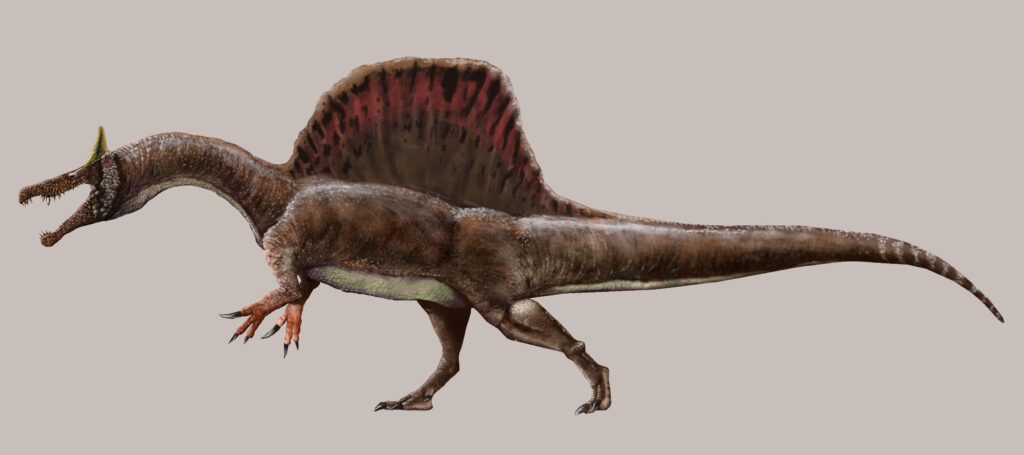
Niger – Scientists working in the remote sands of the central Sahara Desert revealed Spinosaurus mirabilis, a formidable fish-eating dinosaur equipped with a striking blade-like horn on its snout.
First New Spinosaurus in a Century
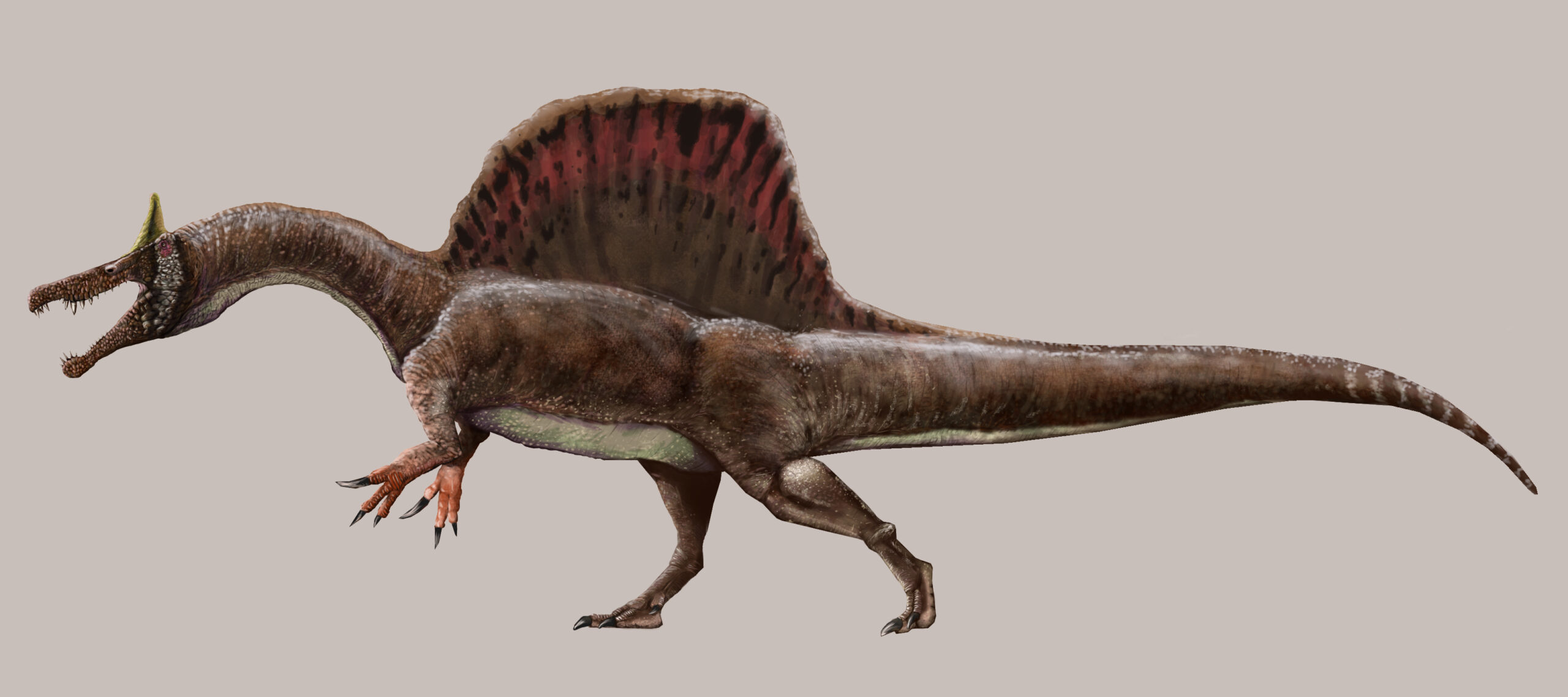
First New Spinosaurus in a Century (Image Credits: Upload.wikimedia.org)
Paleontologists stumbled upon the initial fossils in November 2019 at the Jenguebi site, a forsaken area deep in Niger’s Sahara. The team, led by University of Chicago professor Paul Sereno, initially overlooked the significance of a massive, curved bone fragment amid jaw pieces. A follow-up expedition in 2022 yielded two more such crests, confirming a novel species. This marked the first unequivocal addition to the Spinosaurus genus since its initial description over 100 years ago.
The discovery unfolded like a scene from an adventure tale. Local Tuareg guides led the 20-person crew on motorbikes across vast dunes to the site, first noted in a 1950s report for a saber-shaped tooth. Back in camp, the group huddled around a laptop to view a 3D reconstruction of the skull, pieced together from CT scans. Sereno later recalled the moment as emotional, underscoring the raw thrill of unearthing a lost world.
A Towering Predator with a Showy Crest
Spinosaurus mirabilis stretched to the length of a school bus and rivaled Tyrannosaurus rex in stature. Its skull bore the standout feature: a scimitar-shaped crest protruding prominently from the snout, measuring about a foot long and sweeping upward like a blade. Surface textures and internal vascular canals indicated a keratin sheath, likely adorned with vivid colors for display or communication.
Unlike its relative Spinosaurus aegyptiacus, this species sported a far more pronounced horn. The crest’s bold form set it apart, serving perhaps as a beacon in the dim understory of ancient forests. Jaw fossils revealed conical teeth arranged in interlocking rows, with lower ones protruding between uppers to snare wriggling prey.
Master of Shallow Waters and Slippery Prey
Dating back 95 million years to the Cretaceous, Spinosaurus mirabilis thrived in inland river systems, hundreds of miles from ancient coastlines. Researchers envision it as a “hell heron,” wading on robust legs into waters up to two meters deep to ambush fish like the giant coelacanth Mawsonia, some reaching nine feet. “I envision this dinosaur as a kind of ‘hell heron’ that had no problem wading on its sturdy legs into two meters of water but probably spent most of its time stalking shallower traps for the many large fish of the day,” Sereno stated.
- Interlocking teeth formed a vise-like trap for evasive fish.
- Sturdy limbs supported wading, not swimming or diving.
- Habitat featured forested rivers teeming with large prey, far from marine shores.
- Poor swimmer, akin to modern herons patrolling shallows.
This lifestyle reframes spinosaurids as versatile river stalkers rather than dedicated swimmers.
Reshaping Dinosaur Narratives
The find, detailed in the journal Science, caps a 50-million-year spinosaurid evolutionary arc. Earlier views pegged these giants as fully aquatic, based on coastal fossils. Yet Spinosaurus mirabilis hailed from non-marine sediments, underscoring adaptability across diverse watery realms. The Sahara’s fossil riches, including over 100 tons excavated by Sereno’s teams, continue to yield surprises.
Collaborations with Nigerien communities bolster preservation efforts, including plans for the Museum of the River in Niamey. Replicas now inspire visitors at venues like the Chicago Children’s Museum.
Key Takeaways
- Spinosaurus mirabilis boasts a unique, colorful saber crest for display.
- Semi-aquatic hunter specialized in snaring river fish with specialized teeth.
- Discovery in inland Niger challenges fully aquatic theories for spinosaurids.
This revelation invites fresh scrutiny of how these colossal carnivores navigated prehistoric ecosystems. What do you think of the ‘hell heron’ dinosaur? Share your thoughts in the comments.