Imagine standing on what is now the American Midwest, roughly 20,000 years ago. The landscape you see would barely resemble anything you recognize today. Thunderous footsteps shake the frozen earth. Shadows the size of trucks move between the trees. The air carries a wildness that no nature documentary has ever quite captured. North America, in that not-so-distant past, was a world of giants.
These were not mythological creatures or science fiction. They were real, breathing animals that shaped entire ecosystems before vanishing in one of Earth’s most dramatic extinction events. Some were predators. Some were grazers. Some were so bizarre you would genuinely stop and question reality if you saw one. What happened to them is still, honestly, one of paleontology’s most debated mysteries. Let’s dive in.
The Woolly Mammoth: North America’s Iconic Ice Age Giant
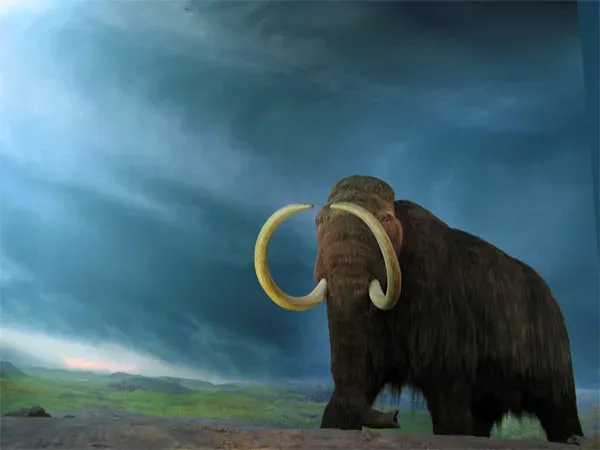
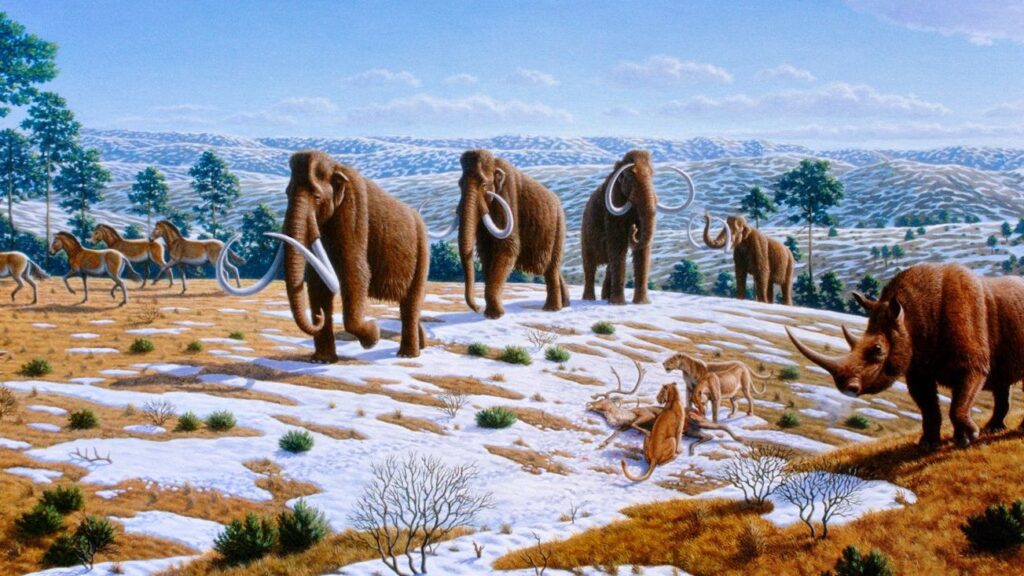
You have almost certainly seen a woolly mammoth in some form, whether in a museum, a film, or a children’s book. Yet knowing what this animal looked like barely prepares you for what it actually was. The woolly mammoth is one of the most famous extinct Ice Age megafauna, standing 12 feet tall at the shoulders and weighing six to eight tons, grazing the northern steppes of Ice Age North America using its colossal, 15-foot curved tusks. For scale, that is about as tall as a basketball hoop, except this thing was alive and moving.
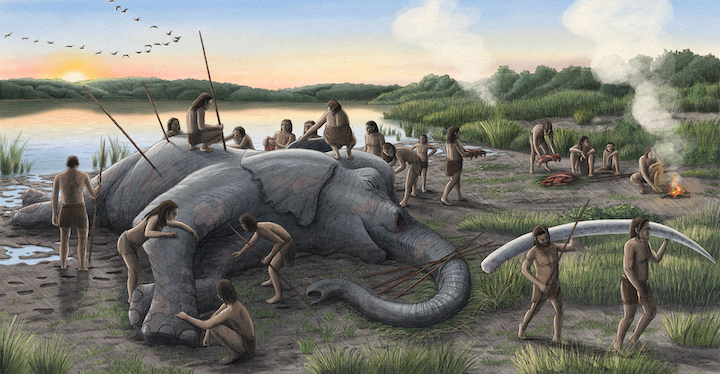
Woolly mammoths entered North America about 100,000 years ago by crossing the Bering Strait. Once here, they dominated the northern landscape for millennia. The woolly mammoth was well adapted to the cold environments present during glacial periods, including the last ice age, and was covered in fur, with an outer covering of long guard hairs and a shorter undercoat. Interestingly, its closest extant relative is the Asian elephant, not the African one, which surprises a lot of people. The woolly mammoth coexisted with early humans, who hunted the species for food, and used its bones and tusks for making art, tools, and dwellings. What a way to go out, quite literally furnishing someone’s home.
Smilodon: The Saber-Toothed Cat That Ruled With Blade-Like Fangs
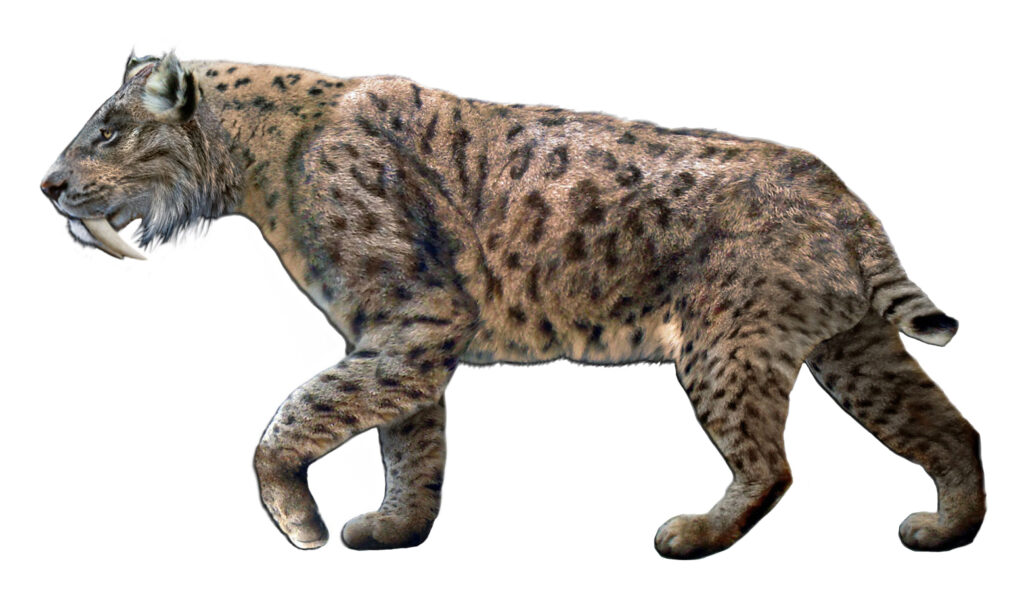
Here’s the thing about Smilodon. Most people picture it as a kind of supercharged tiger with ridiculously long teeth, which, fair enough. The most widely known genus of saber-toothed cats is Smilodon. A large, short-limbed cat that lived in North and South America during the Pleistocene Epoch, it was about the size of the modern African lion and represents the peak of saber-tooth evolution. However, calling it a tiger is actually incorrect. Although commonly known as the saber-toothed tiger, it was not closely related to the tiger or other modern cats, belonging to the extinct subfamily Machairodontinae, with an estimated date of divergence from the ancestor of living cats around 20 million years ago.
Those teeth were no joke. One of the best-known of all prehistoric animals, the feline was armed with a pair of famously long canine teeth that measured up to 28 cm (11 in) long in the largest species. That is longer than a human hand. Smilodon’s gape could have reached over 110°, while that of the modern lion reaches 65°, which made the gape wide enough to allow Smilodon to grasp large prey despite the long canines. Its preferred menu? The size of all the teeth and the robustness of the skeleton suggest that their prey included large mammals like bison, horses, camels, giant ground sloths, and probably young mammoths and mastodons. A terrifying dinner guest, to say the least. The bones of many Smilodon specimens have been recovered from the La Brea Tar Pits in Los Angeles, California, as the cats were apparently mired in the tar as they preyed on other animals that had also become trapped.
The Giant Ground Sloth: The Slow-Moving Behemoth You Would Never Expect
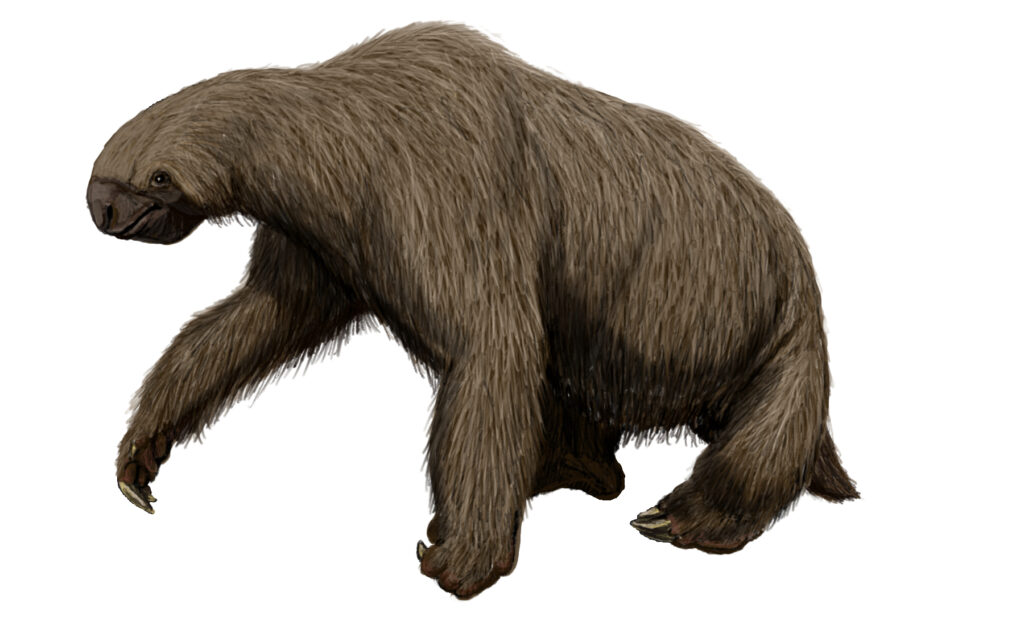
You look at a modern sloth and think cute, lazy, harmless. Now multiply that image by about a thousand and strip away all the charm. The Giant Ground Sloth, also known as Megatherium, was a genus of enormous ground sloths that were indigenous to South America and migrated and spread across the entire continent of North America. The group includes the heavily built Megatherium, which is one of the largest known ground sloths, thought to have had body masses of 3.5 to 4 tons. That is roughly the weight of a large SUV on four legs, with claws.
Those claws, by the way, were truly something else. Their thick bones and even thicker joints gave their appendages tremendous power that, combined with their size and fearsome claws, provided a formidable defense against predators. The hind limbs were flat-footed, and this, along with a stout tail, allowed the animal to rear up into a semi-erect position to feed on tree leaves. The forelimbs had three highly developed claws that were probably used to strip leaves and tear off branches. It was essentially a slow-moving vegetarian tank. And yes, there is even a North American species with a presidential connection. In 1799, Thomas Jefferson named the then-unknown animal Megalonyx, meaning “great-claw.” Megalonyx had the widest distribution of any North American ground sloth, having a range encompassing most of the contiguous United States, extending as far north as Alaska during warm interglacial periods.
The American Mastodon: The Forest Browser You Have Probably Confused With a Mammoth
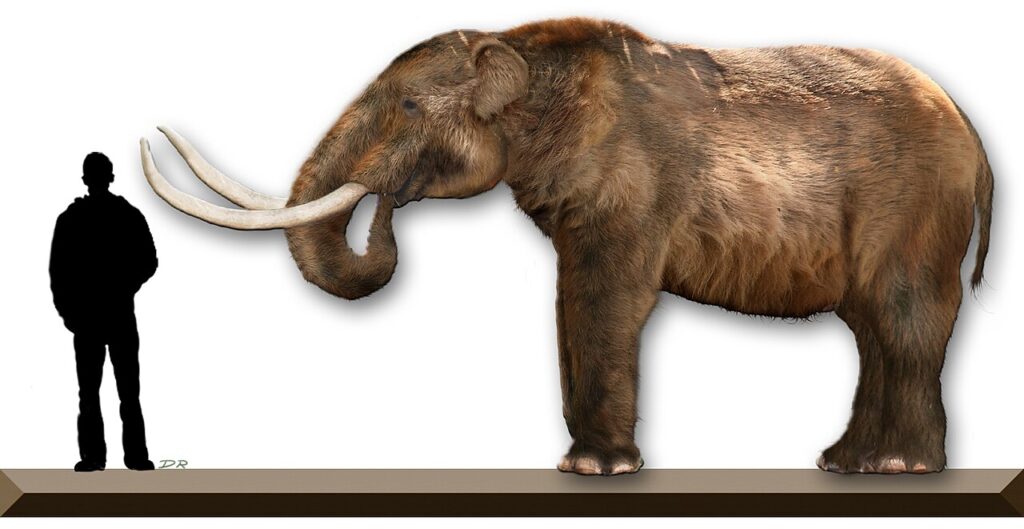
Let’s be real, most people use “mammoth” and “mastodon” interchangeably. They are not the same animal, though, and the differences matter. The American mastodon is the most ancient of the North American “elephants,” with its ancestors crossing the Bering Strait from Asia roughly 15 million years ago and evolving into the American mastodon 3.5 million years ago. While mammoths were grazers of open tundra plains, unlike mammoths who often grazed the open grasslands, American mastodons favored the patchy forests and swamps of their environment.
Mastodons had an overall stockier skeletal build, a lower-domed skull, and a longer tail compared to elephantids. Fully grown male American mastodons are thought to have been around nine to ten feet at shoulder height. They were not small. It is interesting to note that mammoths share more in common with elephants today, especially the Asian elephant, than mastodons. Mastodons were covered with fur, just like mammoths, and a lot of times the two are confused with each other. The clearest distinction? Their teeth. Like other members of Mammutidae, the molar teeth of mastodons have zygodont morphology, where parallel pairs of cusps are merged into sharp ridges, which strongly differ from those of elephantids. Their molars looked like mountain ranges under a microscope, designed perfectly for crushing leaves and woody plants rather than grinding grass.
The Giant Short-Faced Bear: North America’s Most Terrifying Predator on Four Legs
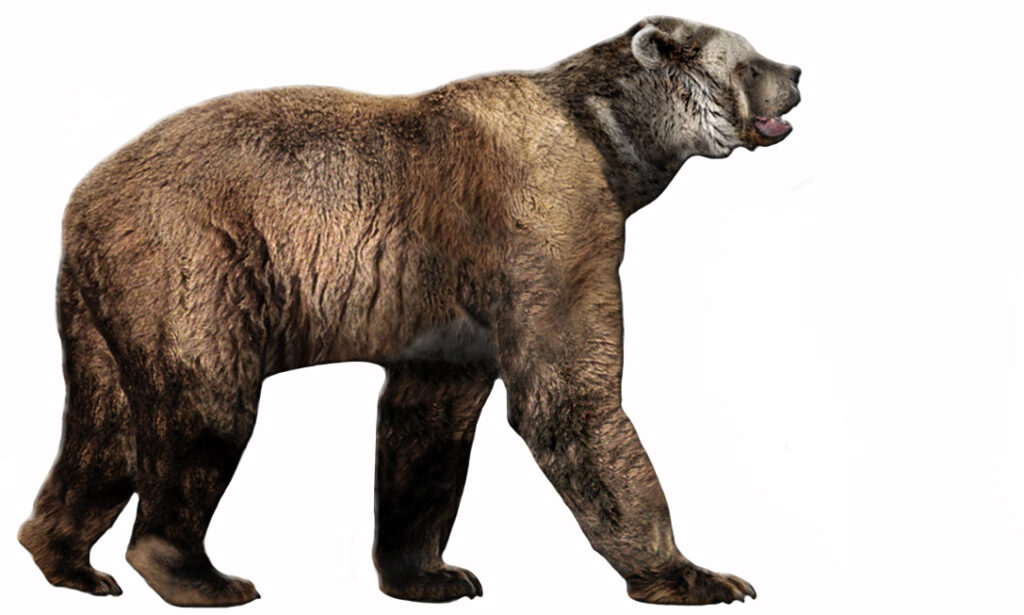
If you thought grizzly bears were scary, I’m sorry to inform you that ancient North America had something considerably worse. The giant short-faced bear, Arctodus simus, was an extremely large bear that occupied much of North America throughout the Pleistocene and is often described as the largest Pleistocene land carnivore in North America. This is not a title earned lightly. Also called the bulldog bear, the giant short-faced bear was undoubtedly the fastest running bear that ever lived. Rangier and longer legged than any bear today, it was about five feet at the shoulders when walking and stood as tall as 12 feet on its hind legs. Unlike pigeon-toed modern bears, its toes pointed straight forward, enabling it to walk with a fast, purposeful gait. It probably could run over 40 miles per hour despite weighing over 1,500 pounds.
Think about that for a second. Something weighing nearly a ton, built like a freight train, sprinting at highway speeds. Its skull and shearing type of teeth indicate a highly carnivorous way of life. Its eye sockets are set wide apart and face forward, giving it excellent vision. Its short, broad snout had a huge nasal passage, which probably means it had a keen sense of smell and could inhale great volumes of oxygen while pursuing prey. The large width of the jaws in relation to their shortness gave this bear a vise-like killing bite and the ability to crush bones to obtain marrow. Analysis of radiocarbon dates obtained on giant short-faced bear bones confirms that these animals went extinct roughly 11,000 years ago and most likely co-existed with groups of humans from the Clovis culture. That means early North Americans had to share their world with this creature, which is both amazing and thoroughly terrifying to consider.
Conclusion
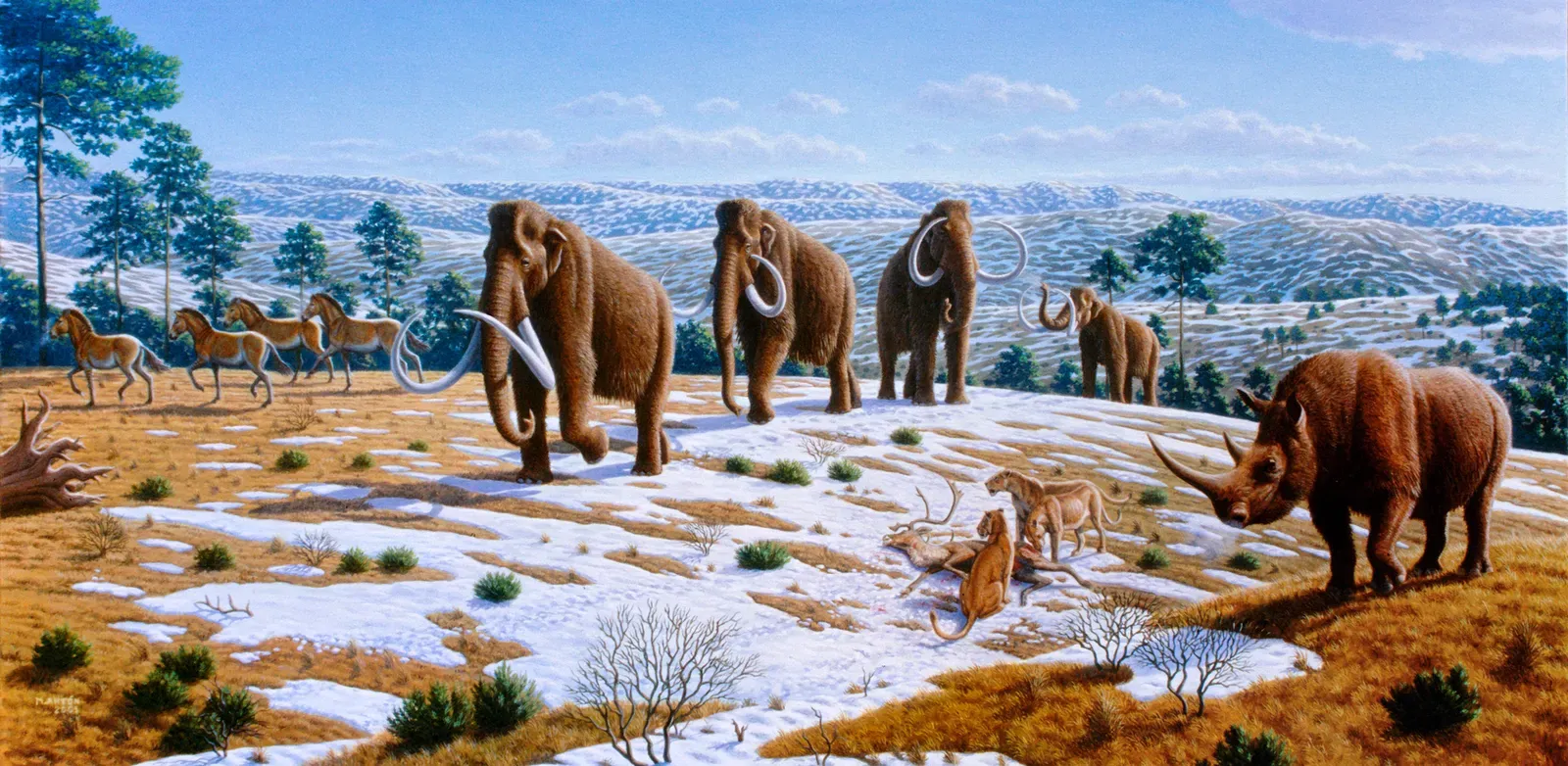
When the glaciers receded in the late Pleistocene, North America was home to dozens of thriving species of extra-large mammals known as megafauna. Around 10,000 years ago, nearly all of those giant creatures were wiped out. The debate over why continues to this day. Some researchers believe the arrival of humans was pivotal, suggesting the animals were hunted and eaten, or that humans altered their habitats or competed for vital food sources. Other researchers contend that climate change was to blame, as the Earth thawed after several thousand years of glacial temperatures, changing environments faster than megafauna could adapt.
What is hard to shake, though, is the sense of loss. North America was once a genuinely wild, larger-than-life place, teeming with creatures that make today’s wildlife look modest by comparison. These mammals lived on Earth for millions of years and were very important to almost all land-based ecosystems. However, natural climate change and humans decreased their ability to survive. The woolly mammoth, Smilodon, the giant ground sloth, the American mastodon, and the short-faced bear were not myths. They were real neighbors on this continent, not that long ago in geological terms. The more you learn about them, the more you realize just how extraordinary, and how fragile, the living world truly is. What would you have done if you had stumbled across one of these giants on an evening walk?