Everyone knows the woolly mammoth. It gets the movie deals, the museum centerpieces, the dramatic documentary narration. But here’s the thing – the mammoth was hardly alone out there. The ancient world was absolutely crawling with colossal creatures that most people have never heard of, each one more jaw-dropping than the last.
It was during the Pleistocene, between roughly two and a half million years ago and around twelve thousand years ago, when the age of giant mammals was truly at its peak, with many species present on all continents. Some of these beasts were bigger than modern elephants. Some were stranger than anything Hollywood has dreamed up. Honestly, the mammoth almost seems ordinary by comparison. Let’s dive in.
Paraceratherium: The Giraffe-Rhino That Dwarfed Everything
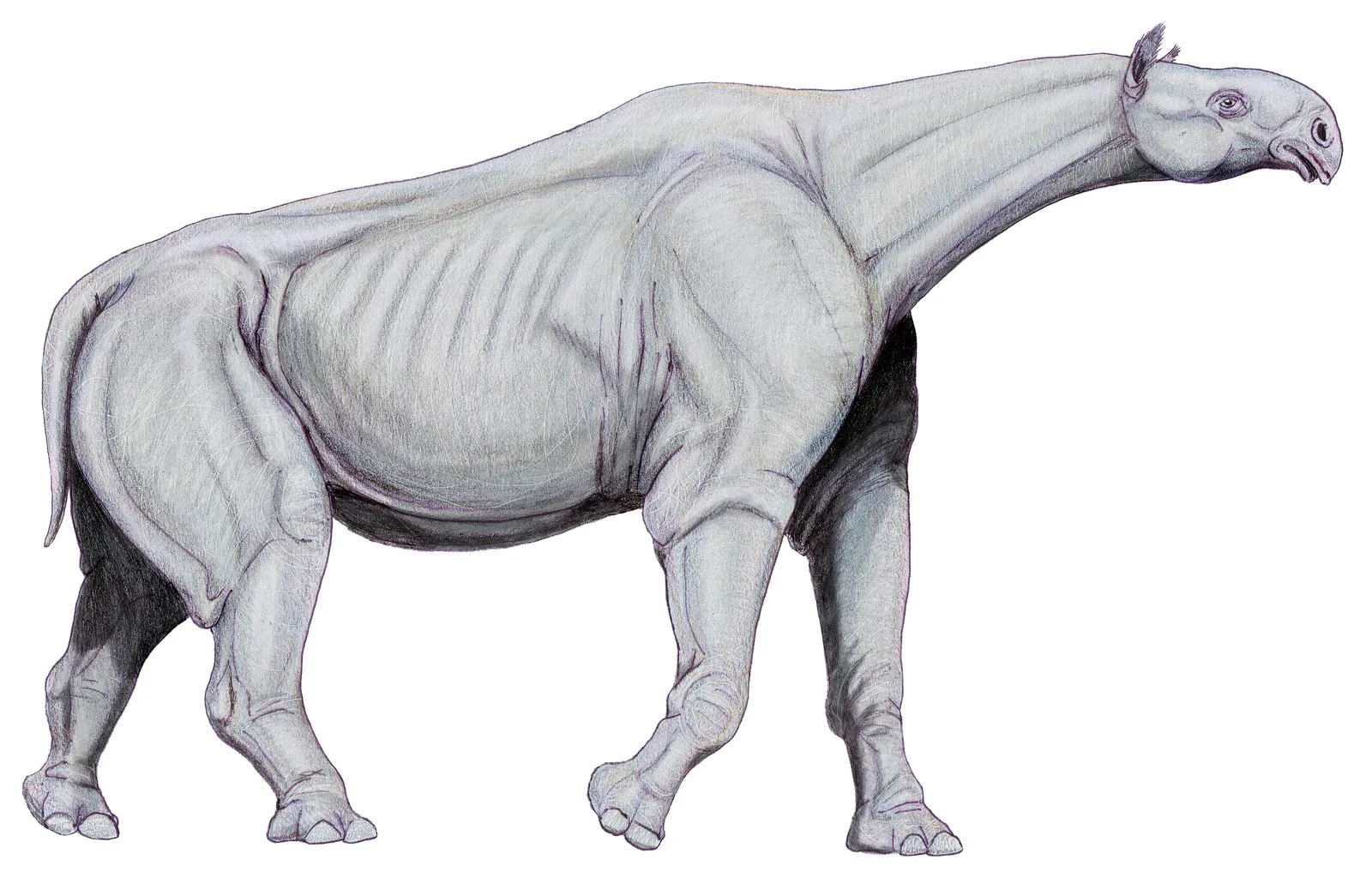
Picture a rhinoceros. Now picture it without a horn, stretch its neck up like a giraffe, then quadruple its weight. That’s basically Paraceratherium, and it remains one of the most mind-bending animals ever to walk the Earth. The shoulder height of this creature was about 4.8 metres (roughly 16 feet), and it stretched to about 7.4 metres in length, with weight estimates reaching between 15 to 20 tonnes.
Some estimates put Paraceratherium at around 17 tons with a shoulder height of around 16 feet – roughly the weight of four average African elephants combined. You can think of it as nature’s most ambitious experiment. It was a browser, eating mainly leaves, soft plants, and shrubs, living in habitats ranging from arid deserts with scattered trees to subtropical forests. The idea of this giant quietly munching treetops, unbothered by essentially every predator on the planet, is both hilarious and genuinely awe-inspiring.
Elasmotherium: The Real-Life “Unicorn” of the Ice Age
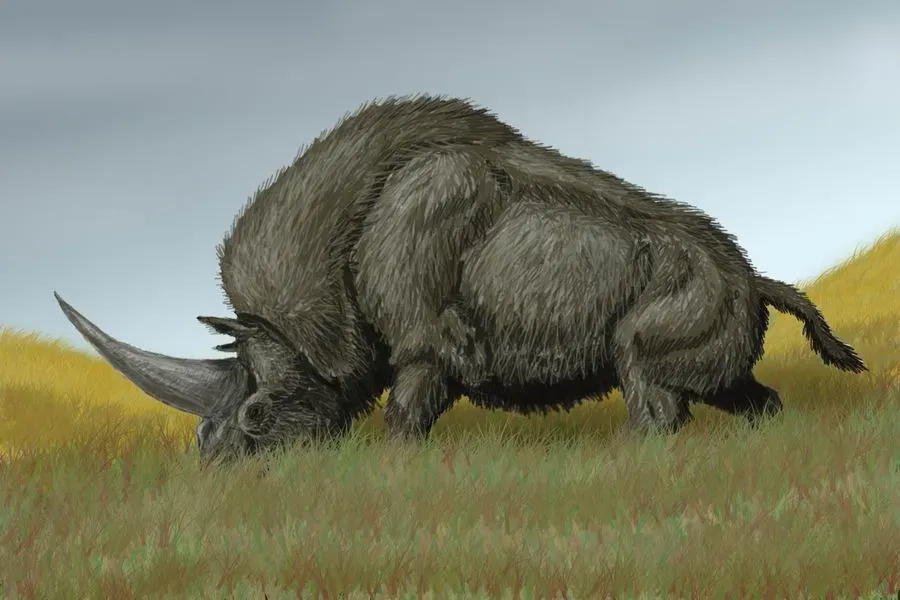
Here’s a fun one to drop at a dinner party: the unicorn myth may actually have been inspired by a very real, very massive prehistoric rhino. Elasmotherium is an extinct genus of very large rhinoceros that lived in Eastern Europe, Central Asia, and East Asia from the late Miocene through to the Late Pleistocene, until at least 39,000 years ago. That means it was alive when humans were already roaming the planet – and they almost certainly crossed paths.
The best-known species, E. sibiricum, was the size of a mammoth, covered in hair, and is thought to have had a large horn protruding from its forehead. It stood around 2 meters tall, stretched to 4.5 meters in length, and weighed an impressive 4 tonnes. Scientists believe this horn could grow as long as five or six feet. Imagine crossing paths with something like that in a Siberian blizzard – no wonder the legends stuck around.
Gigantopithecus: The Giant Ape That May Have Inspired Bigfoot
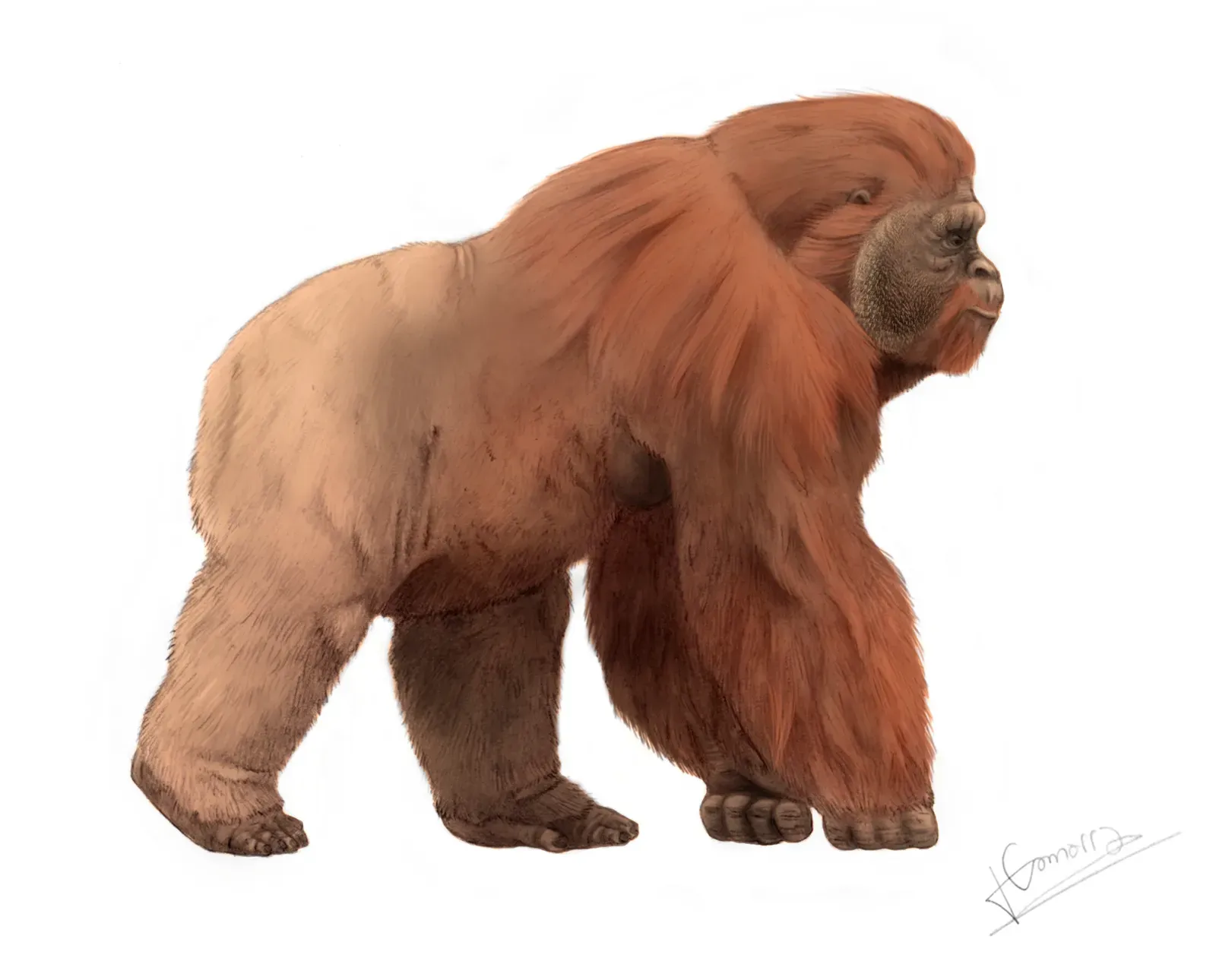
The largest known non-hominid primate is Gigantopithecus blacki. Studies estimate heights around 2.74 to 3.66 meters tall, weighing between 225 and 300 kilograms. I know it sounds crazy, but this thing was essentially a building-sized ape lumbering through the forests of what is now China, India, and Vietnam. Some scientists think its legends filtered down through generations and became what we now call Bigfoot or the Yeti.
Giant primates are scary enough, but Gigantopithecus stood close to ten feet tall and was known to exist in China, India, and Vietnam. Despite its terrifying scale, most researchers believe it was a herbivore, likely munching on bamboo and other forest plants. Think of it as the world’s most intimidating panda – except roughly the height of a two-story house. The fossil record for this animal is frustratingly sparse, mostly consisting of teeth and jaw fragments, which means scientists are still piecing together what it truly looked like.
Megatherium: The Ground Sloth That Could Look Over Your Roof
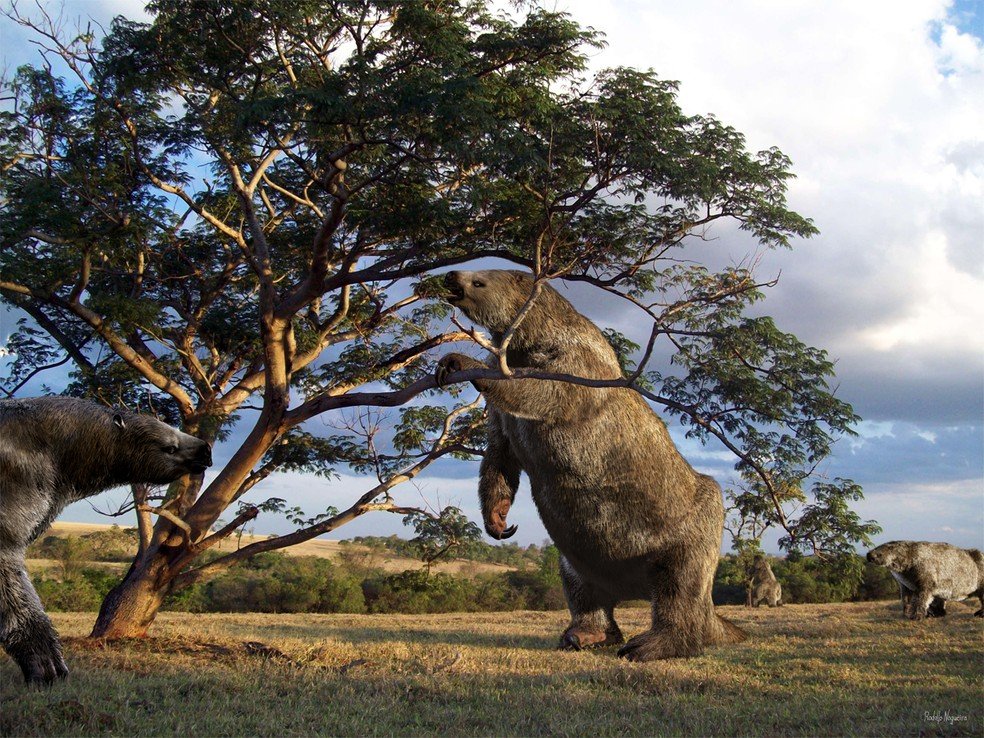
Today’s sloths hang upside down in trees, moving so slowly that algae grows in their fur. Cute. Harmless. Totally unthreatening. Their ancient relatives, however, were an entirely different story. The giant ground sloths of the late Pleistocene were bear-sized herbivores that stood 12 feet on their hind legs and weighed up to 3,000 pounds. That’s not a typo. Twelve feet tall.
When walking on all fours, Megatherium could reach a length of almost 20 feet and could stand on its hind legs to reach a monstrous 13-foot height. Traditionally, research indicates that it was an herbivore, but some researchers insist that the giant sloth also ate meat and scavenged the bodies of other dead animals, scaring other creatures away. Ground sloths had elongated claws like modern sloths, which they would have used to strip leaves and dig for roots. A scavenging, 13-foot predator with enormous claws – and we named its friendlier modern relative one of the internet’s favorite animals. The contrast is almost comical.
Castoroides: The Beaver the Size of a Black Bear
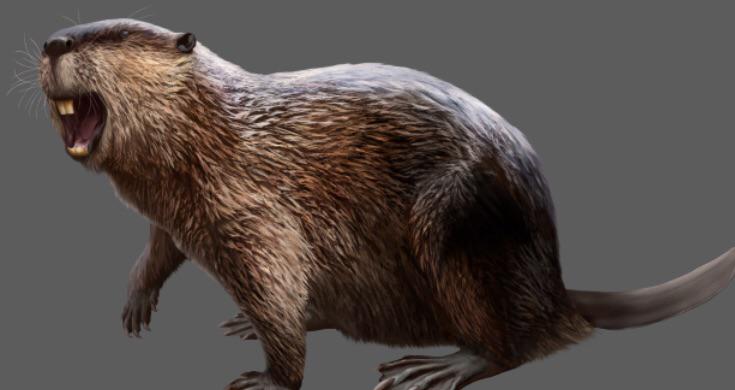
You’ve seen a beaver. Industrious little creature, builds dams, stars in nature documentaries. Charming. Now let’s talk about its ancient North American cousin, which was essentially a nightmare version of everything you just pictured. The largest beaver, Castoroides, grew over 2 meters in length and weighed roughly 90 to 125 kilograms, making it one of the largest rodents to ever exist. That’s roughly the weight of a full-grown black bear.
What makes Castoroides genuinely fascinating is how little we actually know about its behavior. Despite being a beaver, there’s a delicious irony in the fact that scientists have never found a Castoroides dam. It’s been humorously noted that nobody has found a giant beaver dam, raising real questions about what these animals were actually doing with their time. It’s hard to say for sure, but the most likely answer is that their habits were just different enough from modern beavers to leave no trace. A giant rodent whose lifestyle remains largely mysterious – what more could you want from prehistoric science?
Glyptodon: The Armadillo That Wore a Volkswagen
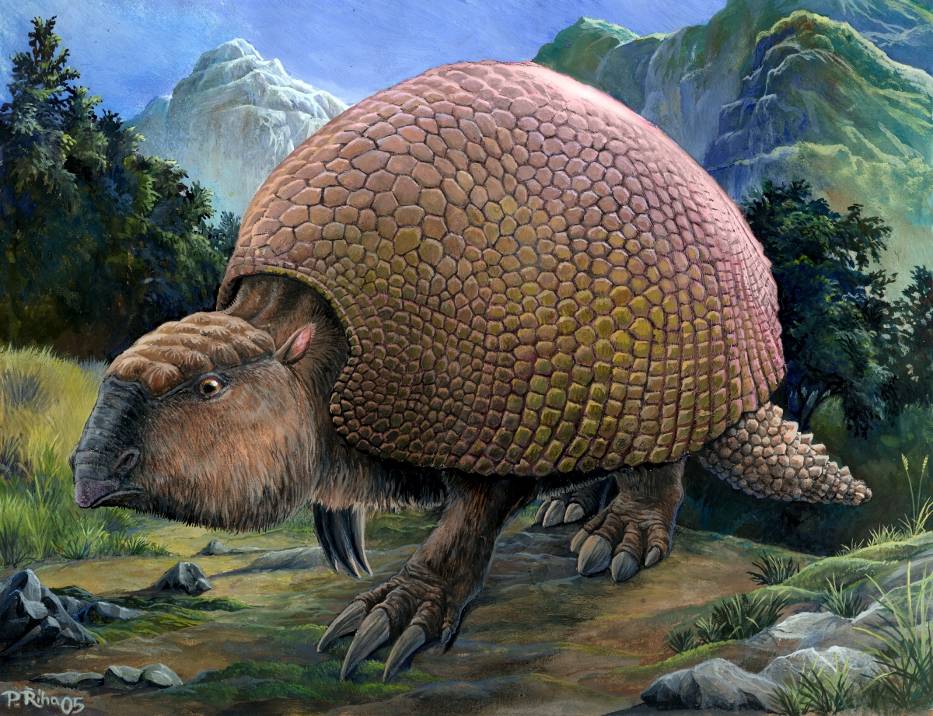
Let’s be real – if you saw a glyptodon walking down the road today, you would think it was a misshapen compact car. Along with woolly mammoths and giant sloths, ancient humans also lived among herbivorous armadillo-like animals called glyptodonts. Fossils of glyptodonts pinpoint them to the swamps of North and South America as far back as 5 million years ago. Their bodies exceeded 4,000 pounds and 10 feet in length. Four thousand pounds. That’s heavier than some SUVs.
The glyptodont had a tortoise-like shell, helping to shield its entire body against predators. Yet, despite their tough exterior, these peaceful creatures weren’t to be feared by their human companions in the Americas. The thick armor of the glyptodonts made them rather useful to early humans. Because they likely didn’t fight back, they were easy to kill. Skulls found in Northern Venezuela indicate they may have suffered multiple blows from ancient human hunters armed with rocks and spears. So the most heavily armored creature on the continent was, paradoxically, one of the easiest meals. Nature has a cruel sense of humor.
Arctodus: The Short-Faced Bear That Could Run You Down
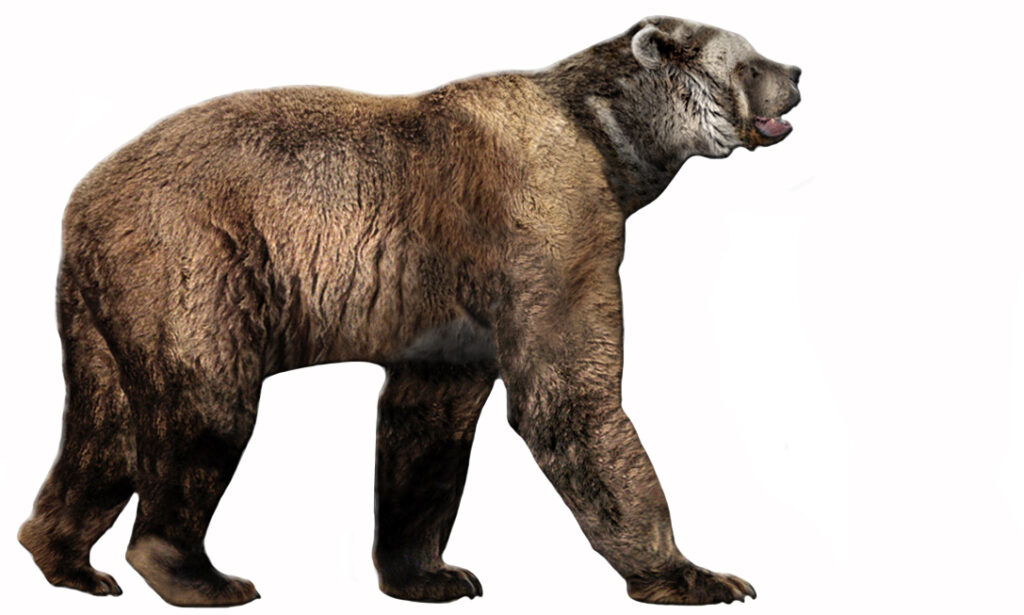
The giant short-faced bear, Arctodus simus, was the largest carnivorous mammal to ever roam North America. Standing on its hind legs, an adult giant short-faced bear boasted a vertical reach of more than 14 feet. Fourteen feet. That’s the height of a basketball hoop and then some. If you encountered one, running would seem like the logical response – unfortunately, that might have been exactly what it wanted you to do.
The most striking difference between modern North American bears and the giant short-faced bear were its long, lean, and muscular legs. Its remarkable build gave rise to the idea that it was a cursorial predator, meaning it ran after prey. Unlike modern bears, which tend to be more lumbering opportunists, Arctodus appears to have been built for the chase – essentially a bear engineered to sprint across open Ice Age plains. These giant mammals had important roles for the healthy functioning of ecosystems, like redistributing nutrients and dispersing seeds. Even apex predators like this one shaped the broader world around them in ways we’re only beginning to fully appreciate.
A World Bigger Than We Imagined
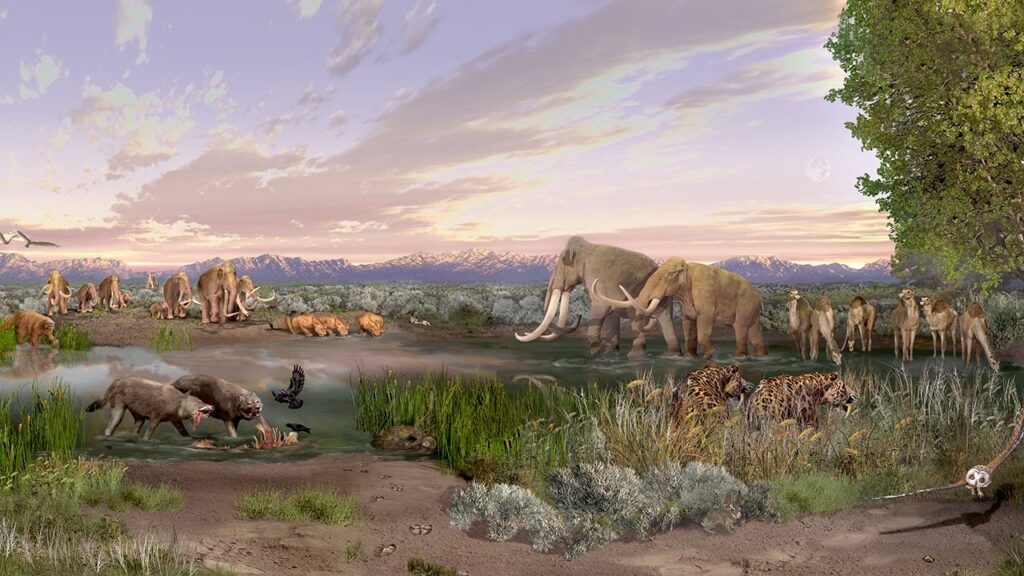
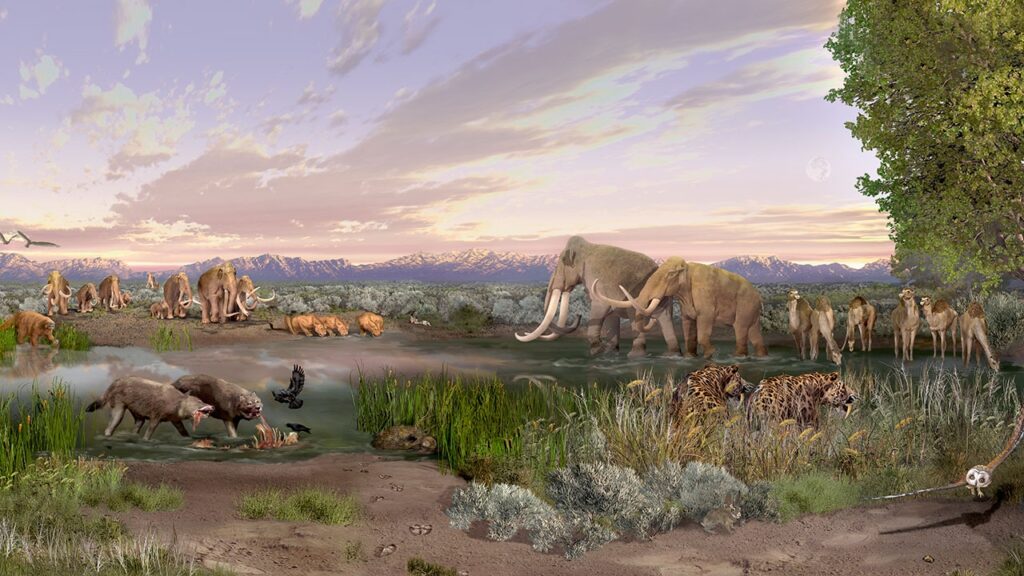
It’s genuinely humbling to think about. When the glaciers receded in the late Pleistocene, North America alone was home to dozens of thriving species of extra-large mammals. Around ten thousand years ago, nearly all of those giant creatures were wiped out. In geological terms, that vanishing act happened in the blink of an eye. One minute the landscape was dominated by armored giants, charging rhino-unicorns, and terrifying running bears. The next, largely gone.
Numerous extinctions occurred during the latter half of the Last Glacial Period, when most large mammals went extinct in the Americas, Australia-New Guinea, and Eurasia – including over eighty percent of all terrestrial animals with a body mass greater than a thousand kilograms. Various theories have attributed the wave of extinctions to human hunting, climate change, disease, extraterrestrial impact, competition from other animals, or other causes. The honest answer is that we still don’t fully know, and that mystery is part of what makes this chapter of Earth’s history so compelling.
The mammoth may be the celebrity of the prehistoric world, but as you’ve just seen, the supporting cast was extraordinary. Seven creatures, seven stories, each one capable of rewriting your mental image of what ancient Earth actually looked like. The real question is: which one surprised you the most?