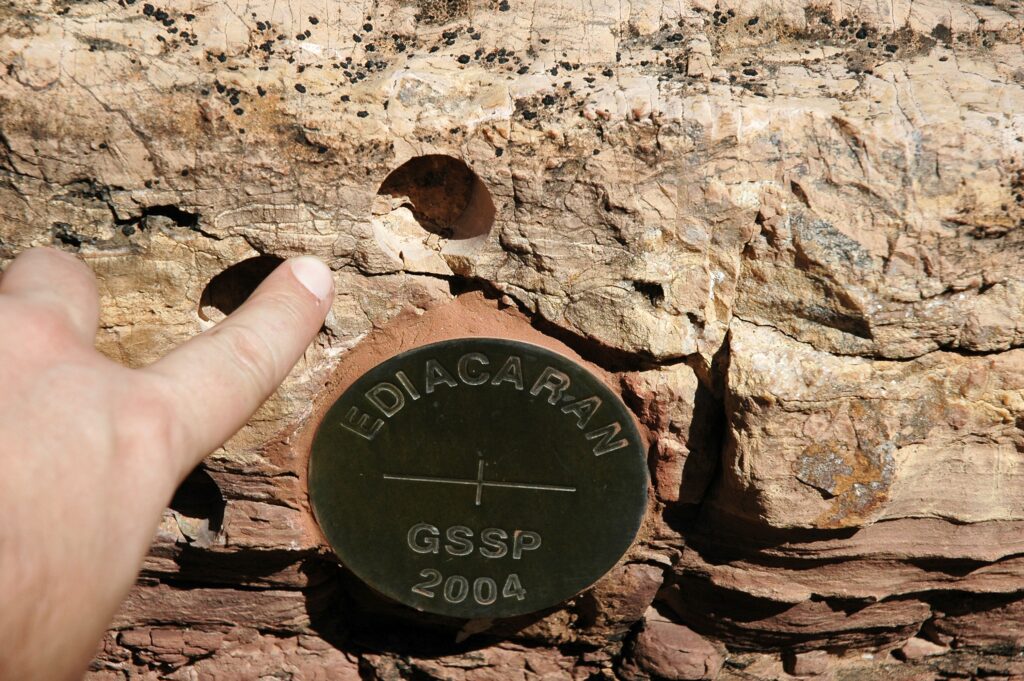
Geological evidence reveals a significant ice age that gripped parts of Earth from approximately 580 to 560 million years ago, during the late Ediacaran Period. This extended cold spell featured widespread glaciations across multiple continents, yet it differed markedly from the more extreme Snowball Earth events of earlier times. Researchers have now pinpointed the processes that sustained these conditions for over 20 million years, offering fresh insights into pre-Cambrian climate dynamics.
Global Traces of an Ancient Freeze
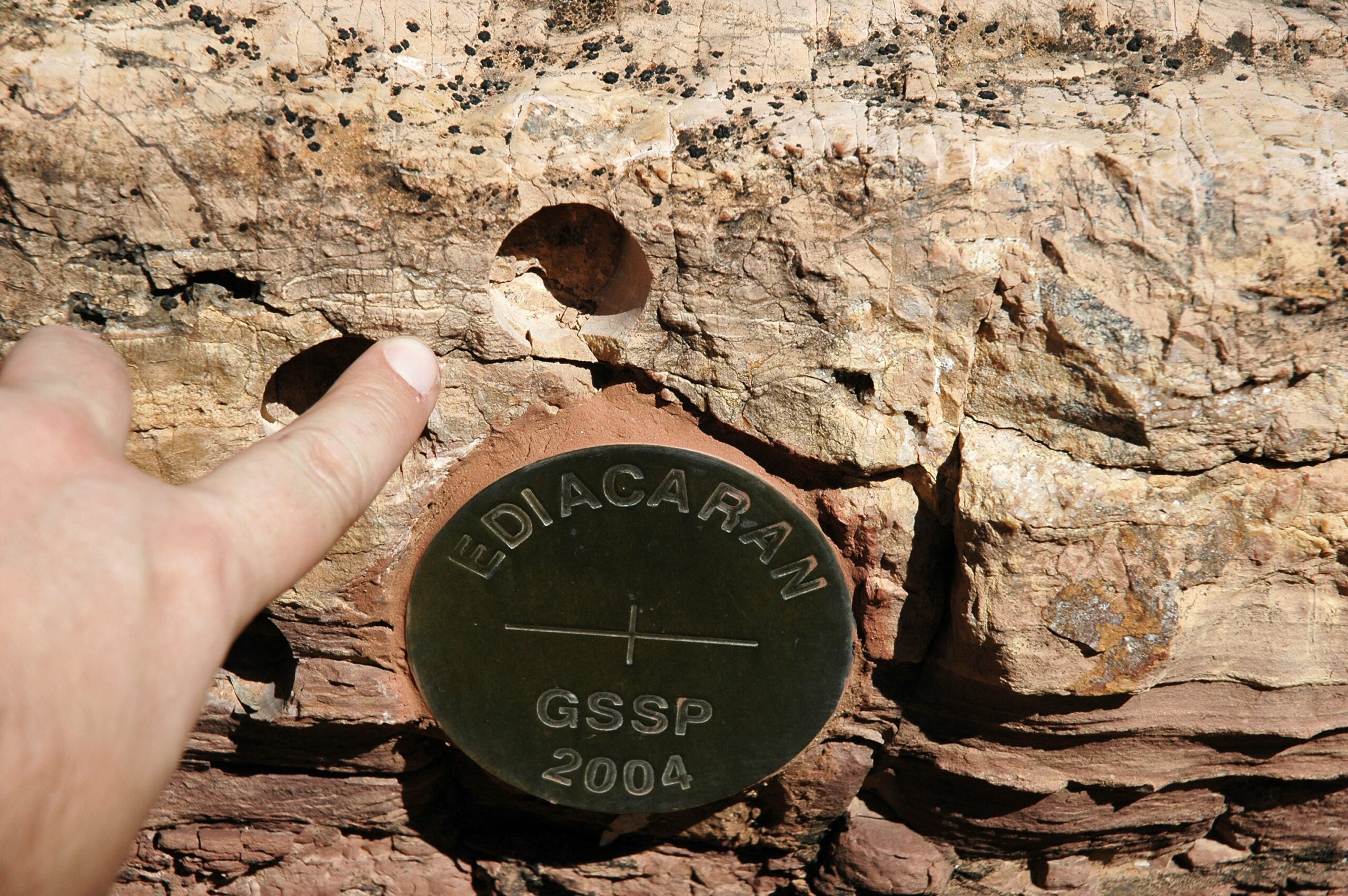
Global Traces of an Ancient Freeze (Image Credits: Upload.wikimedia.org)
Records of this ice age appear in more than 30 glacial deposits scattered worldwide, from Newfoundland to Tarim and North China. The Gaskiers glaciation in Newfoundland stands out with precise dating between 580.9 and 579.9 million years ago, marking the onset. Other formations, such as the Hankalchough in Tarim and Luoquan in North China, followed later, extending the cold phase beyond 560 million years ago.
These deposits document ice sheets that reached subtropical latitudes up to 30-40 degrees north and south. Unlike Snowball Earth glaciations, no evidence suggests a complete planetary freeze; biological activity continued uninterrupted, and typical cap carbonates remained absent. Paleomagnetic data indicate the glaciations occurred diachronously as continents shifted positions, challenging earlier views of isolated events.
True Polar Wander Drives Continental Shifts
A massive true polar wander event, involving a roughly 90-degree reorientation of Earth’s rotational axis, played a pivotal role. This process moved continental blocks through polar and temperate zones between 590 and 560 million years ago. Continents like Avalonia and Laurentia entered glaciated positions early, while Tarim and North China followed later.
Climate models using the Community Earth System Model replicated these patterns. At low atmospheric CO2 levels, simulated snow and ice thicknesses matched over 50 percent of observed glacial records. Global mean surface temperatures dropped to between -4 and -8 degrees Celsius, about 17 degrees below preindustrial levels.
Low CO2 Sustained by Enhanced Weathering
Atmospheric CO2 concentrations stayed remarkably low to maintain the ice age, peaking below 280 parts per million by volume during the core phase from 575 to 565 million years ago. Levels dipped under 140 ppmv at the start and end around 580 and 560 million years ago, yet always exceeded 35 ppmv to avert a Snowball scenario.
| Time (Ma) | Upper pCO2 Bound (ppmv) | Key Feature |
|---|---|---|
| 580 | 70 | Onset, Gaskiers peak |
| 575 | 140 | Core maintenance |
| 570 | 280 | Transitional |
| 565 | 140 | Persistent cold |
| 560 | 70 | Decline |
Enhanced silicate weathering kept CO2 drawdown in check. As true polar wander shifted glaciated continents toward the tropics, deglaciated areas exposed fresh, high-weatherability rock flour to warm, wet conditions. This boosted weathering fluxes by 15 to 57 percent compared to non-glaciated scenarios, balancing volcanic CO2 inputs.
- Gaskiers Formation (Newfoundland): Precisely dated start.
- Hankalchough Formation (Tarim): Post-Shuram carbon isotope excursion.
- Luoquan Formation (North China): Late-phase evidence.
- Bunyeroo Formation (Australia): Subtropical extent.
- Moelv Formation (Baltica): Polar wander correlation.
Links to the Dawn of Complex Life
The ice age overlapped with the Shuram carbon isotope excursion and phosphogenic events, suggesting glacial weathering released nutrients like phosphorus into oceans. This fertilization likely spurred productivity and oxygenation, setting the stage for Ediacara biota diversification.
Avalon assemblages emerged around 575 million years ago post-initial glaciation, followed by White Sea diversification near 560-550 million years ago. The cold spell’s end aligned with turnover toward Nama assemblages, prelude to the Cambrian Explosion.
Accretionary orogens around 580 million years ago may have triggered the cooling through initial weathering surges. However, true polar wander provided the feedback loop for longevity, linking Earth’s deep interior dynamics to surface climate and biology.
This prolonged ice age highlights how geodynamic processes can sustain extreme climates over millions of years, reshaping life’s trajectory. As scientists refine models, these findings underscore the interplay of tectonics, chemistry, and ice in pre-Cambrian Earth.
Key Takeaways
- The late Ediacaran ice age lasted over 20 million years through diachronous glaciations driven by true polar wander.
- Low CO2 (<280 ppmv) was maintained by tropical exposure of glacial rock flour, enhancing weathering.
- Nutrient release from glaciers fueled ocean changes, paving the way for early complex life.
What role do you think ancient ice ages played in life’s major evolutionary leaps? Share your thoughts in the comments.