Sixty-six million years ago, looked completely different than it does today. The warm, shallow seas teemed with marine life, while massive dinosaurs roamed the coastal forests. Then, in an instant, everything changed. A cosmic visitor the size of a mountain slammed into our planet with unimaginable force, forever altering the geography of the region and the course of life on Earth.
You might think such a colossal impact would leave obvious scars, but surprisingly, the evidence of this world-changing event remained hidden for millions of years. The meteorite that reshaped didn’t just affect the immediate area – it created ripple effects that spread across continents and oceans, leaving behind a trail of destruction that would take scientists decades to piece together. Let’s explore the incredible story of how one of Earth’s most dramatic moments was discovered and what it reveals about our planet’s violent past.
The Hidden Giant Beneath the Yucatan Peninsula
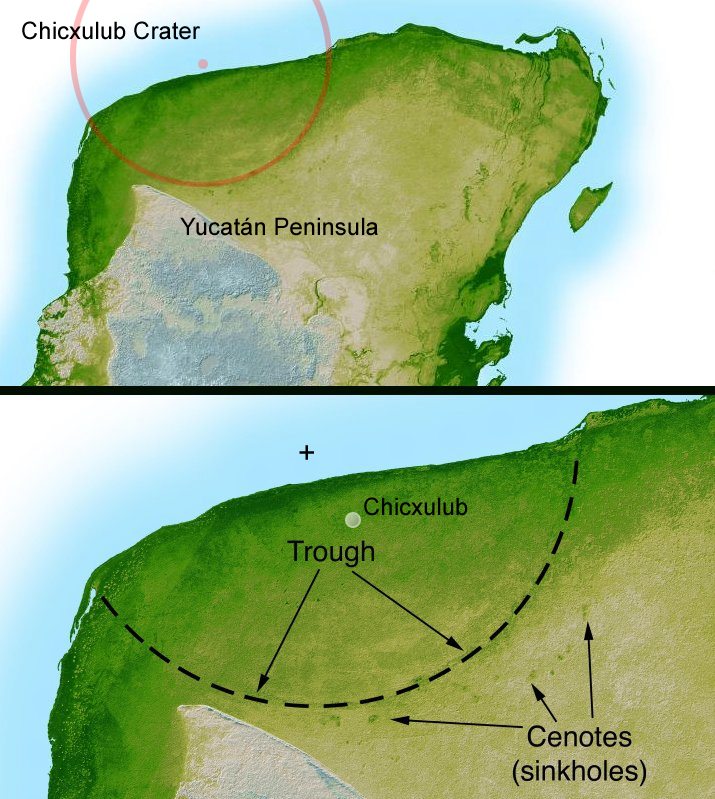
Deep beneath the limestone bedrock of Mexico’s Yucatan Peninsula lies one of Earth’s most significant geological features. The Chicxulub crater is an impact crater buried underneath the Yucatán Peninsula in Mexico, and is estimated to be 150 kilometers (93 miles) in diameter and 20 kilometers (12 miles) in depth. This massive scar on our planet tells the story of an asteroid collision that occurred slightly over 66 million years ago when an asteroid, about ten kilometers (six miles) in diameter, struck Earth.
What makes this crater so remarkable isn’t just its size – it’s how well preserved it remains despite being completely invisible from the surface. Presently buried beneath approximately one kilometer (1000 meters) of limestone, the crater has no direct surface expression. The only hints of its existence come from subtle clues scattered across the landscape, like pieces of an ancient puzzle waiting to be solved.
A Discovery Born from Oil Exploration
The story of how scientists found this hidden crater reads like a detective novel. In 1978, geophysicists Glen Penfield and Antonio Camargo were working for the Mexican state-owned oil company Petróleos Mexicanos (Pemex) as part of an airborne magnetic survey of the Gulf of Mexico north of the Yucatán Peninsula. Penfield’s job was to use geophysical data to scout possible locations for oil drilling. In the offshore magnetic data, Penfield noted anomalies whose depth he estimated and mapped.
When Penfield combined his magnetic data with older gravity measurements from the 1940s, something extraordinary appeared. When the gravity maps and magnetic anomalies were compared, Penfield described a shallow “bullseye”, 180 km (110 mi) in diameter, appearing on the otherwise non-magnetic and uniform surroundings – clear evidence to him of an impact feature. This wasn’t just any geological formation – the perfect circular symmetry screamed of a catastrophic event.
The Long Road to Recognition

Finding the crater was one thing, but getting the scientific community to take notice proved to be another challenge entirely. Penfield presented his findings to Pemex, who rejected the crater theory, instead deferring to findings that ascribed the feature to volcanic activity. Pemex disallowed release of specific data, but let Penfield and Camargo present the results at the 1981 Society of Exploration Geophysicists conference. That year’s conference was under-attended and their report attracted little attention, as many experts on impact craters and the K–Pg boundary were attending the Snowbird conference instead.
The timing couldn’t have been worse. While Penfield was presenting his groundbreaking discovery to a nearly empty room, the world’s leading impact specialists were elsewhere, completely unaware that the smoking gun they’d been searching for had just been unveiled. Although Penfield had plenty of geophysical data sets, he had no rock cores or other physical evidence of an impact. Penfield tried to secure site samples, but was told they had been lost or destroyed. When attempts to return to the drill sites to look for corroborating rocks proved fruitless, Penfield abandoned his search, published his findings and returned to his Pemex work.
The Asteroid That Changed Everything
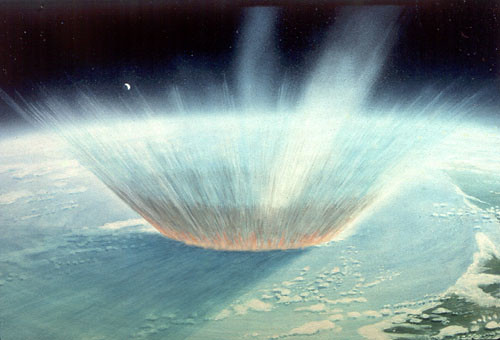
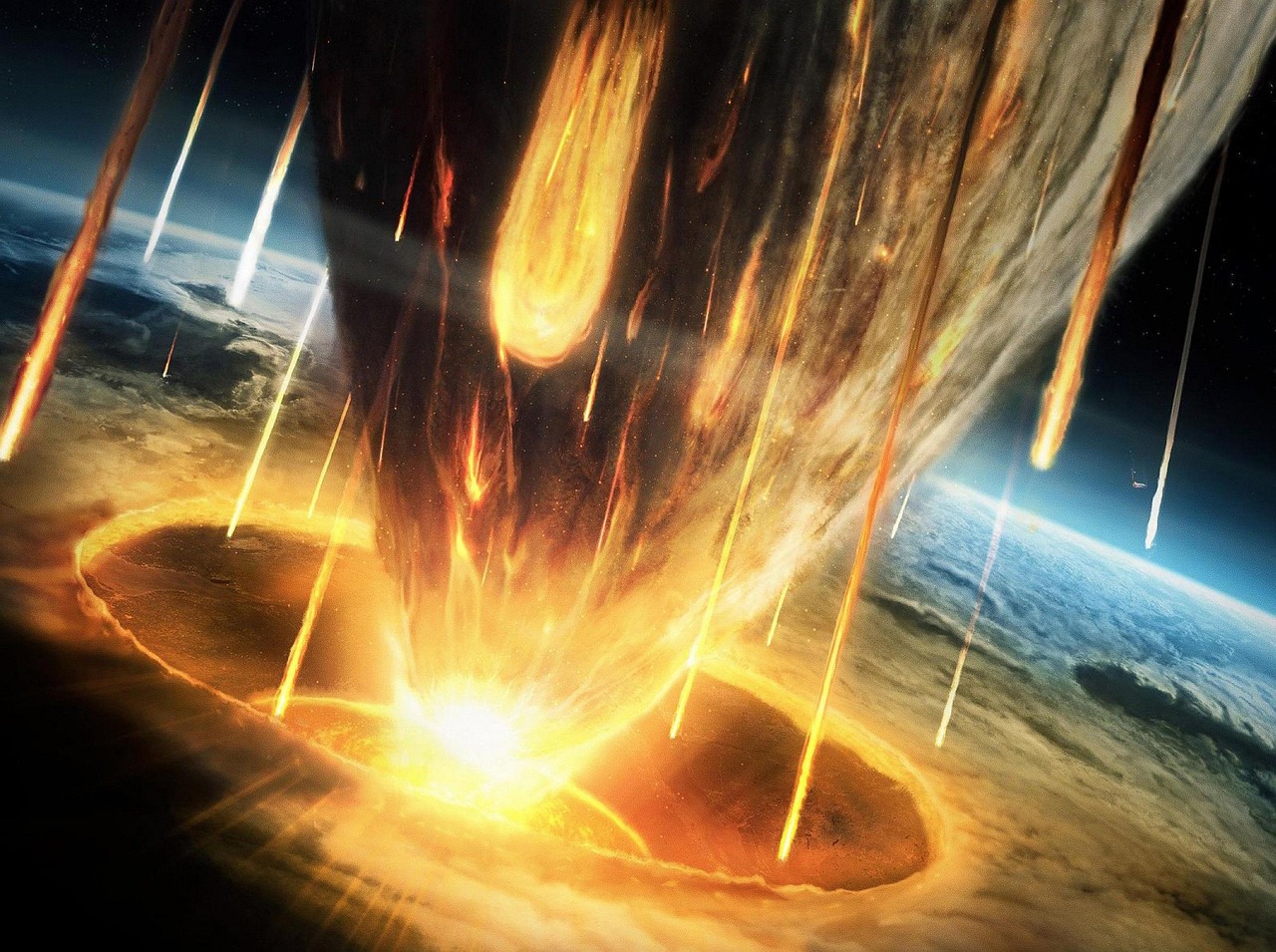
When this space rock collided with Earth, it unleashed forces beyond imagination. Approximately 66 million years ago, an asteroid nearly 10 kilometers (6.2 miles) across hit the Earth near what is now the Yucatan Peninsula, close to the current towns of Chicxulub Pueblo and Chicxulub Puerto. The asteroid hit at an estimated speed of 20 kilometers per second (more than 58 times the speed of sound) at a relatively steep angle of between 45 and 60 degrees to the Earth’s surface. The impact produced as much explosive energy as 100 teratons of TNT, 4.5 billion times the explosive power of the Hiroshima atomic bomb.
The immediate aftermath was nothing short of apocalyptic. Initially, the impact blasted a cavity 100 km (62 miles) wide and 30 km (19 miles) deep. The impact was accompanied by a massive plume of 25 trillion metric tons of molten material shooting up into the atmosphere, with the temperature of some of this molten material being several times hotter than the surface of the sun. This plume would have passed right through the atmosphere, firing some material out into space.
Immediate Devastation Across the Gulf Region
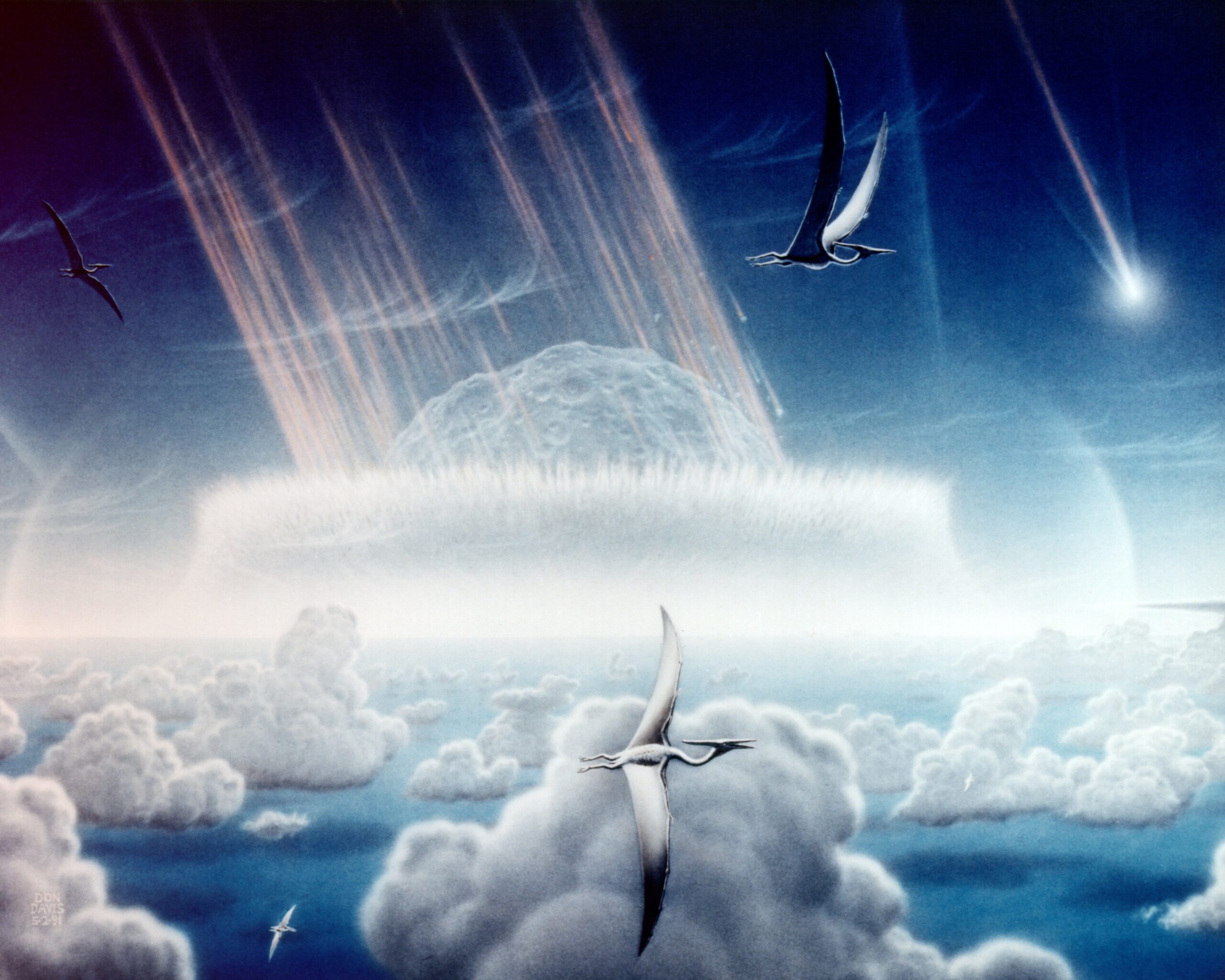
The effects of the impact spread outward from the crash site like ripples in a cosmic pond, but these ripples carried death and destruction. The Chicxulub impact event was an ~100 million megaton blast that devastated the Gulf of Mexico region. The blast generated a core of superheated plasma in excess of 10,000 degrees. Although that thermal pulse would have been relatively short-lived, a handful of minutes, it would have been lethal for nearby life.
The Chicxulub Impact event produced a shock wave and air blast that radiated across the seas, over coastlines, and deep into the continental interior. Winds far in excess of 1000 kilometers per hour were possible near the impact site, although they decreased with distance from the impact site. The pressure pulse and winds would have scoured soils and shredded vegetation and any animals living in nearby ecosystems. An initial estimate of the area damaged by an air blast was a radius 1500 kilometers. Imagine winds more powerful than the strongest hurricanes ever recorded, extending across half of North America.
Tsunamis That Reshaped Coastlines

Perhaps even more devastating than the initial blast were the massive waves that followed. Because the impact occurred at sea, tsunamis radiated across the Gulf of Mexico, crashing onto nearby coastlines, and also radiated farther across the proto-Caribbean and Atlantic basins. Estimates of the sizes of the waves vary. Lower estimates suggest the waves were “only” 50 to 100 meters high, while some estimates suggest the tsunamis were 100 to 300 meters high when they crashed onto gulf shores and tore through coastal ecosystems.
These weren’t ordinary tsunamis – they were walls of water taller than skyscrapers. The tsunamis may have penetrated more than 100 kilometers inland before the backwash swept continental debris back into the Gulf of Mexico, where it was deposited in seafloor channels. Both the initial waves and the resulting backwash deeply eroded the seafloor to depths of several hundred meters. The force was so immense that the impact also generated a seismic pulse roughly equivalent to a magnitude 10 earthquake. That seismic activity caused huge landslides on the seafloor, ripping through any colonies of life.
The Nuclear Winter That Followed

While the immediate effects were catastrophic, the long-term consequences proved even more deadly. Because of where the asteroid hit the Earth, much of the material that was in the impact plume was the sedimentary mineral gypsum – which is high in sulfur – as well as water vapor. The dust and sulfurous materials ejected into the atmosphere would have led to a nuclear winter-like effect, with a rapid decrease in global temperatures.
The impact had created the perfect storm for global devastation. When the meteor hit the Gulf of Mexico, all the soot and debris from the impact shot back up into the atmosphere. Initially, the influx of debris shocked the atmosphere with firey temperatures. Additionally, the impact of the asteroid released sulfurous gas. This combination of factors blocked out sunlight for years, creating a prolonged period of darkness and cold that would reshape life on Earth forever.
The Scientific Breakthrough That Connected the Dots
The crater might have remained a forgotten curiosity if not for a chance encounter between scientists working on seemingly unrelated research. It wasn’t until spring of 1990 that Penfield got a call from a graduate student, Alan Hildebrand, who had examined a 65-million-year-old rock layer in Haiti, only 300 miles from the Yucatán, and determined that the still-hypothetical asteroid impact of that time must have occurred somewhere around the Caribbean. Now Hildebrand wanted to see if he and Penfield could complete the puzzle by locating rock samples from Penfield’s Chicxulub structure.
The collaboration between Penfield and Hildebrand proved to be the key that unlocked the mystery. By marvelous chance, they found that a few breccia samples, part of the original oil drill cores, had been distributed here and there in Mexico and the United States, thus escaping destruction in the Mexican warehouse fire. Penfield and Hildebrand were fortunate enough to get hold of a few of these, including one breccia from the 14th core of the PEMEX drill site called Yucatán 6. Shocked quartz samples from the Yucatán 6 breccia clinched the fact that Penfield’s underground structure was indeed an impact crater.
Conclusion
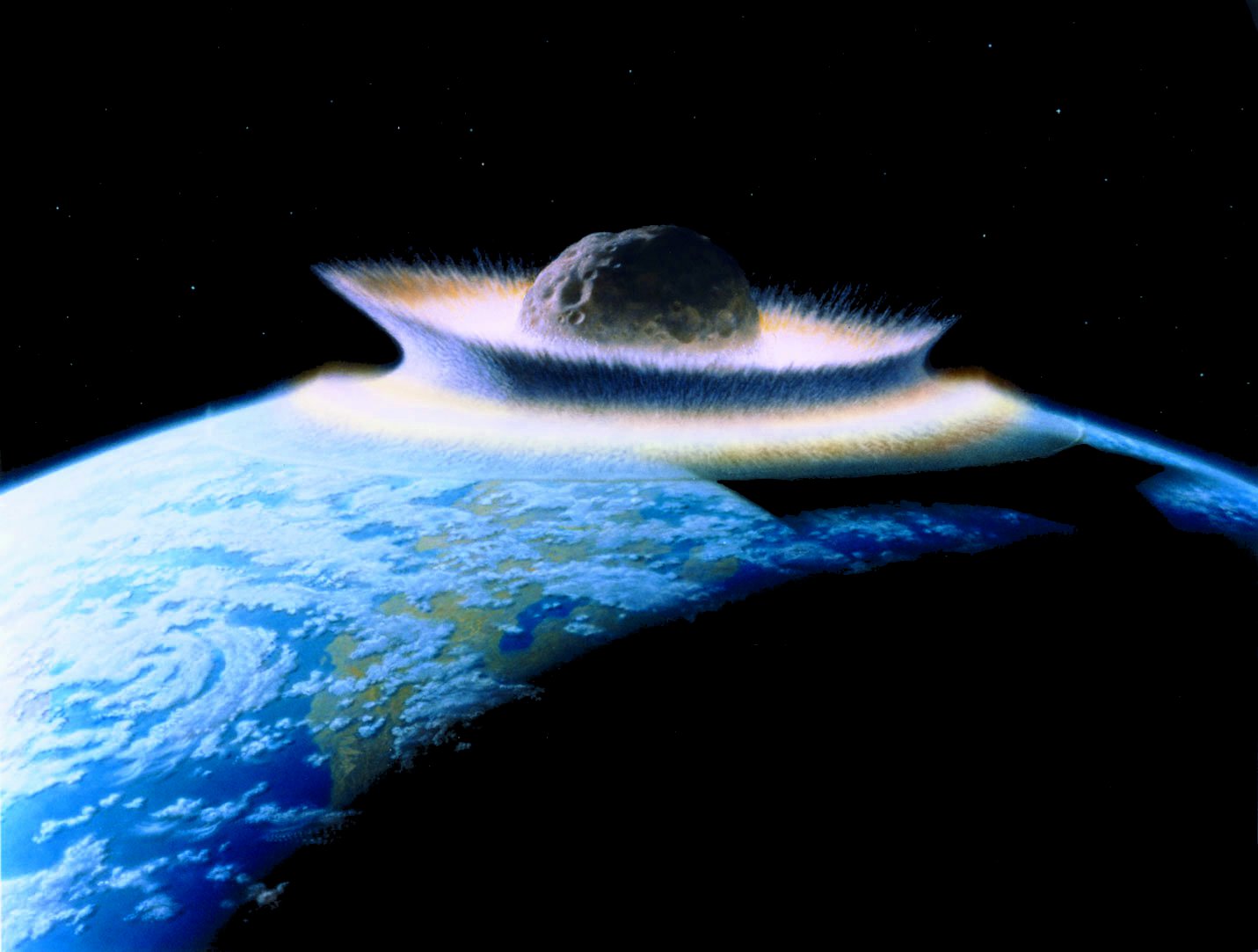
The discovery of the Chicxulub crater represents one of the most important scientific breakthroughs of the 20th century, fundamentally changing our understanding of mass extinctions and the role of cosmic impacts in shaping Earth’s history. In March 2010, forty-one experts from many countries reviewed the available evidence: twenty years’ worth of data spanning a variety of fields. They concluded that the impact at Chicxulub triggered the mass extinctions at the K–Pg boundary.
What began as a routine oil exploration survey in the Gulf of Mexico revealed the smoking gun that explained one of paleontology’s greatest mysteries. as we know it today didn’t just end the age of dinosaurs – it opened a new chapter in Earth’s story. Today, as scientists continue to drill into this ancient scar, each core sample brings new insights into that fateful day when our planet’s destiny was forever changed by a visitor from space. Honestly, it’s humbling to think that we’re walking on a world still shaped by events that unfolded in mere minutes, sixty-six million years ago.
What do you think about the incredible chain of events that led to this discovery? Tell us in the comments.