
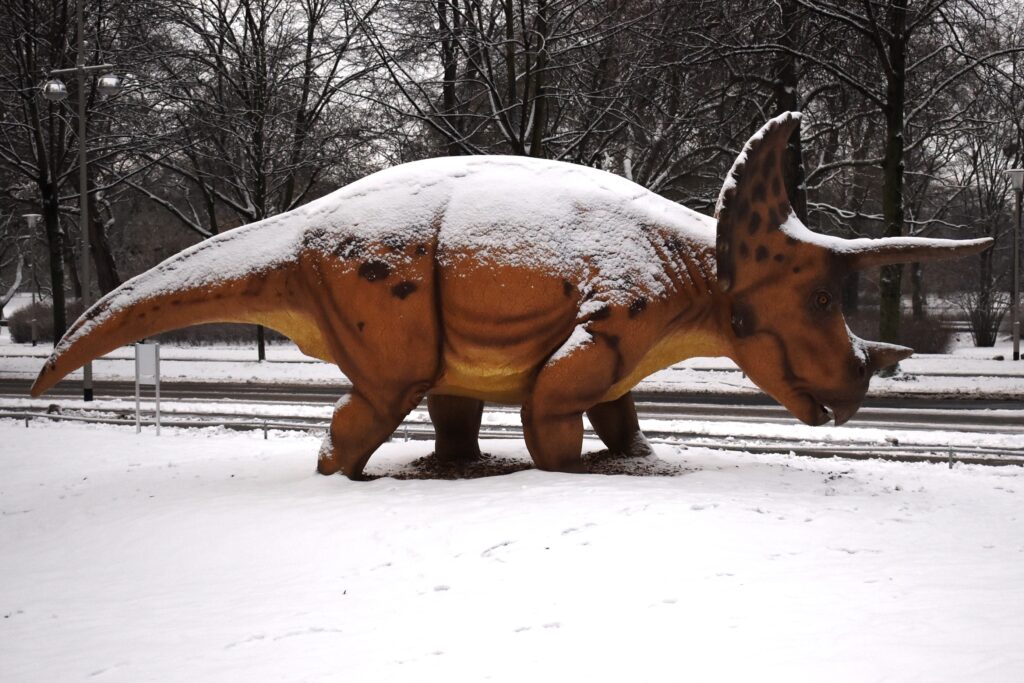
Picture Triceratops the way Hollywood taught you to: a three-horned tank dragging its armored bulk across the Cretaceous floodplain, slower than a golf cart, built for standing its ground rather than covering it. That image is everywhere – museum dioramas, kids’ toys, and one very memorable movie scene of a sick dinosaur lying helpless in the grass. It’s also, according to a growing pile of biomechanical research and fossil trackway evidence, almost completely wrong.
Paleontologists who’ve re-measured the bones, re-traced the footprints, and redone the math have landed on something wild: this supposed lumbering giant may have been able to match, or beat, a Jeep bouncing along a rough off-road trail. Here’s how a dinosaur famous for looking exhausted became one of the biggest speed surprises in paleontology.
#1 – The Jurassic Park Scene That Ruined Triceratops’ Reputation Forever
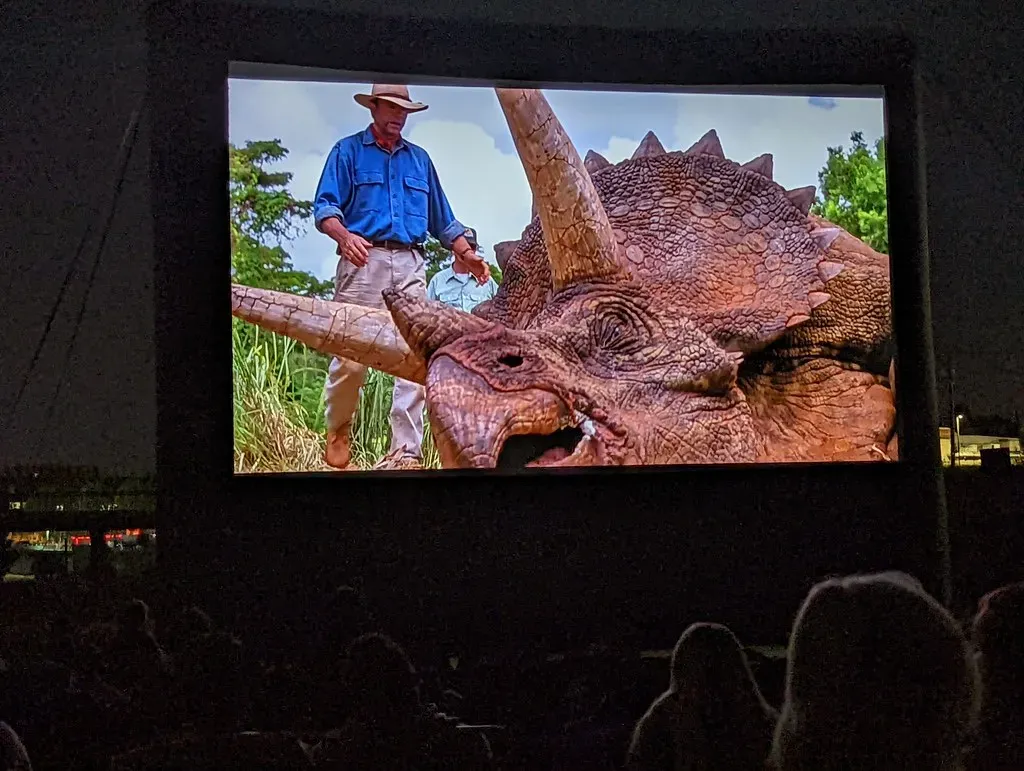
The most iconic on-screen Triceratops moment isn’t a chase. It’s a dinosaur lying sick and helpless in the grass while scientists poke at its droppings.
That single scene from the original Jurassic Park did more to shape public perception than any textbook ever could. Millions of viewers met Triceratops not as a functioning predator-evader, but as a bloated, immobile patient. The species became visually synonymous with “slow” before anyone ever asked what its legs could actually do.
Compare that to the film’s velociraptors and T. rex, both filmed sprinting, snarling, and chasing vehicles. Triceratops got none of that treatment – it sat, it groaned, it looked heavy. Audiences walked away assuming the three-horned giant was built purely for defense, a slow-moving wall of bone that relied on its horns because it simply couldn’t run.
#2 – The Skeleton Was Mounted Wrong for Nearly a Century
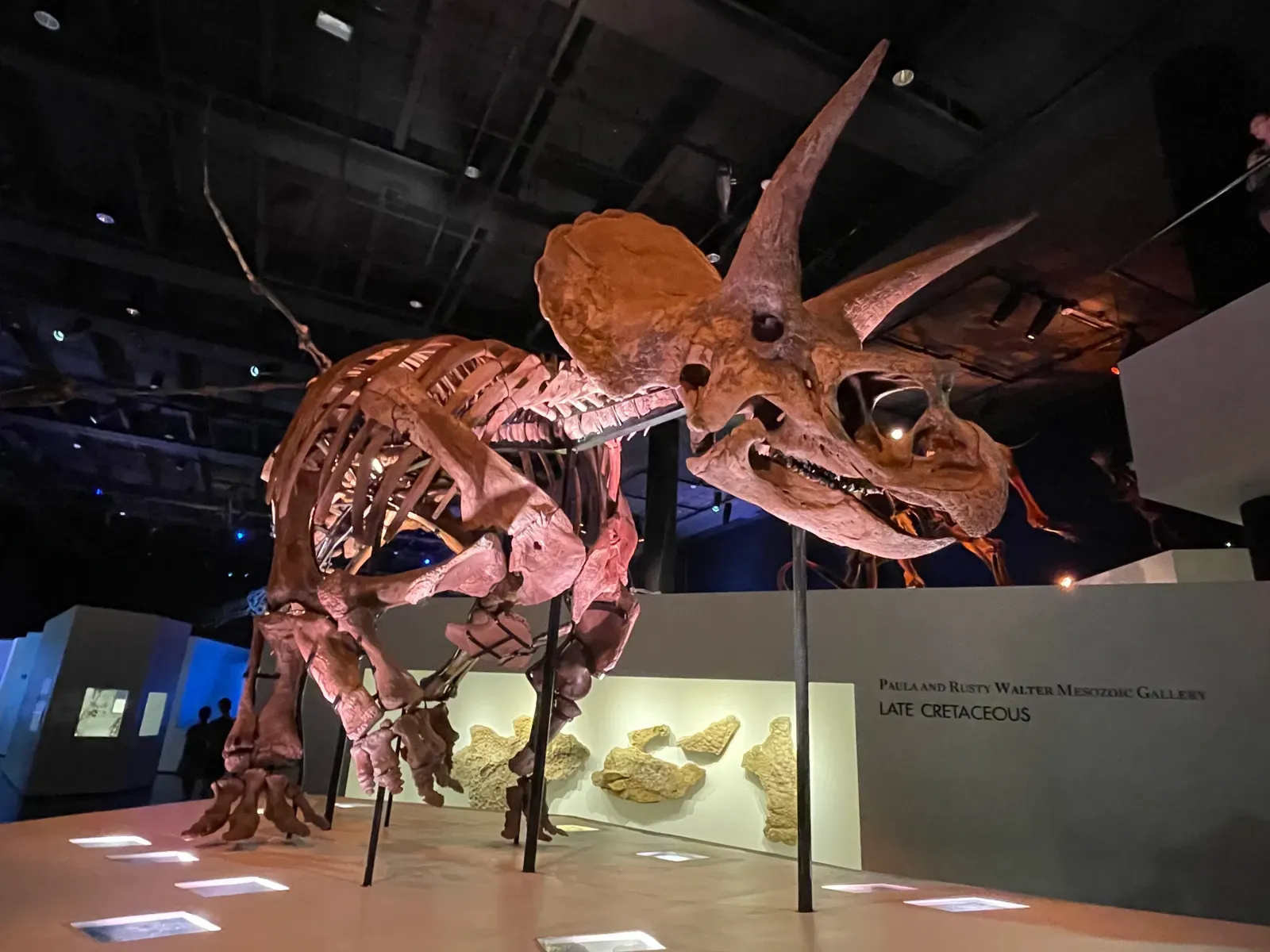
Here’s the part almost nobody talks about: museum skeletons quietly cemented the “slow” myth long before any movie existed.
For decades, museum mounts showed Triceratops with a sprawling, lizard-like stance – front legs splayed outward from the body like a giant iguana. That posture looks clumsy, unstable, and completely incapable of speed, which is exactly the image that stuck in the public imagination for generations.
The problem is that it was wrong. The sprawling look came from errors made when mounting the ribs and vertebrae of ceratopsids decades ago. Once researchers went back to the actual bones and footprints, an entirely different animal emerged – one standing tall, stable, and far more athletic than any sprawling reptile could ever be.
#3 – The Footprints That Changed the Posture Debate
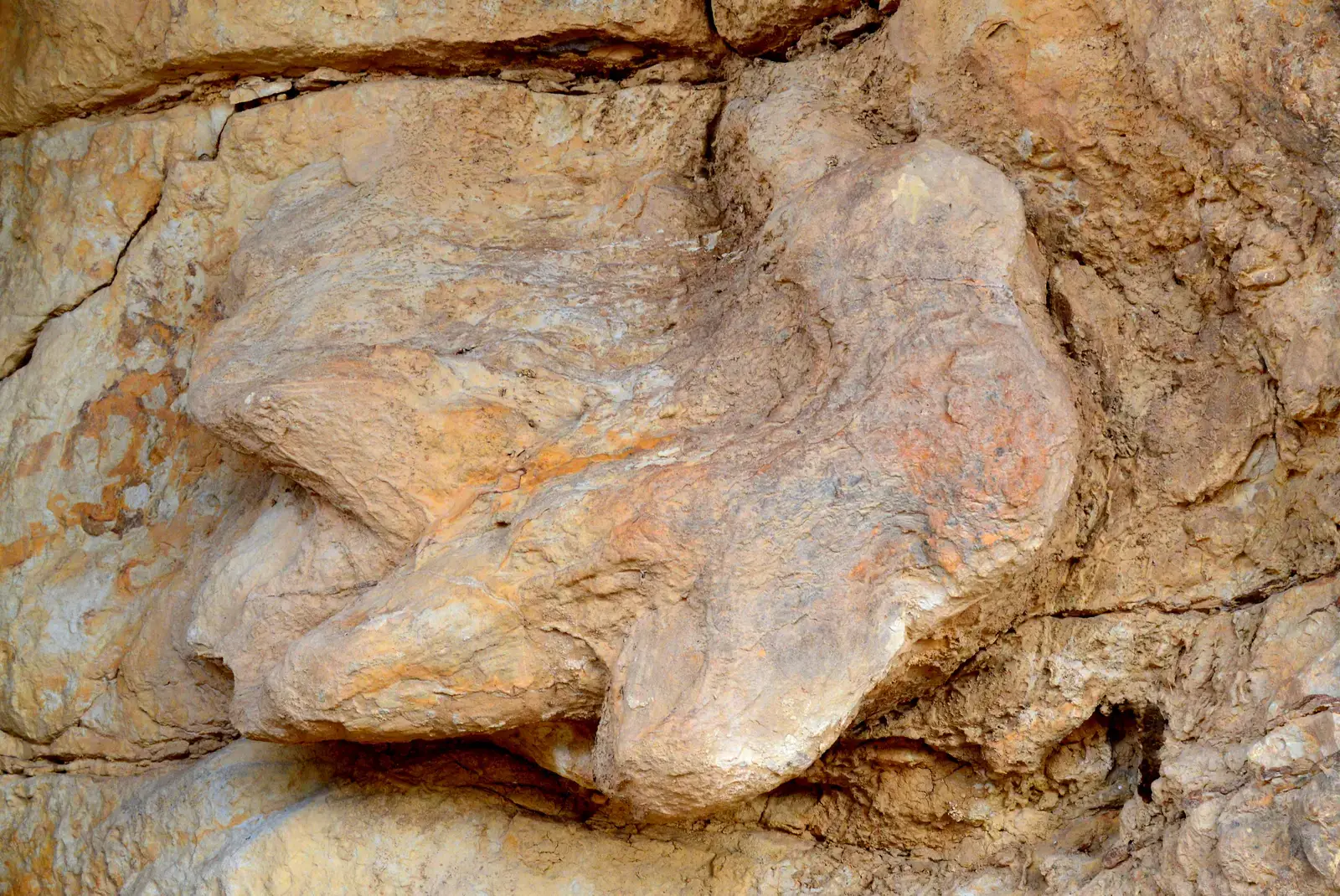
Fossil trackways don’t lie, and Triceratops trackways told researchers something the skeletal mounts never could.
Scientists measure the distance between footfalls and the size of the feet, then apply equations that relate stride length to speed and body size, often using something called the Froude number. When paleontologists Gregory Paul and Per Christiansen analyzed ceratopsian trackways in detail back in 2000, they studied the pedal impressions and the angles of the hands and feet – and concluded these animals had an elephant-like forelimb posture, not a reptilian one.
That single discovery flipped the script on everything scientists thought they knew. An elephant-like stance isn’t a slow stance – elephants themselves can move surprisingly fast for their size. Trackway evidence gave Triceratops a real foundation for speed, not just stability.
Worth Knowing
- Trackway analysis measures footfall spacing and print size, then applies the Froude number to estimate speed from stride length and body size.
- Paul and Christiansen’s 2000 ceratopsian trackway study pointed to forelimb postures closer to an elephant’s than a lizard’s.
- Trackways typically capture routine movement, not maximum sprint speed, so they’re paired with skeletal and muscle modeling for a fuller picture.
- Comparing limb proportions to living animals like elephants – a method known as extant phylogenetic bracketing – helps fill in gaps fossils alone can’t answer.
#4 – Why “Elephant Legs” Beat “Lizard Legs” Every Time
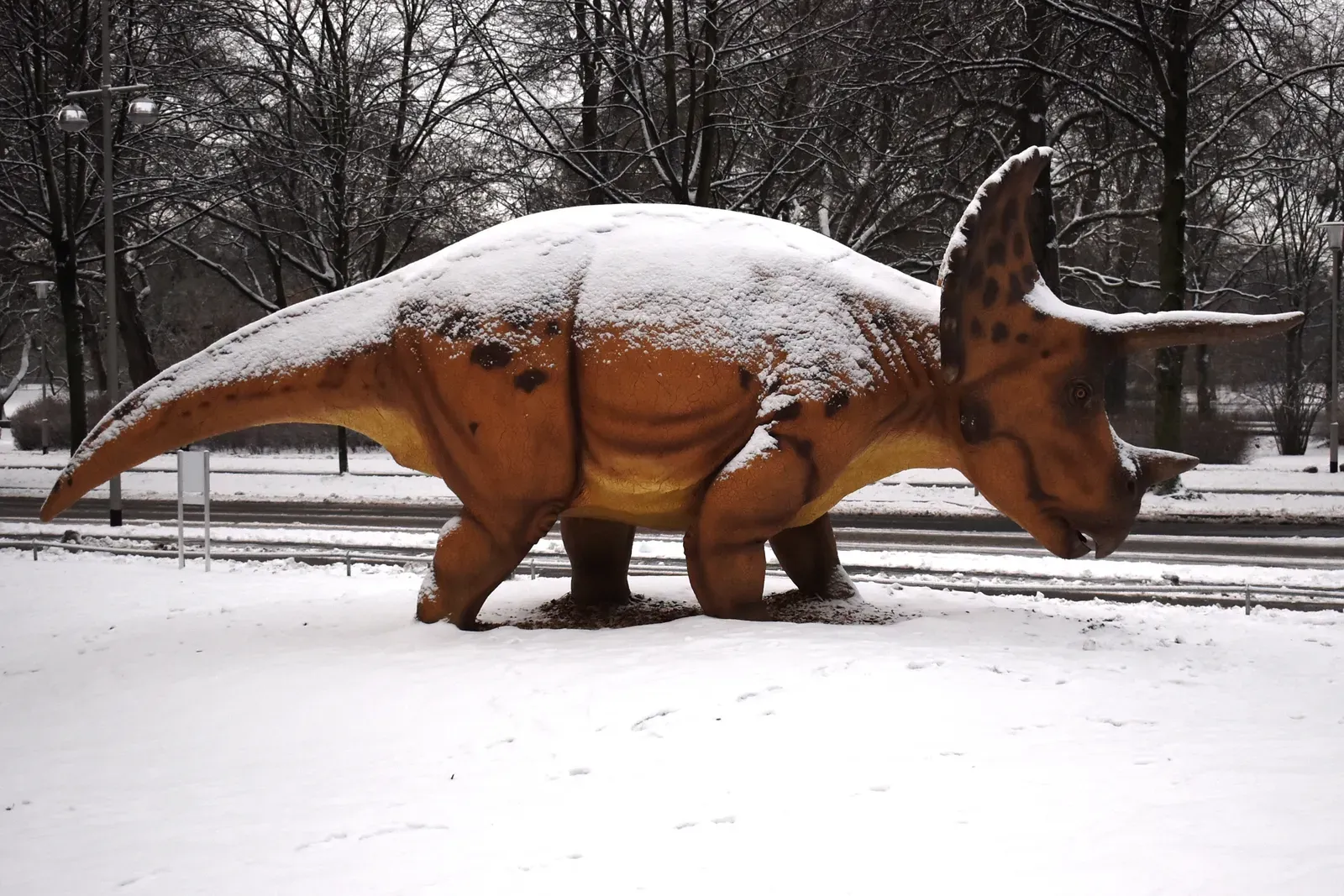
This is the detail that separates a fast quadruped from a slow one, and it comes down to simple physics.
More recent studies, backed by trackway evidence and skeletal analysis, point to a more upright, semi-erect posture for the forelimbs – legs tucked more directly under the body for stability and power. A sprawling stance wastes energy pushing sideways instead of forward. An upright, mammal-like stance channels every bit of muscle power directly into forward motion, the same mechanical advantage that lets a rhino outrun a house cat over short distances despite weighing a hundred times more.
Some researchers go even further than “power.” A mammal-like posture would have let ceratopsids run considerably faster than a reptile-like posture ever could. That single postural correction didn’t just tweak a museum diorama – it rewrote the entire speed profile of one of the most recognizable dinosaurs on Earth.
#5 – The Actual Numbers Paleontologists Are Now Using
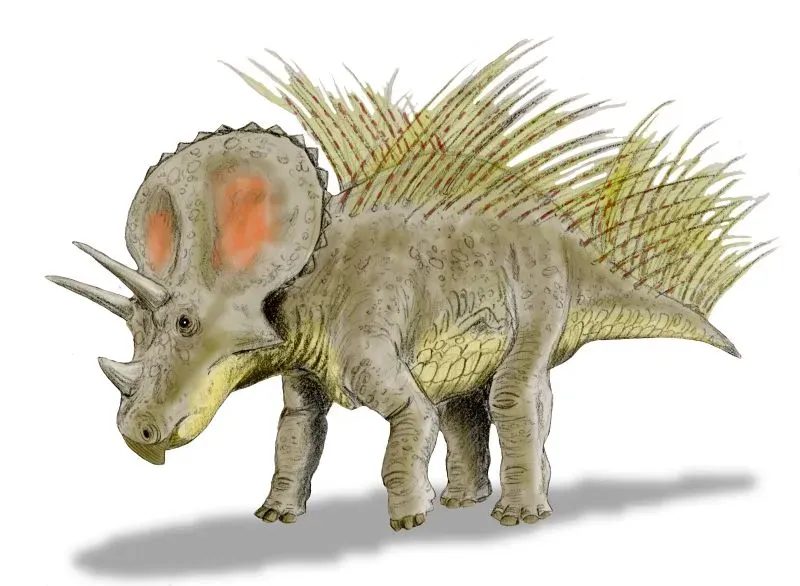
Once researchers fixed the posture problem, the speed estimates jumped in a way that surprised even seasoned dinosaur scientists.
Current estimates put Triceratops’ top speed at roughly 15 to 20 miles per hour, often described as a fast trot rather than a true gallop. That’s already faster than most people can sprint. Some estimates push even higher, with a few paleontologists calculating top speeds around 35 km/h for a stocky, fully quadrupedal herbivore that seems to buck every rule about big, heavy animals being slow.
That converts to roughly 21.7 mph – faster than the average human sprinter, and squarely in “keep pace with slow traffic” territory. For an animal built like a rhino and weighing as much as two pickup trucks, that’s a genuinely shocking number.
Quick Compare
- Triceratops: roughly 15-20 mph fast trot, with some estimates reaching about 21.7 mph (35 km/h)
- Average human sprinter: roughly 15-18 mph at full effort
- T. rex cruising speed: roughly 12-18 mph in most current biomechanical models
- City traffic in a construction zone or side street: often 15-25 mph
#6 – How Big Was This “Slow” Animal, Really?
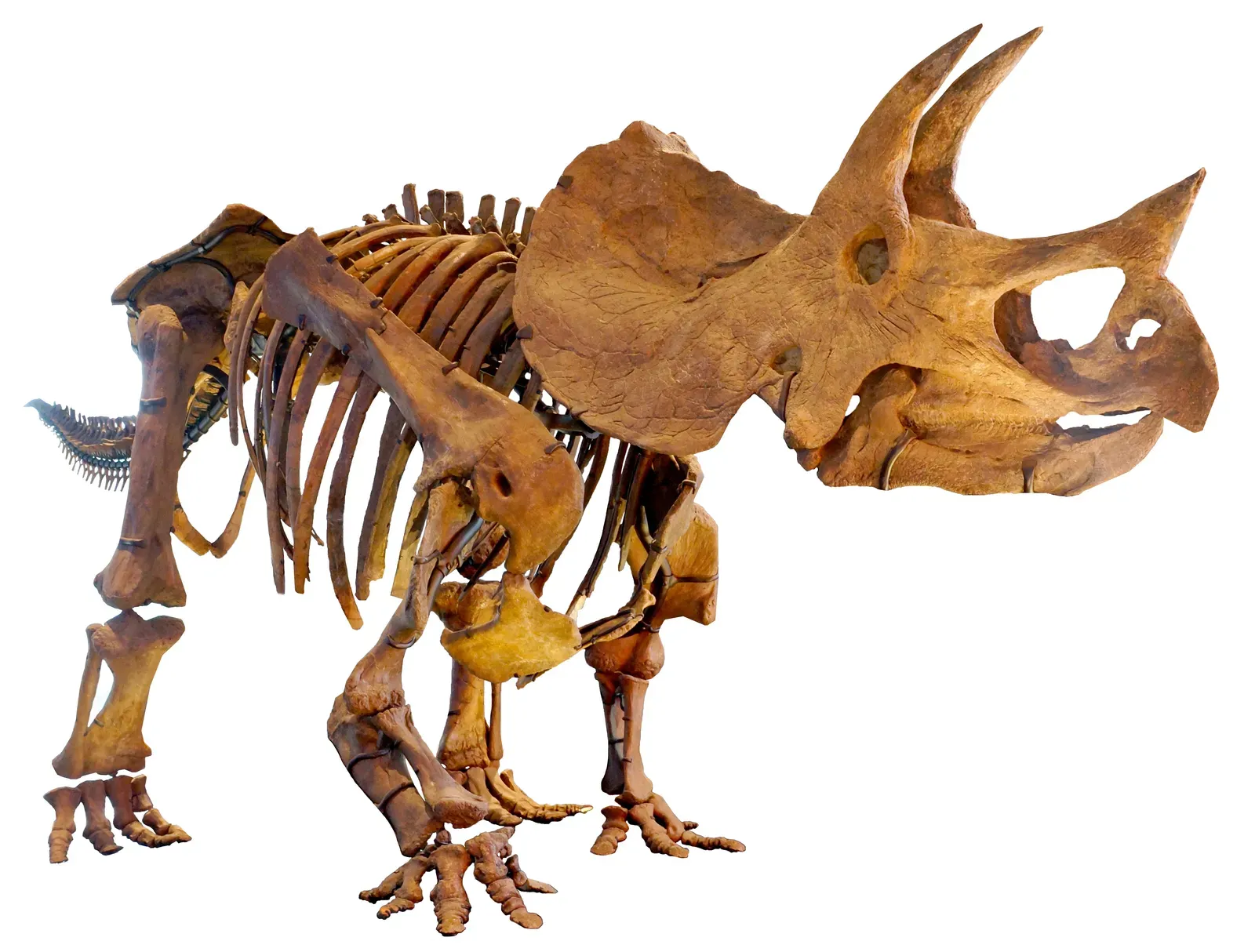
Context matters here, because the sheer size of this creature makes the speed numbers even more absurd.
Triceratops was built like a rhino but more than five times the size: roughly 9 meters long, 3 meters tall, and around 10,000 kilograms. Picture a school bus with legs, horns, and a bony shield the size of a dinner table, then imagine that whole structure moving at a fast trot without collapsing under its own weight. That’s the biomechanical puzzle researchers had to solve.
For comparison, other giant herbivores of the Mesozoic couldn’t manage anything close to this. Massive sauropods like Brachiosaurus are estimated to have plodded along under 11 mph, limited by sheer mass the same way elephants are today. Triceratops broke that pattern almost entirely, defying the usual rule that bigger dinosaurs meant slower dinosaurs.
At a Glance
- Length: roughly 9 meters (about 30 feet), nose to tail
- Height: around 3 meters (about 10 feet) at the shoulder
- Weight: roughly 10,000 kilograms, comparable to two pickup trucks
- Skull: among the largest of any land animal, making up close to a third of its total body length
#7 – So Could It Actually Outrun a Jeep?
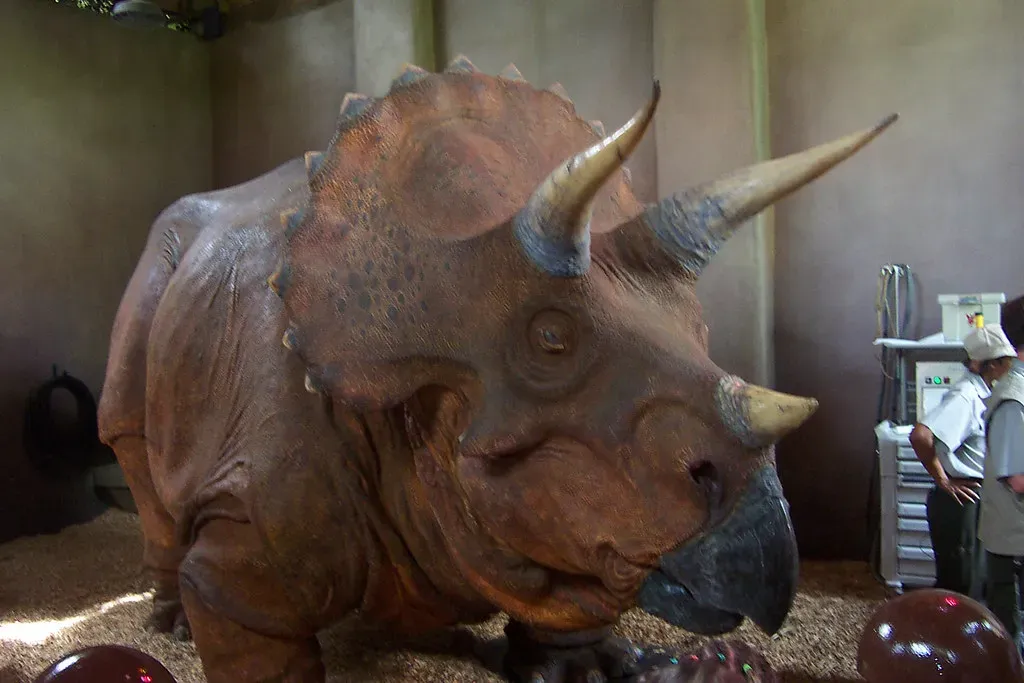
This is the question everyone actually wants answered, and the honest scientific answer is: under the right conditions, yes.
A Jeep crawling over uneven Cretaceous-style terrain – mud, roots, fallen logs, loose rock – rarely holds a steady 25 to 30 mph. Off-road vehicles in low-visibility, obstacle-heavy terrain often creep along at 10 to 20 mph just to avoid damage or a rollover. A Triceratops moving at even the conservative 15 to 20 mph estimate could realistically match or exceed that pace over short bursts.
At the higher estimate of roughly 21.7 mph, this “slow tank” wouldn’t just keep up – it would pull ahead. That’s a controversial claim among casual dinosaur fans who still picture Triceratops as an immobile boulder, but the biomechanics increasingly back it up. A charging 6-ton animal at that speed wouldn’t need to be graceful to be terrifying – it just needs to be faster than you expect.
Fast Facts
- Rough, obstacle-heavy off-road terrain often limits vehicles to about 10-20 mph regardless of horsepower.
- A Triceratops at its conservative 15-20 mph estimate sits right inside that same range.
- At the higher 21.7 mph estimate, the dinosaur edges ahead of a cautiously driven off-road Jeep.
- Speed here depends heavily on terrain – a paved straightaway favors the Jeep every time.
#8 – Why Even T. rex Had to Respect This Speed
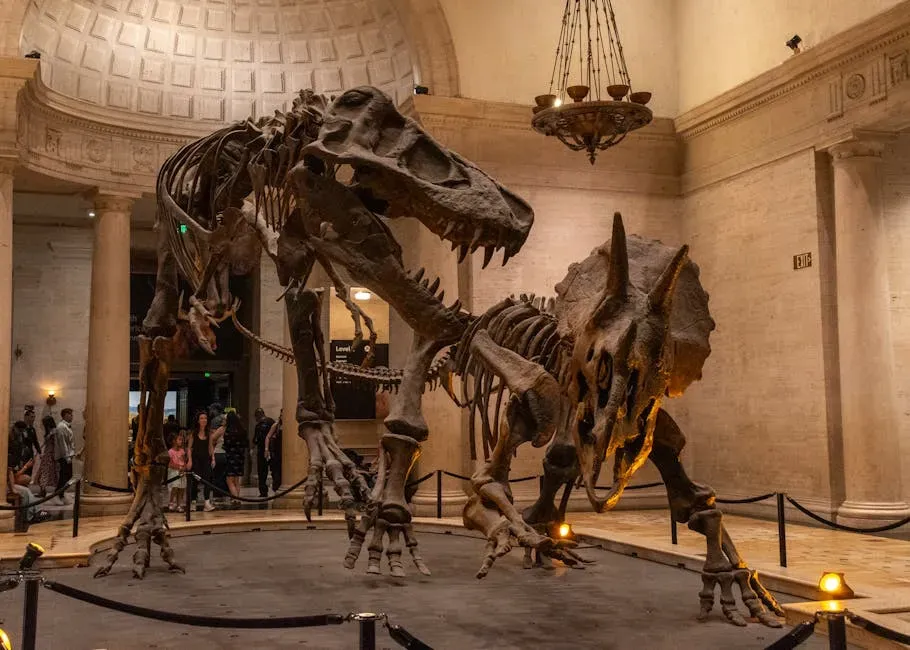
If Triceratops was genuinely this quick, it changes the entire predator-prey dynamic that pop culture has been selling for thirty years.
T. rex undoubtedly preyed on Triceratops, and both species lived side by side right up until the asteroid impact that ended the Cretaceous. But a healthy adult Triceratops was by no means an easy meal. Some studies put T. rex’s realistic cruising speed closer to 12 to 18 mph – meaning a predator chasing a Triceratops wasn’t guaranteed to win the footrace at all.
This is where the myth completely falls apart. The “slow” label never made ecological sense in the first place. Evolution doesn’t typically hand a prey animal three horns, a bony shield, and a six-ton frame while leaving it defenseless against a determined chase. Speed wasn’t Triceratops’ backup plan – it was baked into the design from the start.
The Bottom Line
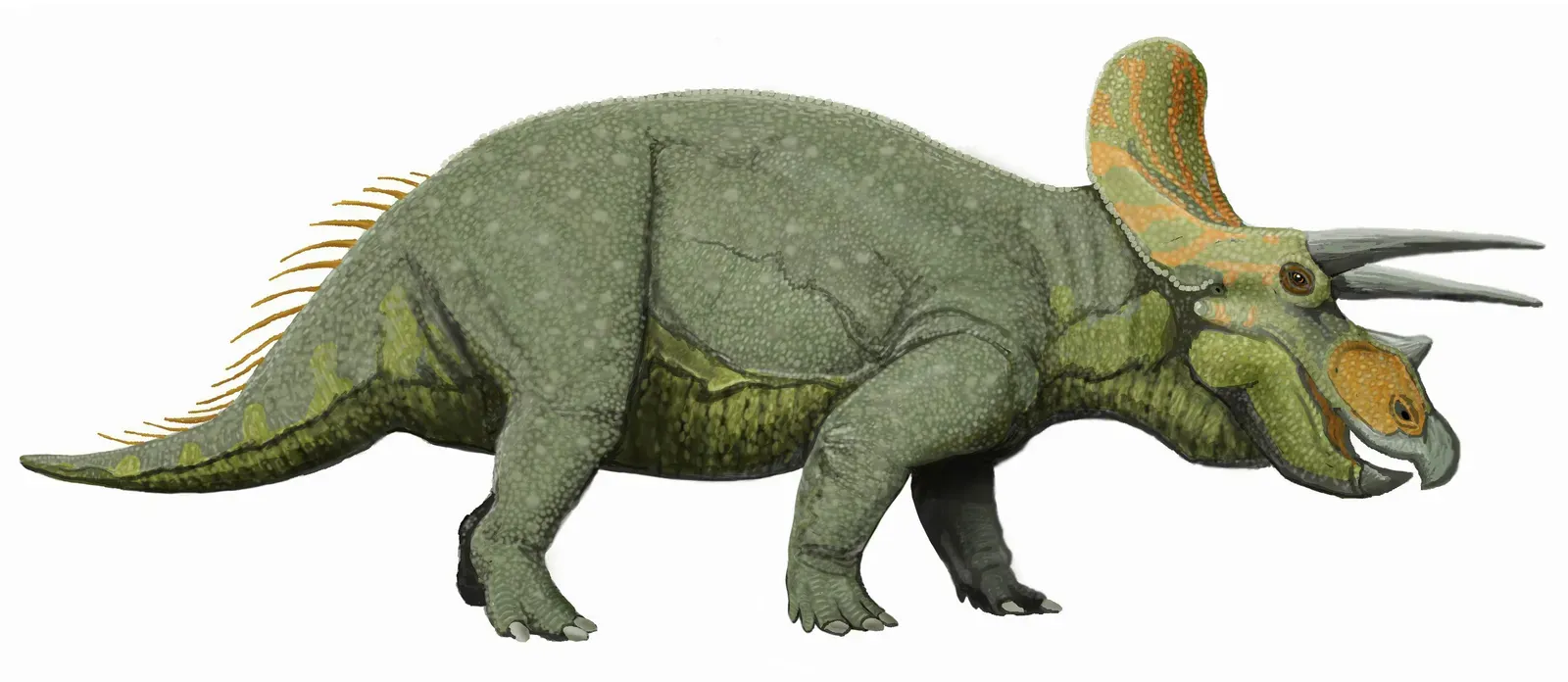
The science is clear on this one: Triceratops was never the plodding tank Hollywood sold us. Between corrected posture, elephant-like limb mechanics, and hard trackway data, researchers now place its realistic top speed between 15 and roughly 22 mph – fast enough to match or beat a Jeep crawling over rough Cretaceous terrain.
Honestly, this is the myth-busting twist that should get more attention than it does. We spent decades assuming dinosaurs were faster and scarier than reality allowed, then somehow slept on the one “slow” species that was secretly among the quickest heavyweights of its era. If Triceratops taught us anything, it’s that armor and speed were never mutually exclusive – Hollywood just never bothered to check the math. Is there another “slow” movie dinosaur you think deserves the same reality check? Drop your pick in the comments.