Sixty-six million years ago, something ended a reign that had lasted over 160 million years. The non-avian dinosaurs, in all their extraordinary variety, vanished from every continent on Earth. What seems like a settled story turns out, on closer inspection, to be one of the most actively debated questions in all of science.
The more researchers dig into the rocks and fossils of the Late Cretaceous, the more complicated and surprising the picture becomes. New findings published as recently as 2025 are reshaping key assumptions about whether dinosaurs were already fading, what role volcanoes really played, and why certain creatures survived when others did not.
The Asteroid That Changed Everything
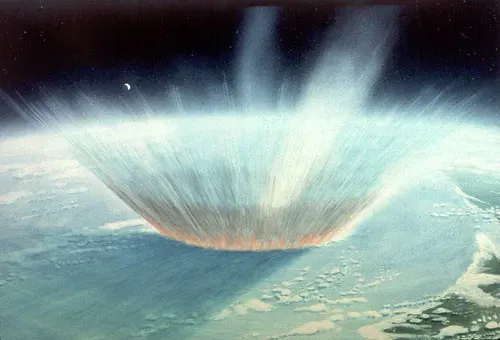
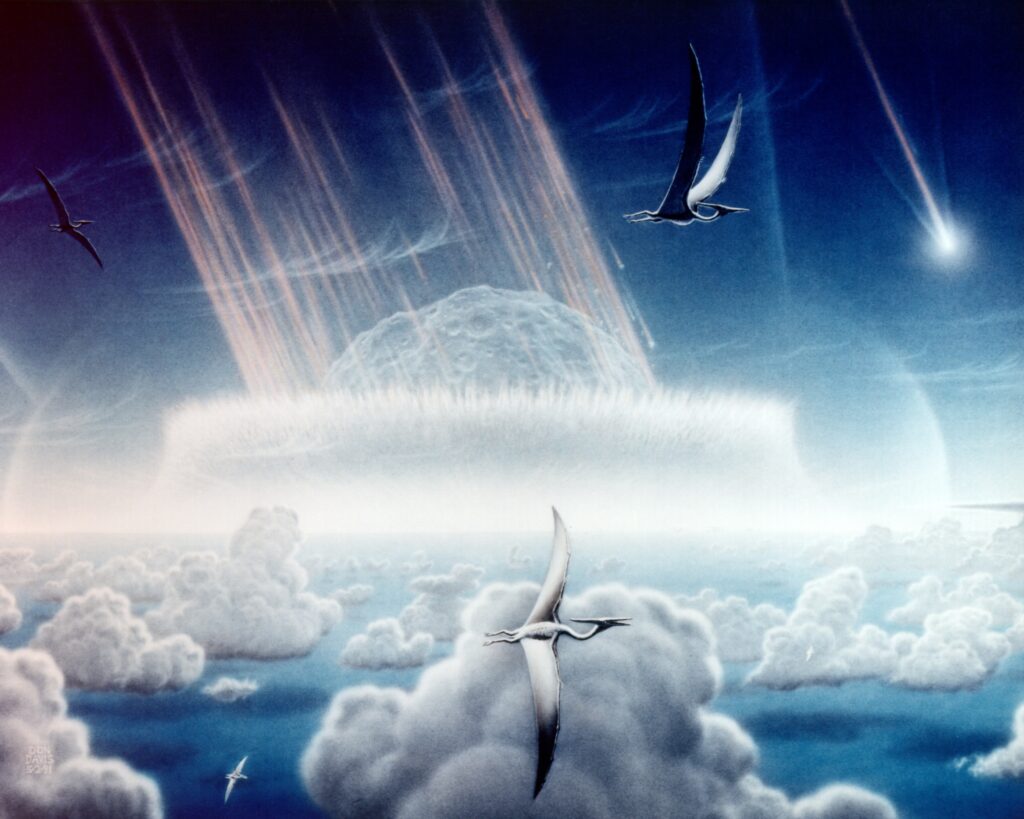
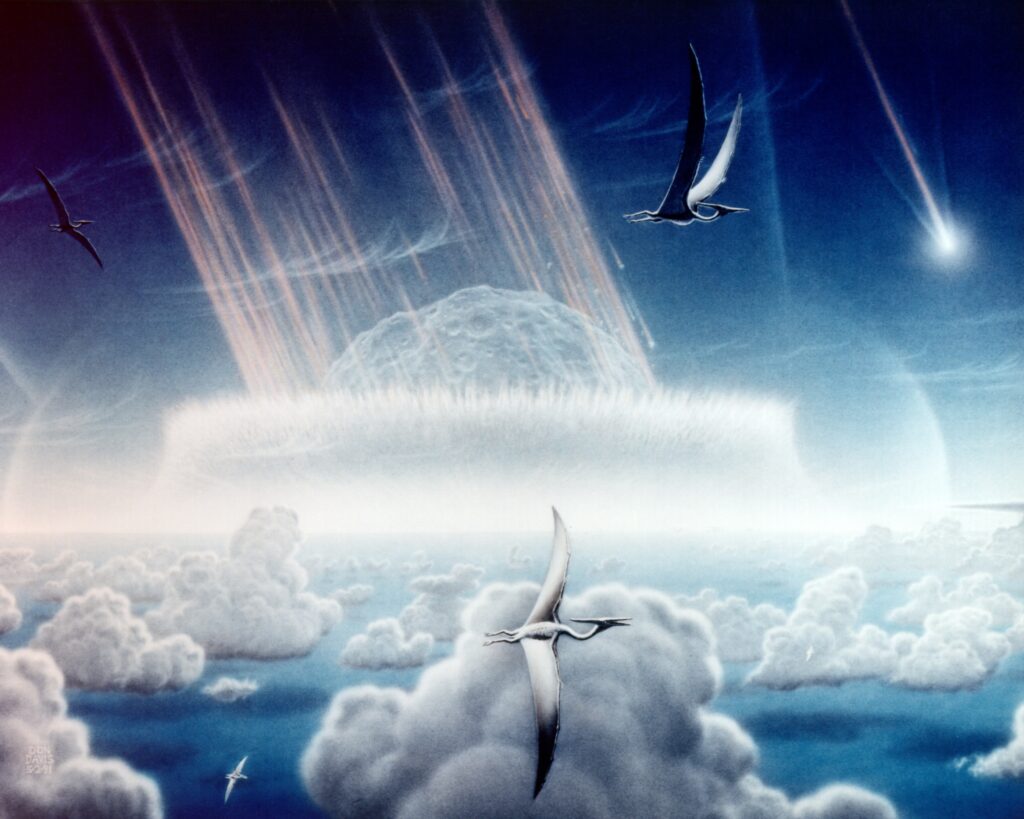
The impact that triggered this extinction is no longer in serious dispute. Scientists discovered the Chicxulub Crater in the Yucatán Peninsula, now considered the likely impact site. The collision would have released the same energy as 100,000,000 megatonnes of TNT, over a billion times the energy of the atomic bombs dropped on Hiroshima and Nagasaki. It’s difficult to overstate the scale of that energy release.
With the effects of volcanism practically ruled out, the Chicxulub meteorite impact stands as the primary cause of the dinosaur mass extinction. The impact unleashed a chain of disasters, including wildfires, earthquakes, tsunamis, and an impact winter that blocked sunlight and devastated ecosystems. The question that keeps scientists busy is not whether the asteroid caused the extinction, but precisely how it did so, and whether anything else helped along the way.
Were Dinosaurs Already in Decline? The Fossil Record Speaks
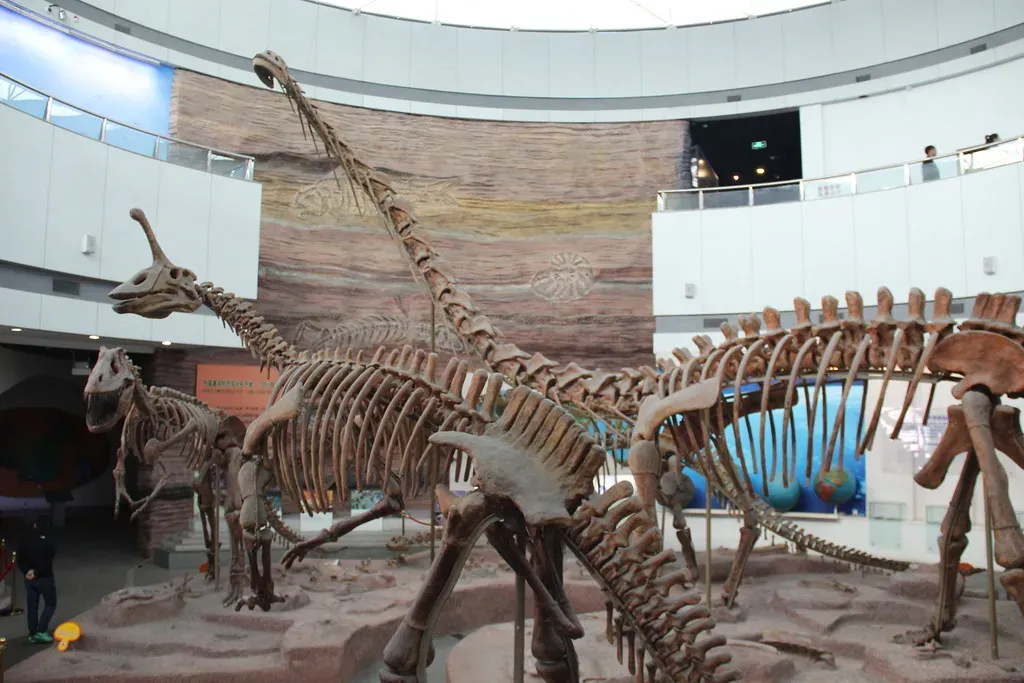
The idea that dinosaurs were already in decline before an asteroid wiped most of them out 66 million years ago may be explained by a worsening fossil record from that time rather than a genuine dwindling of dinosaur species, suggests a new study. That study, published in the journal Current Biology in April 2025, challenges one of the most deeply held narratives in paleontology.
The team studied more than 8,000 dinosaur fossils from North America, focusing on the last 18 million years before the asteroid hit, a window from 84 to 66 million years ago. Before the dinosaur extinction, North America experienced significant changes: sea levels fell, a large inland sea vanished, and mountain ranges rose. As a result of these geologic shifts, much of the sediment that could have preserved fossils from that time is no longer exposed. It is also buried under vegetation, cities, and other obstacles, making it harder for paleontologists to locate fossils from the period just before the asteroid.
The Deccan Traps: Volcanic Villain or Red Herring?
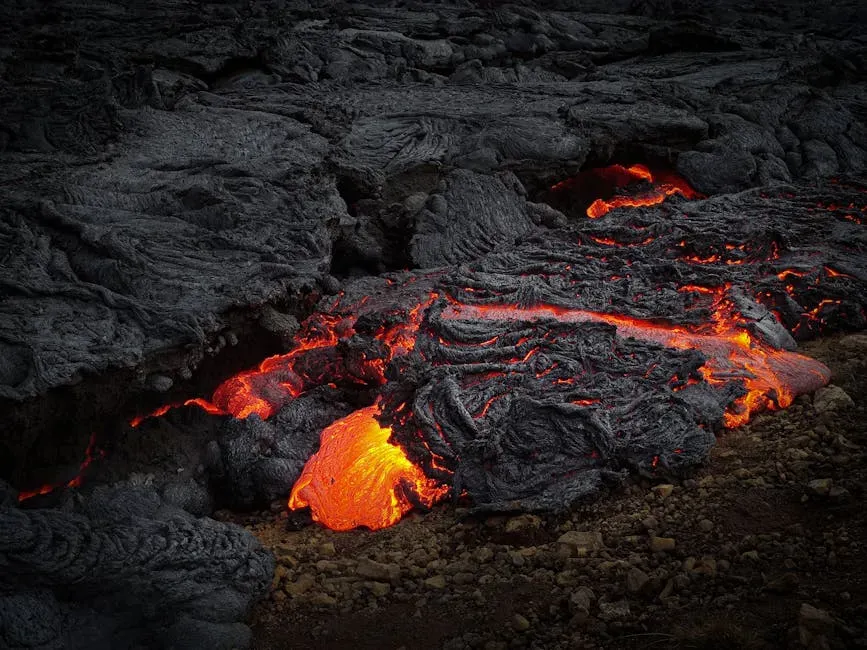
Massive volcanic eruptions on the Indian peninsula have long been proposed as an alternative cause for the demise of the dinosaurs. This phase of active volcanism took place in a period just before the Earth was struck by a meteorite, 66 million years ago. The effect of these volcanic eruptions on the Earth’s climate has been the topic of fierce scientific debates for decades. The Deccan Traps, as this volcanic zone is called, produced eruptions on a staggering scale over a prolonged period.
Climate scientists from Utrecht University and the University of Manchester showed that, while the volcanism caused a temporary cold period, the effects had already worn off thousands of years before the meteorite impacted. The scientists therefore concluded that the meteorite impact was the ultimate cause of the dinosaur extinction event. The concomitant prolonged eruption of the Deccan Traps might actually have acted as an ameliorating agent, buffering the negative effects on climate and global ecosystems that the asteroid impact produced at the Cretaceous–Paleogene boundary. So the volcanoes may have paradoxically softened the blow rather than helped cause the extinction.
Impact Winter and the Collapse of Habitats

Research confirmed that the asteroid caused an impact winter for decades, and that these environmental effects decimated suitable environments for dinosaurs. Previous research suggested that dust from the impact may have dimmed the amount of sunlight reaching the Earth by as much as roughly a fifth, inducing a frigid winter that swiftly killed off plants and destroyed habitats. When the food web collapses at the base, everything above it follows.
Perhaps because the impact and its aftermath obliterated forests worldwide, this led to the mass extinction of prehistoric tree-dwelling birds. Researchers had already long inferred the asteroid impact caused global wildfires, but more recent teams have bolstered the argument for total forest obliteration. In a thin rock layer formed during the first thousand or so years after the impact, between roughly seven and nine out of every ten spores found come from just two species of fern, representing evidence of a disaster flora where pioneer species rapidly recolonized open ground. That shift in plant life speaks volumes about how total the ecological collapse really was.
Ocean Acidification: The Hidden Killer Beneath the Waves
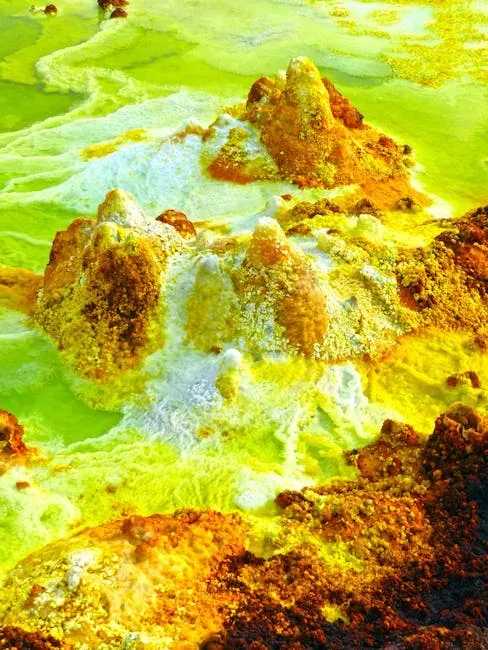
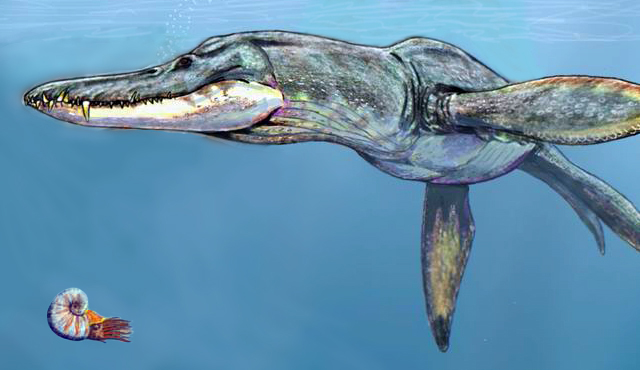
Research published in the journal Proceedings of the National Academy of Sciences revealed the first direct evidence that the Cretaceous-Paleogene extinction event, which occurred 66 million years ago, coincided with a sharp drop in the pH levels of the oceans, indicating a rise in ocean acidity. The impact and its after-effects killed almost three-quarters of the animal species on the planet, including whole groups such as the non-avian dinosaurs and ammonites.
The impact instantly vaporized sulphur-rich rock, creating a vast cloud of sulphur trioxide gas. This mixed with water vapor to create sulphuric acid rain, which would have fallen to the planet’s surface within days, acidifying the surface levels of the ocean and killing life therein. Ammonites, which were free-swimming molluscs of the ancient oceans and are common fossils, went extinct at the time of the end-Cretaceous asteroid impact, as did more than nine out of ten species of calcium carbonate-shelled plankton. The sea did not escape the catastrophe any more than the land did.
Why Birds Survived When Their Relatives Did Not
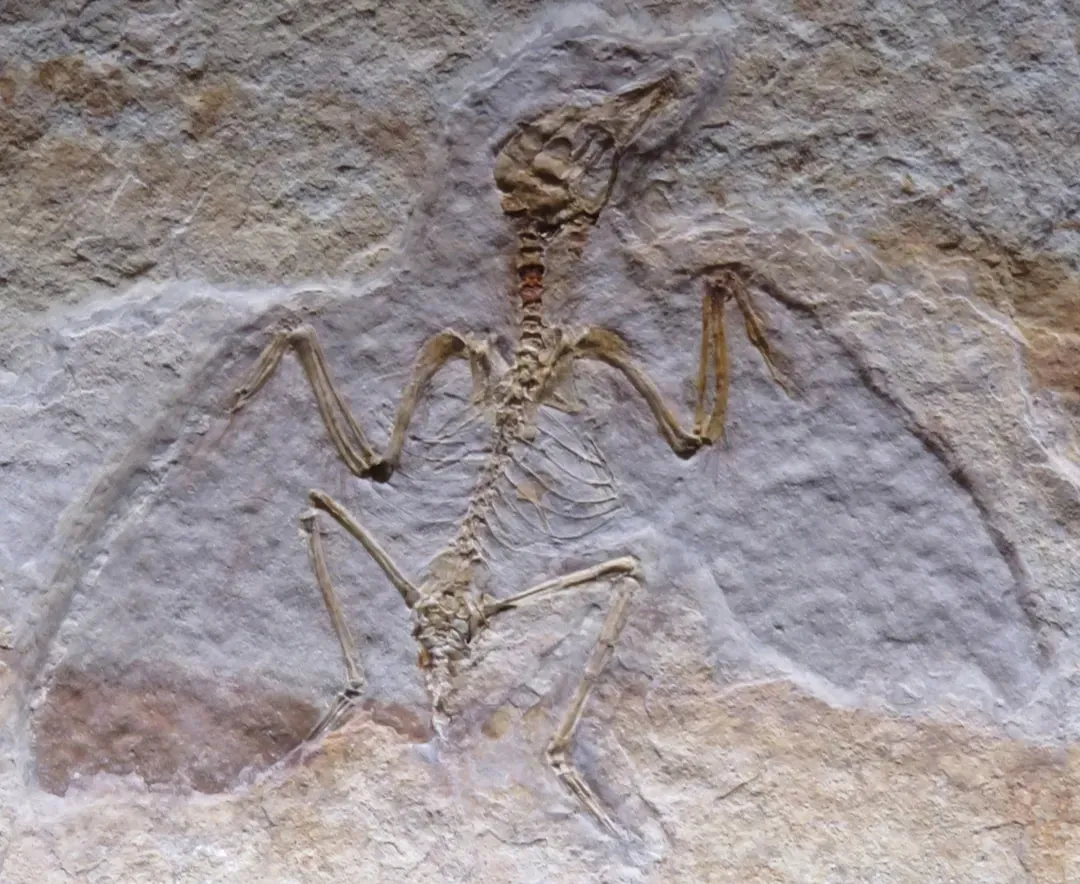
The end of the Cretaceous boasted an entire array of birds and bird-like reptiles. Of these groups, it was only the beaked birds that survived. The happenstances of evolution had given birds a lucky break, with the key events set in motion long before the asteroid struck. The spore and pollen data suggested why so many of the tree-dwelling bird species died: forests thrived before the impact but not afterward, most likely because the asteroid set off a firestorm.
The survival of endothermic animals, such as some birds and mammals, could be due, among other reasons, to their smaller needs for food, related to their small size at the extinction epoch. Many bird lineages became smaller in size while maintaining their brain size. Through evolutionary shrinking, birds wound up with larger brains compared to their body size, setting the stage for avian intelligence beyond what the non-avian dinosaurs could have evolved. It was an unlikely path to survival, but it worked.
How Mammals Inherited an Empty World
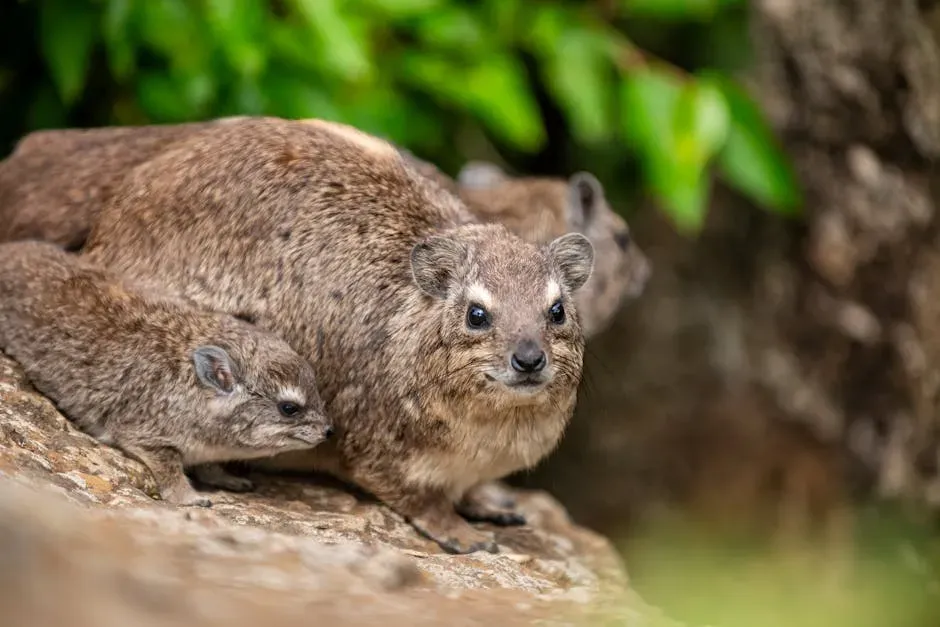
In the wake of the extinction, many groups underwent remarkable adaptive radiation, a sudden and prolific divergence into new forms and species within the disrupted and emptied ecological niches. Mammals in particular diversified in the following Paleogene Period, evolving new forms such as horses, whales, bats, and primates. The emptying of the world was, in a strange sense, an open invitation.
Species at the boundary were generally small, comparable in size to rats, and this small size would have helped them find shelter in protected environments. It is postulated that some early monotremes, marsupials, and placentals were semiaquatic or burrowing, and any burrowing or semiaquatic mammal would have had additional protection from the environmental stresses at that time. It was only around 15 million years after the non-bird dinosaurs disappeared, during the Oligocene Epoch, that really big mammals began to appear. The age of giants returned, just with very different animals wearing the crown.
Conclusion: A Mystery That Keeps Evolving
What makes the story of dinosaur extinction compelling in 2026 is not that science has run out of answers, but that it keeps finding better questions. Dinosaurs were probably not inevitably doomed to extinction at the end of the Mesozoic. If it weren’t for that asteroid, they might still share this planet with mammals, lizards, and their surviving descendants: birds. Thus, the research adds new weight to the idea that the asteroid impact was a cataclysmic fluke – not the final blow to an already dying group, but the abrupt end to a thriving and diverse reign.
The science has never stopped moving. New discoveries from other parts of the world reveal how other regions preserve highly diverse dinosaurian faunas until the end of the Cretaceous, adding to the evidence that dinosaurs were still thriving worldwide when the asteroid struck. Although many scenarios have been proposed, the end-Cretaceous mass extinction seems to be unique in being attributable to a single, devastating agent: the Chicxulub impact.
There is something quietly humbling about this. The most dominant group of large animals in Earth’s history was not worn down by slow decline or gradual misfortune. It was erased in geological terms almost instantly, by a rock from space on an otherwise ordinary day. The world we live in, with its mammals and its birds and its enormous diversity of life, exists precisely because that event happened. Every species alive today is, in its own way, a survivor of that catastrophe.