Long before you ever heard the word “dinosaur,” long before the first footprint pressed into mud on dry land, the ocean was already a war zone. Darkness, pressure, and the cold deep had been sculpting killers for hundreds of millions of years. The sea didn’t wait for evolution to get polite about things. It got brutal fast, and stayed that way.
If you think today’s ocean is scary, with its great whites, orcas, and giant squid, honestly, you haven’t seen anything yet. The creatures that once ruled these waters were so extreme, so perfectly engineered for destruction, that they make our modern apex predators look almost gentle. Get ready to meet the real monsters of Earth’s ancient seas. Let’s dive in.
When Life First Learned to Kill: The Cambrian Explosion
Here’s the thing about the beginning of complex life: it didn’t start peacefully. The Cambrian period occurred approximately 542 to 488 million years ago and included the biggest evolutionary explosion in Earth’s history. In what feels like the blink of an eye on a geological timescale, life went from simple and soft to wildly diverse and remarkably dangerous.
Some researchers think this happened due to a combination of a warming climate, more oxygen in the ocean, and the creation of extensive shallow-water marine habitats – an environment ideal for the proliferation of new types of animals, including those that were larger and more complex in their body shapes and ecologies than their ancestors. Think of it like a starter pistol being fired. Every creature in the ocean suddenly had a reason to evolve fast or die. The world’s first predators took to scanning the seabed from above or hiding in the sediments of the seafloor as disguised ambushers.
Anomalocaris: The Original Ocean Tyrant
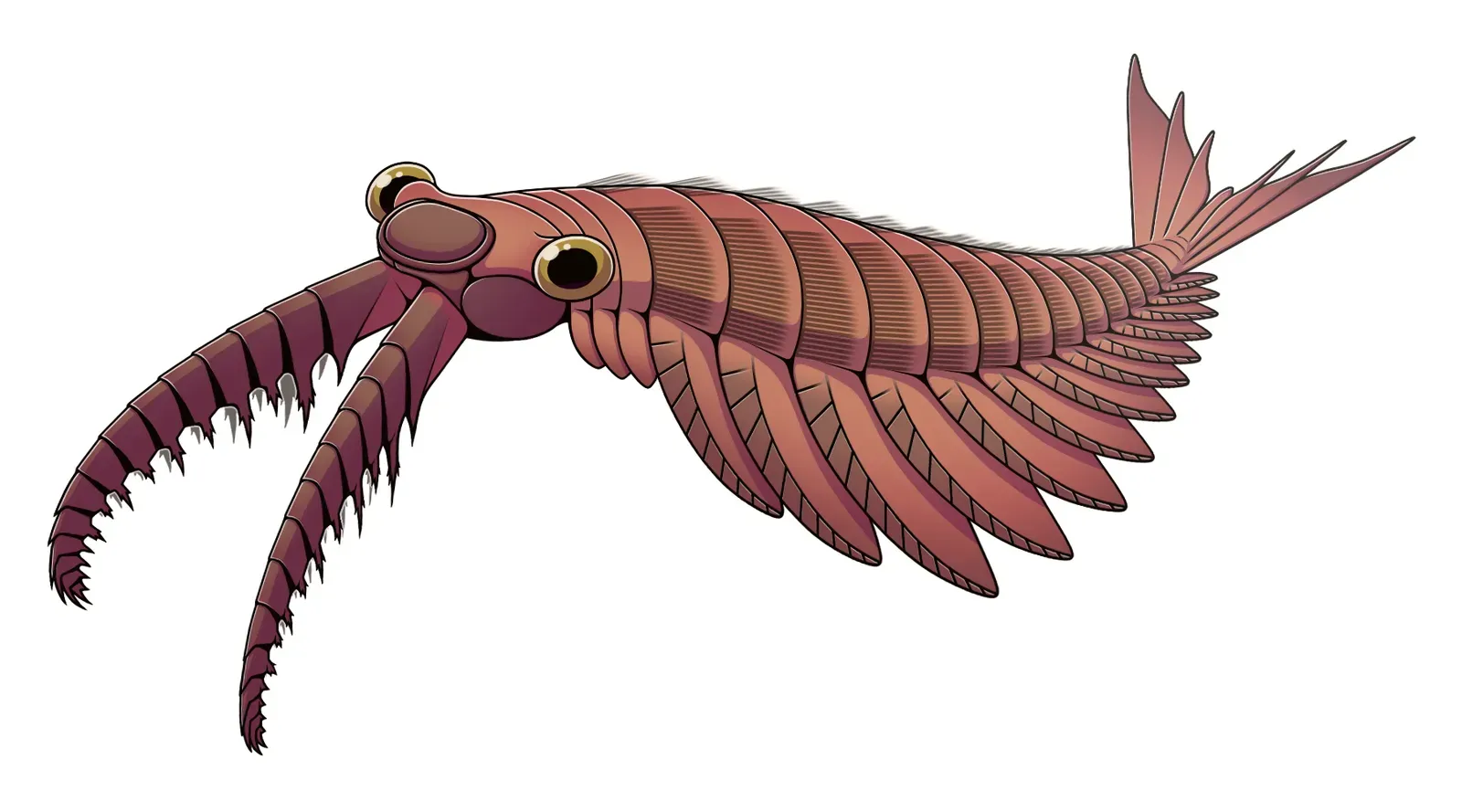
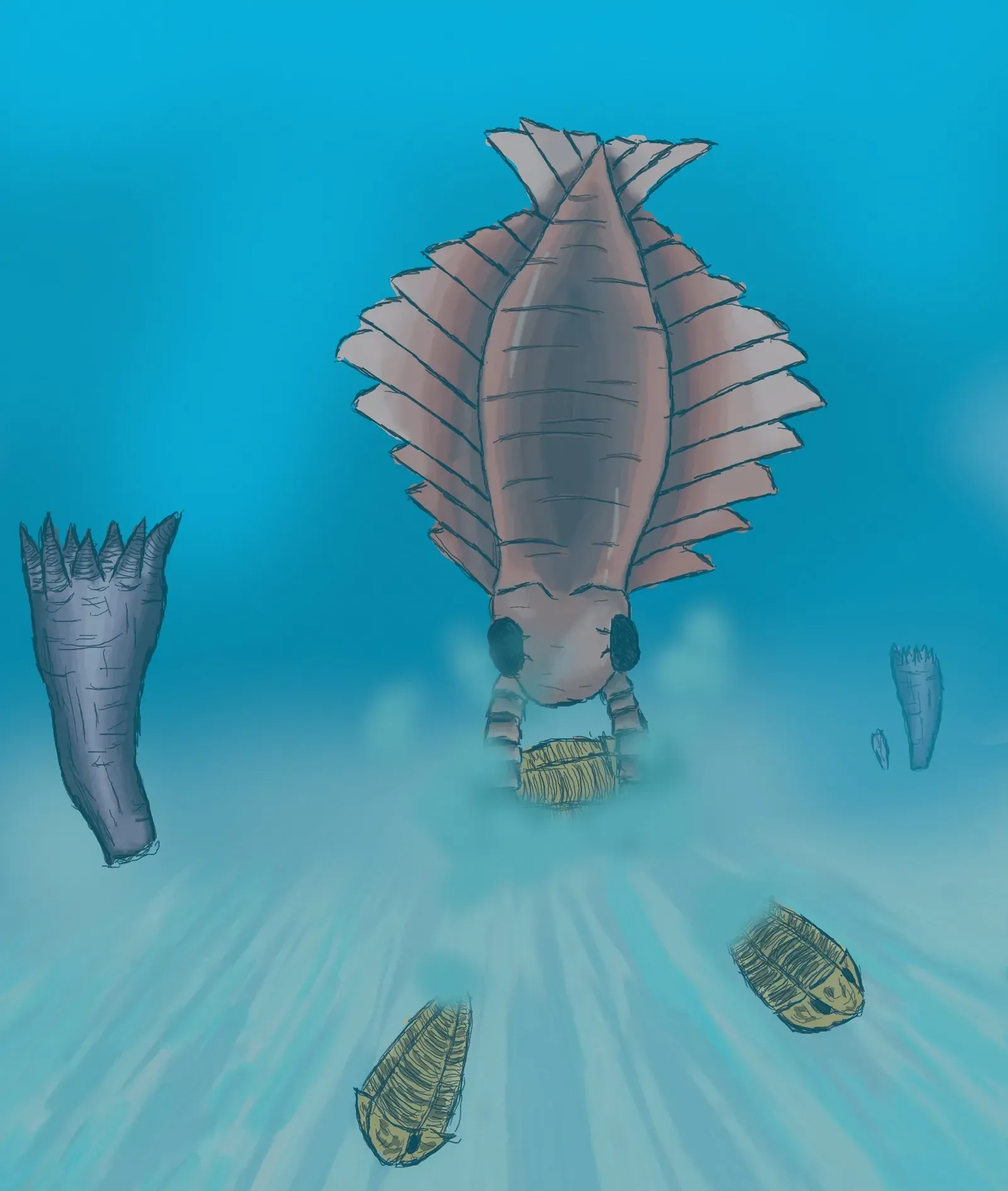
If you could travel back to the Cambrian sea, the creature you would fear most doesn’t even have a common English name most people would recognize. The largest and most fearsome-looking predators to roam the seas during the Cambrian were the anomalocarids, with the largest intact specimens discovered reaching up to 3 feet in length. Doesn’t sound terrifying? Remember, at a time when most animals were barely the size of a fingernail, this thing was essentially a bus.
Some species of anomalocarids used two curled appendages to capture their prey and reel it into a square ring of jagged teeth, also using crushing jaws to tear through the protective armor of hard creatures like trilobites. Even more startling, recent fossil discoveries in Morocco revealed that these animals weren’t just a Cambrian phenomenon. Paleontologists discovered that this group of remarkable ancient sea creatures existed for much longer and grew to much larger sizes than previously thought, with a giant fossilized anomalocaridid measuring one meter in length dating back to the Ordovician period, suggesting these animals existed for 30 million years longer than previously realized.
The Sea Scorpions: Eurypterids and Their Terrifying Reign
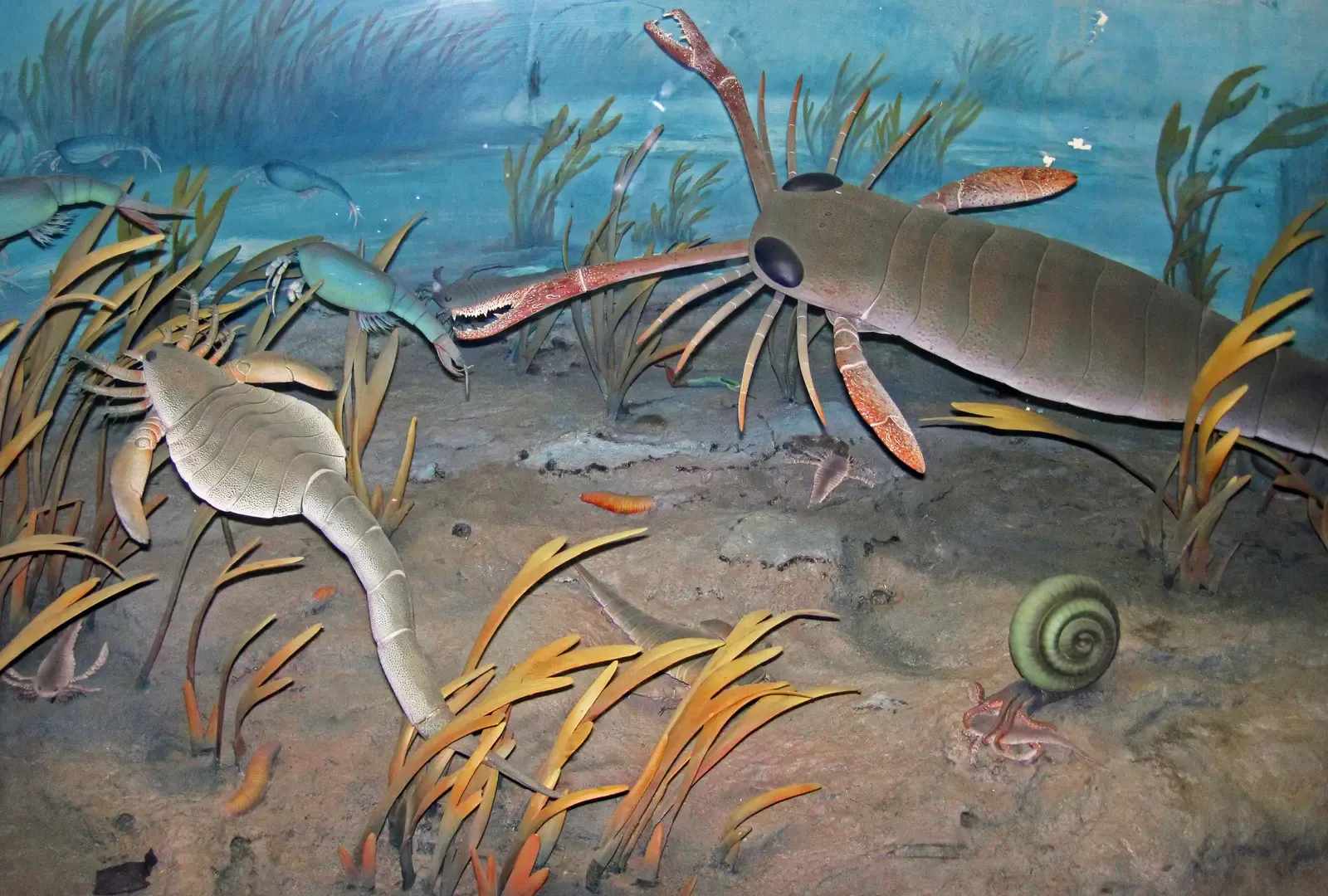
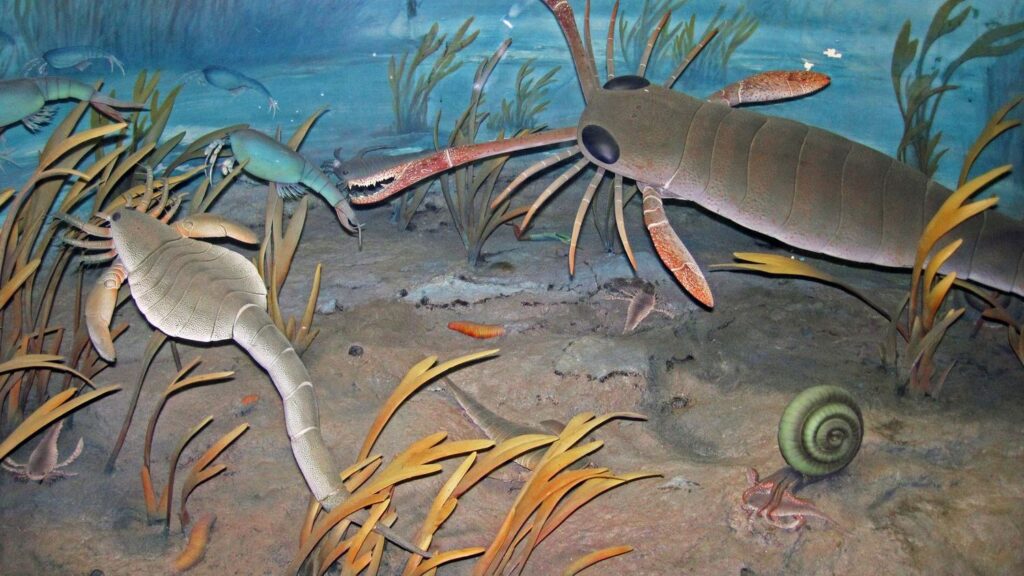
Just over 400 million years ago, during a time when scorpions, spiders, and insects ruled over the land, another type of invertebrate stalked the silty, estuarine environments that littered the coastline of the ancient supercontinent of Euramerica. These predatory invertebrates were known as eurypterids, or sea scorpions, and the largest among them was a 2.5-meter-long monstrosity known as Jaekelopterus. It’s hard to say for sure what it feels like to live in an ocean patrolled by a scorpion the length of a small car, but it was probably not relaxing.
The eurypterids were one of the dominant forces in ancient seas, filling a niche that no one else had claimed. The Ordovician period witnessed the rise of two other large predators equal to or surpassing anomalocaridids in size: eurypterids, or sea scorpions, and nautiloids, which resembled squid with conical shells. These weren’t slow, lumbering animals either. They were agile, armored, and built to chase. The ocean was getting more competitive by the era, and the eurypterids were among the fiercest players in that ancient arms race.
Dunkleosteus: The Armored Juggernaut of the Devonian
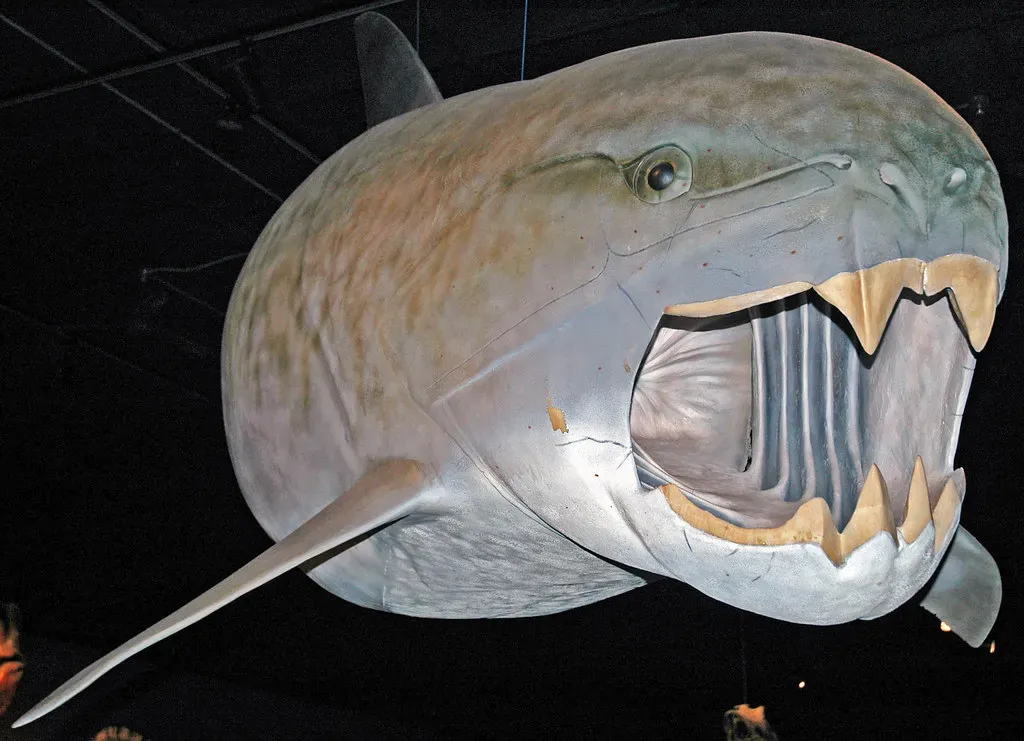
Dunkleosteus is an extinct genus of large arthrodire fish that existed during the Late Devonian period, about 382 to 358 million years ago. It was a pelagic fish inhabiting open waters, and one of the first vertebrate apex predators of any ecosystem. You might picture a fish when you hear that, but this was nothing like a fish you’ve ever seen. Dunkleosteus was a fierce predator, so fierce it required no teeth to hunt. Instead, it had blade-like jawbones that sharpened themselves when the fish opened and closed its mouth.
It was one of the first vertebrate apex predators of any ecosystem, and its appearance marked a turning point in Earth’s history from an invertebrate-dominated ocean to one ruled by vertebrates. Recent research paints an even more fascinating picture of this creature. About 360 million years ago, the shallow sea above present-day Cleveland was home to this fearsome apex predator, a roughly 14-foot armored fish that ruled the Late Devonian seas with razor-sharp bone blades instead of teeth, making it among the largest and most ferocious arthrodires. Even in death, it didn’t disappear quietly. Despite its evolutionary success, Dunkleosteus did not survive the end-Devonian mass extinction events, with two major extinction pulses occurring near the close of the Devonian: the Kellwasser Event, followed by the later and more severe Hangenberg Event.
Ichthyosaurs: The Dolphin Doppelgangers That Could Swallow You Whole
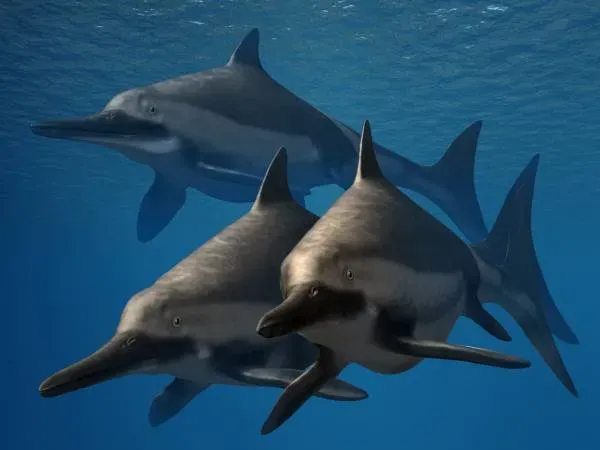
Let’s be real: if you saw an ichthyosaur from a distance, you might mistake it for a dolphin. That would be a very costly mistake. Ichthyosaurs had razor-sharp teeth, with the largest species being roughly the size of whales, and their diet included fish, squid, and other marine animals. They weren’t gentle filter-feeders cruising the surface. They were active, high-speed hunters engineered by millions of years of evolution to be as lethal as possible.
Sea monsters ruled the oceans for over 180 million years, and some ichthyosaurs could swim at speeds of 40 kilometers per hour. That’s faster than most humans can run. Some species of ichthyosaurs had large eyes, which may have helped them in their deep-sea hunting. In terms of sensory adaptation, this was extraordinary. I think it’s remarkable that evolution independently arrived at the same sleek, dolphin-like body shape twice in Earth’s history, producing creatures that were faster and arguably far more dangerous than our modern cetaceans.
Pliosaurs: The Apex Predators That Even Scared Other Predators
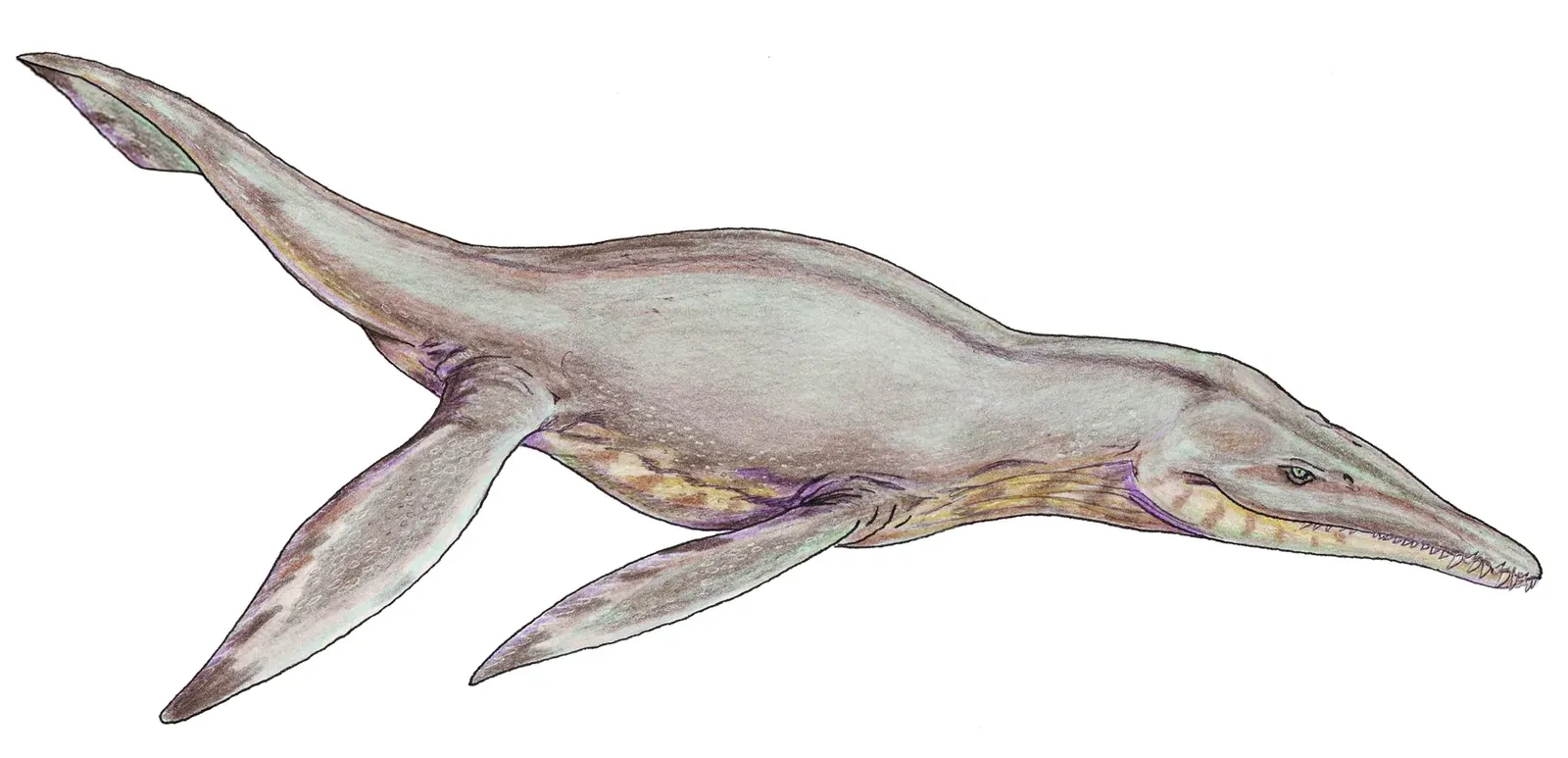
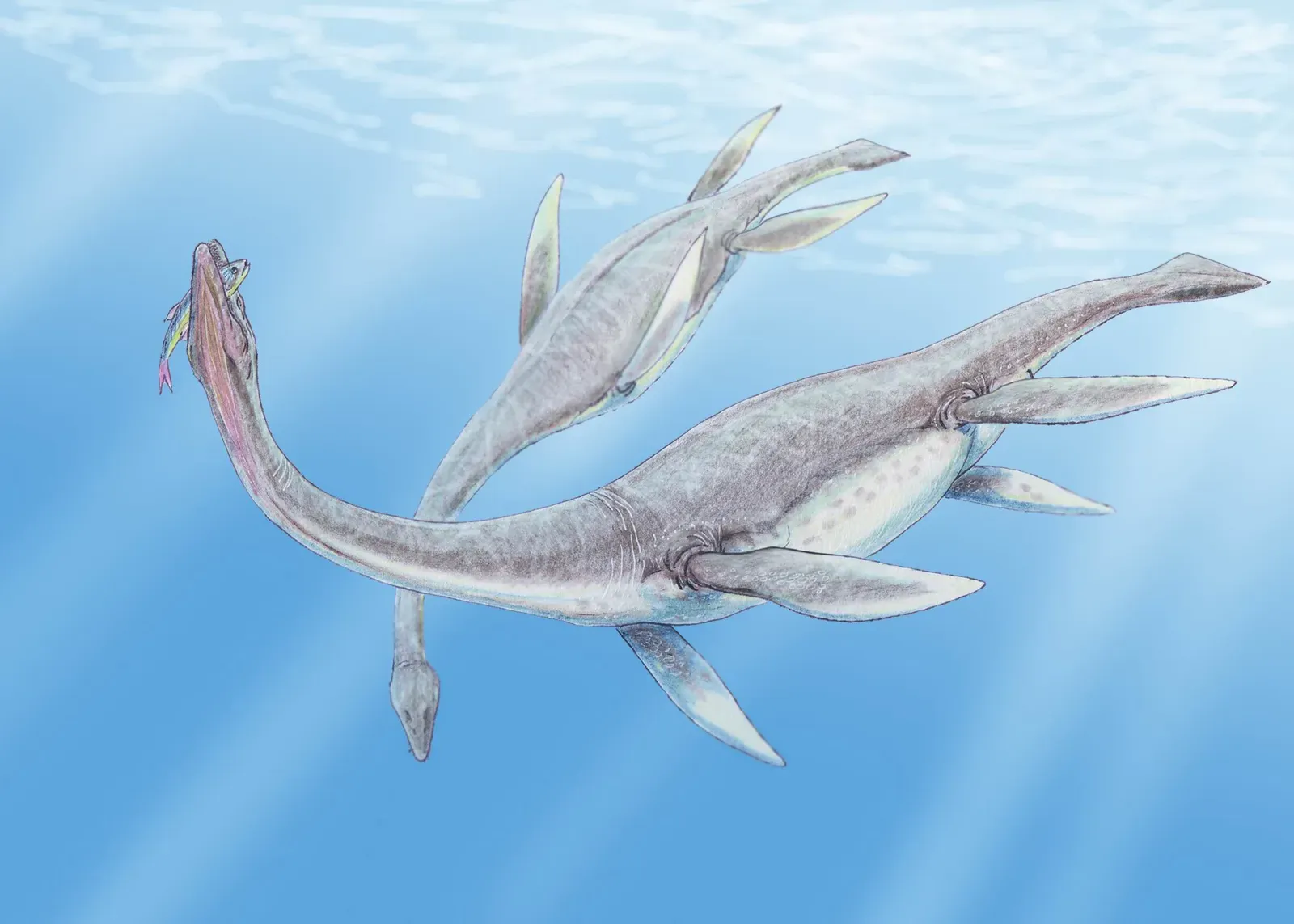
If you were designing the ultimate ocean killer from scratch, you would probably invent something close to a pliosaur. The Pliosaurus was a massive prehistoric ocean animal growing up to 40 feet long, around the size of some whales we see today. These creatures were fierce hunters, strong and fast, known for taking down large prey, even dinosaurs. Let that sink in for a second. A marine reptile so powerful it reportedly preyed on dinosaurs. The sea was not safe from these things, and neither was the edge of land.
Pliosaurs preyed on other marine predators, including ichthyosaurs, and filled the same ecological niche as killer whales in modern times, earning their title as the deadliest sea monsters and apex predators of their time. Recent research has even pushed our understanding of just how dominant these creatures were. In today’s oceans, food chains typically reach six levels, with animals such as great white sharks and orcas at the top. However, researchers discovered that there was a previously unseen seventh level that was filled with enormous marine reptiles, with some such as Sachicasaurus and Monquirasaurus growing up to and beyond 10 metres long, known as hyper-apex predators. Seven levels. The ocean had a layer of terror we had no idea existed until recently.
Mosasaurs: The Late Cretaceous Ocean Rulers
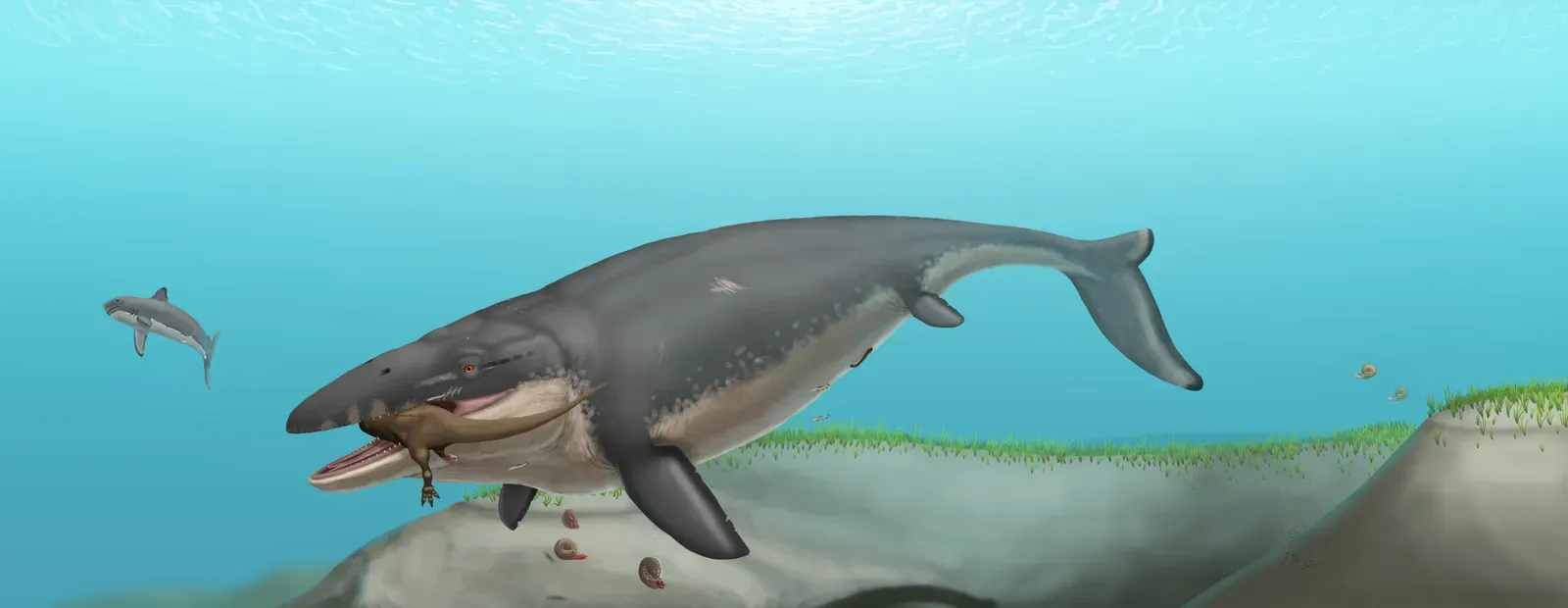
As the dinosaur age thundered along on land, the ocean was undergoing its own changing of the guard. Following the extinction of the ichthyosaurs and pliosaurs, the mosasaurs stepped in to dominate the oceans of the Late Cretaceous. These large, predatory marine reptiles belong to the reptile group Squamata and are thought to have evolved from small, coastal lizards. The transformation from a small lizard scuttling along a shoreline to a 50-foot ocean monster is the kind of evolutionary leap that still seems almost impossible.
The strong jaws of mosasaurs were lined with sharp teeth, enabling them to hunt a wide variety of prey, including fish, sharks, cephalopods, and even other marine reptiles. Their anatomy suggests they were fast and agile swimmers, capable of ambushing or pursuing their prey, and they are considered one of the top marine predators of their time, with their widespread fossil distribution highlighting their success and adaptability in ancient marine ecosystems. A 2016 scientific study even suggested mosasaurs may have had forked tongues, much like modern snakes. Before they fell to the same fate as the nonavian dinosaurs, this group of marine reptiles roamed the world’s oceans, consuming almost anything that moved, including other mosasaurs.
Basilosaurus: The Ancient Whale That Was More Monster Than Mammal
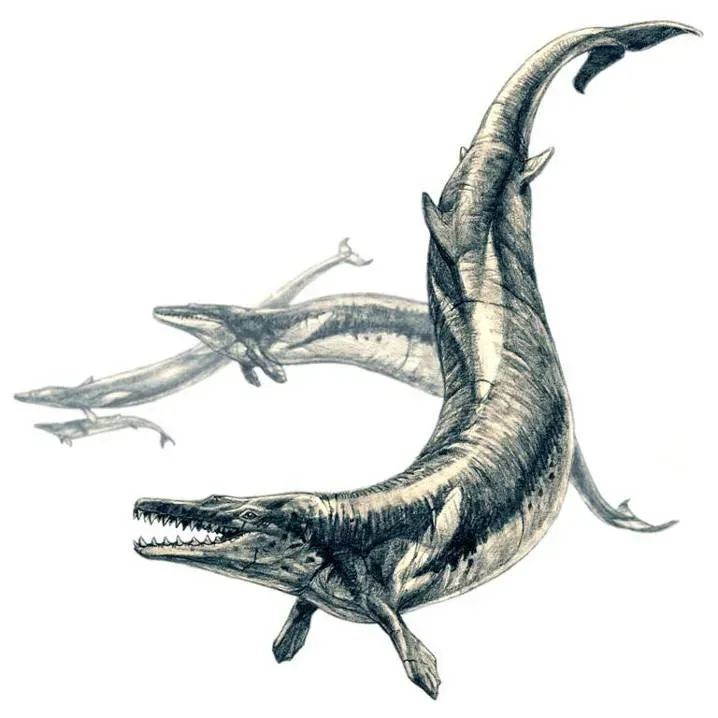
You might assume that the rise of mammals in the ocean meant things became a bit gentler. You’d be completely wrong. Known as King Lizard in ancient Greek, with a body shape reminiscent of a giant marine reptile, Basilosaurus was actually a mammal and an early ancestor of today’s whales. It evolved from a land-dwelling animal that looked a lot like a goat. A goat. That became a sea monster. Evolution truly has no sense of proportion.
Basilosaurus was likely a top predator in its marine environment, feeding on fish, sharks, and possibly other marine mammals, with its elongated body and large size making it a formidable hunter. It was also deeply strange in ways that still fascinate paleontologists. Tiny 35-centimeter-long hind limbs on its body would have been of little use in water, reflecting its terrestrial roots. Its modern descendants, blue whales, orcas, and dolphins, also possess these evolutionary leftovers, though theirs are internalized and truly vestigial. Think of it as evolution leaving a bookmark in the page, a small reminder of where these animals came from before they became ocean predators.
Megalodon: The Shark That Redefined What a Predator Could Be
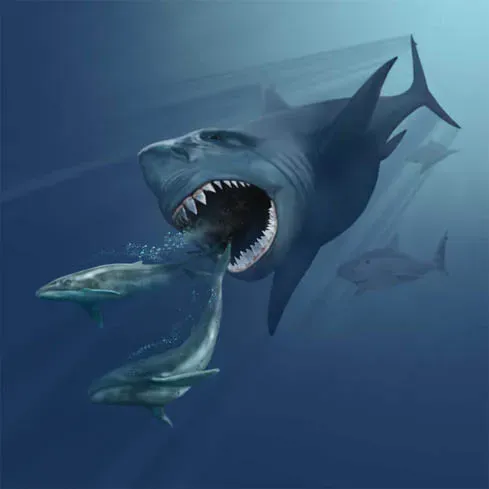
No discussion of could be complete without the creature that has captured the public imagination more than any other. Otodus megalodon was not only the biggest shark in the world but one of the largest fish ever to exist. A 2025 study written by 29 fossil shark experts found that megalodon may have grown up to 24.3 metres long. That’s not a fish. That’s a submarine with teeth. For scale, a modern great white shark barely reaches a quarter of that length.
In order to tackle prey as large as whales, megalodon had to be able to open its mouth wide, with an estimated jaw span of 2.7 by 3.4 metres, easily big enough to swallow two adult people side by side. These jaws were lined with 276 teeth, and studies reconstructing the shark’s bite force suggest it may have been one of the most powerful predators ever to have existed. The numbers are genuinely staggering. Researchers have estimated that megalodon had a bite of between 108,514 and 182,201 Newtons, which dwarfs every other biting force in the known fossil record. Megalodon teeth have been found on every continent except Antarctica, a testament to just how widely this creature dominated the ancient oceans before its extinction roughly 3.6 million years ago.
Conclusion: The Ocean’s Past Is a Warning and a Wonder
Looking back at the parade of monsters that have ruled Earth’s oceans across the ages, it’s hard not to feel a mixture of awe and genuine relief. From the razor-appendaged anomalocarids of the Cambrian to the jaw-dropping scale of Megalodon, the sea has always been home to creatures that push the limits of what biology seems capable of producing. Each one of them was a product of its time, shaped by pressures we can barely imagine, thriving in ecosystems we are only just beginning to understand.
What strikes me most is the pattern that emerges. Every time a great predator was wiped out by catastrophe, extinction, or climate change, a new one rose to take its place. The ocean doesn’t stay quiet for long. It fills every available niche with something hungry. Today’s great white sharks and orcas are impressive, certainly. Still, compared to what came before them, they’re inheritors of a throne built by true titans.
The ancient ocean was a place of extraordinary, breathtaking brutality and just as extraordinary evolutionary creativity. We are only beginning to piece together the full story of what lived in those depths. New fossils are found every year, and each one reshapes our picture of life’s oldest battleground. What ancient predator do you think we haven’t discovered yet? The ocean, it seems, still has secrets left to give up.