Imagine standing in the middle of the Arizona desert, surrounded not by towering trees, but by the stone remains of a forest that once stretched across a lush, tropical landscape some 225 million years ago. The ground beneath your feet is layered with color, the air is dry and still, and scattered around you are enormous logs of shimmering crystal that were once alive, breathing, growing things. It sounds like science fiction. It is not.
The Petrified Forest National Park in northeastern Arizona is one of those rare places on Earth that genuinely makes you feel small in the best possible way. It holds secrets buried across geological time, human history, and ecological mystery. You will be surprised by what you find here. Let’s dive in.
A Desert That Was Once a Tropical Paradise
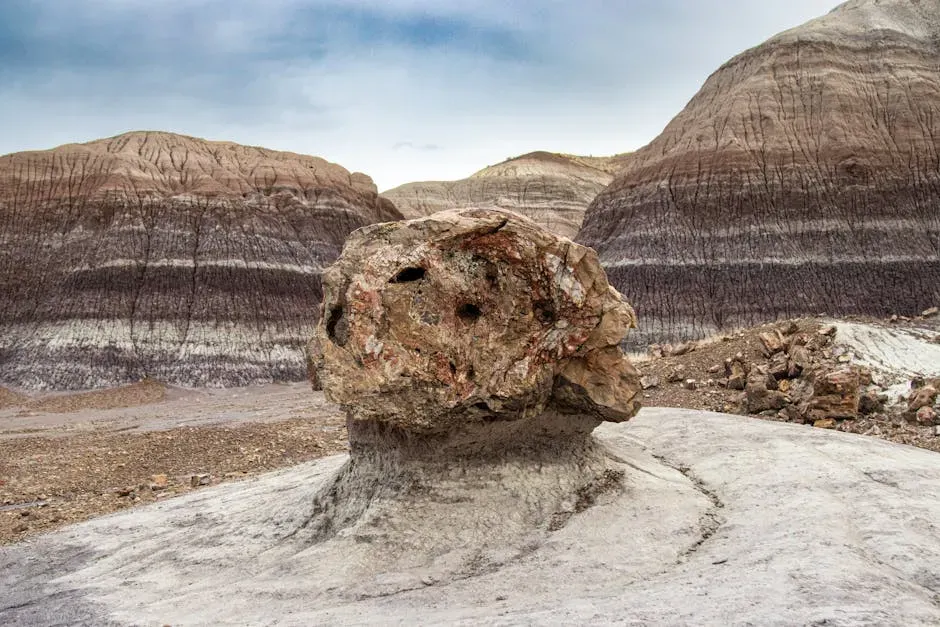
You might look at the dry, sun-baked badlands of northeastern Arizona today and find it almost impossible to believe what this land once was. Petrified Forest National Park preserves traces of an ancient, vastly different landscape. Some 225 million years ago, during the Triassic Period, this area rested near Earth’s equator, part of the massive supercontinent Pangaea. Think of it like this: what is now Arizona was once essentially sitting in the tropics, soaked by seasonal rains, draped in ferns and enormous conifers.
The region was a vast basin with numerous rivers and streams flowing through the lowland. A lush landscape with coniferous trees up to nine feet in diameter and towering almost 200 feet into the sky rose above the land. Galleries of trees, ferns, and giant horsetails grew abundantly along the waterway, providing food and shelter for many insects, reptiles, amphibians, and other creatures. Honestly, picturing that verdant ancient world while looking at today’s stark desert is one of the most mind-bending exercises in natural history you can have.
How Living Wood Became Eternal Stone
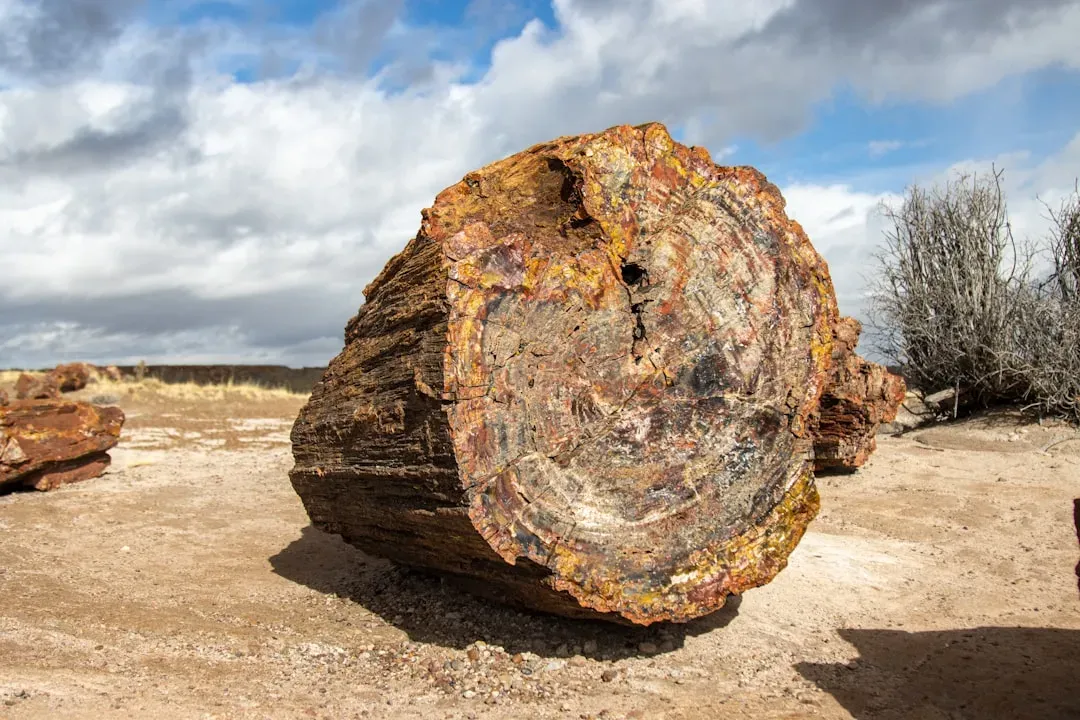
Lining abundant waterways, ancient trees occasionally fell into the flowing water, perhaps blown down by winds or killed by insect infestations. While many of the trees rotted away, some were buried by the quick-moving water. When winds carried ash from distant volcanoes, minerals from the ash infiltrated the wood, forming crystals. It is a process that required a very specific chain of events, almost like a recipe that nature rarely gets exactly right.
The log jams were slowly buried in debris and mud, which contained silica from volcanic ash. The silica and other minerals seeped into the wood and crystallized, perfectly preserving the wood’s cellular structures. Over millions of years, the wood cells were replaced by minerals, and the trees literally turned to stone. The result is what you see in the park today: ancient wood that looks like wood, holds the grain and texture of wood, yet is harder and heavier than almost anything you have ever picked up.
The Stunning Rainbow of Colors Hidden in the Stone
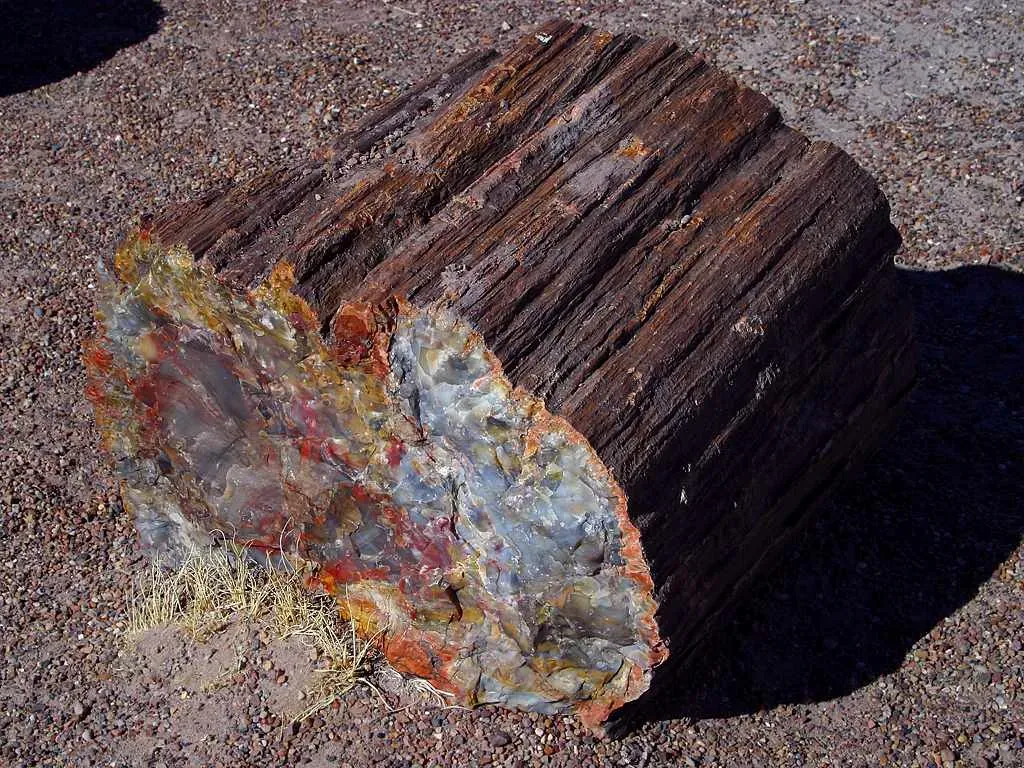
Here is the thing that catches most visitors completely off-guard. These are not dull, grey rocks. The stone logs come in a rainbow of colors, thanks to minerals and other elements they absorbed from the water, like copper and cobalt for green and blue, carbon for black, iron for red, brown, and yellow, and manganese for pink. Walking among them feels like strolling through a giant’s jewelry box.
Petrified wood was formed 225 million years ago during the Triassic period and is four times as hard as granite and very colorful, due to the effect of impurities such as iron, manganese, copper, and lithium present in the wood during the fossilizing process. You will not find many natural formations in the world that are simultaneously a geological record, a work of art, and a scientific treasure. The Petrified Forest manages to be all three at once.
The Ancient Trees Themselves: Giants of a Lost World
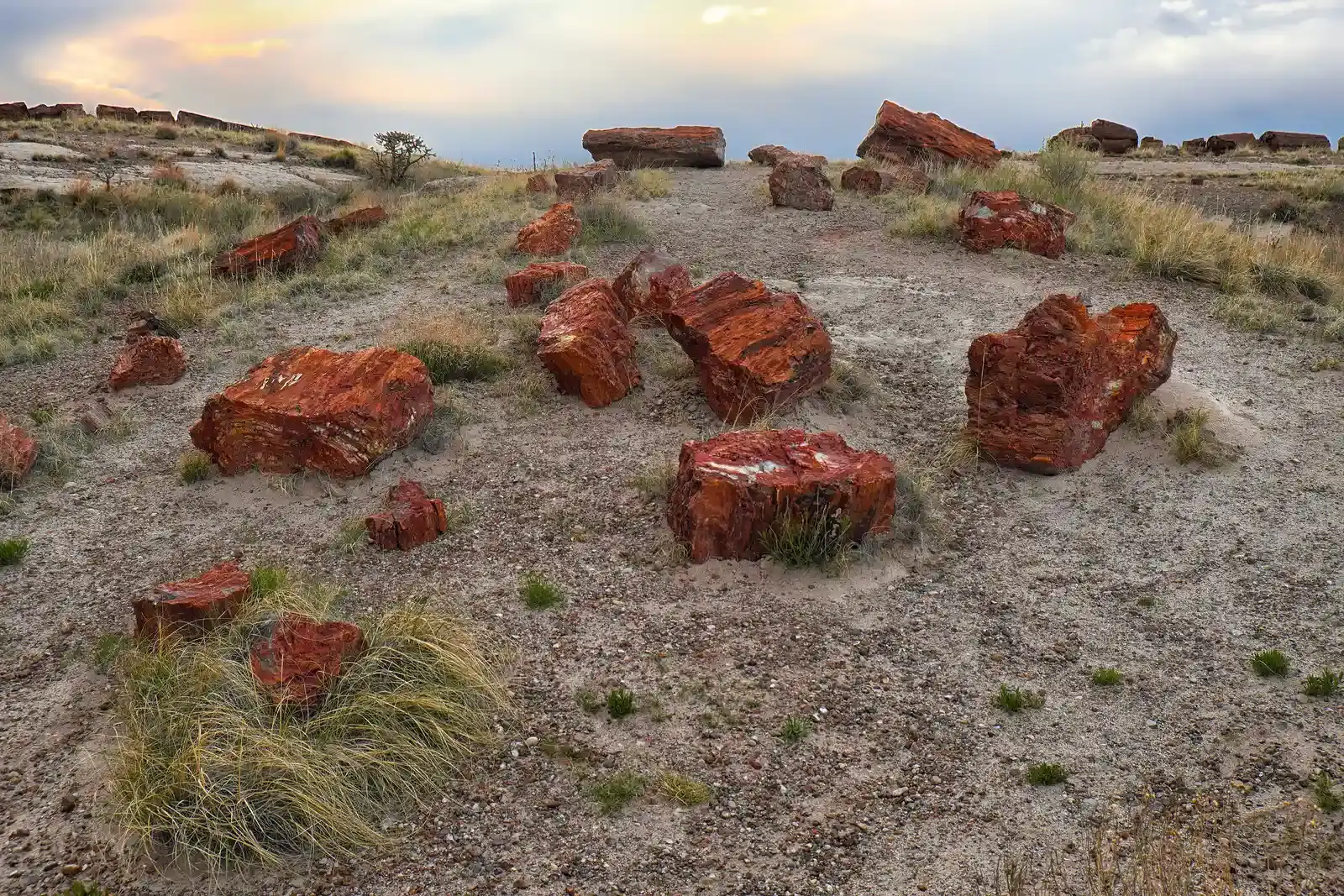
Many of the petrified logs come from conifer trees called Araucarioxylon, which grew as high as 200 feet tall. These trees were not standing up in the ground when the process of petrification began. In the Triassic Period, the trees grew along the waters of a large river system, and some fell into the rivers when they died, floating downstream and collecting in log jams. These were not small trees. They were colossal, ancient giants that dominated the skyline of a prehistoric world.
Many of the fossilized logs are from a tree called Araucarioxylon arizonicum. Two others, Woodworthia arizonica and Schilderia adamanica, occur in small quantities in the northern part of the park. At least nine species of fossil trees have been identified from the park; all are now extinct. There is something quietly sobering about that: every single species of tree preserved here no longer exists anywhere on Earth. You are looking at the last remains of entire lineages.
Dinosaurs and Prehistoric Creatures of the Ancient Floodplain
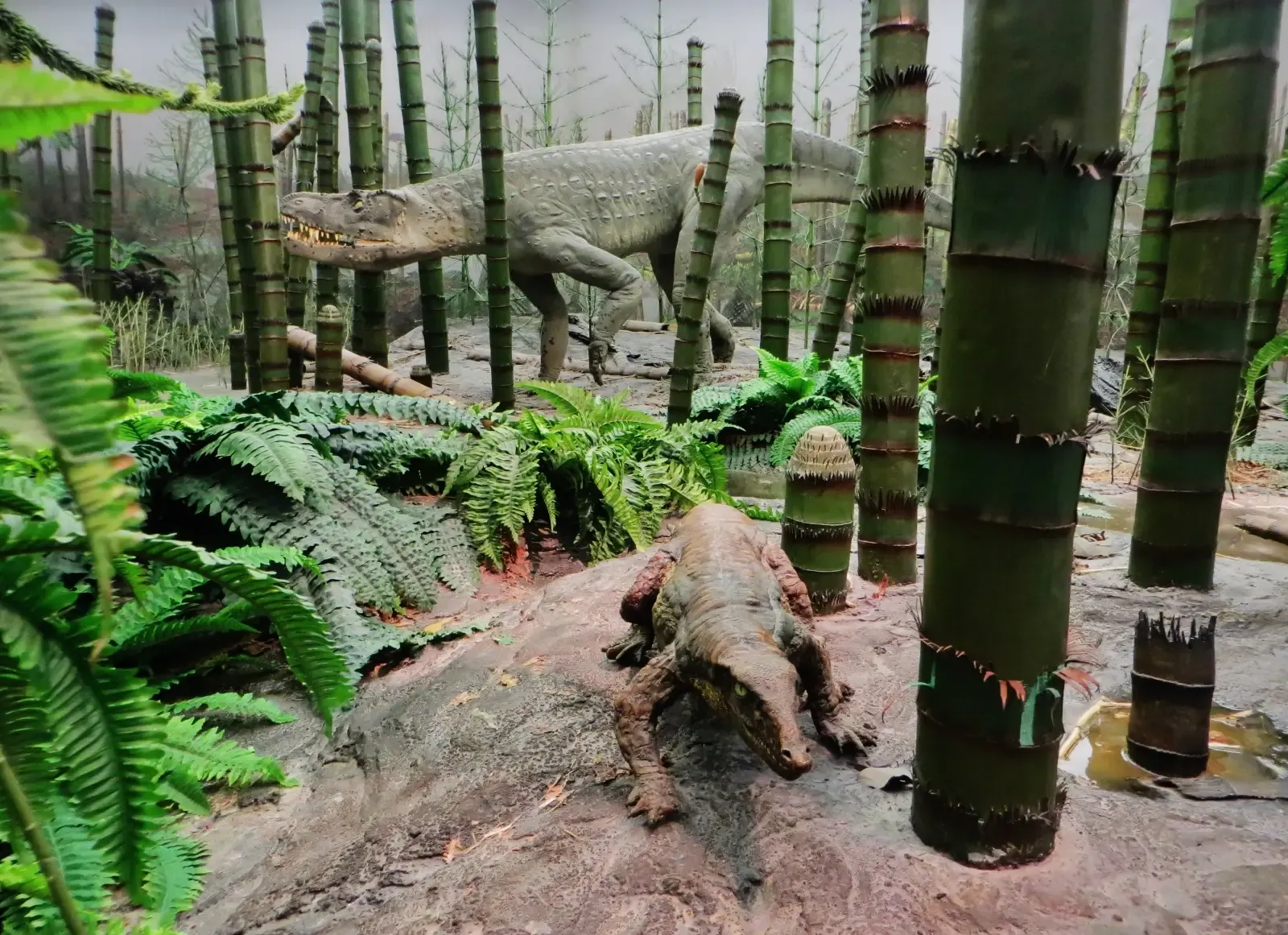
The petrified wood is the star of the show, no question. Yet the park holds another layer of prehistoric life that is just as fascinating. Petrified Forest preserves rocks and fossils from the Late Triassic Period, roughly 225 million years ago, long before flowering plants or modern mammals appeared. Dinosaurs, early crocodile relatives, giant amphibians, and primitive reptiles roamed these wet lowlands while conifer trees, horsetails, and ferns formed lush riverfront forests.
In addition to petrified logs, fossils found in the park have included Late Triassic ferns, cycads, ginkgoes, and many other plants as well as fauna including giant reptiles called phytosaurs, large amphibians, and early dinosaurs. Paleontologists have been unearthing and studying the park’s fossils since the early 20th century. Think of it as a layered archive. The trees are the library shelves, and the bones and fossils packed around them are the books sitting on those shelves, each one telling its own chapter of the story.
Thousands of Years of Human History Written in Stone
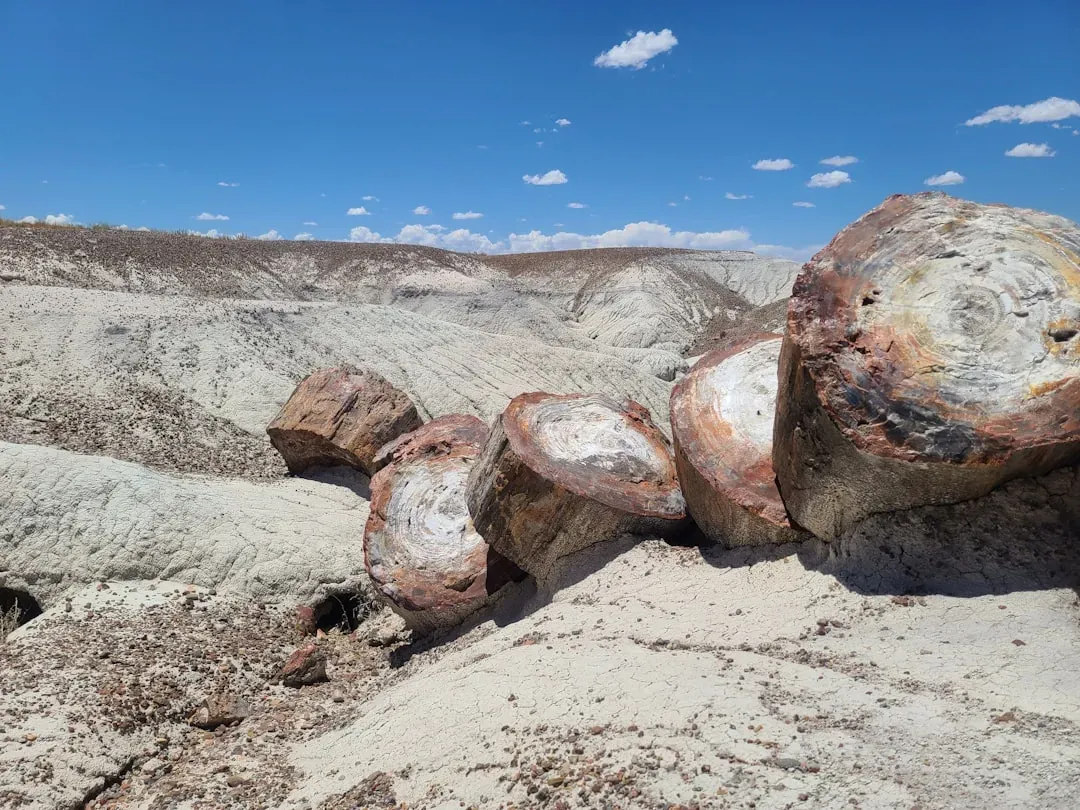
People have been drawn to this remarkable landscape for far longer than you might expect. Evidence of humans in the Petrified Forest dates back 13,000 years. People first came here after the last Ice Age. Early Paleoindian groups used the petrified wood to create different kinds of stone tools. That is not just ancient history. That is an unbroken thread of human presence stretching across every era of recorded civilization and well beyond.
Between 1250 and 1450 CE, Ancestral Pueblo families gathered into large apartment building-like masonry structures with several hundred people living together in close quarters. These large villages were often located near important water sources. Ancestral Pueblo people constructed large pueblos, one called Puerco Pueblo, which overlooks the Puerco River near the middle of the park. There they built roughly 200 rooms around an open plaza. It is staggering to realize that a thriving community once went about daily life in what is now a quiet and windswept national park.
The Painted Desert: Nature’s Own Abstract Canvas
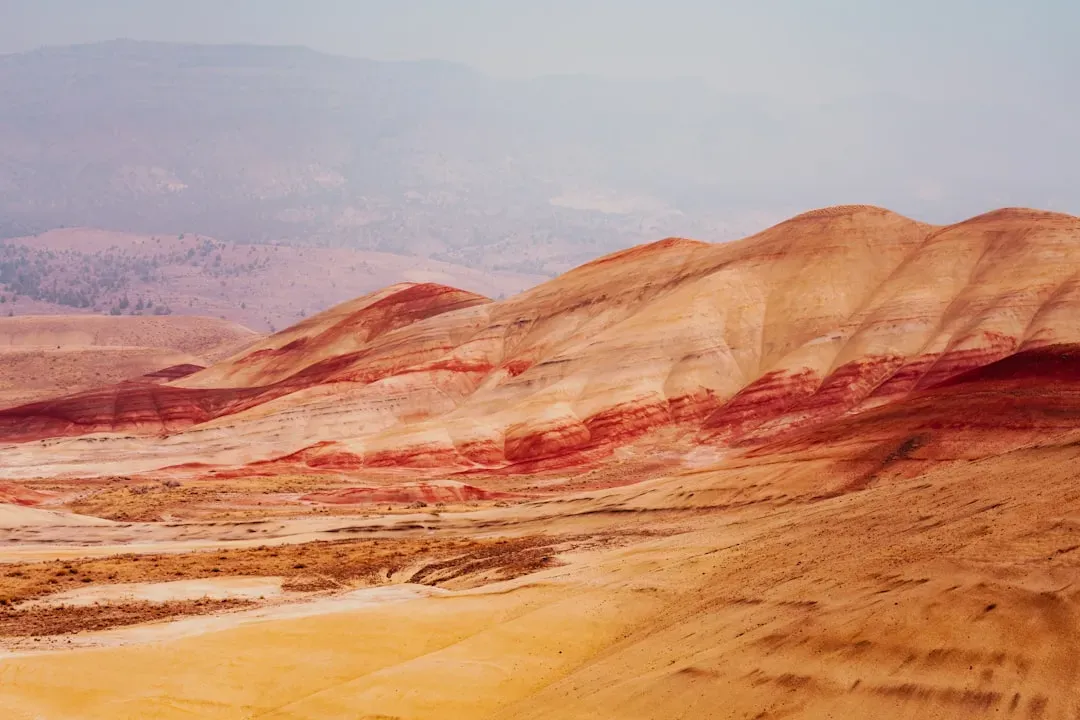
You cannot talk about the Petrified Forest without talking about the Painted Desert, the sweeping, color-drenched landscape that forms the park’s northern backbone. No trip to Petrified Forest National Park is complete without experiencing the Painted Desert, a broad expanse of banded badlands that glows in shifting shades of red, orange, lavender, and gray. These soft hills are carved mainly into the mudstones and siltstones of the Chinle Formation and overlying rock units.
The oldest geological formations in the park are about 227 million years old. Differently colored formations show different time periods. The Blue Mesa formations, for example, have thick bands of grey, purple, blue and green mudstones. They are about 220 million years old. Every color you see is, in a very real sense, a page of Earth’s autobiography. The layers are not just beautiful. They are also a timeline, one you can read simply by looking at the hillside.
Protecting the Park: From National Monument to Living Laboratory
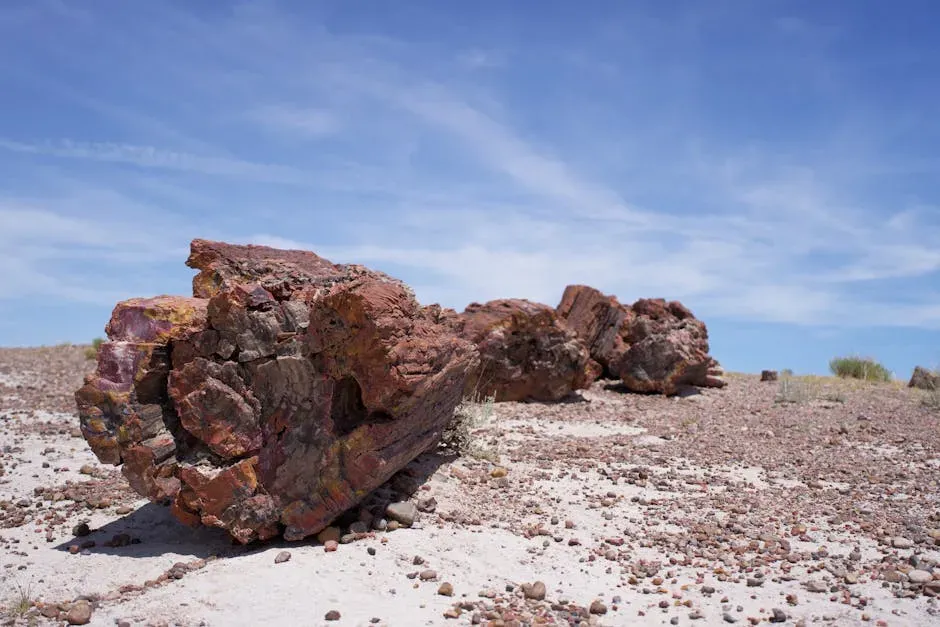
Established as a national monument in 1906 by President Theodore Roosevelt and later designated a national park in 1962, it has a rich geological, ecological, and archaeological history. The early push for protection came out of genuine alarm. Collectors and industrialists in the late 1800s were hauling away petrified wood by the ton, and locals feared the extraordinary landscape would be stripped bare within a generation.
Today, the park is managed by the National Park Service, and efforts are underway to preserve and protect the petrified wood and other natural wonders of the park for future generations. The park also provides opportunities for education and research, with ongoing studies focused on the geology, ecology, and cultural history of the area. It is illegal to remove any petrified wood or other natural features from the park. Violations can result in fines and confiscation of material. The rules exist for good reason: what took 225 million years to form cannot be replaced in any human lifetime.
Conclusion: Stone, Time, and the Stories We Carry
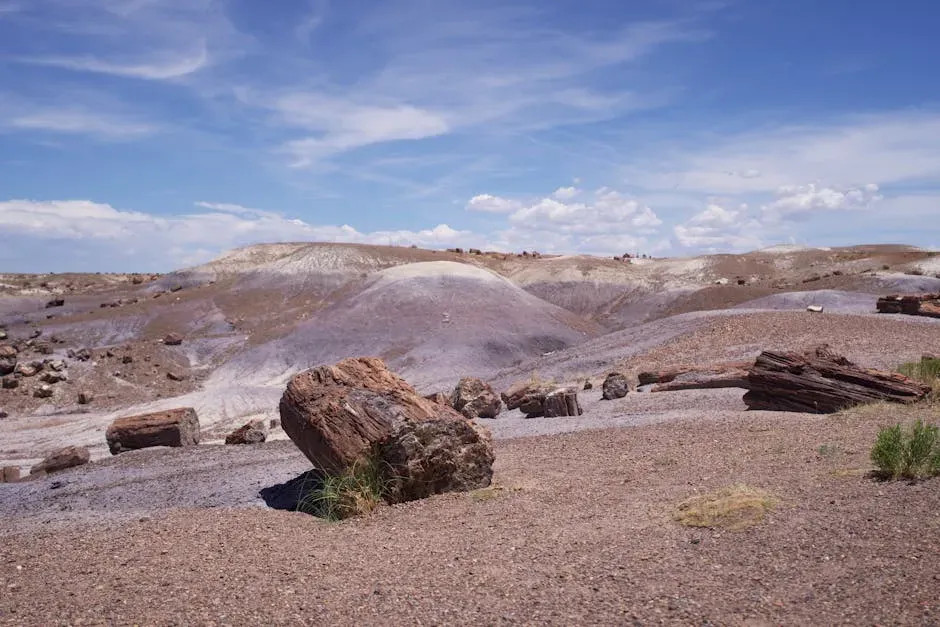
There are very few places left on Earth where you can stand in a dry, open desert and feel the ghost of a tropical rainforest all around you. The Petrified Forest is one of them. It is a place where time has folded in on itself in the most spectacular way, where ancient trees became colored stone, where dinosaurs once splashed through rivers that are now silent dust, and where human civilizations rose and vanished leaving only petroglyphs and pottery shards behind.
What strikes you most, if you let it, is not just the age of everything around you. It is the fragility of it. All of this, the stone logs, the fossils, the pueblo ruins, the painted hillsides, survived only because of a very particular and unlikely chain of events. A little more heat, a different sediment layer, a slightly less volcanic landscape, and none of it would exist. You are looking at a cosmic accident that lasted 225 million years.
So the next time someone tells you Arizona is just a desert, you can smile and tell them it is also a time machine. Have you ever stood somewhere and felt the weight of deep geological time pressing down on you? If you have not, the Petrified Forest is waiting.