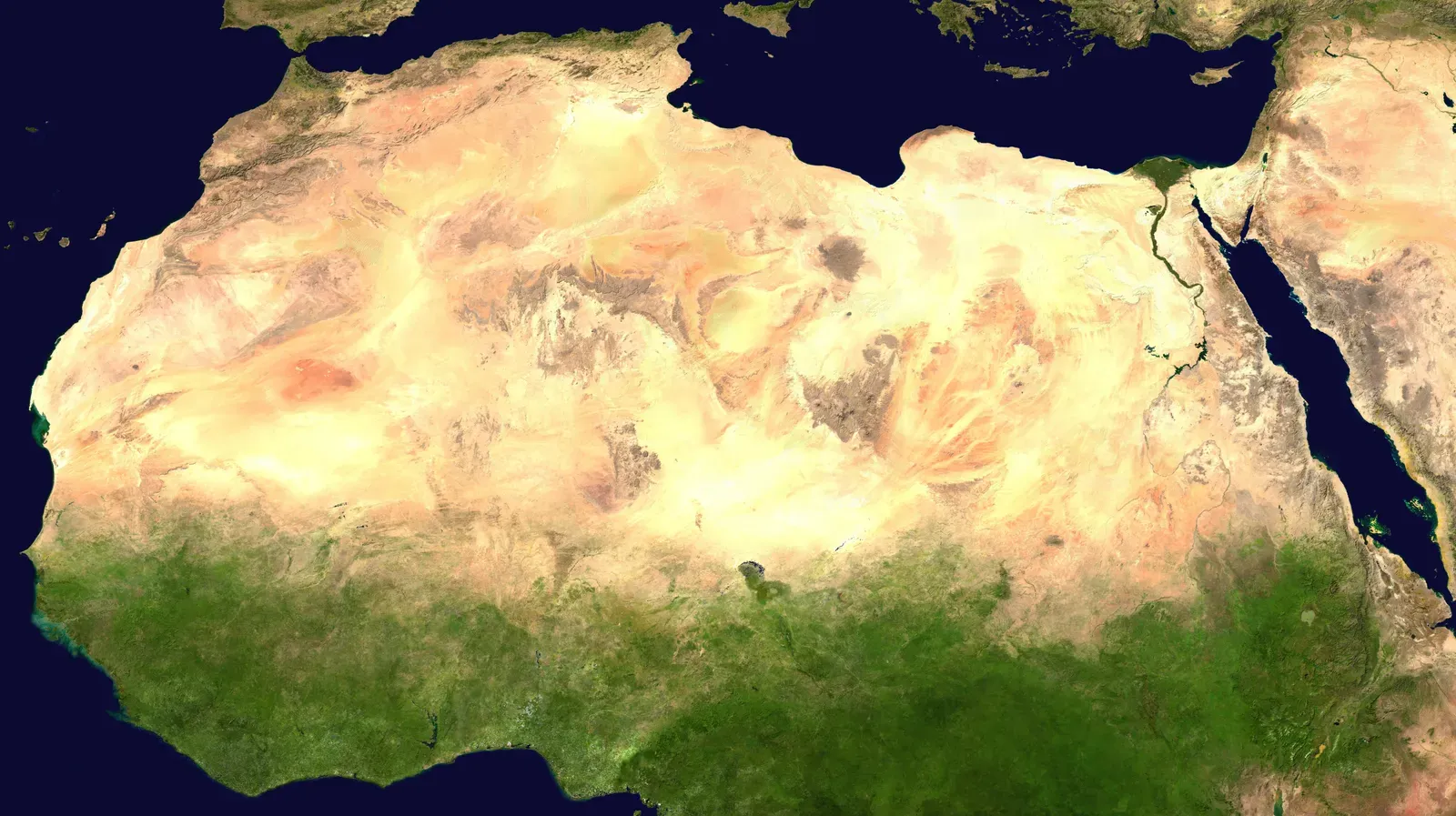
Picture the Sahara and you’re imagining rippling sand dunes, scorching heat, and vast emptiness. It’s hard to believe that this unforgiving landscape was once an entirely different world. Yet scientific evidence tells an astonishing story. Thousands of years ago, what we now know as the world’s largest hot desert was covered with grasslands, dotted with lakes, and filled with wildlife that would seem completely out of place today. Elephants roamed where there’s now only sand. Hippos wallowed in rivers that have long since vanished.
This transformation occurred roughly eleven thousand years ago, when the region looked nothing like the barren wasteland we see in 2026. Something dramatic happened to turn this green paradise into one of Earth’s harshest environments. What you’re about to discover might completely change how you think about deserts, climate, and the fragility of our planet’s ecosystems.
When Earth’s Wobble Created a Garden in the Desert
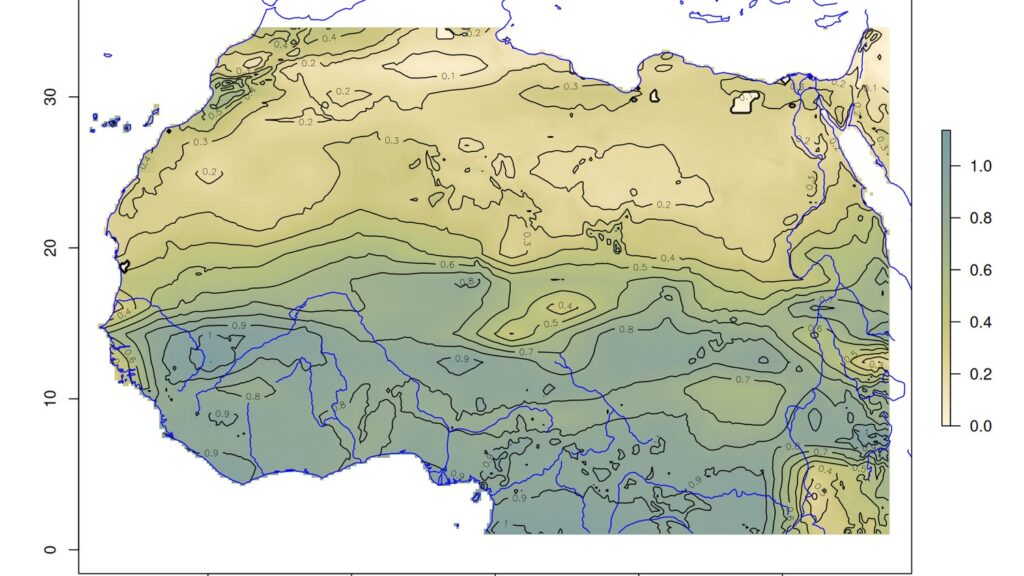
Scientists have identified that north Africa greened approximately every twenty one thousand years over the past eight million years, caused by changes in Earth’s orbital precession. Think of it like a cosmic clock ticking away, slowly altering the planet’s relationship with the sun. This wobble influences seasonality over an approximate twenty one thousand year cycle.
The wobbling caused the Northern Hemisphere to pass closer to the sun during summer months, creating warmer summers that intensified the West African Monsoon system and shifted the African rainbelt northwards. Imagine summer rains pouring over regions that today receive virtually no precipitation. This climate period, called the African humid period, occurred when northern Africa was wetter than today, with much of the Sahara desert covered by grasses, trees and lakes.
A Landscape Transformed Beyond Recognition
During the period from about fourteen thousand five hundred to five thousand years ago, it was a lush green savannah rich in bodies of water and teeming with life. You would have encountered a landscape that seems impossible today. The majority of the Sahara region was characterized by expansive grasslands, while the Sahel region south of the Sahara was mostly savanna.
The African Humid Period was characterized by a network of vast waterways in the Sahara, consisting of large lakes, rivers, and deltas, with the four largest lakes being Lake Megachad, Lake Megafezzan, Ahnet-Mouydir Megalake, and Chotts Megalake. Think about that for a moment. Where there’s currently nothing but sand and rock, massive bodies of water once sustained entire ecosystems. The discharge of the Congo, Niger, Nile, Ntem, Rufiji, and Sanaga rivers increased, with runoff from Algeria, equatorial Africa, northeastern Africa and the western Sahara also becoming larger.
Wildlife That Would Shock Modern Observers
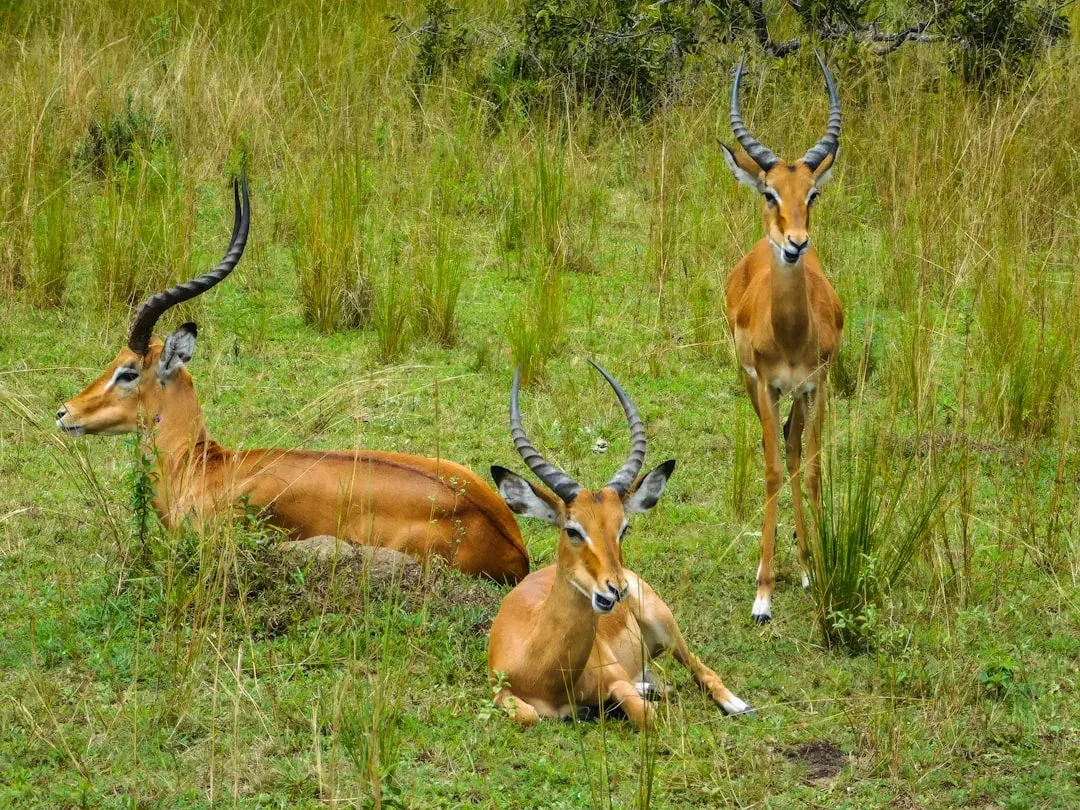
Let’s be real, if you could step back in time to the green Sahara, you’d think you were in the wrong place entirely. This fauna included antelopes, baboons, birds, cane rats, catfish, clams, cormorants, crocodiles, elephants, frogs, gazelles, giraffes, hartebeest, hares, hippos, molluscs, Nile perches, pelicans, rhinoceroses, snake-eagles, snakes, tilapia, toads, turtles and many more animals. Can you imagine crocodiles basking in Saharan waters?
Large herds of animals lived in the Sahara, creating scenes more reminiscent of today’s East African savannas than anything we associate with the desert. Rock art portrays a vibrant savannah inhabited by elephants, giraffes, rhinos and hippos, animals that simply couldn’t survive in the modern Sahara. These weren’t just occasional visitors either. They thrived there.
Ancient Humans Called This Paradise Home
The greening of the Sahara led to a demographic expansion and especially in the Eastern Sahara human occupancy coincides with the African humid period. You have to wonder what life was like for these ancient populations. North Africa was nearly completely vegetated during the height of the period and populated with nomadic hunter-gatherer communities that increasingly practiced pastoralism.
Recent research on DNA from two seven thousand year old naturally mummified individuals excavated from the Takarkori rock shelter in southwestern Libya revealed they lived during the African Humid Period, when the Sahara desert was green and dotted with lakes and streams. These weren’t just wandering nomads struggling to survive. Many humans appear to have depended on water-bound resources, with many tools left by early humans associated with fishery, creating what’s known as “aqualithic” culture.
Rock Art Reveals the Untold Story
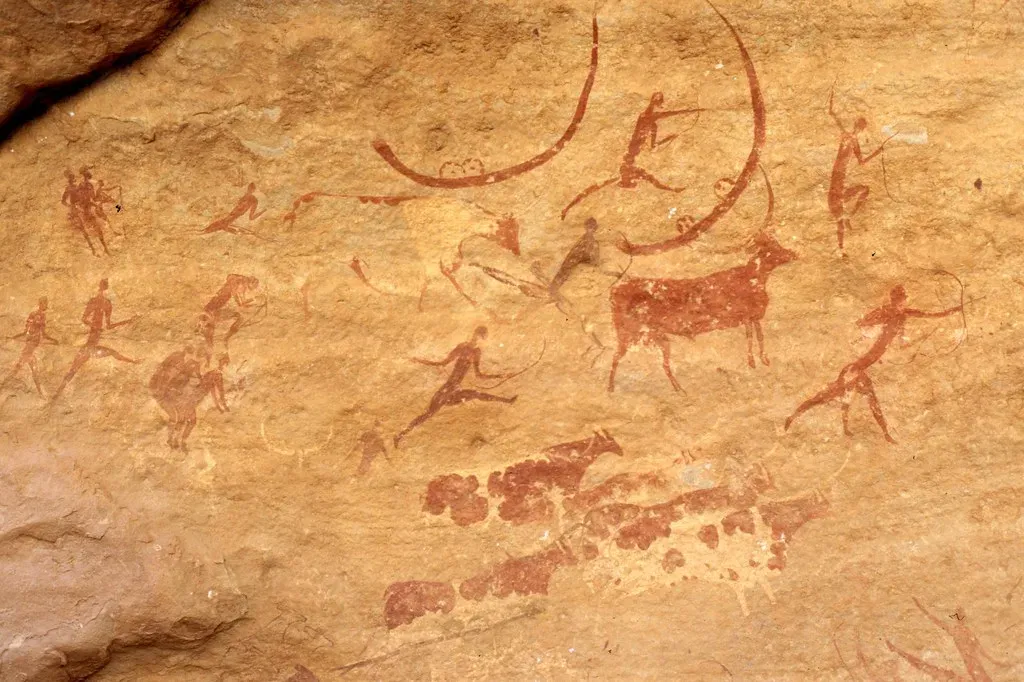
Here’s where things get really fascinating. Humans created rock art such as petroglyphs and rock paintings in the Sahara, perhaps the largest density of such creations in the world, with scenes including animals and everyday life such as swimming which supports the presence of past wetter climates. Swimming! In the Sahara! One well-known petroglyph location is the Cave of Swimmers in the Gilf Kebir mountains of Egypt.
Over fifteen thousand etchings and paintings are exhibited in Algeria’s Tassili N’Ajjer plateau, some as much as eleven thousand years old. These artworks were executed by a hunting people who lived in a savanna region teeming with giant buffalo, elephant, rhinoceros, and hippopotamus, animals that no longer exist in the now-desert area. Every brushstroke and carving is a window into a world that vanished.
The Rapid Collapse of a Green World
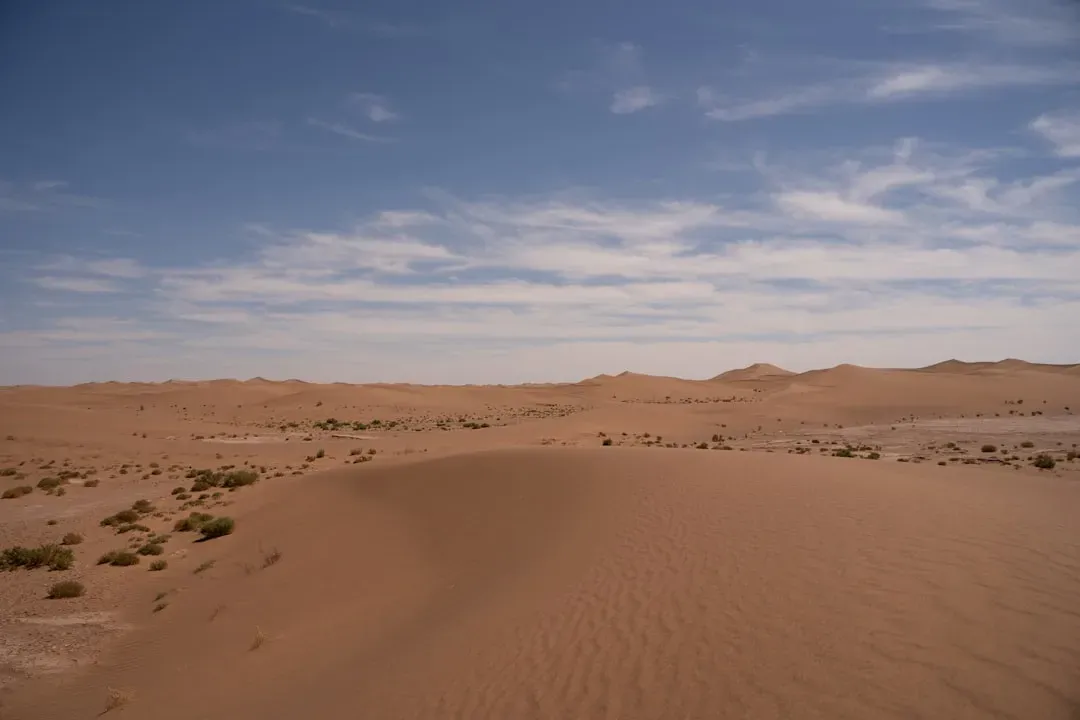
So what happened? How does a verdant landscape turn into endless desert? From the end of the last ice age up until about six thousand years ago, the area now recognized as the Sahara Desert was a fertile, green landscape rich with life, but this era came to a sudden end, turning the once-vibrant region into the dry, barren desert we see today. The speed of this transformation is honestly unsettling.
Geologic evidence from the beginning and end of the African Humid Period suggests that both the onset and termination were abrupt, likely occurring on a timescale of decades to centuries. Imagine witnessing your entire world dry up within a human lifetime. Between approximately 2550 and 2200 BCE, the great lakes dried up, wet-zone fauna disappeared, and human groups migrated toward more fertile regions, especially along the Nile.
Where Did Everyone Go?
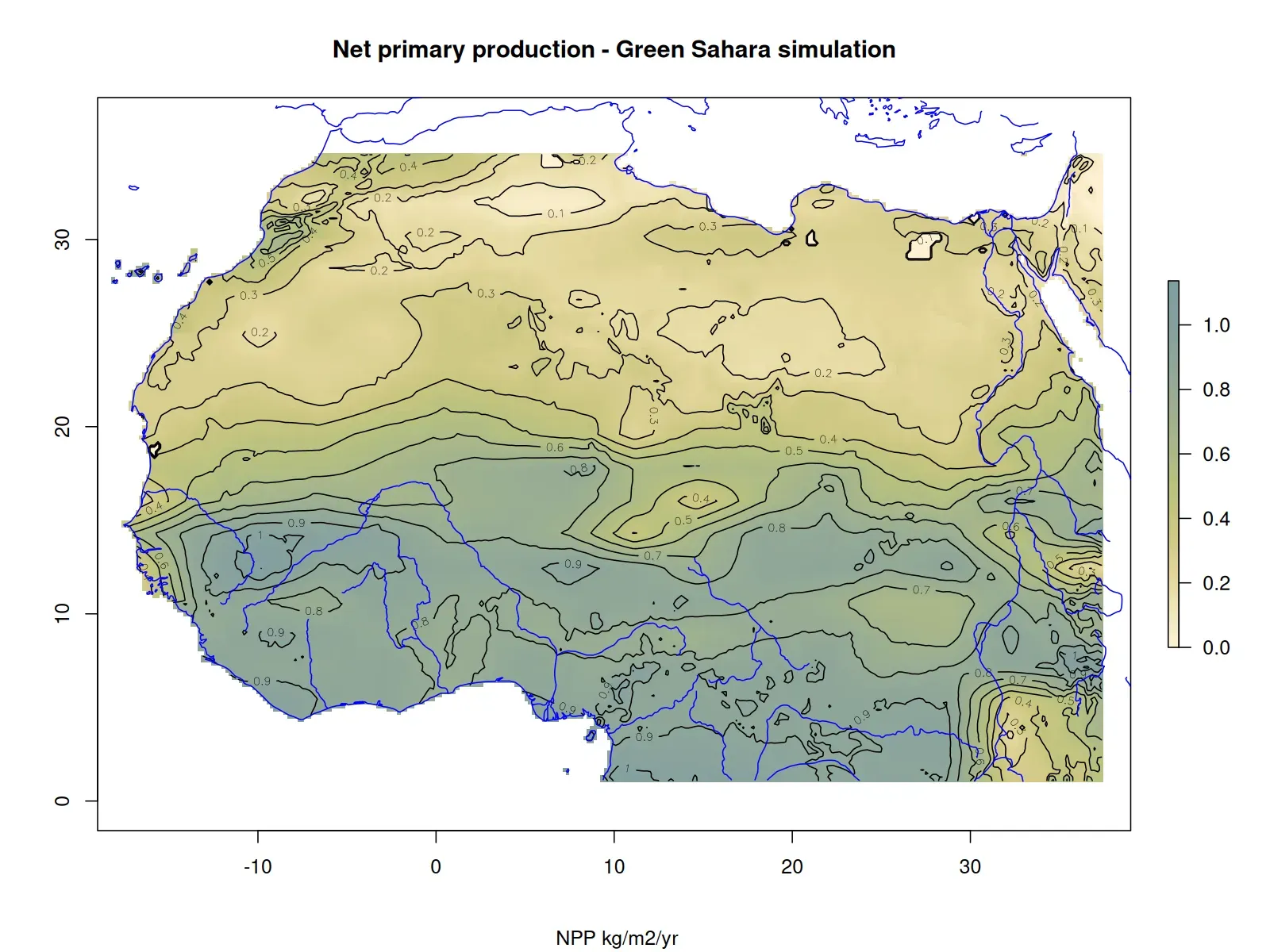
Towards the end of the African Humid Period between seven thousand and five thousand years ago the progressive desiccation of the region led to a widespread depopulation and abandonment of North African sites, though these populations did not disappear, with the large-scale exodus coincident with the rise of sedentary life and pharaonic culture along the Nile River. Think about the implications of that for a moment.
The transition led to a widespread settlement of the Sahara and the Arabian Deserts, and had a profound effect on African cultures, such as the birth of the Pharaonic civilization. The drying of the Sahara didn’t just reshape the landscape. It fundamentally altered human history, pushing populations into concentrated river valleys where some of the world’s earliest complex civilizations would emerge. You could argue that ancient Egypt exists partly because the Sahara turned into a desert.
What you’ve learned here is more than just ancient history. It’s a reminder that Earth’s climate systems can shift dramatically, transforming entire regions in ways that seem almost impossible. The Sahara wasn’t always a desert, and who knows what landscapes we take for granted today might look completely different thousands of years from now. Did you expect that such a barren place once thrived with so much life?