If you grew up thinking dinosaurs were mostly a North American or Asian thing, Muttaburrasaurus is the Australian plot twist you probably never saw coming. It is big, bizarrely built, and wrapped in just enough mystery to keep both scientists and dinosaur fans arguing in the best possible way. There is something oddly charming about a creature that looks part duck-billed herbivore, part kangaroo on steroids, and part walking question mark.
What makes Muttaburrasaurus so fascinating is not only what we know, but also how much we still do not. We have skulls, skeletons, footprints, and yet basic questions like exactly how it sounded, how it held its body, or even which dinosaur family it truly belonged to are still up for debate. That tension between evidence and uncertainty is exactly what turns its story from a dry scientific case study into a surprisingly human tale of curiosity, argument, and discovery.
A Chance Find on an Australian Riverbank
The story of Muttaburrasaurus starts in the kind of place most people would never connect to dinosaurs: a quiet spot along the Thomson River near the small Queensland town of Muttaburra. In the early 1960s, a local grazier out checking the country noticed something odd sticking out of the rock – bones that clearly did not belong to a cow. That moment, on a routine day in the outback, kicked off one of Australia’s most iconic fossil stories. It feels almost unreal that a dinosaur now known worldwide began as a “what on earth is that” moment in the middle of cattle country.
Paleontologists from Brisbane were called in, the bones were carefully dug out, and over time a surprisingly complete skeleton emerged from the rock. For a continent that does not always treat fossils kindly, this was a serious stroke of luck. Once the material was cleaned up and studied, scientists realized they were dealing with something new and substantial – a large herbivorous dinosaur that clearly belonged to the mid-Cretaceous world, but with a shape and skull that did not quite match anything they knew. From that dusty riverbank, Muttaburrasaurus officially entered the scientific record and, eventually, Australian pop culture.
A Dinosaur With a Very Odd Nose
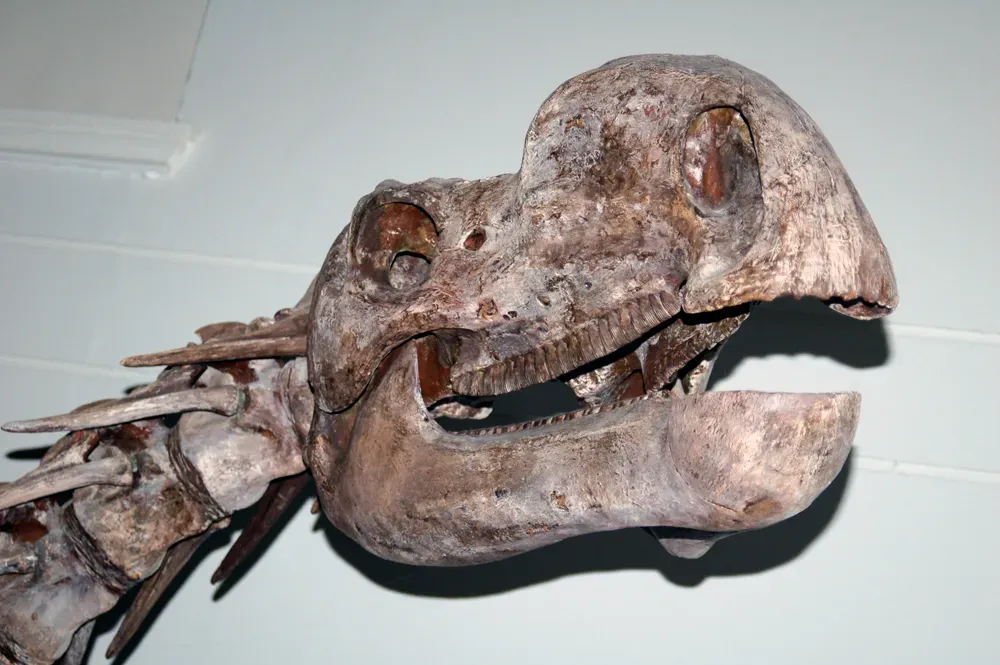
If you look at reconstructions of Muttaburrasaurus, the first thing that jumps out is the skull. Instead of a simple, smooth snout, it has a raised, swollen area over the muzzle that makes it look like it is halfway to growing a horn or a built-in speaker. This bony bulge, part of the nasal region, is one of the biggest reasons Muttaburrasaurus has remained so famous and so puzzling. It practically begs you to ask what on earth that feature was for. It is the kind of anatomical quirk you would expect in a sci-fi creature, not a real animal that once walked around Queensland.
Scientists have suggested that this strange nasal structure might have supported a resonating chamber of soft tissue, kind of like an internal sound box. That would mean Muttaburrasaurus could potentially produce deep, booming calls that carried over long distances, used for communication within the herd or maybe to intimidate rivals. Others have wondered if the bulge was more for visual display, a way to signal maturity or status, much like the crests in some other dinosaurs. The honest answer is that we do not know for sure, and probably never will, but the nose alone turns this dinosaur from a generic plant-eater into a creature with real personality.
Body Plan: Somewhere Between Kangaroo and Crocodile
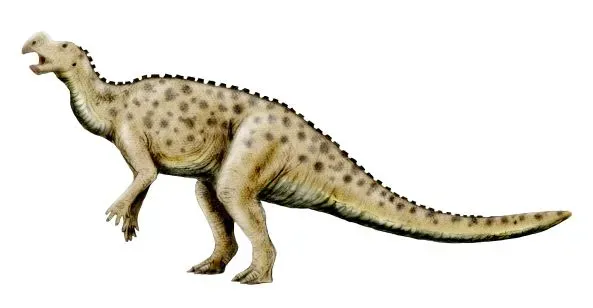
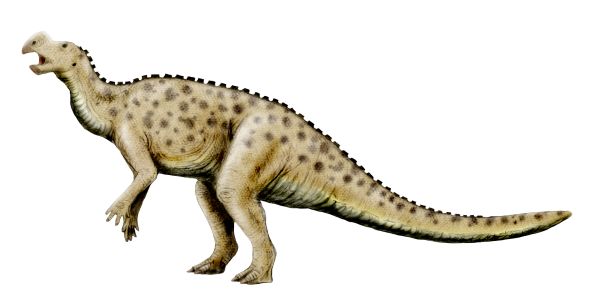
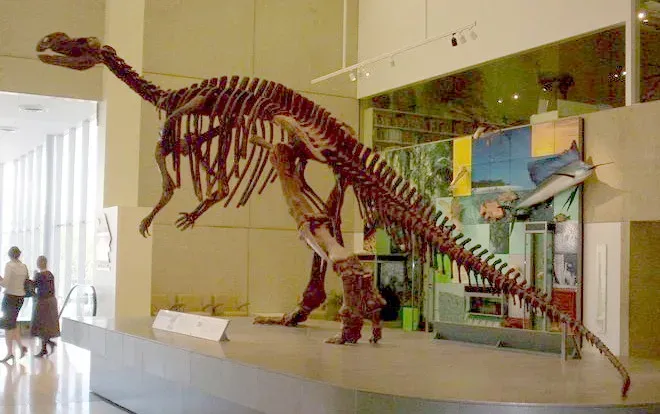
Strip away the flashy nose, and the rest of Muttaburrasaurus is still pretty impressive. It was no lightweight, with estimates putting it at several meters long and weighing as much as a small truck. Its body was built low and solid, with a long tail for balance and strong hind limbs that suggest it could move at a decent clip when it needed to. The front legs were shorter but still robust enough that it likely walked on all fours most of the time, dropping into a more upright, two-legged posture when it wanted to run or reach higher vegetation.
That mix of possible postures makes Muttaburrasaurus feel oddly relatable, like an animal constantly adjusting how it moves depending on what the day throws at it. Some reconstructions give it a slightly kangaroo-like stance when rearing up, while others showcase a more crocodile-length profile when it is on all fours. Throw in a long, beaked snout adapted for snipping plants and rows of complex cheek teeth designed for grinding, and you get a creature perfectly built for life as a mid-sized, adaptable herbivore. It was not the tyrant of its ecosystem, but it was clearly no pushover either.
What Did Muttaburrasaurus Actually Eat?
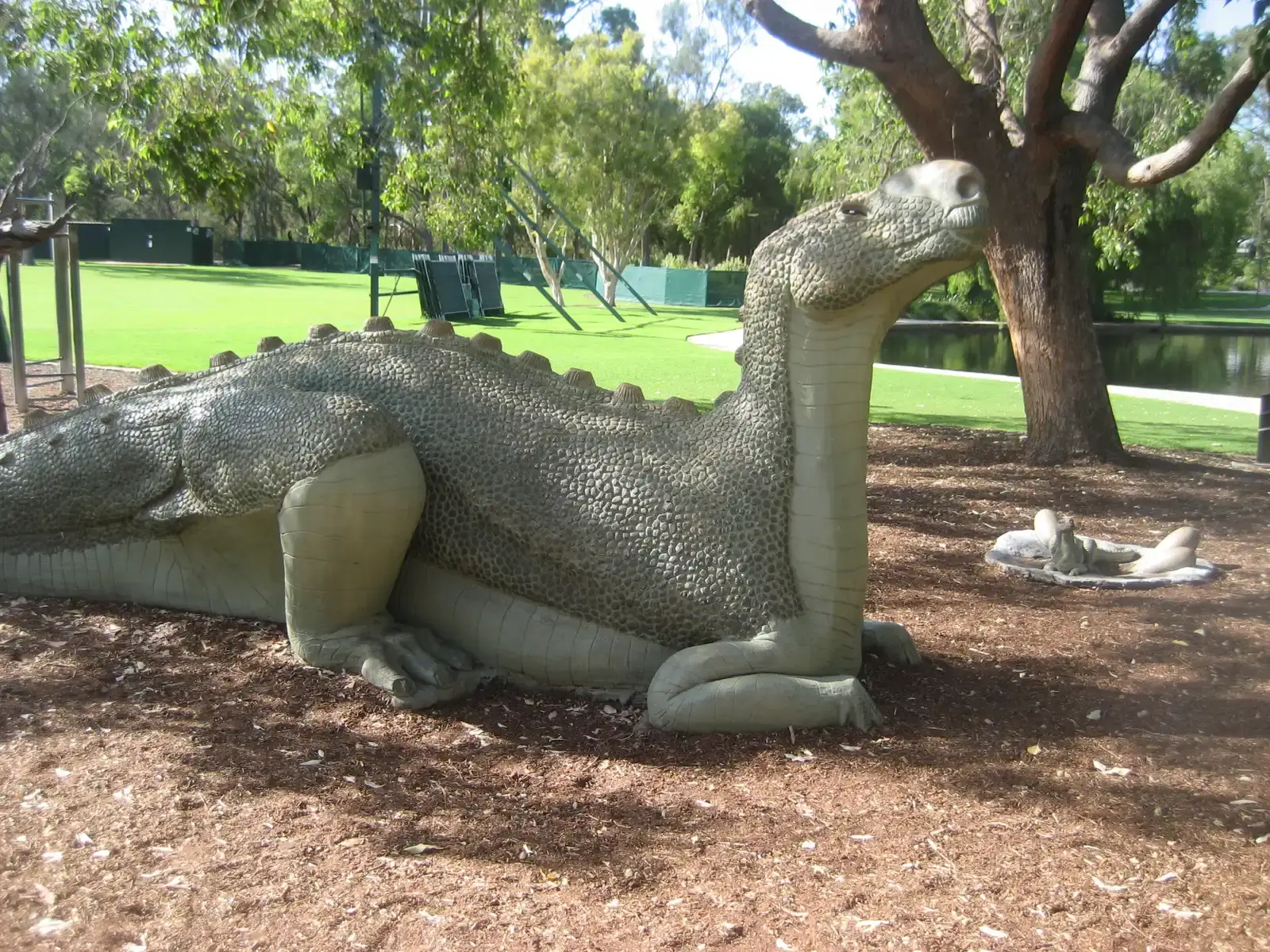
In a world where giant predators get all the attention, plant-eaters like Muttaburrasaurus quietly did the heavy lifting of keeping entire ecosystems running. Its teeth are the main clue to its diet: they are packed tightly, forming grinding surfaces that could slice and mash tough vegetation. This suggests it fed on fibrous plants that needed serious processing – think ferns, cycads, and early flowering plants that were spreading across the mid-Cretaceous landscape. It probably spent much of its day doing what most large herbivores do: methodically chewing its way across the environment, step by step, mouthful by mouthful.
What makes this interesting is how early Australia’s plant communities were evolving at that time. Flowering plants were beginning to rise, but more ancient plant groups still covered large areas. Muttaburrasaurus was living right at that transition, and its dental equipment seems perfectly tuned for a mixed menu. I like to picture it as an outback browser, shifting between different patches of vegetation the way we might rotate between snacks in the pantry. Its teeth and jaws tell a story of flexibility rather than specialization, which might explain why this kind of dinosaur could thrive in a world that was steadily changing around it.
Where Exactly Does It Fit on the Dinosaur Family Tree?
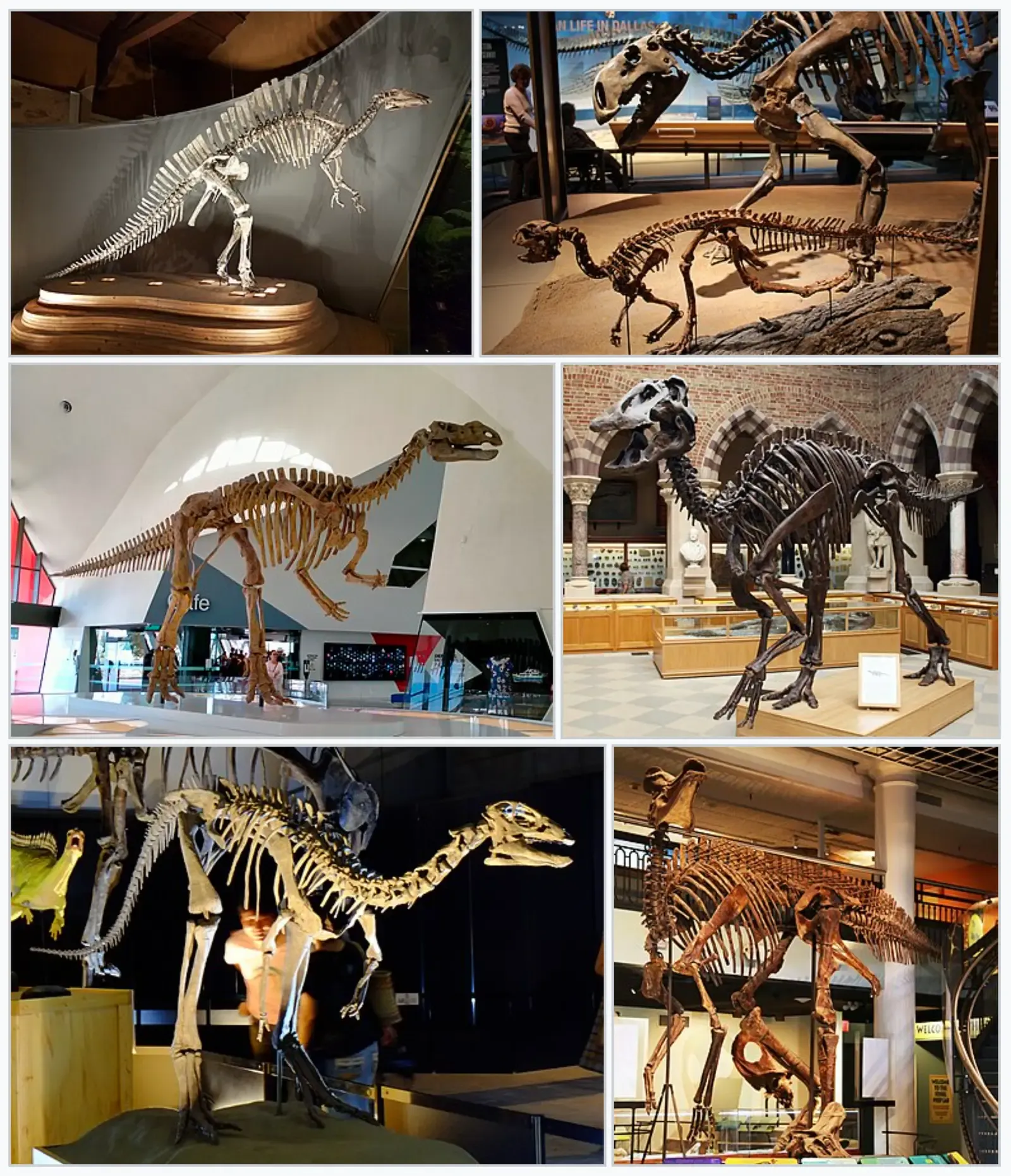
Here is where the story gets messy in the best way. For years, Muttaburrasaurus was often lumped in with the iguanodonts, a group of sturdy, beaked herbivores related to the later duck-billed hadrosaurs. It has the right general body shape and dental style to sit somewhere in that neighborhood, so that was a natural first guess. But as more fossils have been described and the dinosaur family tree has been reshuffled, some researchers have argued that Muttaburrasaurus might sit a bit further outside the classic hadrosaur line than we once thought.
This uncertainty is not a failure of science; it is a sign that the evidence is complex and the story is still unfolding. Different analyses shuffle it around within the broader group of ornithopods, depending on which anatomical features are emphasized. To me, that is part of the charm. Muttaburrasaurus refuses to fit neatly into any simplistic box, reminding us that evolution does not care about our tidy categories. It likely represents a slightly more primitive offshoot of the ornithopod story, an Australian variant evolving in relative isolation while similar dinosaurs elsewhere took different paths.
How Muttaburrasaurus Became an Australian Icon
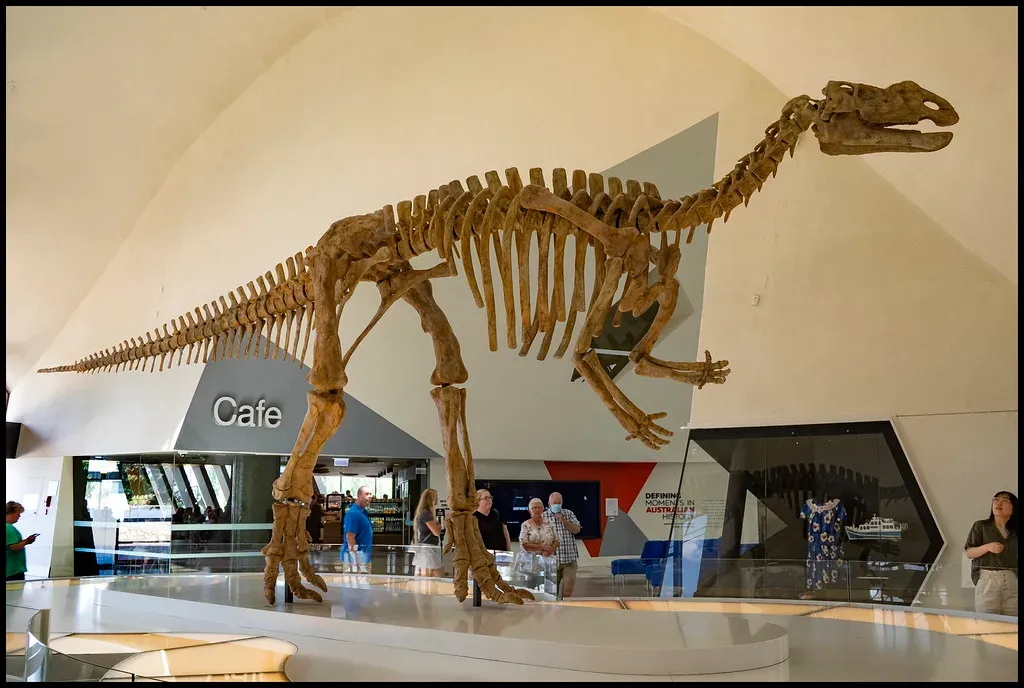
Despite all the technical debates, Muttaburrasaurus has pulled off something few dinosaurs manage: it has become a genuine cultural icon. Its name shows up in museums, documentaries, kids’ books, and even on tourist signs across Queensland. Part of the appeal is surely the name itself – it is long, strange, very Australian, and almost musical once you get the hang of saying it. Another part is that nasal bulge, which gives artists and toy designers something memorable to play with. It stands out on a page or a shelf in a way that some more “normal” dinosaurs simply do not.
On a deeper level, I think Australians were hungry for a dinosaur they could truly claim as their own, and Muttaburrasaurus arrived at exactly the right time. It gave local museums a flagship species and students something homegrown to get excited about in science class. For a continent that is sometimes overlooked in dinosaur discussions compared to North America or Asia, Muttaburrasaurus is a quiet statement that the deep past of Australia is every bit as dramatic and strange. In that sense, it is more than just a fossil; it is a symbol of scientific curiosity rooted in local landscapes and local stories.
Why Muttaburrasaurus Still Matters Today
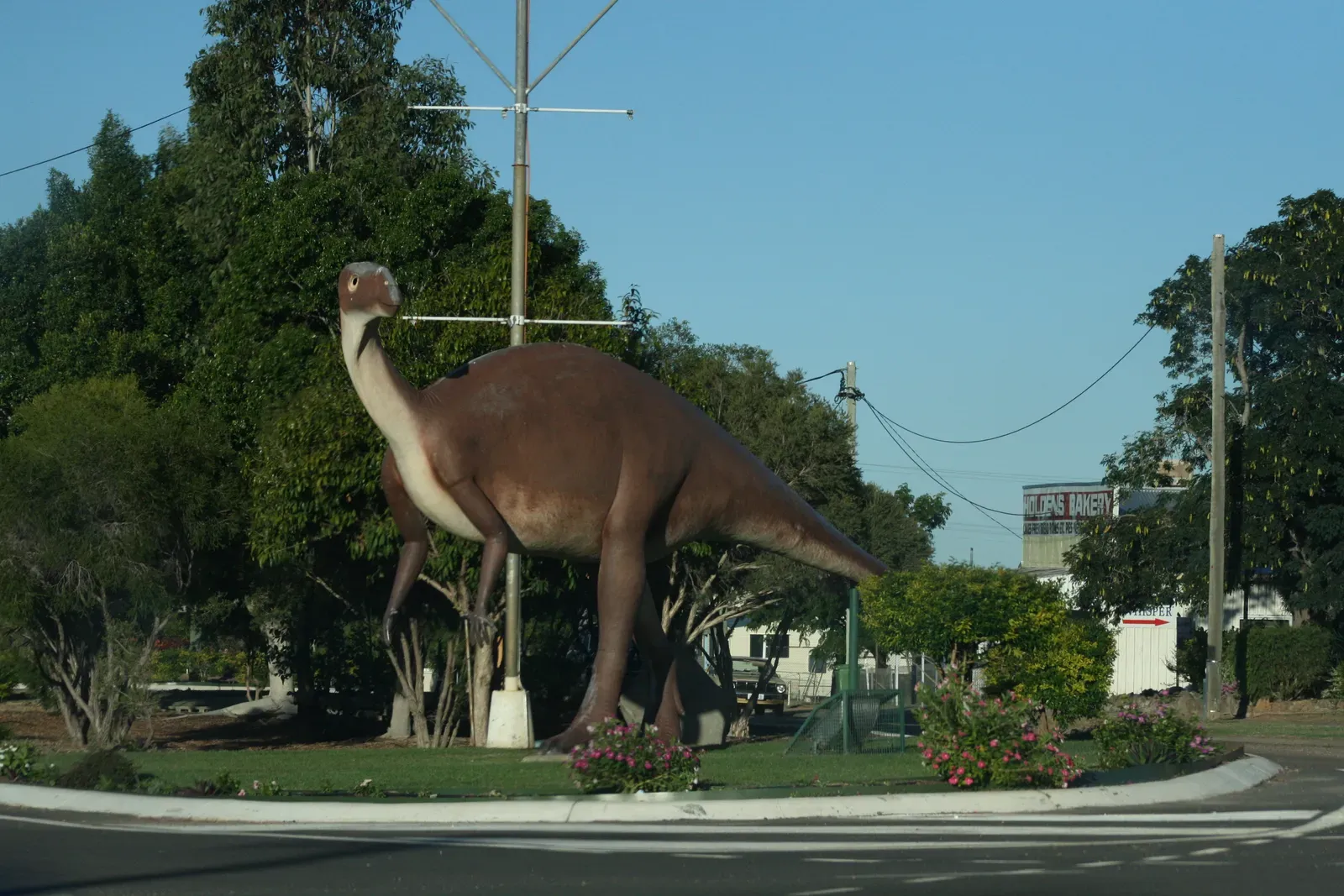
It would be easy to treat Muttaburrasaurus as a solved puzzle from the 1960s and move on, but that would completely miss why it still matters. Each new fossil from Australia’s Cretaceous rocks has the potential to reshape how we see this dinosaur – its relatives, its environment, even its place on the globe. Muttaburrasaurus is a key part of understanding how dinosaur communities evolved on a continent that was breaking away and drifting toward its modern isolation. It anchors a whole slice of Earth’s history that we are still only beginning to map out with any detail.
Personally, I think its story is also a reminder that science is at its best when it leans into uncertainty instead of pretending to have all the answers. We have a good sense of its size, shape, and lifestyle, but the exact details of its sound, its colors, and its behavior will always stay just out of reach. That gap between bones and life leaves room for imagination, but it also keeps us humble. In a world obsessed with quick hot takes and instant certainty, a half-mysterious dinosaur from rural Queensland quietly whispers a different message: that some of the most meaningful stories are the ones we are still actively figuring out.
Conclusion: A Dinosaur That Refuses to Be Boring
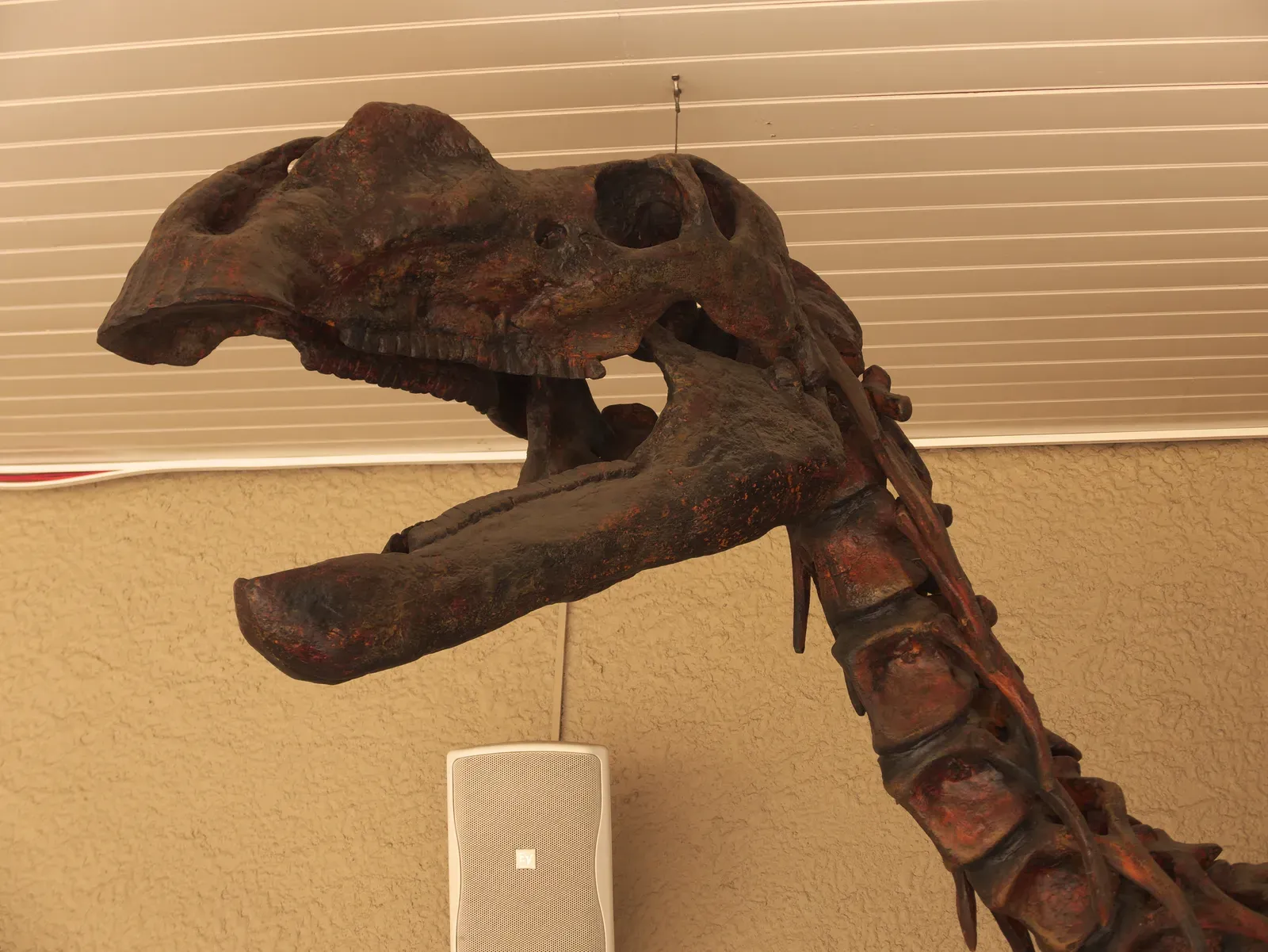
When you step back, Muttaburrasaurus is not the biggest dinosaur, the fiercest predator, or the most completely known fossil we have. Yet I would argue it is one of the most important animals in Australia’s deep past, precisely because it refuses to be boring or easily categorized. Its odd nose, shifting classification, and outback origin combine into a story that feels less like a neat textbook entry and more like an ongoing conversation between fossils, scientists, and the public. In a very real sense, Muttaburrasaurus shows that dinosaurs are not just about teeth and bones – they are about how we see ourselves in the history of our own land.
If anything, I think we tend to underestimate just how radical it is that an animal that died out tens of millions of years ago can still spark new questions today. That alone makes Muttaburrasaurus worth paying attention to, even if another flashy predator is getting more headlines this week. It is a reminder that quiet, stubborn puzzles can be just as thrilling as dramatic discoveries, and that local stories can carry global weight. Next time you see its unusual skull in a museum or a sketch of it striding across an ancient floodplain, it is worth asking yourself: did you ever expect a single strange herbivore from Queensland to carry this much of a story on its back?