The vast expanses of prehistoric Earth harbored creatures so bizarre and otherworldly that they challenge our very understanding of life itself. These weren’t your typical Hollywood dinosaurs stomping through primordial forests. Instead, nature crafted beings so strange, so impossibly designed, that encountering them today would make us question whether we’d discovered alien life forms rather than ancient Earth inhabitants.
From the misty swamps of the Cretaceous to the scorching deserts of the Triassic, evolution experimented with forms that seem almost too fantastical to be real. Yet fossilized remains tell us these creatures once ruled their domains with adaptations so peculiar they look like they were designed by an alien intelligence with a wild sense of humor.
Therizinosaurus: The Giant Clawed Gentle Giant
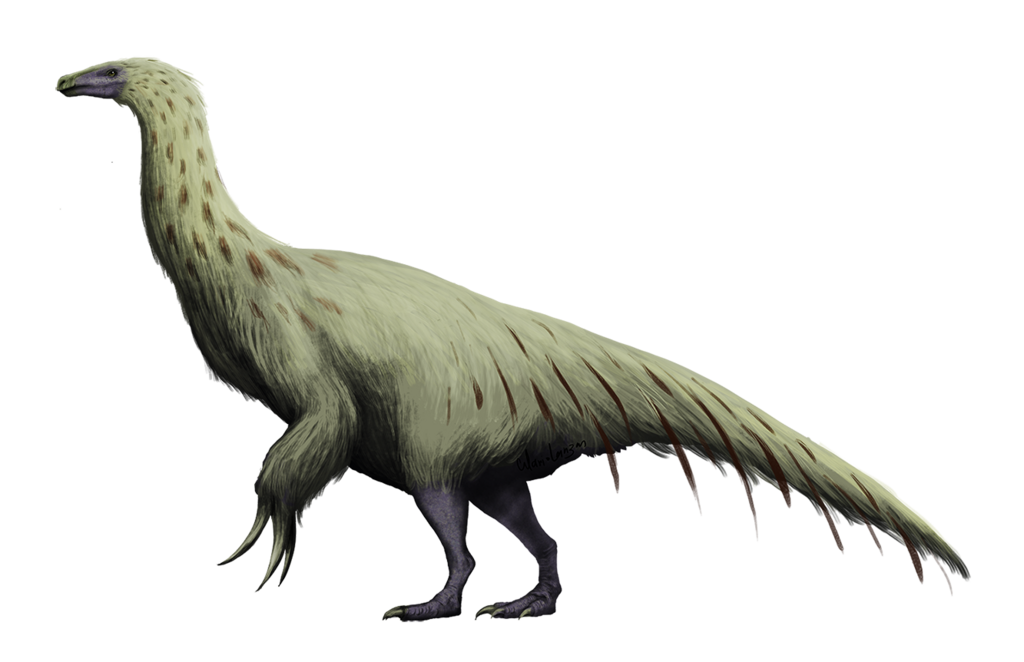
Picture a creature standing 16 feet tall with claws longer than baseball bats, yet this imposing beast was a vegetarian who likely spent its days delicately plucking leaves from treetops. Therizinosaurus possessed the most enormous claws ever discovered on any animal, reaching lengths of over three feet each.
These massive talons weren’t designed for hunting prey or battle, but rather for pulling down high branches to access the choicest vegetation. The sight of this towering giant gracefully using its sword-like claws to harvest plants would have been both mesmerizing and utterly alien to witness.
What makes this dinosaur even more extraordinary is its combination of fearsome appearance with peaceful intentions. Evolution rarely produces such contradictions, making Therizinosaurus appear like a misplaced creature from another world entirely.
Carnotaurus: The Horned Devil of South America

Imagine a T-Rex that decided to grow devil horns and become a sprinter, and you’ll begin to understand the sheer alienness of Carnotaurus. This predator sported two prominent horns above its eyes, giving it a demonic appearance that would terrify even the bravest paleontologist.
Its arms were so reduced they made T-Rex look well-equipped by comparison, essentially becoming useless stumps without even functional hands. Yet this apparent disadvantage was offset by incredibly powerful legs that could propel this 8-foot-tall monster at speeds exceeding 35 miles per hour.
The combination of supernatural speed, demonic horns, and a massive jaw filled with razor-sharp teeth created a predator that seems torn from the pages of science fiction rather than Earth’s natural history.
Amargasaurus: The Spined Sailboat Dinosaur

Walking across the landscapes of ancient Argentina, Amargasaurus looked like a living sailboat had somehow learned to walk on four legs. This sauropod bore two parallel rows of tall spines along its neck and back, creating a distinctive double-sailed silhouette unlike any creature alive today.
These spines may have supported colorful skin membranes used for display, turning this dinosaur into a walking billboard capable of flashing brilliant colors to communicate with its kind. The sight of herds of these creatures moving across prehistoric plains, their sail-like displays rippling in ancient winds, would have been breathtakingly alien.
Unlike its massive cousins like Brontosaurus, Amargasaurus remained relatively small for a sauropod, but its unique spinal architecture made it one of the most visually striking dinosaurs ever discovered.
Parasaurolophus: The Living Trumpet

Nature decided to attach a curved trumpet to the head of Parasaurolophus, creating a dinosaur that looked more like a musical instrument than a living creature. This elaborate hollow crest could produce haunting musical notes that echoed across prehistoric landscapes, turning communication into prehistoric concerts.
Different species of Parasaurolophus possessed crests of varying lengths and curves, each producing distinct musical tones that helped identify species and individuals from vast distances. Scientists have actually recreated these sounds using fossilized skulls, revealing hauntingly beautiful music that once filled ancient air.
The image of herds of these creatures creating symphonic calls at dawn and dusk adds an almost magical quality to our understanding of prehistoric life, making them seem like beings from a world where evolution favored beauty over mere survival.
Dracorex: The Dragon-Faced Enigma

With a skull that appears designed by medieval artists imagining dragons, Dracorex sports a face covered in spikes, knobs, and horns that give it an unmistakably mythical appearance. Its scientific name literally means “dragon king of Hogwarts,” reflecting how closely it resembles legendary creatures from fantasy literature.
This small dinosaur’s elaborate cranial ornamentation served no apparent practical purpose beyond display, suggesting that prehistoric Earth supported creatures dedicated purely to aesthetic grandeur. The discovery of Dracorex blurred the lines between paleontology and mythology in ways that continue to captivate researchers.
Some scientists theorize that Dracorex might actually represent a juvenile stage of other known dinosaurs, but its dragon-like features remain so distinctive that it appears almost too fantastical to have existed alongside more familiar prehistoric creatures.
Gigantoraptor: The Feathered Giant That Redefined Raptors

Everything you thought you knew about raptors gets thrown out the window when you encounter Gigantoraptor, a feathered colossus that stood 16 feet tall and weighed as much as an elephant. This wasn’t your typical swift, small raptor darting through underbrush, but rather a towering giant covered in colorful plumage.
Despite its massive size, Gigantoraptor was likely an omnivore that used its great height to browse vegetation while occasionally snapping up smaller prey. The image of this feathered giant strutting across ancient landscapes like a enormous colorful bird challenges every preconception about what raptors should look like.
Its discovery revolutionized our understanding of raptor evolution and painted a picture of prehistoric ecosystems filled with creatures that seem almost too bizarre to be real.
Nigersaurus: The Vacuum Cleaner Dinosaur

Picture a dinosaur whose mouth looks like it was designed by an alien engineer obsessed with efficiency, and you’ll begin to understand Nigersaurus. This peculiar sauropod possessed over 500 tiny teeth arranged in rows across an incredibly wide, flat mouth that resembled a living vacuum cleaner.
Its neck could barely lift its head above ground level, forcing this dinosaur to spend its entire life with its face pointed downward, sweeping up vegetation like a prehistoric lawn mower. The sight of herds of these creatures moving across ancient plains, their heads constantly lowered in synchronized grazing patterns, would have been utterly mesmerizing.
This extreme specialization for ground-level feeding created a dinosaur so uniquely adapted that it appears almost mechanical rather than biological, as if nature decided to experiment with living machinery.
Concavenator: The Humped Mystery

Concavenator sported a triangular hump on its back that gave it the appearance of a carnivorous camel, complete with what may have been primitive feathers along its arms. This Spanish predator combined features so unusual that paleontologists initially struggled to classify it properly.
The purpose of its distinctive hump remains one of paleontology’s most intriguing mysteries, with theories ranging from fat storage to elaborate display structure. Whatever its function, this feature gave Concavenator a silhouette unlike any other predatory dinosaur.
Recent discoveries suggest it may have possessed primitive feathers or proto-feathers, adding another layer of alienness to an already bizarre creature that seems assembled from parts of different animals entirely.
Epidexipteryx: The Four-Winged Fashion Statement

Imagine a small dinosaur that decided fashion was more important than flight, and you’ll understand Epidexipteryx perfectly. This pigeon-sized creature sported four elaborate ribbon-like tail feathers that were purely ornamental, serving no aerodynamic purpose whatsoever.
Its arms bore primitive feathers unsuitable for flight, suggesting this dinosaur was more interested in looking fabulous than achieving aerial mobility. The sight of these creatures displaying their ornate plumage in prehistoric forests would have resembled a fashion show more than a survival strategy.
Epidexipteryx represents evolution’s artistic side, proving that even in the harsh prehistoric world, some creatures prioritized beauty and display over pure functionality.
Masiakasaurus: The Forward-Facing Fang Monster

Most carnivorous dinosaurs had sensibly arranged teeth pointing backward to help trap prey, but Masiakasaurus decided to be different by sporting forward-projecting fangs that gave it the appearance of a prehistoric vampire. These bizarre dental arrangements seem almost counterproductive for a predator.
Scientists believe these unusual teeth were specialized for catching fish and small prey, turning this dinosaur into a prehistoric angler with built-in fishing hooks. The image of this creature wading through ancient streams, its strange fangs perfectly adapted for snatching slippery prey, adds yet another layer of otherworldliness to our understanding of dinosaur diversity.
Its name appropriately means “vicious lizard,” though its fishing lifestyle was probably less dramatic than its fearsome dental display might suggest.
Kosmoceratops: The Most Ornamented Face in Natural History

If aliens designed a dinosaur to showcase their mastery of decorative excess, they might have created something like Kosmoceratops. This ceratopsian possessed 15 horns and spikes adorning its skull, creating the most elaborately ornamented face in the entire fossil record.
Its frill curved forward in graceful arcs while supporting an array of spikes that would make a punk rocker jealous, all arranged in patterns so complex they appear almost architectural. The purpose of such extreme ornamentation likely involved species recognition and courtship displays that must have been spectacular to witness.
The discovery of Kosmoceratops proved that evolution could produce creatures so ornate they challenge our understanding of natural selection’s practical limitations.
Deinocheirus: The Mystery Arms That Rewrote Paleontology

For decades, paleontologists possessed only the massive arms of Deinocheirus, each measuring 8 feet long with claws the size of crowbars, leading to wild speculation about what kind of monster they belonged to. When complete skeletons were finally discovered, the reality proved even stranger than fiction.
This enormous creature combined the arms of a terrifying predator with the lifestyle of a peaceful giant, using its massive claws to dig up plants and possibly crack open termite mounds. Standing 16 feet tall with a duck-like bill and a sail on its back, Deinocheirus looked like evolution’s answer to a creature design contest where the only rule was “make it weird.”
The contrast between its fearsome arms and gentle nature creates cognitive dissonance that makes this dinosaur seem almost impossible, yet fossil evidence confirms its bizarre reality.
Linhenykus: The One-Fingered Wonder

Evolution took minimalism to its logical extreme with Linhenykus, a small dinosaur that possessed only one functional finger on each hand, complete with an enormous claw that dominated its tiny arms. This chicken-sized creature represents the ultimate reduction of the typical dinosaur hand structure.
Scientists believe this single oversized digit was perfectly adapted for digging into termite mounds and extracting insects, turning Linhenykus into a prehistoric anteater with attitude. The sight of this small dinosaur industriously excavating insect colonies with its specialized single-finger tools would have been both charming and utterly alien.
Its extreme anatomical simplification challenges our understanding of how evolution can strip away seemingly essential features while maintaining perfect functionality for specialized lifestyles.
The Living Proof That Reality Exceeds Fiction

These remarkable creatures remind us that our planet’s history is filled with life forms so extraordinary they seem borrowed from the wildest science fiction. Each bizarre adaptation tells a story of evolutionary experimentation that pushed the boundaries of what we consider possible in the natural world.
The discovery of such alien-seeming dinosaurs continues to revolutionize our understanding of prehistoric life and challenges us to expand our imagination about what forms life might take elsewhere in the universe. Their existence proves that nature’s creativity far exceeds anything human imagination has yet conceived.
When we gaze at reconstructions of these impossible creatures, we’re reminded that our own planet once hosted beings so strange they might as well have arrived from distant stars. What other equally bizarre creatures might be waiting in rocks yet to be discovered?