Earth’s landscapes once echoed with the thunderous steps of colossal dinosaurs, creatures that commanded the planet for more than 150 million years. Their dominance spanned from lush forests to arid plains, shaping ecosystems across continents. Then, approximately 66 million years ago, the Cretaceous-Paleogene extinction event abruptly terminated this era, erasing non-avian dinosaurs from the fossil record.
A Golden Age of Giants
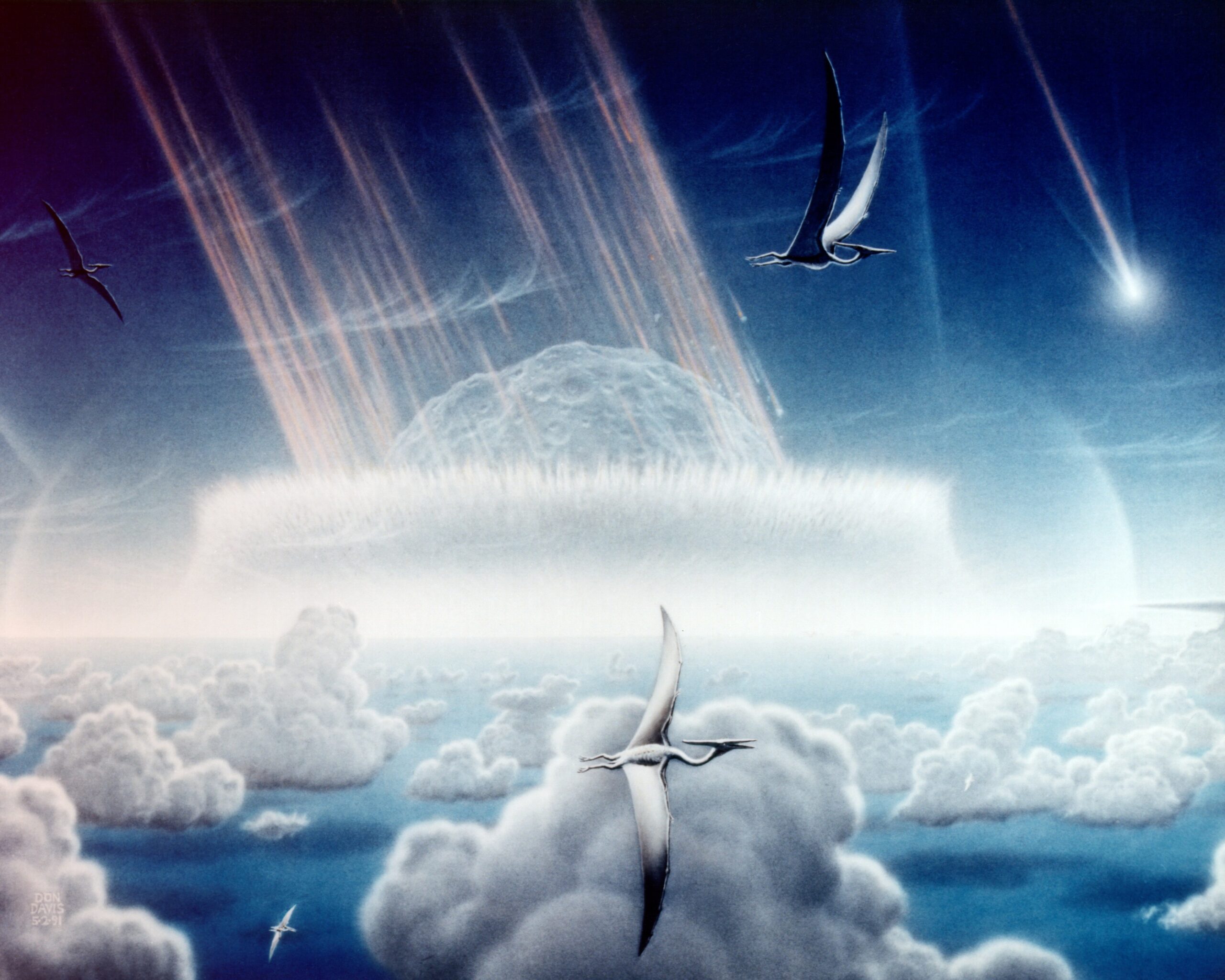
A Golden Age of Giants (Image Credits: Upload.wikimedia.org)
Dinosaurs first emerged during the Late Triassic period, around 233 million years ago, and quickly rose to prominence as apex predators and herbivores alike. They adapted to diverse environments, from towering sauropods grazing on treetops to swift theropods hunting across open terrains. This group of reptiles defined the Mesozoic Era, often called the Age of Reptiles, where they outnumbered and outlasted most competitors.
By the Late Cretaceous, dinosaurs had achieved peak diversity. Species like Tyrannosaurus rex prowled North America, while herds of Triceratops roamed similar grounds. Their success stemmed from efficient metabolisms, varied diets, and reproductive strategies that ensured survival through shifting climates. Paleontologists note that no single weakness plagued them before the end; instead, they thrived until the final moments.
The K-Pg Boundary: Evidence of Doom
Geologists identified the Cretaceous-Paleogene boundary through a thin clay layer rich in iridium, a rare metal on Earth but common in asteroids. This marker, dated precisely to 66.04 million years ago, separates abundant dinosaur fossils below from their total absence above. Shocked quartz and tektites in the same strata point to immense energies unleashed at that time.
The boundary records a global die-off affecting 75 percent of species, including marine reptiles, ammonites, and flying pterosaurs. Land ecosystems collapsed as food chains unraveled from the top down. Fossil sites worldwide, from Montana’s Hell Creek Formation to Italy’s cliffs, show this sharp transition, underscoring the event’s uniformity.
Chicxulub: The Smoking Gun
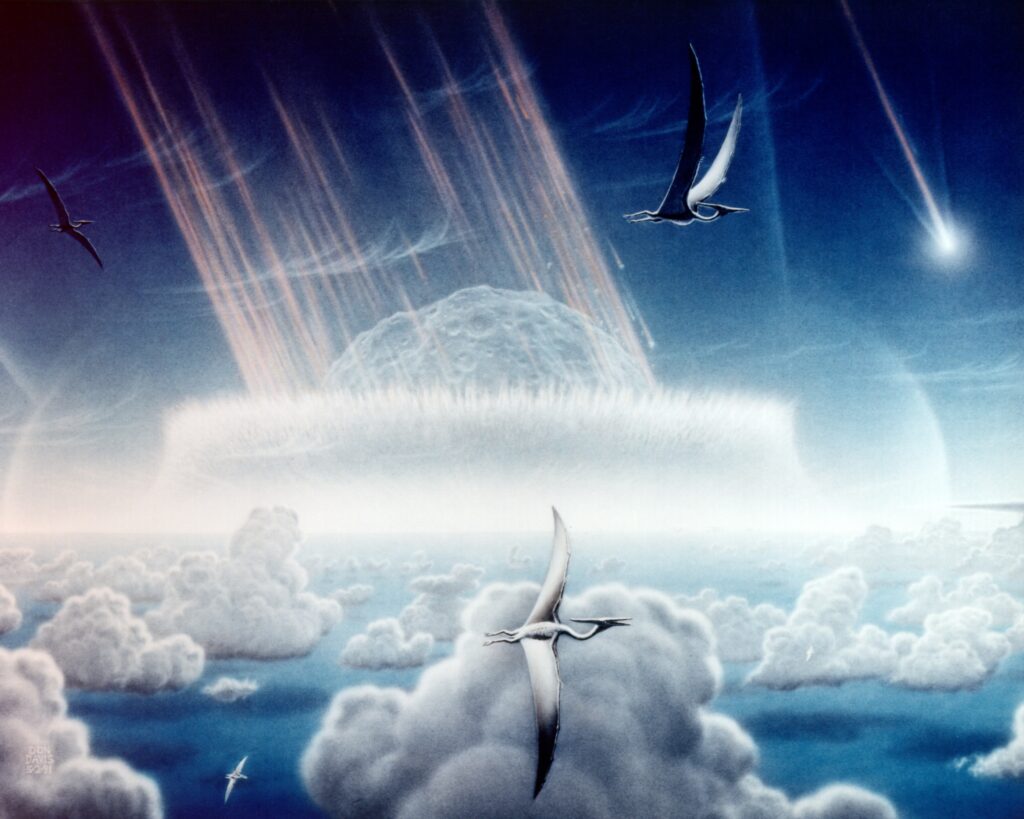
Off Mexico’s Yucatán Peninsula, scientists discovered the 180-kilometer-wide Chicxulub crater, formed by a 10-to-15-kilometer asteroid slamming into Earth at 20 kilometers per second. The impact released energy equivalent to billions of atomic bombs, vaporizing rock and ejecting debris into the atmosphere. Tsunamis surged thousands of feet high, while wildfires ignited forests continents away.
Soot and sulfate aerosols blocked sunlight for years, triggering a nuclear winter-like cooling. Photosynthesis halted, starving herbivores and cascading starvation to carnivores. Though Deccan Traps volcanism in India contributed stress beforehand, the asteroid strike proved decisive, as refined dating aligns it exactly with the extinction.
Aftermath and Unexpected Survivors
The post-impact world plunged into darkness and cold, with acid rain poisoning waters and oceans acidifying. Plankton, base of marine food webs, declined sharply, dooming larger sea life. Recovery took millions of years, with ferns briefly dominating barren landscapes – a “fern spike” in the fossil record.
Small mammals, birds (avian dinosaurs), crocodiles, and turtles endured, thanks to burrowing, small size, or omnivory. These survivors seeded the Cenozoic Era, where mammals eventually rose to dominance. Birds, direct dinosaur descendants, remind us that not all perished.
- Asteroid impact vaporized targets and caused global quakes.
- Debris cloud blocked sun, ending plant growth for years.
- 75-80% species loss, but small adaptable life persisted.
- Mammals diversified post-event, leading to modern biodiversity.
- Boundary clay layer provides irrefutable timeline evidence.
Key Takeaways
The Cretaceous-Paleogene extinction reshaped life forever, clearing paths for mammals and underscoring cosmic vulnerability. One asteroid redefined Earth’s trajectory, proving even giants fall swiftly. What lessons does this ancient cataclysm hold for our world today? Share your thoughts in the comments.