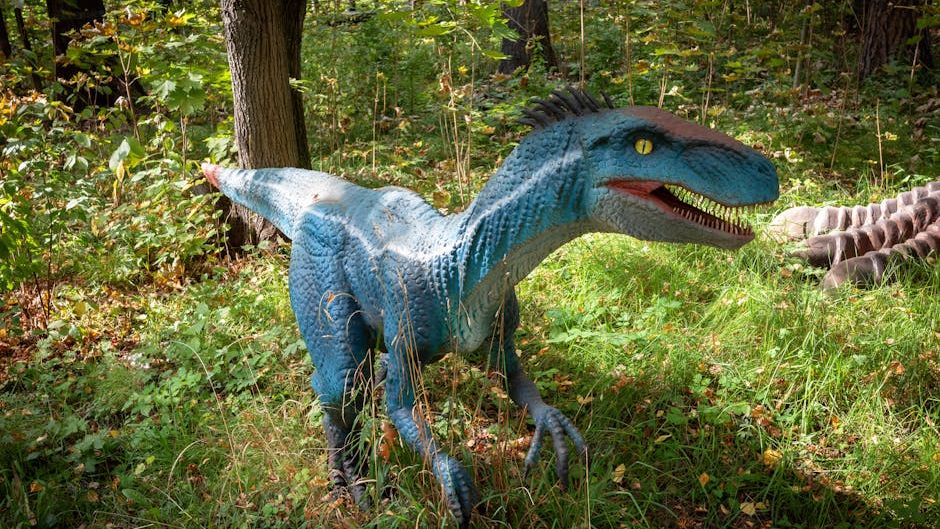
For most of human history, our mental image of dinosaurs was painted in shades of green, gray, and muddy brown. Think about every children’s book, every museum diorama, every early Hollywood blockbuster. The creatures that ruled our planet for roughly 165 million years were depicted as gloriously dull. Honestly, it made them seem almost boring. But that picture, it turns out, was almost certainly wrong.
Science has spent the last two decades quietly demolishing that old assumption, and what’s emerging in its place is nothing short of breathtaking. Dinosaurs may have worn the kind of vivid, complex patterns that rival anything you’d see on a tropical bird today. So let’s dive in, because the true story of how scientists are cracking open the color code of the ancient world is one of the most exciting detective stories in modern science.
The Old Assumption: Why Dinosaurs Were Always Painted Gray
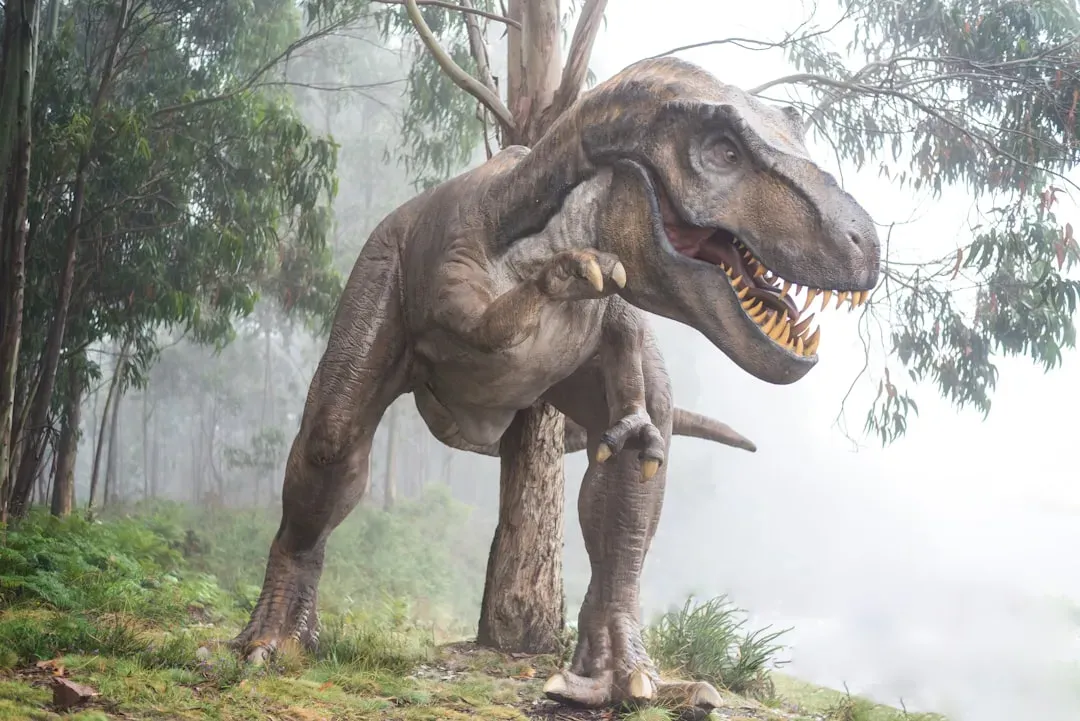
Let’s be real: the “all dinosaurs are gray” idea was never based on hard evidence. It was a default, a scientific shrug, an educated guess made by artists and researchers who simply had nothing else to go on. Dinosaur fossils came to us as tracks, bones, and the rare skin impression that revealed the texture of dinosaur scales but not their hues. For generations, that was simply all you had to work with.
Fossils revealed virtually all we know about dinosaurs, but their color had always been left to our imagination. In fact, paleontologist Michael Benton of the University of Bristol in the United Kingdom always taught his students that the colors of dinosaurs were something we would simply never know. That statement, made by one of the field’s most respected scientists, tells you just how impossible the task once seemed. Fortunately, science had other plans.
The Melanosome Breakthrough That Changed Everything
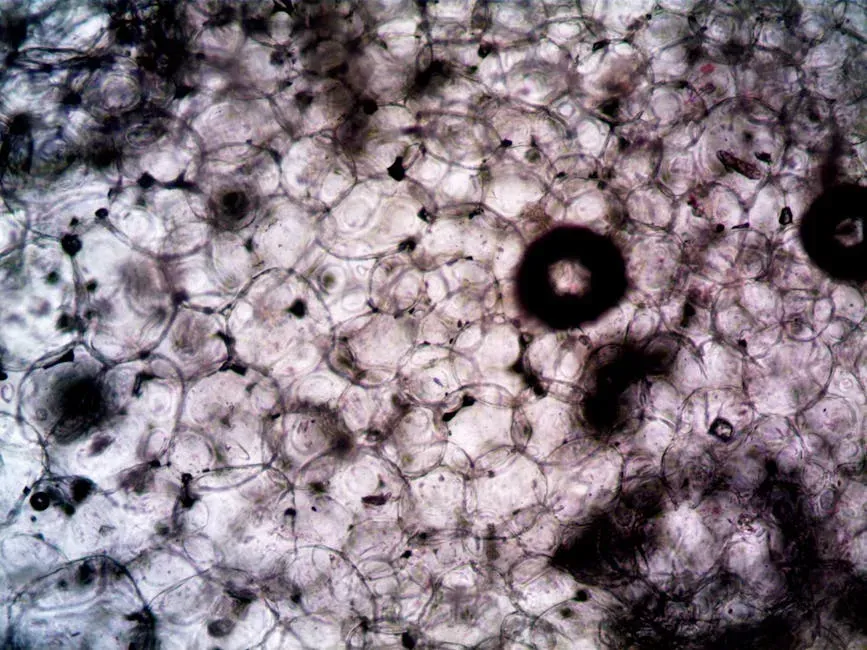
Here’s the thing: the key to unlocking dinosaur color was hidden in plain sight for decades. In 2006, paleontologist Jakob Vinther was looking at a fossil cephalopod under a microscope when he noticed little blobs in the invertebrate’s ink sac. These tiny orbs had previously been dismissed as fossilized bacteria, but on further investigation, Vinther found that these were pigment-carrying organelles called melanosomes. Think of melanosomes as nature’s paint pods: tiny cellular containers that hold the pigments responsible for color.
These organelles contain melanin, a group of pigment compounds found in skin, fur, and feathers. Critically, the structure of the melanosome reveals the color it bestows, and those shapes are preserved in fossils. This was the discovery that started a revolution. If you could identify a melanosome in a fossil and read its shape, you could, in principle, reconstruct the actual color of a creature that had been dead for tens of millions of years.
Reading the Shape: How Melanosome Geometry Reveals Color
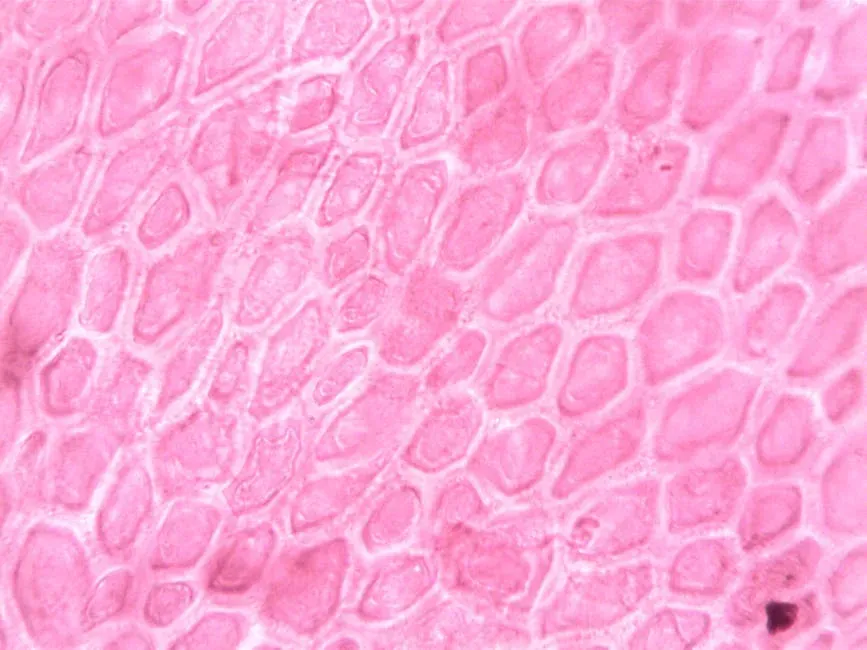
Examples of both eumelanosomes and phaeomelanosomes have been identified in fossils, and they are often preserved in life position within the structure of partially degraded feathers and filaments. Think of it like reading a code written in shapes. Eumelanosomes, which tend to be elongated and sausage-like, are associated with darker tones: black, dark gray, and deep brown. Phaeomelanosomes, which are smaller and rounder, point to warmer reddish-brown tones.
While melanosomes can help detect some colors such as black, gray, reddish brown, and iridescent, there are some parts of the dinosaur color range we cannot quite detect. It’s a bit like having a paint set with some of the most useful colors but not quite the full spectrum. You can read large portions of an extinct animal’s palette, but not every shade. Still, getting even a partial color portrait of a creature that vanished 66 million years ago is nothing short of astonishing.
Sinosauropteryx, Anchiornis, and the First Colored Dinosaurs
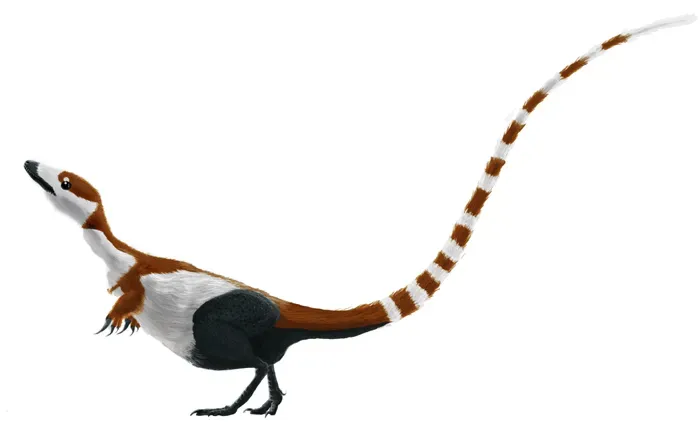
By 2010, full-color dinosaurs were starting to appear in the scientific literature. Fossilized melanosomes in prehistoric feathers were compared to those in living birds to reverse-engineer at least some of the colors dinosaurs wore. It was one of those rare moments in science where you realize the rules of the game have permanently changed. The data provided empirical evidence for reconstructing the colors and color patterning of extinct birds and theropod dinosaurs: the dark-colored stripes on the tail of the theropod dinosaur Sinosauropteryx can reasonably be inferred to have exhibited chestnut to reddish-brown tones.
In 2010, paleontologists studied a well-preserved skeleton of Anchiornis, an averaptonan from the Tiaojishan Formation in China, and found melanosomes within its fossilized feathers. As different shaped melanosomes determine different colors, analysis of the melanosomes allowed the paleontologists to infer that Anchiornis had black, white, and grey feathers all over its body and a crest of dark red or ochre feathers on its head. Suddenly, dinosaurs were no longer prisoners of gray. They were wearing wardrobes.
Camouflage, Countershading, and Reading a Dinosaur’s Habitat
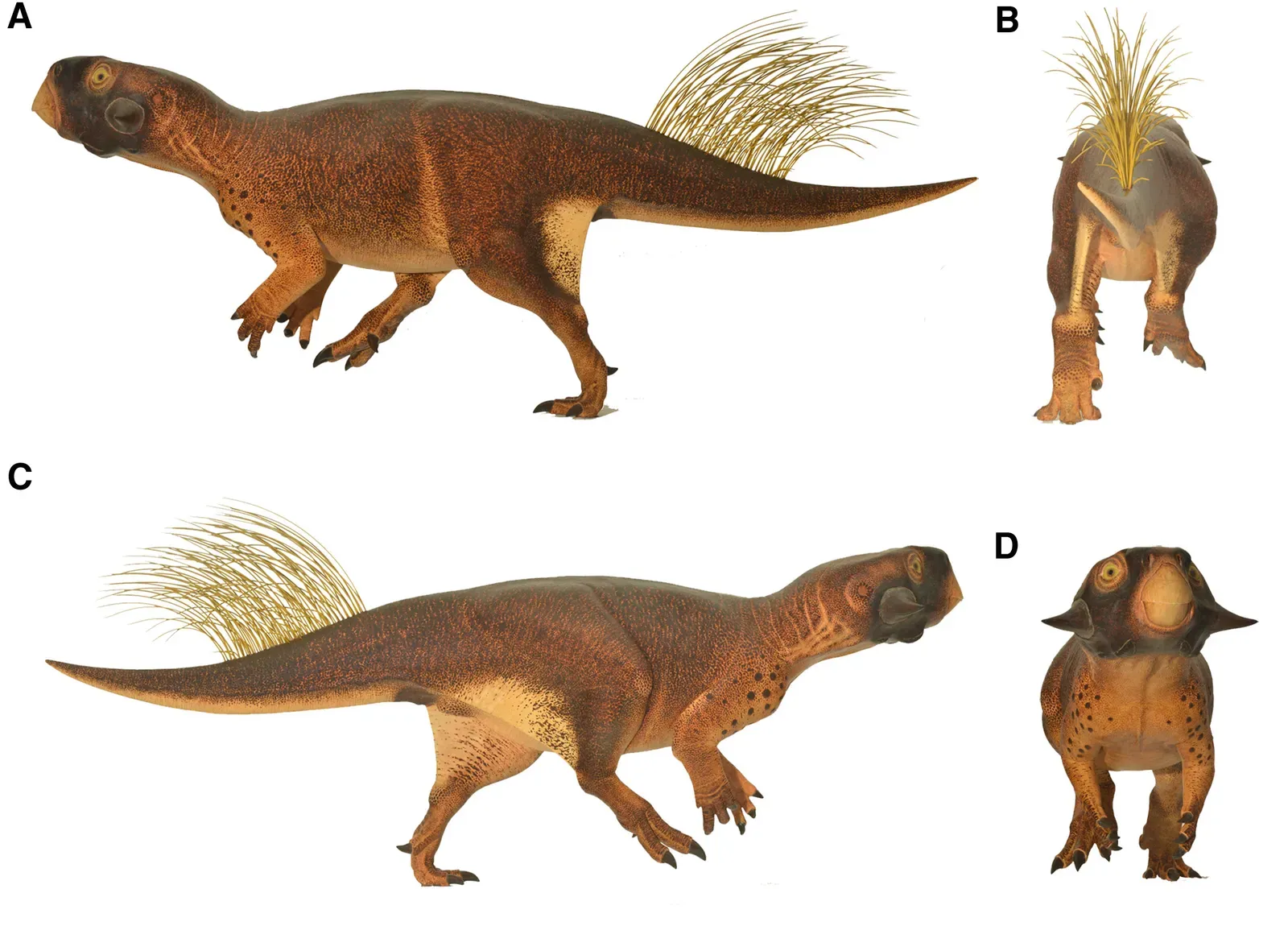
I think this is where dinosaur color science gets truly mind-bending, because it doesn’t just tell you what a dinosaur looked like. It tells you where it lived. Researchers co-headed by University of Bristol scientists found that Psittacosaurus, an early relative of the famed horned dinosaur Triceratops, was light on its underside and darker on top. This color pattern, known as countershading, is a common form of camouflage in modern animals. According to the scientists, Psittacosaurus most likely lived in an environment with diffuse light, such as in a forest.
Countershading works like an optical illusion. It cancels out the shadows that natural overhead light casts on a body, making the animal appear flat and harder to detect. This is similar to that of many modern species of forest-dwelling deer and antelope and may be due to a preference for a densely forested habitat with low light. The specimen also had dense clusters of pigment on its shoulders, face (possibly for display), and cloaca. A dinosaur’s skin color, it turns out, was a survival tool shaped by the exact terrain it roamed.
Iridescent Dinosaurs and the Shimmer of the Cretaceous
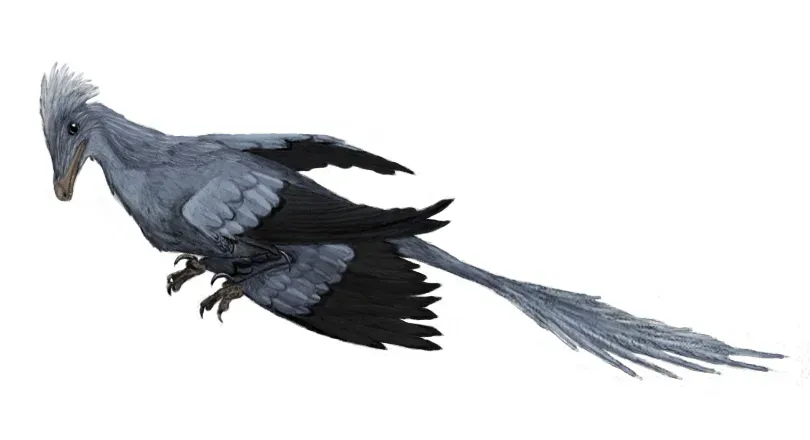
If countershading wasn’t remarkable enough, science then handed us something even more dazzling: iridescent dinosaurs. In Microraptor, the preserved feathers contain long, sausage-shaped melanosomes arranged to bend light in eye-catching ways. Its plumage would have been black, with the same shiny sheen as a crow’s. Picture a four-winged dinosaur gliding through a Cretaceous forest, flashing that iridescent shimmer as it caught the light. It’s the kind of image that makes the ancient world feel suddenly, strikingly alive.
The fossilized feathers of the dinosaur Caihong possessed nanostructures which were analyzed and interpreted as melanosomes. They showed similarity to organelles that produce a black iridescent color in extant birds. Other feathers found on the head, chest, and the base of the tail preserve flattened sheets of platelet-like melanosomes very similar in shape to those which create brightly colored iridescent hues in the feathers of modern hummingbirds. Caihong, a Jurassic dinosaur, may have had a head that glowed with hummingbird-like iridescence. Remarkable, and a little hard to believe, even as you read it.
The Diplodocus Discovery: Sauropods Were Not Just Gray Giants
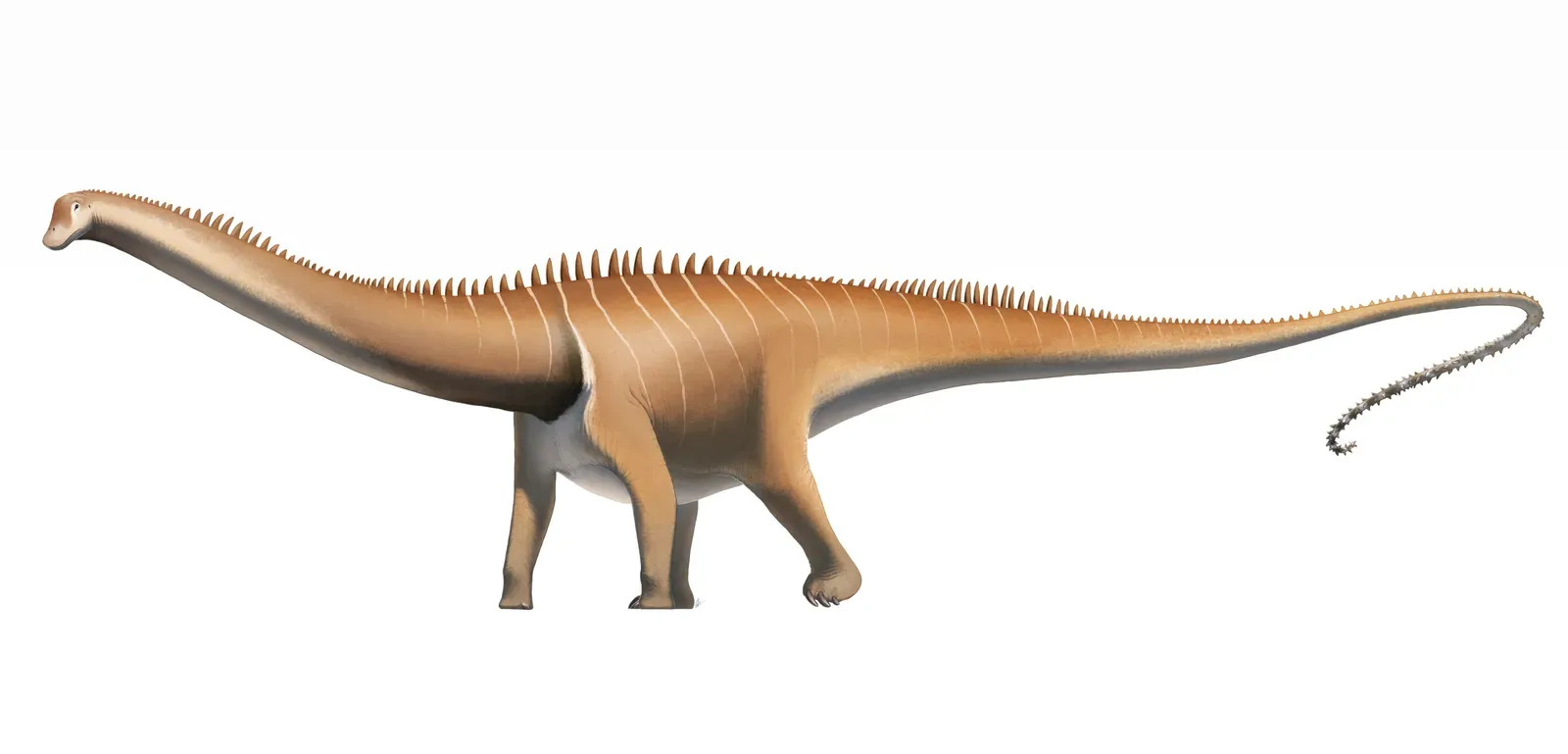
For over a century, massive long-necked dinosaurs like Diplodocus were imagined as gray, lumbering giants with dull, elephant-like skin. That image took a serious blow in December 2025. The preservation of pigment-bearing bodies (melanosomes) showed researchers clear evidence of skin color patterning, the first proof of its kind for a sauropod. This was a watershed moment for paleontology, effectively proving that even the largest dinosaurs to ever walk the Earth may have sported complex visual patterns.
The skin speckling is similar to modern crocodilian species, which share a similar scaled skin type to Diplodocus. The researchers hypothesize the speckled pattern served as camouflage for the dinosaurs, especially critical for the juvenile herbivores that often found themselves the prey of Torvosaurus, Allosaurus, and other predators. It’s a striking parallel: a creature the size of a school bus, yet still using the same tricks a crocodile uses today to blend in and survive. This variety in scale types suggests that the dinosaur could have had a more intricate and varied appearance than the dull, uniform colors often depicted in movies and popular media.
Beyond Melanin: Carotenoids, Structural Color, and What We Still Don’t Know
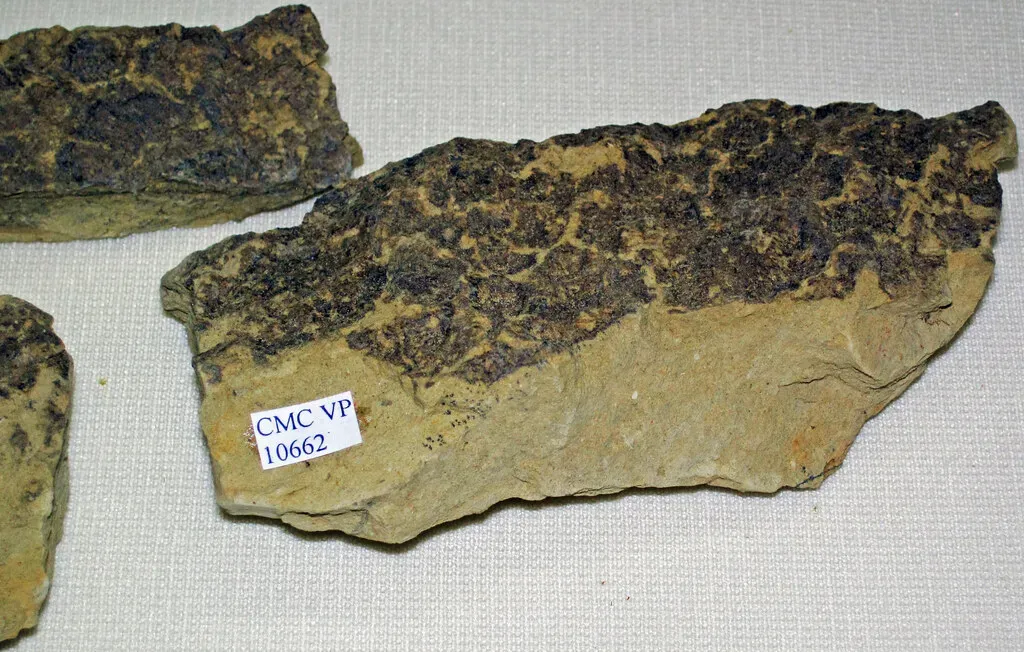
Melanosomes are only one piece of the puzzle, and here’s where things get complicated. There are other pigments to look for in fossils, including carotenoids, which produce bright reds and yellows, and porphyrins, which produce such hues as green, red, and blue. These pigments are far harder to detect in fossils because they don’t preserve the same way melanin does. Carotenoids do not fossilize as well as brown and black pigments, which means scientists must study color in living animals to look for clues about color expression in their extinct ancestors.
Researchers reported the first examples of carotenoid-based coloration in the fossil record, and of structural coloration in fossil integument. The fossil skin, from a 10-million-year-old colubrid snake from the Late Miocene, preserves dermal pigment cells including xanthophores, iridophores, and melanophores in calcium phosphate. That finding, though from a snake rather than a dinosaur, opens a genuinely exciting door: if carotenoid and structural color can be preserved in fossilized skin at all, dinosaur fossils may one day yield far richer color information than we currently imagine. Research has also shown that melanosomes can change shape and shrink over millions of years, potentially affecting color reconstructions. Further complicating the picture is that animals contain additional non-melanin pigments such as carotenoids and what is known as structural color.
Conclusion
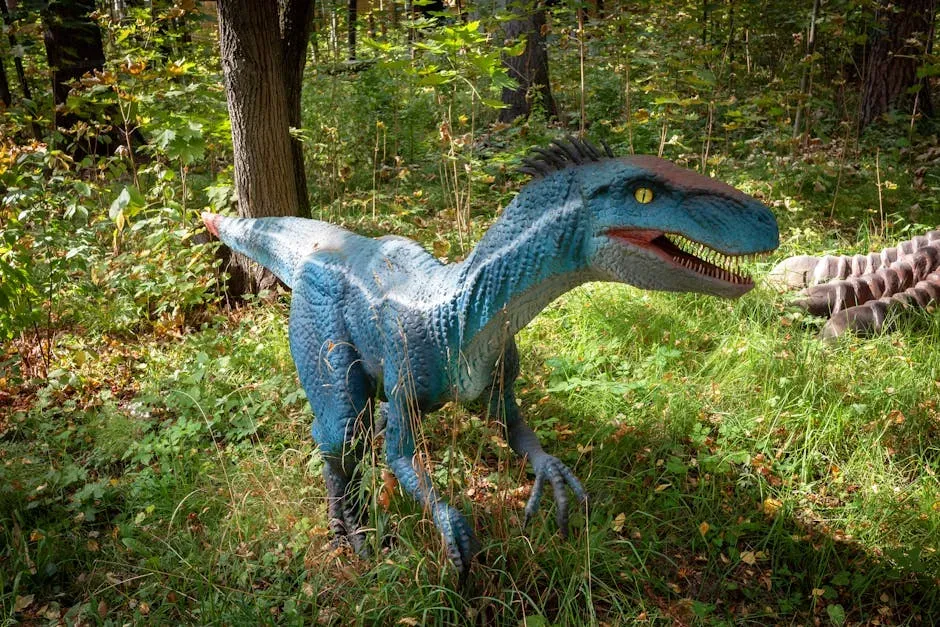
What you’re witnessing, right now, in the world of paleontology, is nothing less than the colorization of deep time. A science that once resigned itself to never knowing what hues the ancient world wore has, in just a couple of decades, produced genuine, evidence-based portraits of extinct animals in color. This type of analysis reveals the potential of the emerging field of fossil coloration. By reconstructing long-lost shades, paleontologists can detect and investigate ancient behaviors that have previously been hidden from view.
Setting aside some caveats, science can now at least begin to answer that persistent question of what dinosaurs looked like in life. We can start to see the colors that kept them hidden, helped them show off, and brightened up the Mesozoic world. The gray giants of old museum halls were never really gray. They were camouflaged forest-dwellers, iridescent gliders, and speckled juveniles trying desperately not to get eaten. The ancient world was, in all likelihood, far more vivid than anyone ever dared to imagine. So the real question now isn’t whether dinosaurs had color. It’s: just how extraordinary were those colors, and what other secrets are still waiting inside the fossils we haven’t yet examined?