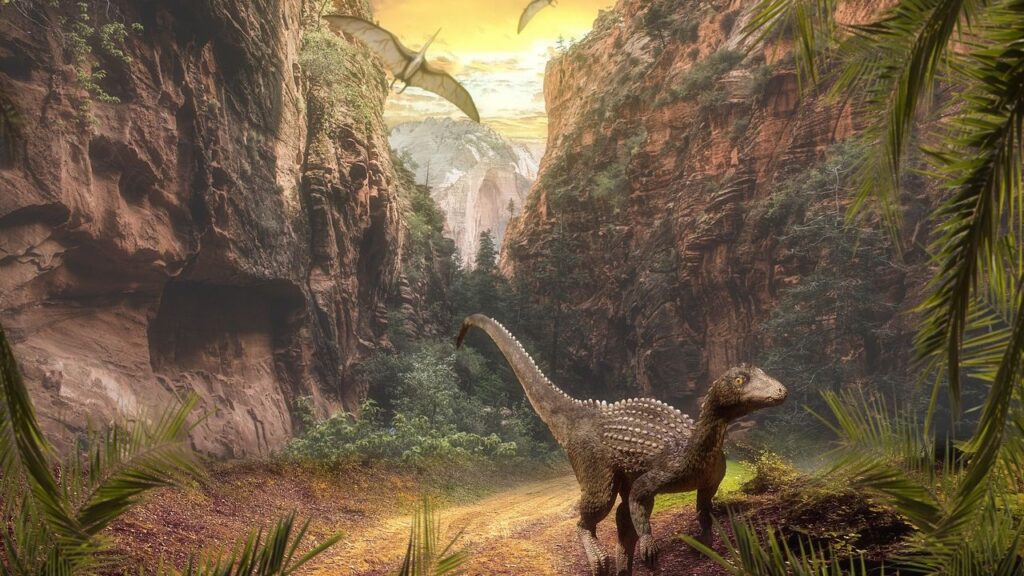
For most of human history, dinosaurs existed in our minds as shadowy, grey-green giants. Artists painted them dull. Movies dressed them in mud tones. Honestly, the whole idea that we could ever know what colors these animals wore seemed as far-fetched as knowing their favorite sounds. Yet something remarkable has happened in science over the past two decades.
It turns out ancient fossils are hiding something extraordinary, something most scientists never thought possible: actual traces of color, preserved in stone for tens of millions of years. The story of how researchers are now cracking open this prehistoric palette is one of the most thrilling in modern science. Let’s dive in.
The Question Everyone Assumed Was Unanswerable
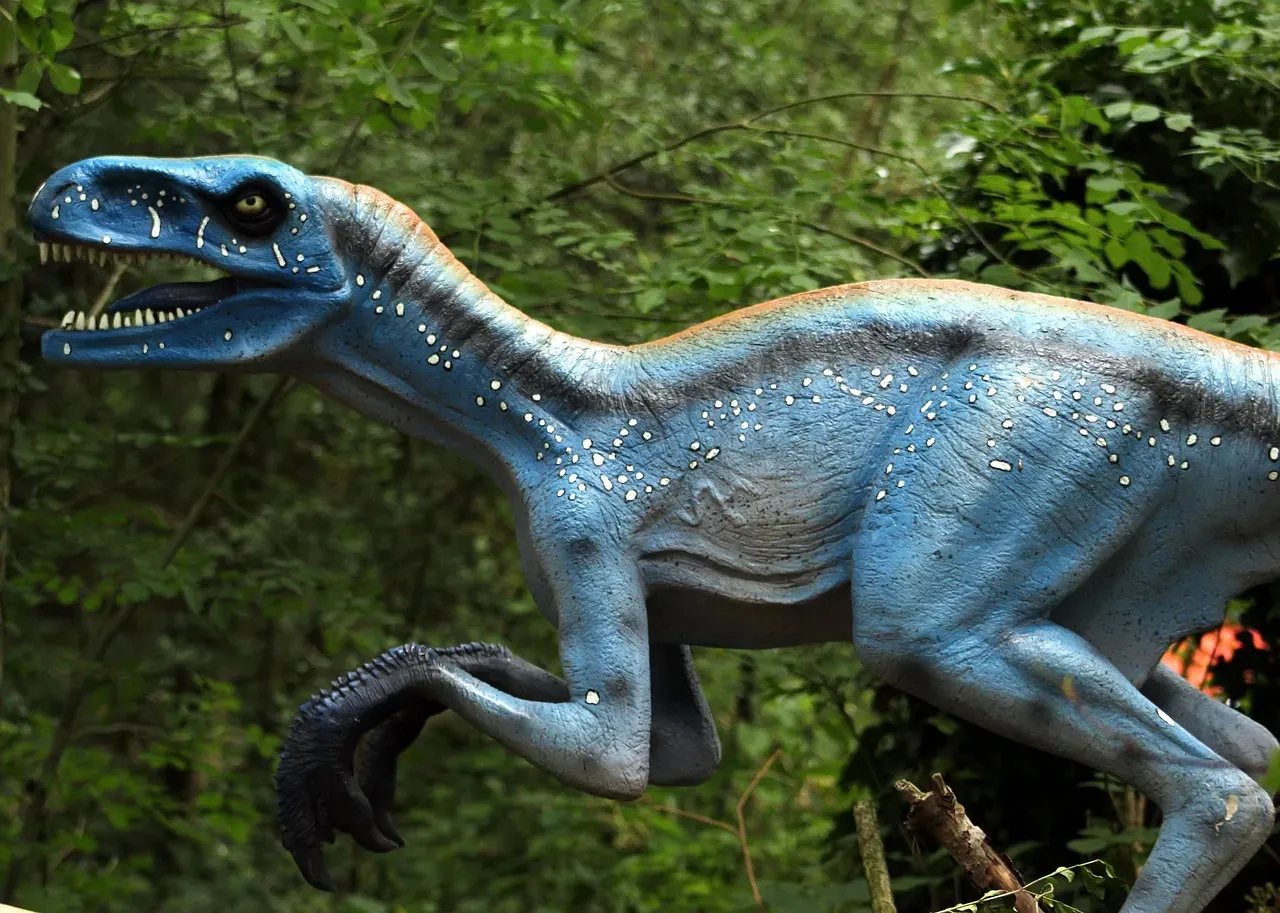
For almost the entire history of paleontology, there was simply no way to tell what hues dinosaurs actually wore. Perhaps, in exceptional circumstances, a fossil might preserve some soft tissues showing patches of light and dark, but the actual in-life coloration of the animal was long thought to be beyond the reach of detection. It was one of those questions that textbooks quietly shelved, treating it as forever beyond science’s reach.
Think of it like trying to figure out the original paint color of a car that burned down to a steel frame a million years ago. Impossible, right? That’s more or less what paleontologists believed, and for a long time, they weren’t wrong. Fossils revealed virtually all we know about dinosaurs, but their color had been left to our imagination. Indeed, paleontologist Michael Benton of the University of Bristol always taught his students that the colors of dinosaurs were something we would never know.
The Tiny Organelles That Changed Everything: Meet the Melanosome
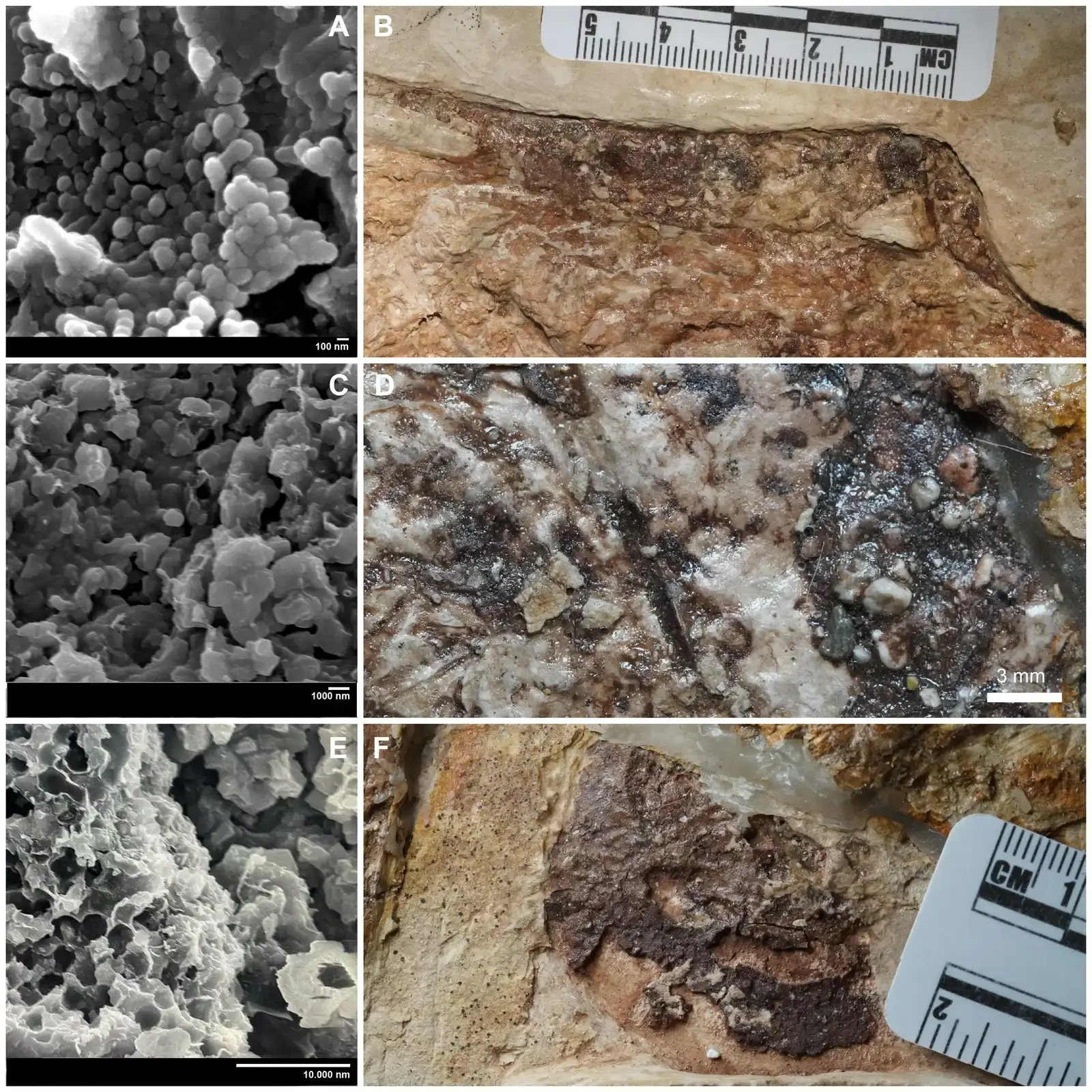
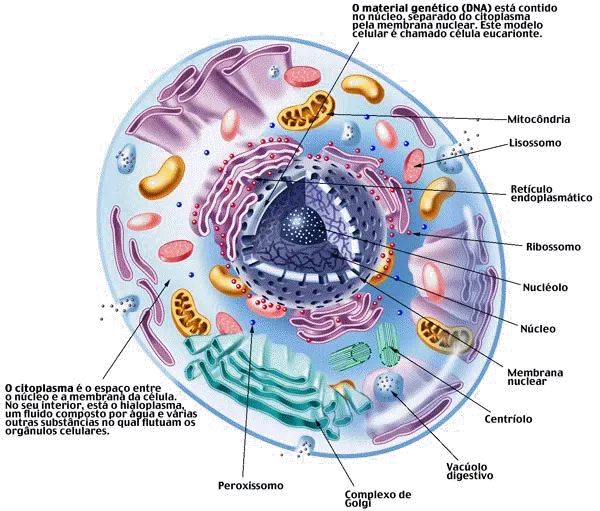
The biological key to solving the coloration puzzle comes down to miniscule structures called melanosomes. These are organelles found inside the cells of animals, and they carry melanin, the same pigment that gives your hair its color and your skin its tan. The stunning part? Microscopic pigment-bearing cell structures known as melanosomes can persist in fossils for tens of millions of years.
Melanin is stored in microscopic vesicles called melanosomes in the fur and feathers of modern animals, and can be spotted easily using a scanning electron microscope. The fact that these structures can persist in fossils was discovered in 2008 by Jakob Vinther, then a PhD student at Yale University. Vinther, who is now based at the University of Bristol, was working with squid fossils at the time. He noticed the squid’s ink sacs looked almost identical under the microscope to those from modern squids, and that observation lit a fuse that would transform an entire scientific field.
Shape Is Everything: How Melanosome Geometry Reveals Color
Vinther came up with a method to predict dinosaur colors based on how the creatures’ melanosomes appeared under the microscope, whether they looked like sausages, meatballs, something in between, or entirely different. It’s almost absurdly elegant when you think about it. The shape of a tiny, ancient organelle tells you whether you’re looking at a black feather, a reddish-brown one, or something in between.
The two most common types of melanin found in modern birds are eumelanin, associated with black and grey feathers, and phaeomelanin, found in reddish-brown to yellow feathers. Workers have endeavored to reconstruct the colors of fossil feathers using quantitative means focused predominantly on melanosome geometry and density, and the results point to the fossilized melanosomes having produced patterns of black, brown, rufous, gray, and other colors. In short, you’re reading color information written in microscopic geometry, like a biological Braille system left behind by evolution.
The Scientific Toolkit: From Electron Microscopes to Mass Spectrometry
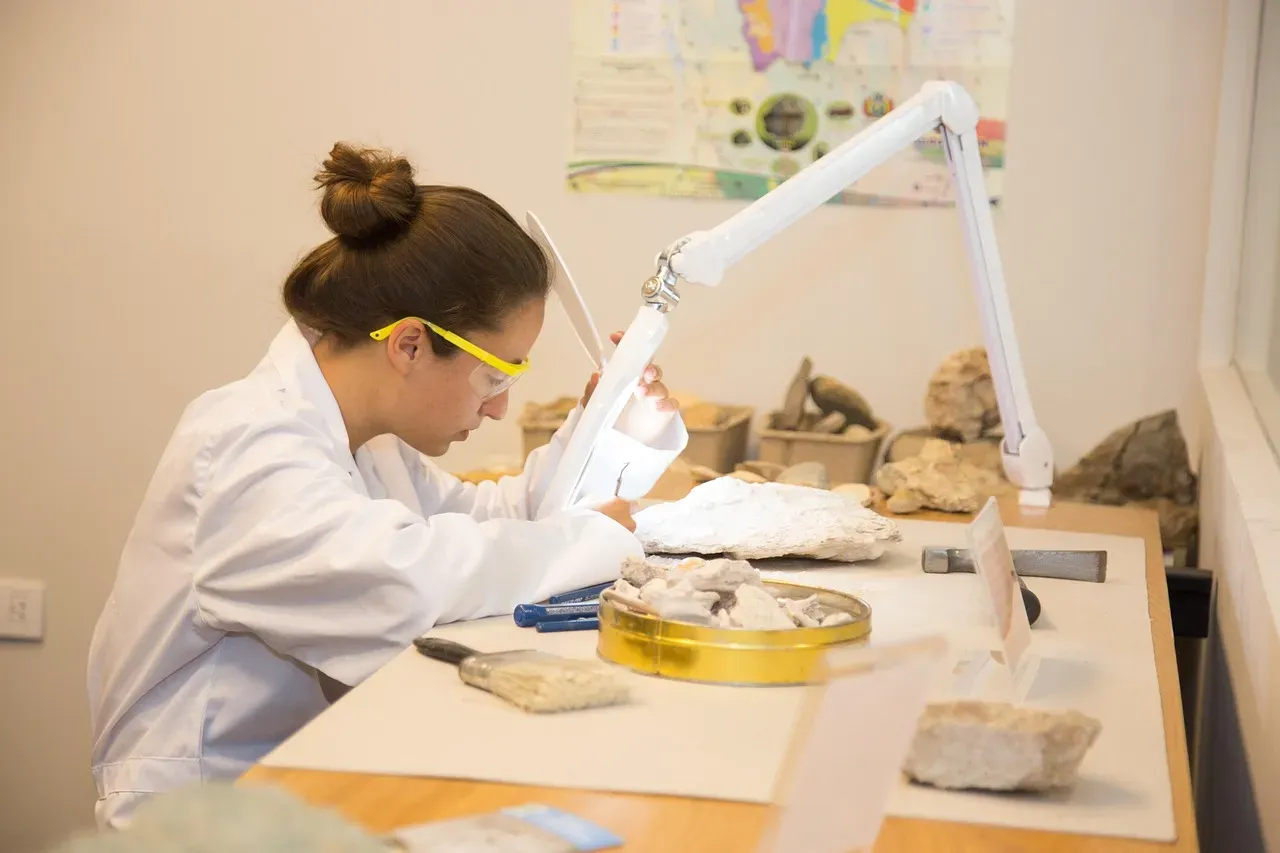
Non-destructive methods and procedures restricted to the sample surface, including light and electron microscopy, infrared and Raman spectroscopy, as well as more invasive approaches including liquid chromatography coupled to tandem mass spectrometry, time-of-flight secondary ion mass spectrometry, and immunological methods were employed. That’s quite a mouthful, but the takeaway is powerful: scientists now bring the full weight of modern chemistry and physics to bear on ancient rock.
The main steps researchers follow include: mapping the known or suspected extent of preserved color and patterns in the specimen; searching for pigment-bearing microstructures using electron microscopy, where microstructure shape can be used to identify melanin-based colors like black, gray and brown; if melanin-based colors are not detected, using high-end chemical analysis techniques to detect biomarkers of other pigments; then using reconstructed colors and patterns to test fundamental hypotheses related to animal physiology, ecology and behavior. It’s a rigorous, multi-layered process, far more sophisticated than simply peering at a rock under a magnifying glass.
The First Full Color Portrait: Anchiornis and Sinosauropteryx
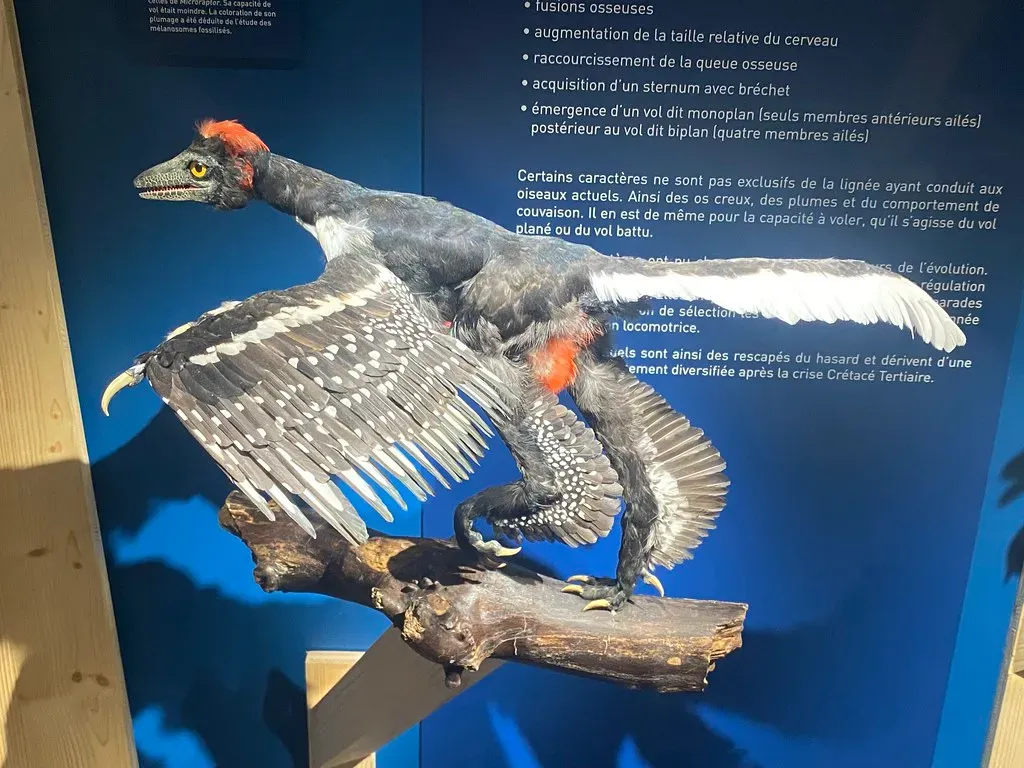
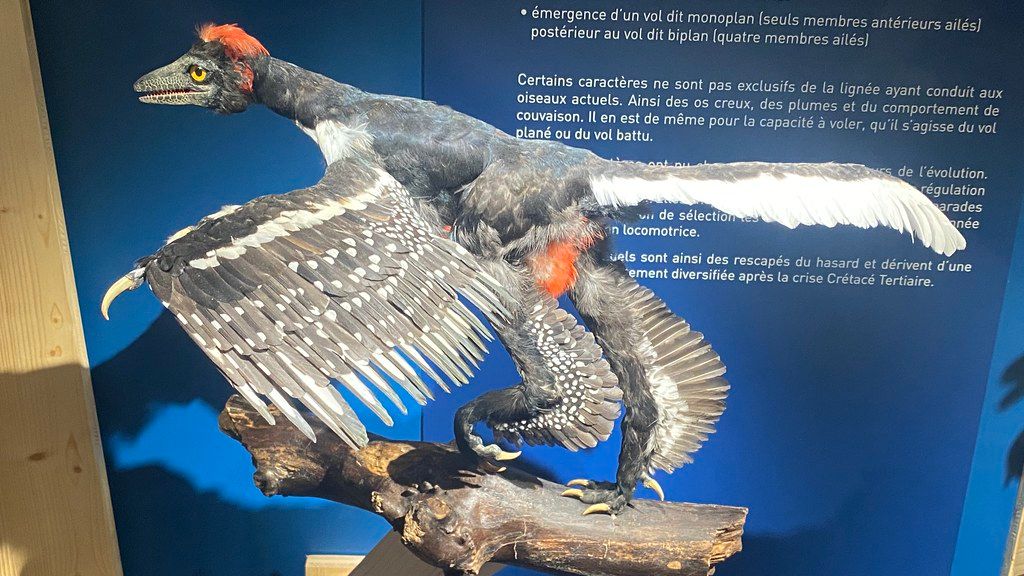
In 2010, Vinther’s team completed the first-ever dinosaur color reconstruction. According to their estimates, the bird-like Anchiornis was mostly gray, save for its black-and-white banded wings and striking mohawk-like reddish-brown crest. That was a genuinely electrifying moment in science. For the first time, a dinosaur had a real, evidence-based color scheme, not a guess, not an artist’s whim, but an actual reconstruction grounded in physical evidence millions of years old.
The week before the Anchiornis paper came out, the small, fuzzy dinosaur Sinosauropteryx was shown to have a vibrant, red-and-white banded tail. The dark-colored stripes on the tail of the theropod dinosaur Sinosauropteryx can reasonably be inferred to have exhibited chestnut to reddish-brown tones. Suddenly, the Mesozoic world was no longer a grey and brown wasteland. It was becoming a place of pattern, contrast, and vibrancy.
Iridescence in Deep Time: The Shimmering Case of Microraptor
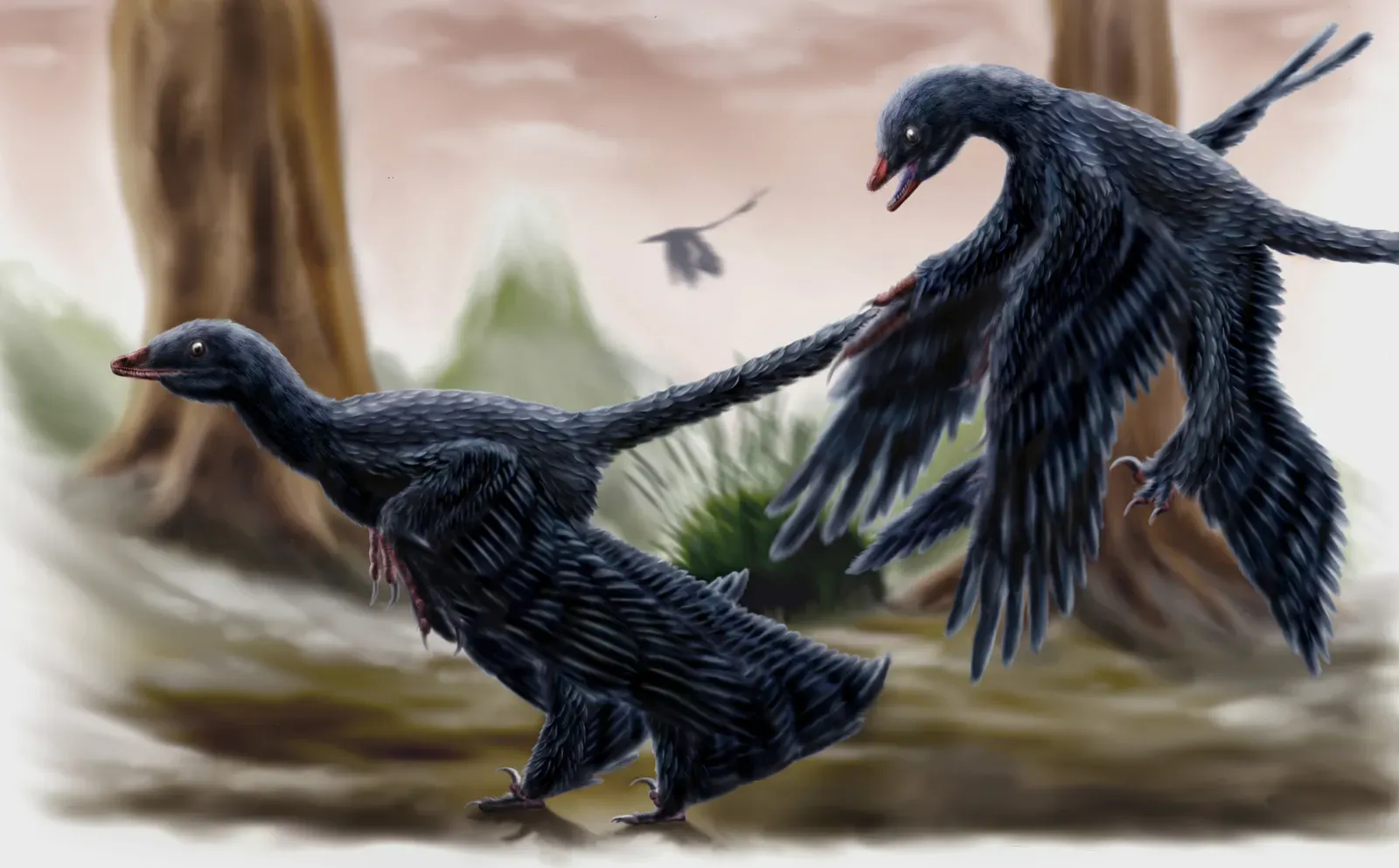
It was not long before researchers discovered evidence of iridescence in an actual dinosaur, a crow-size creature from China with wings on all four limbs. Dubbed Microraptor, it was a primitive cousin to Jurassic Park’s Velociraptor. The movie showed a very different beast, scaly and mundane. Reality turned out to be far more spectacular.
In 2012, the stacked arrangement of melanosomes found in the feathers of four-winged dinosaur Microraptor was shown to create an iridescent sheen similar to that of a modern raven. Jennifer Peteya of Oberlin College and Ghent’s Shawkey later described shimmering iridescence in an enantiornithine bird called Bohaiornis, and a Jurassic theropod with a big fan-shaped tail, named Caihong. Iridescence, that gorgeous rainbow shimmer you see on a crow’s wing in sunlight, turns out to be an ancient evolutionary trick, not a modern bird invention.
Color as a Window Into Behavior: Camouflage, Habitat, and Survival
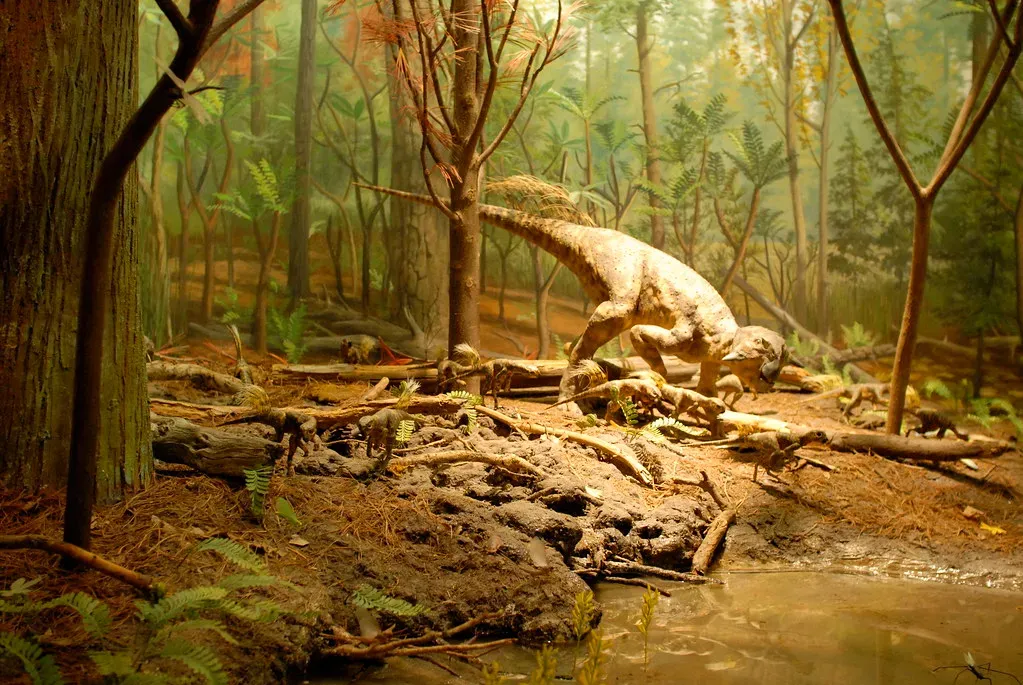
A research team co-headed by University of Bristol researchers Jakob Vinther and Innes Cuthill found that Psittacosaurus, an early relative of the famed horned dinosaur Triceratops, was light on its underside and darker on top. This color pattern, known as countershading, is a common form of camouflage in modern animals. According to the scientists, Psittacosaurus most likely lived in an environment with diffuse light, such as in a forest. Color didn’t just tell them what the animal looked like. It told them where it lived.
In the case of Borealopelta, for example, with a pattern of rusty red on top and light on the bottom, the shading might have been a way for the low-slung dinosaur to hide from the ravenous tyrannosaurs of the time. Borealopelta might have weighed in excess of 1.3 tonnes and measured more than 5.5 metres long, but it relied on countershading to help hide it from predatory dinosaurs. I think that’s one of the most mind-bending conclusions in all of paleontology. A multi-tonne armored tank of a dinosaur, hiding from something even bigger and more dangerous.
The Latest Frontier: Sauropod Skin and the 2025 Diplodocus Discovery
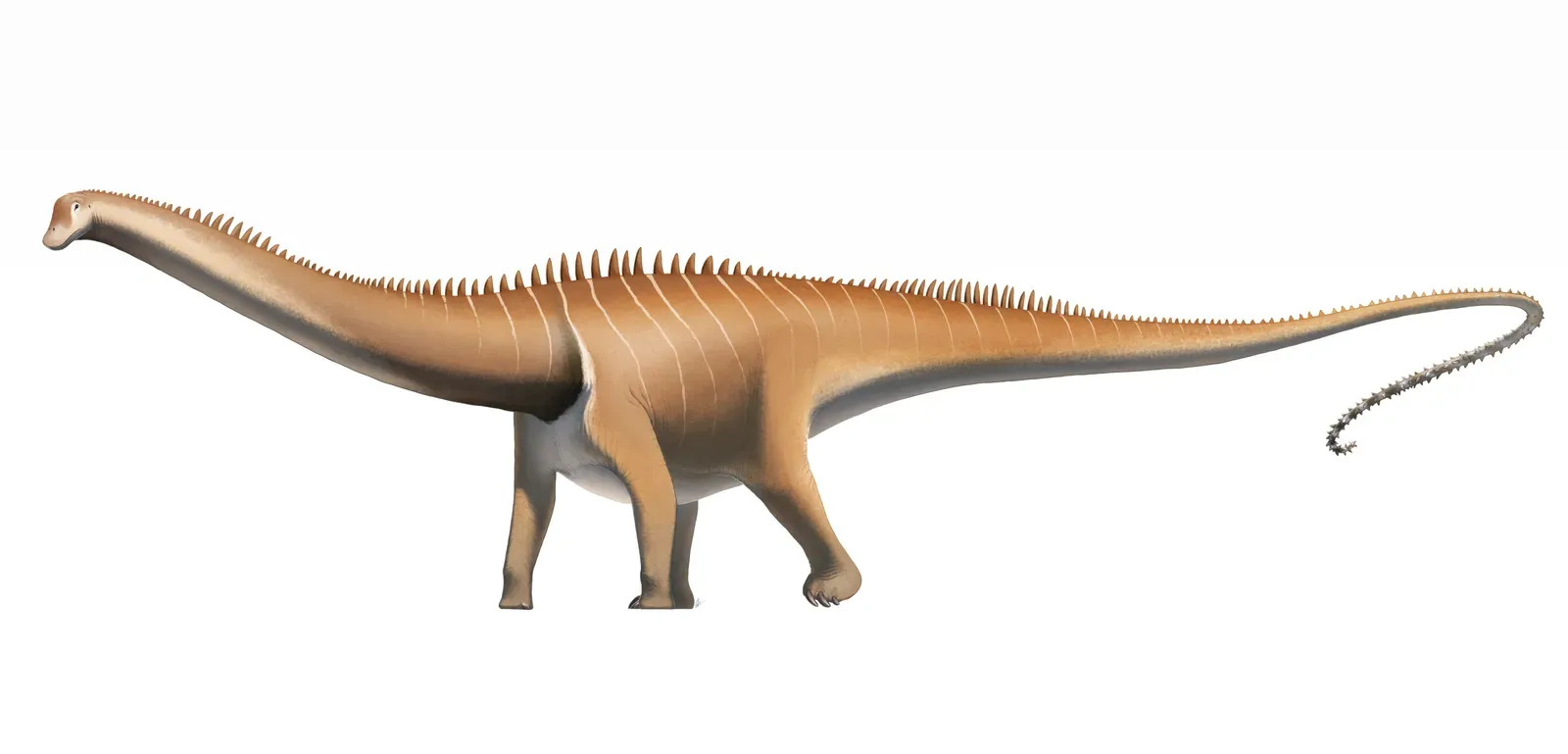
For decades, paleontologists tried to piece together an image of the enormous herbivorous dinosaur Diplodocus, but until recently, the exact details of its appearance remained shrouded in mystery. A groundbreaking discovery in Montana provided a fossilized skin from the long-extinct creature that revealed traces of pigmentation. This is the first time that melanosomes, the organelles responsible for color in animals, have been found in a sauropod dinosaur.
While the research team was reluctant to do a full color reconstruction with the juvenile Diplodocus the skin came from, the researchers detected that the dinosaur would have had conspicuous patterns across its scales. The finding suggests sauropod dinosaurs were not uniformly gray or brown, but had complex color patterns like other dinosaurs, birds and reptiles. If further confirmed, this represents the first evidence of melanosome shape diversity within dinosaur scales and the first record among sauropods. The giants of the Jurassic, it seems, were far more colorful than anyone ever imagined.
Conclusion: A Science Still Being Written
The reconstruction of dinosaur color from fossil evidence is one of those rare scientific stories that keeps getting better. It started with a graduate student noticing squid ink under a microscope, sparked a race between competing research teams, overturned decades of artistic tradition, and is now rewriting our understanding of ancient ecosystems, behaviors, and habitats. The tools are sharper, the questions are bolder, and the fossils are starting to talk.
Honestly, it’s a reminder that science doesn’t always need to discover new species or dig up new bones to change everything we know. Sometimes, the revolution is hiding in plain sight, inside a tiny organelle the size of a fraction of a human hair. What’s truly exciting is knowing that for every dinosaur whose colors we’ve cracked, dozens more are still waiting to reveal their secrets. What color do you think the T. rex really was?