In the badlands of Montana, where the wind whispers stories from millions of years ago, something extraordinary is happening. Every year, fossil hunters and paleontologists converge on this rugged landscape, drawn by the promise of discovering the remains of Earth’s most fearsome predator. This isn’t just any dinosaur hunting ground – this is the kingdom of Tyrannosaurus rex, where the king of all dinosaurs once ruled with absolute dominance.
The Birth of a Legend in the Hell Creek Formation
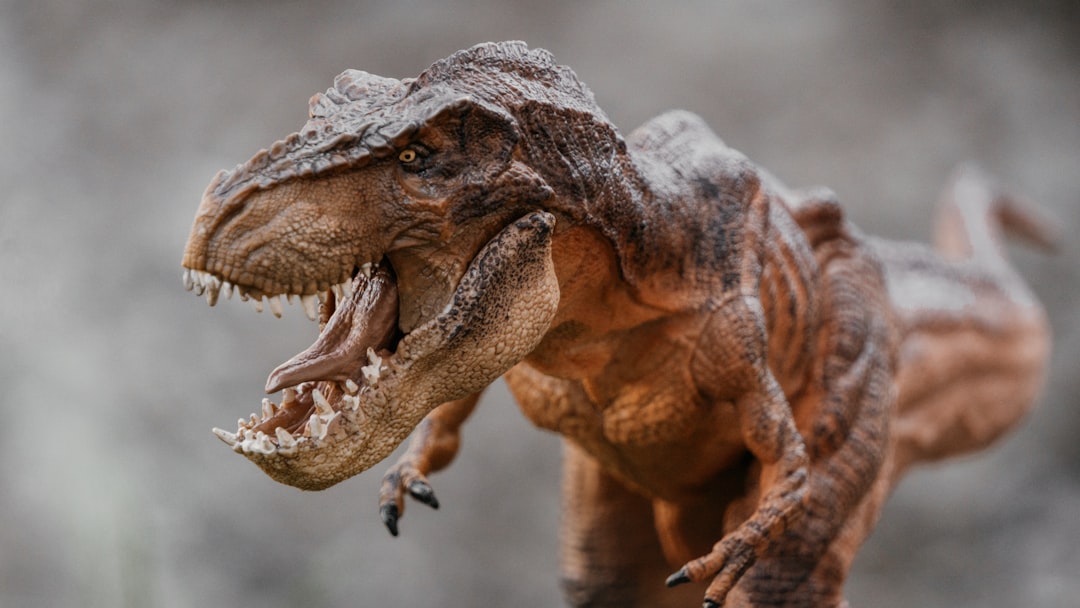
Picture this: the first skeleton of Tyrannosaurus rex was discovered in 1902 in Hell Creek, Montana, by the Museum’s famous fossil hunter Barnum Brown. That single discovery changed paleontology forever. Imagine Brown’s excitement as he uncovered what he described as a “large Carnivorous Dinosaur” unlike anything seen before in the Cretaceous period.
The Hell Creek Formation isn’t just another fossil site – it’s paleontology’s crown jewel. The Hell Creek Formation is an intensively studied geological formation of mostly Upper Cretaceous and some Early Paleocene rocks in North America, named for exposures studied along Hell Creek, near Jordan, Montana. The formation stretches over portions of Montana, North Dakota, South Dakota, and Wyoming. This geological treasure trove has become synonymous with T. rex discoveries, earning its reputation as the most important dinosaur hunting ground in North America.
Montana’s T. Rex Dynasty: A Century of Groundbreaking Discoveries
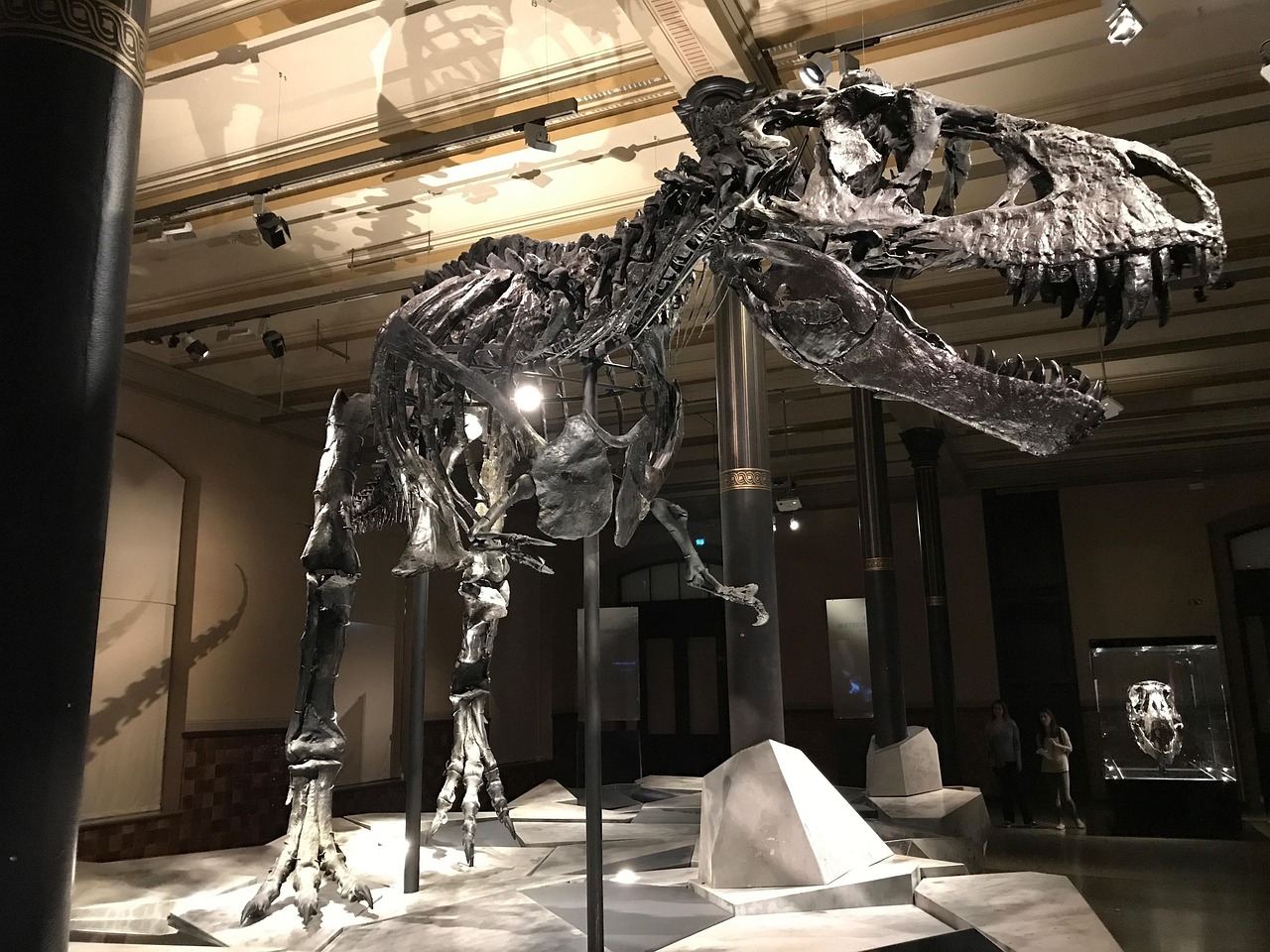
Montana’s relationship with T. rex didn’t end with Brown’s initial find. Six years later, Brown discovered a nearly complete T. rex skeleton at Big Dry Creek, Montana. The skeleton was so spectacular that the rock around it was blasted away with dynamite to reveal a “magnificent specimen” with a “perfect” skull. This dramatic excavation method shows just how precious these discoveries were considered, even over a century ago.
The state’s fossil legacy continued to grow with remarkable finds. “Montana’s T. rex,” found near Fort Peck Lake in 1997, is one of the most complete T. rex specimen ever found. But perhaps the most famous modern discovery belongs to an amateur fossil hunter who changed everything during a family camping trip. In 1988, amateur fossil hunter Kathy Wankel made an unusual and extremely valuable find while on a family camping trip in Montana. Her discovery, now known as the Wankel T. rex, represents one of the most complete skeletons ever found.
The Wankel Wonder: From Family Hike to National Treasure
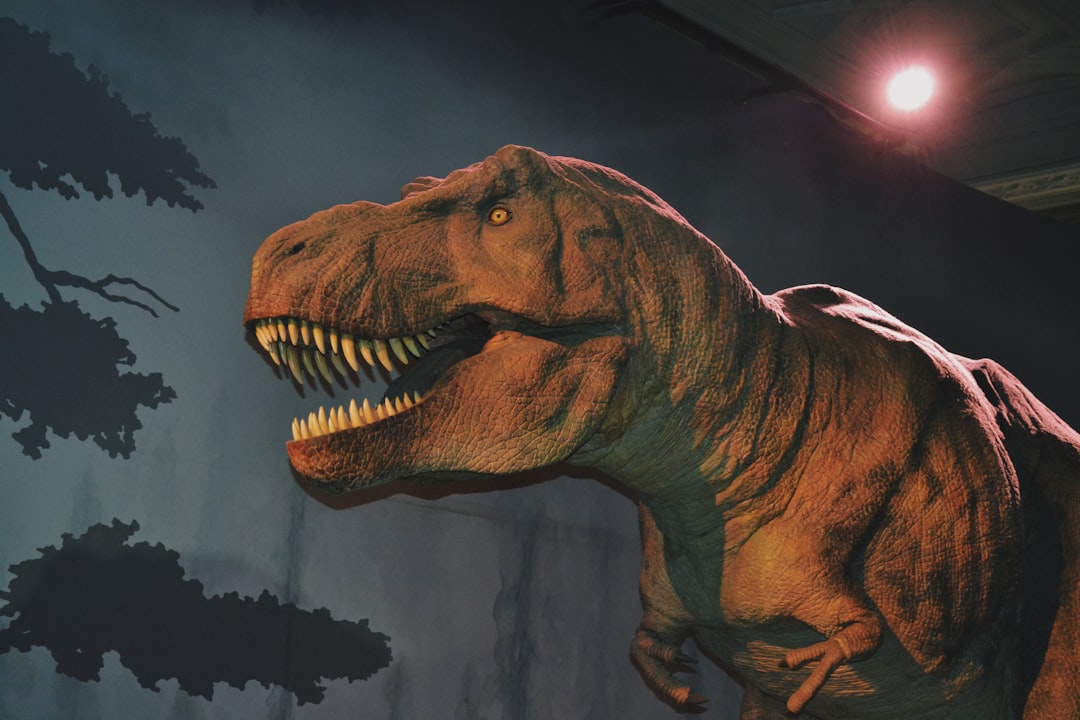
Kathy Wankel’s story reads like a paleontologist’s dream. Kathy Wankel caught a glimpse of a 66 million-year-old shoulder blade. What started as a simple family outing turned into one of the most significant paleontological discoveries of the late twentieth century. The completeness of her find was extraordinary – it is one of the most complete skeletons of T. rex ever discovered.
The impact of this discovery extended far beyond Montana’s borders. In 2013 it was prepared for its journey to Washington, D.C., where it is on loan to the National Museum of Natural History for the next 50 years. In 2014, the fossil bones of the Wankel T. rex (MOR 555 discovered by Kathy Wankel in 1988) were sent to the Smithsonian’s National Museum of Natural History on a fifty-year loan. In its new pose devouring a Triceratops, the Wankel T. rex, renamed the Nation’s T. rex, is the centerpiece of the Smithsonian’s David H. Koch Hall of Fossils. From Montana’s badlands to the nation’s capital – this is the journey of a true scientific treasure.
Modern Discoveries Continue the Legacy
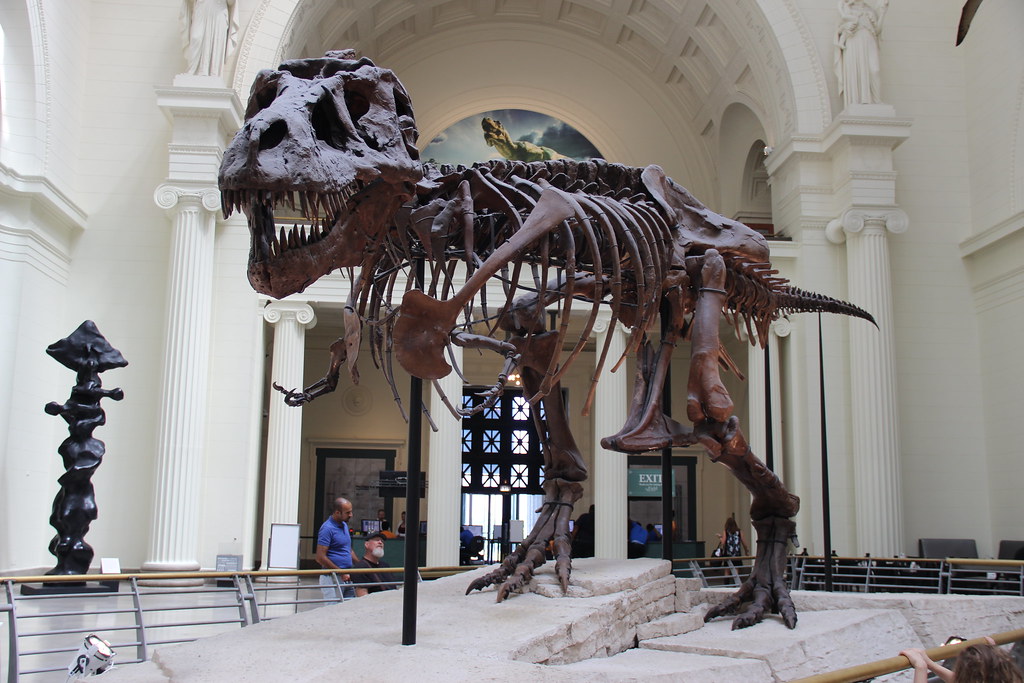
The twenty-first century has brought fresh excitement to Montana’s T. rex story. The team, led by UW biology professor and Burke Museum Adjunct Curator of Vertebrate Paleontology Greg Wilson, discovered the T. rex during an expedition to the Hell Creek Formation in northern Montana – an area that is world-famous for its fossil dinosaur sites. The 66.3-million-year-old T. rex was discovered in the Hell Creek Formation in northern Montana. This discovery, nicknamed the “Tufts-Love Rex,” has provided researchers with new insights into these magnificent predators.
What makes these recent finds particularly exciting is their scientific precision. Tyrannosaurus rex fossils are uncommon finds, and even more so are well-preserved skulls. The UW and Burke team said their find marks just the 15th fairly complete skull in the world. Even casual fossil hunters continue to make remarkable discoveries, with a passionate fossil hunter discovering a Tyrannosaurus rex tooth while out exploring in the Hell Creek Formation as recently as 2024, proving that Montana’s fossil riches are far from exhausted.
The Museum Trail: Montana’s Dinosaur Tourism Empire
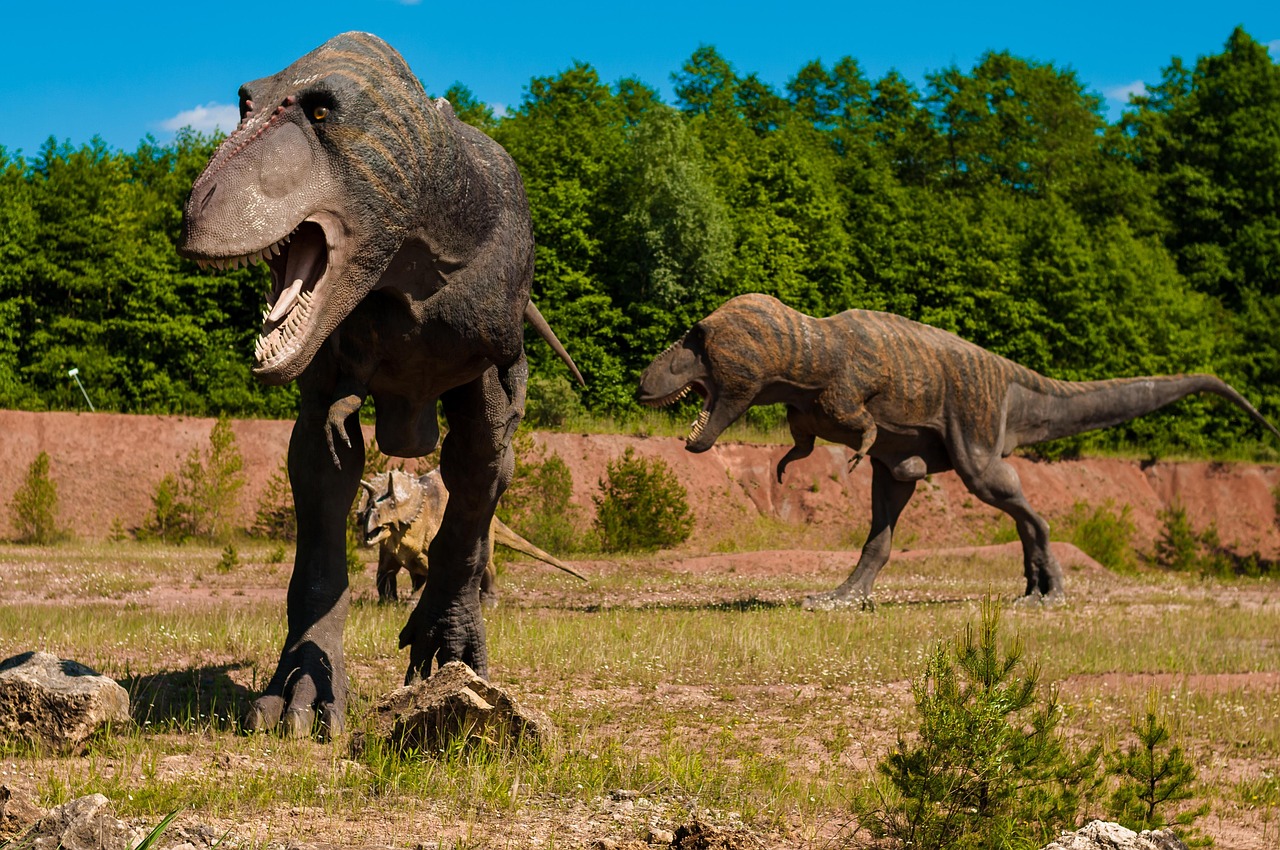
Montana has transformed its paleontological heritage into a thriving tourism industry. This statewide trail runs across Montana and consists of 14 locations from the Montana Dinosaur Center in Bynum to the Carter County Museum in Ekalaka. The Montana Dinosaur Trail offers visitors an unprecedented opportunity to walk in the footsteps of these ancient giants while supporting local communities.
The Museum of the Rockies in Bozeman, Montana has the world’s largest collection of T. rex and Triceratops specimen. This isn’t just a tourist attraction – it’s a world-class research facility where cutting-edge paleontological research continues daily. The economic impact extends throughout the state, with the museum playing a key role in preserving and showcasing the unique cultural and natural heritage of the region, providing educational opportunities, outreach, and driving economic development through tourism. The Dino Shindig was named Montana’s Event of the Year by the Office of Tourism and Business Development in 2017.
Scientific Breakthroughs Born in Montana Soil
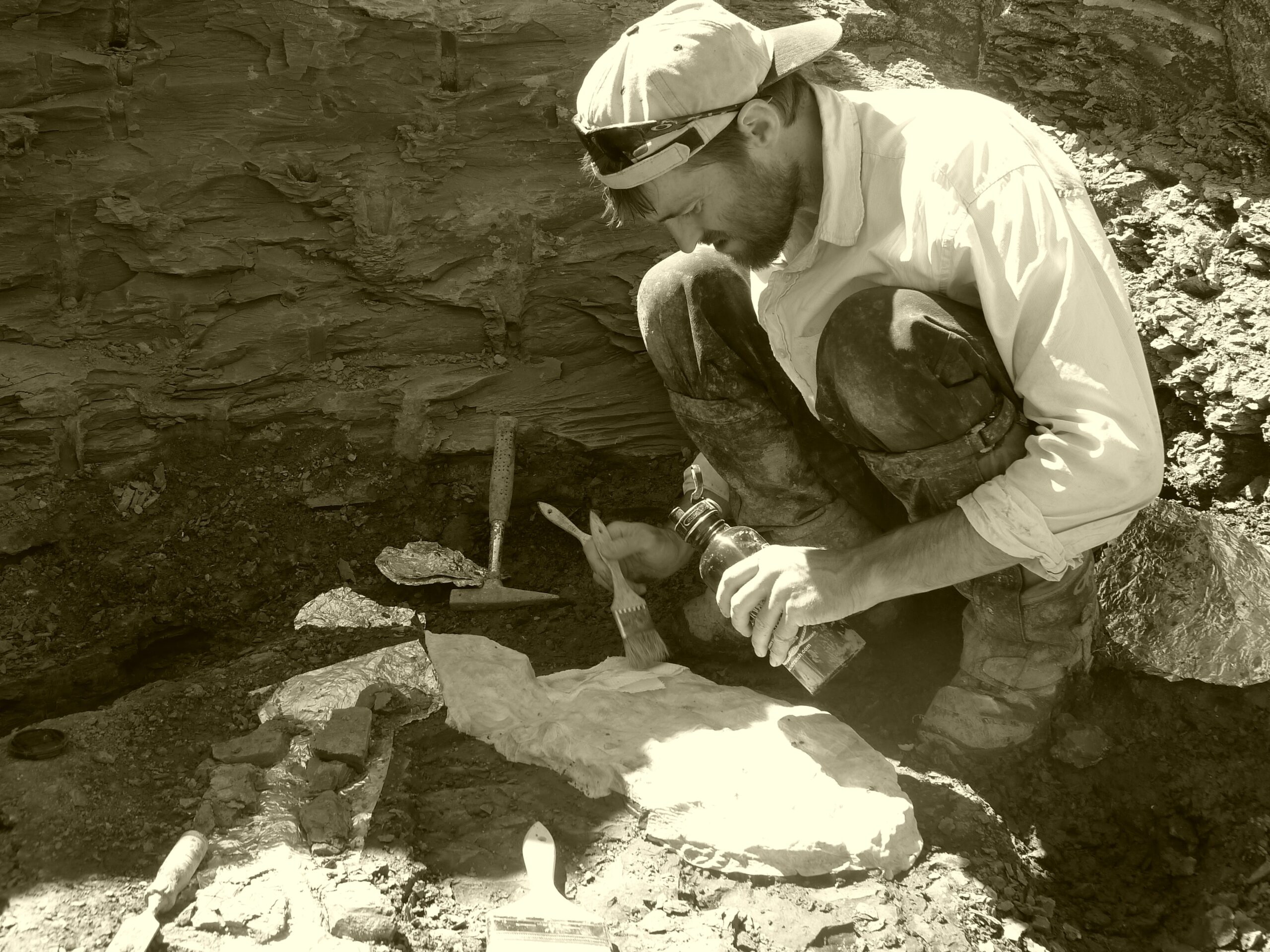
Montana’s T. rex discoveries have revolutionized our understanding of these magnificent predators. The discovery of soft tissue in a Tyrannosaurus rex excavated near Jordan ranked No. 6 in the year’s top 100 scientific discoveries by Discover magazine. This groundbreaking find challenged everything scientists thought they knew about fossil preservation and opened new avenues for understanding dinosaur biology.
Recent research has also unveiled T. rex ancestors in Montana soil. Northeast Montana has once again produced an unusual fossil find – a new ancestor of the formidable Tyrannosaurus rex. Daspletosaurus wilsoni – Wilson’s frightful reptile – is believed to link two other Daspletosaurus dinosaurs. These discoveries help fill crucial gaps in our understanding of tyrannosaur evolution, with the discoveries revealing three partial skeletons and what appears to be a mostly complete articulated skeleton. When alive, the Daspletosaurus wilsoni would have stretched about 30 feet, large for its time.
The Hell Creek Ecosystem: A Window Into Prehistoric Montana
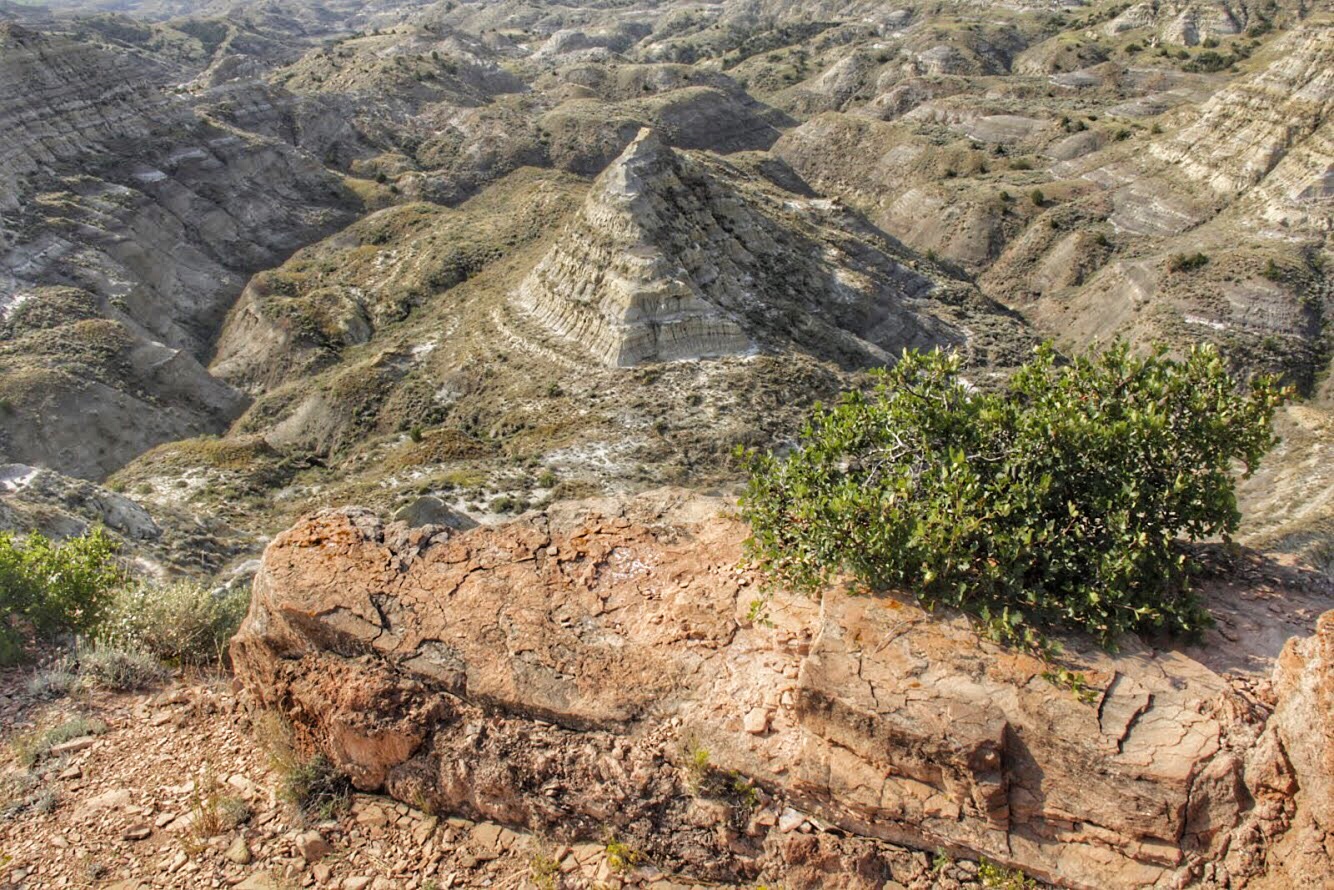
Montana’s T. rex discoveries provide more than just individual specimens – they offer a complete picture of an ancient world. The Hell Creek Formation, as typified by exposures in the Fort Peck area of Montana, has been interpreted as a flat, forested floodplain with a relatively temperate climate that supported a variety of plants ranging from angiosperm trees to gymnosperms such as the conifers, cycadeoids and ginkgos to ferns and moss. This wasn’t the barren wasteland many imagine; it was a lush, vibrant ecosystem.
The formation represents a critical moment in Earth’s history. These rocks preserve the remains of dinosaurs that lived at the very end of the “Age of Dinosaurs” and the top of the formation is capped by what is known as the KT boundary layer. This layer was deposited after a huge meteorite slammed into the ocean near the Yucatan Peninsula in Mexico. The massive plume of smoke and dust that entered the atmosphere fell back to the ground and laid down a thin layer of ash, or ejecta. Many of the most famous and iconic dinosaurs that we know today lived in this area and their remains can be found within the rocks.
The Future of T. Rex Research in Montana
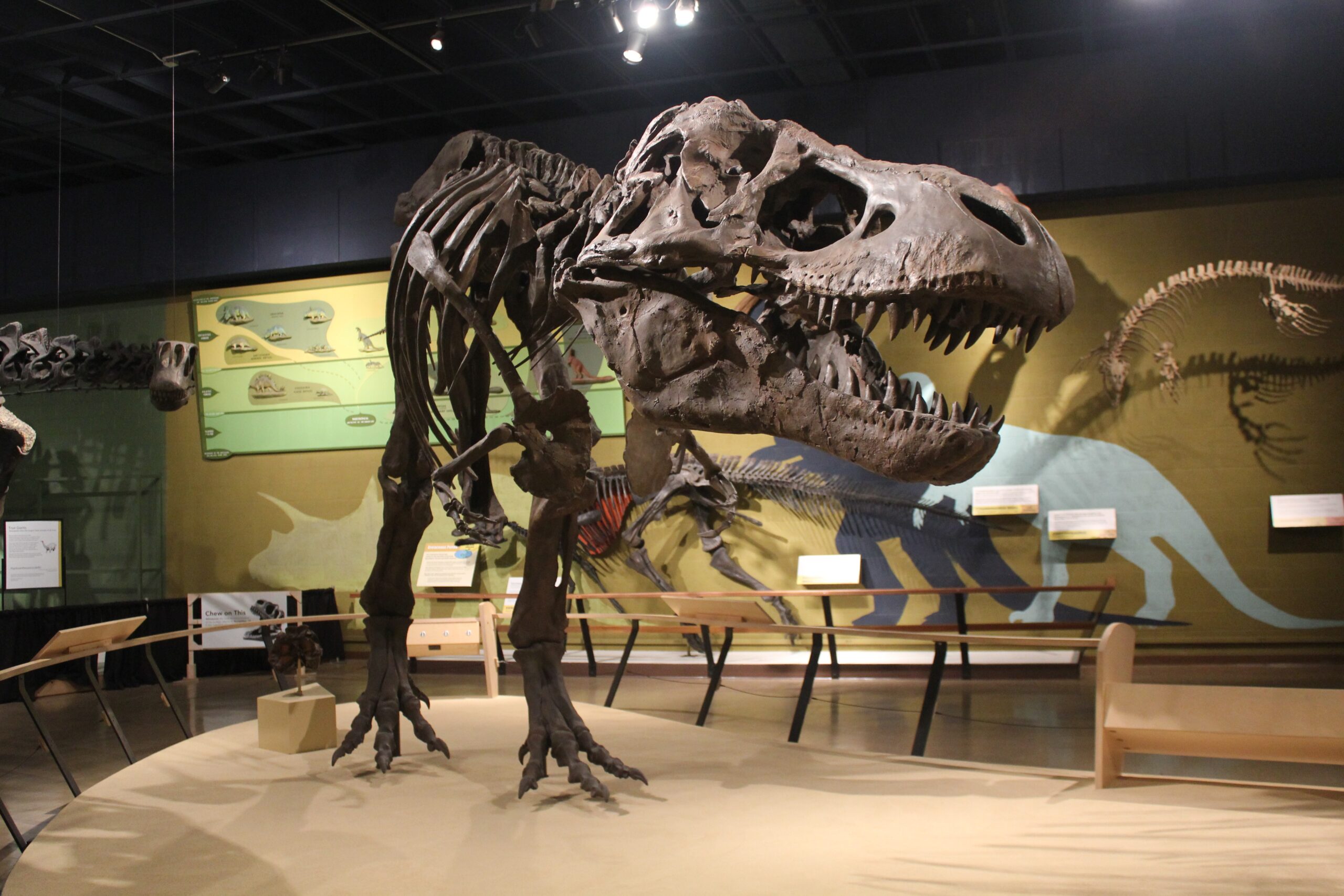
Montana’s reign as T. rex capital shows no signs of ending. Eastern Montana’s Hell Creek Formation yields a high concentration of dinosaur fossils due to its unique erosion and ground disturbance. Alongside paleontologists, visitors too can help make big discoveries each year as snow, rain and wind expose more finds. Nature itself acts as an excavator, constantly revealing new specimens for future generations to discover.
The scientific community continues to invest heavily in Montana’s paleontological future. The world’s largest collection of Hell Creek fossils is housed and exhibited at the Museum of the Rockies in Bozeman, Montana. The specimens displayed are the result of the museum’s Hell Creek Project, a joint effort between the museum; Montana State University; the University of Washington; the University of California, Berkeley; the University of North Dakota; and the University of North Carolina which began in 1998. This collaborative approach ensures that Montana remains at the forefront of T. rex research for decades to come.
Conclusion
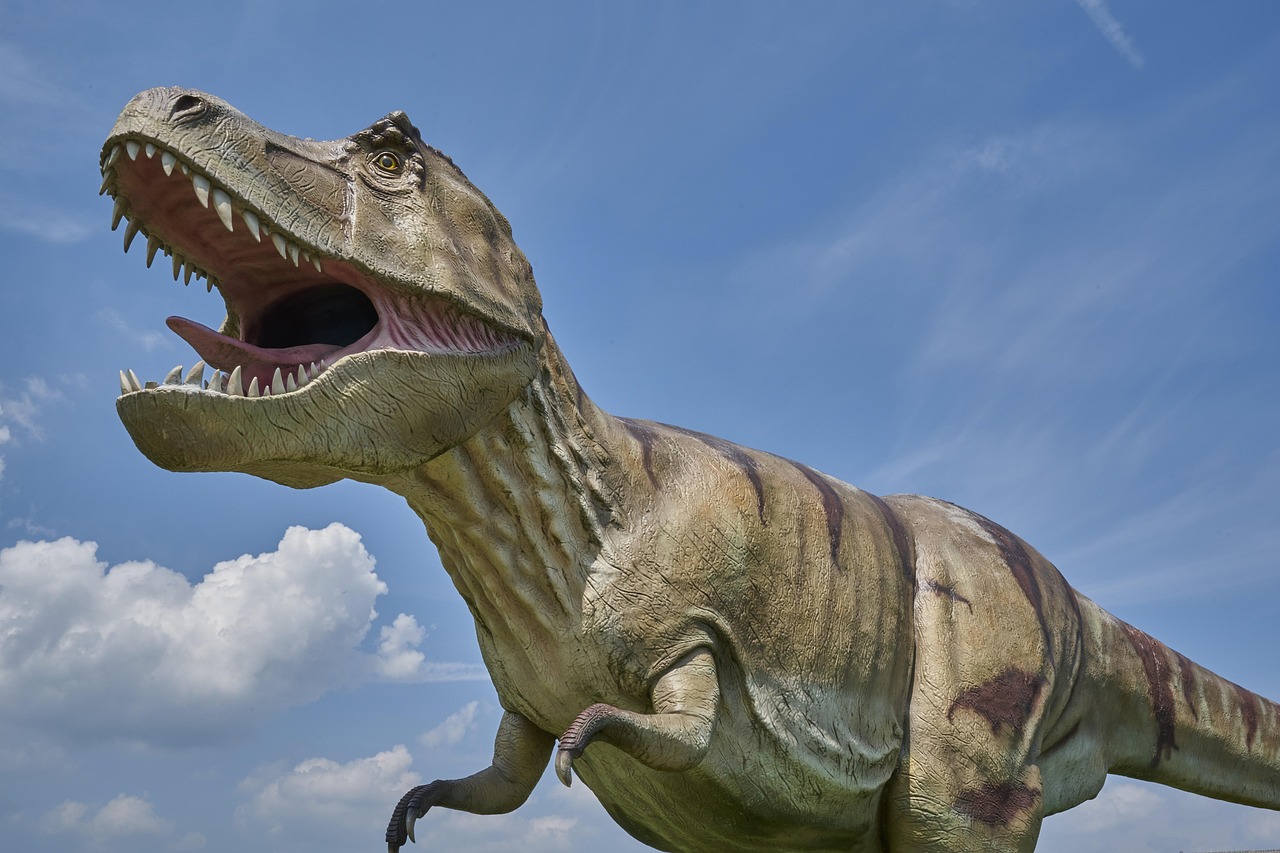
Montana’s relationship with Tyrannosaurus rex spans more than a century of discovery, wonder, and scientific breakthrough. From Barnum Brown’s pioneering excavations to modern-day amateur fossil hunters striking gold in the badlands, this state has consistently delivered the most spectacular T. rex specimens the world has ever seen. The economic impact through dinosaur tourism, the scientific breakthroughs that have reshaped our understanding of these ancient predators, and the promise of future discoveries all point to one undeniable truth: Montana is where the king of dinosaurs truly rules.
As new specimens emerge from the Hell Creek Formation and technology advances our ability to study these magnificent creatures, one thing remains certain – Montana’s T. rex legacy will continue to captivate, educate, and inspire for generations to come. After all, where else can you walk the same ground where the most fearsome predator in Earth’s history once stalked its prey? In Montana, the past isn’t just preserved in museums – it’s alive in every grain of sediment, waiting for the next great discovery.