
Have you ever stopped to wonder if the world you’re experiencing is truly as objective as it seems? Every single day, you navigate through what feels like a concrete, unchanging reality. You see people, make decisions, react to situations. It all feels real, solid, undeniable.
Yet here’s something that might unsettle you: the reality you’re living in right now is being constructed by your mind in ways you’ve never consciously noticed. Your brain isn’t just passively recording the world like some neutral camera. It’s actively building, filtering, and interpreting everything around you. Think of your mind as an unseen architect, quietly drawing up the blueprints of your experience without ever asking for your approval. So let’s dive in and explore the hidden mechanisms that are shaping your reality every single moment.
Your Brain Filters Out Nearly Everything
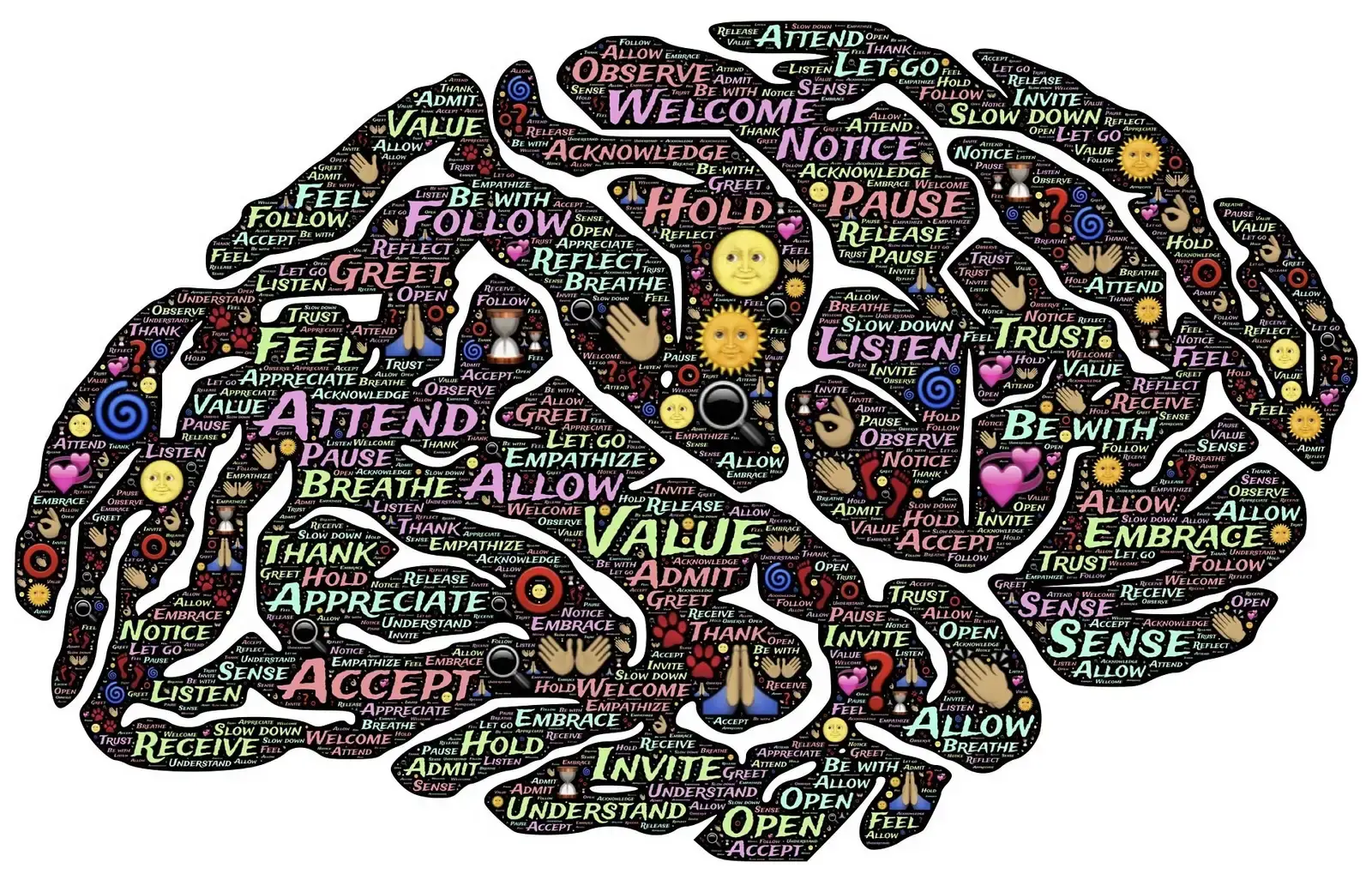
Right now, as you read these words, your brain is performing an astonishing act of deletion. Every second, roughly two million bits of sensory information flood your senses, but you’re only processing around 130 bits of that massive input. That’s less than one percent of available reality making it through to your conscious awareness.
Your brain uses a process called sensory gating to filter out redundant or irrelevant stimuli, preventing an overload of information in higher order centers. Think about it this way: if you experienced every sound, every flicker of light, every texture simultaneously, you’d be paralyzed within seconds. This filtering happens through a neural network called the reticular activating system, your brain’s built in gatekeeper that determines what sensory data deserves your conscious attention and what gets filtered out as background noise. You’re not experiencing objective reality at all. You’re experiencing a highly curated version shaped entirely by what your brain decides matters most.
Your Beliefs Literally Change What You See

Top down influence occurs when the beliefs or knowledge that you bring to perception changes the content of the perception itself, not just what you say or think about your experience, but the actual experience itself. This is wild when you really consider it. Your existing beliefs are actively shaping your phenomenal experience before you even become aware of it.
Let’s be real: this means two people can look at the exact same situation and genuinely see two different things. Your perceptions and experiences form your beliefs, which are things you assume are true. Your perceptions are real but they are not the truth. When you walk into a room convinced someone dislikes you, your brain will hunt for micro expressions and body language that confirm that belief while completely ignoring signs of warmth or friendliness. The idea that we tend to not see things as they are but as we are suggests that our experiences, emotions, and cognitive biases shape our view of reality, and research in psychology and neuroscience supports this.
Your Subconscious Runs the Show
Here’s something that might be hard to accept: you’re not really in control most of the time. Studies show that approximately 95 percent of your brain activity is beyond conscious awareness, with the subconscious mind determining 95 percent of your actions and automated decisions every waking day. Think about that for a moment. The vast majority of what you do, think, and feel is being orchestrated by processes you’re completely unaware of.
Your subconscious comprises memories, beliefs, habits, and emotions that influence behavior without requiring conscious awareness, with neuroscientific studies suggesting that up to 95 percent of human behavior is driven by subconscious processes. Those snap judgments you make about people? The way you react emotionally to certain situations? That’s your subconscious at work, pulling from a vast library of past experiences and learned patterns. Your subconscious is formed from your memories and experiences, and these memories and experiences determine your adult behavior as your conscious mind is fed information from your subconscious. You might think you’re making conscious choices, but honestly, most of the time you’re just along for the ride.
Cognitive Biases Distort Your Every Decision

A cognitive bias is a flaw in your reasoning that leads you to misinterpret information from the world around you. Because you are flooded with information from millions of sources throughout the day, your brain develops shortcuts meant to cut down processing time, but these shortcuts aren’t always perfectly objective. You’d like to think you’re rational, but the truth is you’re running on mental autopilot most of the time.
You favor ideas that confirm your existing beliefs and what you think you know, and when you conduct research, you suffer from trying to find sources that justify what you believe about the subject. This is confirmation bias, and it’s probably affecting you right now as you read this. Cognitive biases can affect your decision making skills, limit your problem solving abilities, hamper your career success, damage the reliability of your memories, and impair your relationships. The scary part? Researchers have catalogued over 175 cognitive biases, and you’re susceptible to dozens of them without even knowing it.
Your Attention Creates Your Reality
The way you direct your attention shapes your experiences and ultimately influences how you perceive reality through your brain’s ability to focus on specific information while filtering out everything else that’s irrelevant to your current goals. This isn’t just some abstract concept. Where you place your attention literally determines what becomes real for you.
Attention acts as your brain’s spotlight, highlighting specific aspects of the environment while ignoring others, and when you focus on something, your brain increases neural activity in related areas, making it more salient in your conscious awareness. Ever notice how when you’re thinking about buying a certain car, you suddenly see that model everywhere? That’s not coincidence. You can walk down the same street every day and suddenly notice a shop that’s been there for years because it simply didn’t make it past your brain’s filter before. Your attention is the sculptor, and your reality is the clay being molded moment by moment.
Expectations Become Self Fulfilling Prophecies
A self fulfilling prophecy is a prediction that comes true at least in part as a result of your belief or expectation that the prediction would come true, as people tend to act the way they have been expected to in order to make the expectations come true. This is one of the most powerful because it creates feedback loops that actually bring your beliefs into existence.
When you expect certain behaviors of others, you’re likely to act in ways that make the expected behavior more likely to occur, and when you believe something about yourself, you’re more likely to act in ways that correspond to your beliefs, thus reinforcing those beliefs and encouraging the same behavior. Honestly, it’s a bit unsettling. If you walk into a job interview convinced you’ll fail, your anxiety and lack of confidence will affect your performance in ways that make failure more likely. In educational settings, when teachers were told random students were expected to perform exceptionally well, those students showed a significant increase in test scores at the end of the year, actually ending with significantly greater improvement. Your expectations aren’t just predictions. They’re instructions.
Your Emotions Color Every Experience

Emotions, often considered the driving force behind your actions, have intricate connections with your subconscious mind, and unresolved emotions can take root there, exerting a powerful influence on your well being and behavior. You might think you experience something and then feel an emotion about it, but the reality is more complex and far more interesting.
When you suppress or ignore your emotions, they find a home in your subconscious mind, shaping your thoughts, beliefs, and behaviors in subtle yet profound ways, and unresolved emotions can manifest as anxiety, depression, or other psychological disturbances. Let’s say you had a negative experience with dogs as a child. Even decades later, your emotional system might be triggering fear responses before your conscious mind has a chance to rationally assess whether the friendly golden retriever approaching you is actually a threat. Pain is highly responsive to your psychology and mindset, and those who expect worse pain and ruminate on it feel more intense pain, stay longer in hospitals after surgery, and require more painkillers. Your emotional state isn’t just a reaction to reality. It’s actively constructing what that reality feels like.
Memory Rewrites Your Past

Here’s something most people don’t realize: Cognitive psychology indicates that your memories shape how you see the world, and studies on reconstructive memory show that people unknowingly alter past experiences to fit their existing beliefs through the schema effect. Your memories aren’t accurate recordings. They’re reconstructions influenced by your current beliefs and emotions.
Memory is not a passive recording of experiences but a complex interplay between the conscious and subconscious mind, and your subconscious plays a crucial role in the formation, retrieval, and interpretation of memories, filtering, prioritizing, and sometimes distorting your recollections. Every time you recall a memory, you’re actually rewriting it slightly based on your current mental state. Think about a childhood event you remember vividly. There’s a good chance some of those details have been altered or entirely fabricated by your mind to create a coherent narrative that fits your current identity. Someone who has repeatedly experienced betrayal might interpret neutral actions as deceptive, whereas a trusting person might assume goodwill in others. Your past isn’t fixed. It’s constantly being reinterpreted by your present.
Your Mind Constructs Rather Than Records
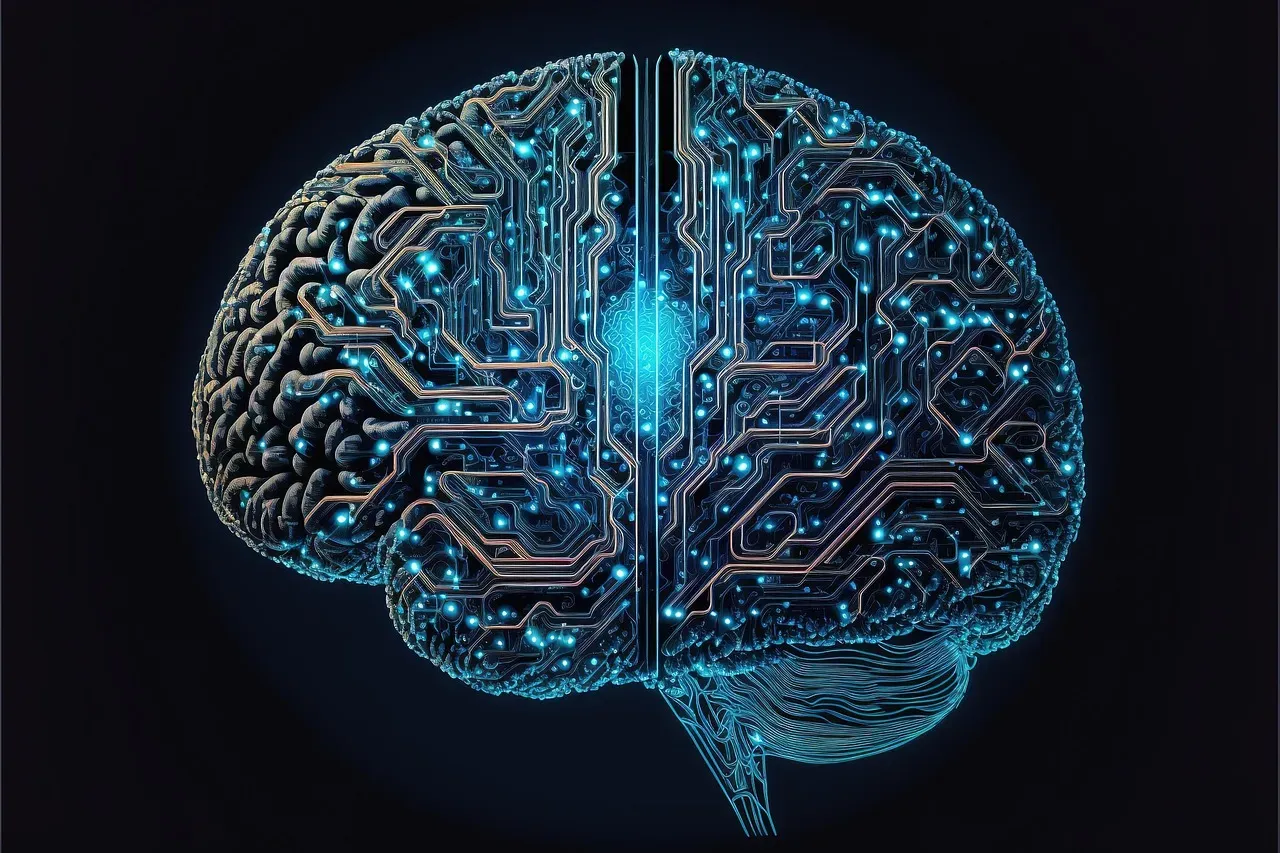
Perception is never a direct window onto an objective reality, as all your perceptions are active constructions, brain based best guesses at the nature of a world that is forever obscured behind a sensory veil. This is perhaps the most fundamental way your mind shapes reality. You’re not passively receiving information from the world. You’re actively building your experience of it.
Your brain does not passively receive information from the senses but actively constructs reality, and studies show that your brain fills in gaps using prior knowledge through a process known as predictive coding, meaning you do not see the world objectively but rather through the lens of your expectations and past experiences. We have known since Isaac Newton that colors do not exist out there in the world but are instead cooked up by the brain from mixtures of different wavelengths of colorless electromagnetic radiation. Even something as seemingly basic as color is a construction of your mind, not an inherent property of the external world.
You Can Reprogram Your Mental Filters
The good news after all this? Learning techniques to reprogram your subconscious mind will help you believe in yourself because your confidence will no longer be challenged by fear of the unknown, and doing so will train your brain to be in line with your true desires and dreams. You’re not stuck with the reality your mind has been constructing.
Understanding this filtering process reveals something profound: you’re not experiencing objective reality but rather a highly curated version shaped by your brain’s priorities, which opens up an exciting possibility because you have more control over what you notice than you might think, and by applying mindfulness techniques strategically, you can retrain your reticular activating system to let more richness through. Through the concept of neuroplasticity, your brain’s ability to adapt and rewire itself, you can reshape deeply ingrained beliefs and behaviors through techniques such as mindfulness, visualization, and cognitive behavioral therapy, promoting the formation of new neural pathways. It takes conscious effort and practice, but you genuinely can change the architect’s blueprints.
Conclusion

Your mind is far more powerful than you’ve probably ever imagined. Every moment of your existence, it’s filtering information, constructing perceptions, and shaping the very fabric of what you experience as reality. Your mind isn’t a passive observer simply perceiving reality as it is but actively changes reality.
The truth is both liberating and a bit terrifying: you’re living in a reality that your own mind has constructed, influenced by your beliefs, memories, expectations, and unconscious processes. Yet this also means you have more agency than you realized. By understanding these hidden mechanisms, you can start to consciously reshape how you perceive and interact with the world. What do you think about this? Does it change how you’ll approach your day tomorrow?