Millions of years before humans ever set foot on this planet, something brutal and extraordinary was already unfolding across prehistoric landscapes. Massive, multi-ton predators were clashing over territory, prey, and dominance in battles so intense that the echoes of those encounters are still frozen, quite literally, in stone. The bones tell stories that no history book could ever fully capture.
You might think we’d have little more than guesswork to work with, but the fossil record is surprisingly vivid. Bite marks. Broken bones. Embedded teeth. Healed wounds. Each one is a chapter from a life that ended, or nearly ended, in violence. The question isn’t really whether these giants fought. It’s how often, how fiercely, and what those fights actually looked like. Let’s dive in.
The “Dueling Dinosaurs”: Nature’s Most Jaw-Dropping Fossil Discovery
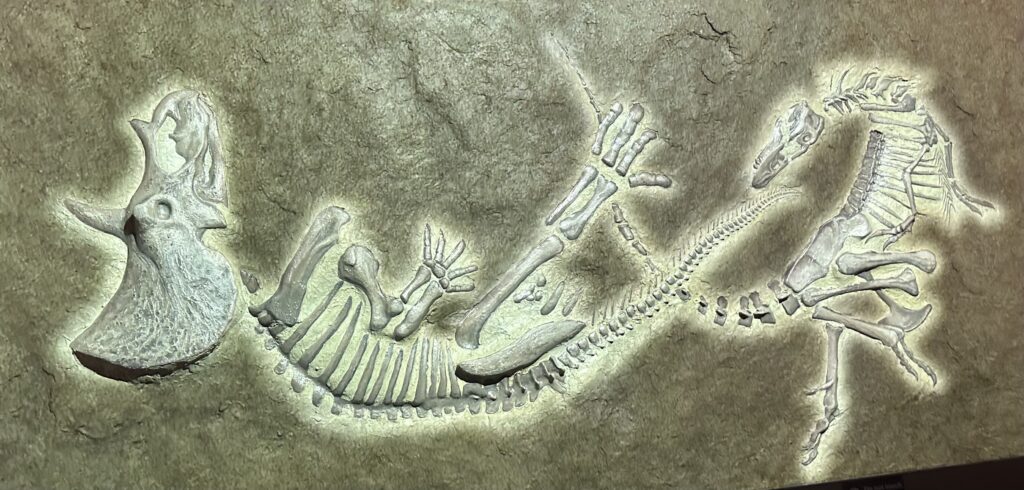
Imagine stumbling across two enormous skeletons, locked together in what looks like a death embrace, buried side by side for sixty-seven million years. That’s precisely what happened in Montana’s Hell Creek Formation in 2006. The specimen, now called the “Dueling Dinosaurs,” originates from the Hell Creek Formation of Montana and consists of the articulated skeletons of a Nanotyrannus lancensis and a Triceratops horridus, associated within a single sandstone block. It’s honestly one of the most mind-bending fossil discoveries ever made.
The “dueling” inference comes from the numerous injuries sustained by both dinosaurs, including a tooth from the tyrannosaur embedded within the Triceratops, though it remains unclear whether they were actually buried while fighting one another. In addition to being an extremely rare paleontological discovery, the Dueling Dinosaurs fossil provides significant insight into the behavior and biology of both species in life. The Tyrannosaurus rex had most of its teeth broken, a broken finger, and a cracked skull, with researchers working to uncover whether all of this damage was sustained during a possible battle with the Triceratops. You can’t make this stuff up.
T. Rex vs. Triceratops: The Rivalry That Defined an Era
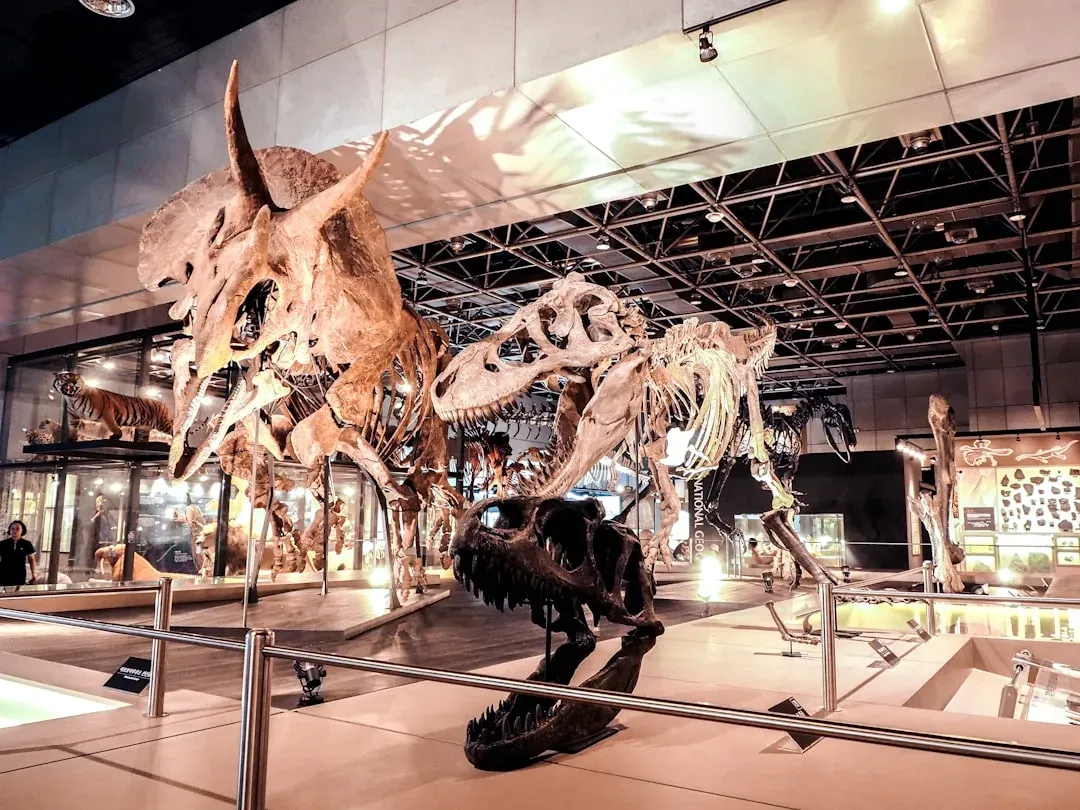
Here’s the thing about this rivalry: it wasn’t just a single dramatic showdown between two unlucky animals. The evidence suggests these confrontations were a regular part of prehistoric life. Paleontologists have found Triceratops bones scarred with healed T. rex bite marks, suggesting not only that attacks happened, but that some Triceratops lived to tell the tale. These weren’t one-sided hunts. They were battles of survival, with outcomes that could go either way.
Think about what that means for a moment. A Triceratops that survived a T. rex attack didn’t just walk away unscathed. It walked away carrying the teeth marks of the most powerful land predator that ever lived. Researchers have reported definitive evidence of predation by T. rex in the form of a tooth crown embedded in a hadrosaur’s tail bone, surrounded by healed bone growth, indicating that the prey escaped and lived for some time after the injury. The fossil evidence confirms what we’ve long suspected: T. rex and Triceratops were true rivals, not just passing neighbors.
T. Rex Fighting Itself: When the Top Predator Turns on Its Own Kind
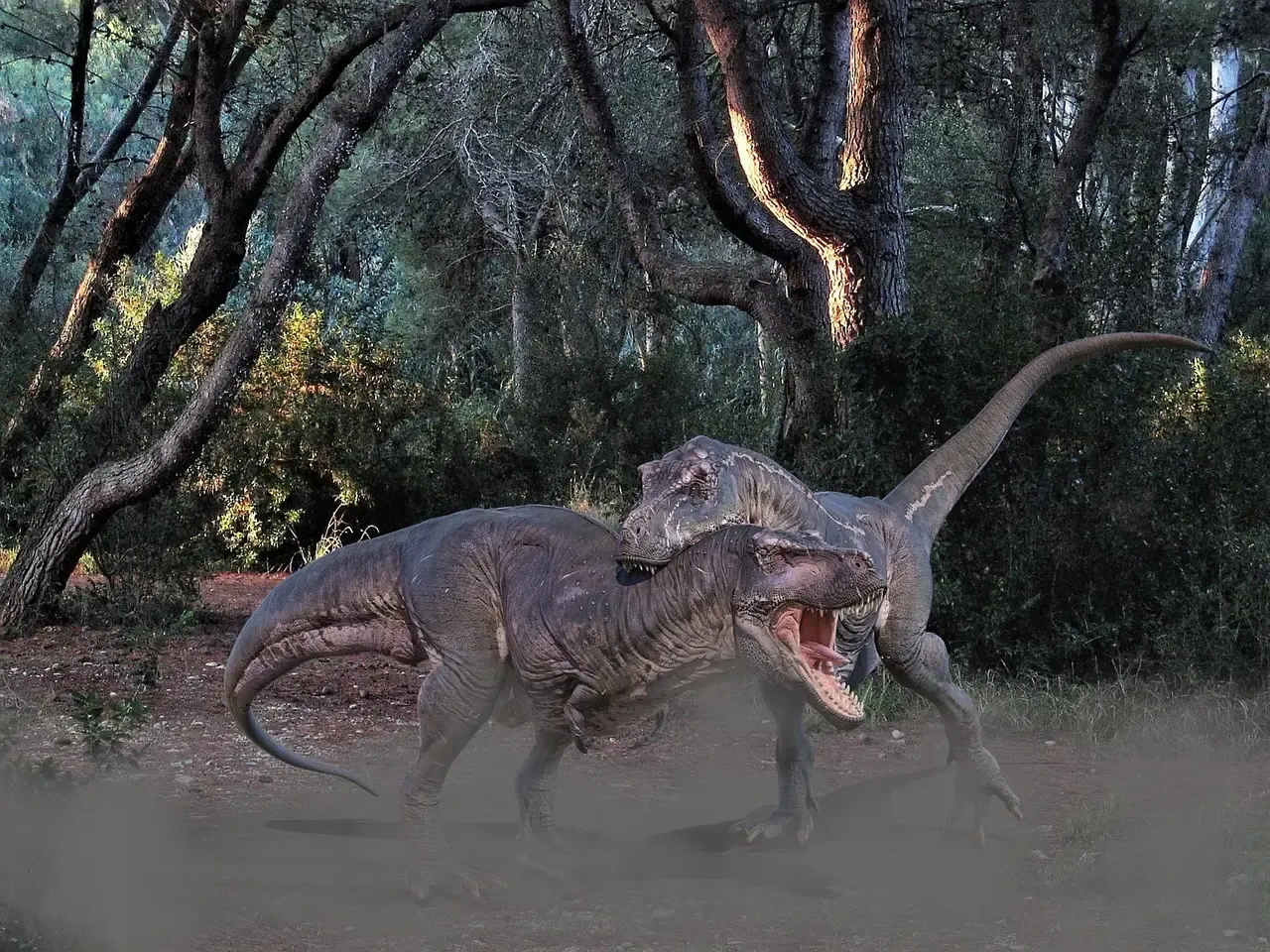
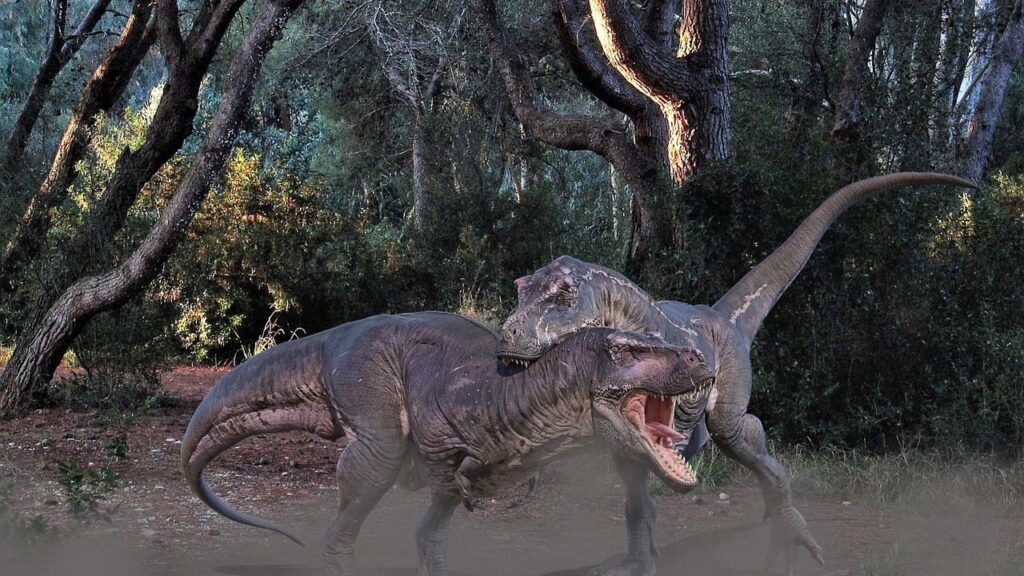
You might expect the world’s most dominant predator to be too busy hunting to quarrel with its own species. You’d be wrong. Being a T. rex was certainly tough. Not only did they have to contend with formidable prey animals such as the ceratopsians and hadrosaurs, but there is plenty of evidence to suggest that these predators battled it out amongst themselves. This type of conflict, when an animal from one species fights another of the same species, is referred to as intraspecific competition.
The skull of the teenage T. rex known as “Jane” shows four partially healed bite marks. The punctures are consistent with the tooth shape of another T. rex about the same age. This fossil indicates not only that T. rex fought by biting each other on the snout, as some crocodile species do today, but also that this behavior started early in the life of the tyrant lizard. One of the most prominent injuries found in the famous specimen “Stan” are in the neck and skull, with a piece of bone missing at the rear and a hole in the skull about an inch wide, probably made by another Tyrannosaurus. Two cervical vertebrae are also fused, and another has additional bone growth, which could have been caused by another Tyrannosaurus bite, though the bite marks are healed, indicating that Stan survived the wounds. Territorial disputes, dominance contests. It seems some things never change.
Allosaurus vs. Stegosaurus: The Jurassic Grudge Match
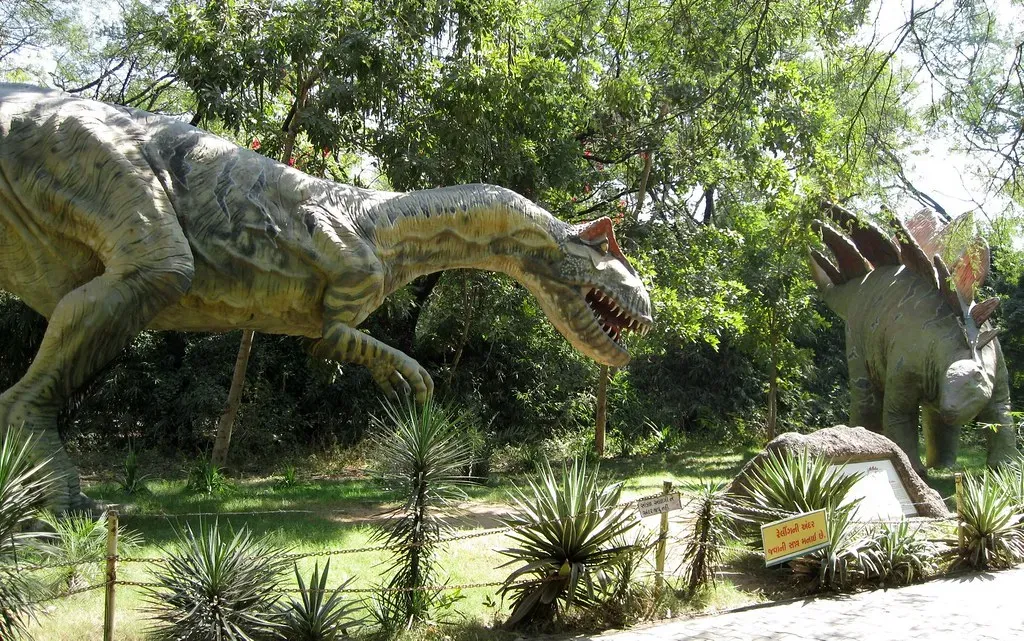
Long before T. rex ever roamed the Earth, another pair of giants was engaged in its own brutal arms race. Stegosaurus would have lived alongside dinosaurs such as Apatosaurus, Diplodocus, Camarasaurus, and Allosaurus, the latter of which may have preyed on it. What makes this rivalry so fascinating is that the prey fought back with absolutely devastating results. We’re talking about a weapon so effective it sometimes killed the attacker outright.
In several reports, individuals of the large predator Allosaurus, a theropod dinosaur that lived between 155 and 145 million years ago, have been found with puncture wounds from encounters with Stegosaurus. Researcher Robert Bakker and colleagues reported an Allosaurus specimen with multiple large wounds through its pelvis, roughly the size of the tail spikes carried by stegosaurs, known popularly as thagomizers. This Allosaurus was so severely injured that it did not recover and eventually died of its wounds. Evidence from other individuals suggests that these two Jurassic giants likely clashed on a regular basis. Imagine an Allosaurus, one of the most terrifying predators of the Jurassic period, being fatally skewered by a herbivore’s tail spike. Remarkable.
Carcharodontosaurs vs. Early Tyrannosaurs: Keeping Giants in Check
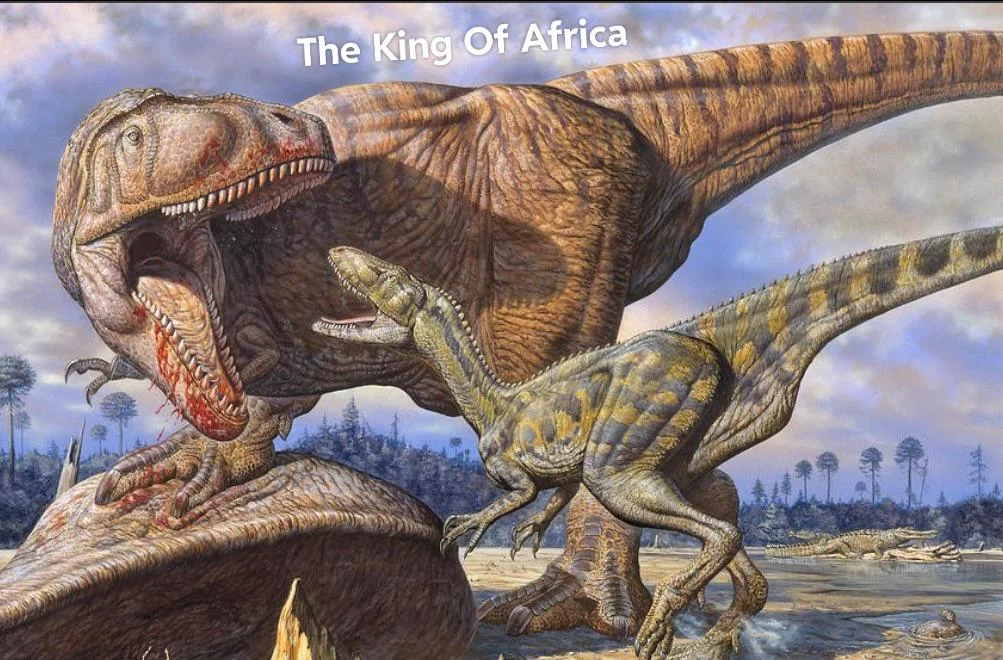
Here’s a chapter of dinosaur history that might genuinely surprise you. Long before T. rex emerged as the undisputed king of North America, its tyrannosaur ancestors were being pushed around by an entirely different group of even larger predators. A carnivorous dinosaur, one of the three largest ever discovered in North America, lived alongside and competed with small-bodied tyrannosaurs ninety-eight million years ago. This newly discovered species, Siats meekerorum, was the apex predator of its time and kept tyrannosaurs from assuming top predator roles for millions of years.
The discovery of Siats provides new evidence for the ecological coexistence of large allosauroids and small-bodied tyrannosauroids. These data support the hypothesis that the extinction of Allosauroidea in terrestrial ecosystems of North America permitted ecological release of tyrannosauroids, which went on to dominate end-Cretaceous food webs. In other words, T. rex only got its moment in the sun because another monstrous predator finally disappeared. The huge size difference certainly suggests that tyrannosaurs were held in check by carcharodontosaurs, and only evolved into enormous apex predators after the carcharodontosaurs disappeared. Timing, as they say, is everything.
Spinosaurus and Carcharodontosaurus: Two Giants, One Killing Ground
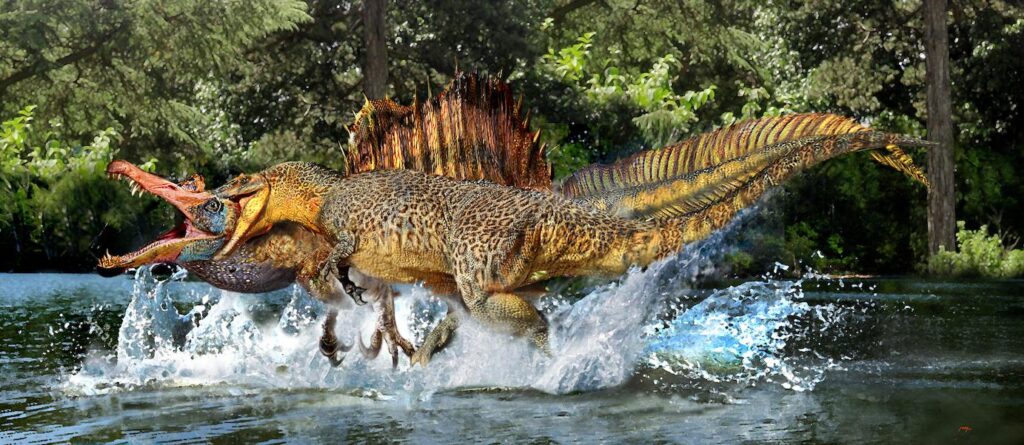
Imagine two of the largest predatory dinosaurs ever known sharing the same scorching landscape in what is now North Africa. Honestly, that thought alone is enough to make your head spin. Teeth collected from the Kem Kem Group of Morocco point to Carcharodontosaurus sharing a habitat with Spinosaurus, other large theropods, and massive crocodilians. Spinosaurus may have lived alongside similarly large dinosaurian predators such as Carcharodontosaurus, titanosaur sauropods, and the thirty-three-foot long crocodylomorphs Stomatosuchus and Sarcosuchus.
A common trend found on large theropod skulls is to exhibit antemortem bite marks that suggest these carnivores were often involved in territorial battles over prey, mates, or scavenging rights. With spinosaurids occupying semi-aquatic lifestyles, carcharodontosaurids were easily the largest terrestrial predators in the early and middle Cretaceous. Unlike its competitors, Spinosaurus appears to have focused on aquatic prey, and by hunting fish and possibly other water-dwelling animals, it may have occupied a unique ecological niche that reduced competition with other predators. It’s almost like nature forced these two colossal animals into a tense, uneasy coexistence by giving them different lunch menus.
What Scarred Bones Reveal: The Science Behind Reading Ancient Violence
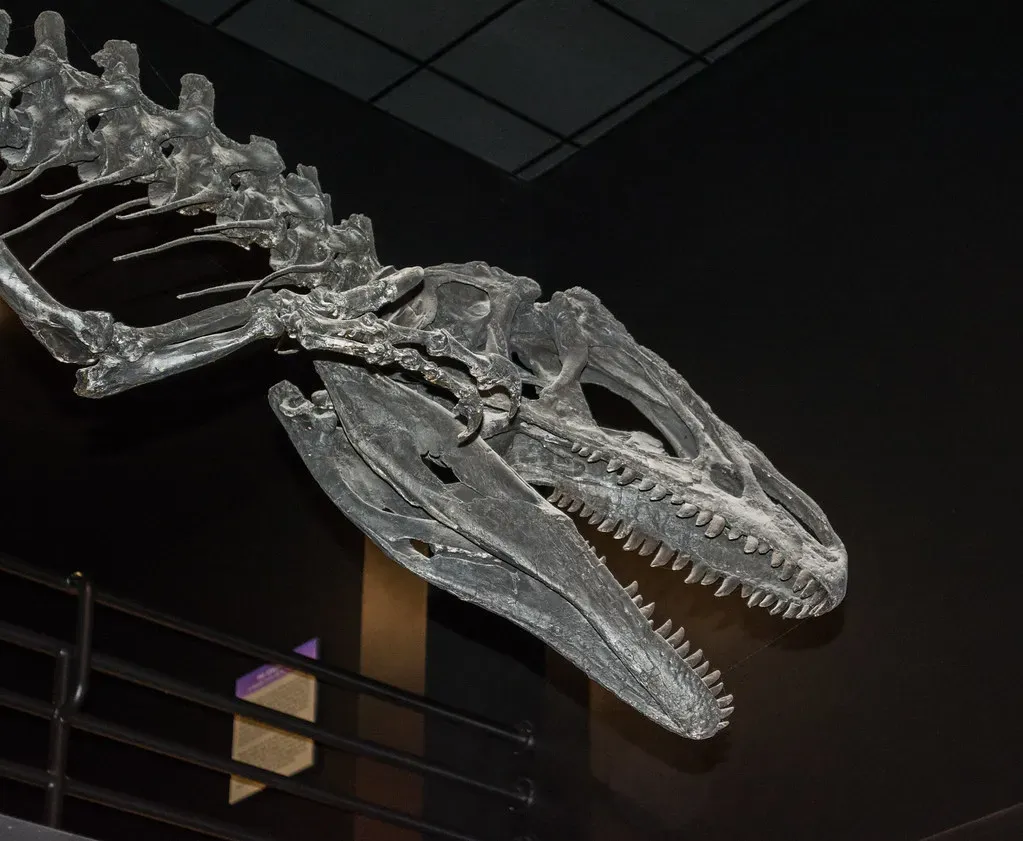
It’s hard to say for sure just how much of the prehistoric violence we’ll ever fully reconstruct, but the tools available to paleontologists today are genuinely astonishing. Scientific examination of the Dueling Dinosaurs is currently ongoing at the North Carolina Museum of Natural Sciences, and the usage of non-destructive scientific instruments such as CT scans is expected to reveal more information. The specimen has been considered one of the best-preserved and most complete fossils of both species, and contains skin impressions and potentially internal organs, stomach contents, and proteins.
Although the presence of healed injuries demonstrates that an animal lived long enough after an attack to create new bone at the site of the damage, a rare occurrence in the fossil record, the healing usually obliterates any clear signature linking the injury to a specific predator. This is why complete, well-preserved specimens are so enormously valuable. The number of pathologic specimens and the number of pathologies within fairly complete Allosaurus individuals suggest that members of this taxon had an active lifestyle predisposed to injury, with most pathologies found seeming to be traumatic in origin. Every scar is essentially a frozen headline from sixty-seven million years ago, and paleontologists are slowly learning to read them all.
Conclusion: The Stone Record of an Ancient World at War
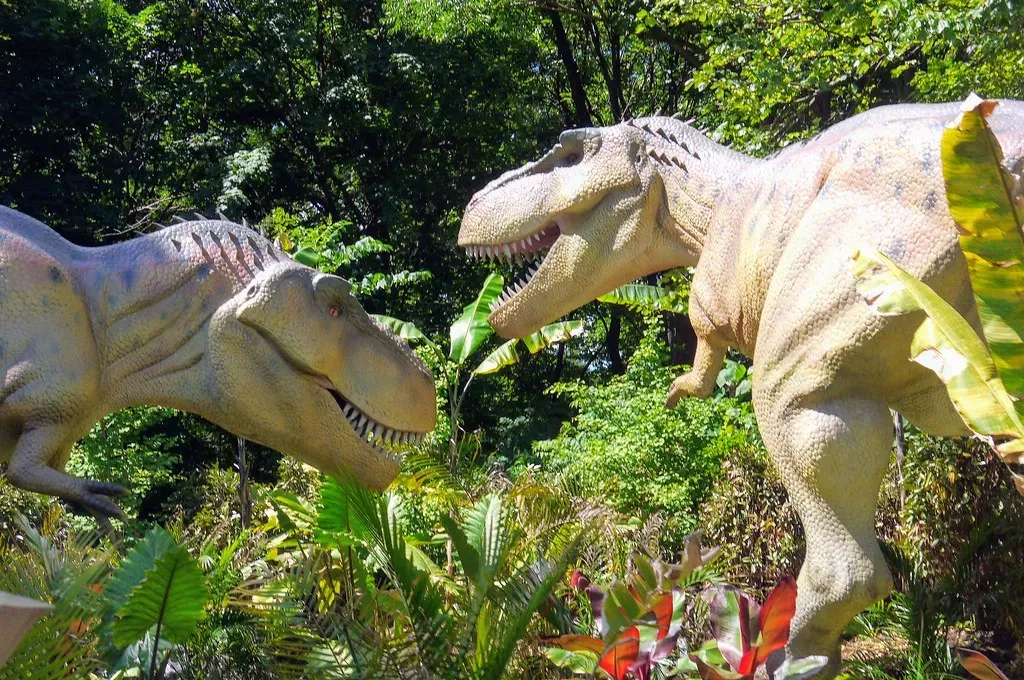
What you’re left with, when you step back and look at all of this evidence together, is a picture of prehistoric ecosystems far more violent and dynamic than most people ever imagined. These weren’t peaceful giants wandering vast empty landscapes. They were competing, clashing, hunting, and sometimes dying at the claws and teeth of rivals just as formidable as themselves. The fossils are clear on that.
It’s a reminder that competition, struggle, and survival are not modern inventions. They’re as old as life itself, written into the very bones of creatures that vanished long before our species drew its first breath. The next time you see a T. rex skeleton in a museum, look a little closer at those old healed fractures and bite marks. There’s an entire war story hiding in there. What do you think would surprise you most if you could witness one of these ancient battles firsthand? Tell us in the comments.