Dinosaurs ruled the Earth for well over 160 million years. You might picture them as solitary, brutish creatures, driven purely by appetite and instinct. But here is the thing – that picture is almost certainly wrong, and the rocks beneath your feet hold the evidence to prove it.
From nesting colonies in Montana to fossilized family groups buried alive in ancient floods, paleontology has been quietly assembling one of the most surprising stories in natural history. The lives of dinosaurs were far more complex, intimate, and even tender than anyone dared imagine just a few decades ago. So let’s dive in.
Reading the Rock Record: What Fossils Actually Tell You
When you find a dinosaur fossil, you are not simply looking at a dead animal. You are reading the last chapter of a life story. Paleontologists have begun to answer previously elusive questions about life in the Mesozoic: how dinosaurs nested, how eggs matured, and how parents cared for their offspring. Every layer of sediment, every bone fragment, every fossilized eggshell is a clue left behind by time itself.
Since the start of the twenty-first century, there has been a notable increase in annual publications focusing on dinosaur reproduction and ontogeny, with researchers using these data to address a range of macroevolutionary questions. Ontogeny, which is closely tied to osteological morphological variation, impacts several key research areas, such as taxonomic diversity, population dynamics, and palaeoecology. Honestly, it is extraordinary how much a single bone can reveal when the right analytical tools are applied to it.
Eggs, Nests, and the Shocking Secret of Soft Shells
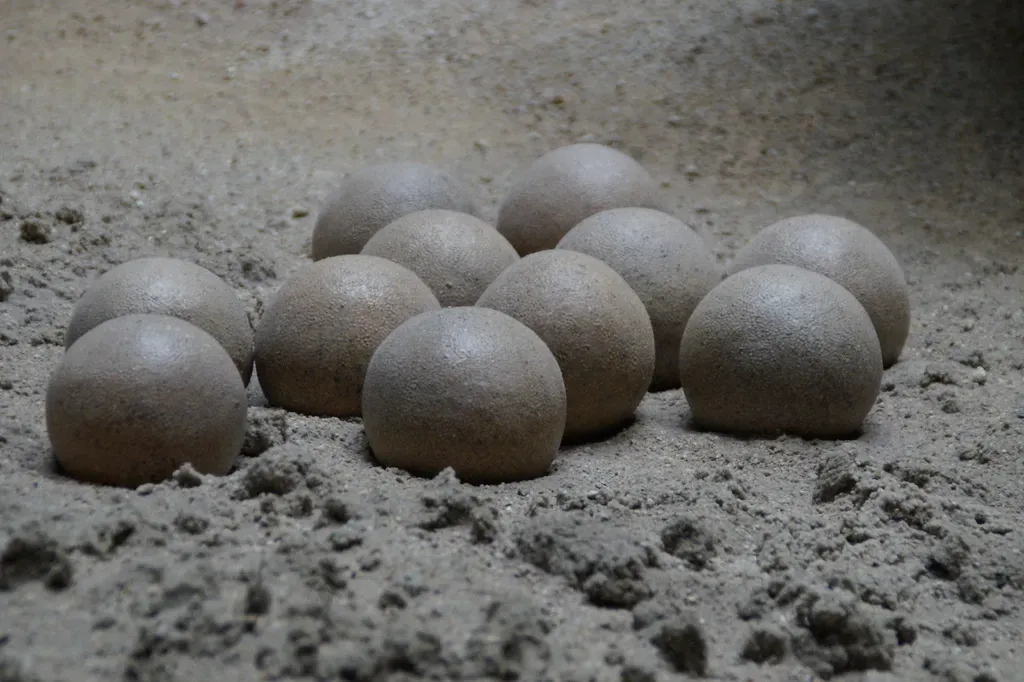
You probably grew up assuming all dinosaurs laid hard, crunchy eggs. That assumption was perfectly reasonable – until it was completely dismantled. In 2020, that assumption was completely overturned, opening an exciting new realm of research on dinosaur reproduction. That revelation – that some dinosaurs laid soft-shelled eggs – and other recent discoveries about dinosaur nests offer vivid glimpses into the lives of long-dead dinosaurs, from egg to parenthood.
A study by University of Calgary paleontologist Darla Zelenitsky and colleagues found that some dinosaurs, like the 73 million-year-old horned dinosaur Protoceratops and the 215 million-year-old, long-necked dinosaur Mussaurus, laid soft-shelled eggs similar to the leathery eggs of some modern reptiles. This discovery reshapes everything you thought you knew about how different dinosaur families raised their young. This research could help to explain why dinosaur eggs are harder to find than many paleontologists would expect, because softer eggs would be less likely to fossilize. Working out which dinosaurs laid which types of eggs is important for answering big questions about dinosaur parental care.
Maiasaura: The Dinosaur That Taught Us What “Good Mother” Really Means
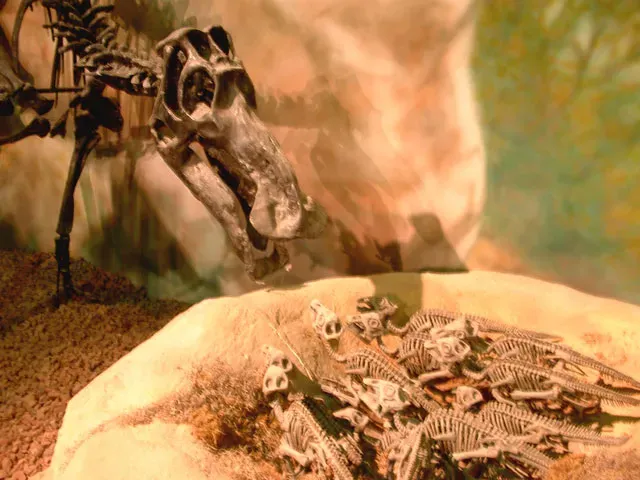
If there is one dinosaur that changed the game when it comes to understanding family dynamics, it is Maiasaura. The duck-billed Maiasaura, a name that means “good mother lizard,” is one of the best-known examples of parental behaviour. These Late Cretaceous dinosaurs, which lived around 80 to 75 million years ago, are thought to have nested in large colonies. Picture a whole neighborhood of dinosaur nests, bustling with activity – not so different from a modern seabird colony, when you think about it.
Finding nests with juvenile dinosaur bones, such as in the proposed Maiasaura nesting colonies in Montana, suggests that the hatchlings were cared for by a parent. The parents may have extensively provided food and protection for their hatchlings, although this idea is still debated. Still, the fossil sites in Montana tell a persuasive story, one that points toward genuine, sustained parental investment lasting well beyond hatching.
Big Mama and the Oviraptorids: Brooding Against All Odds
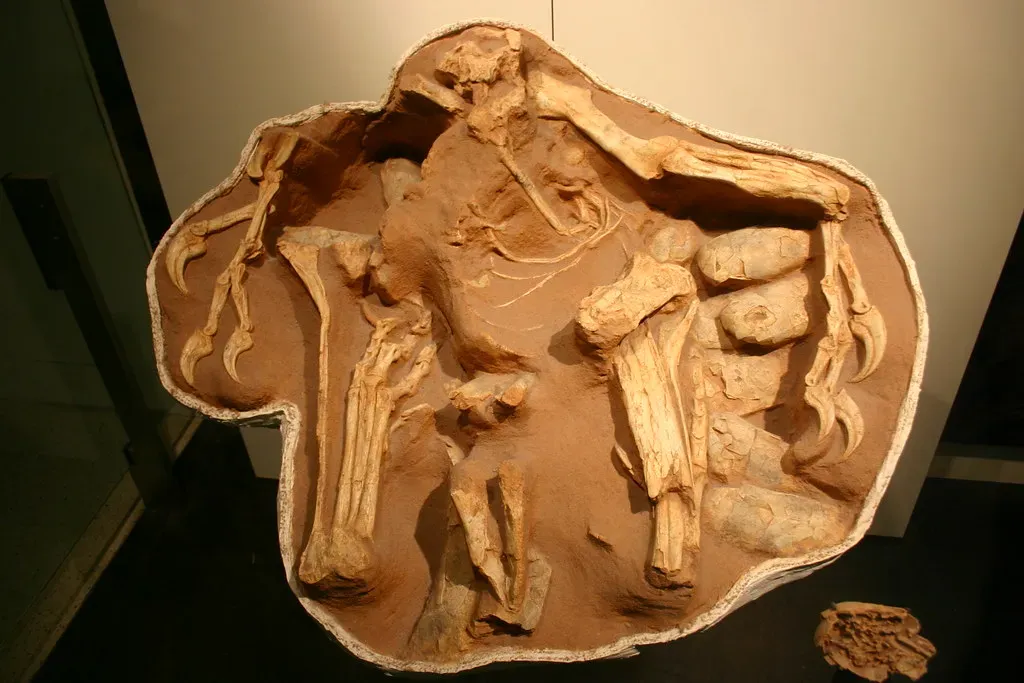
Perhaps no fossil is more emotionally striking than the one paleontologists nicknamed “Big Mama.” This 75-million-year-old oviraptorid was uncovered brooding on – meaning sitting on top of – a nest of eggs. The Mongolian dinosaur was revealed to the world in 1995 and named as Citipati in 2001. It is a moment frozen in stone. A parent giving everything, right up to the very end.
It has now been confirmed that the eggs actually belonged to Oviraptor. There is no other evidence that it stole eggs – in fact, oviraptorids show substantial evidence of putting their lives on the line for their young. Scientists know from previous finds that oviraptorids laid two eggs at a time in a clutch of 30 or more. This means that the mother would have to stay with or at least return to the nest, lay her pair of eggs, arrange them carefully in the circle, and bury them appropriately every day for two weeks to a month. That is not casual parenting. That is a serious, sustained commitment to the next generation.
The Latchkey Kids: When Young Dinosaurs Struck Out on Their Own
Publicada por/Publish by: Luis Miguel Bugallo Sánchez, CC BY-SA 3.0)
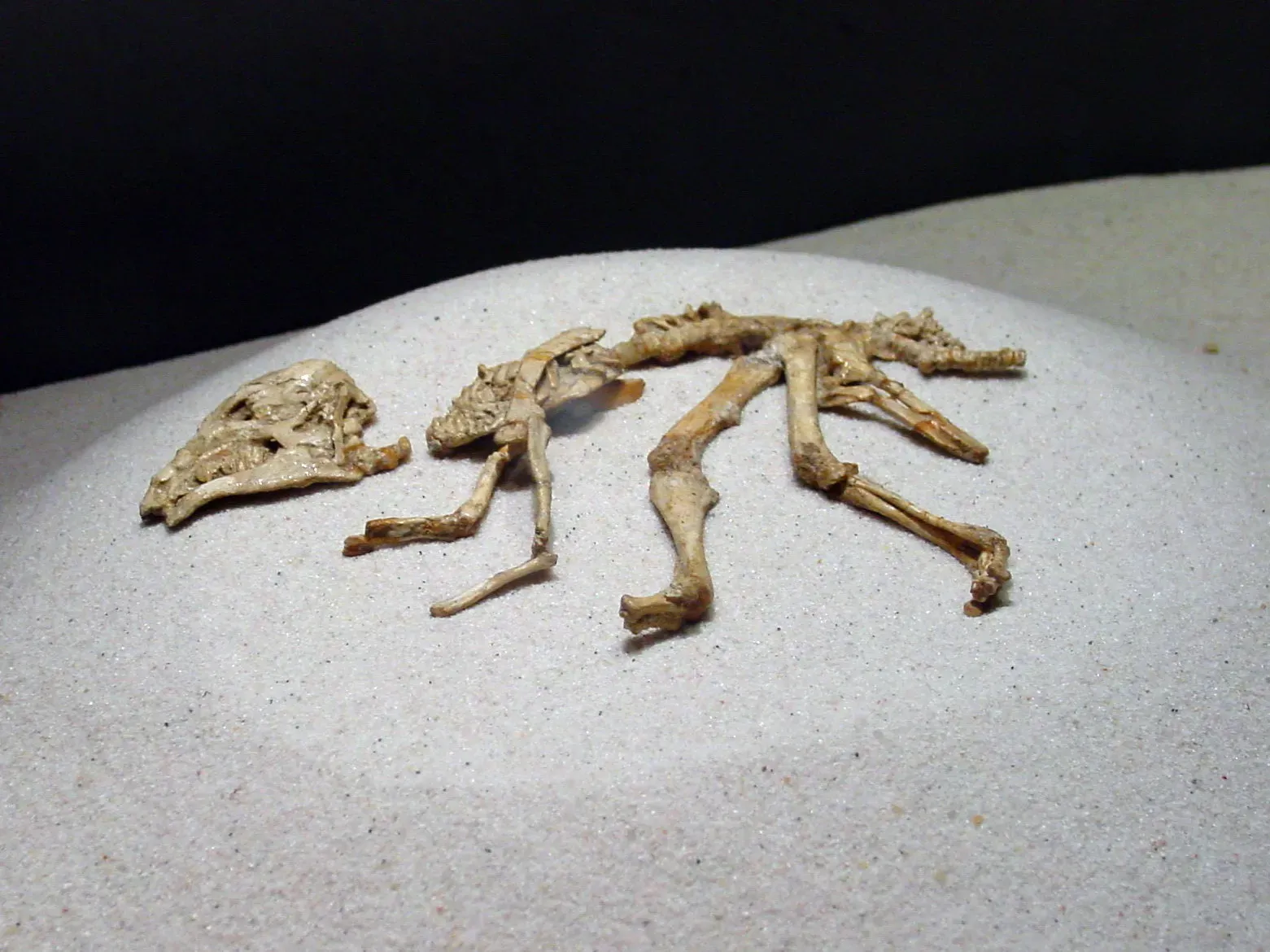
Here is where things get genuinely surprising. Not all young dinosaurs were coddled and protected for years. Research published in late 2025 by University of Maryland paleontologist Thomas Holtz Jr. suggests that many young dinosaurs lived remarkably independent lives. While parents did provide some care, young dinosaurs were relatively independent. After just a few short months or a year, juvenile dinosaurs left their parents and roamed alone, watching out for each other.
When you count young dinosaurs as separate functional species from their parents and recalculate the numbers, the total number of functional species in these dinosaur fossil communities is actually greater on average than what you see in mammalian ones. This is a staggering idea. It means dinosaur ecosystems were not just diverse because of many species – they were diverse because juveniles and adults of the same species were essentially living completely different ecological lives. The Mesozoic world had different environmental conditions, such as warmer temperatures and higher carbon dioxide levels. These factors would have made plants more productive, generating more food energy to support more animals.
Herding Together: The Social Lives of Ancient Giants
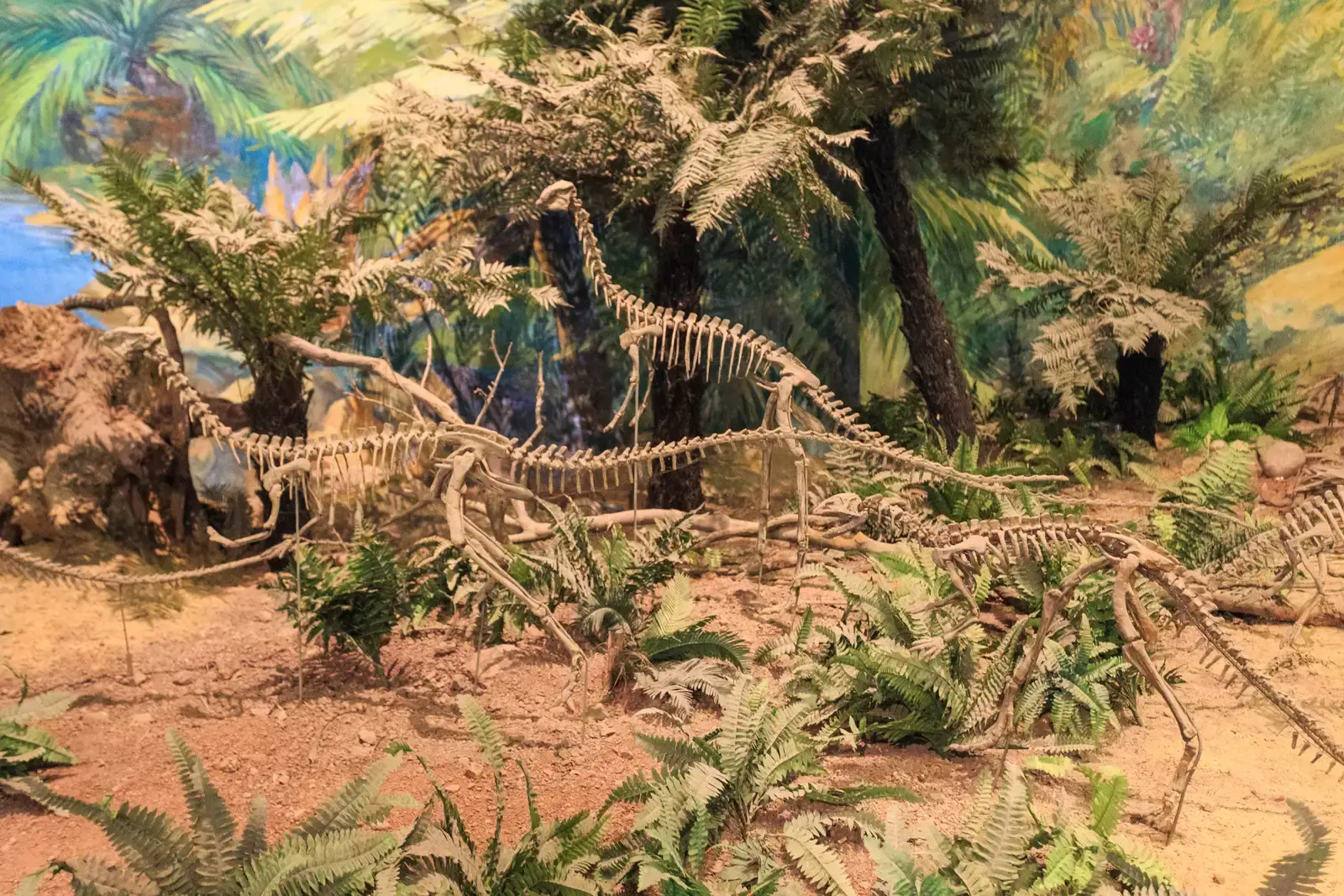
If you assumed that massive dinosaurs were mostly loners, the fossil record is about to prove you wrong. The team’s results show that Mussaurus and possibly other dinosaurs evolved to live in complex social herds as early as 193 million years ago, around the dawn of the Jurassic period. Imagine that – organized, multigenerational social groups nearly 200 million years ago. That is older than most people ever picture dinosaur social life being.
Researchers reported an exceptional fossil occurrence from Patagonia that includes over 100 eggs and skeletal specimens of 80 individuals of the early sauropodomorph Mussaurus patagonicus, ranging from embryos to fully-grown adults. Most specimens were found in a restricted area and stratigraphic interval, with some articulated skeletons grouped in clusters of individuals of approximately the same age. New discoveries indicate the presence of social cohesion throughout life and age-segregation. This means that multifamily groups got together not just for breeding and nesting but potentially formed life-long herds, more like today’s elephants or wildebeests. The comparison to elephants is almost breathtaking, isn’t it?
Bones Don’t Lie: What Paleontology Still Has Left to Reveal
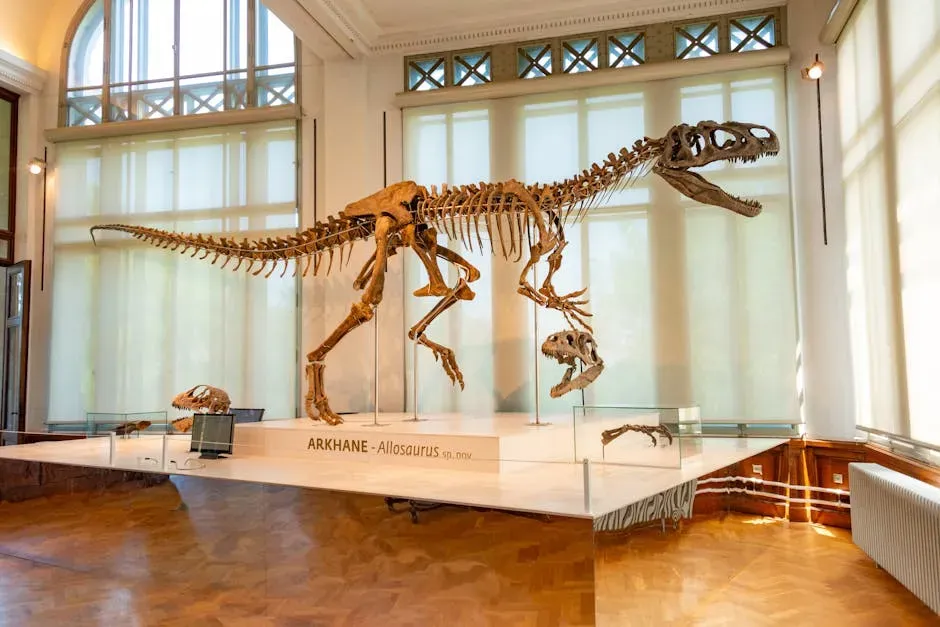
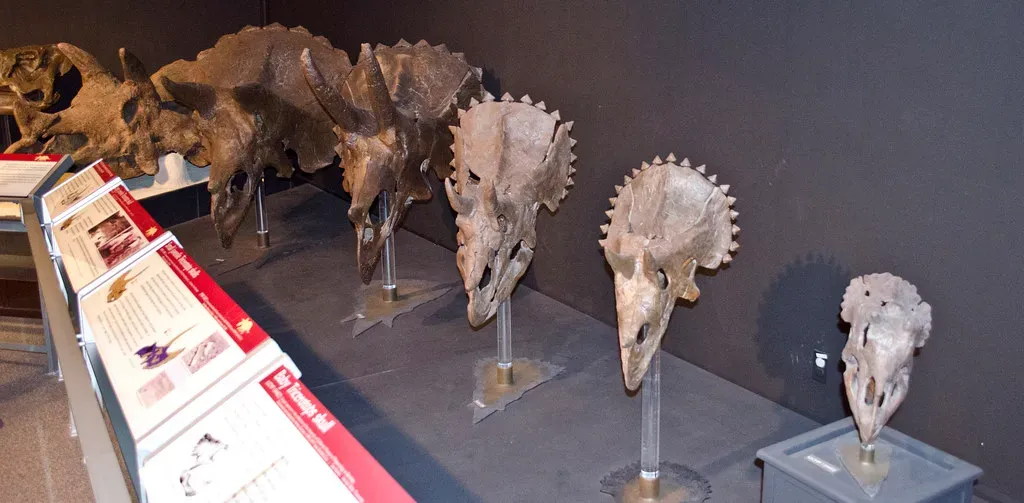
Reading the age and growth stage of a dinosaur directly from its fossilized bones is one of the most powerful tools in modern paleontology. New data on dinosaur longevity garnered from bone microstructure – known as osteohistology – are making it possible to assess basic life-history parameters of dinosaurs such as growth rates and timing of developmental events. Analyses of these data in an evolutionary context are enabling the identification of developmental patterns that lead to size changes within the Dinosauria.
Think of dinosaur bones like tree rings – each growth mark laid down in the tissue tells you something about season, stress, and speed of development. Identification of the ontogenetic status of an extinct organism is complex, and yet this underpins major areas of research, from taxonomy and systematics to ecology and evolution. In the case of the non-avialan dinosaurs, at least some were reproductively mature before they were skeletally mature. It’s hard to say for sure how much more is left to discover, but given the pace of new findings published through 2025 and into 2026, the answer is almost certainly: quite a lot. Since the start of the twenty-first century, there has been a notable increase in annual publications focusing on dinosaur reproduction and ontogeny. The science is still very much alive, and the surprises keep coming.
Conclusion
You came into this article probably thinking of dinosaurs as thundering, solitary beasts. What paleontology has actually uncovered is something far more nuanced – creatures that built nests, raised young, lived in multigenerational herds, and sacrificed their lives sitting atop eggs in a sandstorm. Some were devoted parents. Others were more like absent landlords. The range of family strategies is, remarkably, not that different from the animal kingdom you see around you today.
Every new fossil site, every freshly sectioned bone, and every reanalyzed clutch of ancient eggs adds another chapter to this ongoing story. Paleontology is not just about digging up the past – it is about understanding life itself at its most primal and most intimate. What surprises you most about how dinosaurs actually raised their young? Drop your thoughts in the comments – this is one conversation that is far from over.