Most people picture dinosaurs as creatures frozen in time, roaming some generic ancient jungle. But here’s the thing – the world these animals lived in was never still. The ground beneath their feet was literally in motion, reshaping coastlines, splitting continents, and rewriting the rules of survival every few million years.
The Age of Dinosaurs spanned roughly 186 million years of the Mesozoic Era, a period of relentless geographical transformation. When you realize that Earth’s entire surface was reshuffling like a slow-motion puzzle, the story of where dinosaurs lived and how they evolved suddenly becomes something far more dramatic than most textbooks let on. Buckle up, because this is the story you were never fully told. Let’s dive in.
One World, One Stage: The Reign of Pangaea
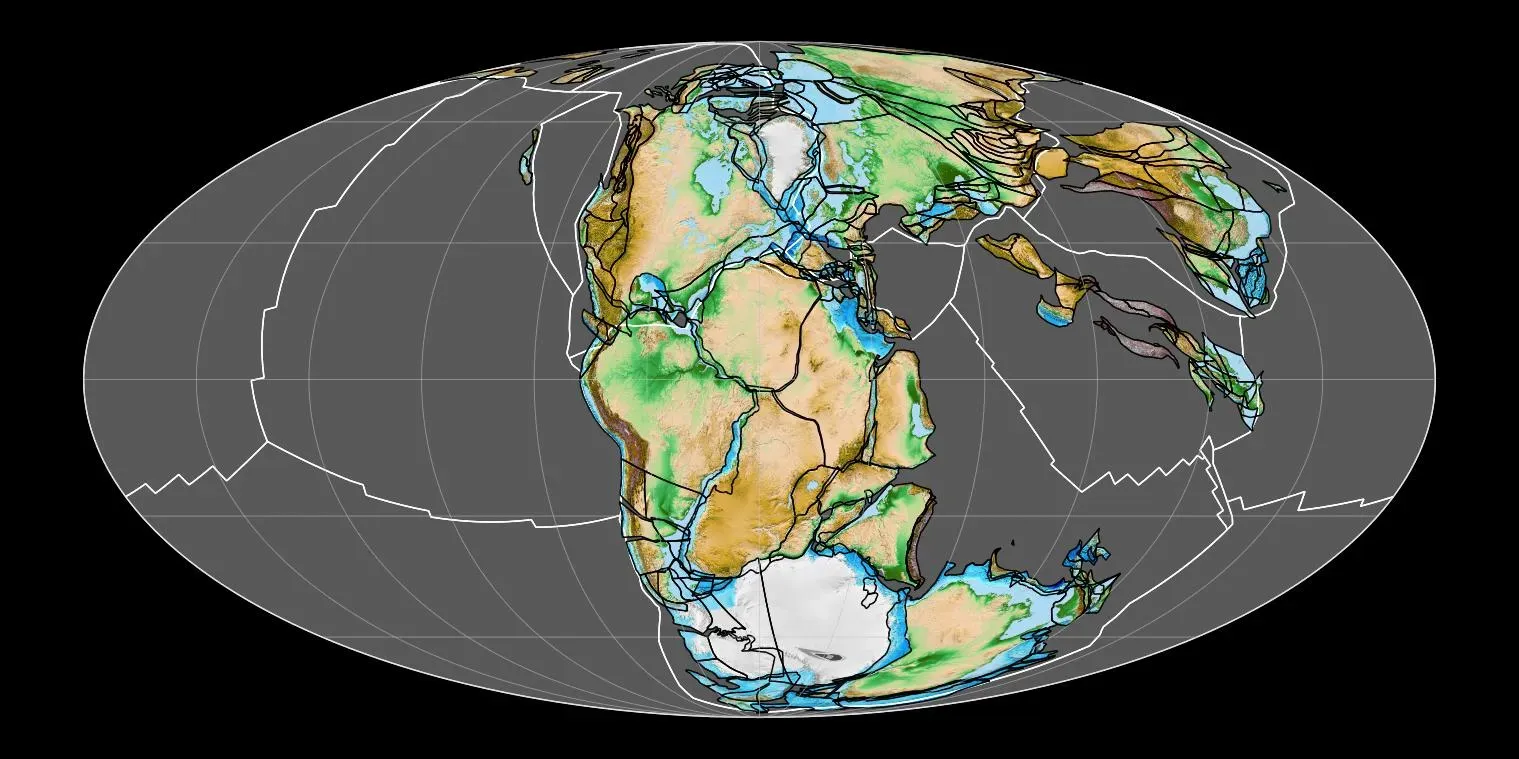
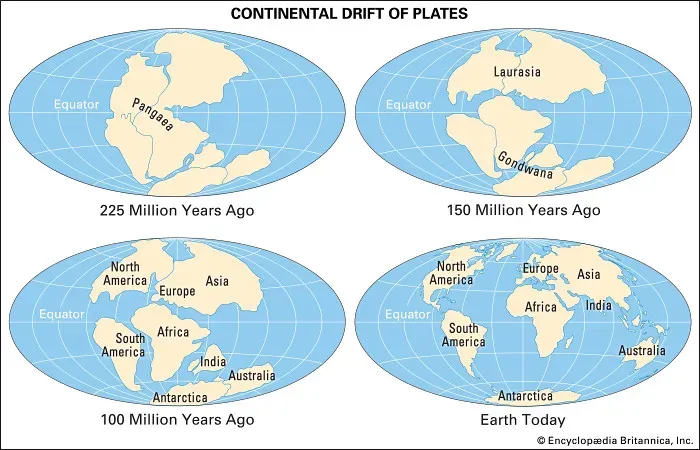
Picture every continent you know – North America, Africa, Asia, South America – all jammed together into a single, enormous landmass. That was Pangaea, and honestly, it’s one of the most mind-bending things about our planet’s history. During the Triassic period, approximately 252 to 201 million years ago, all of Earth’s landmasses were united into this supercontinent, creating a world where early dinosaurs could potentially range across much of the planet without encountering oceanic barriers.
The Mesozoic Era began with nearly all of Earth’s land consolidated into Pangaea, and this immense landmass provided an uninterrupted corridor for early dinosaur lineages, allowing them to achieve widespread distribution shortly after their appearance in the Triassic Period. Think of it like one massive highway with no tolls and no borders. Evidence suggests that early dinosaur species could spread relatively easily across Pangaea, explaining why we find similar early dinosaur fossils across widely separated modern continents, and why the unified landmass allowed for a relatively homogeneous dinosaur fauna during the early stages of their evolution.
The Interior Desert and the Coastal Refuge
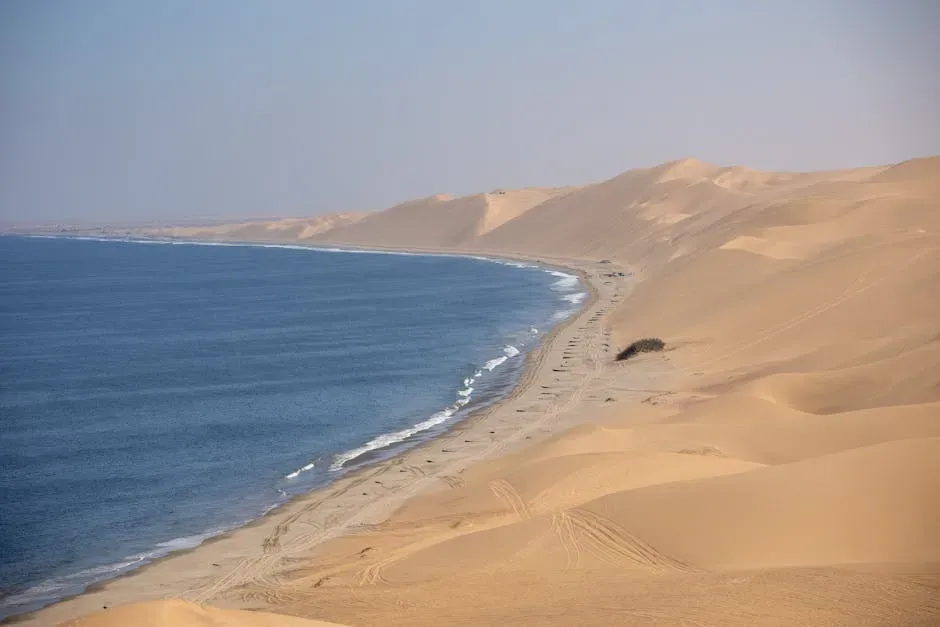
Not all of Pangaea was a paradise. Far from it, actually. Pangaea’s climate was generally dry and highly seasonal. At the heart of the giant landmass was a vast desert, and paleontologists observe that fossils are scarce in Pangaea’s interior – the high temperatures making it nearly uninhabitable. Imagine the Sahara, but the size of half the known world. That’s what the interior looked like.
The vast interior of Pangaea featured harsh, arid climates, while coastal regions were more temperate, creating distinct habitat zones. Not all of Pangaea was scorching – areas closer to the coasts were likely to have had temperatures comparable to today’s tropics. So early dinosaurs essentially clung to the edges, thriving in coastline ecosystems while the barren interior remained largely empty. It’s a bit like how today’s most populated cities hug coastlines – geography has always dictated where life chooses to settle.
The Great Fracture: When One World Became Two
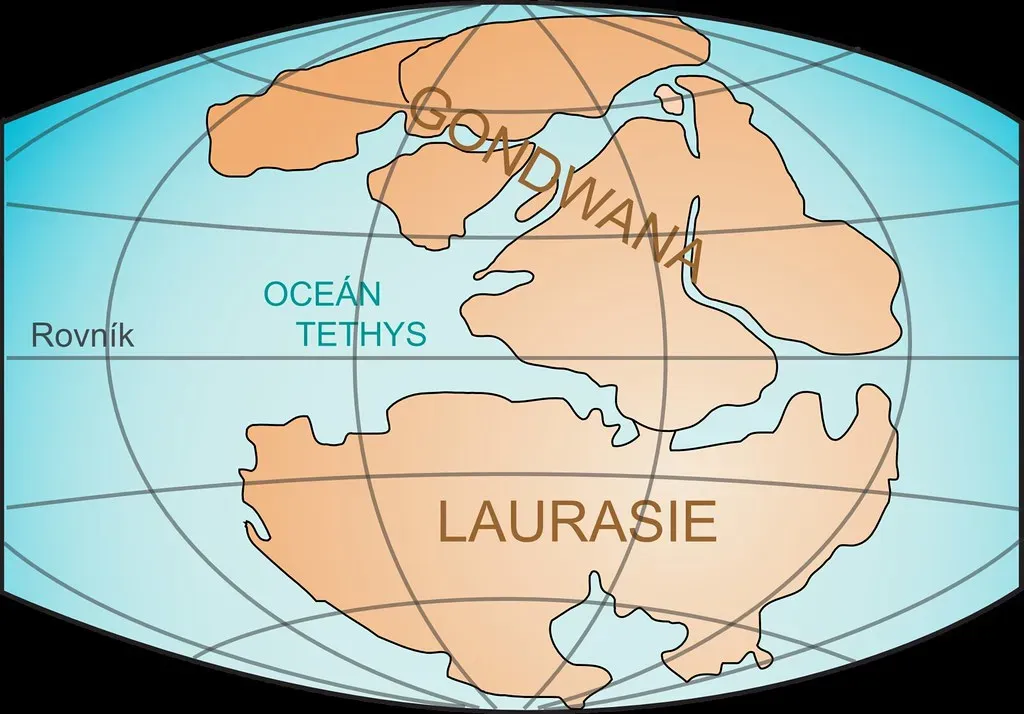
The ancient supercontinent Pangaea began breaking apart approximately 180 million years ago, triggering one of the most significant evolutionary experiments in Earth’s history. This massive geological process, known as continental drift, created natural barriers that isolated dinosaur populations from one another, leading to divergent evolution across separate landmasses. You can think of it like a giant biology experiment where the scientist suddenly slams a wall down the middle of the lab.
The first major geographical shift began toward the end of the Triassic, fracturing the landmass into two continents separated by the widening Tethys Ocean. The northern continent, Laurasia, contained what would become North America, Europe, and most of Asia, while the southern continent, Gondwana, included South America, Africa, Antarctica, Australia, and India. As the rift widened during the Jurassic Period, the newly formed oceans created barriers that prevented intercontinental travel, and this isolation drove evolutionary divergence, leading to distinct dinosaur faunas. Two worlds. Two completely different evolutionary stories.
North vs. South: When Dinosaurs Went Their Own Way
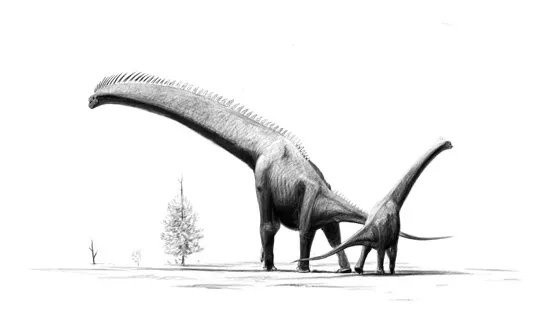
Here is where things get genuinely fascinating. Once Laurasia and Gondwana were separated, the dinosaurs on each landmass began evolving along strikingly different paths. Laurasian sauropods, such as Brachiosaurus, followed a different evolutionary path from the titanosaurs that evolved in the increasingly fragmented Gondwana. It’s parallel evolution on a continental scale – two lineages, once related, becoming strangers.
The ecological niches filled by tyrannosaurs in Laurasia were occupied by abelisaurids in Gondwana, showing parallel but separate evolutionary developments. The apex predators of the Southern Hemisphere were the Abelisaurids, stocky, short-armed theropods like Carnotaurus, found across South America, Africa, and India. I think that’s one of the most spectacular things about continental drift – it essentially ran the same evolutionary experiment twice, in two separate laboratories, and produced completely different results. Same pressures, wildly different solutions.
Island Worlds and the Surprising Case of the Shrinking Dinosaur
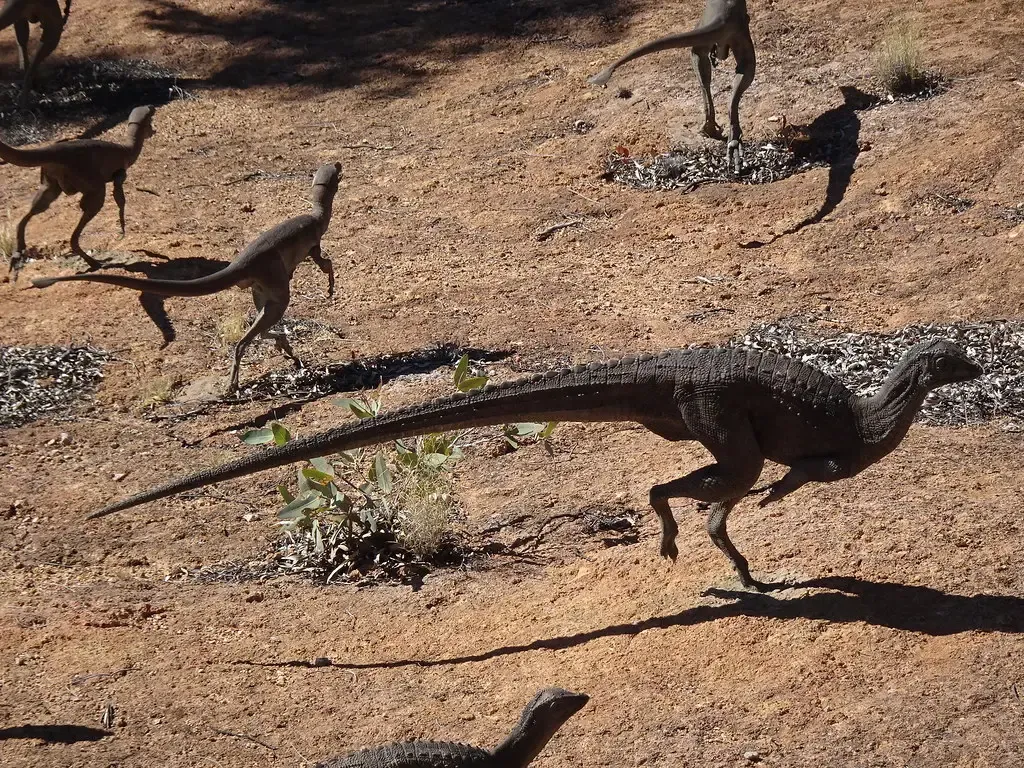
As the continents fragmented further, something truly unexpected began happening. As continental separation accelerated, newly isolated landmasses functioned effectively as giant islands, triggering classic island biogeographic processes among dinosaur populations. Limited geographical ranges and resource constraints often led to evolutionary dwarfism, where large dinosaur lineages evolved smaller-bodied descendants. Yes – you read that right. Some dinosaurs actually shrank.
The Late Cretaceous Hateg Island fauna of modern-day Romania provides a compelling example, where isolated sauropods evolved into Magyarosaurus, a diminutive relative of much larger mainland species, standing just 2 meters tall. Similar patterns emerged on other Mesozoic islands, with fossils revealing specialized adaptations to limited island resources. Europe was, in fact, an island chain during this period, and populating some of these islands were endemic dwarf dinosaur species. It’s like nature hitting a “reduce” button when resources run out – an elegant, ruthless adaptation.
Climate Shifts, Flowering Plants, and the Final Chapter
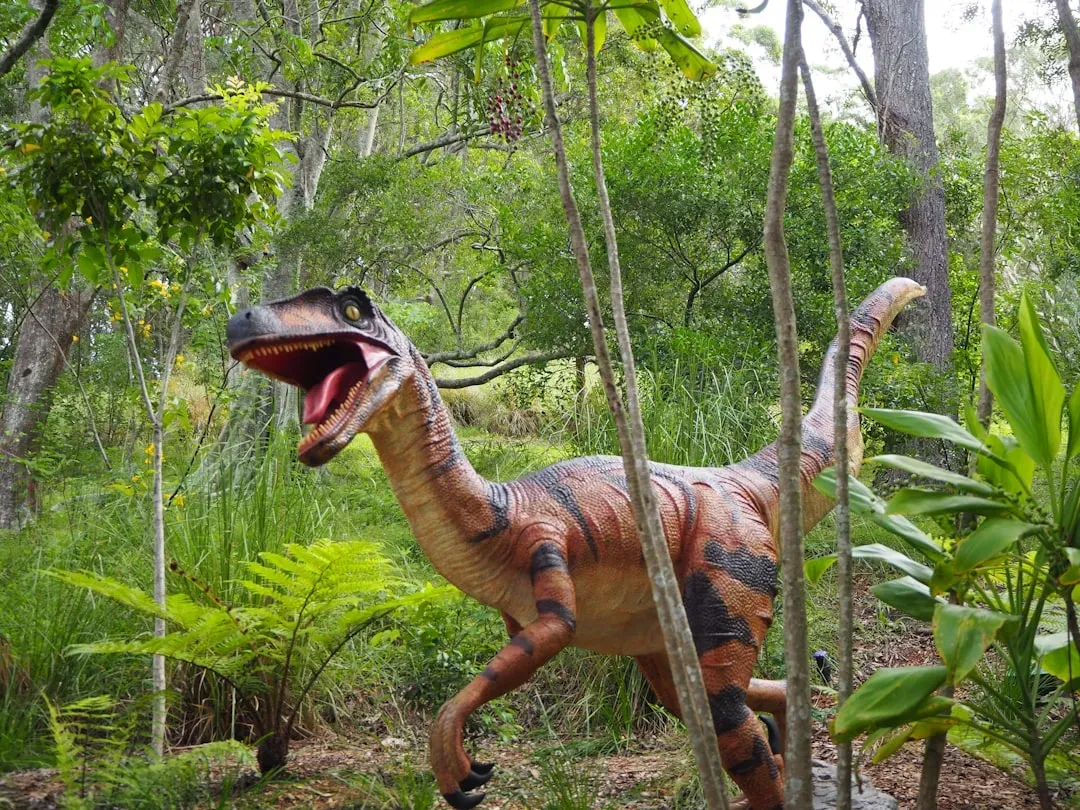
The breakup of Pangaea did more than just separate species. It reshaped the entire climate of the planet, and with it, the food that dinosaurs relied upon. As continental fragments drifted apart, newly formed oceans modified atmospheric circulation patterns and created maritime climate influences that penetrated deeper into formerly arid continental interiors. These climate shifts coincided with a general warming trend during the Jurassic and Early Cretaceous periods, creating expansive greenhouse conditions that eliminated polar ice caps and raised sea levels worldwide.
The changing climate regimes triggered corresponding shifts in vegetation patterns, including the rise of flowering plants, known as angiosperms, during the Cretaceous period. Dinosaurs responded to these environmental transformations through anatomical adaptations, shifting migration patterns, and dietary specializations to exploit new plant resources. The Cretaceous climate was generally warmer and more humid than today, the polar regions were free of continental ice sheets, and dinosaurs even roamed Antarctica, despite its long winter night. The world was more alive and more dynamic than most of us ever imagine.
Conclusion: The Ground That Made the Giants
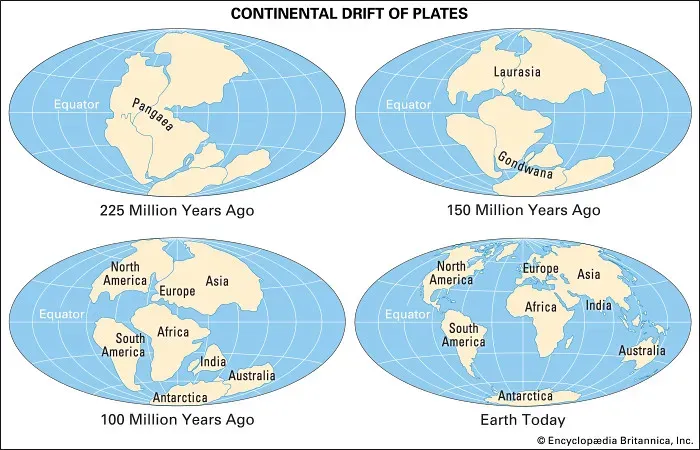
It’s easy to look at a Tyrannosaurus rex or a Brachiosaurus and think the story is all about the animal. But the real story is the world beneath their feet. Continental drift stands as one of the most significant forces shaping dinosaur evolution over their 165-million-year reign on Earth. From the unified world of Pangaea to the increasingly fragmented continents of the Late Cretaceous, dinosaurs responded to geographic isolation by evolving distinctive regional characteristics and adaptations.
Understanding continental drift helps explain why similar fossils are found on different continents – fossils of the same dinosaur species have been discovered in both South America and Africa, supporting the idea that these continents were once connected. The ground you walk on today was once part of a world that shaped creatures almost beyond imagination. Every fossil pulled from the earth is not just a bone – it’s a chapter of a story written in stone, one continent at a time.
So the next time you see a dinosaur exhibit at a museum, take a moment to think about the invisible force that made it all possible. Not evolution alone. Not just diet or predators. The slow, unstoppable movement of the planet itself. What would the dinosaurs look like today if Pangaea had never broken apart? Now there’s a thought worth sitting with.