Beneath the steaming geysers and rainbow-hued hot springs that make Yellowstone National Park one of the most visited places on Earth, something enormous stirs. Something ancient. Something that, in the distant past, reshaped entire continents in a matter of hours. Most visitors walking the boardwalks around Old Faithful have no idea they are standing directly on top of one of the most powerful geological forces our planet has ever known.
This is not just a park. It is a window into Earth’s most violent prehistory. From titanic eruptions that blanketed half of North America in ash to a living, breathing underground plumbing system still active today, the story of the Yellowstone supervolcano is equal parts terrifying, humbling, and absolutely fascinating. Buckle up, because the deeper you dig into this story, the more extraordinary it becomes. Let’s dive in.
What Exactly Makes Yellowstone a “Supervolcano”?
Not every volcano earns the dramatic title of “supervolcano,” and honestly, the bar is spectacularly high. The term “supervolcano” implies a volcanic center that has had an eruption of magnitude 8 on the Volcano Explosivity Index (VEI), meaning that at one point in time it erupted more than 1,000 cubic kilometers of material. To put that into perspective, that is roughly four times the volume of Lake Erie, blown into the sky in a single cataclysmic event.
That implies an eruption of magnitude 8 on the Volcano Explosivity Index, indicating an eruption of more than 250 cubic miles of magma. Think about that for a second. That is not a mountain blowing its top. That is essentially a region of Earth’s crust disintegrating. Yellowstone doesn’t just have a volcano; Yellowstone is a volcano. It’s active. A plume of molten rock that rises beneath the park creates one of the world’s largest active volcanoes, and you can see evidence all around in the form of geysers, hot springs, mud pots, and other otherworldly thermal features.
Three Prehistoric Eruptions That Changed the World

Here is where things get truly staggering. Molten rock rising from deep within the Earth produced three cataclysmic eruptions more powerful than any in the world’s recorded history. The first caldera-forming eruption occurred about 2.1 million years ago. If you want a sense of the sheer scale, consider that the first major eruption of the Yellowstone volcano, which occurred 2.1 million years ago, is among the largest volcanic eruptions known, covering over 5,790 square miles with ash.
In terms of large explosions, Yellowstone has experienced three at 2.08, 1.3, and 0.631 million years ago. This comes out to an average of about 725,000 years between eruptions. Each cycle involved a large ignimbrite eruption, continental-scale ash-fall, and caldera collapse, preceded and followed by smaller lava flows and tuffs. Scientists also confirm that the last Yellowstone eruption was 1,000 times greater than the notorious 1980 Mt. Saint Helens eruption that killed 56 people and thousands of animals, and scorched hundreds of square kilometers of land in Washington and Oregon.
The Anatomy of the Caldera: A Colossal Scar on the Landscape
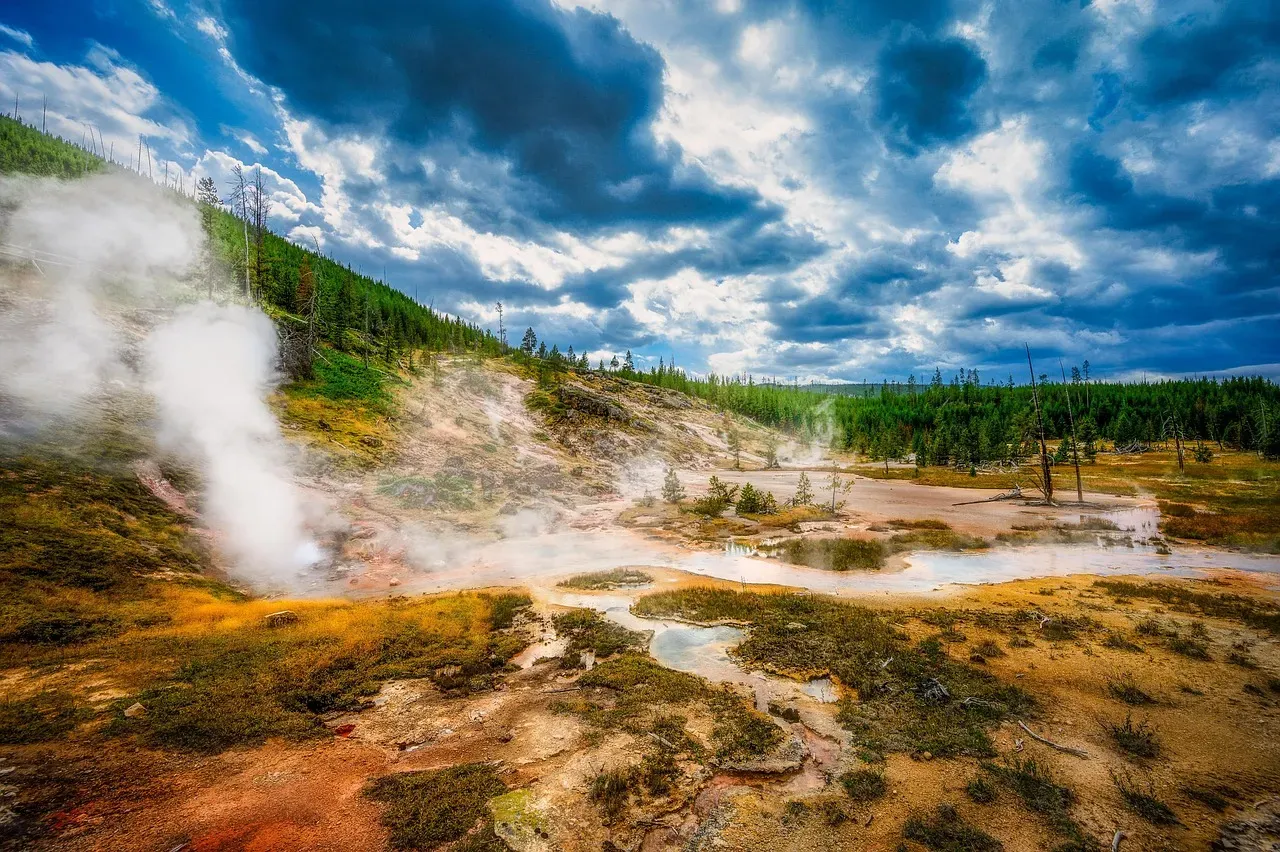
After each supereruption, you are not left with a mountain. You are left with an enormous scar, a sunken crater where the land has literally collapsed into the emptied magma chamber below. The eruptive blast removed so much magma from its subsurface storage reservoir that the ground above it collapsed into the magma chamber and left a gigantic depression in the ground. The huge crater, known as a caldera, measured as much as 80 kilometers long, 65 kilometers wide, and hundreds of meters deep.
The most recent major eruption, 640,000 years ago, caused the ground to collapse into the magma reservoir, leaving a giant caldera. Subsequent lava flows filled in much of the caldera, and it is now measured at 30 by 45 miles. The Yellowstone Caldera, also known as the Yellowstone Plateau Volcanic Field, is a Quaternary caldera complex and volcanic plateau spanning parts of Wyoming, Idaho, and Montana. It is, in short, a landscape shaped entirely by catastrophe. And you can walk right through it.
The Underground Plumbing System: Two Hidden Magma Chambers
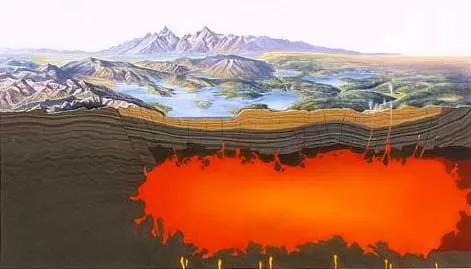
One of the most jaw-dropping geological discoveries in recent decades is that Yellowstone is not powered by a single magma chamber, but two. Underneath the bubbling geysers and hot springs of Yellowstone National Park in Wyoming sits a volcanic hot spot that has driven some of the largest eruptions on Earth. Geoscientists have completely imaged the subterranean plumbing system and found not just one, but two magma chambers underneath the giant volcano.
The shallower one is composed of rhyolite (a high-silica rock type) and stretches from 5 km to about 17 km beneath the surface and is about 90 km long and about 40 km wide. The deeper reservoir is even more astonishing. University of Utah seismologists discovered a reservoir of hot, partly molten rock 12 to 28 miles beneath the Yellowstone supervolcano, and it is 4.4 times larger than the shallower, long-known magma chamber. That deeper chamber alone, if it could fill the Grand Canyon, would do so more than eleven times over.
Geysers, Hot Springs, and the Living Skin of a Sleeping Giant
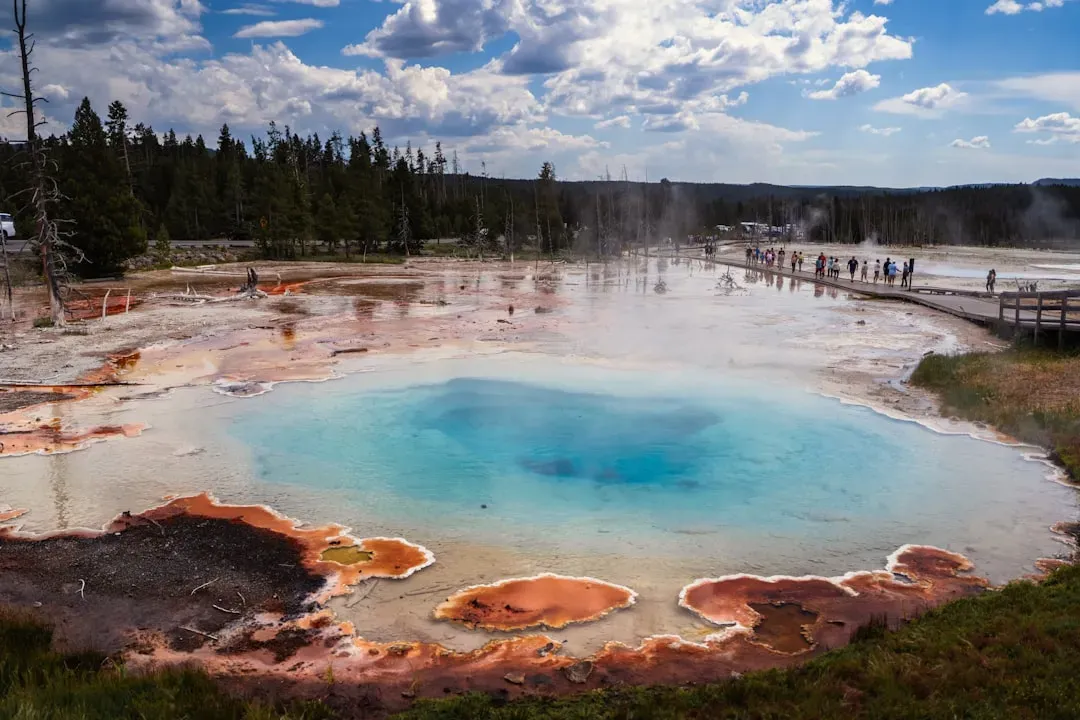
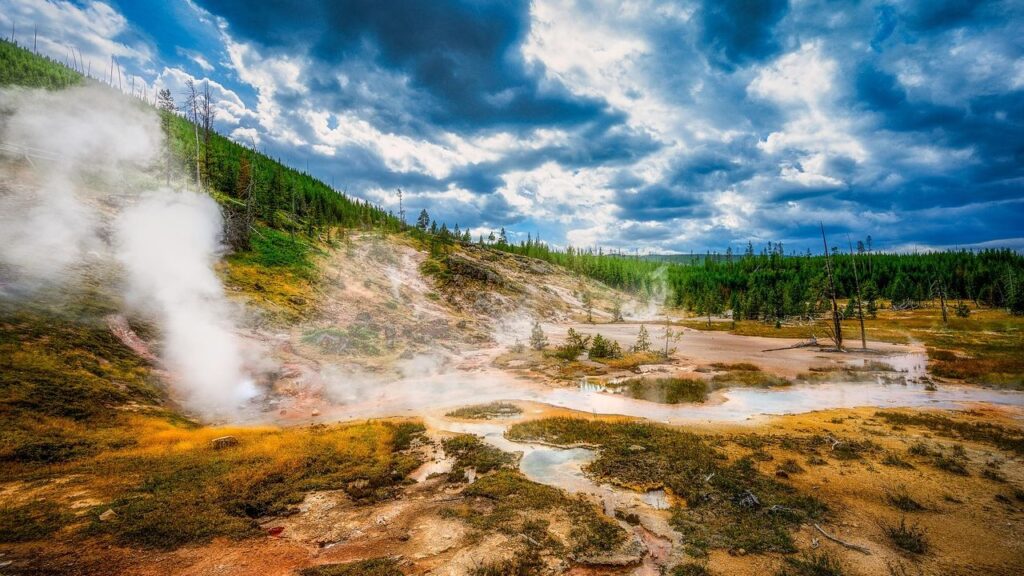
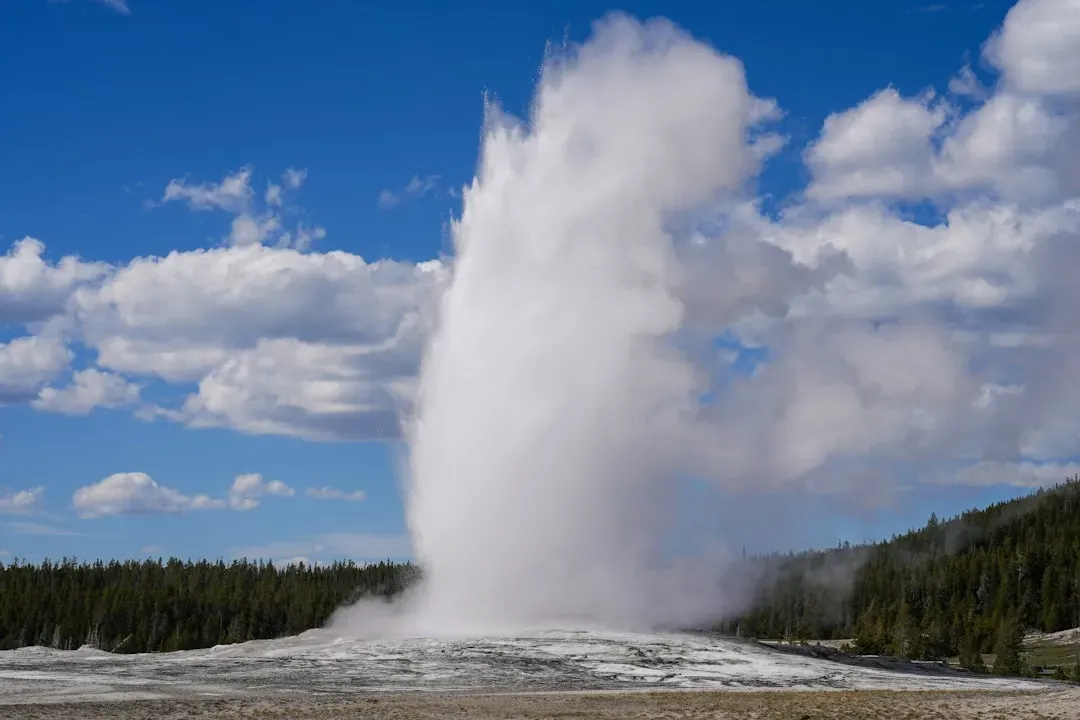
You might wonder why anyone would choose to build a national park on top of all this. Well, the same heat that makes Yellowstone terrifying also makes it breathtaking. Due to a shallow source of magma and resulting volcanic activity, it boasts the largest concentration of active geysers in the world, approximately 500, which is impressively more than half of the world’s total. That is not a coincidence. That is the direct, visible consequence of a volcanic system that never truly went to sleep.
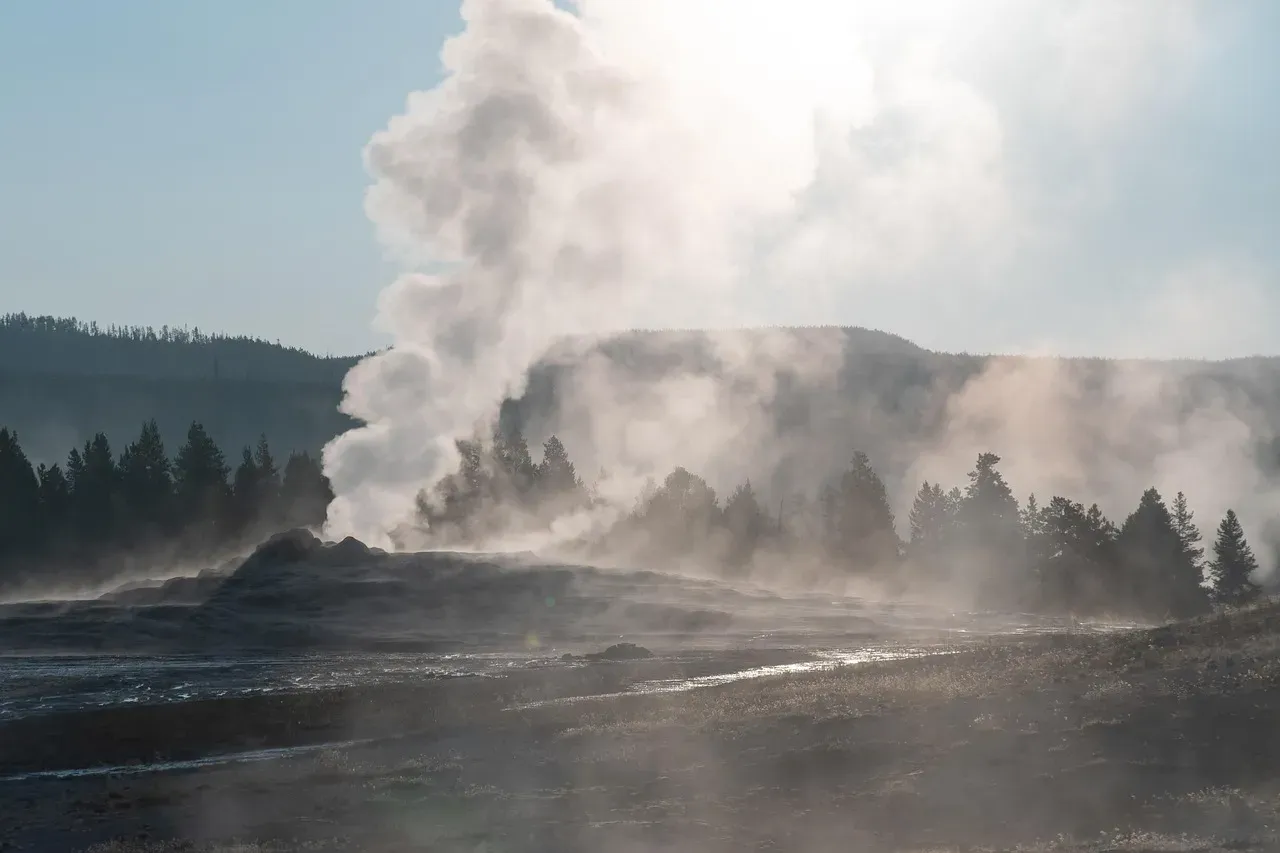
Heat and volcanic gases from slowly cooling magma rise and warm the dense salty water that occupies fractured rocks above the Yellowstone magma chamber. That brine, in turn, transfers its heat to overlying fresh groundwater, which is recharged by rainfall and snowmelt from the surface. Water boiling at depth below the surface is hotter than the temperature of boiling at the surface. If it rises quickly, this superheated water can flash to steam, propelling both steam and hot water to the surface as a geyser. In 2026, the volcanic system is as alive as ever. In Norris Geyser Basin, Steamboat Geyser erupted on February 27, and Echinus Geyser erupted about 40 times during the month, the first eruptions of the geyser since 2020. Steamboat Geyser erupted at about 7:01 p.m. MST, its first eruption of 2026.
The Global Consequences of a Prehistoric Supereruption
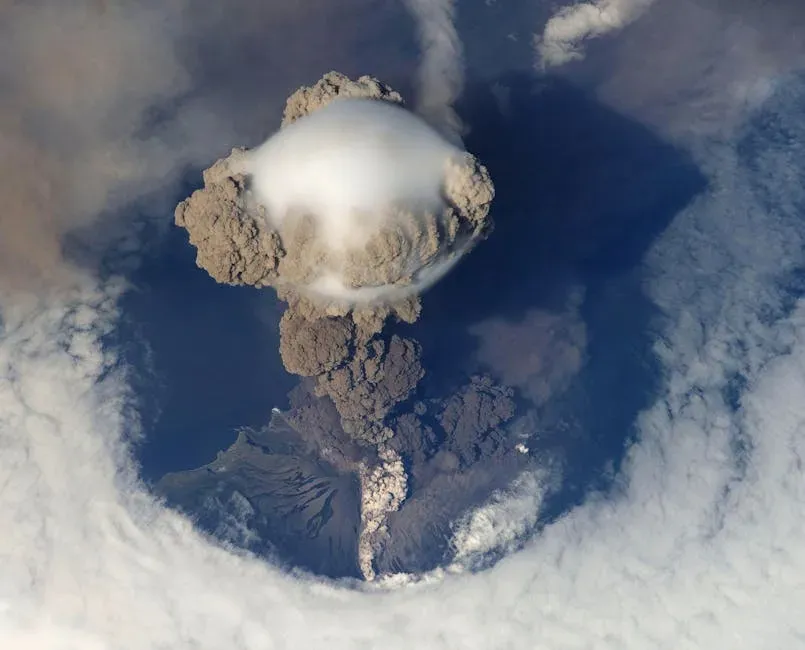
If you think the effects of Yellowstone’s prehistoric blasts were local, think again. During the three giant caldera-forming eruptions that occurred between 2.1 million and 631,000 years ago, tiny particles of volcanic debris covered much of the western half of North America, likely a third of a meter deep several hundred kilometers from Yellowstone. Wind carried sulfur aerosol and the lightest ash particles around the planet and likely caused a notable decrease in temperatures around the globe.
The reach of the ancient ash beds is staggering. The biggest of the Yellowstone eruptions occurred 2.1 million years ago, depositing the Huckleberry Ridge ash bed. More expansive is the Huckleberry Ridge ash bed, sparked by an eruption some 2.1 million years ago. That reached into more than 15 present-day states, from California east to Texas, north through Missouri into Minnesota, and west into Idaho. It is hard to wrap your head around that. Ash from a single Wyoming eruption reaching New York? That is not a metaphor for power. That is just the raw, unfiltered truth of what a supervolcano can do. And a comparison to smaller events tells the story even clearer: the 1991 eruption of Mt. Pinatubo in the Philippines was about 1,000 times smaller than Yellowstone’s largest known eruption; it caused temporary, yet measurable, changes in global temperatures. The sulfur dioxide emitted from the volcano interacted with the atmosphere, which cooled the Earth’s surface for three years following the eruption. At the height of the impact, global temperatures dropped by 1.3 degrees Fahrenheit.
Is Yellowstone “Overdue” to Erupt? What Scientists Say Today
I know what you are thinking. Three eruptions, roughly every 700,000 years, and the last one was over 630,000 years ago. Surely it is almost time, right? Actually, no. Honestly, the whole “overdue” narrative is a sensationalized oversimplification. Yellowstone is not overdue for an eruption. Volcanoes do not work in predictable ways and their eruptions do not follow predictable schedules. Even so, the math doesn’t work out for the volcano to be “overdue” for an eruption.
Although another catastrophic eruption at Yellowstone is possible, scientists are not convinced that one will ever happen. What is far more likely, according to the experts at the USGS, are smaller-scale hydrothermal events. Officials at the Yellowstone Volcano Observatory say the most likely activities that might take place in the future are hydrothermal explosions or lava flows. Although lava flows are a type of magmatic eruption, they are not as devastating as the caldera-forming explosions. Instead of instant destruction, lava flows slowly ooze out of the ground over a period of days, months, or even years. Meanwhile, in early 2026, the USGS confirmed that Yellowstone Caldera activity remains at background levels, with 74 located earthquakes in February, the largest being a magnitude 2.4. Routine, in Yellowstone terms.
Conclusion: A Reminder That Earth is Still in Charge
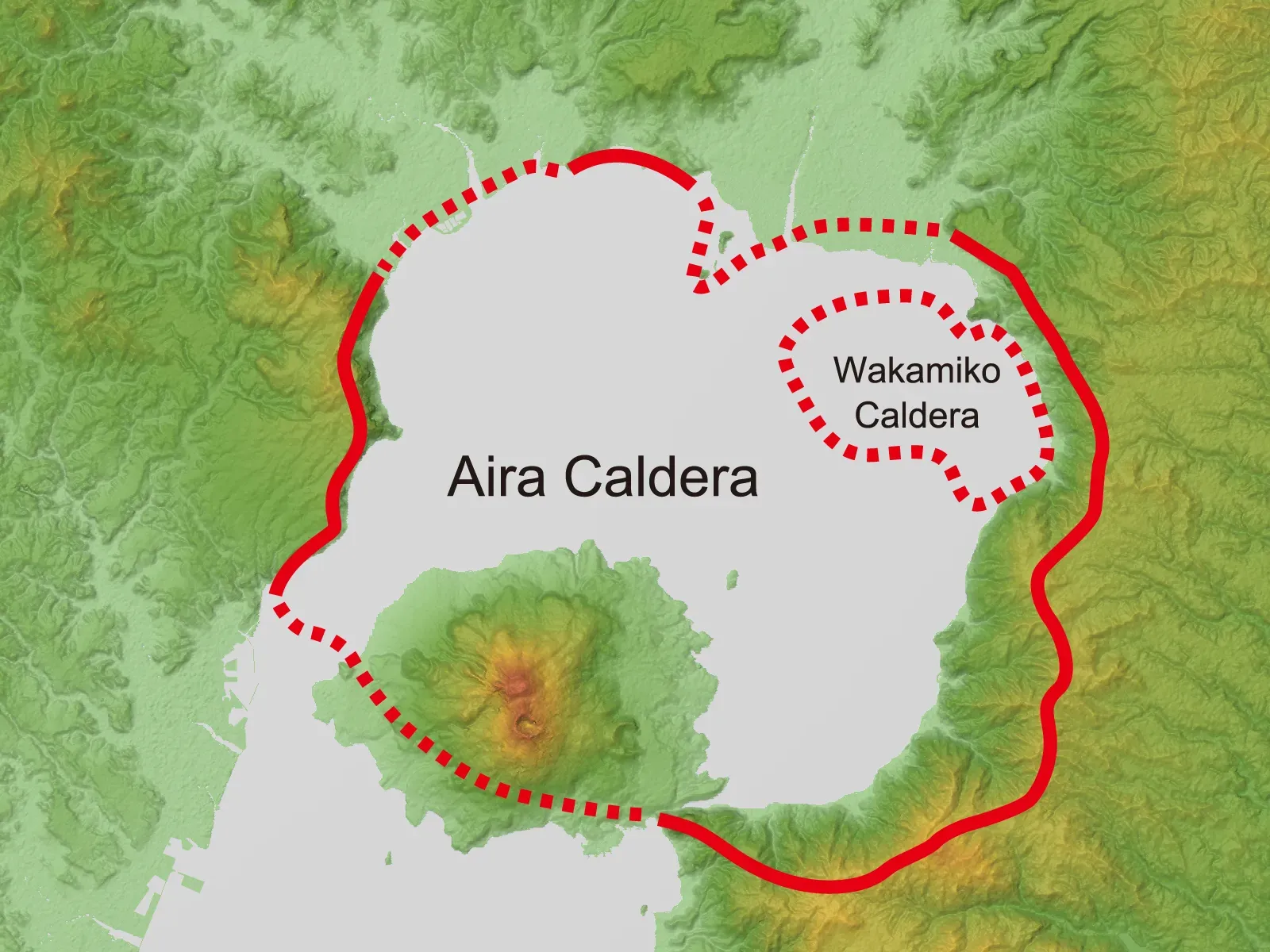
Rendering software: KASHMIR 3D, Public domain)
What the Yellowstone supervolcano ultimately teaches you, more than any geology textbook ever could, is that the planet we live on is not a static backdrop to human history. It is dynamic, restless, and occasionally, in its deep prehistoric past, downright ferocious. Walking through the park today, among the steaming vents, the prismatic pools, and the forests shaped by ancient lava flows, you are walking through the direct aftermath of events so powerful they cooled the planet and buried an entire continent in ash.
The volcano has not gone silent. It breathes, shifts, and rumbles. Scientists continue to monitor it with GPS satellites, seismographs, and satellite radar, watching every millimeter of ground movement. Scientists with the YVO believe warnings of any significant activity could appear as early as weeks to months and even years before the eruption would actually take place. Signs pointing to an eruption would comprise events such as intense earthquakes and extreme deformation of surrounding grounds. The technology watching over this sleeping giant is as impressive as the giant itself. Perhaps the most powerful takeaway here is this: the same force that could one day reshape a continent is also the reason one of the world’s most beautiful places exists at all. Not bad for a volcano that hasn’t truly erupted in over 600,000 years. So next time you see Old Faithful shoot skyward, remember what’s powering it. What do you think about living so close to one of Earth’s greatest natural forces? The comments are yours.