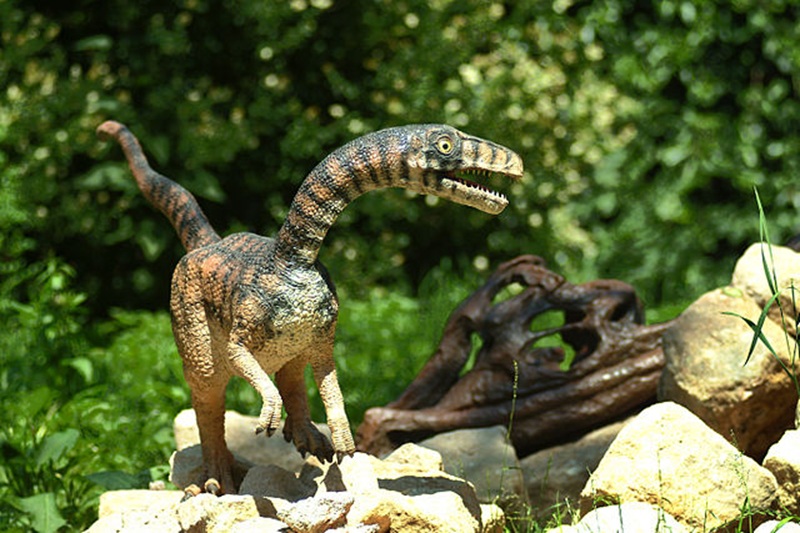
In the vast timeline of Earth’s prehistoric past, some of the most fascinating dinosaurs weren’t the towering giants that often capture our imagination, but rather the small, agile predators that dominated their ecological niches through speed and specialized adaptations. Two such remarkable creatures were Compsognathus and Microraptor, diminutive dinosaurs separated by millions of years and significant evolutionary developments.
Despite their small stature—with both weighing less than a modern house cat—these prehistoric hunters possessed formidable predatory capabilities that made them effective killers in their respective environments. This article explores and compares these two fascinating dinosaurs, examining their physical characteristics, hunting strategies, evolutionary significance, and what made these tiny predators truly deadly in their prehistoric ecosystems.
The Evolutionary Timeline: When These Mini Predators Lived

Compsognathus and Microraptor existed during vastly different periods in Earth’s history, separated by approximately 75 million years. Compsognathus roamed the Earth during the Late Jurassic period, approximately 150 million years ago, making its home primarily in what is now Europe. Fossil specimens have been discovered in Germany and France, offering significant insights into this ancient predator.
Microraptor, on the other hand, lived much later during the Early Cretaceous period, roughly 120-125 million years ago, with fossils exclusively found in the Liaoning Province of northeastern China. This significant temporal gap between the two species means they never encountered each other and evolved under different environmental pressures and ecological contexts. This separation in time also represents crucial steps in theropod evolution, with Microraptor showcasing more advanced features that would eventually lead toward modern birds.
Size Comparison: Just How Small Were They?
Despite both being categorized as “tiny” dinosaurs, Compsognathus and Microraptor had notable differences in their dimensions. Compsognathus was approximately 1 meter (3.3 feet) in length and likely weighed between 2.5 to 3.5 kilograms (5.5 to 7.7 pounds), making it about the size of a turkey. Its slender build featured long hind limbs adapted for quick movement, with a lightweight body perfectly balanced for agility.
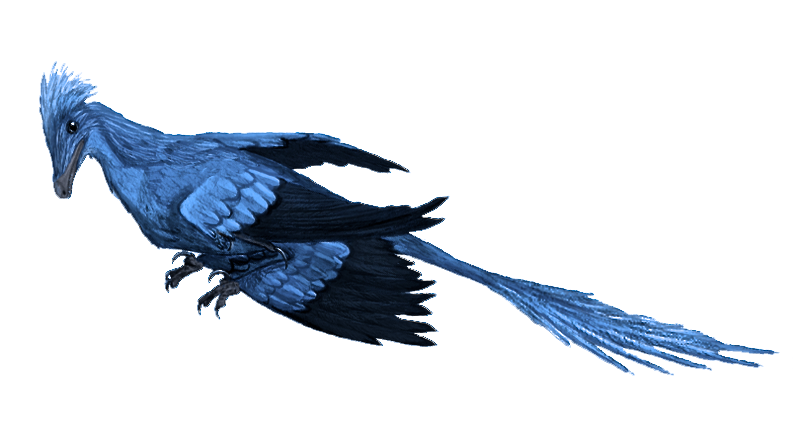
Microraptor was even smaller, measuring around 77-90 centimeters (2.5-3 feet) in length and weighing a mere 1 kilogram (2.2 pounds) or less. What Microraptor lacked in size, it made up for in unique anatomical features—most notably the presence of four wings. Both dinosaurs were among the smallest known non-avian dinosaurs, demonstrating that deadly predatory capabilities didn’t necessarily correlate with massive size in the ancient world. Their diminutive stature likely allowed them to exploit ecological niches unavailable to larger predators.
Anatomical Features: Compsognathus Unpacked
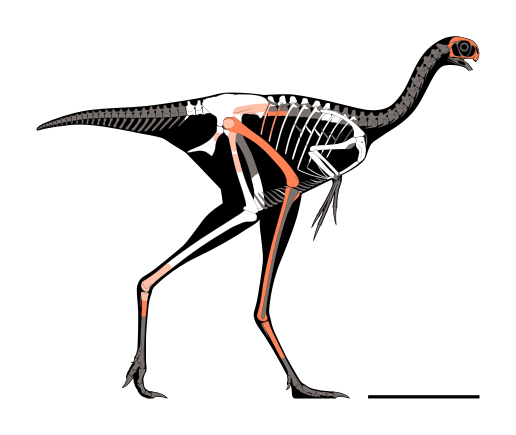
Compsognathus possessed a sleek, streamlined body perfectly adapted for rapid pursuit of prey. Its skull was relatively small but contained rows of sharp, serrated teeth ideal for gripping small prey like lizards and possibly insects. Paleontological evidence has actually revealed lizard remains in the stomach region of one well-preserved Compsognathus specimen, confirming its diet. The dinosaur featured long, slender hind limbs that were disproportionately large compared to its tiny forelimbs, suggesting it was primarily bipedal and relied on its powerful legs for locomotion and hunting.
Each hand contained three fingers equipped with sharp claws, while its elongated, stiff tail served as a counterbalance during rapid changes in direction. One of the most notable aspects of Compsognathus’s anatomy was its remarkably light skeletal structure, featuring hollow bones similar to those found in modern birds—an early evolutionary adaptation that would become standard in avian dinosaurs.
The Four-Winged Wonder: Microraptor’s Unique Adaptations

Microraptor stands out in paleontological studies as one of the most remarkable dinosaur discoveries, primarily due to its four wings—a feature that revolutionized our understanding of dinosaur-to-bird evolution. Unlike Compsognathus, Microraptor possessed long flight feathers not only on its forelimbs but also on its hind limbs, effectively creating four wing-like structures.
These feathers were asymmetrical, similar to those of modern flying birds, strongly suggesting genuine aerodynamic capability. Its body was covered in sleek, glossy plumage that likely appeared iridescent black based on fossilized melanosomes (pigment-bearing organelles). Microraptor also possessed a long, feathered tail that likely served as a stabilizer during aerial movement.
Its skull featured a mouth full of sharp teeth, and it had grasping hands with curved claws perfect for capturing and holding prey. These adaptations made Microraptor a versatile predator capable of hunting in multiple domains—trees, ground, and air—giving it a significant advantage over many contemporaneous species.
Hunting Strategies: How Compsognathus Secured Its Prey
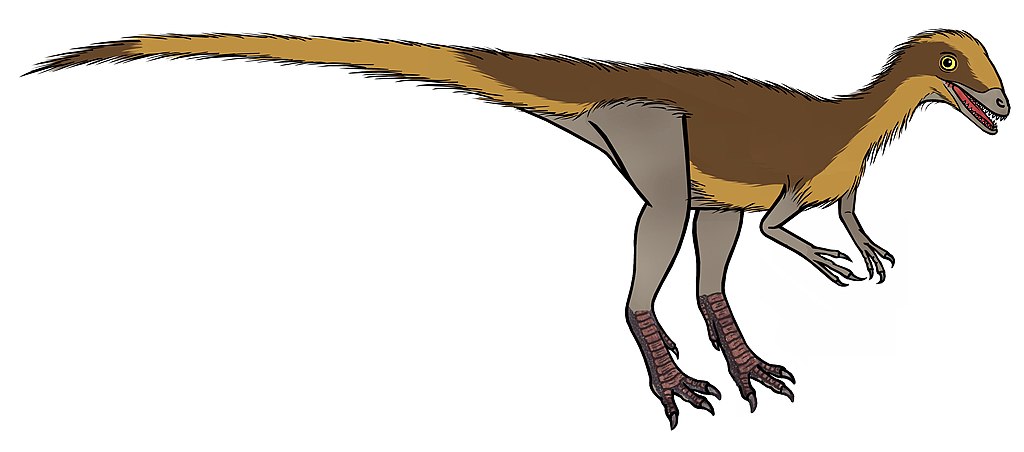
Compsognathus employed hunting techniques that capitalized on its speed and agility rather than brute strength. Studies of its leg proportions suggest it was capable of reaching speeds of up to 40 kilometers (25 miles) per hour in short bursts, making it one of the fastest dinosaurs of its time relative to its size. This velocity would have been crucial for pursuing small, swift prey across open areas of the Late Jurassic landscape. Unlike larger predators that relied on ambush tactics, Compsognathus likely utilized active pursuit hunting, wearing down prey through sustained chases.
Its large eyes positioned on the sides of its head provided excellent peripheral vision for tracking movement, while its grasping hands could quickly seize smaller animals once within range. The stomach contents of preserved specimens reveal a diet primarily consisting of small lizards and possibly juvenile dinosaurs, suggesting Compsognathus was an opportunistic predator that targeted prey significantly smaller than itself. Its sharp, serrated teeth would have been effective for delivering quick, fatal bites to small vertebrates, making it a formidable predator despite its diminutive size.
Aerial Advantage: Microraptor’s Revolutionary Hunting Technique

Microraptor represents one of the most fascinating cases of predatory adaptation in the dinosaur world, employing a hunting strategy previously unseen in the fossil record. Paleontologists believe it utilized a form of gliding or limited powered flight to move between trees in densely forested environments, effectively creating a new hunting domain that few contemporaneous predators could access.
Analysis of Microraptor fossils with preserved stomach contents reveals a diverse diet that included birds, fish, and small mammals—evidence of its versatile hunting capabilities across different environments. The discovery of fish remains in one specimen suggests Microraptor might have employed a hunting technique similar to modern fishing birds, possibly gliding low over water surfaces to snatch prey. Its four-winged configuration likely allowed it to descend upon prey from above in a controlled aerial attack, using the element of surprise rather than pure speed.
Microraptor’s sharp teeth and grasping claws would have secured struggling prey quickly after initial contact. This revolutionary combination of aerial mobility and predatory adaptations made Microraptor an extraordinarily effective hunter despite its small size, representing an important evolutionary step between ground-dwelling dinosaurs and fully flight-capable birds.
Evolutionary Significance: Compsognathus and the Bird Connection

When the first Compsognathus fossil was discovered in 1859, it immediately sparked scientific interest due to its bird-like characteristics, coming just two years before the discovery of Archaeopteryx, the famous transitional fossil between dinosaurs and birds. Compsognathus occupies a critical position in the theropod family tree, belonging to the coelurosaurian theropods, which also gave rise to birds. Its lightweight frame, hollow bones, and three-fingered hands showcased early adaptations that would later become more pronounced in avian dinosaurs.
Thomas Henry Huxley, a prominent 19th-century biologist, used Compsognathus as evidence to support Darwin’s theory of evolution, noting the striking similarities between this small dinosaur and Archaeopteryx (minus the feathers). Modern cladistic analyses confirm Compsognathus’s importance in understanding dinosaur evolution, placing it as a relatively basal coelurosaur that demonstrates the early development of bird-like features.
While not a direct ancestor of birds, Compsognathus represents an important evolutionary stage showing how theropod dinosaurs were developing adaptations that would eventually lead to avian flight, making it a crucial piece in reconstructing the dinosaur-bird evolutionary transition.
Microraptor: The Missing Link in Flight Evolution

Microraptor’s discovery in the early 2000s fundamentally altered our understanding of how flight evolved in dinosaurs, challenging the long-held ground-up theory of flight development. As a dromaeosaurid dinosaur (closely related to Velociraptor) with four wings, Microraptor provided compelling evidence for the alternative trees-down hypothesis of flight evolution. Its unique configuration of four feathered limbs suggested that flight may have evolved through gliding from elevated positions before developing into the powered flight seen in modern birds.
The asymmetrical flight feathers on all four limbs indicate genuine aerodynamic function rather than merely display purposes, representing one of the earliest known examples of dinosaurs using feathers for aerial locomotion. Numerous studies have examined Microraptor’s flight capabilities, with most concluding it was capable of gliding effectively and possibly some limited powered flight, though not with the efficiency of modern birds.
The presence of a fully-feathered dinosaur with clear flight adaptations so early in the evolutionary timeline of paravians (the group containing dromaeosaurids, troodontids, and birds) suggests that the common ancestor of these groups may have already possessed some aerial capabilities. This makes Microraptor one of paleontology’s most significant discoveries for understanding the evolutionary pathway from ground-dwelling dinosaurs to the diverse aerial adaptations of modern birds.
Habitat and Environment: Where Compsognathus Thrived
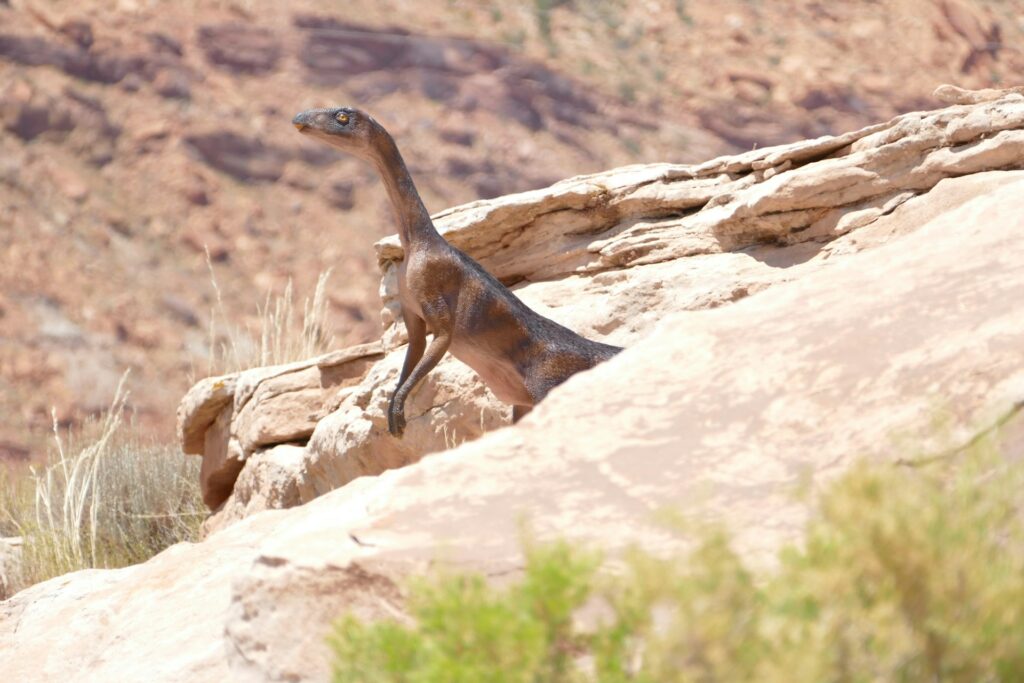
Compsognathus inhabited a dramatically different world from our own, living during the Late Jurassic in what is now southern Europe. The region it called home consisted primarily of tropical to subtropical archipelagos scattered across shallow seas, creating a mosaic of island environments. The two most significant Compsognathus fossil discoveries come from the Solnhofen limestone in Germany and the Portlandian limestone in France, both representing lagoon environments with periodic dry spells.
These areas featured low-lying islands with limited vegetation, surrounded by warm, shallow waters rich with marine life. The climate was warmer and more uniform than today’s, with distinct wet and dry seasons that influenced resource availability. Compsognathus shared this habitat with various pterosaurs, early crocodylomorphs, and a diverse array of small reptiles and amphibians that likely constituted much of its prey base.
The isolation of these island environments may have contributed to the evolution of Compsognathus’s small size through a process called insular dwarfism, where limited resources favor smaller body sizes in predators. These archipelago ecosystems created unique evolutionary pressures that shaped Compsognathus into the specialized small predator preserved in the fossil record.
The Prehistoric Forests of Microraptor

Microraptor inhabited a lush, forested ecosystem during the Early Cretaceous period in what is now northeastern China, specifically the famous Jehol Biota preserved in Liaoning Province. This environment was dominated by dense coniferous forests interspersed with ginkgoes, cycads, and early flowering plants, creating a multi-layered canopy perfect for an arboreal lifestyle. The region experienced a temperate climate with distinct seasons, including cold winters that would have presented survival challenges for its inhabitants.
Numerous lakes and rivers dotted the landscape, explaining the exceptional preservation of aquatic organisms alongside terrestrial species in the fossil record. Volcanic activity was common in the region, with periodic ash falls that tragically killed many animals but fortuitously created the perfect conditions for exceptional fossil preservation. Microraptor shared this environment with a diverse ecosystem of other feathered dinosaurs, primitive mammals, amphibians, and a variety of insects and fish.
The complex, three-dimensional forest environment likely drove the evolution of Microraptor’s gliding adaptations, as the ability to move efficiently between trees would have provided significant advantages for hunting and escaping larger predators. This rich forest ecosystem, with its diverse habitats from forest floor to canopy, allowed for the specialized niche exploitation that Microraptor’s unique adaptations represent.
Scientific Discoveries: The Famous Compsognathus Specimens

The scientific understanding of Compsognathus rests primarily on two exceptionally preserved specimens that have provided remarkable insights into this diminutive dinosaur. The first specimen, discovered in 1861 in the Solnhofen limestone of Bavaria, Germany, became the holotype for the species Compsognathus longipes. This fossil, approximately the size of a chicken, was remarkably complete and well-preserved, offering scientists a comprehensive view of the animal’s skeletal structure.
The second specimen, discovered in the 1970s near Canjuers in southeastern France, was slightly larger and contained the remains of a small lizard in its abdominal region, providing direct evidence of its diet. This French specimen also preserved potential evidence of dermal structures that some paleontologists have interpreted as simple filamentous proto-feathers, though this remains contested. Both specimens have been subjected to increasingly sophisticated analysis techniques over the decades, including CT scanning and UV light examination, revealing previously unobserved details about the animal’s anatomy.
The limited number of specimens makes Compsognathus somewhat enigmatic compared to better-represented dinosaur species, with ongoing debates about aspects of its appearance and biology. Nevertheless, these two fossils remain among the most important small theropod specimens ever discovered, continuing to yield new information as technology advances.
The Microraptor Fossil Treasure Trove
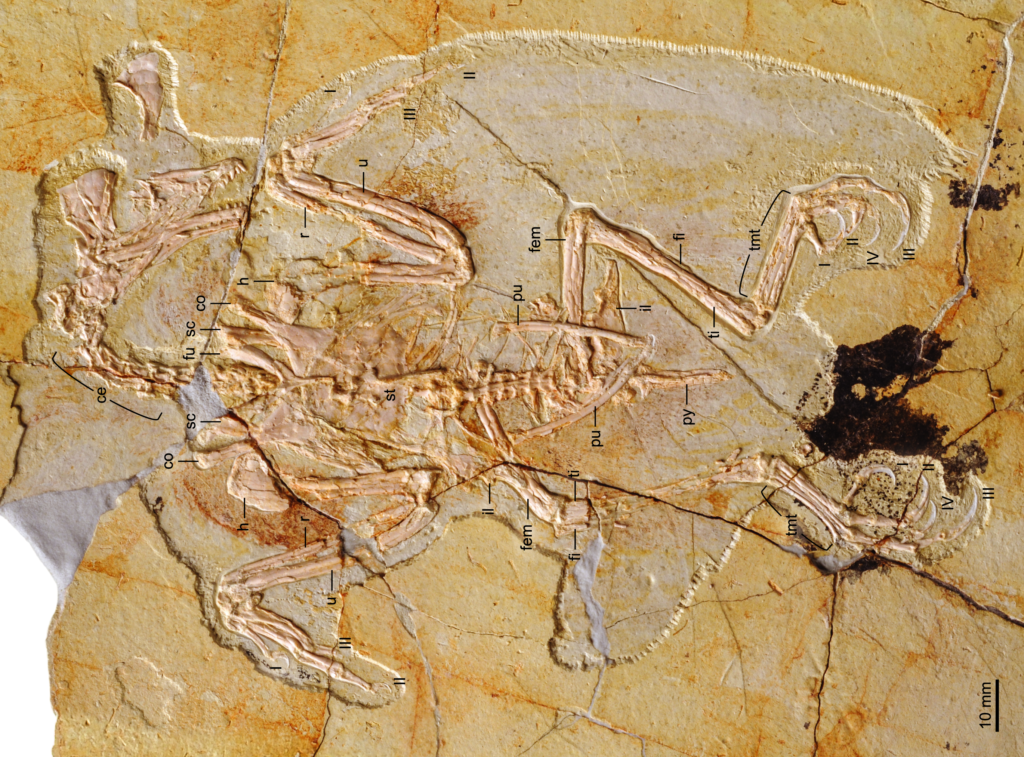
Unlike the limited Compsognathus fossil record, Microraptor is known from hundreds of specimens recovered from the Jiufotang and Yixian Formations of Liaoning Province, China. This extraordinary abundance of fossils has made Microraptor one of the most comprehensively studied dinosaurs in paleontology. The exceptional preservation quality of these fossils results from rapid burial in fine-grained volcanic ash, which captured remarkable details including complete feather impressions, stomach contents, and even traces of original coloration.
One particularly famous specimen, known as Microraptor gui, preserved clear impressions of flight feathers on all four limbs, definitively establishing the four-winged configuration that revolutionized our understanding of flight evolution. Another notable specimen preserved the remains of a bird in its stomach, providing direct evidence of its predatory capabilities and diet. Scientists have also identified specimens containing fish and mammal remains, demonstrating Microraptor’s diverse hunting preferences.
The preservation of melanosomes (pigment-containing organelles) in some specimens has allowed researchers to determine that Microraptor likely possessed iridescent black plumage similar to modern crows, representing one of the first scientifically rigorous color reconstructions of any dinosaur. This wealth of exceptionally preserved fossils continues to yield new insights, making Microraptor an invaluable window into the biology and ecology of feathered dinosaurs and the evolution of avian flight.
Cultural Impact and Representation in Media
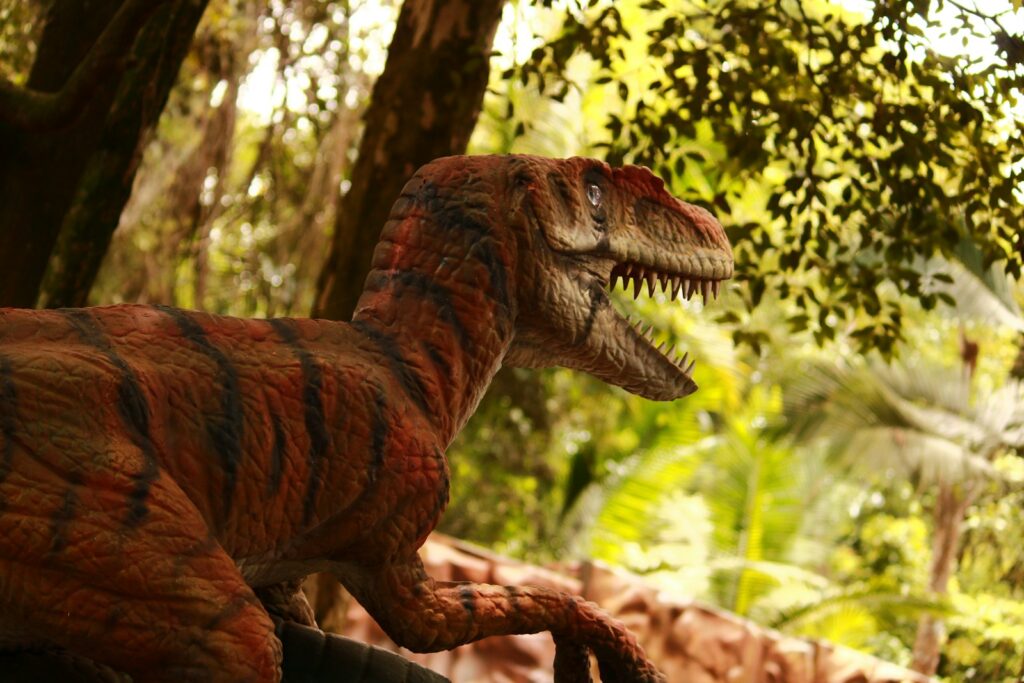
Despite their scientific importance, Compsognathus and Microraptor have experienced contrasting fortunes in popular culture and educational media. Compsognathus gained significant public recognition through its memorable appearance in “The Lost World: Jurassic Park” (1997), where a pack of these small dinosaurs was portrayed attacking a young girl, introducing audiences to the concept that even small dinosaurs could be dangerous predators.
This representation, while dramatically exaggerated for entertainment purposes, placed Compsognathus firmly in the public consciousness. Microraptor, despite its revolutionary importance to paleontology, has received less mainstream attention, though it has been featured in documentary series like BBC’s “Planet Dinosaur” and PBS’s “NOVA,” where its unique four-winged configuration has been highlighted. Both dinosaurs have become staples in dinosaur encyclopedia books and educational materials, particularly in discussions about dinosaur-bird evolution.
Museums worldwide have created displays featuring models and reconstructions of both species, with Microraptor exhibits often emphasizing its feathered appearance and revolutionary place in understanding flight evolution. As scientific understanding continues to evolve, particularly regarding the appearance and behavior of these animals, their cultural representations have gradually shifted toward more accurate portrayals