Imagine standing in a dry desert landscape in New Mexico, looking down at a series of footprints pressed into ancient mud, and realizing those prints were made by a child who walked here over 20,000 years ago. That moment, frozen in geological time, is exactly the kind of discovery that rewrites the human story. The question of when our earliest ancestors first set foot on North American soil has fascinated, frustrated, and genuinely excited scientists for generations.
What you might think you know about this topic is likely already outdated. The old textbook answer, that humans arrived in North America roughly 13,000 years ago, has been challenged repeatedly, and the evidence piling up is nothing short of jaw-dropping. Buckle up, because the story of how we got here is far older, messier, and more thrilling than anyone expected. Let’s dive in.
The Clovis First Theory: The Starting Point That Started Arguments
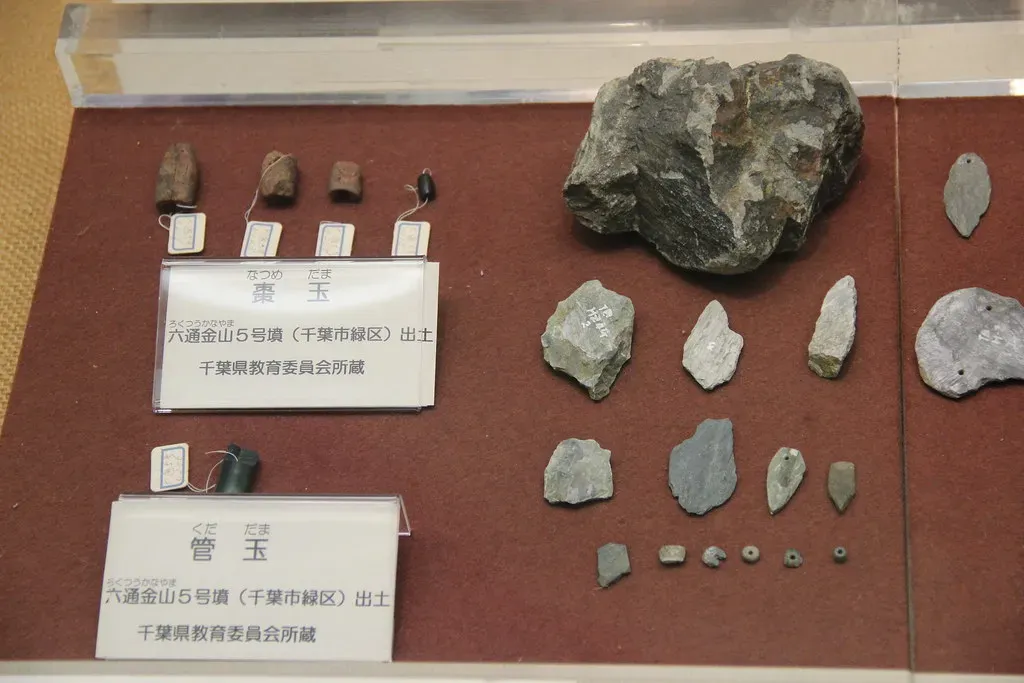
For most of the twentieth century, there was one story, and one story only, about the first people to arrive in North America. Researchers believed a single theory explained the peopling of the Americas, focusing on findings from Blackwater Draw, New Mexico, where human artifacts dated from the last ice age were found alongside the remains of extinct animals in the 1930s. This led to the widespread belief in the “Clovis-first model,” proposing that the first Americans migrated over the Beringia land bridge from Asia during a time when glacial passages opened. It was a tidy, clean narrative. A little too tidy, as it turned out.
This model linked the first inhabitants to distinctive spear points, known as Clovis points, ranging in age from roughly 13,250 to 12,800 years old. Honestly, for decades this was the gold standard. If you didn’t date your artifact after the Clovis points, archaeologists simply didn’t take you seriously. Clovis First, as it was called, was the one and only accepted explanation of initial human arrival and subsequent expansion throughout North and South America. To be taken seriously, any artifact of human culture had to be dated after those found at Clovis. That kind of rigid orthodoxy, as history often shows, is precisely what gets shattered by new discoveries.
White Sands: Footprints That Rewrote Everything
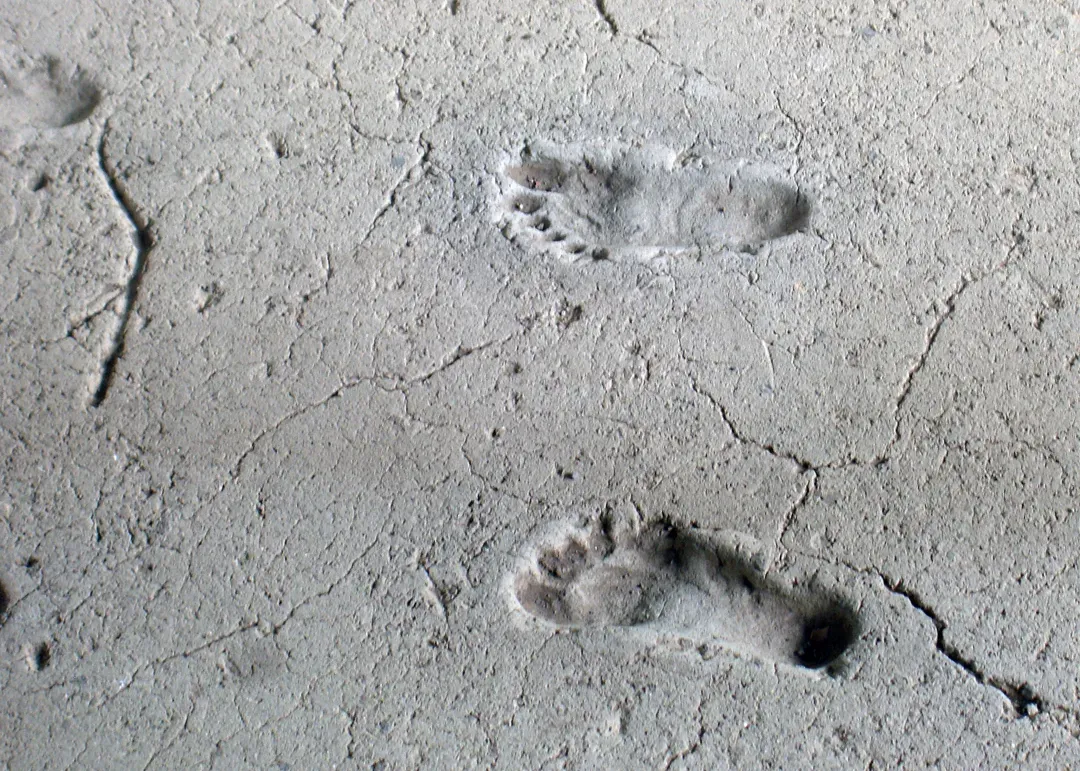
(Original text: self-made), CC BY-SA 3.0)
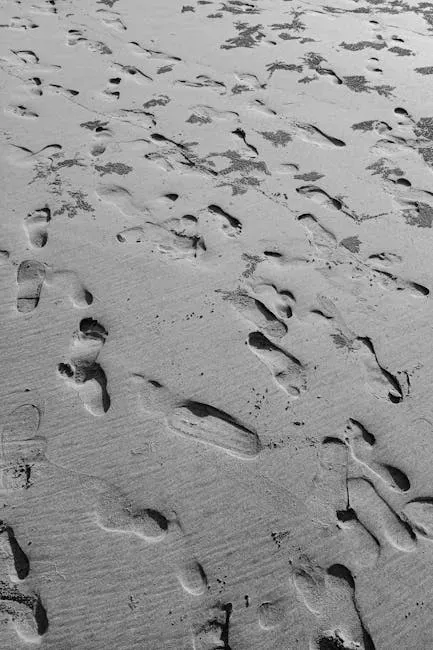
Here’s the thing about the White Sands National Park in New Mexico: most people think of it as a stunning desert landscape of chalk-white dunes. Few people imagine it as the site of the most explosive archaeological discovery in recent memory. The potentially oldest known human footprints in North America were found at White Sands National Park in New Mexico, where researchers identified approximately 60 fossilized footprints buried in layers of gypsum soil on a large playa in the Tularosa Basin.
The tracks showed human activity in the area occurred between 23,000 and 21,000 years ago, a timeline that would upend anthropologists’ understanding of when cultures developed in North America. That is not a small revision. That is roughly 10,000 years added to the clock. Traditional archaeology relies on the discovery of bones and tools but can often be difficult to interpret. Human footprints, however, provide unequivocal evidence of presence and also of behavior. When you see a child’s footprint preserved in ancient clay, it stops being an abstract number and becomes something deeply personal. Something real.
Challenging the Dates: The Science Behind the Proof
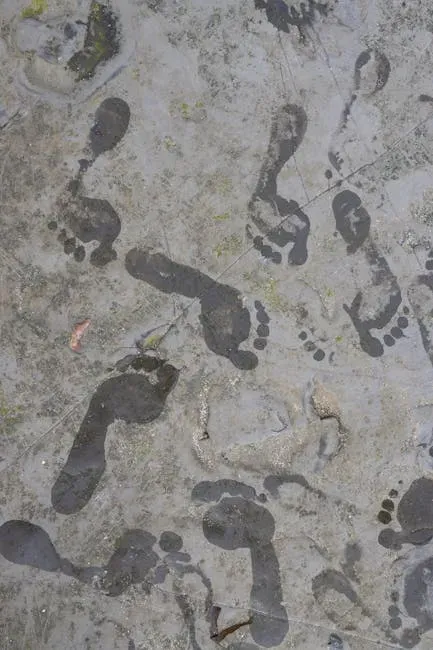
You might wonder: how do scientists actually know how old these footprints are? The answer involves some genuinely remarkable detective work. The age of the White Sands footprints was initially determined by dating seeds of the common aquatic plant Ruppia cirrhosa that were found in the fossilized impressions. Aquatic plants can acquire carbon from dissolved carbon atoms in the water rather than ambient air, which can potentially cause the measured ages to appear too old. Critics jumped on this issue, and fair enough.
A new study then supported the 2021 findings by relying on ancient mud to radiocarbon date the footprints, not seeds and pollen, and using an independent lab to make the analysis. The team used new radiocarbon ages of terrestrial pollen collected from the same stratigraphic horizons as the original seeds, along with optically stimulated luminescence ages of sediments from within the human footprint-bearing sequence, to evaluate the accuracy of the seed ages. Two completely different methods. Same result. It’s hard to argue with that kind of convergence, and I think most honest scientists would admit the evidence is now quite compelling.
Arlington Springs Man: The Oldest Known Human Remains in North America
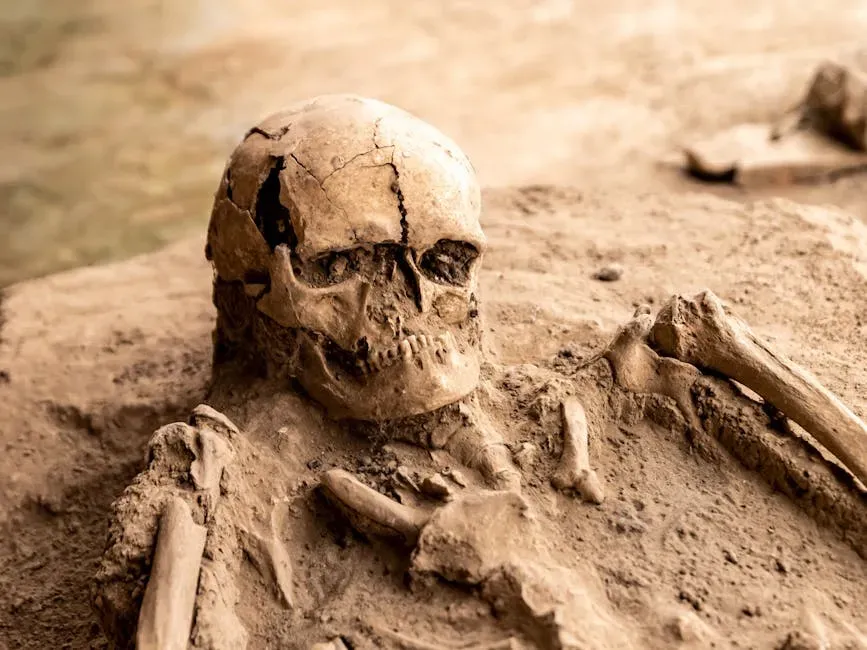
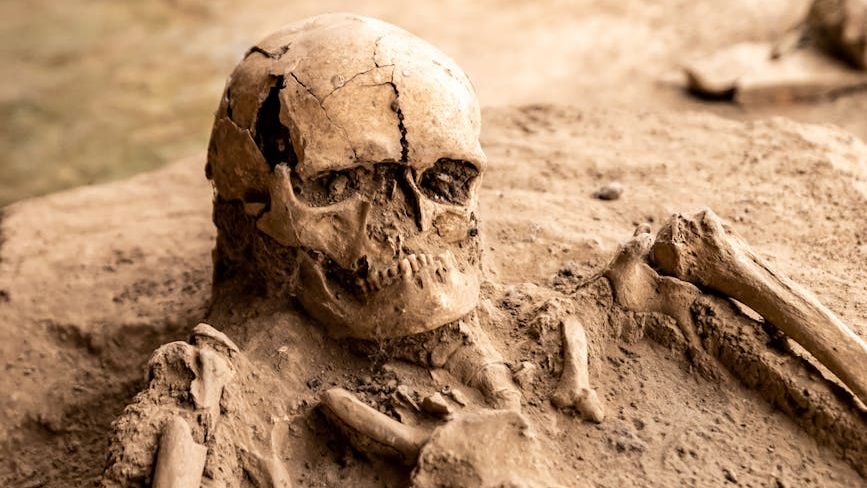
While the White Sands footprints grab headlines for their age, the oldest directly dated human skeletal remains found in North America tell a different kind of story. Arlington Springs Man was an ancient Paleoindian, most likely a man, whose remains were found in 1959 on Santa Rosa Island, one of the Channel Islands located off the coast of Southern California. He lived about 13,000 years before the present, making him the earliest dated adult in North America.
What makes this find genuinely fascinating goes beyond the age. His presence on an island at such an early date demonstrates that the earliest Paleoindians had watercraft capable of crossing the Santa Barbara Channel, and lends credence to a coastal migration theory for the peopling of the Americas, using boats to travel south from Siberia and Alaska. Think about that. These were not primitive people stumbling blindly across a continent. They were skilled seafarers navigating open ocean waters. In 2022, after a NAGPRA request, Arlington Springs Man was repatriated to the Santa Ynez Band of Chumash Mission Indians for reburial according to their native customs. Science, ultimately, making room for humanity.
Meadowcroft, Buttermilk Creek, and Paisley Caves: Multiple Clues, One Big Picture
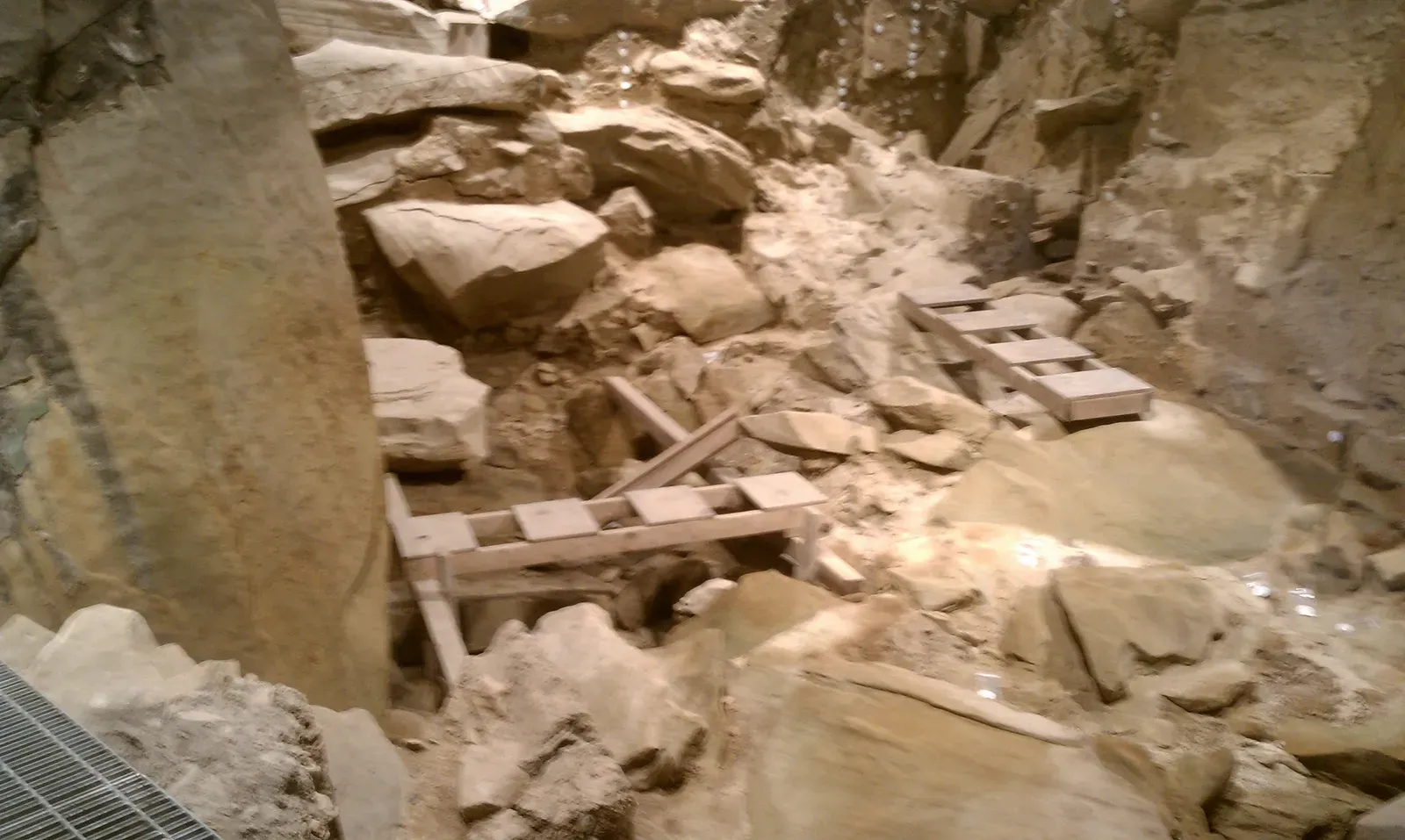
It’s not just one dramatic site that’s reshaping the timeline. Pre-Clovis evidence has been piling up from several locations across North America, and together they paint a remarkably consistent picture. Meadowcroft Rockshelter in Pennsylvania may have a history of at least 16,000 years. While excavating what researchers called the “Deep Hole,” they found a finished lithic tool later called the Mungai knife, which would be the oldest human artifact found at the site, dating back 16,000 years.
In Texas, at the Buttermilk Creek complex, stone tool fragments date back 15,500 years. At Oregon’s Paisley Caves, fossilized human feces date back 14,300 years. These aren’t obscure side notes. Taken together, the weight of these discoveries is simply too heavy to dismiss. Radiocarbon dating of human projectile points at the Cooper’s Ferry site in Idaho revealed that people found their way inland into North America by about 16,000 years ago. Cooper’s Ferry may be the oldest strong evidence of human settlement of the continent yet. The pre-Clovis world was real. It was populated. It was active.
DNA and the Beringia Waiting Room: Where Our Ancestors Paused Before the Journey

Perhaps the most mind-bending part of this entire story is not where the first Americans ended up, but where they paused along the way. Cumulative evidence indicates the ancestors of Native Americans lived on the Bering land bridge for roughly 10,000 years, from approximately 25,000 years ago until they began moving into the Americas about 15,000 years ago once glacial ice sheets melted and opened migration routes. Imagine an entire population living for hundreds of generations on a landmass that no longer exists. It’s almost science fiction.
A comparison of DNA from 600 modern Native Americans with ancient DNA recovered from a late Stone Age human skeleton from Mal’ta near Lake Baikal in southern Siberia shows that Native Americans diverged genetically from their Asian ancestors around 25,000 years ago, just as the last ice age was reaching its peak. In 2018, the sequenced DNA of an Indigenous girl, whose remains were found at the Upward Sun River archaeological site in Alaska in 2013, proved not to match the two recognized branches of Indigenous Americans and instead belonged to the early population of Ancient Beringians. This breakthrough is said to be the first direct genomic evidence that there was potentially only one wave of migration in the Americas that occurred, with genetic branching and division transpiring after the fact. One group. One journey. Extraordinary consequences.
Conclusion: A Story Still Being Written
The search for North America’s earliest human ancestors is one of the most dynamic, contested, and genuinely exciting fields in all of science. What we thought we knew 30 years ago has been overturned, refined, and overturned again. The precise date for the peopling of the Americas is a long-standing open question. While advances in archaeology, Pleistocene geology, physical anthropology, and DNA analysis have progressively shed more light on the subject, significant questions remain unresolved.
Let’s be real: there is something deeply humbling about standing at the edge of what we know and realizing how much is still buried, still submerged, still waiting in ancient sediment for someone with the right tools and the right question. Every new footprint, every ancient tooth, every strand of preserved DNA is another sentence in a story that stretches back tens of thousands of years. As research progressed, the narrative shifted from a single migration event to multiple small, diverse groups entering the continent at various points in time. Our ancestors were neither simple nor singular. They were complex, resilient, and astonishingly resourceful.
The next great discovery about North America’s earliest people might be sitting just beneath someone’s feet right now, pressed into ancient mud, waiting to be found. What do you think we’ll uncover next? Tell us your thoughts in the comments below.