West Papua, Indonesia – Scientists recently confirmed the survival of two marsupial species long presumed extinct, hidden in the dense rainforests of the Bird’s Head Peninsula on New Guinea. The pygmy long-fingered possum and ring-tailed glider, relics from a bygone era, surfaced through a blend of modern photographs, museum specimens, and local expertise. This dual rediscovery underscores the enduring mysteries of one of the world’s most biodiverse yet understudied regions.
A Groundbreaking Double Discovery
The odds of rediscovering a single mammal thought extinct for millennia hovered near zero, yet researchers achieved the improbable by confirming two such Lazarus taxa. Teams led by zoologist Tim Flannery of the Australian Museum integrated fossil evidence with contemporary images captured by conservationists and locals. Publications in the Records of the Australian Museum on March 6, 2026, formalized the findings, marking the first new genus of New Guinean marsupial since 1937.
Expeditions spanned remote lowland forests, where old-growth stands of gigantic kauri trees shelter ancient lineages. A 1992 museum specimen, once misidentified, proved pivotal alongside photos from 2015 and 2022. Flannery described the moment: “The chances of finding one Lazarus mammal species is ‘almost zero’… But finding two is ‘unprecedented and groundbreaking.’”
The Pygmy Long-Fingered Possum Emerges
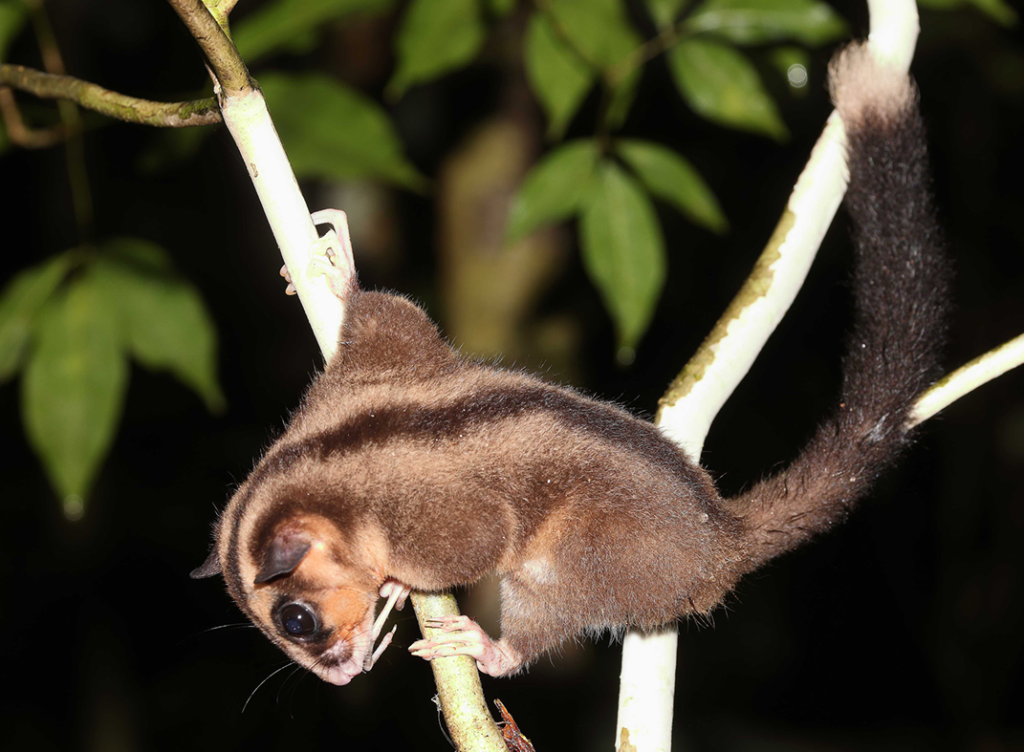
This palm-sized marsupial, Dactylonax kambuayai, boasts bold stripes and a standout trait: one elongated fourth digit on each hand, twice the length of its fellows. It rips into rotting wood to extract beetle larvae, guided by specialized ears attuned to low-frequency sounds. Fossils traced its presence to Australia’s Queensland some 300,000 years ago and West Papua until about 6,000 years past.
Modern sightings confirmed its persistence in low-elevation rainforests below 1,000 meters, areas scarce in other possums. The species belongs to the rare Dactylopsilinae subfamily, with relatives confined to higher altitudes elsewhere on New Guinea. Its rarity in the fossil record hinted at elusive habits even then.
Secrets of the Ring-Tailed Glider
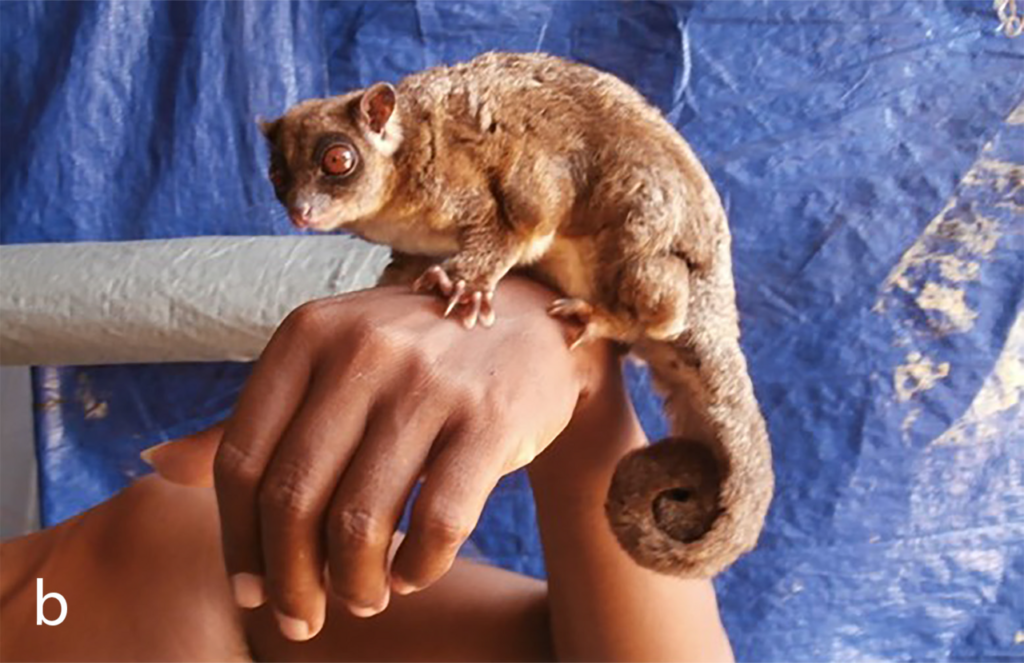
Tous ayamaruensis, the ring-tailed glider, glides through canopies on a membrane between limbs, gripping vines with a prehensile tail about the length of two open palms. Weighing around 300 grams with large eyes and unfurred ears, it nests in tree hollows and likely sustains on sap, leaves, and invertebrates. Local clans revere it as Tous, a sacred embodiment of ancestral spirits central to initiation rites.
Fossil fragments, pieced by the late Ken Aplin late last century, marked it as a lone survivor of its genus, akin to Australia’s greater gliders. Photos from riverine forests in 2015 sealed its living status, revealing pair-bonding behaviors and single annual offspring.
| Species | Size/Weight | Signature Feature | Known From |
|---|---|---|---|
| Pygmy Long-Fingered Possum | Palm-sized | Elongated fourth digit | Fossils ~6,000 years old |
| Ring-Tailed Glider | ~300g | Prehensile tail, gliding membrane | Pleistocene-Holocene fossils |
Indigenous Knowledge Proves Essential
Tambrauw and Maybrat elders from the region shared vital insights, guiding surveys and identifying the glider through cultural lore. Co-author Rika Korain, a Maybrat woman, stressed: “We worked very carefully and collaboratively with Tambrauw Elders and identification would not have been possible without cooperation with Traditional Owners and this connection has been essential for ongoing work.”
Partnerships with the University of Papua, Global Wildlife Fund, and Minderoo Foundation amplified efforts. Papuan researchers like Dr. Aksamina Yohanita celebrated the involvement: “I’m very proud that Papuan researchers contributed to these landmark discoveries.” Such alliances revealed how Vogelkop’s forests, viewed as humanity’s origin by locals, harbor evolutionary holdouts from ancient Australia.
Facing Habitat Perils in a Fragile Eden
Though thriving in isolation, both species confront logging and land clearing encroaching on their old-growth homes. Ecologist David Lindenmayer warned of the urgency: “Hugely concerned about the extent of land clearing in New Guinea.” Their specialized diets render captivity impractical, heightening wild protection needs.
Researchers advocate maintaining Indigenous stewardship to safeguard these bioregions. Flannery noted potential for more surprises: “There are almost certainly more.” Preserving Vogelkop could unlock further relics of a lost Australian fauna now fused into New Guinea.
Key Takeaways
- Two Lazarus marsupials persist in New Guinea’s Bird’s Head Peninsula after 6,000 years off the radar.
- Indigenous collaboration unlocked the discoveries, blending ancient knowledge with science.
- Urgent conservation shields these rarities from logging threats in their rainforest refuges.
These findings remind us that nature still conceals profound secrets amid rapid change. What untapped wonders might remote forests yield next? Share your thoughts in the comments.