You probably think you already know the T. rex story. Giant lizard, tiny arms, thunderous roar – the stuff of Hollywood blockbusters and childhood nightmares. But here’s the thing: even scientists severely underestimated just how devastating this creature’s bite truly was. As research has deepened over recent decades, the numbers that have come back from laboratories and fossil beds have left paleontologists genuinely stunned.
What you’re about to discover isn’t just a cool dinosaur fact you can drop at a dinner party. It’s a story about the most extraordinary biting machine that ever walked the Earth, a biological weapon so refined by evolution it could shatter bone the way you’d snap a pretzel. So let’s dive in.
The Numbers Are Truly Staggering
Let’s be real – most people picture the T. rex as a powerful animal, but “powerful” doesn’t even begin to cover it. Dynamic musculoskeletal models predict that an adult T. rex generated sustained bite forces of between 35,000 and 57,000 Newtons at a single posterior tooth, by far the highest bite forces estimated for any terrestrial animal. To put that into everyday perspective, your own jaw generates roughly 300 Newtons on a good day.
Research found that this prehistoric reptile could chow down with nearly 8,000 pounds of force, which is more than two times greater than the bite force of the largest living crocodiles – today’s bite force champions. Think about that. The crocodile, a creature that has haunted riverbanks for millions of years and is widely feared as nature’s perfect predator, wasn’t even close to the T. rex in raw biting power.
A Skull Built Like a Bridge
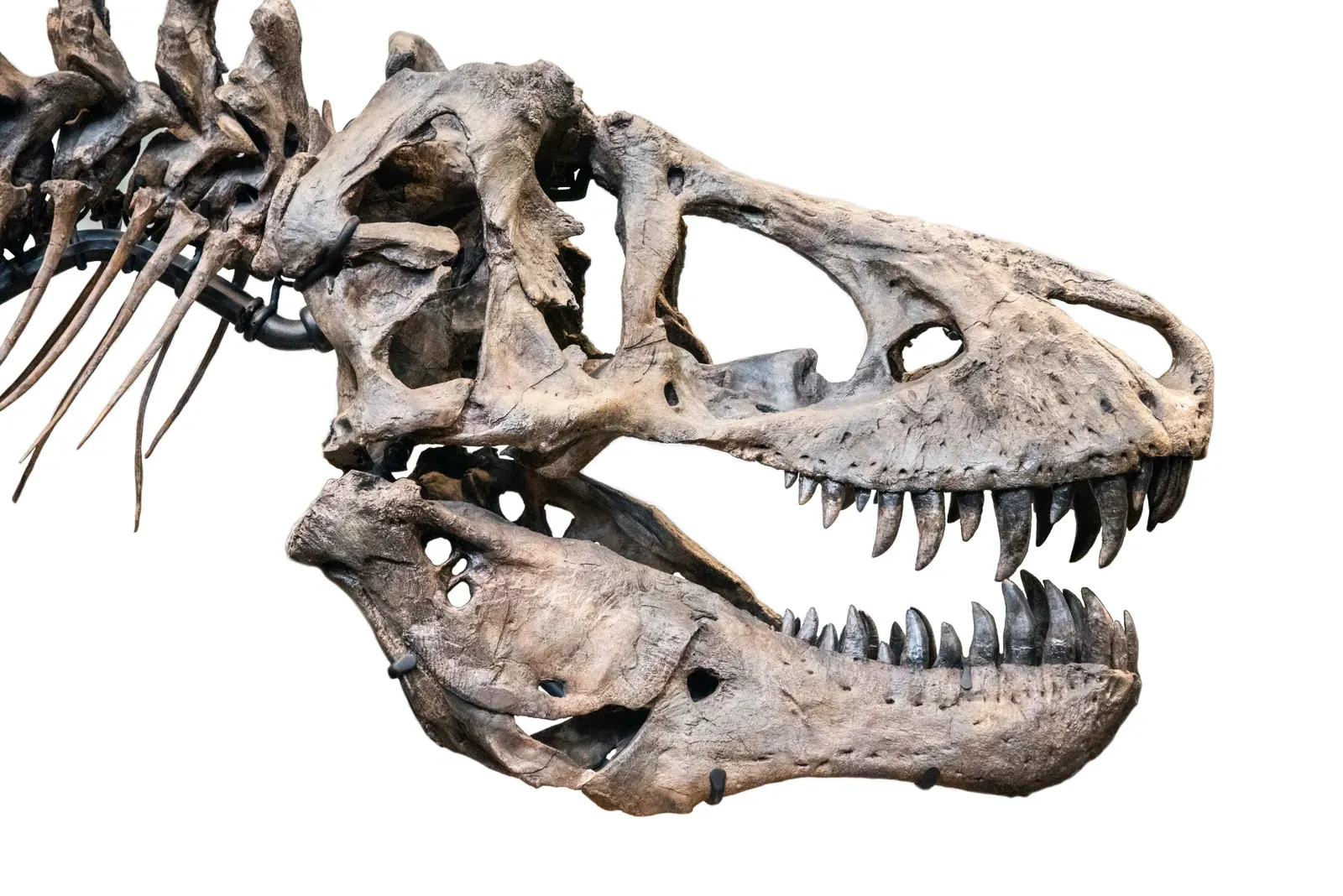
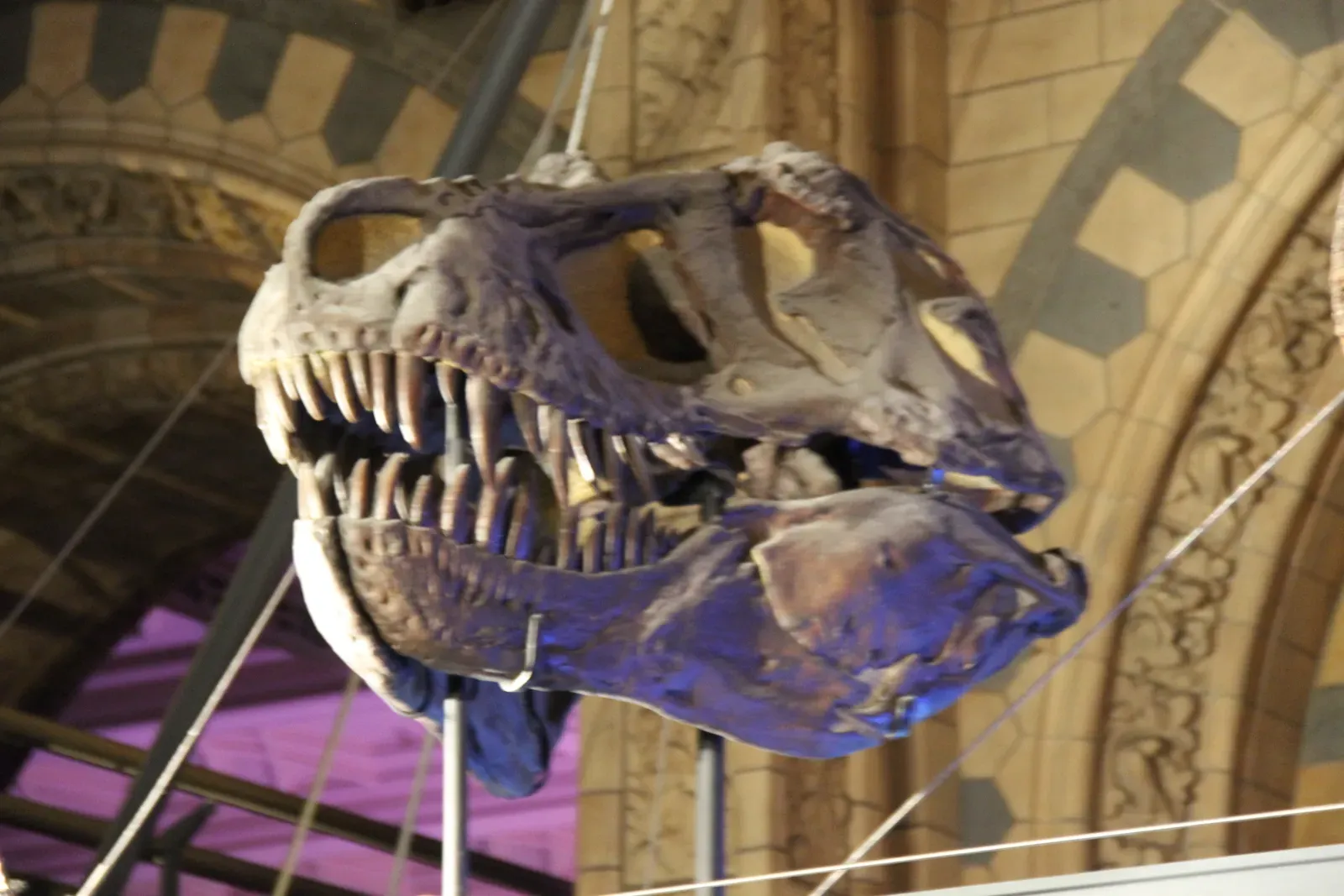
The most striking feature of Tyrannosaurus rex was its enormous skull, which could exceed five feet in length. This skull was not only large – it was extraordinarily strong. The bones of the skull were fused and reinforced with thick struts, allowing it to withstand tremendous stresses during feeding. Honestly, it’s more engineering marvel than anatomy when you really think about it.
The immense bite force demanded a specialized and robust skull structure to prevent self-destruction. Unlike many other theropods, the T. rex skull was deep, broad, and heavily built, optimized for strength. This construction resembled the stiff, unmoving skull of a crocodile rather than the kinetic skulls found in many modern reptiles. A crucial adaptation was the fusion of the nasal bones along the snout, providing a rigid anchor point to resist compressive stresses. It’s like the difference between a flimsy cardboard box and a steel-reinforced vault.
Teeth Designed to Destroy Bone, Not Just Flesh
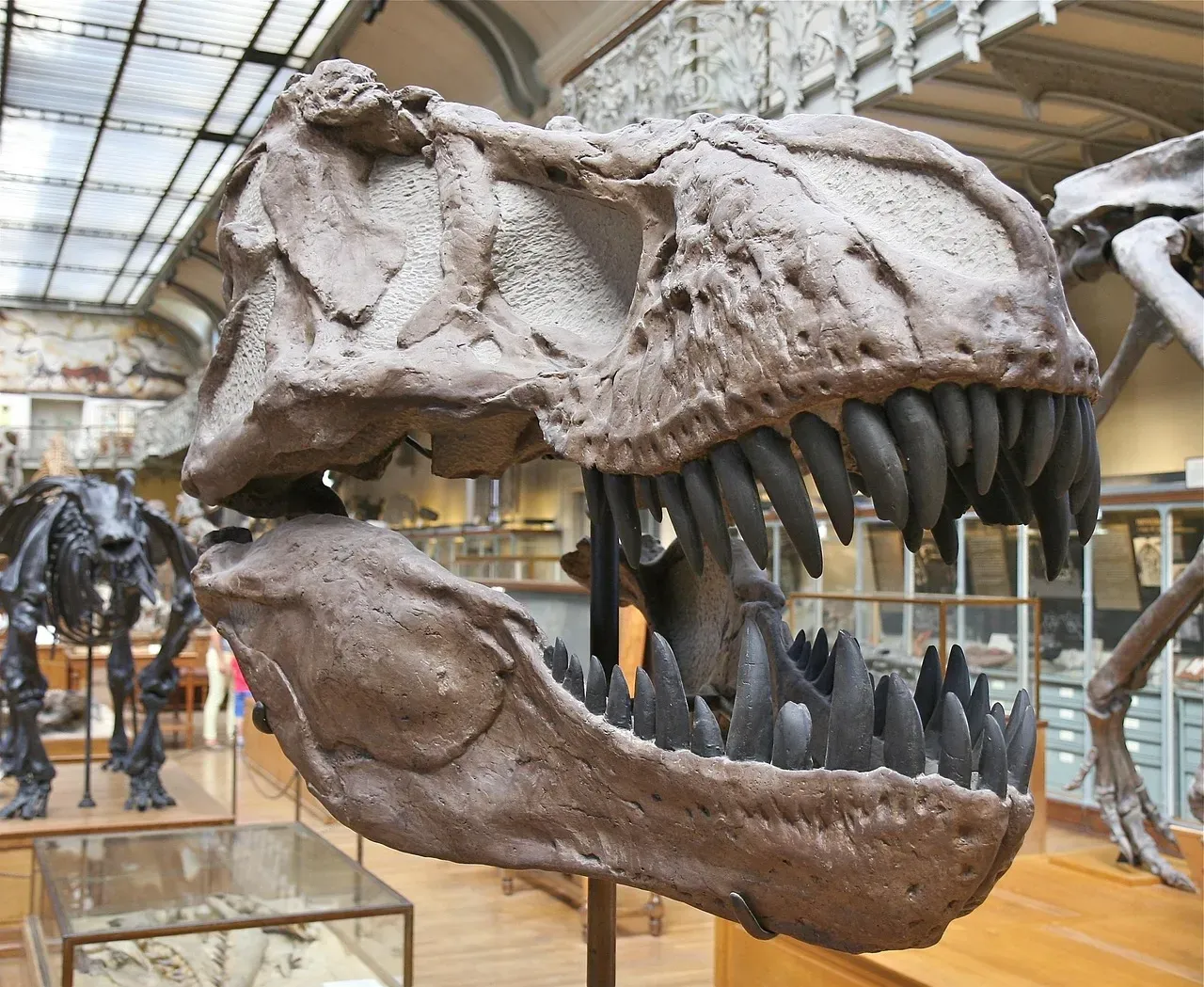
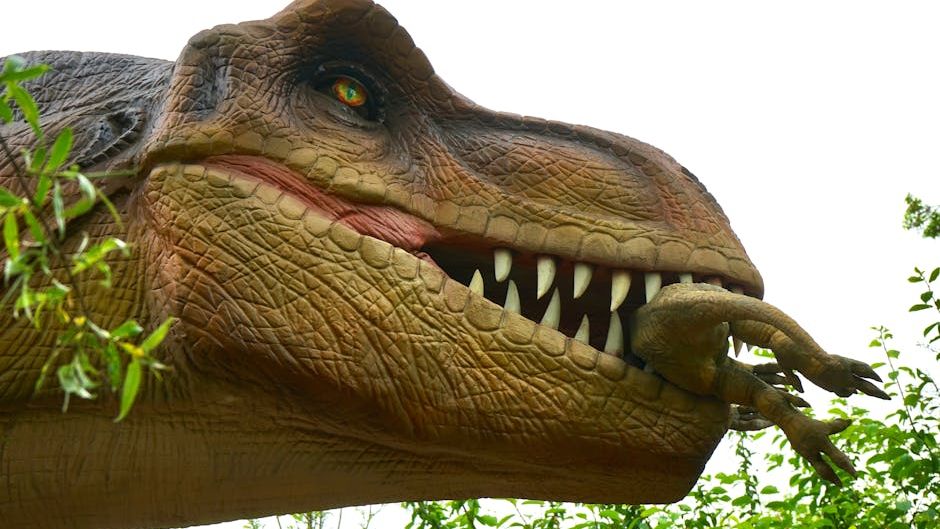
While Allosaurus teeth were thin cutting blades, Tyrannosaurus rex teeth had a different design, with thick, rounded cross sections that tapered to a dull spear point. Forget the image of a T. rex slicing elegantly through flesh like a chef with a good knife. These teeth were more like railroad spikes driven by a pneumatic hammer.
The long, conical teeth generated an astounding 431,000 pounds per square inch of bone-failing tooth pressures. Research also showed that the teeth were designed to induce fractures in bones, causing them to fragment explosively, unlike scavenging mammals such as hyenas, which gnaw at bones persistently to access the nutritious marrow within. You could argue the T. rex didn’t eat its meals so much as detonate them.
Even Teenagers Packed a Serious Punch
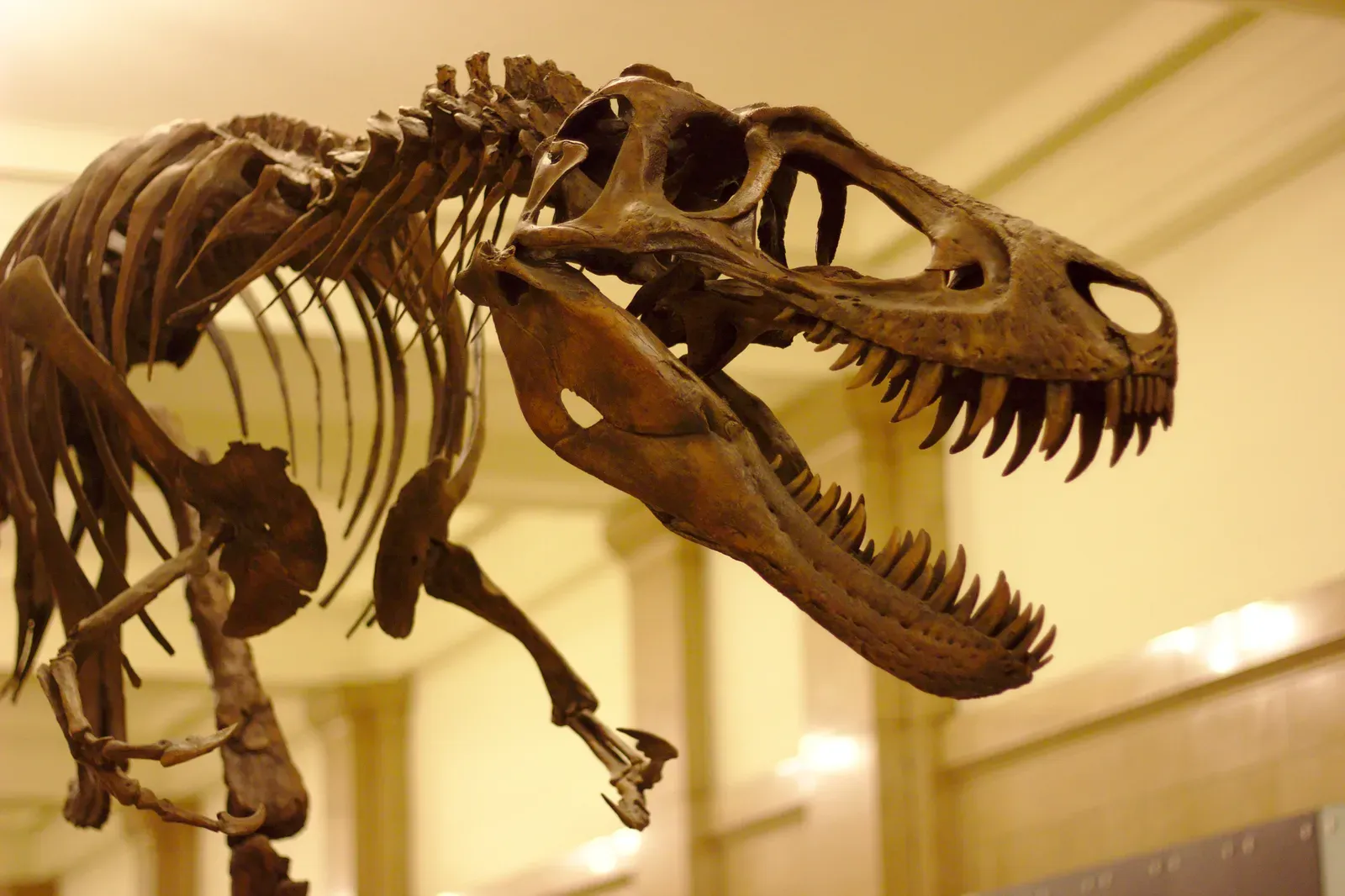
Here’s something that might genuinely surprise you. By the age of 13, the bite force of a Tyrannosaurus rex could already puncture bone. These weren’t fully grown adults pulling off bone-crushing feats – these were essentially adolescents still building up their jaw strength, yet already capable of something no living reptile can match today.
Juvenile T. rexes have teeth that are oval in cross section – more knife-like, presumably to cut and tear flesh. Adult T. rexes have teeth with round cross sections, more like posts, to crush bone. The study reveals that juvenile T. rexes, while not yet able to crush bones like their 30- or 40-year-old parents, were developing their biting techniques and strengthening their jaw muscles to be able to do so once their adult teeth came in. It’s a growth curve unlike anything we see in modern animals – a slow, steady build toward becoming one of history’s most terrifying forces of nature.
The Art of Extreme Bone Crushing
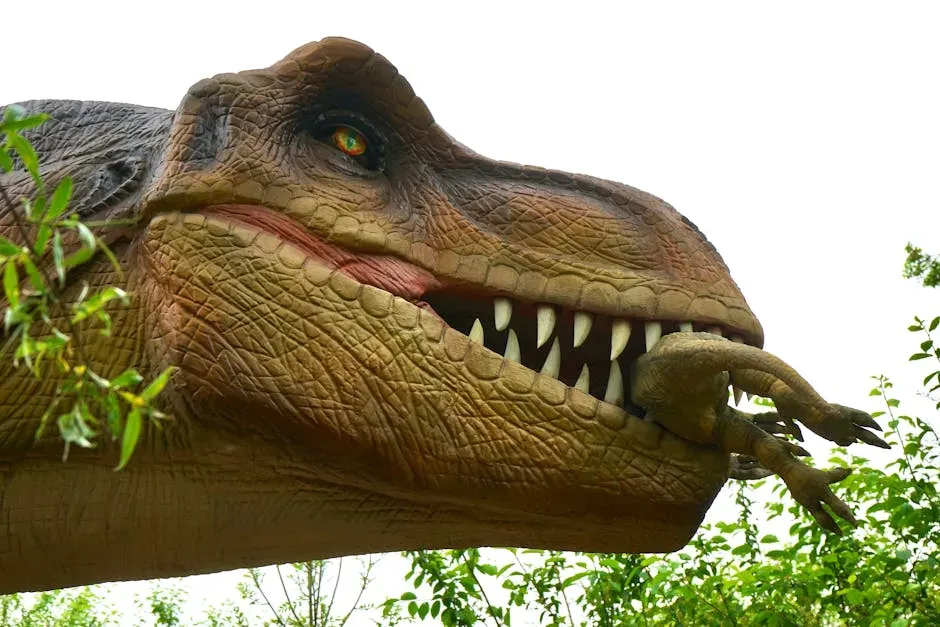
North American tyrannosaurids, including the giant 13-metre theropod dinosaur Tyrannosaurus rex, stand out for habitually biting deeply into bones, pulverizing and digesting them. This behavior – called osteophagy – is something we usually only associate with carnivorous mammals like wolves or hyenas. The fact that a reptile achieved it is remarkable.
Tyrannosaurus rex appears to be unique among reptiles for achieving this mammal-like ability but without specialized, occluding dentition. Paleontologists have analyzed a coprolite – a pile of fossilized T. rex dung – and found bone fragments inside. This may mean that the dinosaur relied on bone for nourishment. In other words, the T. rex wasn’t just biting through bone for sport. It was extracting every last calorie from its prey, including the nutrient-rich marrow locked deep inside.
Fossil Evidence That Still Shocks Scientists Today
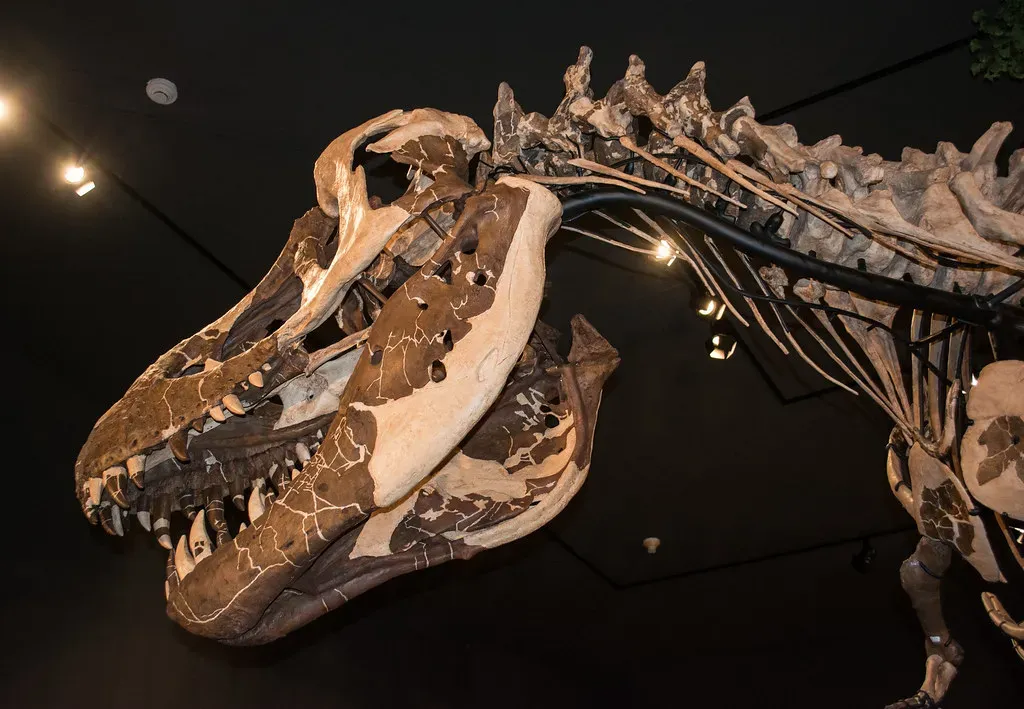
Fossil evidence shows that T. rex routinely bit through the ribs, hips, and skulls of its prey, leaving behind tooth marks that can still be studied today. These aren’t subtle impressions. These are deep, catastrophic gouges in some of the toughest biological material on Earth, left by a jaw that closed like a hydraulic press.
It gets even more dramatic. Researchers report definitive evidence of predation by T. rex – a tooth crown embedded in a hadrosaurid caudal centrum, surrounded by healed bone growth. This indicates that the prey escaped and lived for some time after the injury, providing direct evidence of predatory behavior by T. rex. Paleontologists have also found Triceratops bones with healed bite wounds, evidence that some victims survived attacks, offering a rare glimpse into real predator-prey struggles from deep time. The prey survived. The T. rex’s tooth stayed embedded in its spine. It’s hard to imagine a more dramatic fossil record.
More Than a Hunter – A Complete Feeding Machine
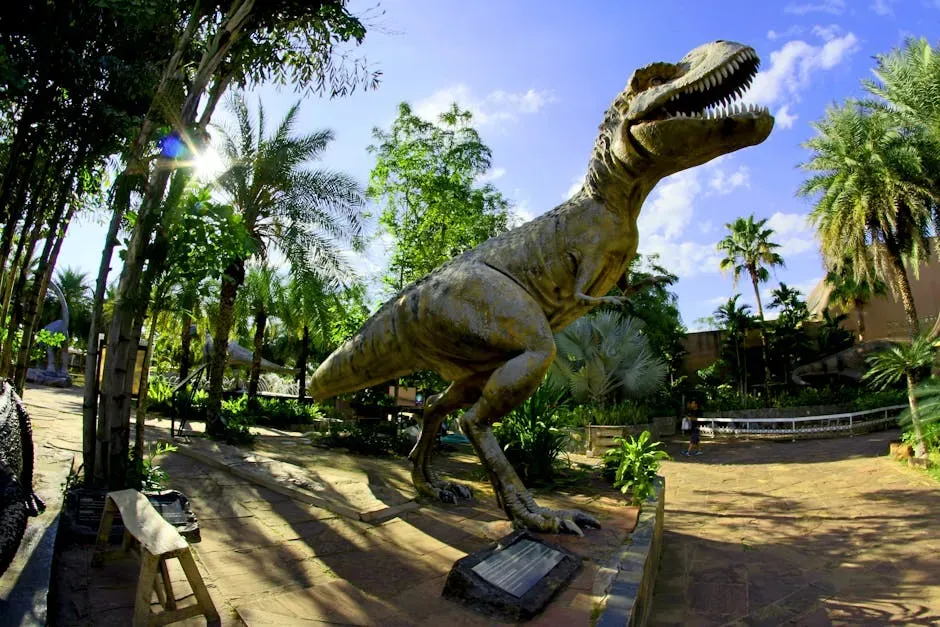
A study found that the tyrannosaurs’ dissimilar teeth had different uses depending on their size, placement, serrated edge and angle in the mouth. While the teeth at the front were specially designed for gripping and pulling, the teeth at the side of the jaw were meant to puncture, and the teeth at the back were specialized both to slice pieces of prey and to force the slices into the throat. Every single tooth had a job to do. This wasn’t a blunt instrument – it was a precisely engineered weapon system.
Most scientists maintain that T. rex was an apex predator – the top hunter of its environment – that would also scavenge when it had the chance. Many features of T. rex’s body and new fossil discoveries support its hunting abilities, including forward-facing eyes that gave it depth perception, much like modern hawks or lions. Collectively, these capacities and behaviors allowed T. rex to finely fragment bones and more fully exploit large dinosaur carcasses for sustenance relative to competing carnivores. Whether it was hunting or scavenging, nothing was left to waste.
Conclusion
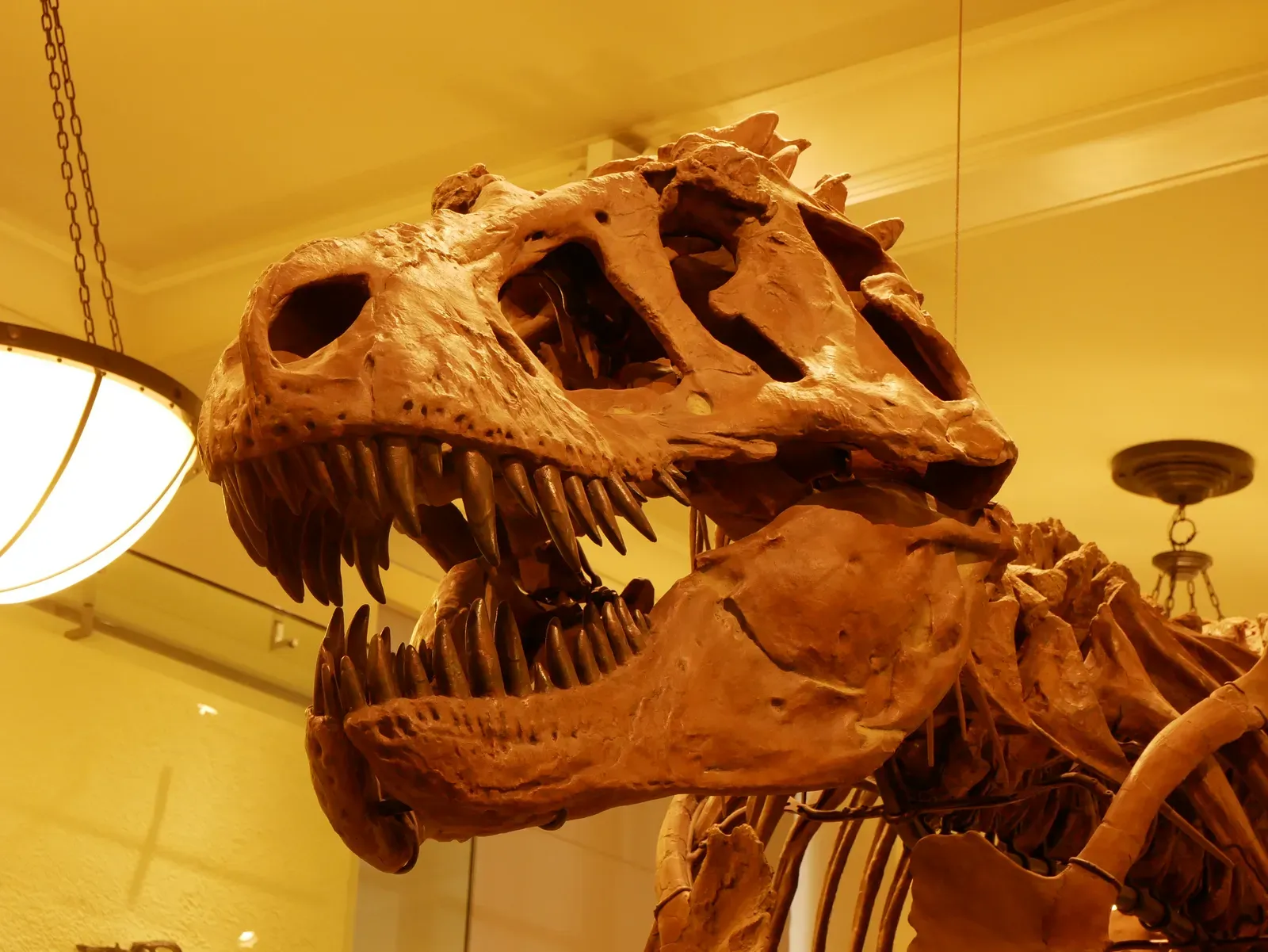
When you step back and consider everything we now know about the T. rex’s bite force, the picture that emerges is almost surreal. We’re talking about an animal that could bite with the weight of three small cars, shatter bones that no other reptile could crack, digest the fragments like a mammalian carnivore, and do all of this with a skull that was simultaneously massive yet refined enough to channel every ounce of force directly through its prey. It is, without question, the most formidable biting machine in the history of life on land.
I think what’s most humbling about all of this is how long it took us to truly understand the scale of what we were dealing with. The T. rex wasn’t just big – it was specifically, almost impossibly well-designed for destruction. Science keeps revising the estimates upward. So perhaps the most honest takeaway is this: we still may not know just how powerful it really was. What do you think – does any living animal even come close? Tell us in the comments.