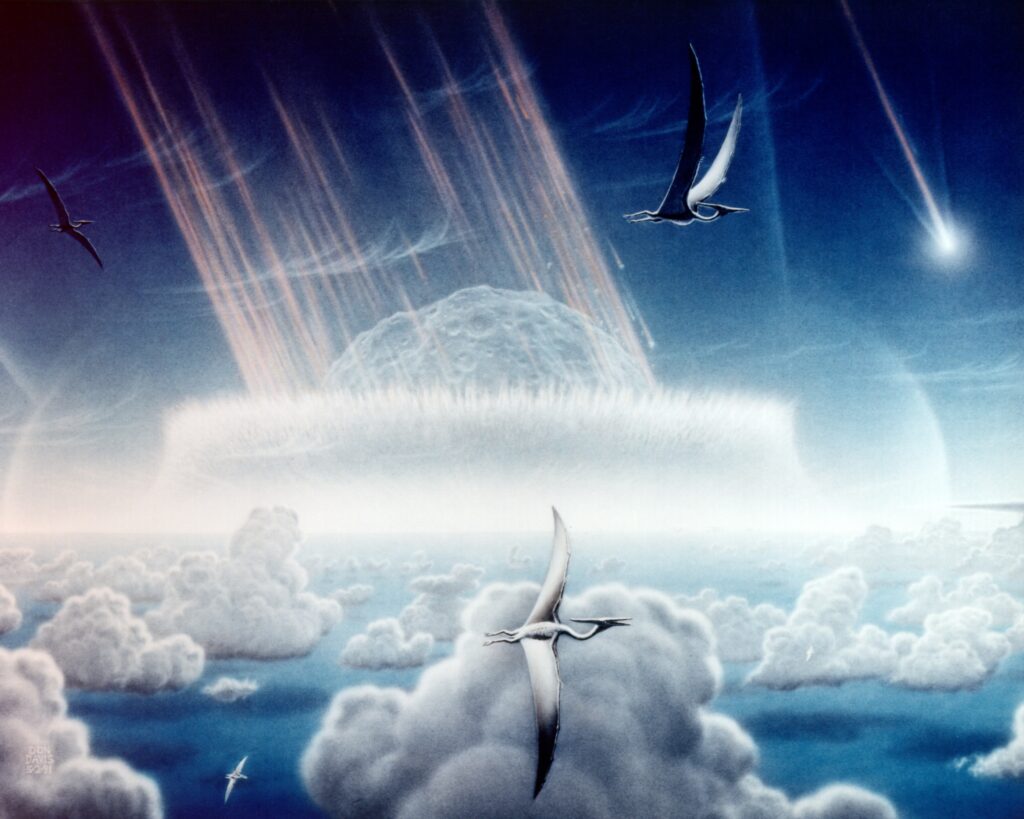
Ukraine – Researchers have pinpointed the age of the Boltysh crater with unprecedented precision, placing its formation hundreds of thousands of years after the catastrophic Chicxulub impact that triggered the extinction of non-avian dinosaurs. This 24-kilometer-wide scar in central Ukraine, long shrouded in dating uncertainties, now offers a clearer view of Earth’s turbulent recovery phase following the Cretaceous-Paleogene (K-Pg) boundary event. The findings challenge earlier hypotheses of multiple simultaneous strikes and highlight how smaller impacts shaped the early Paleocene world.
A Buried Giant Emerges from Ukraine’s Plains
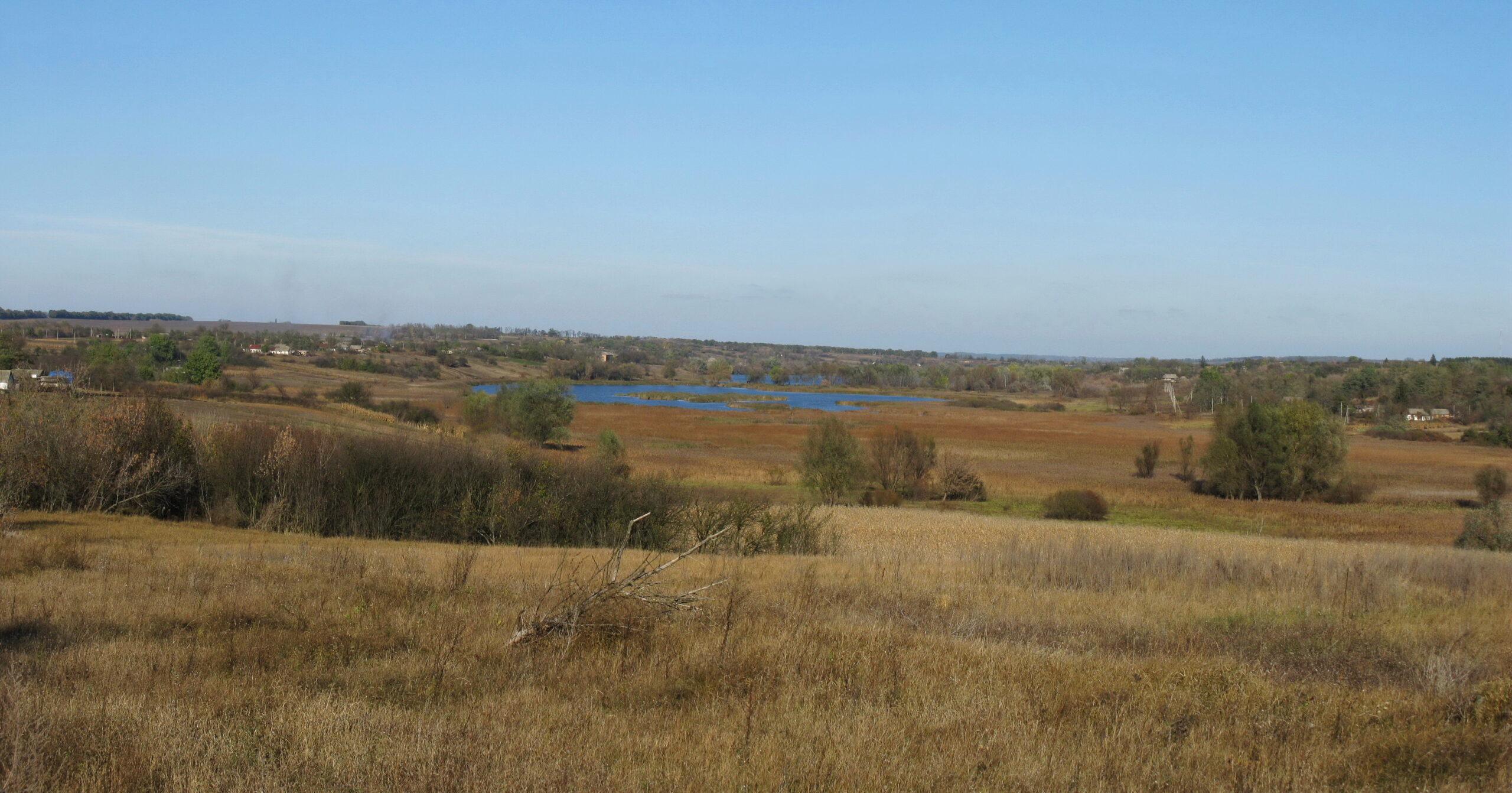
A Buried Giant Emerges from Ukraine’s Plains (Image Credits: Upload.wikimedia.org)
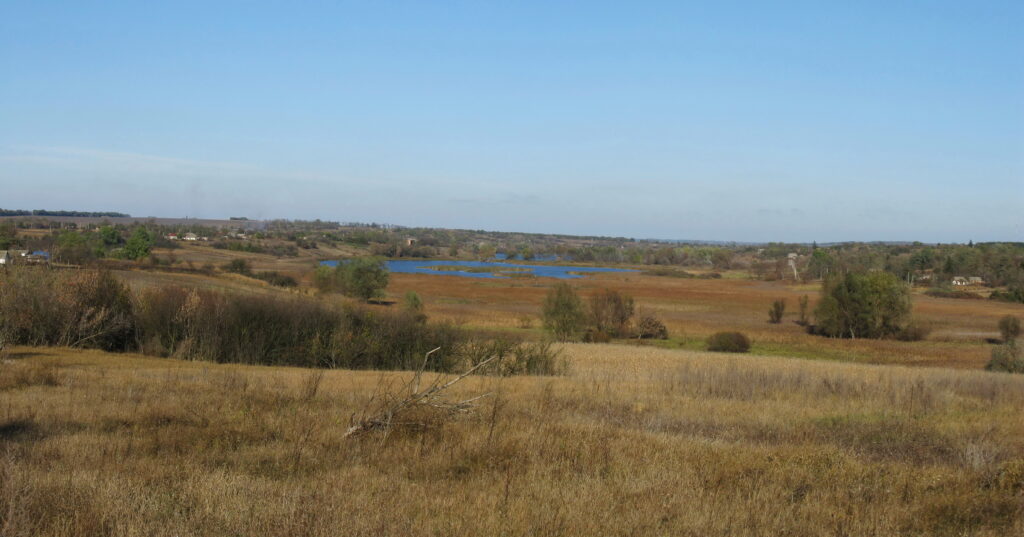
The Boltysh crater lies buried beneath sediments in Kirovohrad Oblast, near the village of Bovtyshka along the Tiasmyn River. Oil exploration in the 1960s first revealed its central uplift, but scientists confirmed it as an impact structure by 1975 through studies of its distinctive breccia and melt rocks. At roughly 24 kilometers across and 550 meters deep, it resulted from a 15-mile-wide asteroid slamming into shallow marine sediments during the late Cretaceous or early Paleocene.
Early investigations assigned broad age ranges, from 54 to 98 million years ago, based on surrounding rock layers. A 1987 analysis of impact glasses suggested around 100 million years, while 2002 argon-argon dating narrowed it to 65.17 million years – close enough to the K-Pg boundary at 66 million years to spark debate. For years, the crater fueled speculation about a barrage of cosmic projectiles ending the dinosaur era.
Precision Dating Overturns Old Assumptions
A 2021 study employed advanced argon-argon geochronology on drill cores from the crater’s melt rocks and sediments, achieving four times the previous precision. The result: 65.39 million years ago, with an uncertainty of just 140,000 to 160,000 years. This placed the impact firmly 650,000 years after Chicxulub.
Lead researcher Annemarie Pickersgill of the University of Glasgow likened the misconception to a crime scene mix-up: “If there’s a burglary and then I arrived at the bank later, nobody’s going to be like, ‘You were there, you did it.’” The technique measured argon isotope buildup in post-impact materials, ruling out earlier overlaps.
- Initial estimates (1970s-1980s): 54-100 million years ago, tied to local strata.
- 2002 argon dating: 65.17 ± 0.64 million years.
- 2010 palynology: Possibly thousands of years before Chicxulub, based on fern spores.
- 2021 refined argon-argon: 65.39 ± 0.14/0.16 million years, post-K-Pg.
Boltysh Versus Chicxulub: A Tale of Two Strikes
The Chicxulub crater in Mexico dwarfs Boltysh at 180 kilometers wide, with an impactor ten times larger. While Chicxulub unleashed global firestorms, tsunamis, and a “nuclear winter,” Boltysh’s smaller projectile left regional effects, including an ejecta blanket spanning over 6,500 square kilometers.
| Crater | Location | Diameter (km) | Age (million years ago) |
|---|---|---|---|
| Chicxulub | Mexico | 180 | ~66 |
| Boltysh | Ukraine | 24 | 65.39 ± 0.14/0.16 |
Philippe Claeys of the Free University of Brussels emphasized the value: “You’re trying to document a major event that basically, surely shaped the biosphere… Is it important to document an event like Boltysh? Absolutely.”
Impacts on a Recovering Planet
Boltysh struck during the early Danian stage, as mammals and survivors like birds began rebounding. Its timing aligns with the Lower C29n hyperthermal – a brief global warming spike where ocean temperatures rose nearly four degrees Fahrenheit – coinciding with the end of Deccan Traps volcanism. Scientists now probe whether this impact exacerbated stresses on a fragile ecosystem.
Though too small for worldwide devastation, Boltysh records how frequent large impacts – every one to three million years – punctuated recovery. It debunks “sidekick” theories from 2010 studies suggesting paired K-Pg strikes but opens questions about localized disruptions, like fern spikes in sediments possibly triggered by the event itself.
- Boltysh formed 650,000 years after Chicxulub, clearing it from dinosaur extinction blame.
- Advanced dating techniques reveal a chaotic post-K-Pg world of hyperthermals and volcanism.
- Smaller craters like Boltysh complete the geological puzzle of Earth’s dynamic history.
The Boltysh crater reminds us that cosmic violence persisted long after the dinosaurs fell, influencing life’s fragile restart. What role might such impacts play in modern risk assessments? Tell us in the comments.