You’ve probably seen dinosaur skeletons towering in museums, their bones telling stories of ancient power and mystery. These creatures roamed the Earth millions of years ago, but what about the tiny, fragile beginnings of their lives? What secrets lie hidden in fossilized eggs, waiting to reveal truths about how these giants cared for their young? The world of dinosaur eggs offers a window into prehistoric family life that challenges everything you thought you knew about these ancient animals.
The journey into dinosaur parenthood is filled with surprises, from nest designs that rival modern engineering to incubation strategies that defy expectations. Let’s dive in.
The Hidden Clock Within Ancient Shells
Imagine holding a dinosaur egg in your hands and being able to tell its exact age, down to the million. Scientists have recently discovered something extraordinary within fossilized eggshells. Researchers found that fossilized dinosaur eggshells contain a natural clock that can reveal when dinosaurs lived, with the technique delivering surprisingly precise ages.
Scientists have directly dated dinosaur eggs by firing lasers at tiny eggshell fragments, revealing that fossils in central China are about 85 million years old. Think about that for a moment. A microscopic laser beam can unlock secrets buried for nearly ninety million years. The method works because uranium trapped in the eggshell decays into lead at a predictable rate, creating what researchers call an atomic clock for fossils.
This breakthrough changes everything. Previously, scientists had to rely on dating rocks found near the eggs, which wasn’t always accurate. Now they can date the eggs themselves directly, opening up possibilities for understanding dinosaur populations and climate conditions with unprecedented precision.
When Embryos Speak Across Millennia
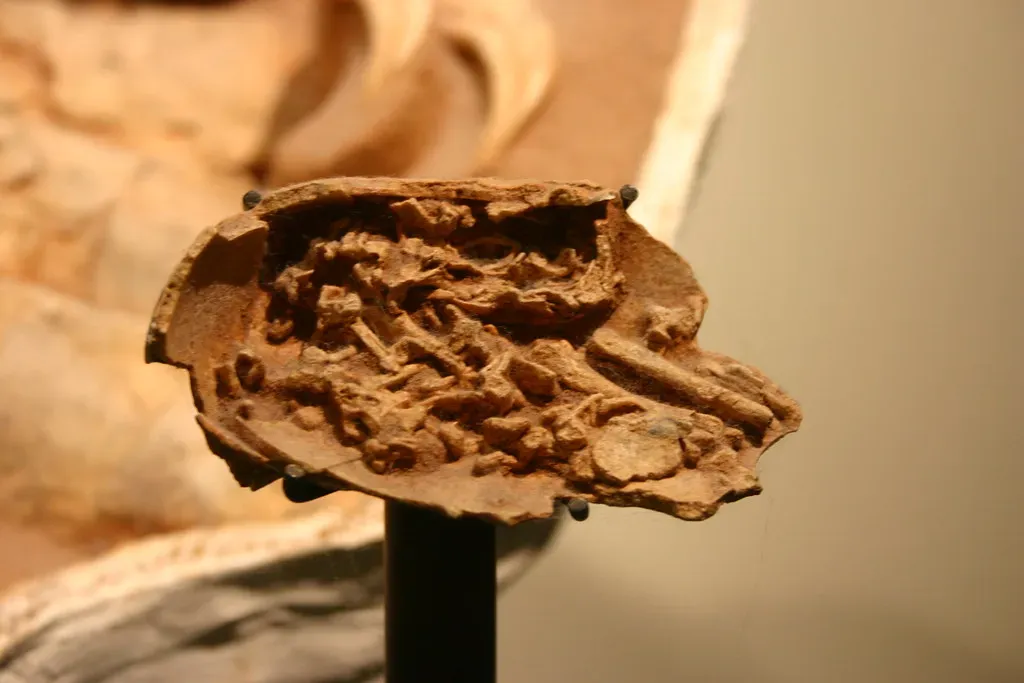
A 72 to 66 million year old embryo discovered in southern China, dubbed Baby Yingliang, belongs to a toothless theropod dinosaur and is among the most complete dinosaur embryos ever found. What makes this discovery truly remarkable isn’t just the preservation itself. The posture of Baby Yingliang is unique among known dinosaur embryos, with its head below the body and feet on either side, similar to modern bird embryos in a position related to tucking behavior critical for hatching success.
Let’s be real: finding a perfectly preserved embryo curled inside its egg after seventy million years is nothing short of miraculous. These delicate fossils are incredibly rare because specific conditions must align. The egg needs to contain a healthy embryo when buried, remain intact without cracks, and survive the slow fossilization process where minerals replace organic material.
Most of the time, soft tissues and fluids inside the egg break down or dissipate instead of becoming fossils. When everything goes right, however, you get a snapshot of life frozen in time, revealing behaviors you never thought possible to observe in extinct creatures.
Nesting Colonies and Community Care
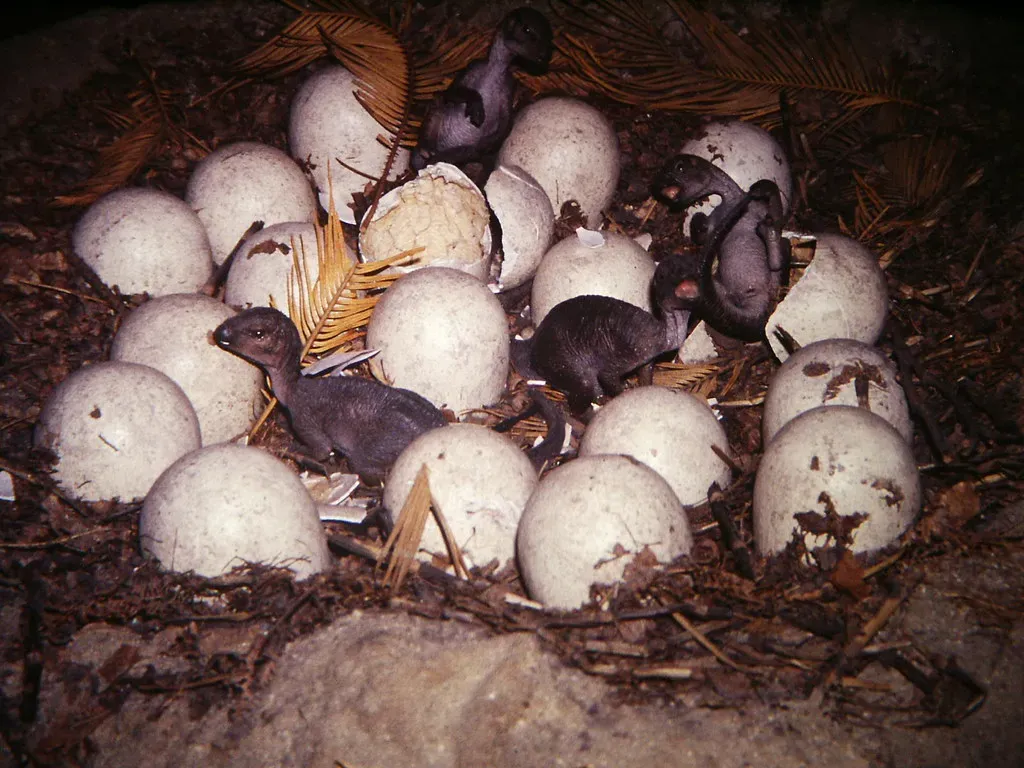
Maiasaura, known as good mother lizard and living around 80 to 75 million years ago, is thought to have nested in large colonies with parents possibly extensively providing food and protection for their hatchlings. Picture a bustling prehistoric nursery where dozens of parents tended their nests side by side. Fossil evidence suggests Maiasaura parents nested in large colonies, creating a social structure similar to modern day birds with communal nesting behavior providing advantages in protection and care for hatchlings.
The evidence gets even more compelling. Excavations revealed Maiasaura nests containing hatchlings with underdeveloped leg bones but well developed arm and shoulder features, suggesting babies remained in the nest while adults brought food to them. This completely flips the old assumption that dinosaurs were cold, uncaring reptiles who laid eggs and walked away.
Community nesting wasn’t just about convenience. It provided safety in numbers, protection from predators, and perhaps even a form of cooperative childcare. Some scientists speculate about dinosaur daycare arrangements where multiple adults watched over mixed groups of juveniles.
The Art of Sitting on Eggs Without Crushing Them
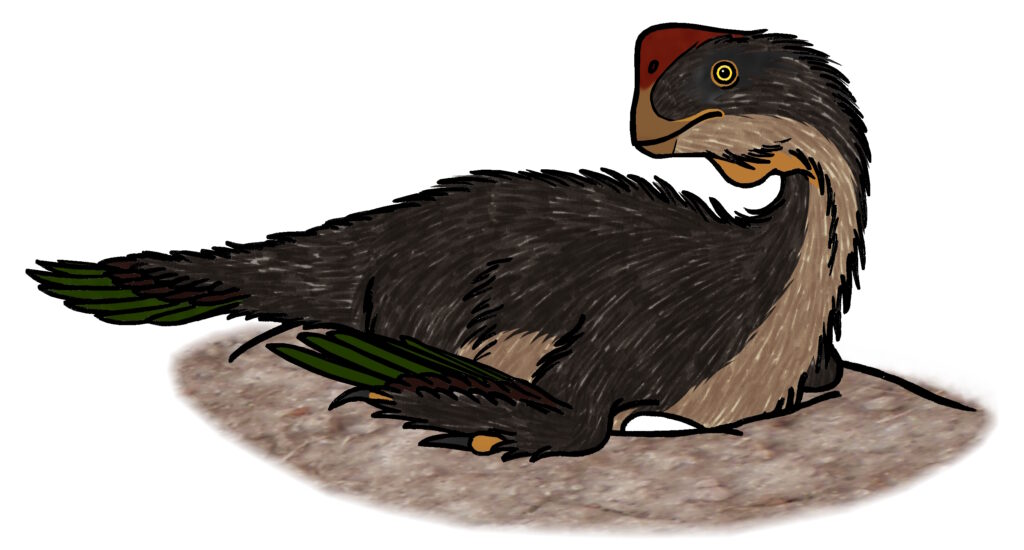
Oviraptorids faced a peculiar challenge. How do you brood your eggs when you’re the size of a large bird or even bigger? A 75 million year old Mongolian dinosaur fossilized sitting right on top of a nest was dubbed Big Mama, with these dinosaurs sitting on nests in a very bird like way with their bodies positioned in the center and arms held over eggs to help protect them.
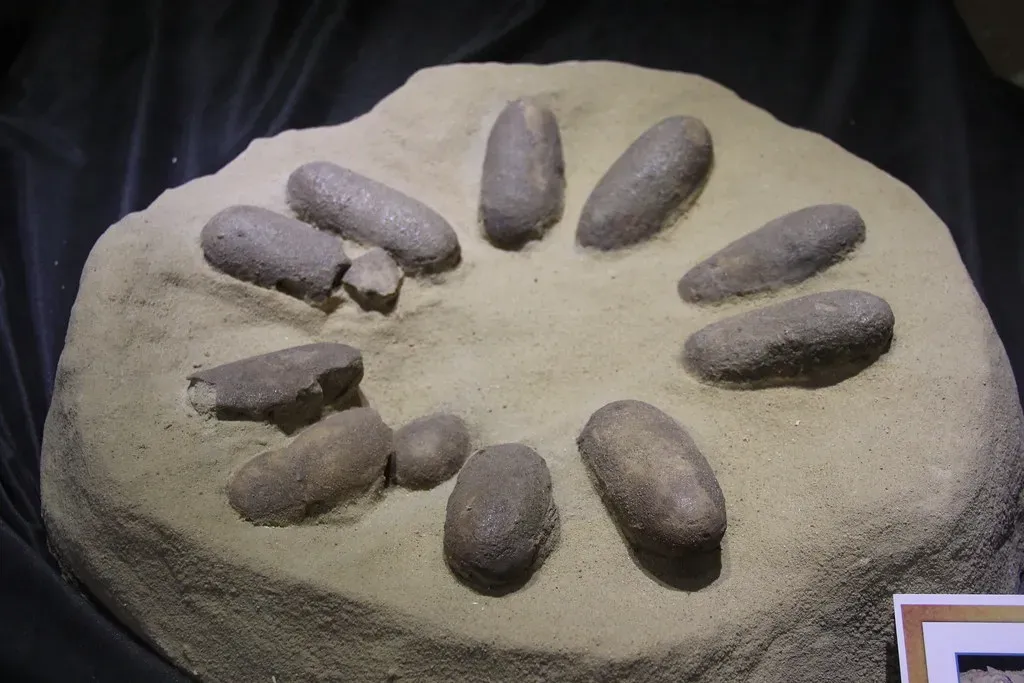
Here’s where it gets fascinating. Larger Oviraptorosaurs like Gigantoraptor, which got as big as rhinos, laid their elongated oval eggs in a near perfect ring shape with two or three rings stacked, leaving a spot in the middle for them to set their weight. Clever, right? They engineered their nests to avoid crushing their precious eggs while still providing warmth and protection.
Geochemical analysis of fossilized eggs calculated that oviraptorosaur eggs were incubated within a 35 to 40 degrees Celsius temperature range, confirming the discovery of fossilized oviraptorosaurs stretched across their clutch. Their feathered bodies would have acted like natural insulation, concealing and warming the eggs just like modern birds do today.
Geothermal Nurseries and Natural Incubators
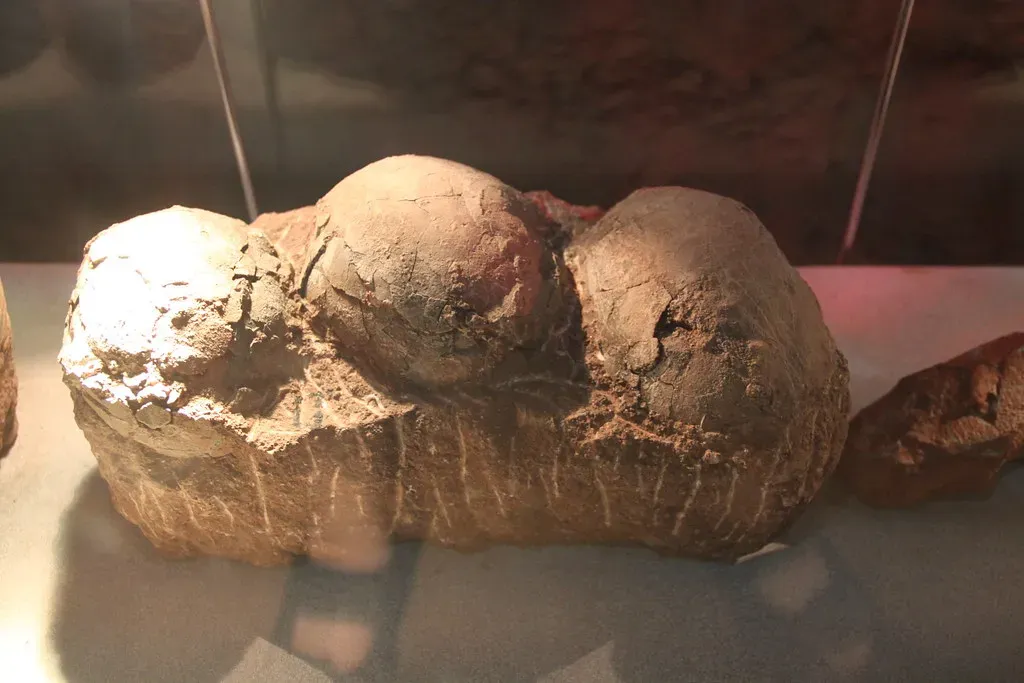
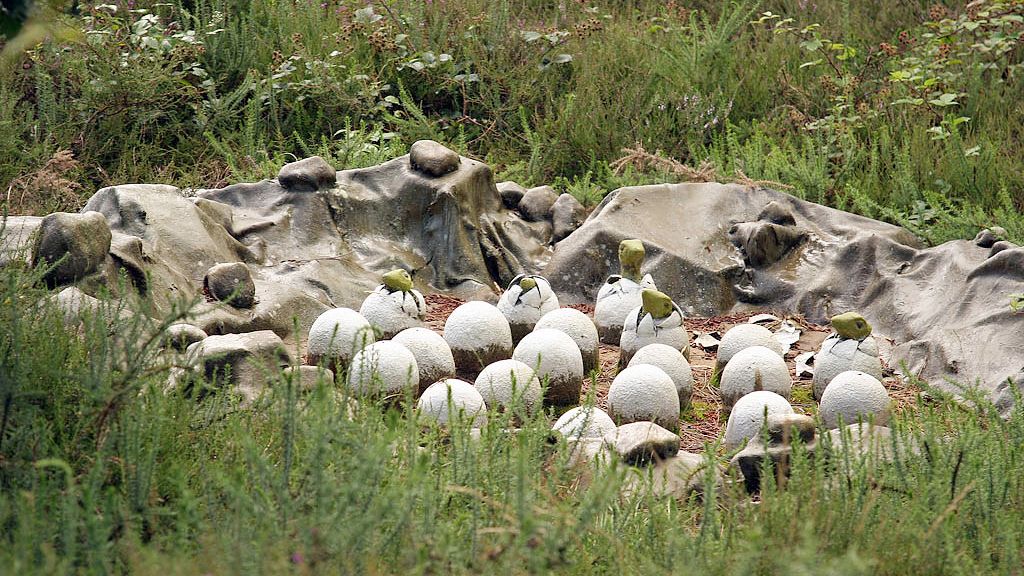
Not all dinosaurs could sit on their eggs. The giant sauropods, weighing dozens of tons, would have obliterated their clutches. So what did they do? At Argentina’s Sanagasta Geological Park, fossilized eggs of giant sauropods sit next to geysers and volcanically heated sites, with each of roughly 80 egg clusters positioned near these geothermal structures, suggesting these dinosaurs were using the planet to keep their babies warm.
Think about the ingenuity required here. These massive creatures sought out locations where the Earth itself provided incubation heat. Some species maybe buried their eggs in layers of plant material mixed with dirt, and as those plants decomposed, microbes eating them would release heat sufficient to keep buried eggs warm even in colder climates.
Modern megapodes, like brush turkeys, use similar strategies today. They build enormous mounds of decomposing vegetation and constantly adjust the soil covering to regulate temperature. The connection between ancient sauropods and these modern birds reveals evolutionary strategies that span hundreds of millions of years.
The Reptilian Reality of Long Incubation
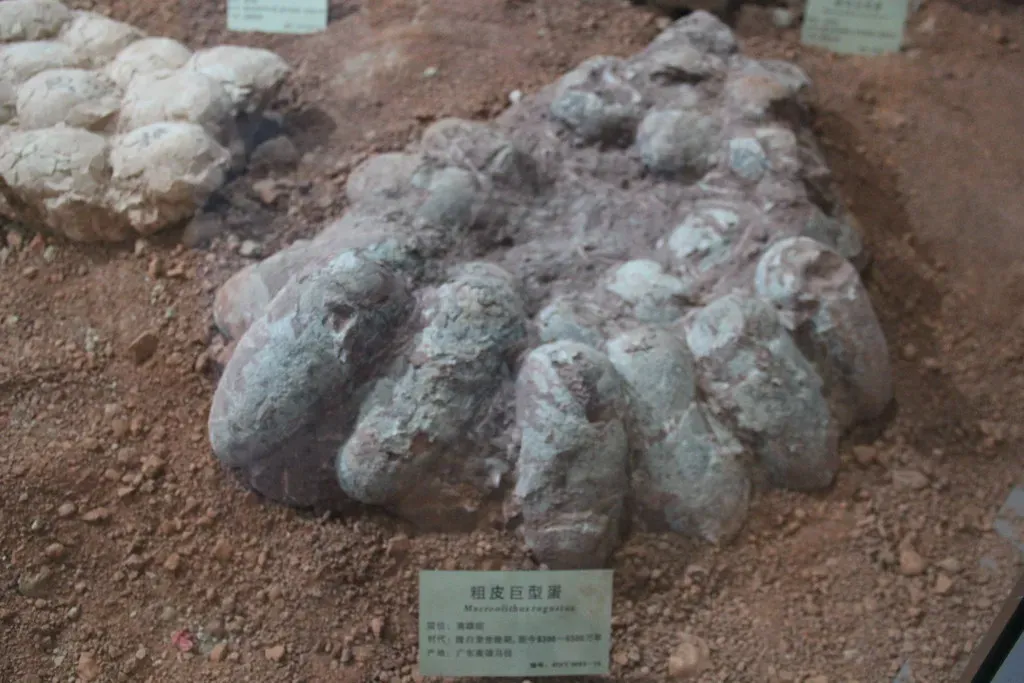
Scientists once assumed dinosaur eggs hatched quickly like bird eggs. They were wrong. Dinosaurs took anywhere from three to six months to hatch their eggs, and that long waiting period likely contributed to nonavian dinosaurs extinction about 65 million years ago. Results showed nearly three months for tiny Protoceratops embryos and six months for those from the giant Hypacrosaurus.
Honestly, six months is an eternity in the wild. Prolonged incubation put eggs and their parents at risk from predators, starvation and other environmental risk factors. Parents had to guard nests through changing seasons, facing predators, floods, droughts, and countless other dangers. Every day the eggs remained unhatched was another day of vulnerability.
The biggest ramification relates to extinction, as these warm blooded creatures with slow incubation times would have been at a distinct disadvantage compared to other animals that survived the extinction event. When the asteroid struck and resources became scarce, animals that could reproduce quickly had the edge. Dinosaurs simply couldn’t bounce back fast enough.
Egg Architecture and What Shells Reveal
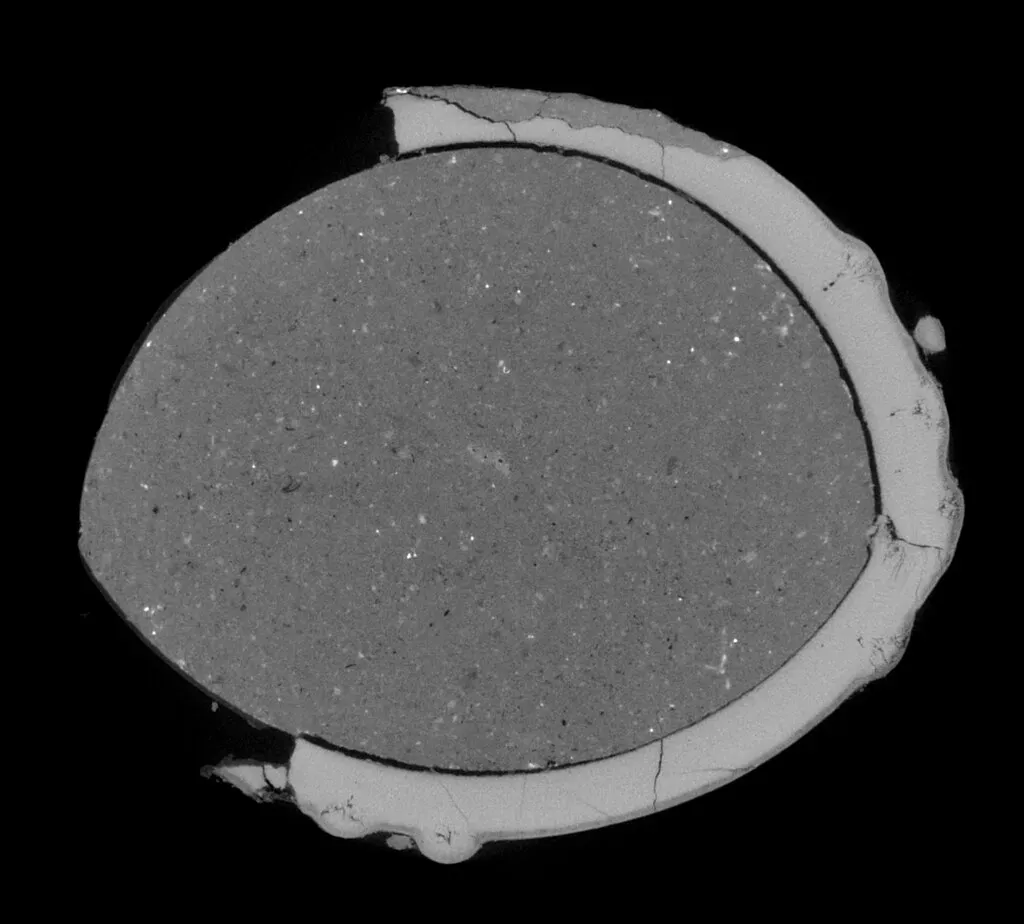
Dinosaur eggshell can be studied in thin section and viewed under a microscope, while the interior can be studied using CAT scans or by gradually dissolving away the shell with acid, and sometimes the egg preserves remains of the developing embryo inside. The structure of eggshells tells you more than you’d expect. Classification is based on shell structure viewed in thin section via microscope, with three main categories: spherulitic for sauropods and hadrosaurs, prismatic, and ornithoid for theropods including modern birds.
Shell thickness, porosity, and texture all matter. Highly porous shells suggest eggs were buried in moist soil where gas exchange was limited. Less porous shells with elongated shapes are associated with exposed nests where parents brooded. The eggs weren’t just containers. They were sophisticated biological systems adapted to specific nesting strategies.
Even among only the hard eggs of dinosaurs, there are considerable differences in eggshell architecture, and such varied eggshell structure indicates vastly different nest styles, incubation methods, and times between egg laying and hatching. Each shell tells a story about how that particular species approached parenthood.
The Legacy of Prehistoric Parents
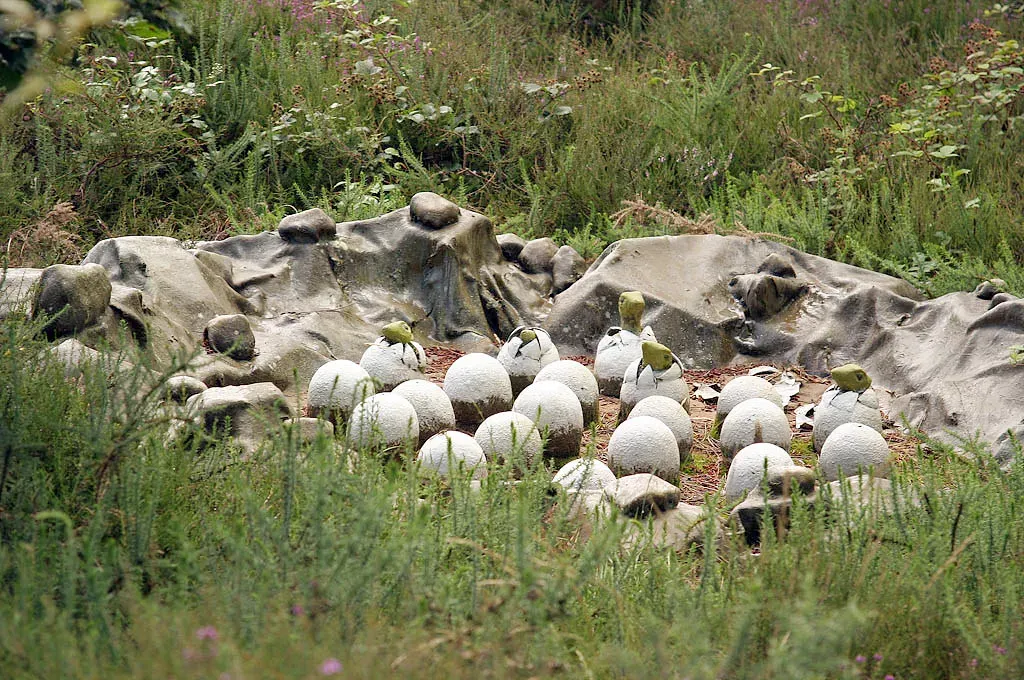
What does all this teach you? Dinosaurs were far more sophisticated parents than anyone imagined decades ago. Some brooded their eggs with dedicated care, others engineered communal nesting colonies, and still others harnessed geothermal energy for incubation. Recent paleontological discoveries have dramatically transformed understanding of dinosaur parenting behaviors, revealing sophisticated nesting strategies, complex familial structures, and nurturing behaviors that challenge preconceptions.
The diversity of parenting strategies mirrors what you see in modern animals. Not every species cared for young the same way, just as modern reptiles, birds, and mammals all approach parenthood differently. Just like living animals exhibit variety in behaviors from species to species, dinosaurs also were variable in their parenting, with some neglectful and burying eggs while others caringly tended nests, and some living alongside each other while others parted way soon after birth.
Understanding dinosaur eggs isn’t just about satisfying curiosity. It reveals how evolution shaped reproductive strategies over millions of years, how parental care behaviors developed, and why some lineages survived mass extinctions while others vanished. Every fossilized egg is a time capsule containing answers to questions scientists are only beginning to ask. The next discovery could rewrite what you think you know about these magnificent creatures and the tender care they showed their unborn young.
What surprises you most about how dinosaurs raised their babies? The world of prehistoric parenthood continues to astonish researchers, and there are surely more revelations waiting to be unearthed.