Picture a continent where the ground literally shook beneath the weight of creatures that made today’s wildlife look miniature. Beavers the size of bears. Sloths heavier than pickup trucks. Bears that could look a modern elephant in the eye. Fifty thousand years ago, North America was ruled by megafauna. Lumbering mammoths roamed the tundra, while forests were home to towering mastodons and fierce saber-toothed predators. It’s the kind of world that sounds more like fantasy than natural history.
What’s genuinely thrilling, though, is that we keep learning more about these titans with every passing year. New fossils, advanced DNA analysis, and cutting-edge biomolecular tools are rewriting what we thought we knew. You might be surprised by just how many mysteries still remain, and how recently some of these secrets have been cracked open. Let’s dive in.
The Woolly Mammoth: More Than Just a Furry Elephant
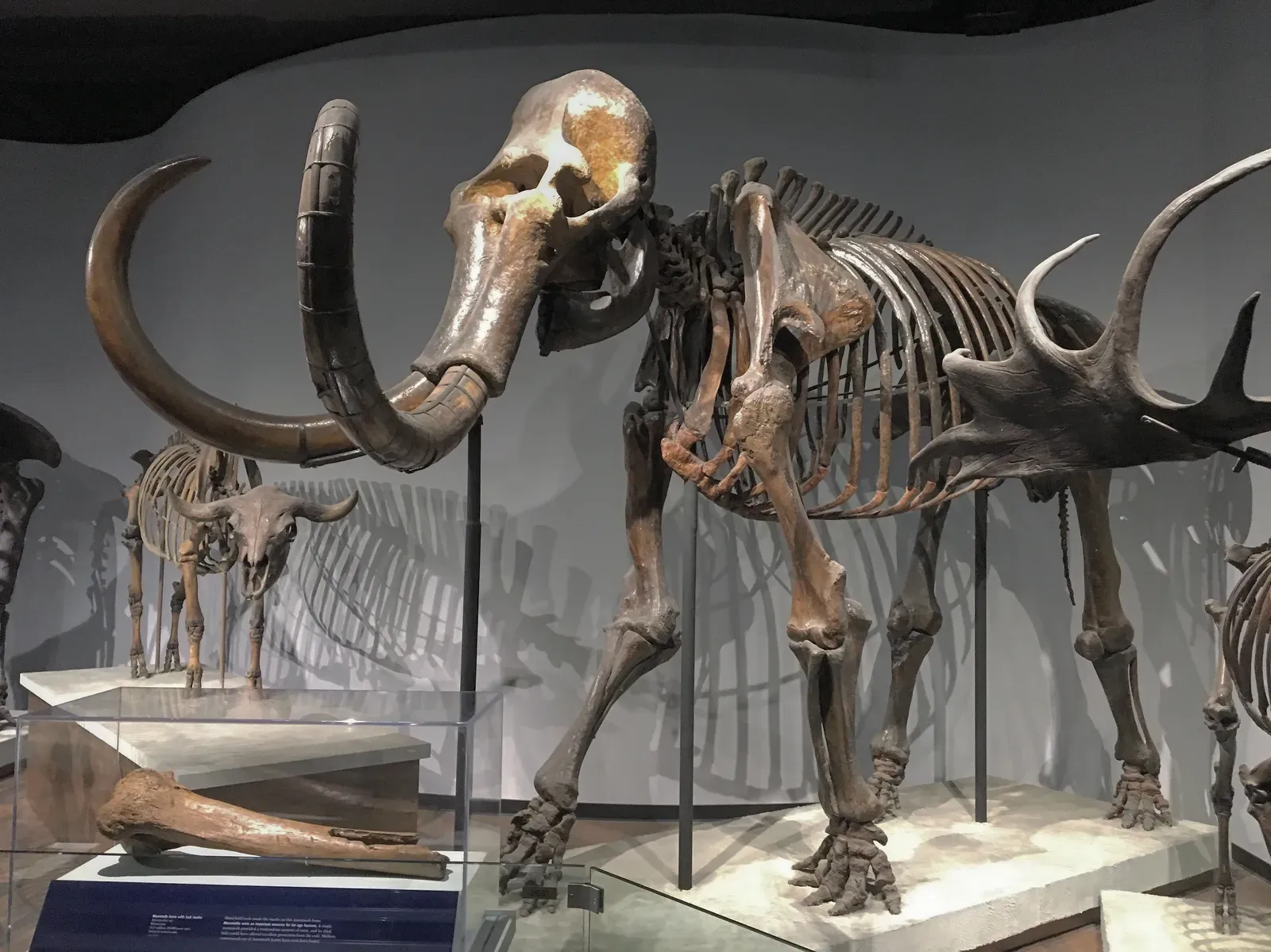
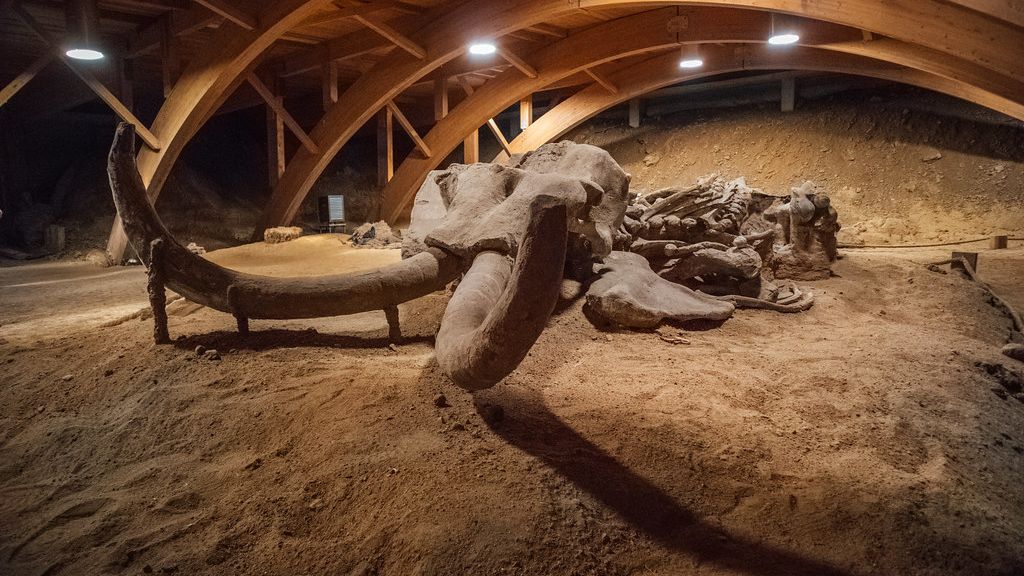
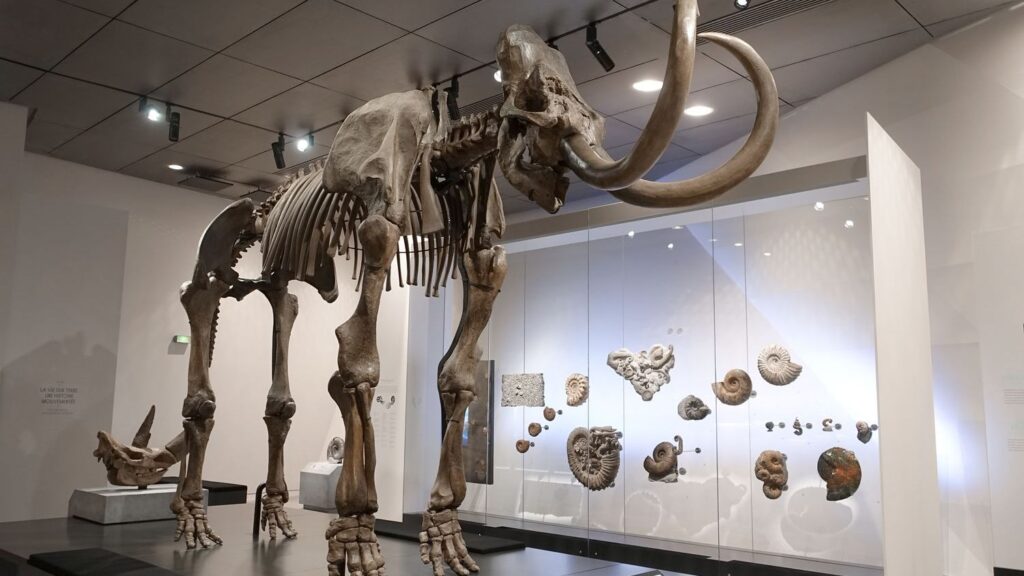
The woolly mammoth (Mammuthus primigenius) is one of the most famous extinct Ice Age megafauna. Standing 12 feet tall at the shoulders and weighing six to eight tons, the woolly mammoth grazed the northern steppes of Ice Age North America using its colossal, 15-foot curved tusks to dig under the snow for food and defend itself against predators. You could stack two average-sized cars on top of each other and still not reach its shoulders.
Woolly mammoths are among the best-known of all prehistoric mammals to the general public and, aided by the fact that some lived recently enough to be preserved in permafrost, they are also among the best-studied. But there is still more to learn about the details of their lives and habits. For instance, a study published recently looked at the detailed isotopic composition of a fossil mammoth that had died about 12,000 BC in Alaska, showing that she was female and had migrated over 1,000 km during her lifetime, having originally been born in the Yukon. The area where she died was popular with mammoths but also with humans – she may have died peacefully, but the presence of people where mammoths congregated may not be a coincidence.
Mammoths spread everywhere in Ice Age North America, ranging from Canada down to Honduras. Nearly all mammoths and mastodons were wiped out in the great megafauna extinction 10,000 years ago, but archaeologists have dug up remains showing that lone bands of mammoths still roamed arctic islands as recently as 4,500 years ago. Honestly, that means mammoths were still alive when the ancient Egyptians were building the pyramids. Let that sink in for a moment.
The American Mastodon: North America’s Older, Stockier Titan
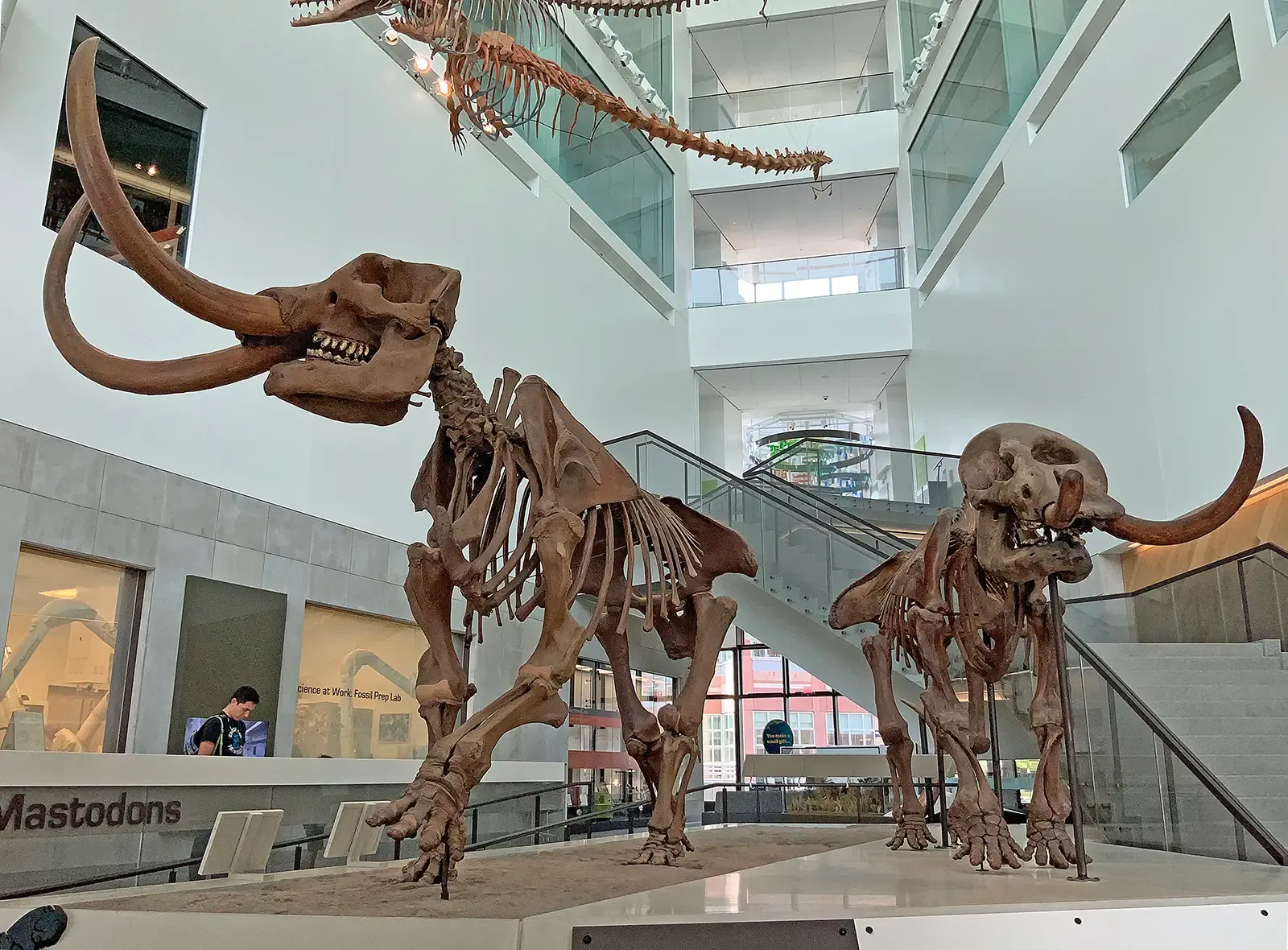
The American mastodon (Mammut americanum) is the most ancient of the North American “elephants.” Its ancestors crossed the Bering Strait from Asia roughly 15 million years ago and evolved into the American mastodon 3.5 million years ago. The mastodon was shorter and stockier than the later mammoths, and the shape of its teeth indicates that mastodons didn’t graze on grass like mammoths, but ripped off leaves and entire tree branches for food.
Here’s the thing about mastodons – people still mix them up with mammoths. They’re related, but not in the way most people assume. Mammoths are more closely related to modern elephants, separated by merely 5 million years of evolution, while mastodons are much more distantly related, separated by about 25 million years. Think of it like comparing a cousin to a second cousin twice removed. Mastodon behaviors were probably not much different from elephants and mammoths, with females and juveniles living in herds and adult males living largely solitary lives, plus entering phases of aggression similar to the musth exhibited by modern elephants.
New research has also reshaped your understanding of where mastodons lived. Some 125,000 years ago, during a warm interval known as the last interglaciation, megafaunal mammals were able to penetrate parts of northern North America that had previously been covered by massive ice sheets. The new findings also indicate that mastodons suffered local extinction in the north several tens of millennia before either human colonization or the onset of climate changes at the end of the ice age about 10,000 years ago.
The Columbian Mammoth: A Giant Without the Fur Coat
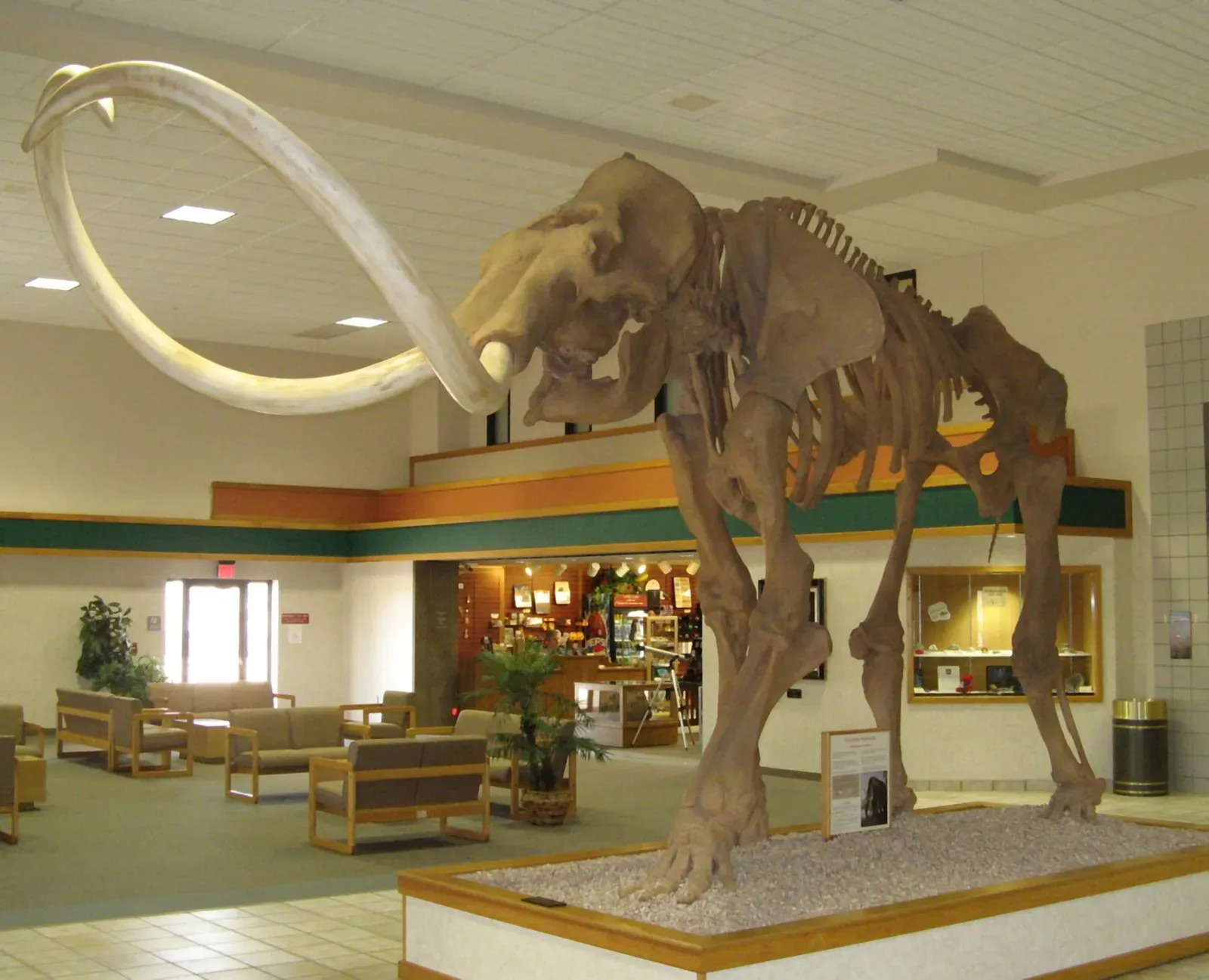
Uploaded by FunkMonk, CC BY-SA 2.0)
When most people imagine a mammoth, they picture a shaggy, cold-weather beast. The Columbian mammoth challenges that image entirely. The Columbian mammoths were bigger and much less hairy than their northern cousins. They were adapted to warmer climates and have been found as far south as Mexico. Think of them as the sunbelt version of the woolly mammoth – warmer, larger, and just as awe-inspiring.
Fully-grown male Columbian mammoths weighed nearly 10 tons and stood about 13 feet tall, while male American mastodons reached heights of 10 feet and weighed in around 6 tons. The scale of that is almost hard to visualize. Excavations of a famous tar pit deposit over one hundred years ago produced the vast majority of mammoth and mastodon remains, including more than 400 mammoth bones and about 200 mastodon bones. Based on the number of different types of bones preserved, scientists have estimated that one pit captured at least 27 mammoths alone.
For a few thousand years prior to their extinction, Columbian mammoths coexisted in North America with Paleoindians – the first humans to inhabit the Americas – who hunted them for food, used their bones for making tools, and possibly depicted them in ancient art. Columbian mammoth remains have been found in association with Clovis culture artifacts. The relationship between early humans and these giants remains one of paleontology’s most intensely debated stories.
The Giant Ground Sloth: The Beast That Baffled a President
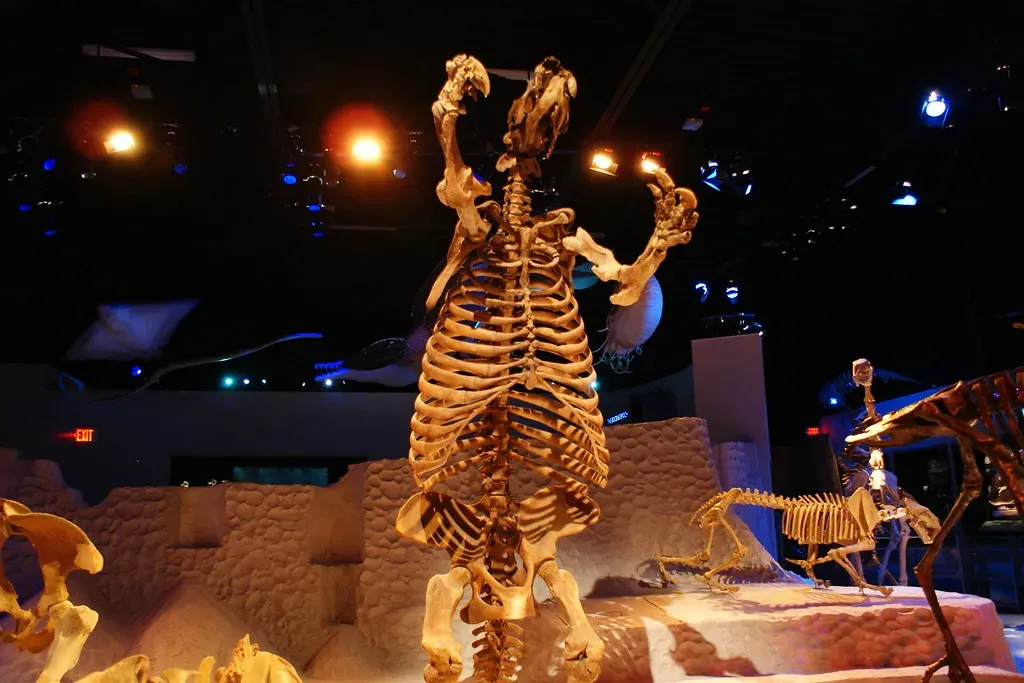
Few prehistoric stories are as wonderfully weird as the one connecting a Founding Father to a giant extinct sloth. Jefferson’s ground sloth is named for Thomas Jefferson, who recorded fossil bones from this animal that had been recovered from a cave in West Virginia in the late eighteenth century. Originally, Jefferson thought the remains belonged to a giant cat, based on the size of the large claws recovered from the cave, and the name he assigned to the animal, “Megalonyx,” means “giant claw.” He soon realized, however, that the animal was closely related to South American tree sloths.
Megalonyx evolved during the Pliocene Epoch and became extinct at the end of the Late Pleistocene, living from roughly 5 million to about 13,000 years ago. The type species, M. jeffersonii, the youngest and largest known species, measured about 3 meters in length and weighed up to nearly 1,300 kilograms. To put that in perspective, that’s roughly the weight of a small car. Megalonyx had the widest distribution of any North American ground sloth, having a range encompassing most of the contiguous United States, extending as far north as Alaska during warm interglacial periods.
Recent research has revealed something fascinating about their social lives. An adult sloth with two associated juveniles of different ages were found at a unique site in Iowa, suggesting that adults cared for multiple generations of offspring. That’s a level of behavioral complexity most people never associate with these lumbering prehistoric giants. Giant Ground Sloths went extinct in North America only 11,000 years ago and were encountered by early American peoples. There is even some evidence that Megalonyx jeffersonii was on the menu of early Americans.
The Giant Short-Faced Bear: North America’s Most Fearsome Predator
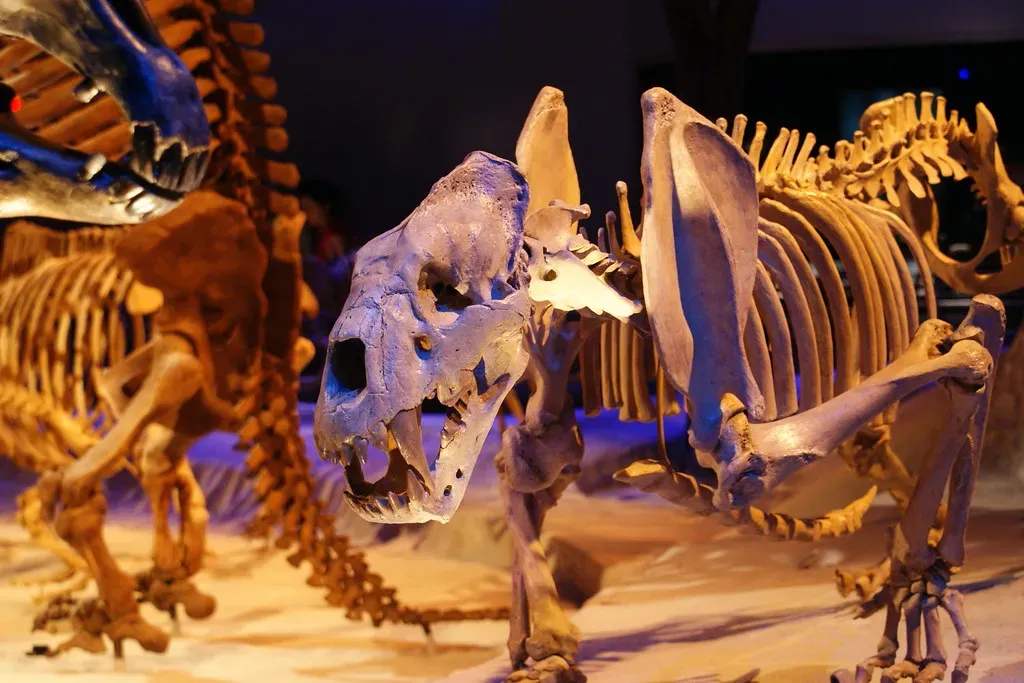
If you think modern grizzly bears are terrifying, you haven’t met their ancient relative. The giant short-faced bear (Arctodus simus) was the largest carnivorous mammal to ever roam North America. Standing on its hind legs, an adult giant short-faced bear boasted a vertical reach of more than 14 feet. That’s taller than most ceilings in a two-story house.
Also called the bulldog bear, the giant short-faced bear was undoubtedly the fastest running bear that ever lived. Rangier and longer-legged than any bear today, it was about five feet at the shoulders when walking and stood as tall as 12 feet on its hind legs. Unlike pigeon-toed modern bears, its toes pointed straight forward, enabling it to walk with a fast, purposeful gait. It probably could run over 40 miles per hour despite weighing over 1,500 pounds.
A 2025 genetic study published in the Zoological Journal of the Linnean Society brought a fresh twist to how scientists understand this animal. Researchers revealed a lack of geographic structure in the species, as well as low genetic diversity and relatively recent mitochondrial diversification. These observations may represent population bottlenecks during the Late Pleistocene or simply a naturally low effective population size. Strikingly, all large specimens that could be genetically sexed were male, while all small specimens were female, supporting the hypothesis that size variation in Arctodus simus can be explained by sexual dimorphism. In other words, what scientists once thought were different subspecies may simply have been males and females.
The Ancient Camel: America’s Forgotten Original
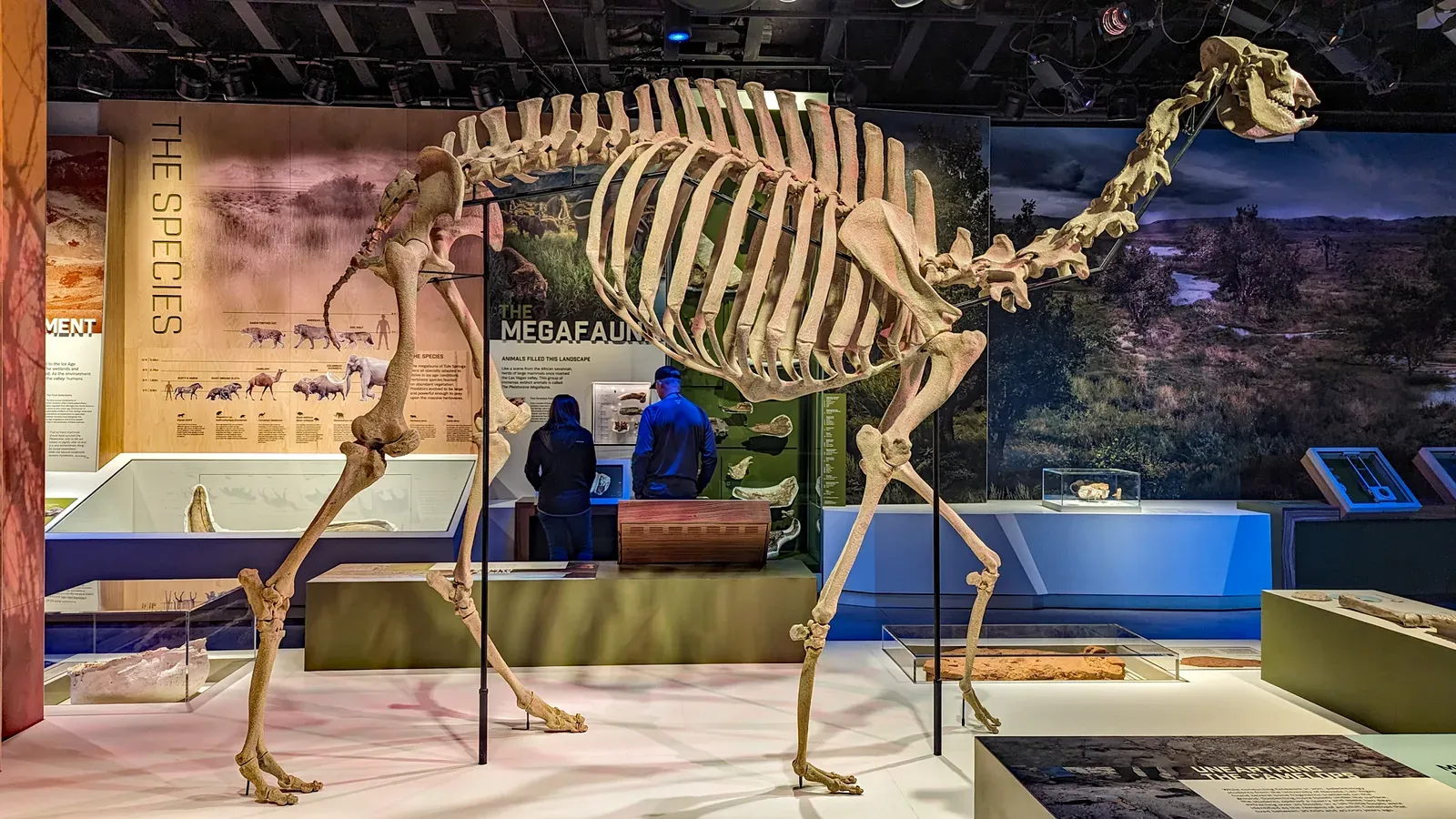
Here is a fact that genuinely surprises most people: camels are not from the Middle East or Africa. They are, in origin, a thoroughly North American animal. The very first camels on the planet evolved in North America around 44 million years ago. Those ancient camels migrated westward over the Bering land bridge around 7 million years ago, later becoming the one-humped dromedary and two-humped Bactrian camels of North Africa and Asia. Other ancient species of North American camels migrated south and became the llamas and alpacas of South America.
The Ice Age version still living in North America was something else entirely. One of the most widespread camel species in Ice Age North America was the camelops (Camelops hesternus), or “yesterday’s camel,” a two-toed, furry camel that stood seven feet tall at its shoulders. Seven feet tall at the shoulder – that’s taller than most professional basketball players, and that’s just the shoulder height. Seventy-two million years ago, in what is now northwestern Colorado, a mammal lived in a swampy area similar to modern-day Louisiana, significantly larger than its other furry contemporaries. The fossil record of North American megafauna continues to push back our timeline of just how rich and strange this continent once was.
The Great Extinction Debate: What Really Killed the Titans?
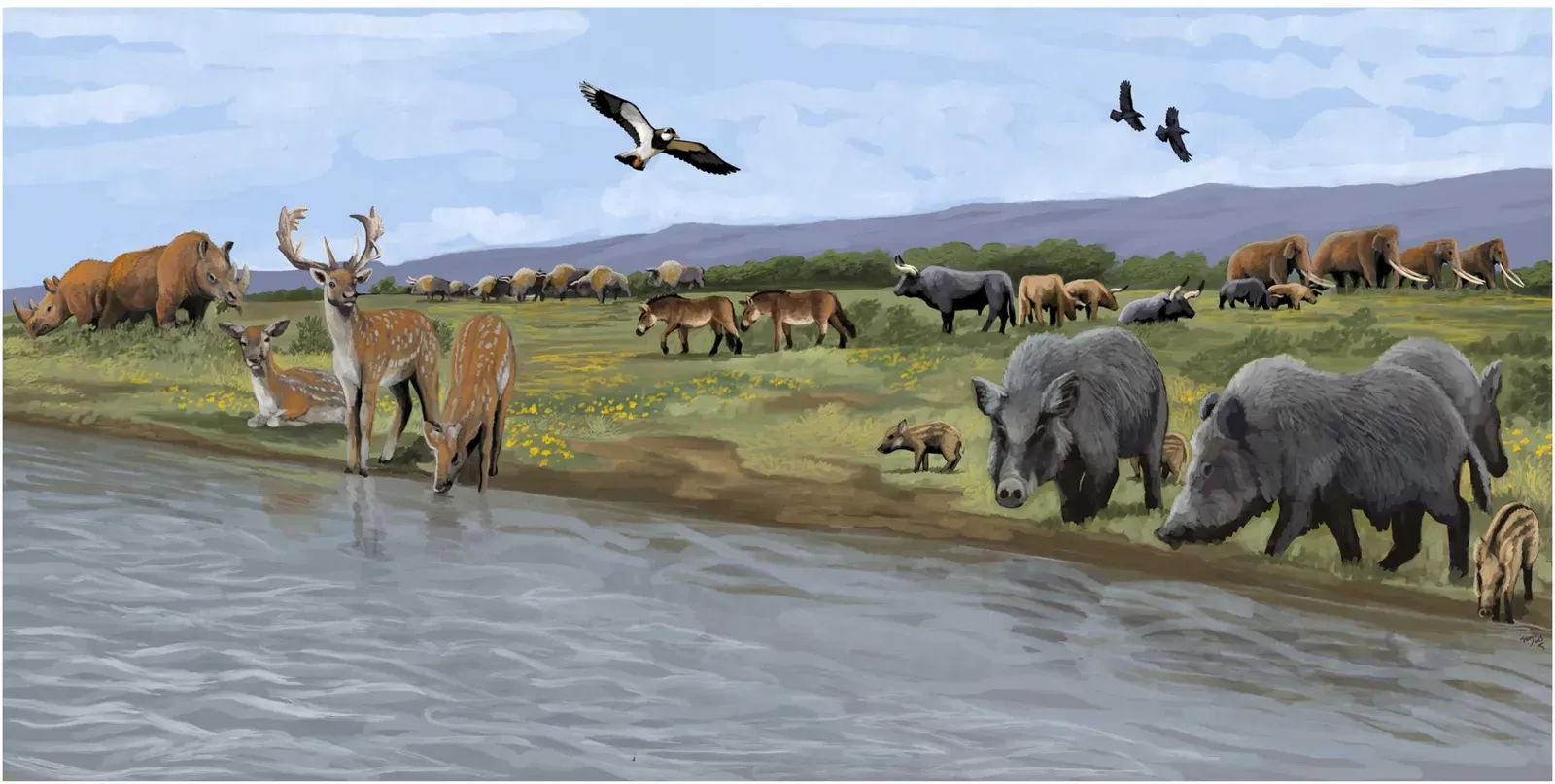
This is the question that scientists still argue about today, sometimes loudly. When the glaciers receded in the late Pleistocene, North America was home to dozens of thriving species of extra-large mammals known as megafauna. Around 10,000 years ago, nearly all of those giant creatures were wiped out. The “why” of that disappearance remains genuinely unsettled science.
The idea that humans wiped out North America’s giant mammals is known as the “overkill hypothesis.” First proposed by geoscientist Paul Martin more than 40 years ago, it was inspired in part by advances in radiocarbon dating, which seemed to indicate an overlap between the arrival of the first humans in North America and the demise of the great mammals. Proponents point out that climate change couldn’t be the main factor because North America’s mammalian behemoths had already survived several other ice ages without dying off. A 2023 paper found “no support for an extinction driven primarily or even secondarily by climate.”
Yet the climate camp isn’t backing down quietly. The mass extinctions may have also been triggered by a sudden climatic shift that rapidly cooled the planet 12,800 years ago, the so-called Younger Dryas, or animals could have been stricken with diseases carried by Paleo-humans and their dogs. Despite decades of study, this Ice Age mystery remains unsolved. Scientists simply don’t have sufficient evidence at this point to rule out one scenario or the other, or indeed other explanations that have been proposed, such as disease, an impact event from a comet, or a combination of factors. It’s hard to say for sure, but I think the honest answer is that it was probably all of the above, working together in a perfect, catastrophic storm.
Conclusion: Giants Lost, Lessons Gained
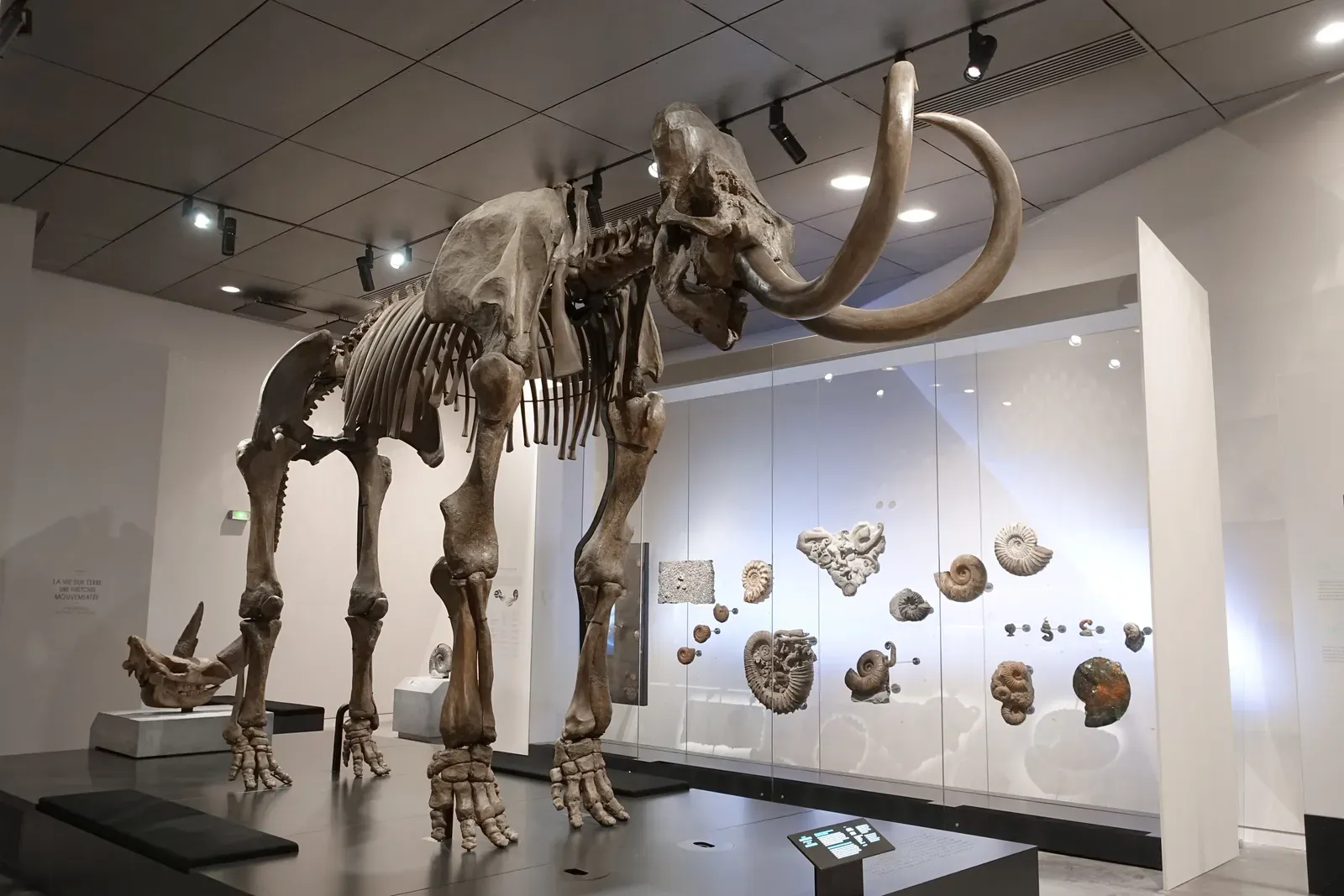
North America’s prehistoric megafauna were not mythological creatures. They were real, breathing animals that shaped the very ecosystems we inhabit today. Giant North American fruits of plants such as the Osage-orange, Kentucky coffeetree, pawpaw, and honey locust have been proposed to have evolved in tandem with now-extinct American megafauna such as mammoths and other large herbivores, since no extant endemic herbivores are able to ingest these fruits and disperse their seeds. Introduced cattle and horses have since taken over this ecological role. In other words, even the trees around you carry the ghost of a vanished giant.
What makes this field so electric right now is that technology is moving faster than ever. Recent years have seen the development of new biomolecular methods of archaeological exploration. Rather than heading out to excavate new sites, archaeologists are increasingly turning their attention to the scientific laboratory, using new techniques to probe existing material. Every old bone in a museum drawer is a potential discovery waiting for the right tool and the right moment.
The titans of North America’s past may be gone, but they are far from forgotten, and far from fully understood. As new genetic technologies, fresh excavations, and sharper scientific questions continue to reshape the story, one thing is certain: the most remarkable revelations may still be buried just beneath the surface. What would you do if you found a mammoth tooth in your backyard? Tell us in the comments.