For most of human history, dinosaurs lived only in our imagination as lumbering gray or greenish beasts, draped in dull leather skin. That image, endlessly recycled in textbooks and Hollywood blockbusters, had very little science behind it. It was, honestly, just a guess dressed up as a depiction. But over the past few decades, something remarkable has happened. Science has found a way to look back across millions of years and actually recover color from the deep past.
What researchers have uncovered is nothing short of jaw-dropping. These ancient creatures were not the bland, reptilian giants we once assumed. Some burned ginger-orange. Others shimmered with iridescent feathers that rivaled modern ravens. Some wore clever camouflage. The truth about dinosaur color has rewritten our picture of the Mesozoic world completely, and the story is still unfolding. Let’s dive in.
The Old Assumption: Why We Got Dinosaurs So Wrong
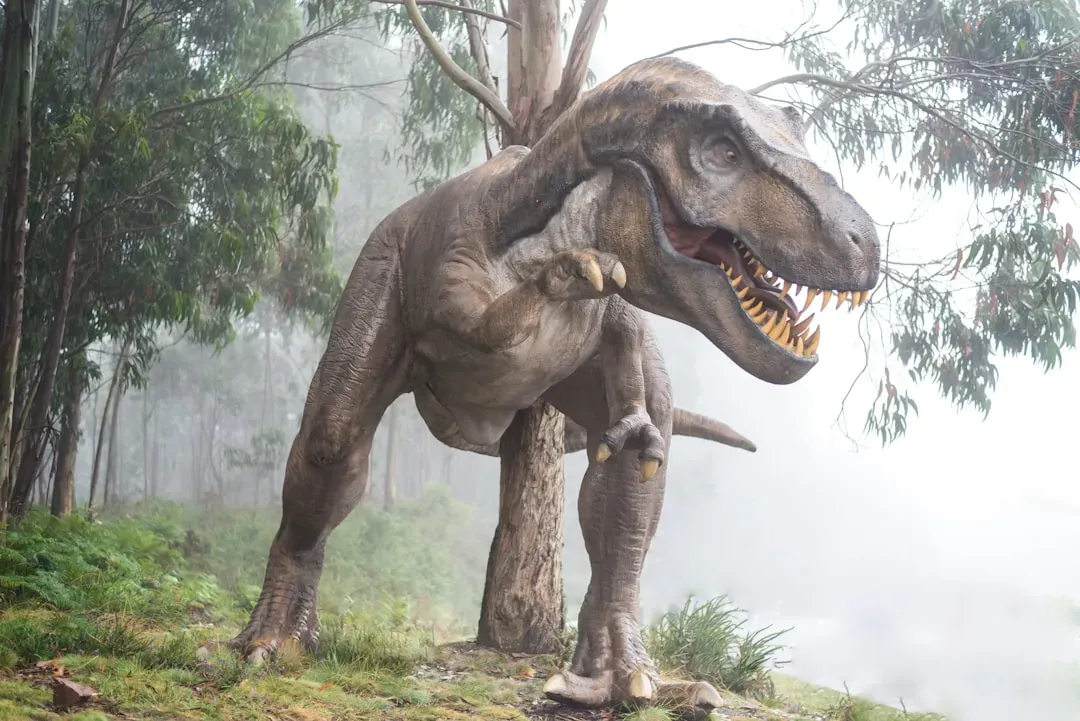
For over a century, the prevailing public image of dinosaurs was that of oversized lizards lumbering around swamps, with leathery skin usually depicted in earth tones, making them appear rather bland and unrelatable. Think about every museum diorama you ever visited as a kid, every Jurassic Park poster, every children’s encyclopedia with that familiar sea of muddy gray scales. It was all based on assumption, not evidence.
Dinosaur coloration is generally one of the unknowns in the field of paleontology, as skin pigmentation is nearly always lost during the fossilization process. It is a bit like trying to identify a painting by studying only the canvas frame. The structure survives, but the color disappears. That’s why scientists needed a radically different approach to crack this puzzle.
The Melanosome Revolution: Tiny Structures That Changed Everything
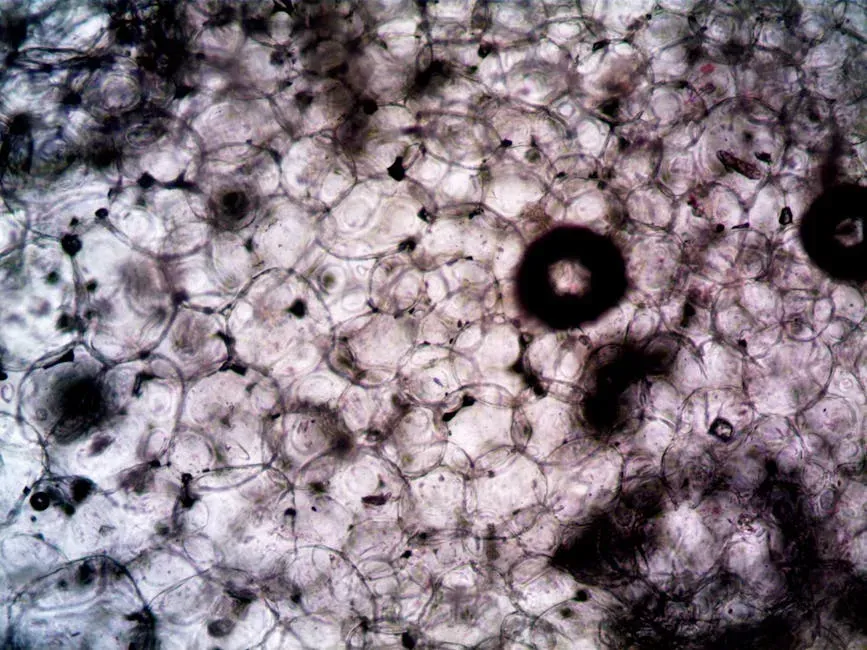
Much of the breakthrough stems from investigations into melanin, a pigment found in structures called melanosomes inside cells that gives external features including hair, feather, skin and eyes their color. These microscopic packets of pigment turned out to be far more durable than anyone expected. Melanin pigment can remain intact for 200 million years. That’s a staggering thought. A chemical signal from the age of dinosaurs, still readable today.
The team determined the feather colors by analyzing the shape and density of melanosomes within fossil feathers. Melanosomes are nanoscale, pigment-bearing organelles within feathers. Think of them as tiny color-coded capsules. In modern birds, different types of melanosomes are known to produce different colors in feathers. Eumelanosomes are rod-like and are associated with the colors black and gray. Phaeomelanosomes are round and produce colors ranging from reddish brown to yellow. A lack of melanosomes makes white. Once scientists understood that rule in living birds, they could apply the same logic backward through geological time.
Sinosauropteryx: The World’s First Known Ginger Dinosaur
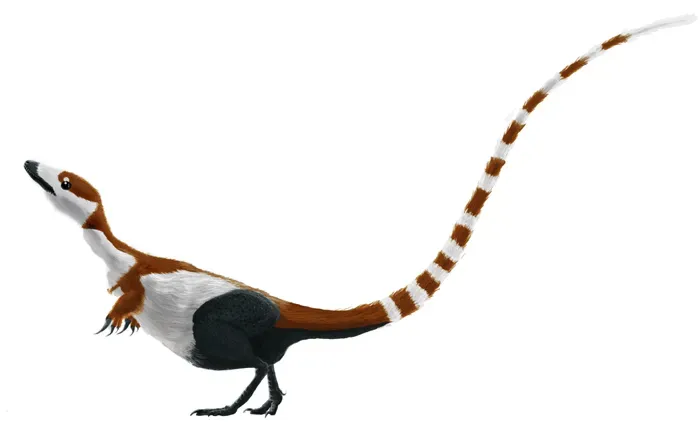
Sinosauropteryx was a long-tailed, turkey-sized meat-eater that lived 124 million years ago in northeastern China and sported a gingery-brown coat of downy feathers, with a dark back and lighter underbelly. It also had white tail stripes like a ring-tailed lemur and a bandit mask across its eyes, similar to a raccoon. Let that image sink in for a moment. A raccoon-faced, orange-furred dinosaur with striped tail decorations, stalking prey through ancient Chinese floodplains. That is not what the movies ever showed you.
In a 2010 paper published online in Nature, a team of scientists from China and the UK revealed that Sinosauropteryx probably had ginger-coloured feathers and a striped tail. They found that Sinosauropteryx had orange-coloured feathers on its back and limbs, a banded tail alternating between orange and white, and a bandit mask on its face. This distinctive bandit mask may well have been for camouflage, both from prey and from its own predators. The banding of the tail was likely used by the animal in display and communication between others of its kind. Color wasn’t just decoration, it was survival strategy and social language all at once.
Anchiornis: The Chicken-Sized Dinosaur With a Mohawk of Fire
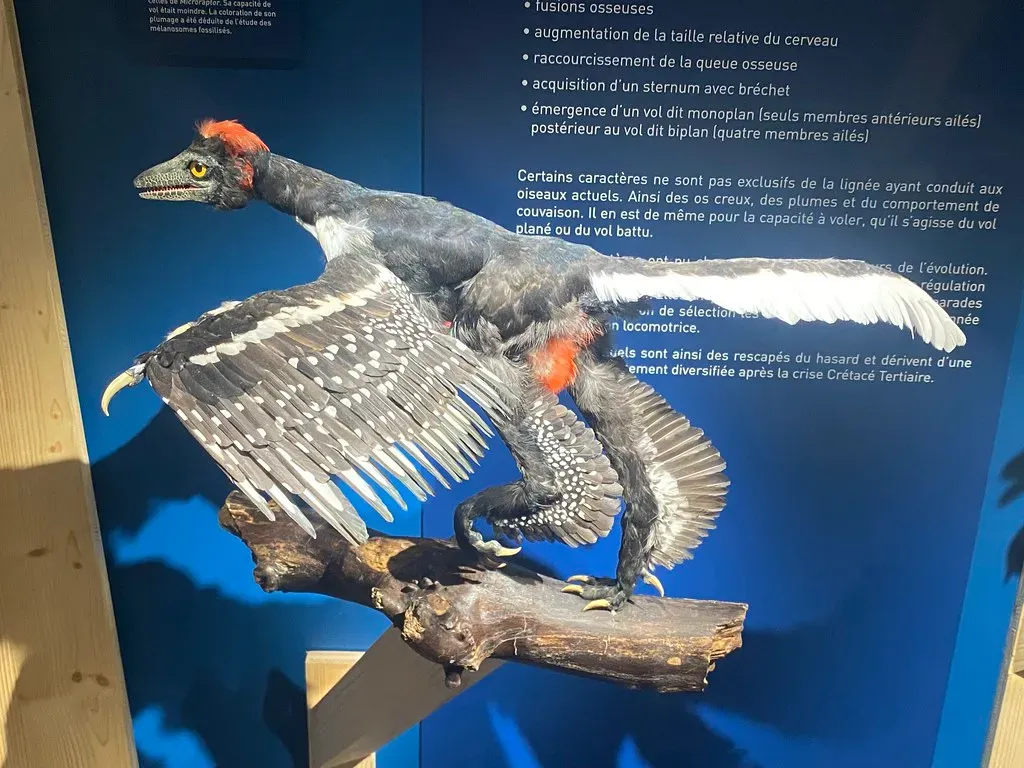
The 155-million-year-old Anchiornis huxleyi turns out to have looked something like a woodpecker the size of a chicken, with black-and-white spangled wings and a rusty red crown. It sounds almost cartoonish, but the science behind this reconstruction was rigorous. In 2010, a team of scientists examined numerous points among the feathers of an extremely well-preserved Anchiornis specimen to survey the distribution of melanosomes, the pigment cells that give feathers their color. By studying the types of melanosomes and comparing them with those of modern birds, the scientists were able to map the specific colors and patterning present on this Anchiornis when it was alive.
Researchers report that a complicated pattern of reddish brown, black, gray, and white feathers covered the fossilized dinosaur, leading to speculation that perhaps this coloration was used for attracting mates or some form of visual communication, as is often the case in living birds. The bold coloring of Anchiornis, for its part, probably helped to attract mates or served as some other kind of display, as occurs in flashily dressed modern birds. It’s hard not to draw a direct parallel with a modern peacock, strutting its visual credentials for exactly the same reasons.
Masters of Disguise: Dinosaurs and the Art of Camouflage
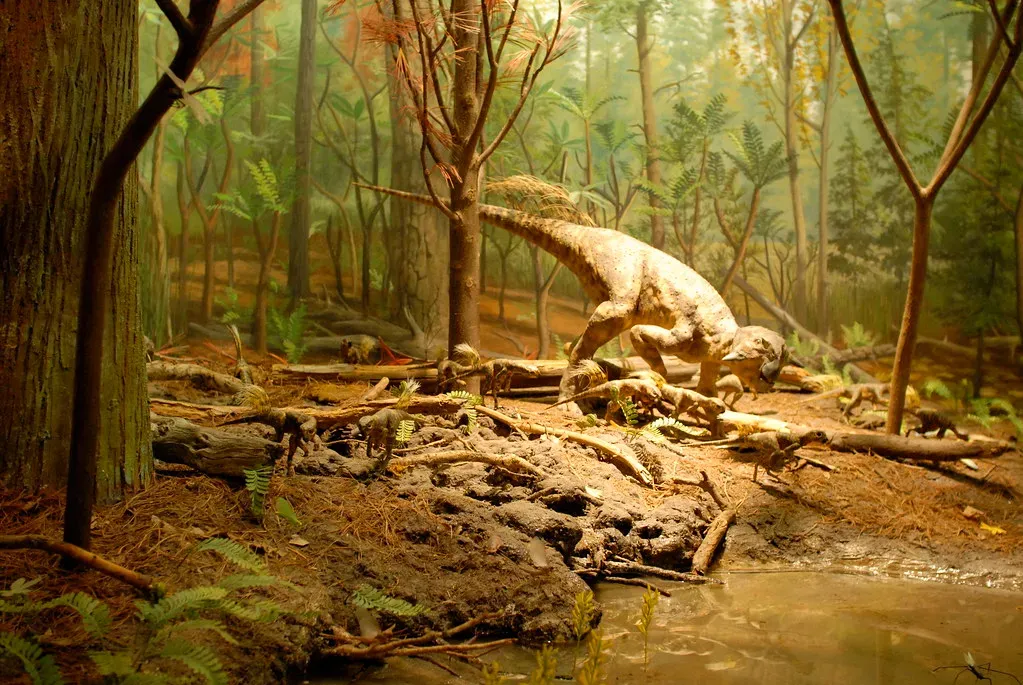
The dinosaur Psittacosaurus is the first dinosaur to show evidence of countershading, a type of camouflage in which animals have darker-colored backs and lighter bellies. Researchers found that Psittacosaurus, an early relative of the famed horned dinosaur Triceratops, was light on its underside and darker on top. This color pattern, known as countershading, is a common form of camouflage in modern animals. According to the scientists, Psittacosaurus most likely lived in an environment with diffuse light, such as in a forest.
The distribution of the pigmentation patterns suggests color patterns congruent with camouflage through background matching and countershading, in addition to some putative disruptive coloration on the legs, coupled with strong facial pigmentation suggestive of a signaling function. This dual purpose is fascinating. The same animal was hiding from predators while simultaneously communicating visually with its own kind. This demonstrates that fossil color patterns can provide not only a better picture of what extinct animals looked like, but they can also give new clues about extinct ecologies and habitats.
Iridescent Plumage and Display: Dinosaurs That Shimmered
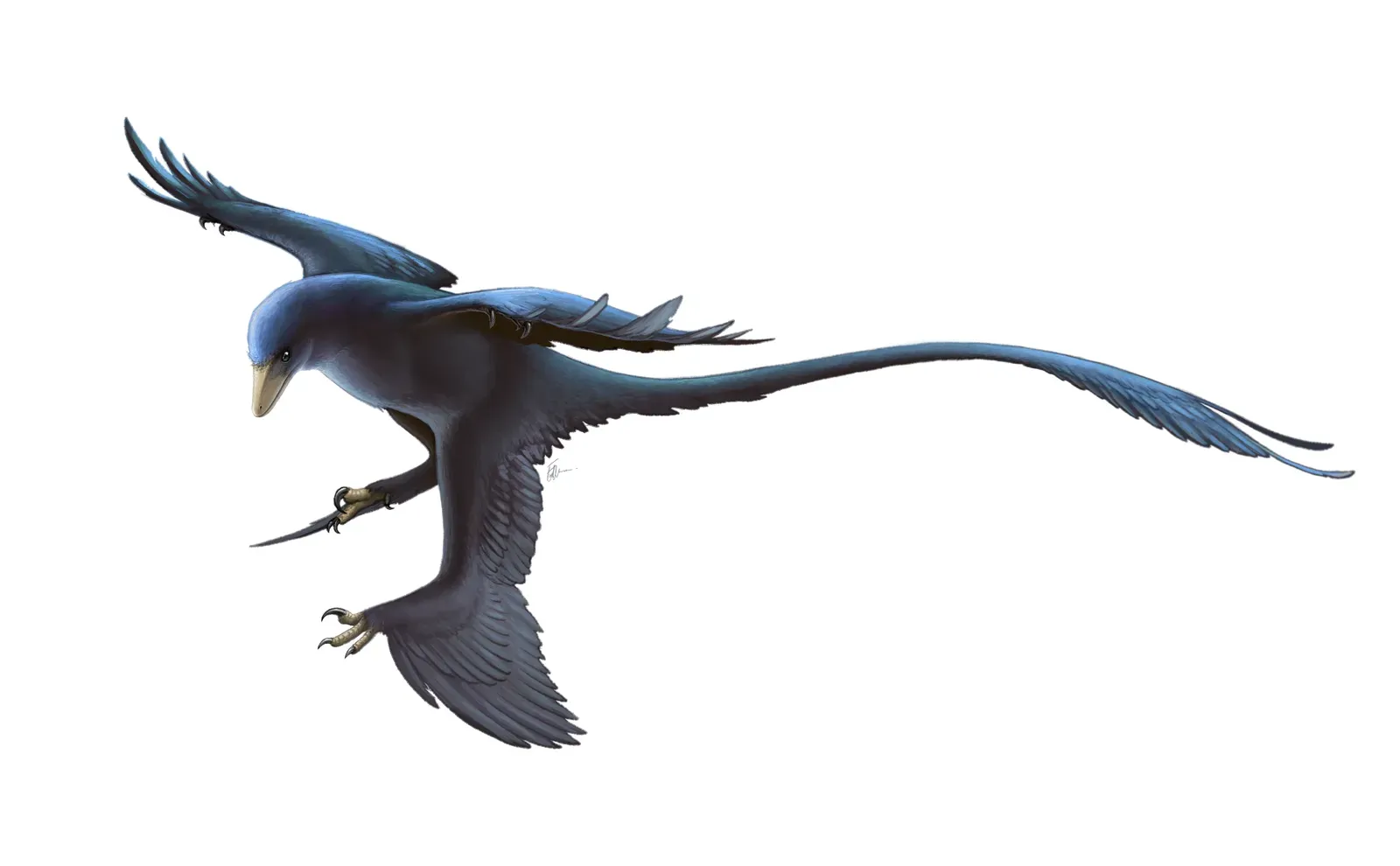
In 2012, the stacked arrangement of melanosomes found in the feathers of four-winged dinosaur Microraptor was shown to create an iridescent sheen similar to that of a modern raven. Imagine a crow-black, four-winged creature catching sunlight and flashing blue-green iridescence as it moved through the Cretaceous forest. Experts had presumed that Microraptor was nocturnal, based on the large size of its eye sockets. But the discovery that it possessed iridescent plumage suggests otherwise, because in modern birds such coloration is typically found in species that are active in the daytime.
Some feathered dinosaurs wore dark, iridescent sheens like ravens, others had red-and-white striped tails, and some wore rainbow shades, not all that different from some birds. Other feathers found on the head, chest, and the base of the tail preserve flattened sheets of platelet-like melanosomes very similar in shape to those which create brightly colored iridescent hues in the feathers of modern hummingbirds. The Mesozoic world, it turns out, was bursting with visual spectacle. Nature was doing bold color long before humans ever learned to paint.
Beyond Feathers: Color in Scales and Sauropod Skin
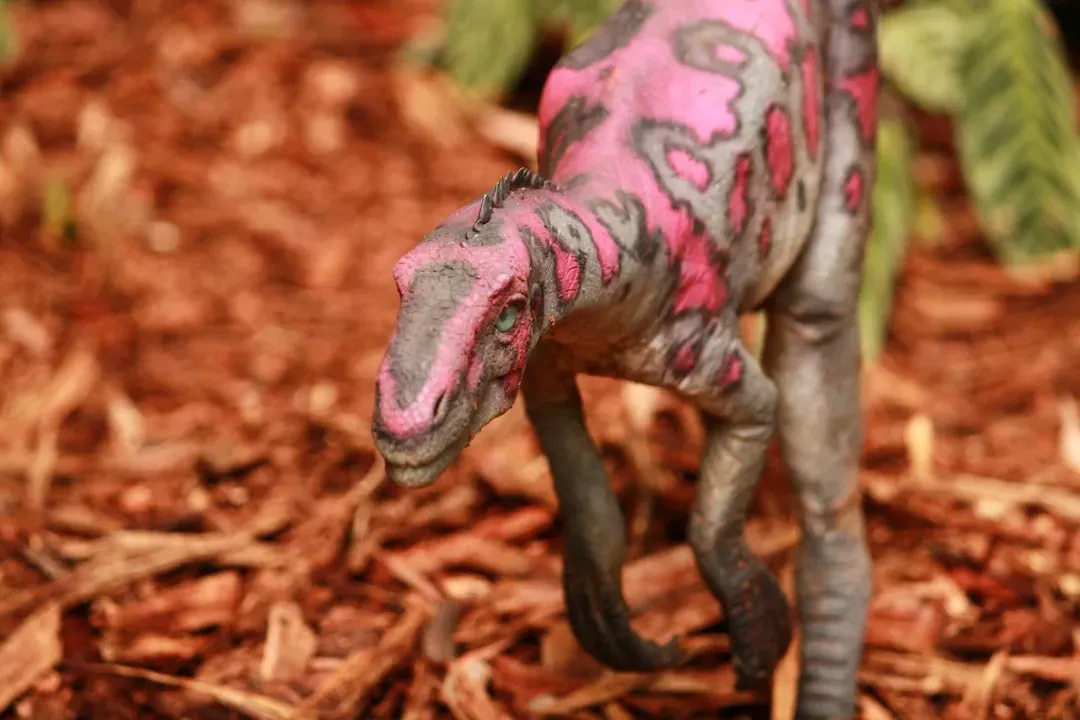
Microscopic clues found in fossil Diplodocus skin indicate these dinosaurs were colorful. From the Jurassic rocks of Montana’s Mother’s Day Quarry, paleontologists uncovered fossils of sauropod skin so delicately preserved that they include impressions of pigment-carrying structures called melanosomes. This was a landmark discovery, because for years scientists could study color in feathered dinosaurs but had almost nothing to say about the enormous plant-eaters that most people picture when they imagine a dinosaur. While researchers were reluctant to fully reconstruct the color of the juvenile Diplodocus the skin came from, they detected that the dinosaur would have had conspicuous patterns across its scales. The finding suggests sauropod dinosaurs were not uniformly gray or brown, but had complex color patterns like other dinosaurs, birds and reptiles.
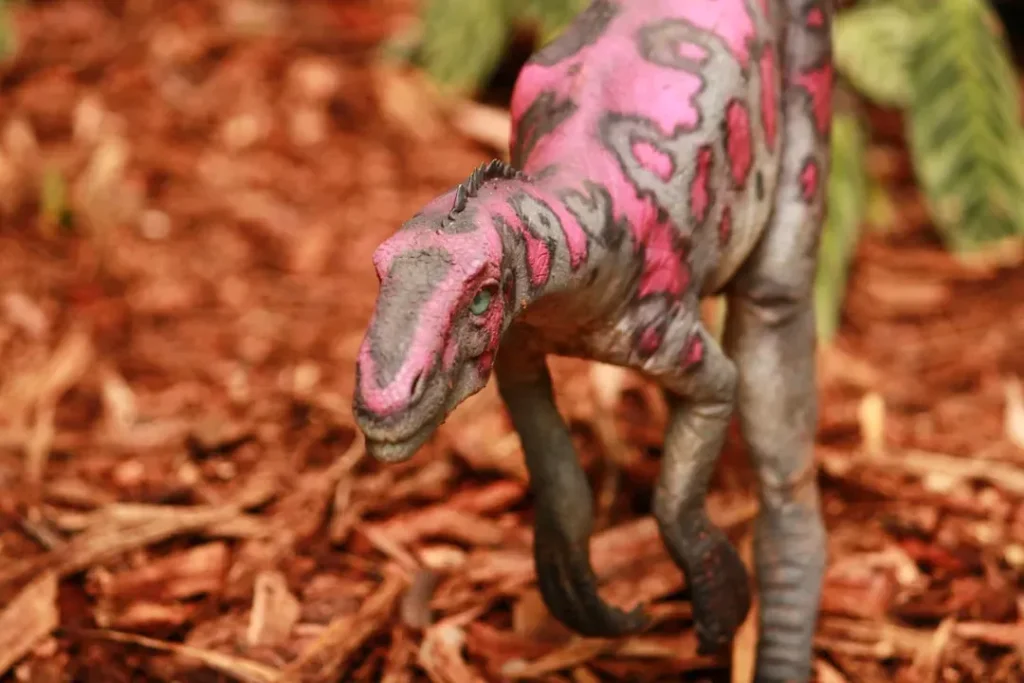
Both melanosome shapes appeared together in small clusters rather than spread evenly across the skin. This pattern suggests a speckled or spotted look instead of one solid color. It’s a bit like discovering that elephants were secretly covered in leopard spots. The horned dinosaur Psittacosaurus and the armored dinosaur Borealopelta, for example, were darker above and lighter below to create a kind of camouflage called countershading. This not only tells us something about the colors of these dinosaurs, but what their environments were like and how they lived. Both of these herbivorous dinosaurs would have had to look out for predators, so disruptive coloration would have helped them avoid detection by hungry predators.
Conclusion: The Mesozoic in Technicolor
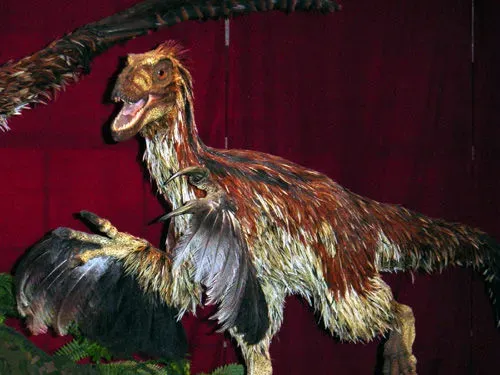
The story of dinosaur color is, at its heart, a story about human curiosity refusing to accept limits. For generations, we were told we would never know what color dinosaurs were. Then science found a way anyway, one tiny fossilized melanosome at a time. Pigments have been found in fossil dinosaurs for the first time, taking “dinosaur color out of the realm of art and into the realm of science.”
What started as a novelty of deciphering dinosaur colors has turned into a very serious field which is studying the origins of key pigment systems, how the evolution of colorful structures may have helped drive major evolutionary transitions like the origin of flight, and how color is related to ecology and sexual selection. The deeper you look into fossil color science, the more you realize it tells you not just what dinosaurs looked like, but how they behaved, where they lived, and how they interacted with their world.
The gray, scaly dinosaurs of old textbooks are gone forever. In their place stands something more vibrant, more alive, and frankly more extraordinary. A ginger dinosaur with a raccoon mask. A glittering four-winged creature like a living raven. A spotted giant the size of a school bus. The Mesozoic world was painted in brilliant color, and we are only just now learning to see it. Does that change how you picture your favorite dinosaur? It probably should.