Broxbourne, Hertfordshire – A nine-year-old Asiatic lion named Sahee captured attention at Hertfordshire Zoo when he underwent a specialized medical procedure last December. The effort focused on assessing his reproductive health as part of broader conservation initiatives. Zoo officials emphasized the examination’s role in supporting an international breeding program for the vulnerable species.
Sahee’s High-Stakes Health Examination
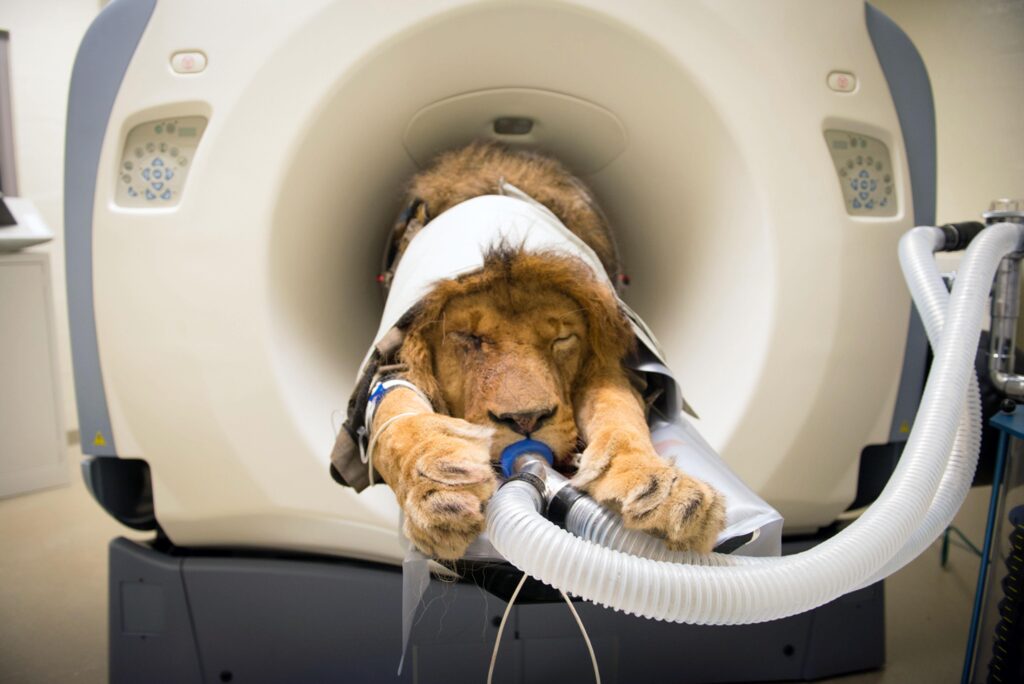
Sahee’s High-Stakes Health Examination (Image Credits: Reddit)
Veterinarians immobilized Sahee with a dart gun before placing him under general anesthesia for the hour-long check. The team performed electro-ejaculation to evaluate his fertility, alongside a full-body X-ray and a review of his overall condition. They also investigated a persistent eye concern that had arisen previously.
At 175 kilograms, Sahee returned to his enclosure once the assessments concluded, with the veterinary staff reversing the anesthesia safely. The procedure demanded precise coordination to minimize risks. Hertfordshire Zoo’s staff highlighted the operation’s success in providing essential data without complications.
The Pair Behind the Conservation Push
Sahee shares his habitat with Sonika, his female counterpart, as part of the European Endangered Species Programme. The duo arrived at the zoo in April 2025, forming a key pairing aimed at producing offspring. Despite their close bond, the lions had not yet conceived, prompting the need for this intervention.
Breeding success remains crucial for Asiatic lions, whose wild population hovers around 700 individuals confined to India’s Gir Forest. Captive programs like this one help bolster genetic diversity and prevent further decline. Zoo leaders view Sahee and Sonika as pivotal to these long-term goals.
Threats Facing Asiatic Lions
Asiatic lions face multiple challenges in their natural habitat. Habitat loss from human expansion limits their range severely. Disease outbreaks and conflicts with local communities add to the pressures on the population.
In captivity, zoos contribute through structured breeding and health monitoring. Such procedures ensure animals like Sahee remain viable for reproduction. The species’ classification as vulnerable underscores the urgency of these efforts.
- Limited to Gir National Park in India
- Population estimated at 700 in the wild
- Genetic bottlenecks from small numbers
- Potential for international exchanges to enhance diversity
- Success stories from past captive births
Insights from Zoo Leadership
Hertfordshire Zoo’s managing director, Tyler Whitnall, stressed the procedure’s importance. “Sahee’s wellbeing is our absolute top priority, which is why we wanted to give him a full health check,” Whitnall stated. “However, the fertility scan was arguably the most critical part of this procedure. Sahee and Sonika are an incredibly important pairing within the international breeding programme, which is vital to safeguarding the protection of the species.”
Whitnall also noted the team’s expertise. “This procedure was conducted under the expert eye of our dedicated team to ensure Sahee’s safety and comfort throughout, and we eagerly await the results of the fertility scan.” Results from the test could guide future breeding decisions. The zoo continues to monitor the pair closely.
Key Takeaways
- The procedure combined fertility assessment with comprehensive health screening.
- Sahee and Sonika represent a strategic match in global conservation.
- Around 700 Asiatic lions survive in the wild, making every effort count.
This procedure exemplifies how zoos advance wildlife preservation amid declining numbers. Sahee’s examination not only informs breeding strategies but also raises awareness about Asiatic lions’ plight. What steps can we take to support such vital conservation work? Share your thoughts in the comments.