
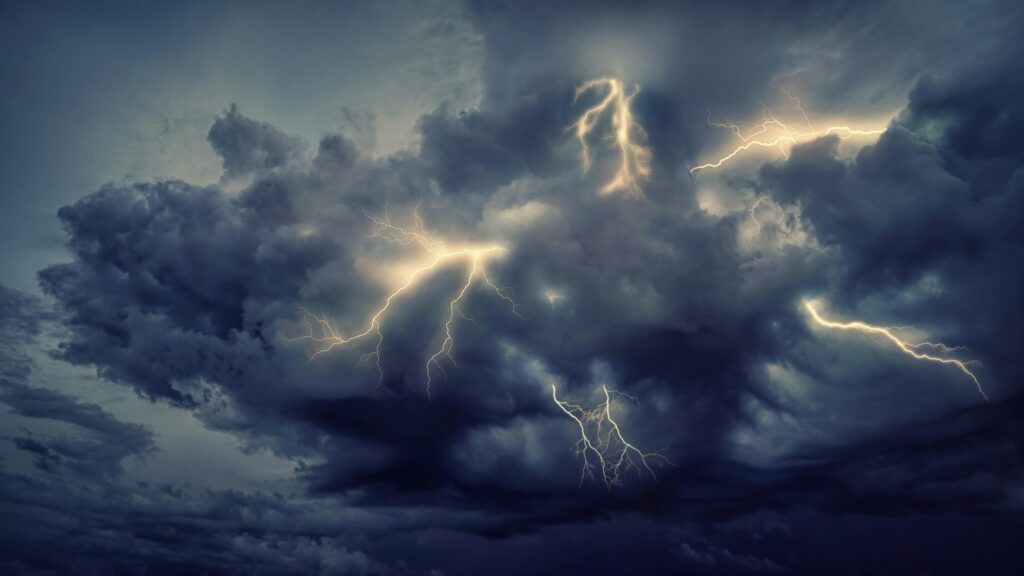
Imagine standing on a swampy shoreline, no birds, no buzzing insects, no rustling trees like we know them today. The sky darkens, lightning flashes over towering clubmoss forests, and thunder rolls across a world that feels familiar and alien at the same time. The storm is the same raw physics we know now, but the soundtrack is filtered through a planet that had never seen a blade of grass or a single flower.
When I first really thought about this, it felt almost unsettling. We act like thunderstorms have always sounded like a summer evening in the suburbs, but three hundred million years ago the world that thunder rolled through was quieter, wetter, and stranger. To get anywhere close to the sound of that storm, we have to strip away birdsong, flowering shrubs, and mammal calls, and then rebuild the soundscape from the ground up using what we know from geology, paleobotany, and atmospheric science.
A world with no grass, no flowers, and almost no big animals
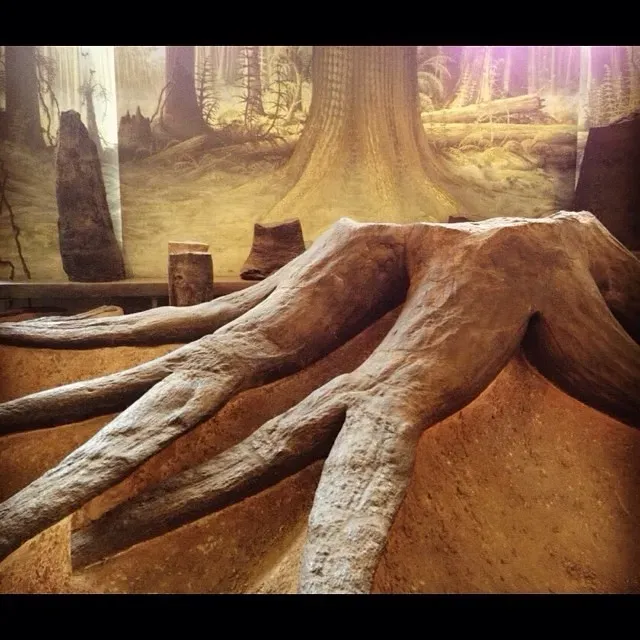
Three hundred million years ago drops you into the late Carboniferous, long before dinosaurs, long before mammals with fur, and even before the first flowering plants evolved. The land was dominated by dense coal swamps: forests of giant clubmosses, horsetails, and seed ferns, some as tall as modern trees but built with different tissues and leaves. Under your feet, instead of a grassy lawn, you’d be sinking into spongy mats of moss-like plants, decaying trunks, and mud, more like walking through a soaked peat bog than a meadow.
The largest land animals around you would have been early amphibians and small reptile-like creatures that mostly weighed less than a house cat. There were no herds of heavy herbivores stomping the ground, no large predators roaring in the distance, and absolutely no birds wheeling overhead. That means the background noise between claps of thunder would have been dramatically different: fewer heavy footsteps, fewer loud calls, and far more of the subtle sounds of water, wind, and insects. Thunder would have echoed over a world that, by our standards, was almost eerily underpopulated and underpowered.
The air itself: thicker oxygen, different humidity, different boom
The late Carboniferous atmosphere appears to have held more oxygen than today, possibly close to half again as much as modern levels. That richer air may have felt denser in your lungs if you could somehow breathe it, and it would also have influenced how sound traveled through it. Higher oxygen goes hand in hand with different greenhouse gas balances and global humidity patterns, and the prevailing view is that many of these swampy regions were warm, wet, and prone to frequent storms.
Sound moves through air according to its temperature, density, and moisture, and in a hot, humid environment thunder tends to sound deeper and carry farther. The low-frequency rumbles would have rolled long distances through the thick, moisture-laden air, spreading a sustained growl over the landscape. High, sharp cracks from nearby lightning would still snap in your ears, but the overall impression would likely have been a smoother, more enveloping roar rather than the crisp, broken echoes you often hear in a cooler, drier modern sky.
Lightning over coal swamps: where the storm was born
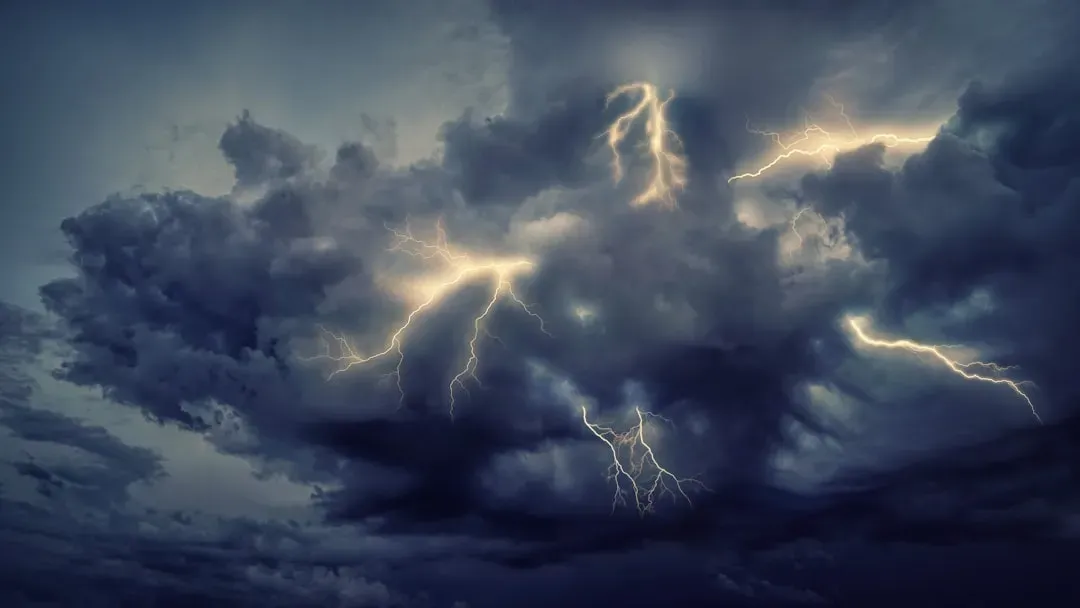
Thunder is simply the sound of lightning superheating air, so to understand the noise you have to think about the storms themselves. Over vast Carboniferous coal swamps, warm surface temperatures, abundant evaporation, and frequent convection would have driven towering storm clouds, not wildly different in shape from modern cumulonimbus. The difference is the setting: instead of floating over patchwork farmland or pine forests, these clouds billowed above endless wetlands and dense stands of clubmoss trees rising from black water and mud.
When lightning struck, it was hitting a world loaded with organic matter: dead trunks, peat layers, and waterlogged vegetation. Some strikes would have ignited fires in drier patches, but in many of the wettest areas, sparks would have died out in the soaked substrate. Each bolt still produced the same rapid expansion of air and explosive pressure wave, but the surfaces that reflected and absorbed that blast – soft mud, water-covered forest floors, spongy plant mats – would have shaped the thunder’s character, dulling some of its sharpest edges while letting the deeper notes ring out.
No leaves like ours, no grass blades: how plants shaped the sound
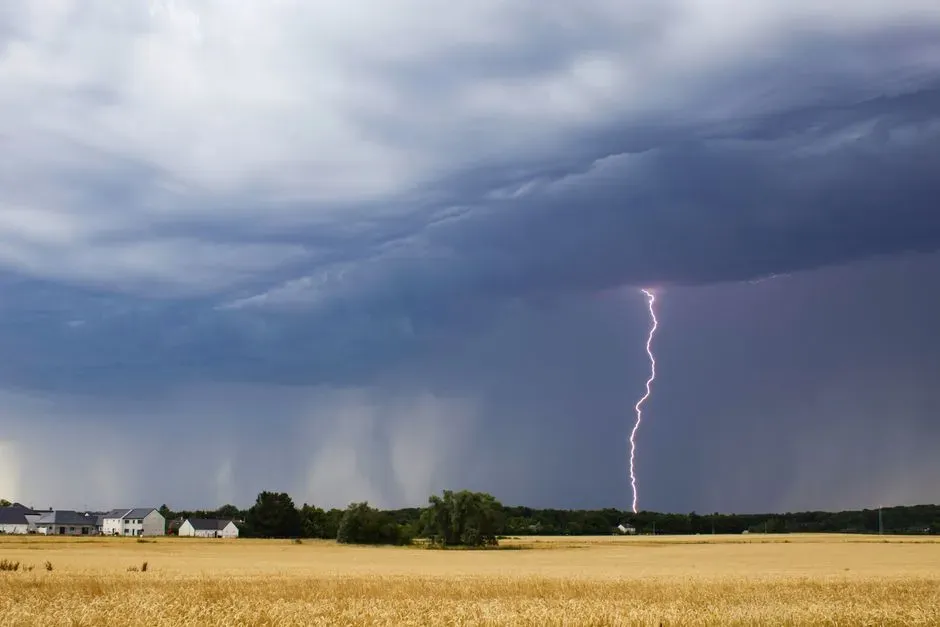
One of the strangest aspects to imagine is the complete absence of grass blades hissing in the wind or flowering shrubs rattling their leaves during a storm. Instead, you had forests dominated by lycopsids and giant horsetails, with narrow, scale-like leaves and stiff, jointed stems, plus broad fronds from seed ferns. When rain slashed down, it would have hit these surfaces in a very different way, producing a sound more like water on thick reeds and hard scales than on flexible, flat leaves.
Picture sheets of rain drumming on rough, ridged trunks and ladder-like branches, then splashing into shallow pools and channels between massive roots. Without grassy fields to generate that soft, uniform whisper, the storm’s background noise would have been patchier and more percussive, full of isolated splats, plops, and trickling streams. The vegetation would still rustle and sway, but the tonal quality of that movement would lean more toward creaks and clacks of fibrous, primitive plant tissue instead of the familiar shushing of modern broadleaf forests or prairies.
Ground-level acoustics: mud, water, and echoing tree-pillars
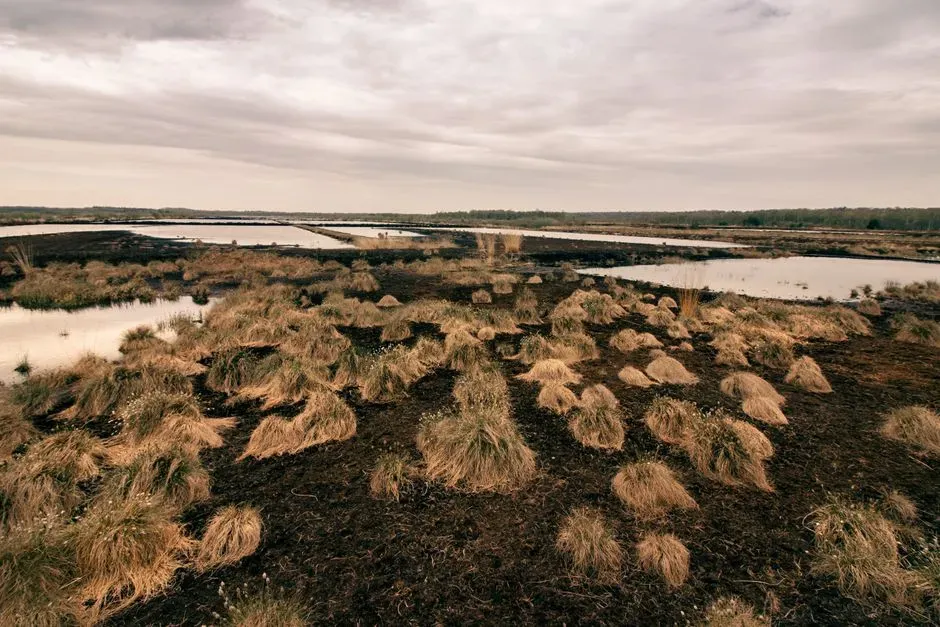
Sound does not just move through air; it bounces off, sinks into, and resonates with whatever it hits. On Carboniferous land, much of the ground was saturated: mud, shallow water, peat, and decaying plant mats. Soft, waterlogged surfaces absorb high-frequency sounds really well. That means the sharpest elements of thunder – those crackling, high-pitched edges – would have been partly swallowed up as the pressure wave hit the ground. The low, bass-heavy rumble, though, would have been reinforced and carried, giving distant thunder a deep, continuous feel.
At the same time, the vertical trunks of clubmoss trees and other tall plants could act almost like a forest of rough pillars, scattering and reflecting some of the sound sideways. In dense stands, the thunderclap from a nearby lightning strike might have pinged through the trunks in a chaotic pattern, creating overlapping echoes that blurred into a complex roar. If you were standing at the edge of an open water body – like a lagoon next to the swamp – you might have heard clearer echoes off the water surface and any exposed rocky outcrops, adding layers and depth to each rolling peal.
Animal sounds in the storm: tiny bodies, big silence
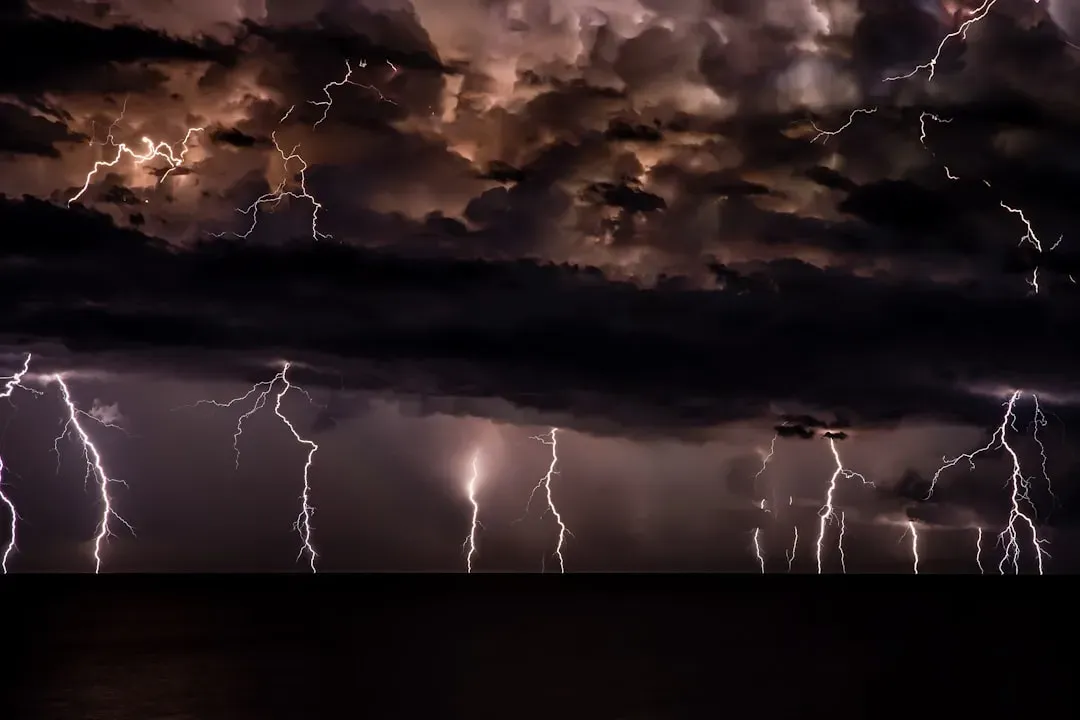
Modern thunderstorms are layered over the cries of birds, the distant lowing of cattle, the barking of dogs, and sometimes even human traffic and machinery. Strip all of that away. Three hundred million years ago the loudest land animals were mostly small amphibians and early reptiles, many of them fragile and low to the ground. Their calls, if they called audibly at all like some frogs do today, would have been modest in volume and limited in range. During a heavy storm, most of them would have been hiding in burrows, hollow logs, or water, not standing out in the open making a racket.
That means thunder had less competition. When the sky split with a nearby strike, the sound would have dominated the entire acoustic scene for long moments, instead of momentarily interrupting traffic noise or farm animals. You might have picked up the frantic splashing of something diving into the water or the rustle of a creature scuttling for cover, but these sounds would be faint and localized. In the gaps between thunderclaps there would be a striking quiet compared to today’s busy landscapes – just the hiss of rain, drip of canopy runoff, and perhaps the high, delicate wings of giant insects cutting through the humid air.
Insects and wings: the eerie contribution of giant arthropods

The one group of animals that very likely did add a distinctive layer to the soundscape was the arthropods. With elevated oxygen, some insects and their relatives reached impressive sizes: dragonfly-like predators with wingspans wider than your outstretched arms and chunky millipede relatives crawling like moving logs. Large wings beating through thick, humid air generate a deeper, more noticeable thrum than the almost inaudible flutter of many modern insects, especially when those wings are membrane-like and broad.
Picture the buildup to a storm: pressure dropping, wind picking up, and giant, dragonfly-like forms slipping through the gloom above the swamp canopy. Their wingbeats might have been audible as a low, rapid whoosh or buzzing thrum as they retreated to safer perches ahead of the downpour. During the storm itself, most flight would pause, but the echoes of their earlier movements and the knowledge that the air was shared with such massive, buzzing predators gives the entire imagined soundscape a slightly unnerving edge. Thunder in that world did not rumble over birds and mammals; it rolled over a stage dominated by armor-plated, many-legged life.
The human ear in an inhuman world: how we would hear it
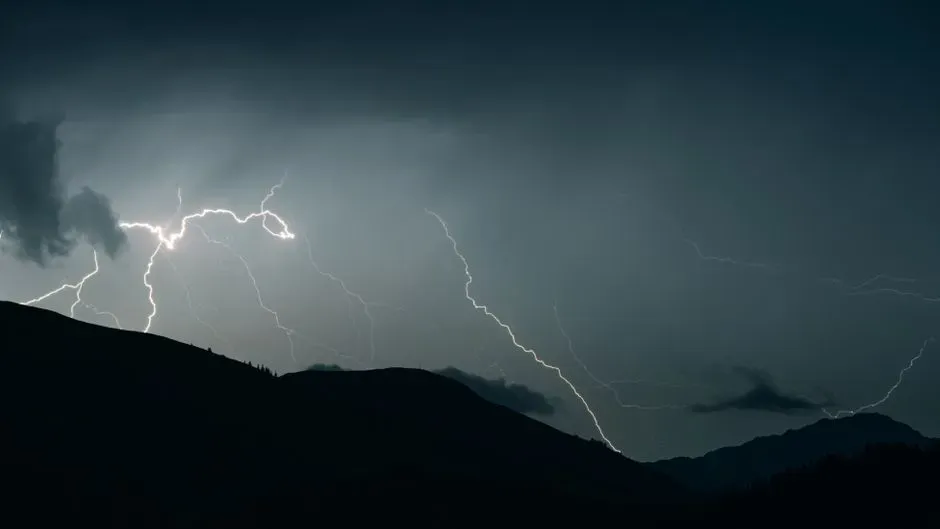
If you could stand in that Carboniferous storm with your modern ears, the first surprise might be the way thunder feels rather than sounds. The deeper emphasis in the rumble, helped along by humid air and soft, organic ground, would vibrate through your chest and bones more than you are used to, like being too close to a giant speaker at a concert. The lack of familiar high-pitched echoes from buildings or rocky canyons would make each clap feel strangely open, as if the sound is coming from everywhere and nowhere at once.
The second surprise would be the silence between events. No distant highway hum, no jet plane overhead, no chorus of songbirds. Just water, wind, and the occasional snap of a tree-sized clubmoss trunk giving way under stress. That emptiness would make each new lightning strike shocking all over again, because there is nothing else to dilute your attention. Psychologically, a Carboniferous thunderstorm might feel lonelier and more eerie than a modern one, even if the underlying physics of the thunder is almost exactly the same.
The closest modern analogues: where today’s storms hint at ancient sound
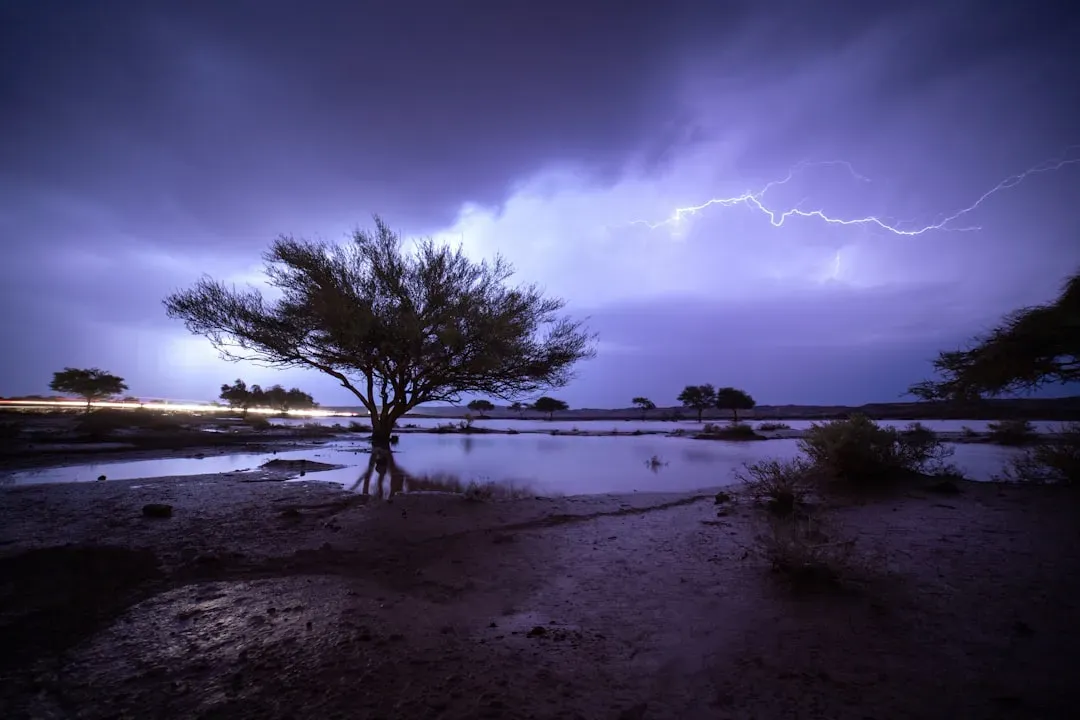
We can never truly replay a three-hundred-million-year-old sound, but some modern places offer imperfect echoes of that world. Think of a thunderstorm rolling over a remote peat bog or a dense mangrove swamp far from cities and farmland. There are no herds, almost no vehicles, just thick humidity, standing water, and tangled vegetation. When thunder hits in such a place, the sound skims over water, sinks into soft ground, and reverberates through trunks and roots in a way that already feels different from a storm over asphalt and cornfields.
Now strip away the birds, flowering shrubs, and grass, and stretch that wet wilderness to the horizon in every direction. The storm you hear would still be recognizably a thunderstorm, but its details would be shifted: more bass, fewer competing voices, and a more alien quality to the background rustling and dripping. To me, that is the most compelling takeaway: even without the exact sounds, we can say with confidence that ancient thunder did not roar over a blank, generic planet. It worked with a specific set of surfaces, plants, and animals to produce a soundscape that modern ears would find both familiar and unsettlingly otherworldly.
Opinionated conclusion: ancient thunder was louder in meaning, not in decibels
When I picture a thunderstorm three hundred million years ago, I do not imagine it being dramatically louder on a sound meter; I imagine it being more profound because there was less noise to hide it. In my view, ancient thunder probably felt bigger and more ominous precisely because the rest of the world was quieter, simpler, and dominated by water and plants rather than crowds of loud animals. The storm’s voice had the stage almost to itself, and the result would have been a raw, focused display of nature’s power, without the modern clutter we tend to take for granted.
I also suspect we underestimate how alien it would feel to hear something so universal in such an unfamiliar setting. Same lightning, different world. The absence of grass and flowers, the tiny size of land animals, the dominance of swamp forests and giant insects – all of that would reshape not just the technical acoustics but the emotional punch of the sound. Thunder would still be a boom in the sky, but in that ancient silence it might have felt closer to a god’s heartbeat than to a background weather event. If you could stand there for one storm and then come home, which world’s thunder do you think would haunt you more?