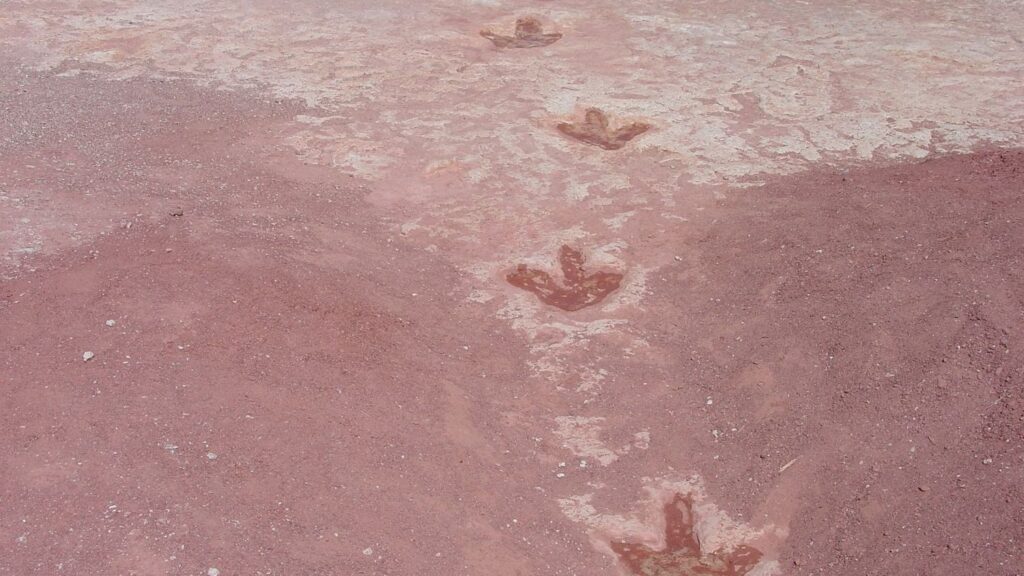
Imagine standing in a muddy field 76 million years ago, watching a group of enormous horned dinosaurs move through a Cretaceous landscape together – not alone, not scattered, but in a tightly coordinated group. Now imagine a pair of massive tyrannosaurs circling nearby, watching from a distance. It sounds like something from a movie, right? Well, here’s the thing – we don’t have to imagine it. The footprints are still there.
Dinosaur footprints are far more than ancient curiosities pressed into stone. They are a living record of behavior, personality, and survival strategy frozen in time. Every impression in the sediment tells a story that bones simply cannot. So let’s dive into what those muddy, million-year-old steps are actually telling us – you might be surprised by what you find.
Footprints vs. Bones: Why Tracks Tell a Different Story
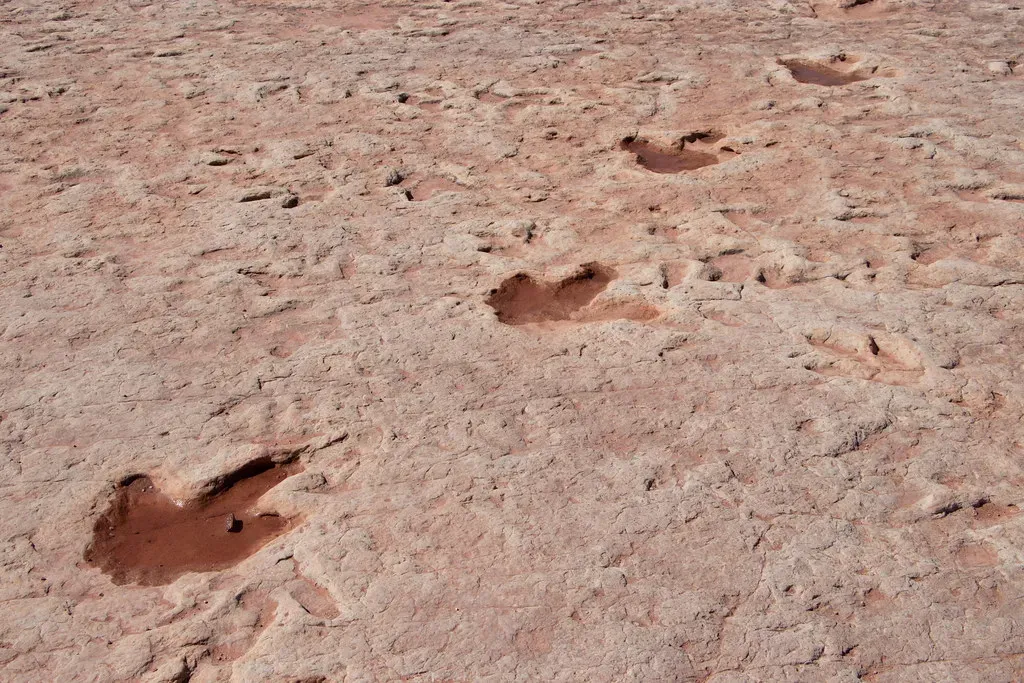
You might wonder why paleontologists get so excited about footprints when museums are already full of spectacular dinosaur skeletons. Dinosaur bones tell us what these animals looked like, but footprints show us how they lived. That difference is enormous. A skeleton is essentially a snapshot of a moment of death. A trackway is a snapshot of life in motion.
The fossilized footprints and trackways of vertebrates are often overlooked in favour of skeletal remains, and yet at museums, many more people crowd around the dinosaur skeletons than around the dinosaur tracks nearby – even though fossilized tracks can provide information about extinct animals that is simply not available from the bones alone. Think about it like watching a video versus looking at a photograph. Tracks are the video. Body fossils set limits on feasible reconstructions of functional capacity and behavior in theropod dinosaurs, but do not document in-life behaviors. In contrast, trace fossils such as footprints preserve in-life behaviors that can potentially test and enhance existing reconstructions.
The Groundbreaking Discovery That Changed Everything
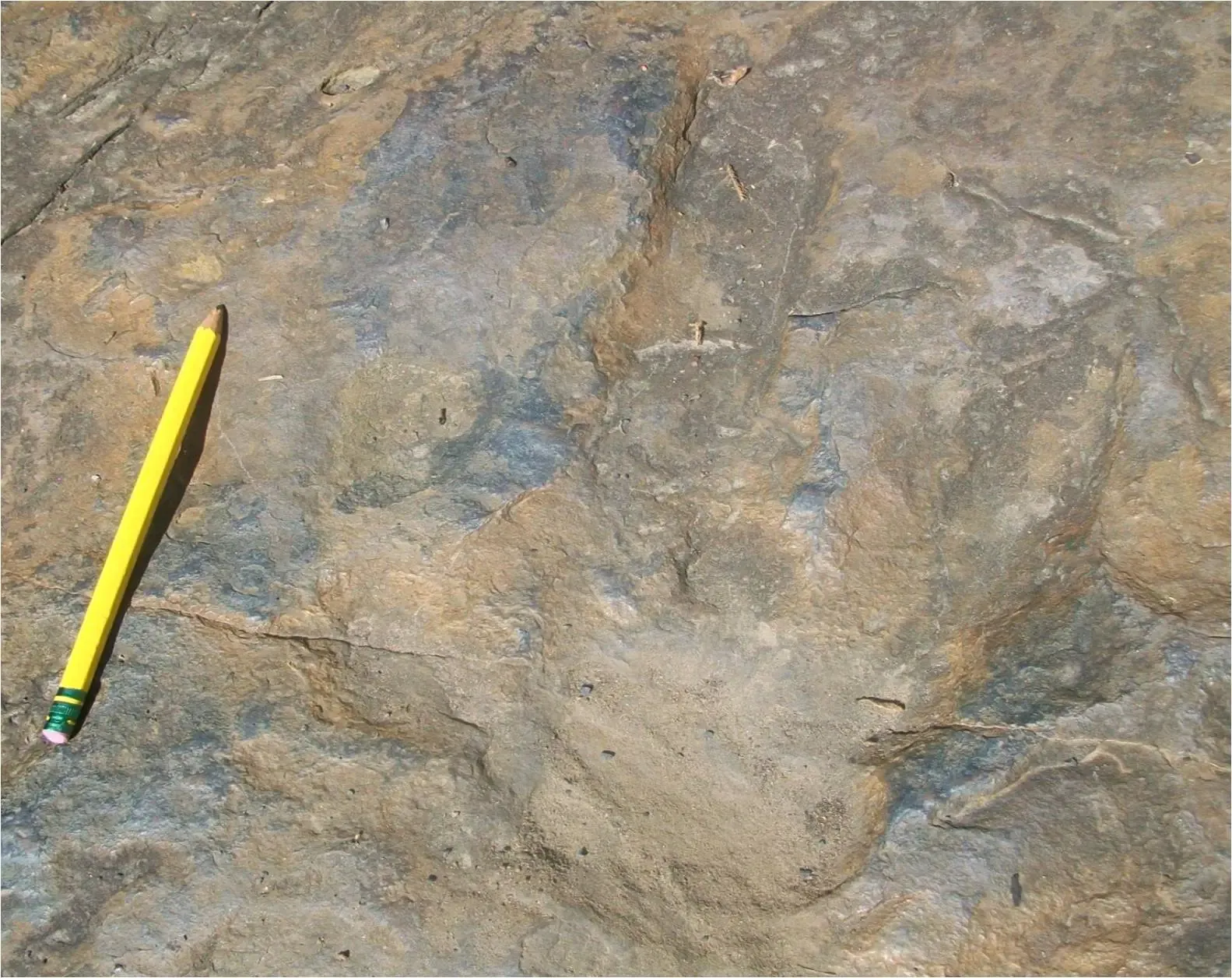
In 2024, a discovery shook the paleontological world to its core. Footprints of a multispecies herd of dinosaurs discovered in Canada demonstrate the social interaction between different dinosaur species 76 million years ago, according to findings published in the journal PLOS One. This wasn’t just another set of tracks in some remote quarry. This was the first time in history that physical fossil evidence confirmed that different species of dinosaurs actually traveled together.
The discovery includes footprints from multiple dinosaur species walking alongside each other, providing the first evidence of mixed-species herding behavior in dinosaurs, similar to how modern wildebeest and zebra travel together on the African plains. Honestly, that comparison alone should make you stop and think. An international team, including scientists from the University of Reading and the Royal Tyrrell Museum of Palaeontology in Canada, was involved in the study, which has been published in the journal PLOS ONE.
The Skyline Tracksite: Reading the Story in the Rock
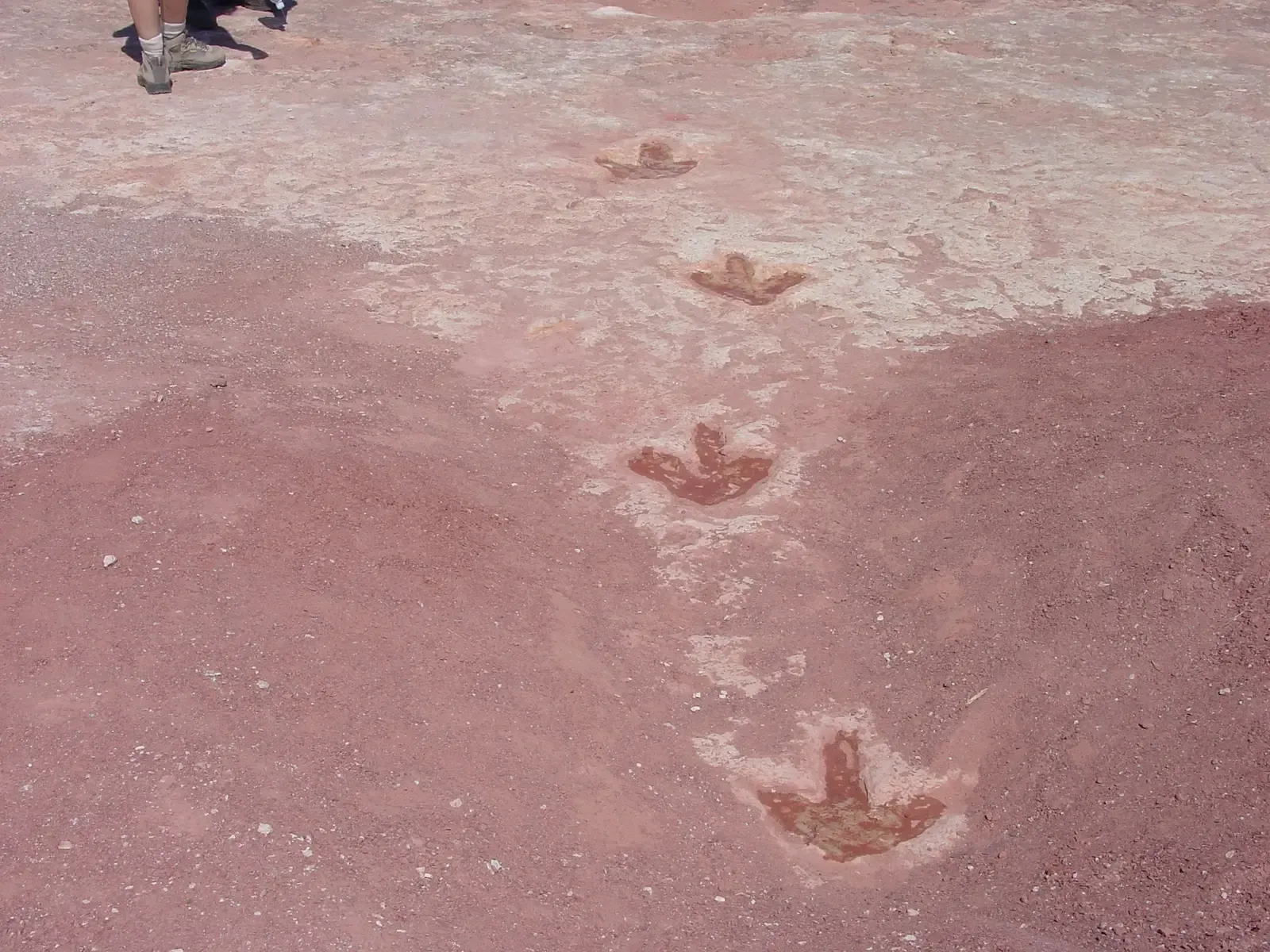
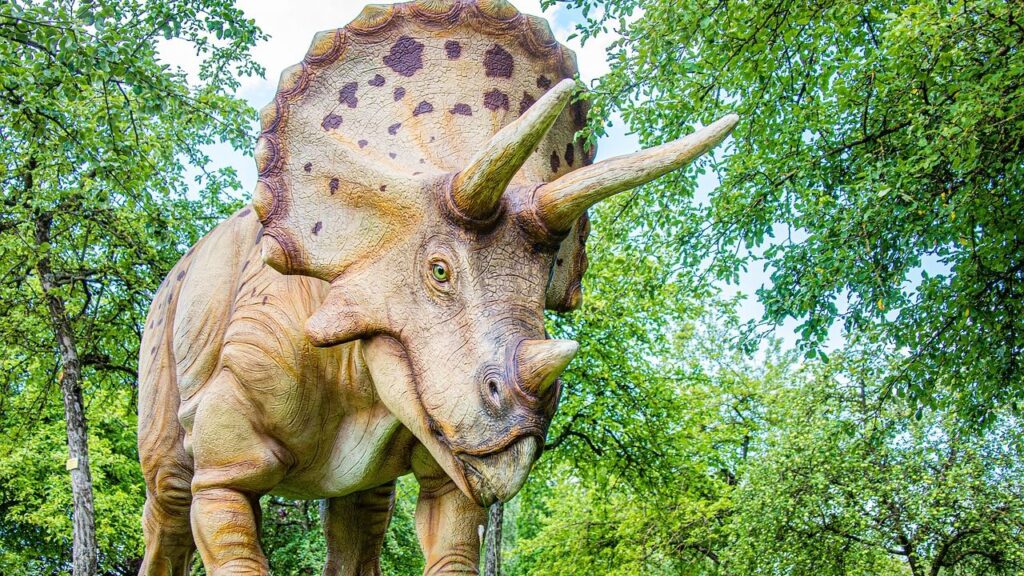
The discovery, made at a site now known as the Skyline Tracksite, marks a significant shift in how scientists understand dinosaur behavior. What makes this site so extraordinary is the sheer variety of species represented in one place, at the same moment. At the site, paleontologists unearthed 13 ceratopsian (horned dinosaur) tracks from at least five animals walking side by side, with a probable ankylosaurid (armored dinosaur) walking in the midst of the others. Picture a horned Styracosaurus marching shoulder to shoulder with a tank-like ankylosaur – that is extraordinary company to keep.
The new tracksite is the first discovery of its kind in Dinosaur Provincial Park in Alberta, Canada, a park that is world-famous for its abundant fossils but where dinosaur footprints were virtually unknown. It’s remarkable that a site with over a century of intensive fossil research could still yield something this new and exciting. So far, the remains of at least 44 species across 10 dinosaur families have been identified from the site. Yet the footprints had remained hidden, practically invisible, until scientists knew exactly what to look for.
The Tyrannosaur Threat: Predators Lurking in the Tracks
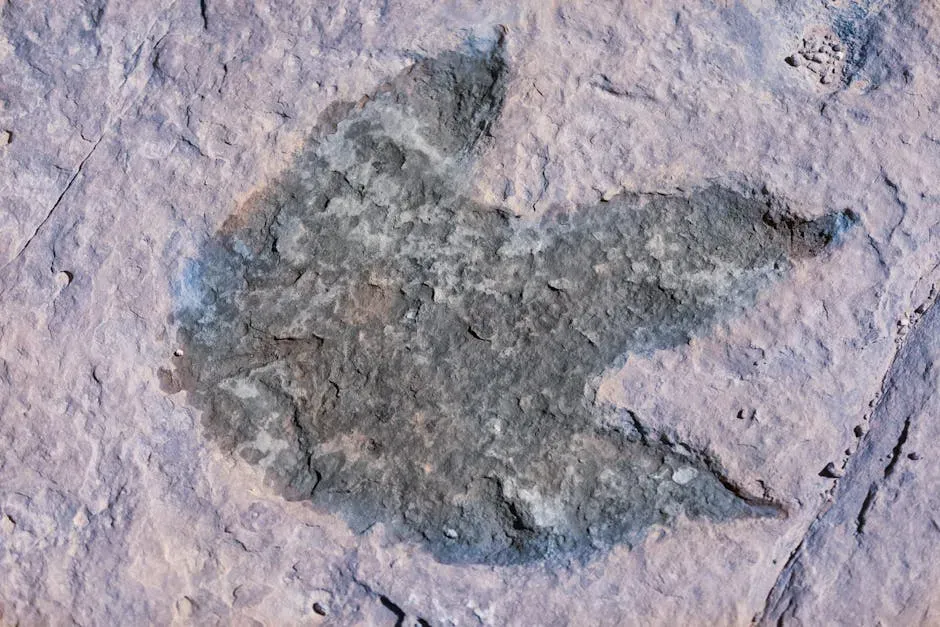
Now here is where the story gets genuinely chilling. Researchers were also surprised to find the tracks of two large tyrannosaurs walking side-by-side and perpendicular to the herd, raising the prospect that the multispecies herding may have been a defense strategy against common apex predators. Two tyrannosaurs walking together, perpendicular to the herd – if that doesn’t make the hair on your arms stand up, nothing will. It’s like finding surveillance footage of a predator stalking its prey, frozen in stone.
According to researchers, the tyrannosaur tracks strongly imply that the predators were observing the herd, although there is no definitive proof that they interacted. Science demands caution, which is fair. The tracks also add weight to theories that tyrannosaurs may have hunted or roamed in pairs or small groups, though more research is needed. Still, the spatial relationship between the predator tracks and the herd tracks paints an unmistakably dramatic picture of a prehistoric standoff millions of years in the making.
Safety in Numbers: Herd Behavior as a Survival Strategy
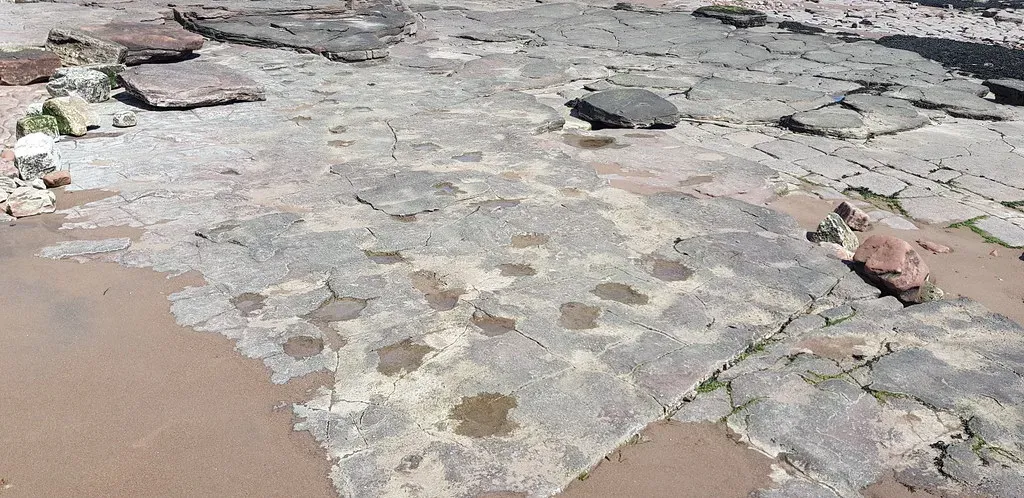
It is the first time tracks have provided such clear signs of mixed-species movement in a single herd, a dynamic seen today among animals like zebras and wildebeests that travel together for protection. Researchers say the discovery reveals how some dinosaur species may have relied on group behavior for survival, especially in predator-rich environments. Think about the logic. A ceratopsian with its horns and an ankylosaur with its armored body and club tail – together, they make a far more formidable defensive unit than either would alone.
Trackway evidence suggests that sauropods, those long-necked dinosaurs, moved about in closely knit and tightly grouped herds, with mature animals on the outside and younger, smaller animals on the inside. Large footprints on the perimeter of the group and smaller footprints towards the middle provide scientific evidence to show that sauropods moved this way to give some protection to the younger animals within the herd. This is genuinely moving, in a deep evolutionary sense. Protecting the young – that impulse stretches back more than 200 million years. Let’s be real: that’s not so different from what you see in any modern elephant herd today.
Speed, Gait, and What Footprints Reveal About Movement
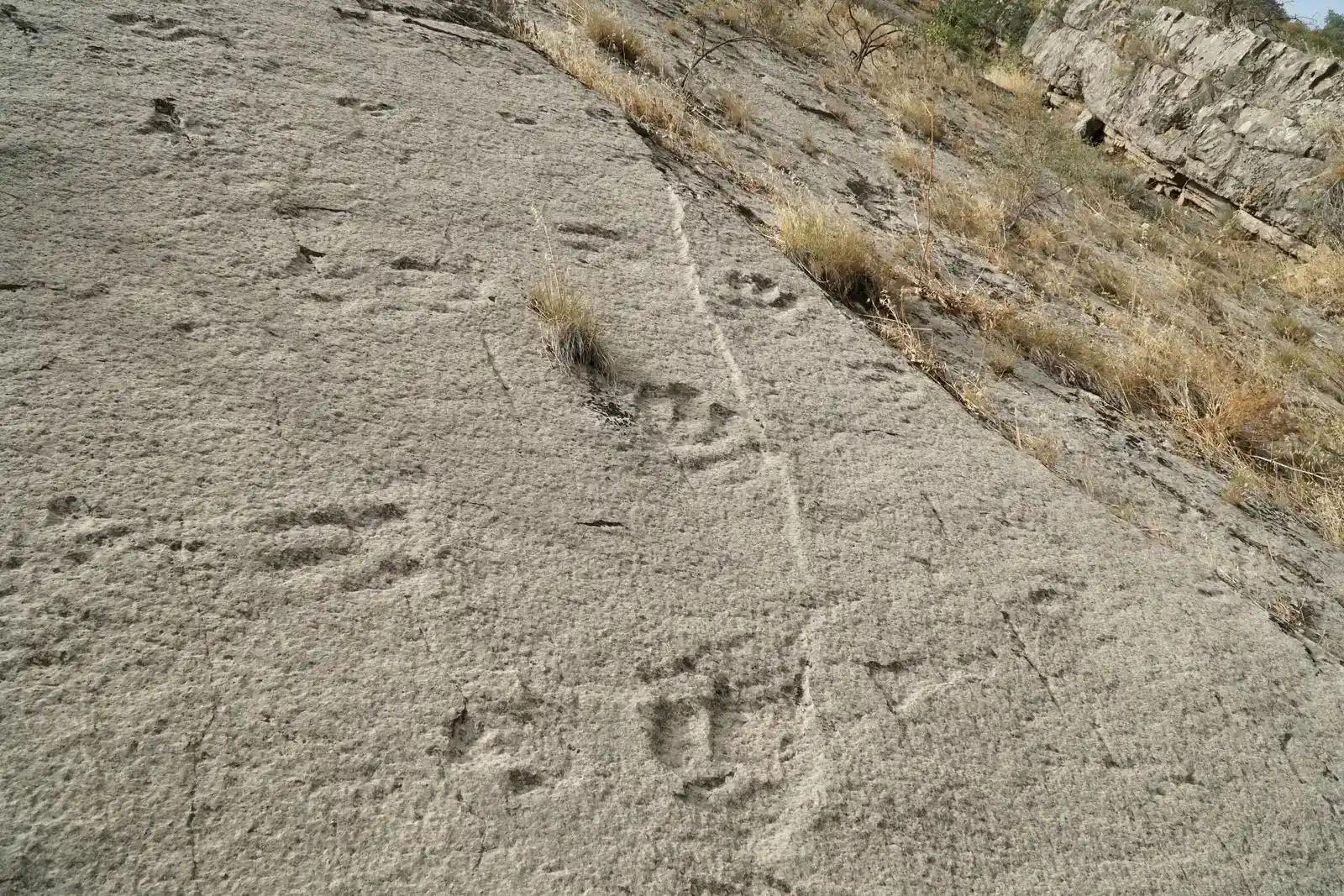
Dinosaur footprints have provided crucial evidence about locomotion capabilities that have transformed our understanding of how these animals moved. By measuring stride length and footprint patterns, paleontologists can calculate approximate speeds, revealing that some dinosaurs were much faster than initially believed. The math is surprisingly elegant. Stride length combined with estimated hip height feeds into formulas that give researchers a reasonable picture of how fast these creatures were moving at the moment their feet hit the mud.
Almost no dinosaur trace fossil shows tail drag marks – this was some of the first evidence that dinosaurs held their tails up above the ground. That single observation single-handedly overturned the old image of a slow, tail-dragging reptile. Trackways also reveal whether dinosaurs walked with an upright, mammal-like posture or with a more reptilian gait. The spacing and alignment of footprints in theropod dinosaurs show they walked with their feet directly beneath their bodies, similar to modern birds, while some sauropod tracks demonstrate a wide-gauge stance that provided stability for their enormous bodies. Every step, in every direction, tells you something new.
Migration Routes, Megasites, and the Scale of Ancient Movement
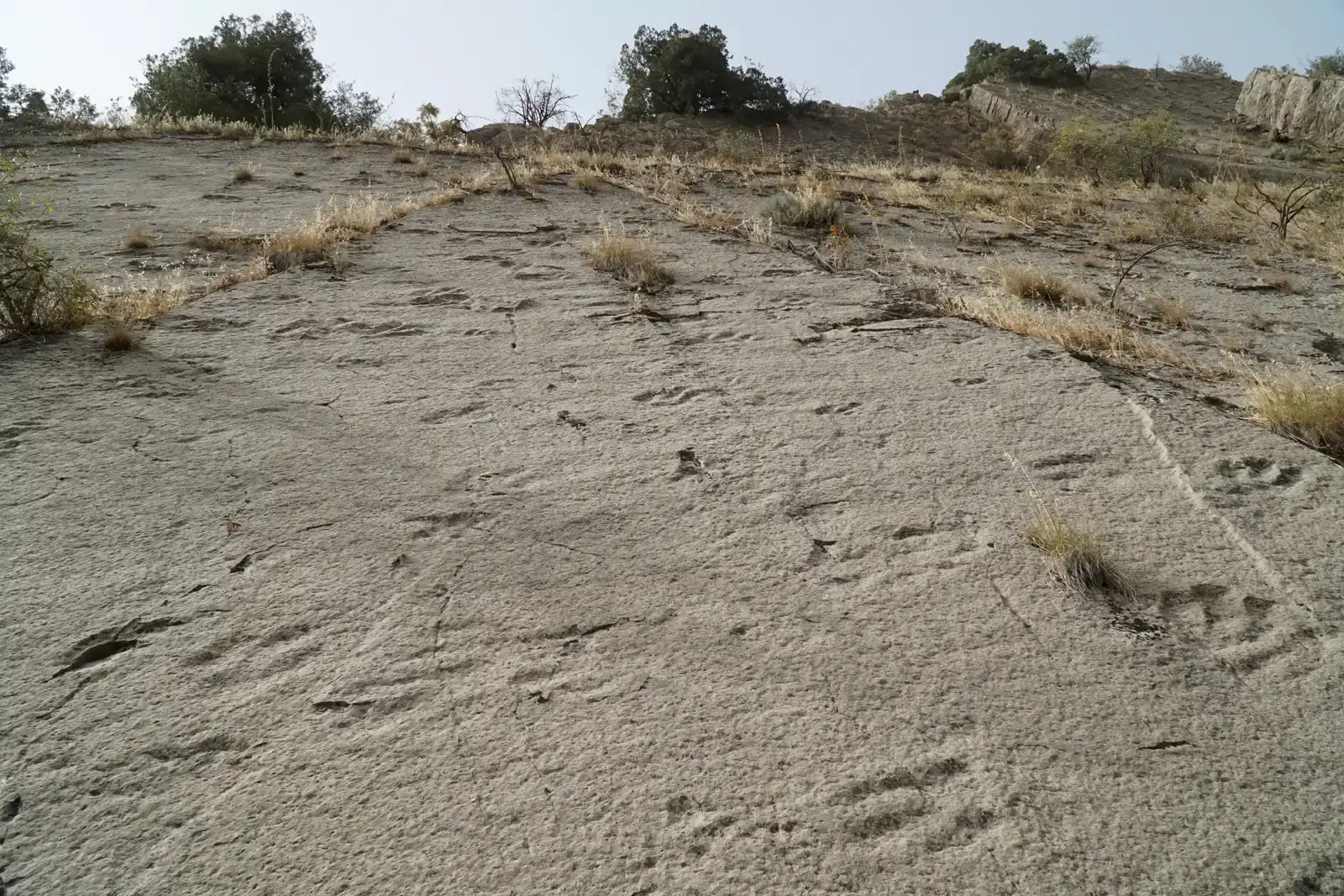
Paleontologists have documented more than 1,500 dinosaur track sites worldwide and are finding more each year. Track sites or trackways, defined as a sequence of two or more tracks made by the same dinosaur, have been found on every continent except Antarctica. The sheer global scale of this fossil record is staggering. You’re looking at a network of ancient footpaths criss-crossing entire continents. Collectively, these trackways represent 190 million years of geologic time, from the dawn of the dinosaurs 255 million years ago to their sudden demise 65 million years ago.
A megatrack site is an area where dinosaurs left footprints fossilized across huge areas of land. Some paleontologists believe these sites represent migration routes, prehistoric trackways that may have been used by groups of dinosaurs following the rains, searching for fresh feeding or heading for breeding grounds. It’s hard to say for sure exactly which routes were used repeatedly versus which were one-time crossings. The impact of such large herds on the plant life of the time must have been great, suggesting constant migration in search of food. When you imagine tens of thousands of multi-ton sauropods moving together across a floodplain, the ecological impact alone is mind-blowing.
Conclusion: The Most Underrated Window into the Prehistoric World
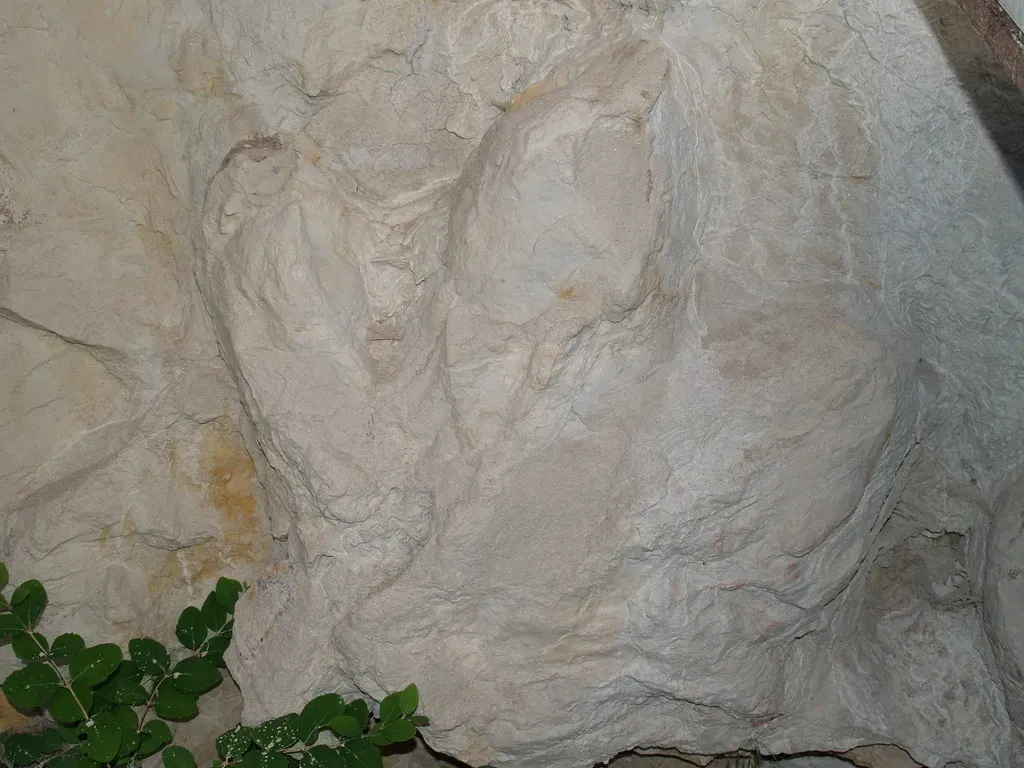
Dinosaur footprints are, without question, one of the most underappreciated sources of knowledge in all of paleontology. Bones give you a creature. Footprints give you a life. In the long term, discoveries like the Skyline Tracksite could help us understand not just how dinosaurs moved, but how they migrated, raised young, or interacted with predators and other species in their ecosystems. That’s not a small ambition. That’s the difference between understanding a fossil and understanding a world.
What continues to astonish researchers – and honestly, what astonishes me – is that places like Dinosaur Provincial Park, which have been studied for over a century, can still yield something completely new. The Skyline Tracksite offers strong evidence for mixed-species herding, a behavior seen in modern animals, and the discovery method has already led to more tracksites being found in the park. The ancient mud is still giving up its secrets. Every new site discovered rewrites something we thought we knew. So the next time you think we’ve figured out the dinosaurs, remember: there are still millions of footprints out there waiting to tell their story. What do you think the next discovery will reveal? Tell us in the comments.