When most of us picture the age of dinosaurs, we see the same thing: a T. rex roaring in front of a smoking volcano, palm trees in the background, maybe a swampy jungle and a blazing red sunset. That image is everywhere – from kids’ books to movie posters – but it is wildly incomplete and often flat-out wrong. The real dinosaur Earth was stranger, more colorful, and far more varied than anything Hollywood usually shows, and once you see it in your mind, it changes how you think about deep time entirely.
For one thing, dinosaurs ruled this planet for an almost unimaginable stretch of time, from roughly the Late Triassic through the end of the Cretaceous, spanning well over one hundred and fifty million years. Across that vast timespan, Earth’s continents moved, climates flipped, oceans rose and fell, and entire ecosystems came and went. Talking about “what it looked like back then” as if it were one frozen moment is like trying to summarize all of human history with a single photo. So let’s zoom in, era by era, and walk through the real dinosaur world that would absolutely shock you if you could step into it.
The Triassic: A Hot, Harsh World On A Supercontinent
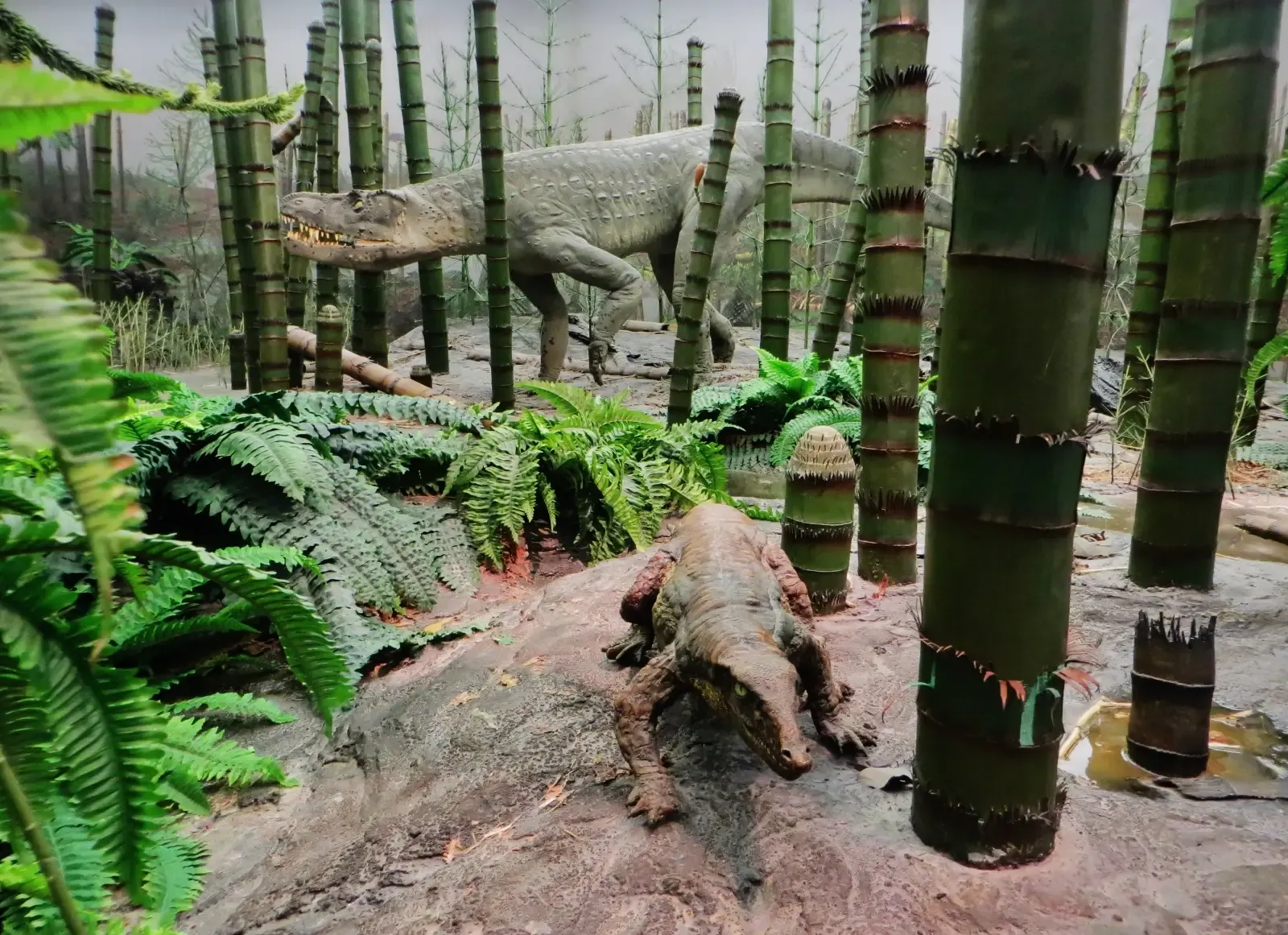
Imagine standing almost anywhere on land around 230 million years ago and realizing you are on one enormous, connected continent – Pangaea. There are no Atlantic or Indian oceans splitting the landmasses; instead, this giant supercontinent stretches from pole to pole, surrounded by a massive global ocean. Much of the interior is scorching, dry, and seasonal, with brutal droughts, flash floods, and temperature swings that make most of today’s deserts seem tame by comparison. The climate is driven by intense greenhouse conditions, thinner polar ice, and huge regions where life has to fight for every drop of water.
The landscape would not look like the lush dinosaur jungles you see in movies, especially in the early and middle Triassic. Instead, you’d see open woodlands, scrubby conifer forests, ginkgo trees, and strange seed ferns, with dusty floodplains crisscrossed by braided rivers. Early dinosaurs, still relatively small and lean, share this world with massive crocodile relatives, mammal-like reptiles, and bizarre armored creatures you probably would not recognize as “prehistoric animals” at first glance. If you were dropped here, you might actually be more struck by the heat, the reddish soils, and the sheer dryness of the air than by the animals themselves.
The Jurassic: A Greenhouse Planet Of Giants
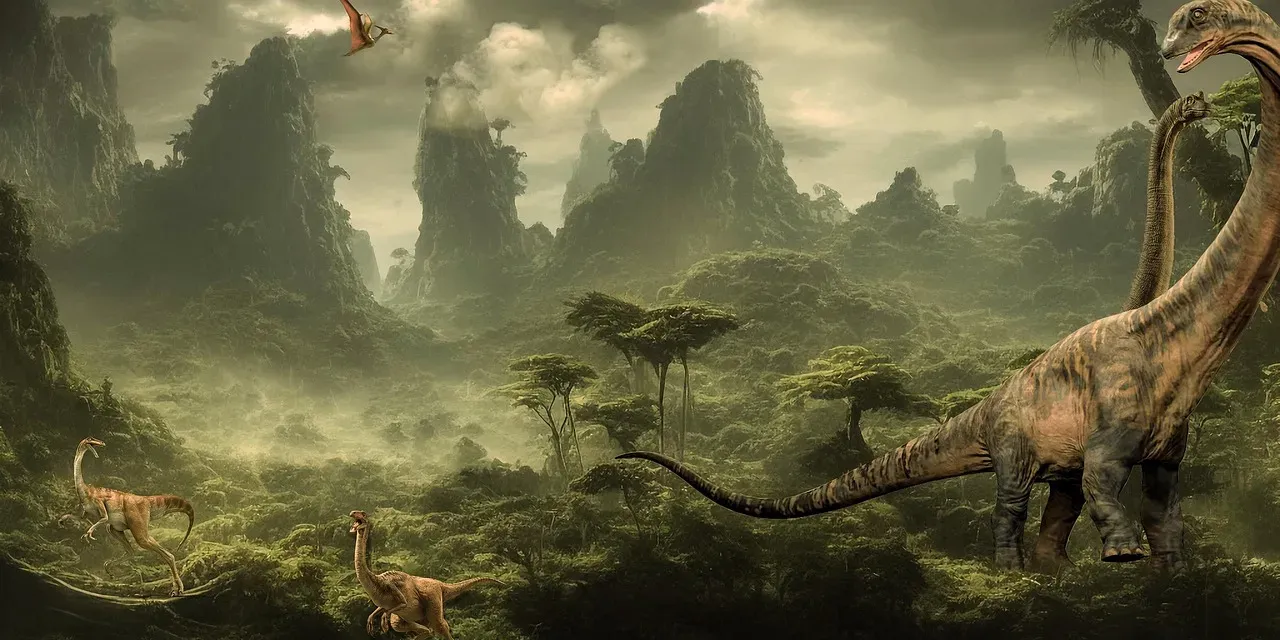
By the Jurassic period, the picture starts to change dramatically: Pangaea is breaking apart, and with that tectonic chaos comes new coastlines, widening oceans, and shifting climate belts. Greenhouse conditions are still strong, and there is no permanent polar ice, which means sea levels are higher and global temperatures are generally warmer than today. Many regions that are now cool or temperate would have felt almost subtropical, with humid coastal areas and broad, lush river valleys that look more like something between a pine forest and a fern jungle than any modern habitat. The air might feel thicker, warmer, and in many places heavy with the scent of vegetation and damp soil.
This is the age of the gigantic sauropods, and their presence would change how you experience the landscape. Picture wide floodplains dotted with conifer stands, cycads, and tree ferns, and then imagine herds of long-necked sauropods moving slowly across them like living skyscrapers, stripping branches far above your head. The ground is churned by their feet, and their dung enriches the soil, which in turn feeds the plant life. Pterosaurs glide over coastal cliffs and inland lakes, and the sounds around you are a mix of insect drone, reptilian calls, and the distant thunder of massive animals moving through the brush. Earth in the Jurassic is greener, wetter in many regions, and shaped physically and ecologically by the giants that dominate its food webs.
The Cretaceous: A Warmer, Wilder Version Of Our Modern World
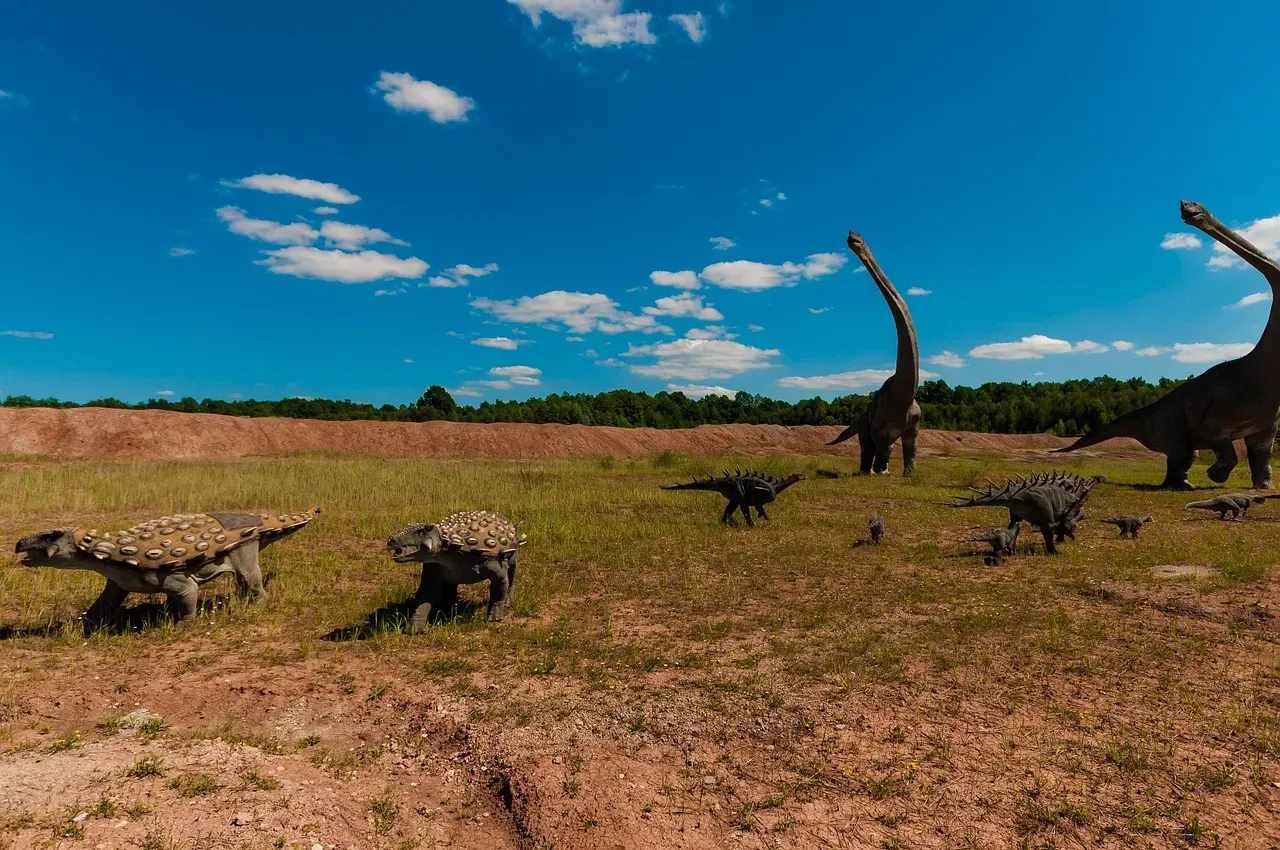
By the Cretaceous, especially the later part, Earth starts to look uncannily like a more extreme version of today’s planet. The continents have broken up further, so you now have recognizable chunks like North America, Europe, and Asia, though their shapes and positions are different. Sea levels are higher due to warm, ice-free poles, flooding huge areas of what is now land and creating shallow inland seas. Imagine much of central North America under a warm, shallow ocean teeming with marine reptiles and ammonites, while coastal plains around it support dense forests and diverse dinosaur communities. The world feels fragmented, with many distinct habitats and regional dinosaur faunas.
The vegetation has evolved too: flowering plants are spreading, meaning that many Cretaceous landscapes would show bursts of color you might not expect in “dinosaur times.” Think of forests of conifers, but now decorated with early flowering shrubs and small trees, plus buzzing pollinators starting to reshape ecological relationships. Some regions are steamy and tropical, while others are more temperate, and even polar regions host forests instead of ice sheets. If you walked through a Late Cretaceous forest, parts of it might actually feel strangely familiar – birds in the branches, flowering plants underfoot – until a multi-ton ceratopsian or a towering tyrannosaur stepped out from between the trees and shattered that illusion of modernity.
The Skies And Seas: Pterosaurs, Proto-Birds, And Alien Oceans
![The Skies And Seas: Pterosaurs, Proto-Birds, And Alien Oceans ([3] archive copy at the Wayback Machine, CC BY-SA 3.0)](https://nvmwebsites-budwg5g9avh3epea.z03.azurefd.net/dinoworld/bd35e9d94e89860230073d9696c6946b.webp)
One of the most shocking differences between dinosaur Earth and today is not just on land but above and below you. Look up in the Jurassic or Cretaceous and you would not just see birds; you would see pterosaurs spanning the sky, from small, agile insect-eaters to creatures with wingspans as wide as a small airplane. They are not dinosaurs but close relatives, and they fill many of the ecological roles that seabirds, shorebirds, and even some large gliding mammals occupy now. Alongside them, early birds – true feathered dinosaurs – are already flapping and gliding, and the air is alive with a complexity of flying vertebrates that makes our modern skies feel strangely quiet by comparison.
Now dive into the seas and the contrast becomes even more dramatic. Instead of whales and dolphins, you have giant marine reptiles like plesiosaurs with long necks, pliosaurs with massive skulls, and streamlined mosasaurs ruling Cretaceous oceans. Sharks are present, but they are not yet the unchallenged top predators of the open sea. Coral reefs, where they exist, host different communities of invertebrates, and ammonites – spiral-shelled relatives of squids – are everywhere, from shallow coastal waters to deeper offshore realms. If you could snorkel in a Late Cretaceous inland sea, you’d recognize fish and perhaps some familiar reef shapes, but the huge reptilian silhouettes gliding past would make it feel more like visiting an alien planet than a version of our own oceans.
Colors, Smells, And Sounds: A Sensory Overload You Would Not Expect
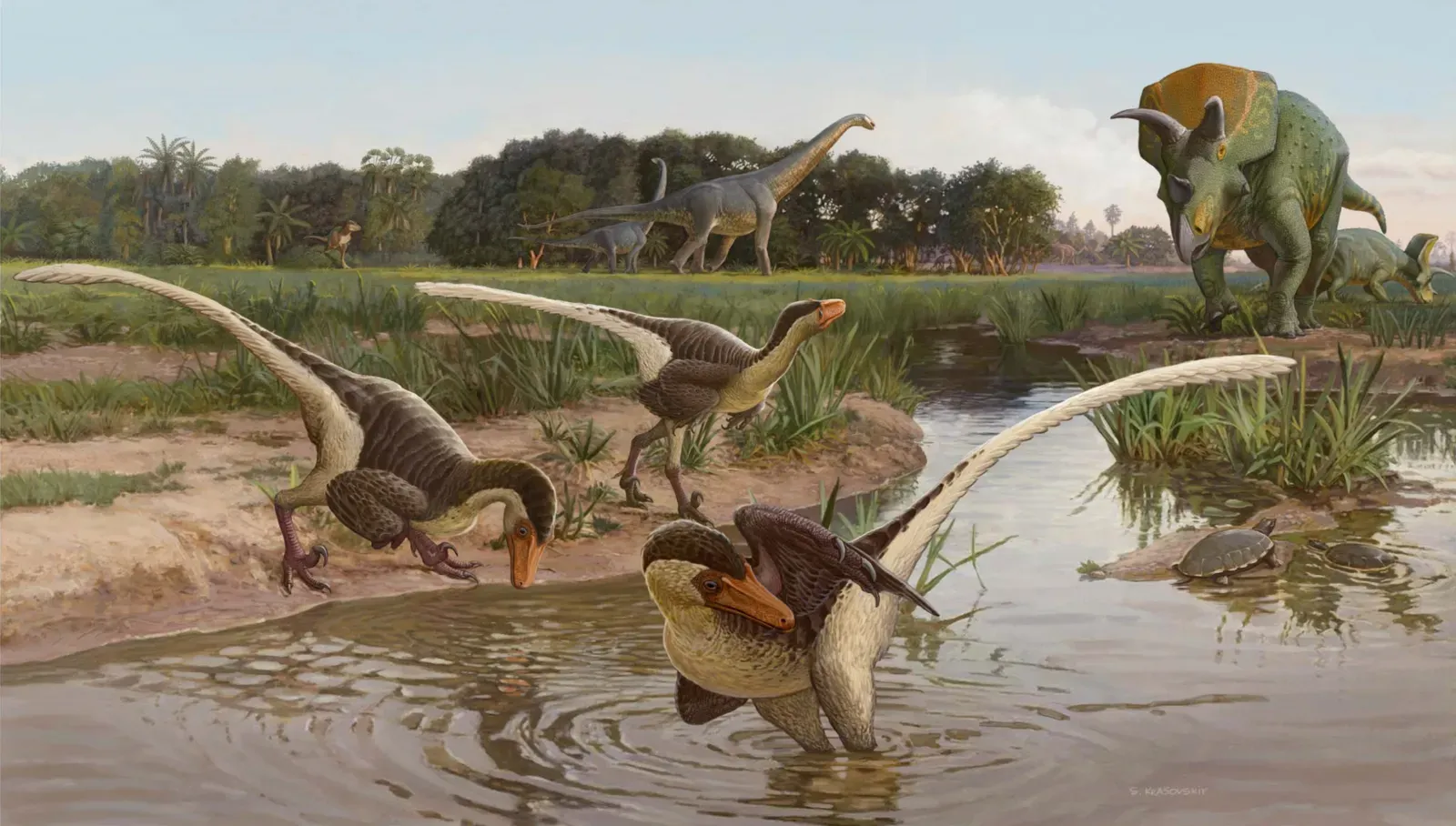
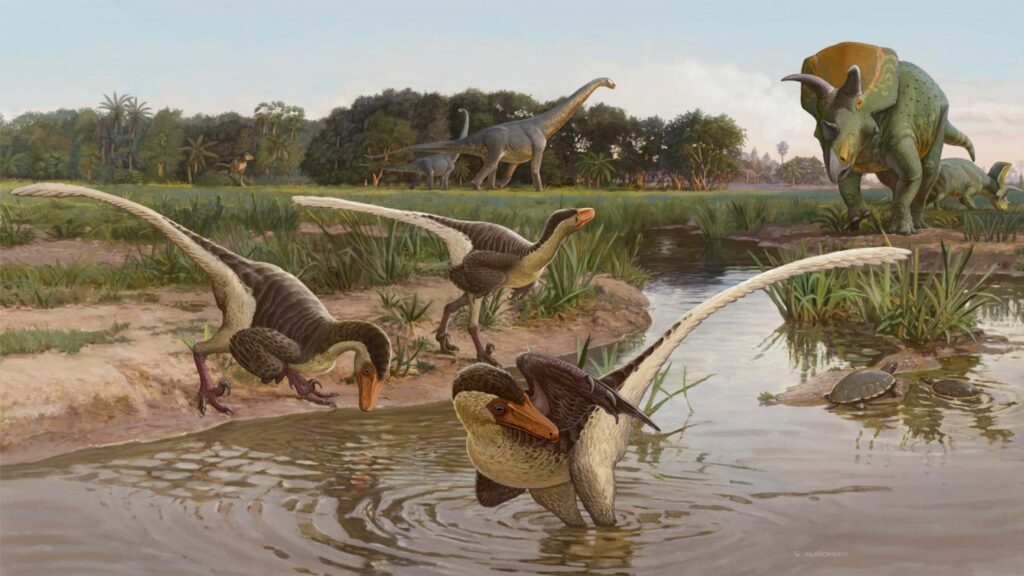
Most dinosaur art still leans toward greens, browns, and grays, but there is every reason to think the real world back then was far more colorful. Plants alone would have produced vivid greens from conifers and ferns, with reds, yellows, and early floral colors from the first flowering plants in the Cretaceous. Many dinosaurs, especially smaller species and those closely related to birds, likely had feathers or filamentous coverings with pigments that produced striking patterns and hues. Instead of a world of dull, scaly brown, you might be walking through forests where bright, feathered animals dart between trees like overgrown, hyperactive birds, flashing reds, blues, or iridescent tones as they move.
Then there are the smells and sounds, which almost never make it into our mental picture. A Jurassic floodplain would reek of wet soil, rotting vegetation, and the musk of large animals, not unlike standing downwind of a modern herd of elephants in a swampy environment but amplified. The soundscape might include the low, resonant calls of large herbivores, the sharp cries of smaller predators and early birds, the hum and buzz of insects, and the constant rustle of wind through towering conifers and tree ferns. It would be loud, earthy, and messy – a sensory overload that would probably feel more like trekking through a dense tropical reserve than wandering a quiet, cinematic valley.
Climate Extremes And Polar Forests: No Ice Caps, But Not Just Sweltering Heat
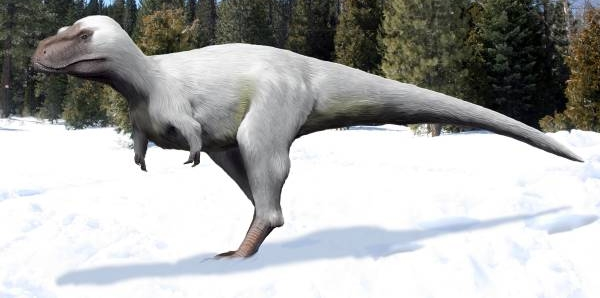
One of the biggest misconceptions is that the age of dinosaurs was just one long, uniform heatwave. Yes, greenhouse conditions generally made the planet warmer than today, and there were times when no permanent ice caps existed at either pole. But that does not mean the whole world was a sweaty, steaming jungle. There were cooler regions, highland areas, and strong seasonal patterns, especially at higher latitudes. Some places experienced long, dark winters and months of continuous summer light, even if they did not freeze into modern-style polar deserts.
What really shocks people is that polar regions during parts of the Cretaceous hosted thriving forests and dinosaur populations. Picture stands of hardy conifers and deciduous trees growing at what we would now call polar or subpolar latitudes, with dinosaurs adapted to months of low light and cooler conditions. These animals might have grown more slowly, developed seasonal strategies, or even sported insulating feathers or filamentous coverings to help deal with colder seasons. Earth was not simply “hot everywhere,” but rather a world with complex climate zones under a greenhouse umbrella, where dinosaurs survived from equatorial swamps all the way up to chilly, seasonally dark polar woodlands.
Conclusion: The Real Dinosaur Earth Was Stranger, Richer, And More Familiar Than You Think
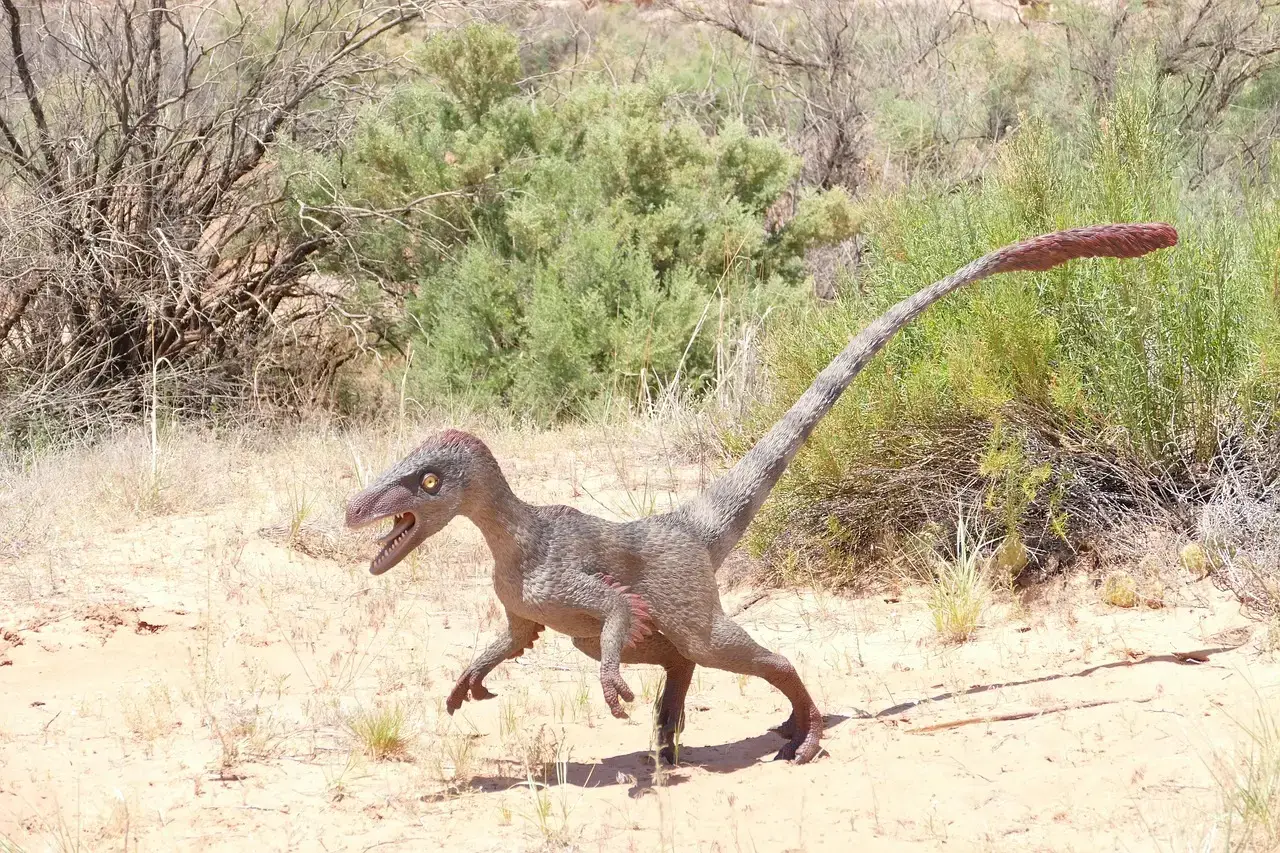
When you put all of this together – a supercontinent splitting apart, greenhouse climates without permanent ice caps, shallow inland seas cutting across continents, polar forests, and vibrant, noisy ecosystems in sky, land, and sea – the familiar dinosaur mural in your head starts to feel painfully thin. The real dinosaur Earth was not a single scene but a long, evolving story of drifting continents, changing climates, and constantly shifting communities of plants and animals. In some ways it was brutally alien, with giant marine reptiles and towering sauropods that have no true modern equivalents, and in other ways it was hauntingly familiar, with birds in the trees and flowers blooming under their feet. That mix of strangeness and familiarity is what makes it so captivating.
Personally, I think the biggest shock is realizing that our own world is just one brief chapter in a much longer, wilder planetary saga. The age of dinosaurs was not some primitive, half-finished version of Earth; it was a fully realized world with its own complex rules, climates, and dramas, every bit as intricate as the present. If anything, it humbles us: we are latecomers to a planet that has been reinventing itself for hundreds of millions of years. Next time you see a cliché dinosaur scene, it might be worth asking yourself: are we really imagining the past, or just recycling a movie still because it is easier than facing how strange reality truly was?