Picture yourself standing in a primeval forest three hundred million years ago, where the sunlight barely pierces through enormous fern fronds and towering club mosses. Suddenly, something massive blocks out the light overhead. You look up to see what appears to be an enormous dragonfly, but its wingspan stretches wider than a hawk’s. This isn’t science fiction – this is the reality of prehistoric Earth, when insects ruled the skies and land with sizes that would make modern creatures seem like toys.
During the Carboniferous Period, our planet was home to arthropods that would make even the bravest among us think twice about venturing outdoors. These weren’t just slightly larger versions of today’s bugs. We’re talking about creatures so massive they could stand toe-to-toe with modern birds, and in some cases, even larger mammals. The fossil record reveals a world where the line between insect and monster was beautifully, terrifyingly blurred.
The Age of Oxygen: When Earth’s Atmosphere Fueled Giants

You might wonder how insects could possibly grow to such enormous sizes when today’s largest beetles barely reach the length of your thumb. The answer lies in one crucial factor: oxygen levels. During the Carboniferous Period, atmospheric oxygen levels reached as high as 35 percent, significantly higher than current levels compared to today’s 21 percent.
This oxygen-rich environment created the perfect conditions for gigantism among arthropods. The way oxygen is diffused through an insect’s body via its tracheal breathing system puts an upper limit on body size, which prehistoric insects seem to have well exceeded, leading scientists to propose that Earth’s atmosphere contained more oxygen than the present 20 percent. Think of it like this: if you’ve ever struggled to breathe at high altitude, you can imagine how much easier it would be to power a large body when there’s significantly more oxygen available in every breath.
Meganeura: The Dragonfly That Dwarfed Birds
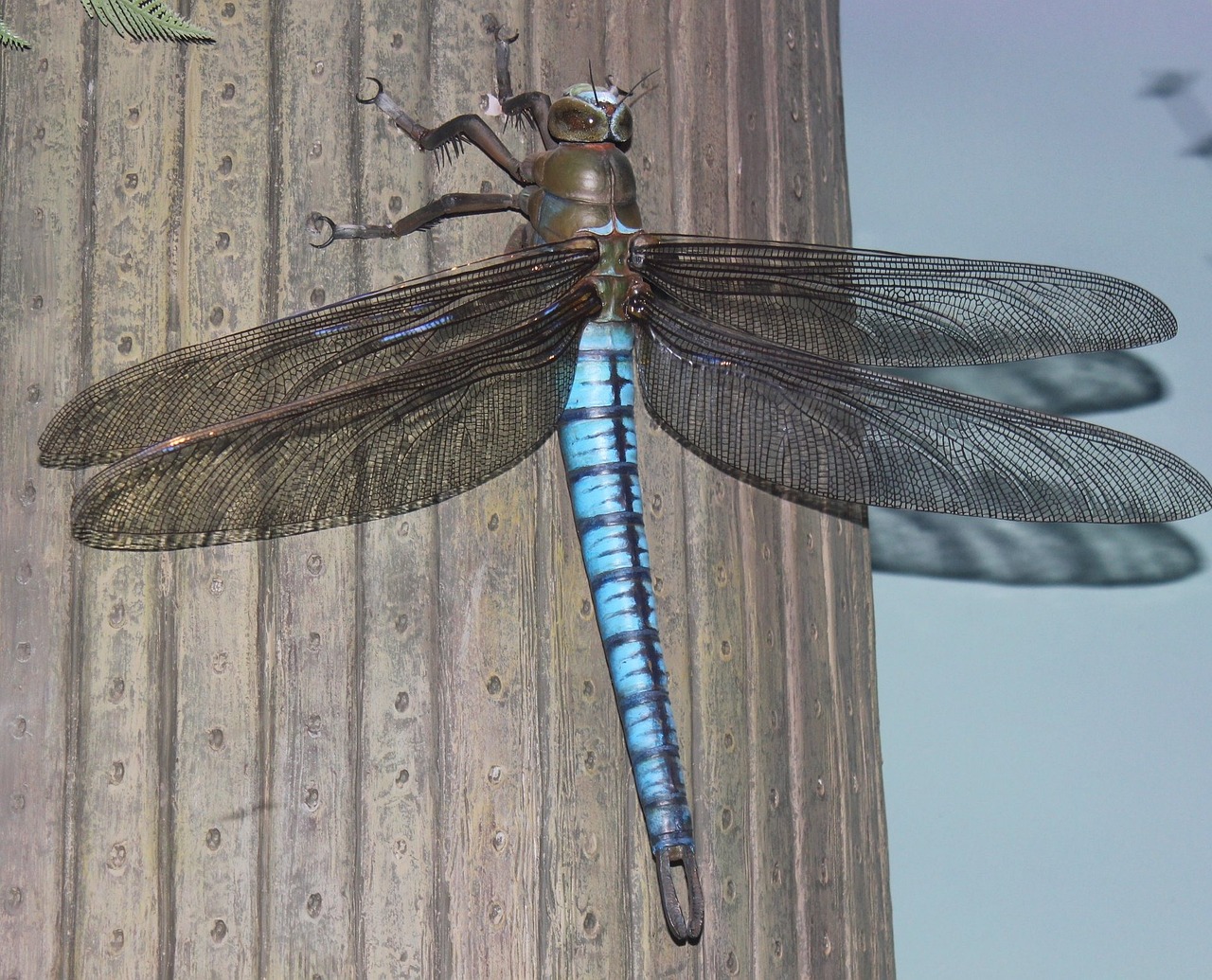
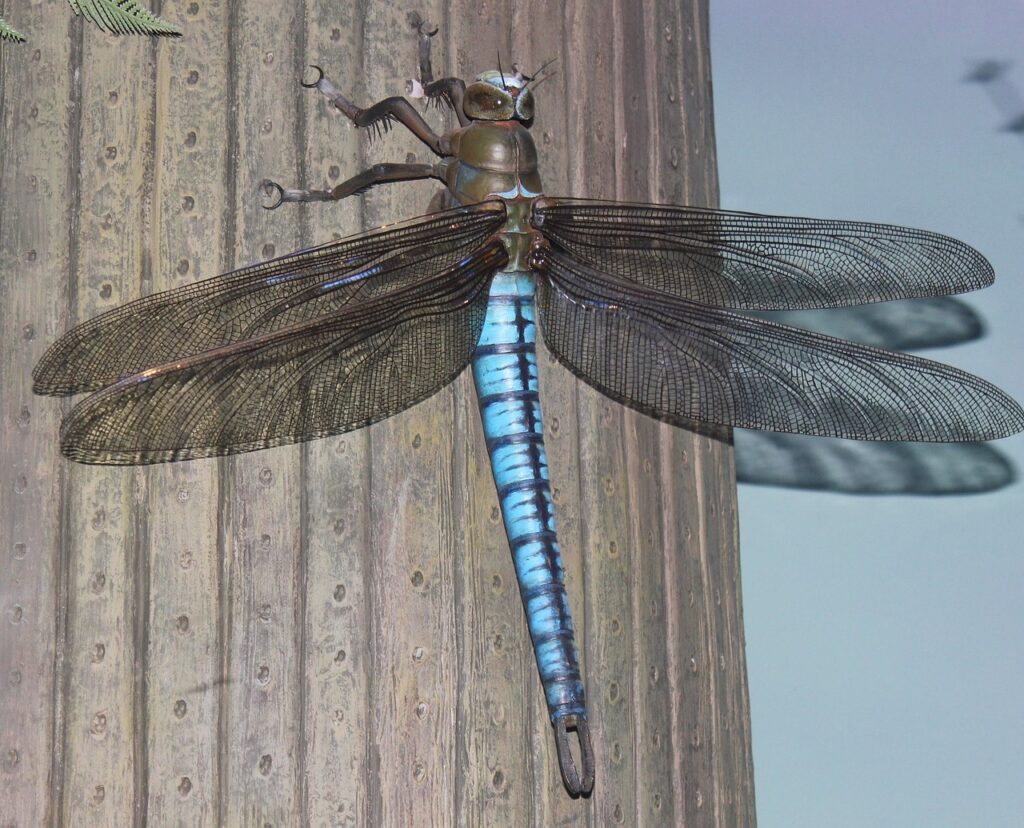
300 million years ago, insects similar to modern day dragonflies had wingspans up to 65 centimeters, with Meganeura having a wingspan as wide as a Sharp-shinned Hawk we see flying today. These weren’t just oversized dragonflies – they were apex predators of their time, dominating the skies like nothing we see today.
Meganeura had spines on the tibia and tarsi sections of the legs, which would have functioned as a “flying trap” to capture prey, with engineering examinations estimating that the largest specimens with wingspans over 70 cm weighed between 100 to 150 grams. Imagine watching one of these magnificent creatures hunting, its massive form gliding through the humid air of ancient swamps, using those spined legs like a deadly net to snare smaller insects mid-flight.
Meganeuropsis: The Record-Breaking Flying Giant
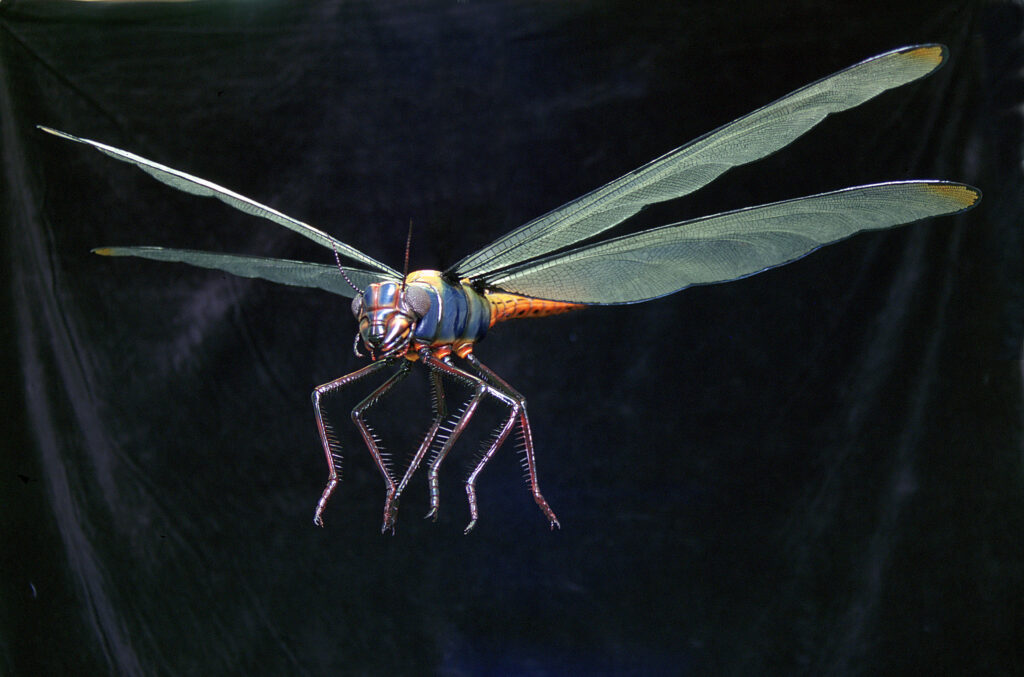
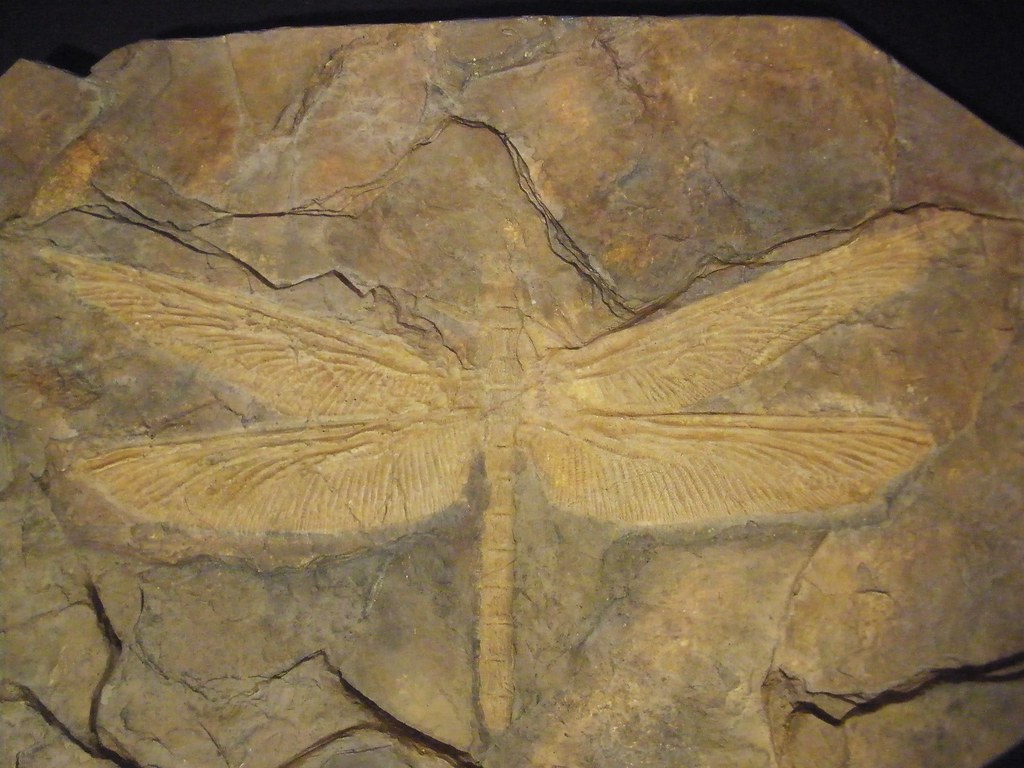
While Meganeura captures most of the attention, its relative Meganeuropsis actually holds the record for the largest insect ever discovered. Meganeuropsis permiana buzzed around planet Earth about 298 million years ago during the Permian period, representing the largest of all the giant bugs of prehistory and the monstrous distant relative of the dragonflies you see today.
The Meganeuropsis had a whopping 71cm-wide wingspan, with some specimens reaching up to 71 cm – comparable to the wingspan of a modern crow. This North American giant dominated the prehistoric skies, soaring over landscapes that would be unrecognizable today. Its robust body structure was similar to modern dragonflies but vastly more powerful, equipped with strong mandibles for capturing prey and flight muscles that could power its enormous wings through the thick, oxygen-rich atmosphere.
Arthropleura: The Car-Sized Millipede That Roamed the Forest Floor
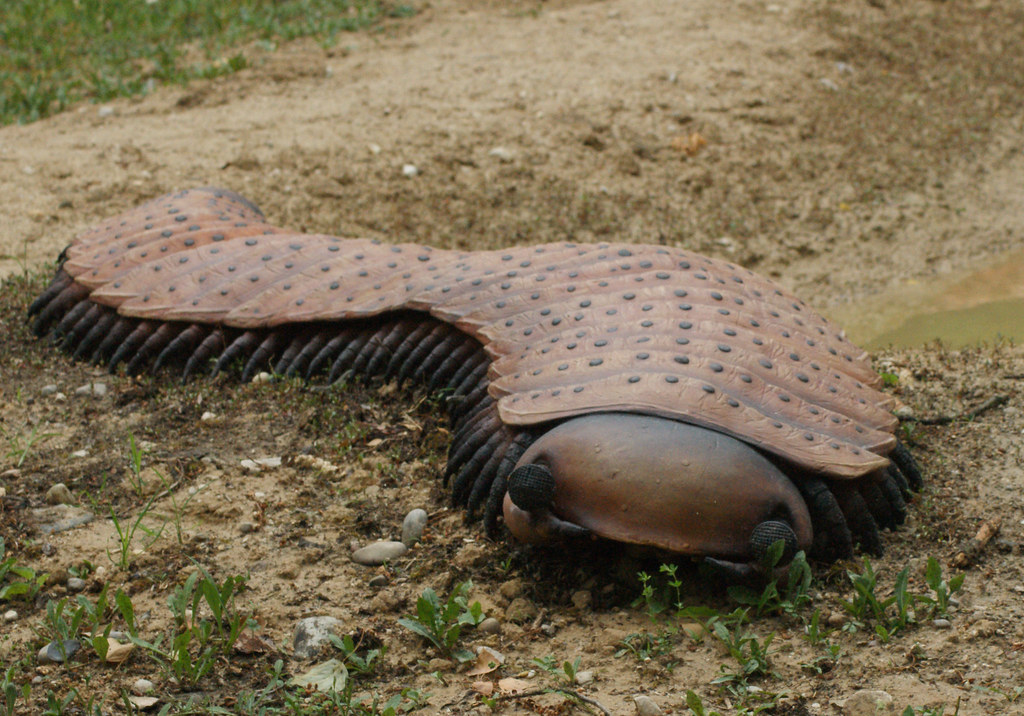
Not all prehistoric giants took to the skies. On the forest floor lurked something even more impressive in terms of sheer size. At up to 2.6 meters in length, Arthropleura is widely considered the largest invertebrate to ever walk the Earth, with the largest specimens reaching up to 2.6 metres (8.5 ft), making it the largest known land arthropod of all time.
Arthropleura displays various millipede and centipede characteristics – like millipedes, it has two pairs of legs per body segment, whereas centipedes only have one pair per segment, with Arthropleura having 24 body segments and 44 pairs of legs. Picture this gentle giant slowly moving through the Carboniferous forests, its segmented body undulating like a massive, living train. Despite its intimidating size, recent research suggests it was likely herbivorous, feeding on the abundant plant matter rather than hunting prey.
Pulmonoscorpius: The Giant Scorpion That Ruled Scottish Swamps

If giant flying insects and car-sized millipedes weren’t impressive enough, the Carboniferous Period also produced scorpions that would make today’s desert dwellers look like toys. Pulmonoscorpius exceeded lengths of 70cm and was one of the top predators in Scotland during the Early Carboniferous, with this giant scorpion measuring about 28 inches and hunting insects and small vertebrates.
It lived in what is now Scotland during the Early Carboniferous (336-326 million years ago), back when this area lay at the equator and was covered by vast, tropical swamps, with fossils of this giant scorpion found only at one site – East Kirkton Quarry, which lies just 20 miles west of Edinburgh. This prehistoric predator prowled through steamy wetlands that bore no resemblance to modern Scotland, using its massive pincers and formidable stinger to dominate the ecosystem.
Titanomyrma: The Hummingbird-Sized Ants
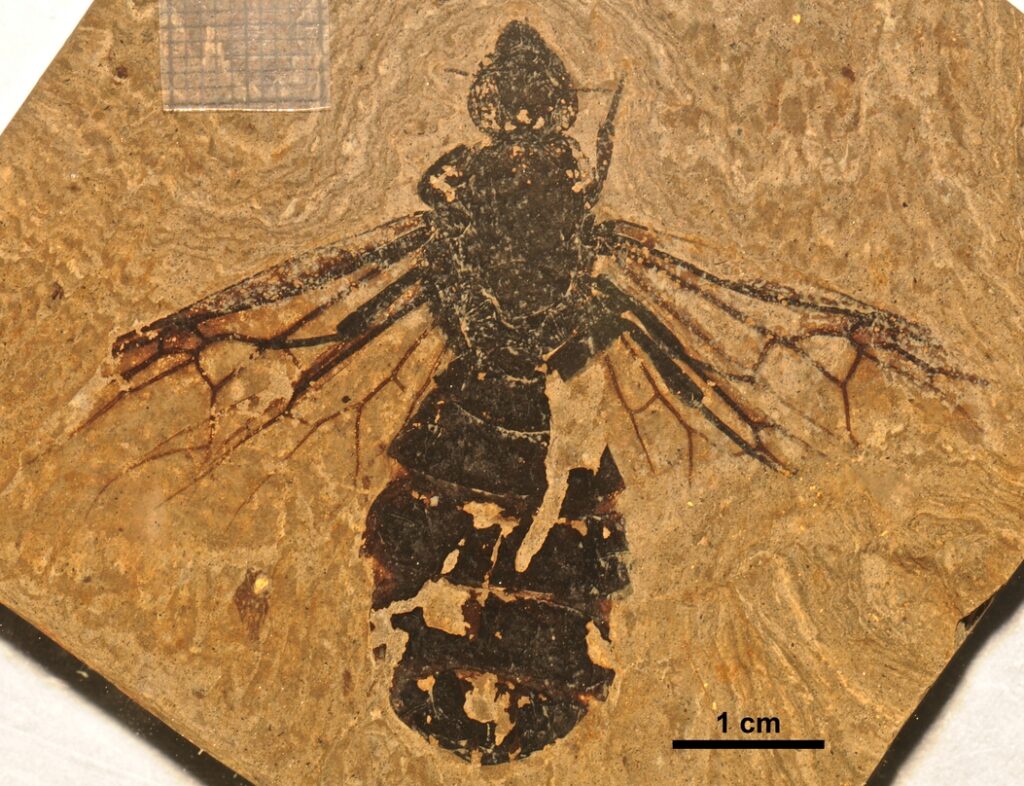
Even insects we consider relatively small today had their giant prehistoric counterparts. Titanomyrma was perhaps the largest ant to ever live, with workers maxing out at sizes of around 3cm, while queens reached ‘colossal’ sizes of 7cm and sported wings that measured 16cm across, making them comparable in size to today’s hummingbirds.
From studies of fossils, researchers have deduced that Titanomyrma, unlike 71% of modern ant species, didn’t have a stinger and instead sprayed formic acid from its digestive tract as a defence mechanism, and it may have also been carnivorous, feeding on other insects and small, already-dead animals. These ancient ants lived during the Eocene period around 47 million years ago, creating colonies that must have been truly spectacular to behold, with queens the size of small birds ruling over their domains.
The Mysterious World of Six-Winged Insects
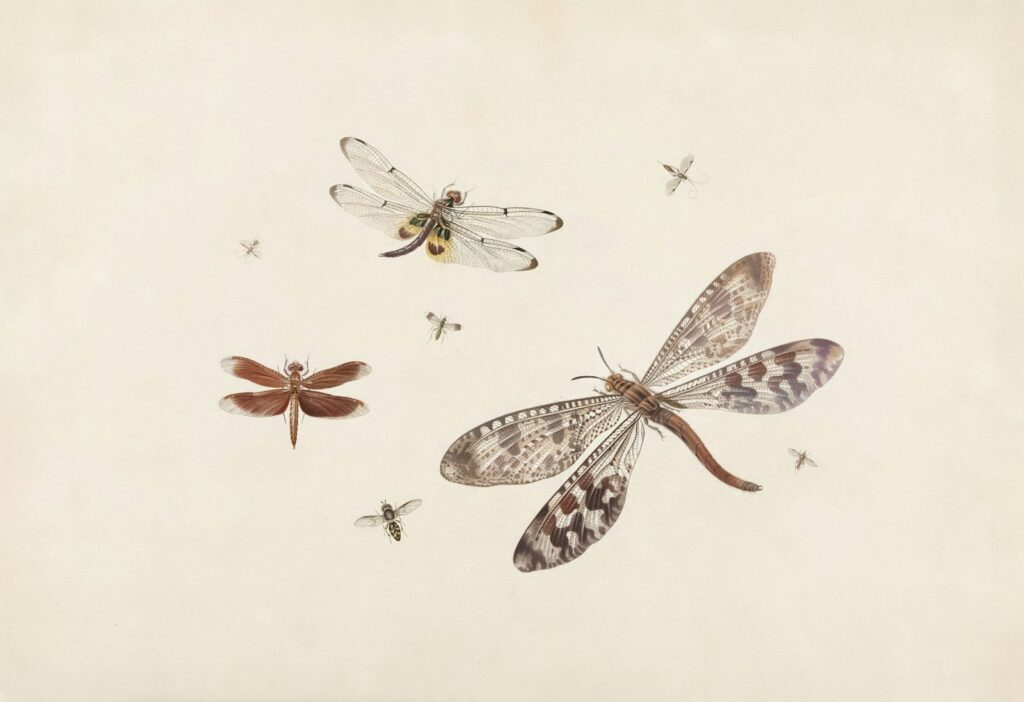
Perhaps one of the most bizarre groups of prehistoric insects was the Palaeodictyoptera, a diverse family that included some truly unique specimens. Mazothairos wasn’t quite as large as Meganeuropsis, but with a wingspan that measured 56cm across they were still giants of their time, belonging to the diverse group of insects known as palaeodictyopterans.
A group of six-winged insects called Palaeodictyoptera existed during the Carboniferous period and survived into the Permian, having beak-like mouthparts, similar front and rear wings, and an extra pair of tiny wings in front of the first pair, with some species such as Mazothairos having a wingspan of about 55 cm. These extraordinary insects represented an evolutionary experiment that has no modern equivalent, combining features that seem almost alien by today’s standards.
The Science Behind the Giants: How High Oxygen Levels Created Monsters
The relationship between atmospheric oxygen and insect size isn’t just theoretical. Scientists began rearing insects in three different environments, imitating various oxygen concentrations throughout time: a 12 percent oxygen atmosphere, Earth’s estimated lowest level; today’s 21 percent; and the oxygen-saturated 31 percent of the Carboniferous period, with dragonflies responding to high oxygen levels by swelling to 15 percent larger than those reared in normal oxygen levels, while in low oxygen, the dragonflies ended up 20 percent smaller than today’s typical size.
It’s likely the larvae of many ancient insects also passively absorbed oxygen from water and were not able to regulate their oxygen intake very well – a big danger when oxygen levels were so high, with one way to decrease the risk of oxygen toxicity being to grow bigger, since large larvae would absorb lower percentages of the gas, relative to their body sizes, than small larvae. This creates a fascinating paradox: insects grew larger partly as protection against having too much of the very thing that enabled their growth.
The End of an Era: Why the Giants Disappeared
You might assume that if high oxygen levels created giant insects, they would have persisted as long as oxygen remained elevated. However, the story is more complex. After the evolution of birds about 150 million years ago, insects got smaller despite rising oxygen levels, with maximum insect size tracking oxygen surprisingly well for about 200 million years, then around the end of the Jurassic and beginning of the Cretaceous period, about 150 million years ago, oxygen goes up but insect size goes down, coinciding strikingly with the evolution of birds.
Decreasing insect size in the Early Cretaceous, even as atmospheric pO2 increased, supports the predation hypothesis because it coincides with the acquisition of anatomical characters in early birds that enabled greater maneuverability, and likely enhanced their prey capture abilities, with the timing of the shifts in evolutionary size dynamics coinciding with the radiation of stem-group birds. The age of giant insects ended not because of environmental changes alone, but because evolution produced new predators that made being large a liability rather than an advantage.
The world of prehistoric insects reveals a chapter of Earth’s history that seems almost too extraordinary to be real. These magnificent creatures, with their bird-sized wingspans and car-length bodies, dominated ecosystems for millions of years before gradually giving way to the smaller, more familiar insects we know today. Their fossilized remains continue to amaze scientists and spark our imagination about what life was like in those ancient, oxygen-rich worlds where giants truly walked – and flew – among us.
What would you think if you encountered one of these prehistoric titans today? The next time you see a dragonfly hovering over a pond or a millipede curled up under a log, remember their incredible ancestors who once ruled the Earth in sizes that would make our modern wildlife seem almost miniature by comparison.