
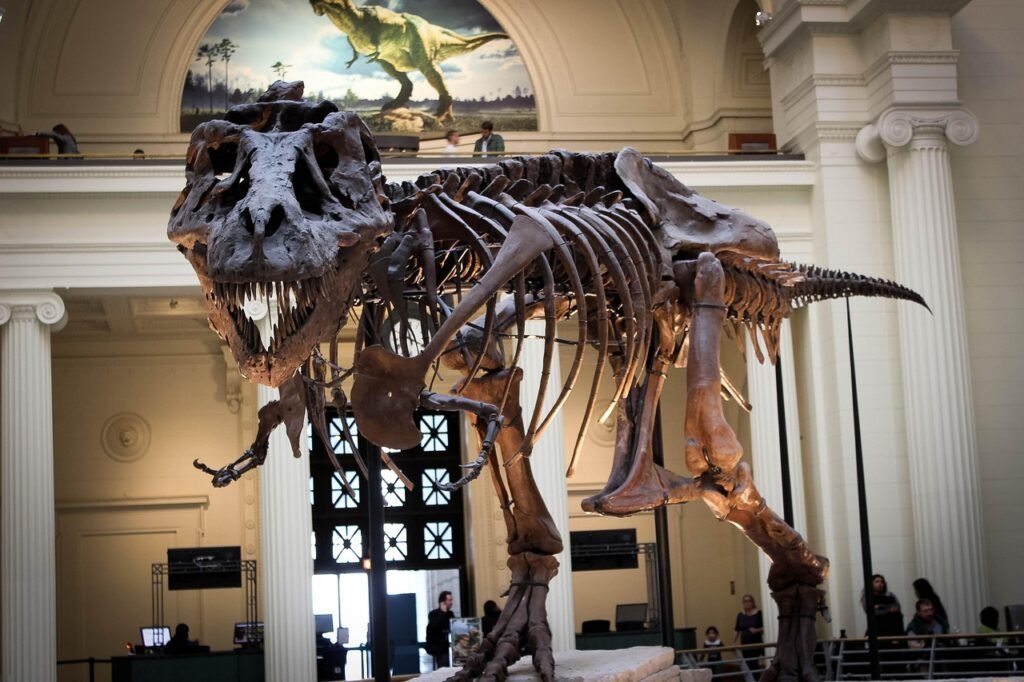
Most people assume Sue the T. rex’s story ended the second the gavel dropped at $8.36 million inside Sotheby’s in 1997. That’s actually where things got interesting. The record sale was just the opening act – what came next was three years of quiet, obsessive detective work that cracked open her skeleton and rewrote what science thought it knew about the most famous predator to ever walk the planet.
Buried inside those 67-million-year-old bones were diseases, old wounds, a possible cause of death, and evidence so strange that even the researchers doing the digging didn’t see it coming. Here’s what paleontologists actually found once Sue stopped being an auction lot and became one of the most studied skeletons in scientific history.
#1 – The Record Sale That Accidentally Started a Fossil Gold Rush
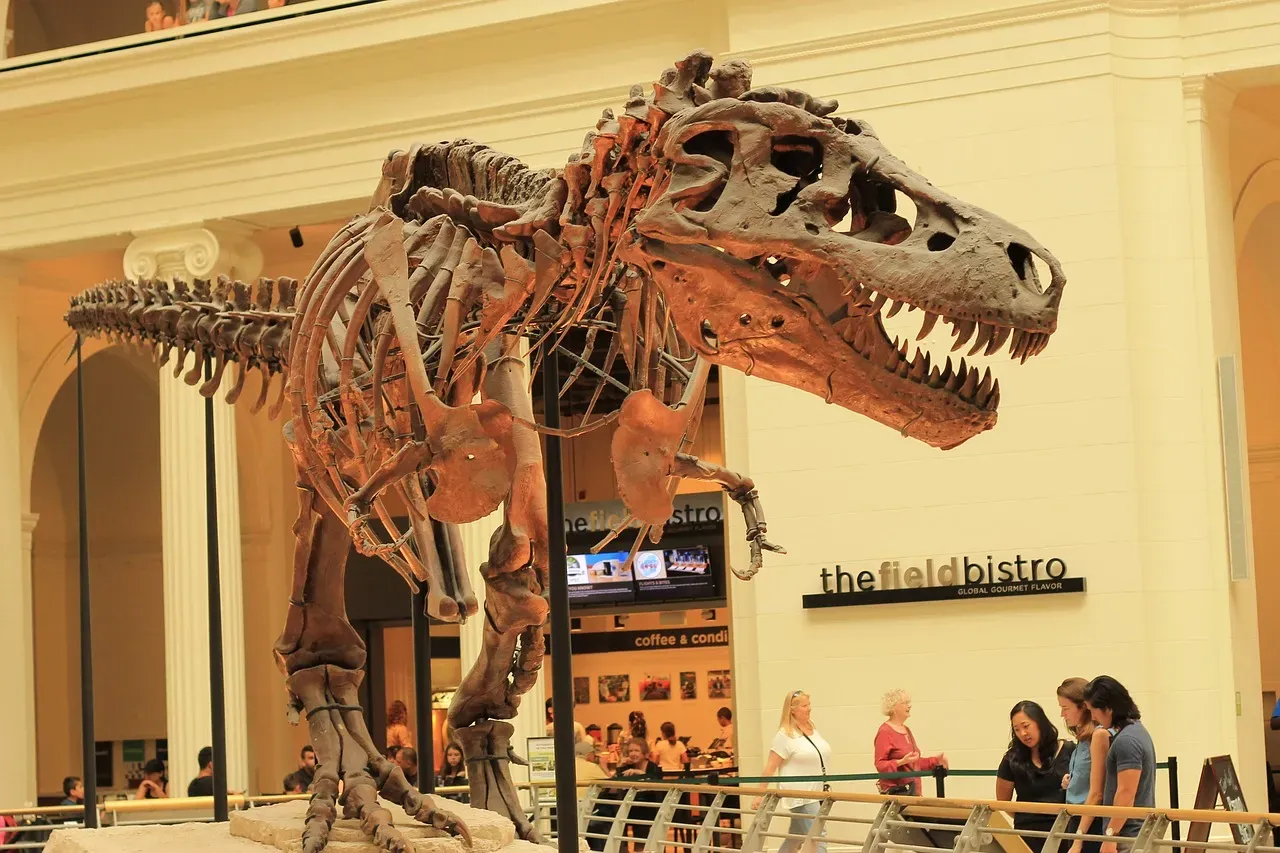
Nobody sitting in that Sotheby’s auction room in October 1997 fully grasped what they were watching happen. A Tyrannosaurus rex nicknamed Sue shattered every auction expectation when Sotheby’s sold her to The Field Museum in Chicago for an unprecedented $8.36 million – the highest price anyone had ever paid for a dinosaur fossil at public auction.
The Field Museum didn’t foot that bill alone. Major corporations like Disney and McDonald’s chipped in funding to help the museum win the bidding war. That corporate backing mattered – without it, Sue almost certainly would have vanished into a private collection instead of a public research institution.
Quick Compare
- Sue the T. rex (1997): $8.36 million – the sale that started it all
- Stan the T. rex (2020): $31.8 million
- Apex the Stegosaurus (2024): $44 million
- Sue’s win was partly bankrolled by Disney and McDonald’s
What most people don’t realize is that this single sale created an entire industry. In the decades since, prehistoric sales have only climbed higher, eventually leading to Stan the T. rex selling for $31.8 million in 2020 and a Stegosaurus named Apex fetching $44 million in 2024. Sue didn’t just become a museum star – she became the reason dinosaur fossils are now treated like fine art at auction houses.
But the sale price is nothing compared to what her skeleton was actually hiding.
#2 – She’s the Most Complete T. rex Ever Found, and It’s Not Close
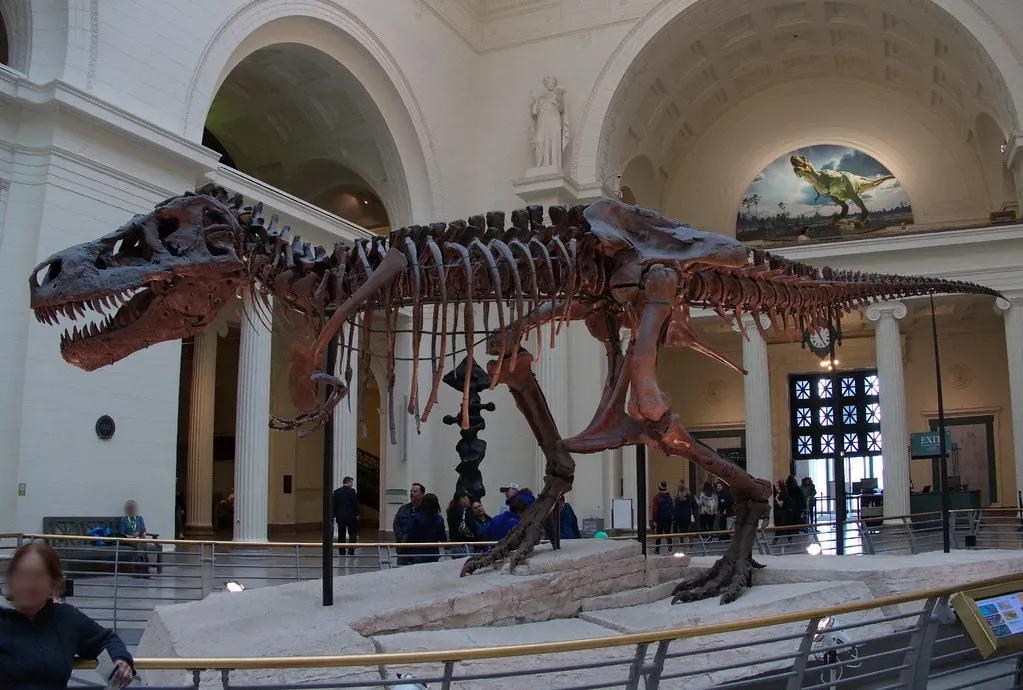
Once preparators finally got a good look at what they’d purchased, the numbers were staggering. At more than 40 feet long and 13 feet tall at the hip, Sue is physically the largest Tyrannosaurus rex specimen ever discovered out of more than 30 known T. rex skeletons – and she’s also the most complete, at around 90 percent, with 250 of the roughly 380 bones in a T. rex skeleton intact, including the furcula and gastralia.
That level of completeness is almost unheard of in paleontology. Most dinosaur skeletons on display in museums are actually reconstructions – plaster, resin, and educated guesswork filling in for bones that were never found. Sue barely needed any of that.
At a Glance
- Length: more than 40 feet
- Height at the hip: 13 feet
- Completeness: roughly 90 percent
- Bones recovered: 250 of about 380
- Known T. rex skeletons worldwide: 30+
The 90% figure is the single most important number in this entire story, because it’s what let scientists ask questions no other T. rex skeleton could answer – questions about disease, aging, and injury that require an almost-complete body to even investigate. Sue remains the most complete and best-preserved T. rex skeleton ever found.
That completeness came at a cost, though – the preparation process alone nearly broke the museum’s staff.
#3 – It Took 30,000 Hours Just to Get Her Ready for Display
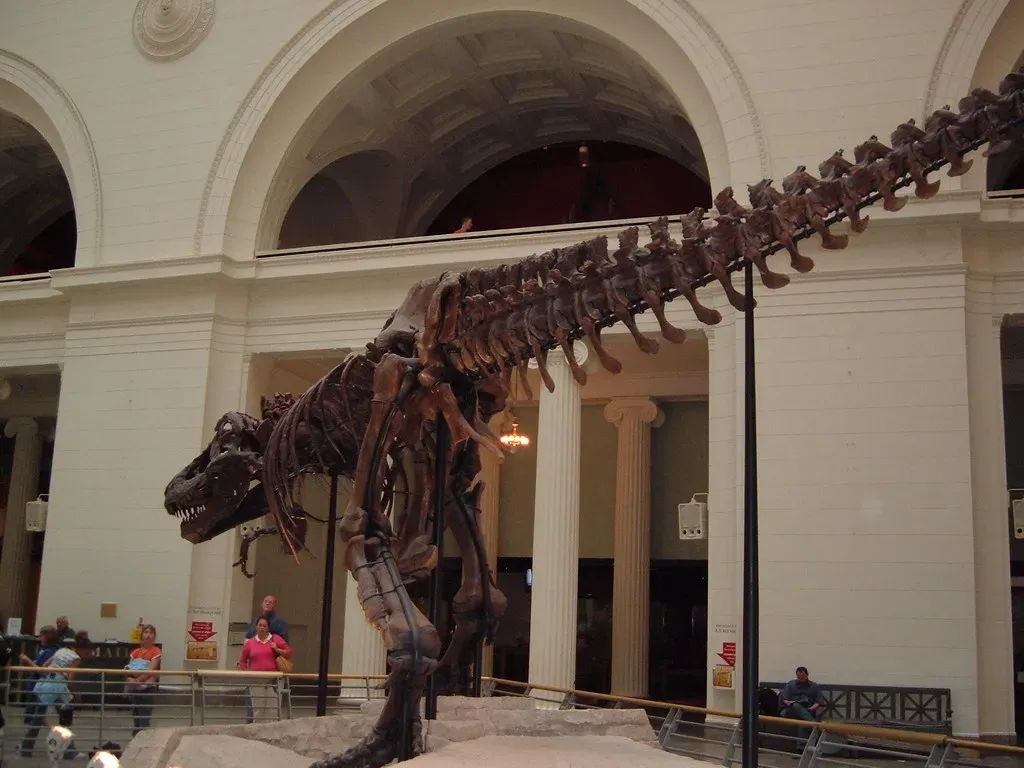
Buying Sue was the easy part. Turning a pile of field-jacketed rock into a museum centerpiece took years. Sue finally made her dramatic debut in Stanley Field Hall on May 17, 2000, but a staggering amount of work happened before she ever stood upright.
Twelve museum preparators spent more than 30,000 hours preparing the skeleton itself, plus another 20,000 hours building the exhibit around her. Think about that math: it’s the equivalent of one person working full-time for over 14 years, just on the bones. Every fragment had to be carefully separated from surrounding rock without damaging tissue that was 67 million years old.
Here’s the detail almost nobody mentions – the preparators weren’t just cleaning bones, they were preserving evidence. Copies of Sue’s skeleton were cast from molds, which meant every scratch, fracture, and lesion had to be documented before casting, creating a permanent scientific record researchers still use today.
That level of obsessive documentation is exactly what let scientists catch something strange about her size a full 18 years later.
#4 – Her Size Had to Be Recalculated After Everyone Got It Wrong
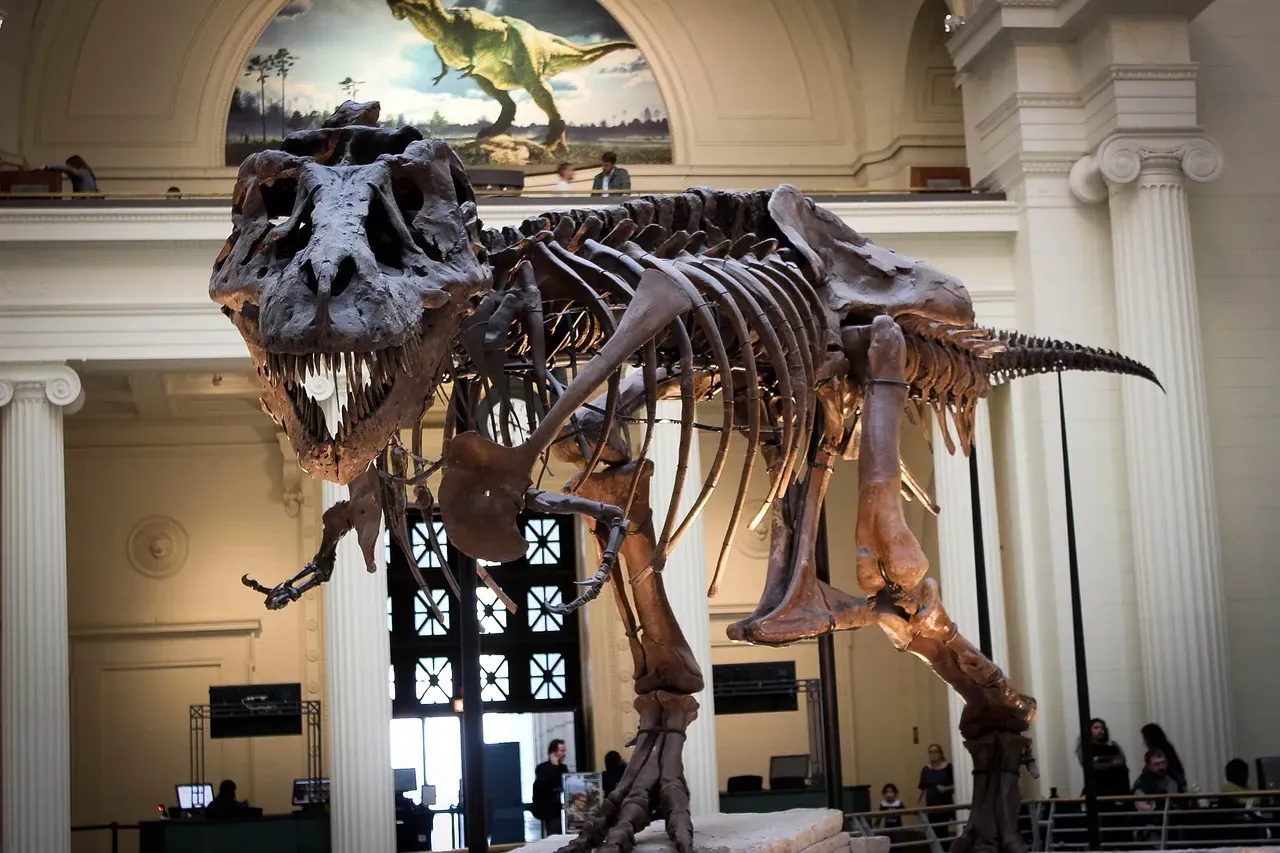
For nearly two decades, museum-goers were told Sue weighed somewhere between five and seven tons. That number turned out to be built on outdated methods – scientists had originally measured leg bone circumference to estimate body mass, a technique that badly undersold her.
That changed when the Field Museum’s team went back with modern imaging technology. Sue measures 40 feet long and 13 feet tall, and it turns out she actually weighed nine tons when she was alive. That’s not a small correction – it’s a difference of roughly two tons, enough to change how scientists model her speed, hunting style, and metabolic needs.
The most surprising part is that fixing her weight also meant physically rebuilding parts of her skeleton. Newly identified belly ribs, called gastralia, had to be added back onto the mount, which meant widening other bones to fit them in – giving Sue a noticeably bulkier midsection than the version visitors saw for 18 straight years.
That correction was minor, though, compared to the bone that helped prove dinosaurs and birds are closer relatives than anyone imagined.
#5 – A Single Bone Helped Confirm Dinosaurs Are Basically Birds
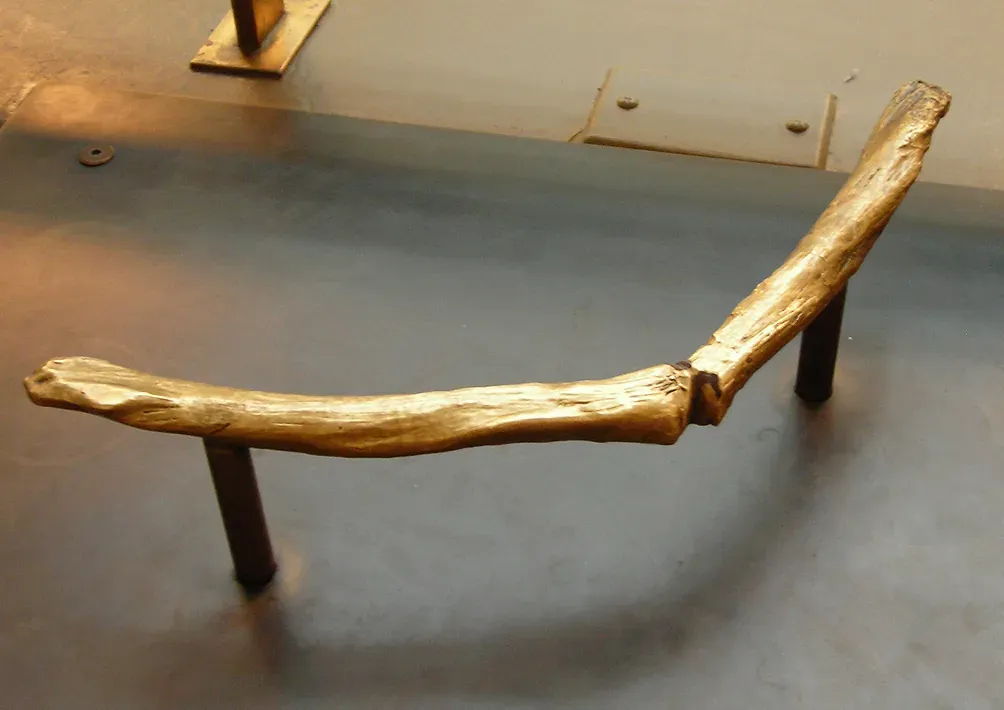
For years, one particular bone in Sue’s skeleton sat unidentified, its purpose a mystery even to the experts preparing her. New research changed that. In keeping with findings that emerged after Sue was mounted in 2000, the museum lowered her arms and installed the bone now correctly identified as her wishbone.
The wishbone – technically called a furcula – is a bone almost exclusively associated with birds. Finding one intact in a Tyrannosaurus rex was a massive piece of supporting evidence for the now widely accepted theory that birds are living descendants of theropod dinosaurs.
Sue’s skeleton contains bones so rare that even trained paleontologists get excited describing them. Scientists identified the furcula, a stapes (a delicate inner-ear bone), and nearly all of her gastralia. Finding a stapes preserved in a 67-million-year-old predator that weighed nine tons is close to miraculous.
That level of preservation is exactly what let scientists figure out something even more personal about Sue: her actual age when she died.
#6 – Her Bones Contain Literal Rings That Reveal Her Age
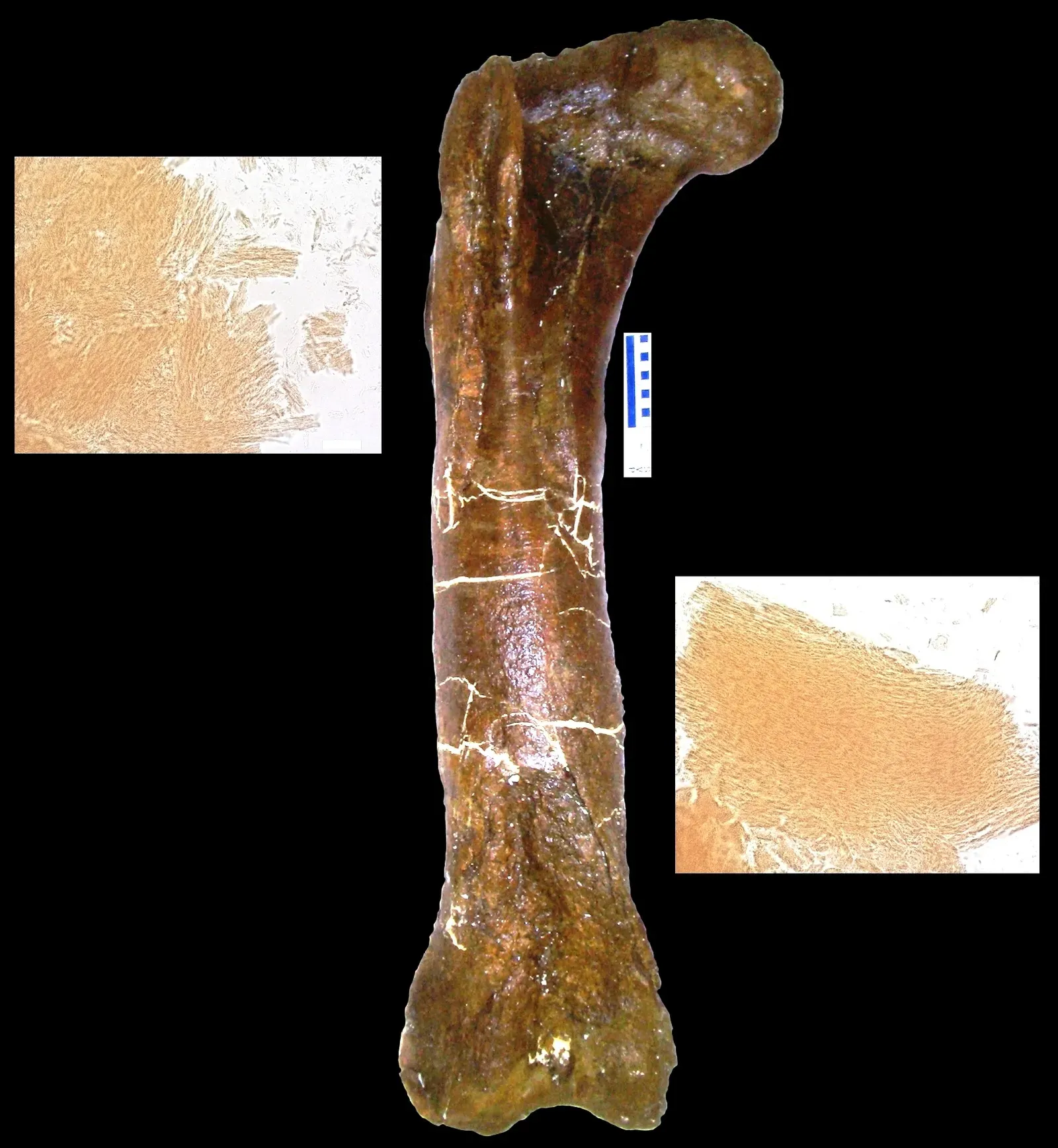
Just like a tree stump, dinosaur bones grow in annual layers, and Sue’s skeleton was intact enough to count them. Her fossilized bones contain rings, much like tree rings, that researchers counted to estimate her age – the first pass put her at 28 years old when she died, making her the most geriatric Tyrannosaurus yet found.
Follow-up research has refined that window slightly. Field Museum scientists now place her lifespan somewhere between 28 and 33 years. Either way, that makes her the oldest T. rex ever documented.
Worth Knowing
- Dinosaur bones grow in yearly layers, similar to tree rings
- First age estimate from ring counts: 28 years old
- Refined range after later study: 28 to 33 years
- Sue is the oldest T. rex ever documented
That’s a genuinely controversial finding, because it upends the old Hollywood image of T. rex as a short-lived killing machine. If the biggest, most dominant predator of the Cretaceous only made it into her late twenties or early thirties before dying, life at the top of the food chain was clearly brutal, not effortless. Growth rings told scientists her age – but a completely different kind of clue told them she spent that life in constant pain.
#7 – She Had Gout, Making Her the First Dinosaur Ever Diagnosed With a Disease
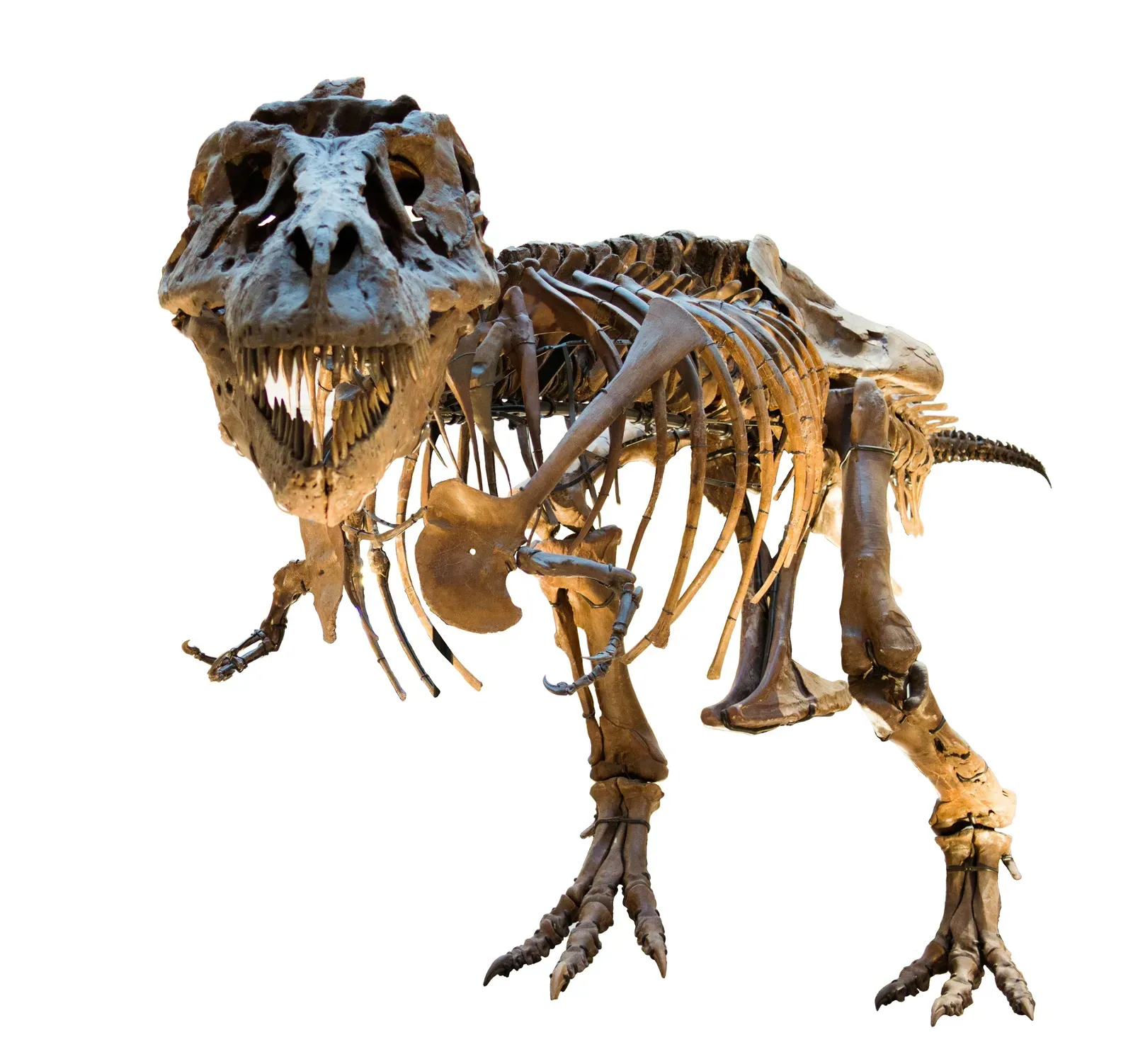
This is arguably the single strangest discovery to come out of Sue’s skeleton. A team led by Bruce M. Rothschild of the Arthritis Center of Northeast Ohio found signs of gout in the finger bones of Sue’s right hand, publishing the finding in the journal Nature in 1997 – the same year she was sold.
Gout isn’t just an old-timey human ailment. It’s a disease in which the body generates excess uric acid, which crystallizes and erodes bone and joint tissue, forming lesions and causing painful swelling. Gout is triggered by a diet high in purines, a substance found in red meat – which a T. rex certainly ate plenty of.
Most people assume gout is a modern, “rich person’s disease” tied to alcohol and rich food – turns out apex predators had the exact same problem 67 million years ago. Later imaging at Argonne National Laboratory backed this up further, with researchers finding evidence in Sue’s right arm consistent with a lack of use and probable gout in her fingers. Painful joints were bad enough. The holes scientists found in her jaw were far more disturbing.
#8 – Mystery Holes in Her Jaw Sparked a Twenty-Year Scientific Argument
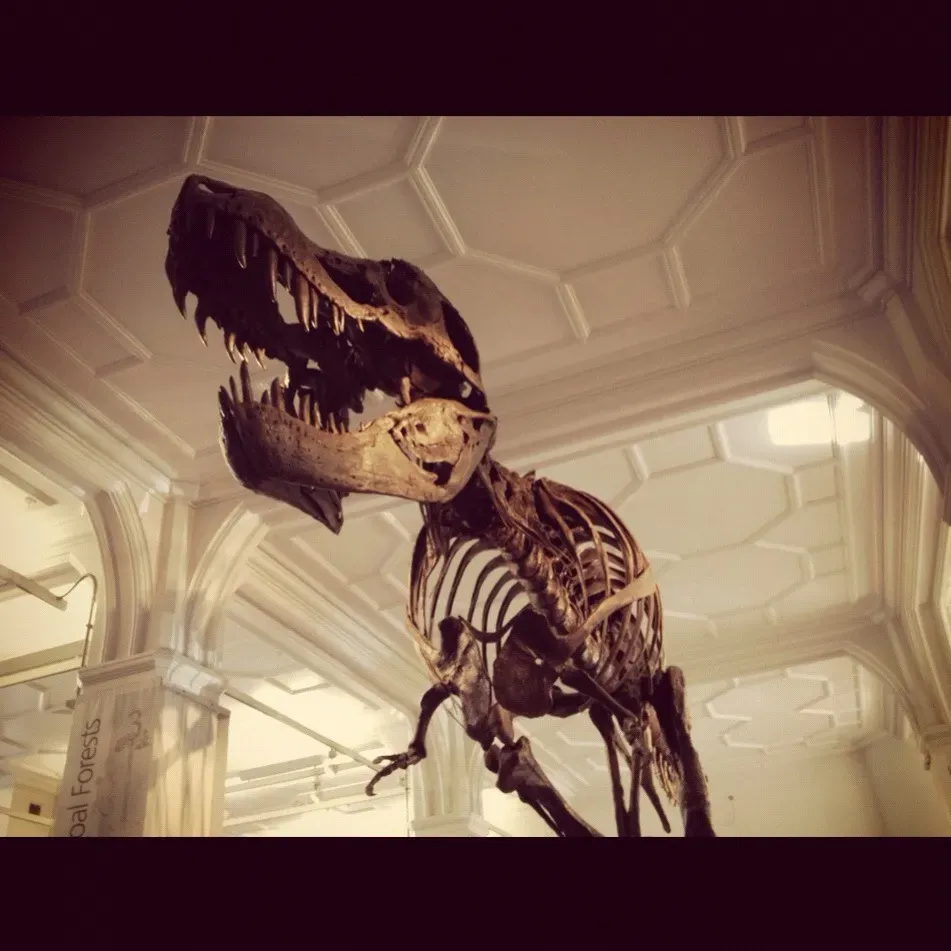
Sue’s lower jaw has smooth-edged holes punched clean through the bone, and scientists still can’t fully agree on what caused them. Tyrannosaurid fossils often display similar erosive lesions on the mandible, and researchers have previously blamed actinomycosis – a bacterial bone infection – or bite wounds from rival tyrannosaurs.
A 2009 study offered a new, far weirder explanation. Researchers showed the lesions are consistent with damage caused by trichomonosis, a parasitic infection that still causes nearly identical mouth and jaw abnormalities in modern birds of prey. That’s right – the mightiest predator in Earth’s history may have died from something disturbingly similar to what still kills hawks and pigeons today.
This single-celled parasite theory suggests something genuinely tragic. Researchers argue these scars didn’t come from a clash of titans, but from a lowly parasite – one that may have infected Sue’s throat and mouth so severely that the animal slowly starved to death. Not every scientist is convinced, though.
So many hypotheses have been put forth only to be shot down. It’s a good paleontology mystery.
Jingmai O’Connor, paleontologist, University of Chicago
The jaw holes weren’t Sue’s only injury – her whole skeleton reads like a battle log.
#9 – Her Skeleton Is a Map of Nearly Every Injury Imaginable
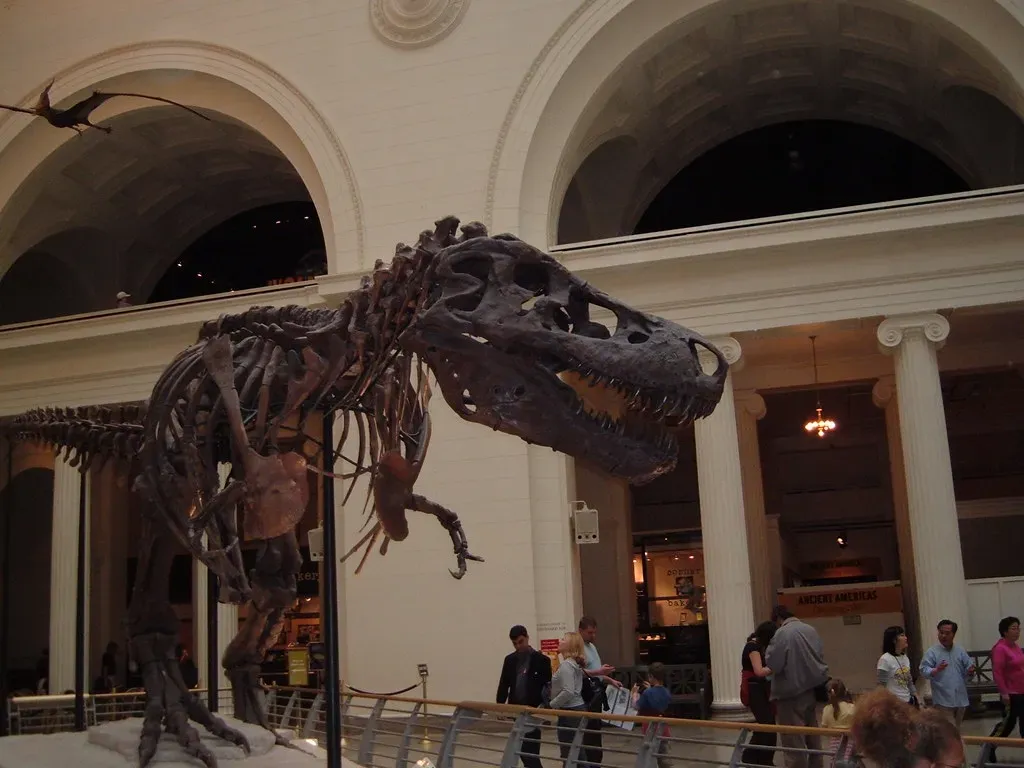
Piece by piece, researchers built a disturbing picture of just how physically punishing Sue’s life really was. Over her decades on Earth, she suffered broken bones, torn tendons, broken ribs, bone infections, protozoan parasites, and arthritis.
Fast Facts
- Broken bones and torn tendons across multiple joints
- Broken ribs that healed over time
- Chronic bone infections
- Protozoan parasite damage in the jaw
- Arthritis, including in her tail
The injuries weren’t random, either – they told a story. Damage to her right shoulder region, likely from struggling prey, tore a ligament and injured the shoulder blade, while healed rib fractures show she survived a serious fall or impact. As Jingmai O’Connor put it, “it had fallen on its right side, busting its ribs – they healed, though.”
Here’s the part that reframes her entire death: despite all this accumulated damage, there’s no single fatal blow anywhere on her skeleton. No clean break, no obvious kill wound. The precise moment of Sue’s death remains unknown, and the scientific consensus now points toward complications from advanced age layered on top of the illnesses recorded in her bones.
Sue wasn’t killed in one dramatic moment. She was worn down slowly – arthritis in her tail, a chronically infected leg bone, gout in her fingers, and finally, potentially, a parasite that stopped her from eating at all.
The Bottom Line
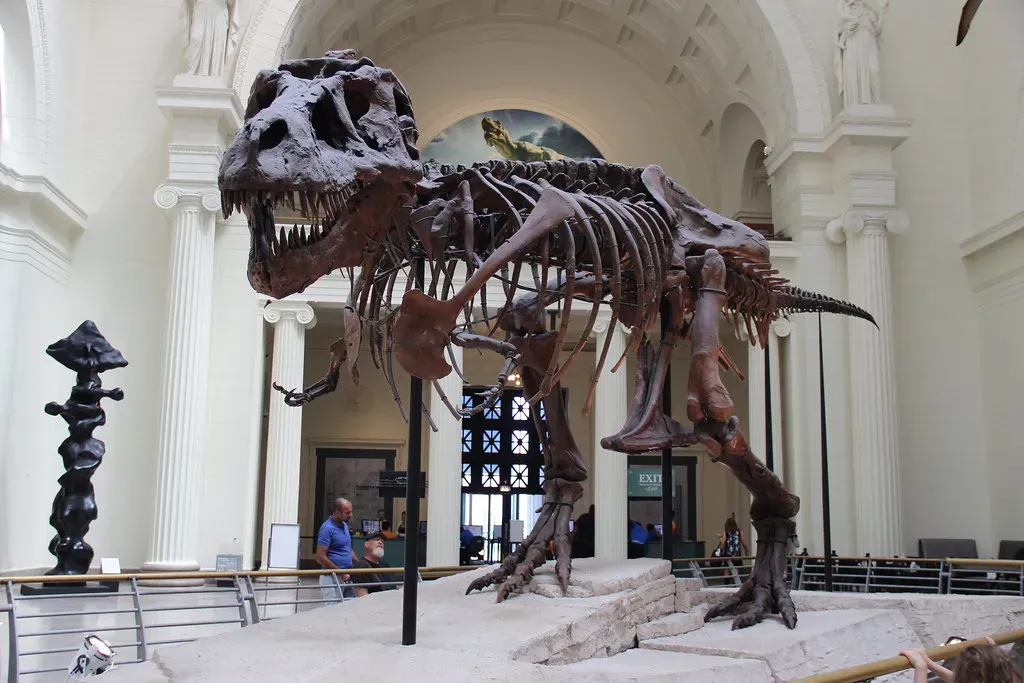
Sue’s $8.36 million sale wasn’t the headline – it was the opening line. What actually mattered came after the gavel fell: a 90%-complete skeleton, a wishbone that helped tie dinosaurs to birds, gout diagnosed in a 67-million-year-old predator, and a jaw disease debate that’s still unresolved decades later.
That’s a $60 million plus dinosaur. No question at all.
Cassandra Hatton, Sotheby’s
Honestly, that price talk misses the point. Sue’s real value was never the hammer price – it was the decade of science that price tag made possible. As newer fossils sell to private buyers for tens of millions with far less research access, paleontologist Scott Persons has warned that “more and more dinosaurs are being sold this way and at ridiculous prices.” Sue proved what a fossil can teach us when it ends up in a lab instead of a living room, and that’s a lesson worth remembering every time another skeleton disappears into a private sale. What do you think – should record-breaking dinosaur fossils be reserved for public museums instead of private collectors? Drop your take in the comments.