
Have you ever found yourself reacting in ways you can’t quite explain? Maybe you snap at someone over a minor comment or feel inexplicably anxious in certain situations. These reactions aren’t random. They’re part of something deeper, something psychologists call your emotional blueprint. Think of it as the invisible instruction manual that guides how you respond to life’s daily challenges. This blueprint was written long before you became aware of it, shaped by experiences, family patterns, and learned responses that now operate on autopilot.
Here’s the thing. Most of us move through life without understanding why we feel what we feel. Yet this understanding holds the key to genuine self-awareness and emotional intelligence. When you start decoding your emotional blueprint, you begin to recognize the patterns that either serve you beautifully or hold you back. You gain the power to rewrite outdated scripts and create healthier responses. Let’s dive into what makes up your emotional blueprint and how you can start .
The Hidden Architecture of Your Emotions

Your emotional blueprint consists of patterns of thoughts, feelings, and actions inherited from your ancestors, creating a framework for how you respond to events until someone consciously starts to change these patterns. It’s honestly fascinating when you realize that you respond not only to early experiences in your own life but also to the experiences of prior generations, whose experiences color yours even when you don’t know them.
This blueprint comprises a set of traits, thoughts, and habits you inherit from your past family, acting like your emotional DNA. The way your grandmother handled conflict, the way your father dealt with disappointment, even the unspoken rules about which emotions were acceptable in your household – all of this feeds into the blueprint you’re working with today. The blueprint is passed down via the unique systemic language and behaviors that live in the family system in response to events, and it essentially runs our lives.
Think about it this way. If your family responded to stress by shutting down emotionally, you might automatically withdraw when things get tough. It’s not a conscious choice. It’s your blueprint in action, telling you this is how safety looks.
Primary Emotions vs. Secondary Layers

Primary emotions emerge as instinctive, immediate responses to stimuli – they’re your nervous system’s first reaction before conscious thought intervenes, arising from deeper brain structures and serving important survival functions. Joy, fear, sadness, anger, disgust, surprise – these are your raw emotional data points.
Secondary emotions, by contrast, are more complex reactions that emerge as you process and interpret your initial feelings. For instance, if someone makes a negative remark about you, you might feel embarrassment as a primary emotion, but then feel anger or resentment as a secondary emotion. The catch? Secondary emotions often mask what you’re truly feeling underneath.
Cognitive appraisals play a central role in the formation of secondary emotions, as the way an individual interprets an event determines the emotion they experience. This is where things get interesting for your self-awareness journey. When you can identify the primary emotion beneath your secondary response, you unlock a much clearer understanding of what’s actually happening inside you. That anger might really be hurt. That irritability could be masking fear.
How Your Body Speaks Before Your Mind Knows

Your body knows you’re experiencing an emotion before your conscious mind catches up. This might be the most underutilized tool in your emotional intelligence toolkit. That knot forming in your stomach during a difficult conversation? Your shoulders creeping toward your ears when deadlines loom? These aren’t just random physical sensations.
The connection between body signals and heightened self-awareness is remarkably direct, as your nervous system processes emotional information through physical channels first, meaning emotional awareness begins in your body, not your thoughts. Writing down your physiological feelings when experiencing emotions helps you recognize what’s going on, because sometimes you might not recognize your emotions and feelings, but you’ll recognize that you might be feeling sweaty, or breathing heavy, or blinking a lot.
Start tracking where tension appears in your body. Notice how your breathing changes throughout the day. Does your jaw clench when a specific person emails you? Does your chest tighten in certain types of meetings? These physical cues are your early warning system, offering real-time feedback about your emotional landscape before your thoughts have even caught up to label what’s happening.
Recognizing Your Automatic Emotional Patterns

Your brain loves efficiency, so it creates shortcuts based on past experiences, and these shortcuts become emotional patterns – automatic responses that save mental energy. The problem? Not all shortcuts lead somewhere helpful. Some patterns keep you trapped in cycles that no longer serve you.
Someone cuts you off in traffic, and suddenly you’re fuming about everything wrong with the world – this pattern feeds on itself, with anger generating more angry thoughts, which intensify the emotion. Sound familiar? Avoidance loops keep you stuck by reinforcing the belief that certain situations are too threatening to face – you skip the social event, dodge the difficult conversation, or procrastinate on that project, and each avoidance confirms your anxiety.
There’s also the people-pleasing cycle, where your self-worth becomes tied to others’ approval, you say yes when you mean no, suppress your needs, and exhaust yourself trying to keep everyone happy, which erodes self-trust and creates resentment. If you track your emotional patterns over thirty days, you’ll look back and start to see patterns emerge. That’s when the real work begins.
The Gap Between Trigger and Response

The gap between trigger and response is where heightened self-awareness lives and grows, and when you notice a strong emotional reaction, mentally labeling what you’re experiencing creates just enough distance to observe rather than immediately react. This is perhaps the most powerful skill you can develop.
Once you recognize emotional patterns, you create space between stimulus and response, and that space is where real change happens – it’s the foundation of both self-awareness and mental health improvement. Let’s be real here. Most of us operate on autopilot, with milliseconds between something happening and us reacting. Creating even a tiny pause changes everything.
On an individual level, being aware of your feelings is the first step in not letting those feelings control you, and recognizing how you feel and why will help you to sit with those feelings and then move forward in a productive way. Try this simple technique. When a strong emotion hits, say to yourself mentally what you’re experiencing. Simply naming it – whether it’s defensiveness, frustration, or anxiety – gives you that crucial moment of observation before choosing how to respond.
Childhood Programming and Your Current Responses

Understanding your emotional responses boils down to the culture you grew up in, both the environment in your families and the wider social norms you’ve been surrounded by – it’s all about how you were taught to handle your feelings from the start. This isn’t about blaming your parents or dwelling on the past. It’s about understanding the operating system that was installed in you.
Imagine growing up in a family where certain emotions are just not okay, or maybe some feelings get the green light while others are left in the dark – this creates a real disconnect from important parts of ourselves, as emotions that are not welcome end up being ignored, dismissed, or even punished. If anger wasn’t allowed in your household, you probably learned to suppress it. If sadness was met with discomfort, you likely learned to hide vulnerability.
Acknowledging the authenticity of primary emotions while normalizing the complexity of secondary emotions can help you feel understood and reduce shame or guilt associated with your emotional experiences. The beautiful thing? Once you see these childhood patterns clearly, you can start making different choices. You’re not stuck with the blueprint you received. You can renovate it.
Building Emotional Literacy and Awareness
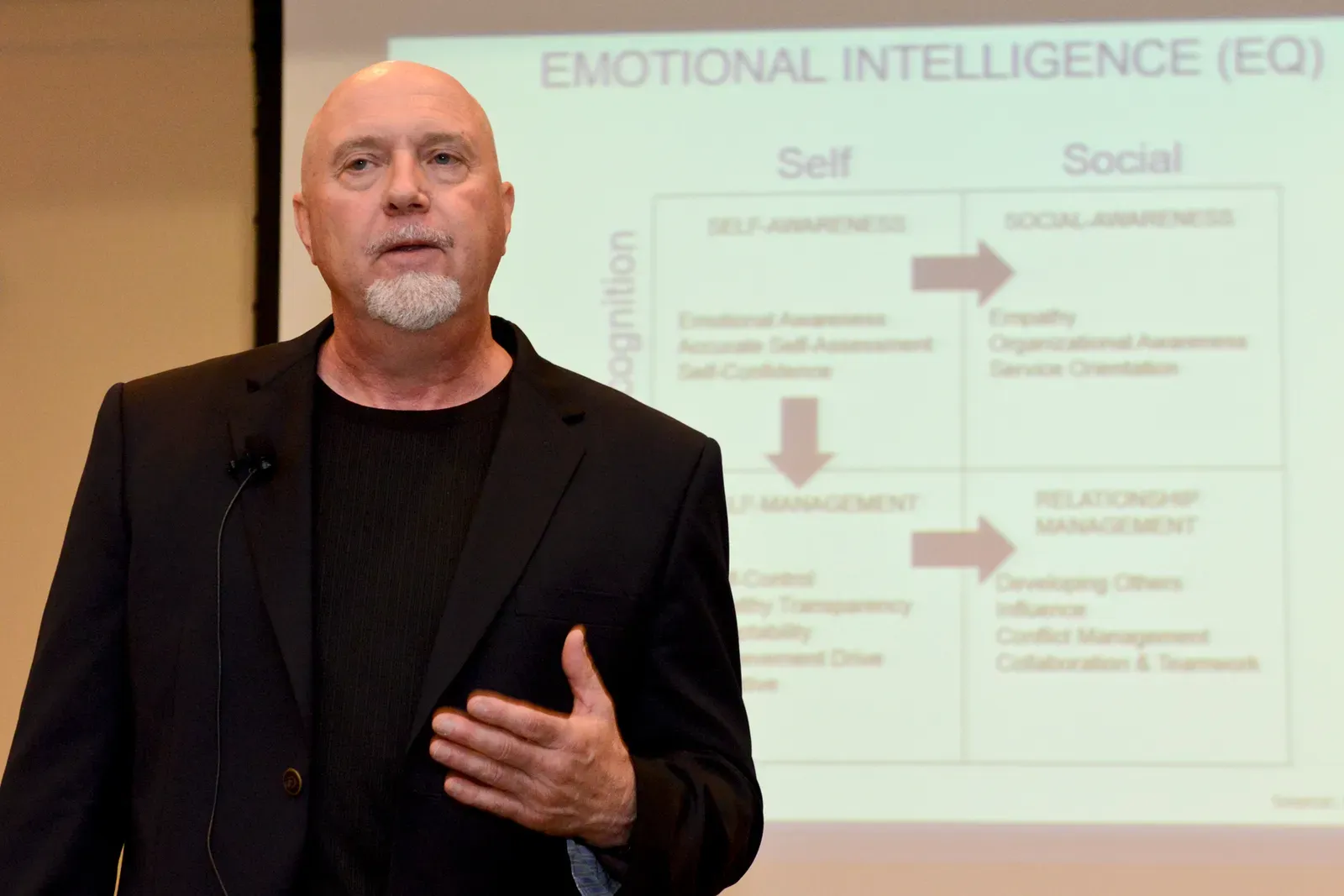
Emotional awareness is the ability to conceptualize and describe one’s own emotions and those of others. It’s like learning a new language, except this one has been speaking to you your whole life without you fully understanding what it’s saying. The ability to identify one’s emotions is a foundational emotional intelligence skill.
Self-awareness is the ability to recognize your emotions and to be able to tell what emotions you’re experiencing, which can be very difficult – people don’t always know they are filling emotions around the clock, but being able to understand what you’re feeling at the time can also change your behavior and the direction of the conversation or situation or your life in general.
Start with daily check-ins. Pause throughout your day and ask yourself what you’re feeling right now. Go beyond simple labels like good or bad. Can you distinguish between feeling anxious versus feeling overwhelmed? Between disappointed and hurt? By consistently recording thoughts and emotions through journaling, you can identify patterns and triggers you may not have noticed before. The practice doesn’t need to be elaborate. Even brief reflections build powerful self-awareness over time.
Transforming Your Emotional Blueprint

Research suggests that the act of generating awareness of one’s emotional world is a necessity for adaptive emotion regulation and an important contributor to general well-being, and awareness of emotional patterns helps you recognize their recurrent situational nature, to which you can then modulate your reactions in an adaptive way. This is where understanding transforms into change.
Identify specific situations that cause immediate emotional flooding or shutdown, introduce a moment of delay between the trigger and the automatic reaction, and then choose a behavior that aligns with the desired, healthier blueprint – consistent practice in choosing new responses gradually weakens the old, reactive pathways in the nervous system. It won’t happen overnight. Honestly, it might feel awkward or uncomfortable at first.
Unlike IQ, which changes little after our teen years, emotional intelligence seems to be largely learned, and it continues to develop as we go through life and learn from our experiences. Every time you pause before reacting, every time you name an emotion instead of just acting on it, you’re literally rewiring your neural pathways. You’re creating a new emotional blueprint that serves the person you want to be, not just the patterns you inherited.
Conclusion: Your Emotional Blueprint as a Living Document

Your emotional blueprint isn’t set in stone. It’s more like a living document that you can edit, revise, and improve throughout your life. The awareness you’ve gained from exploring these concepts gives you something precious – choice. You can choose to respond differently than your automatic patterns dictate. You can choose to sit with uncomfortable emotions instead of avoiding them. You can choose to honor your feelings while still making wise decisions about how to express them.
is an ongoing journey, not a destination. Some days you’ll catch yourself falling into old patterns, and that’s okay. The goal isn’t perfection. It’s progress, awareness, and the willingness to keep learning about yourself. As you continue this work, you’ll likely find that relationships improve, stress becomes more manageable, and you feel more authentically yourself.
What patterns have you noticed in your own emotional responses? Have any of these insights resonated with something you’ve experienced? Your emotional blueprint is uniquely yours, and understanding it might just be the most valuable investment you make in yourself.