Think about the most powerful jaws to ever exist on Earth. You’ve probably seen the movies, the documentaries, the museum displays. Yet there’s something deeply fascinating about understanding just how these ancient creatures actually measured up against one another when it came to pure crushing power. The story isn’t quite as straightforward as you might think.
When you picture a prehistoric predator, you’re likely imagining something terrifying, something capable of snapping bone like breadsticks. The truth is even more intriguing than fiction. Let’s explore the science that allows researchers to peer back millions of years and quantify exactly how devastating these bites really were.
The Undisputed Champion of Terrestrial Bite Force
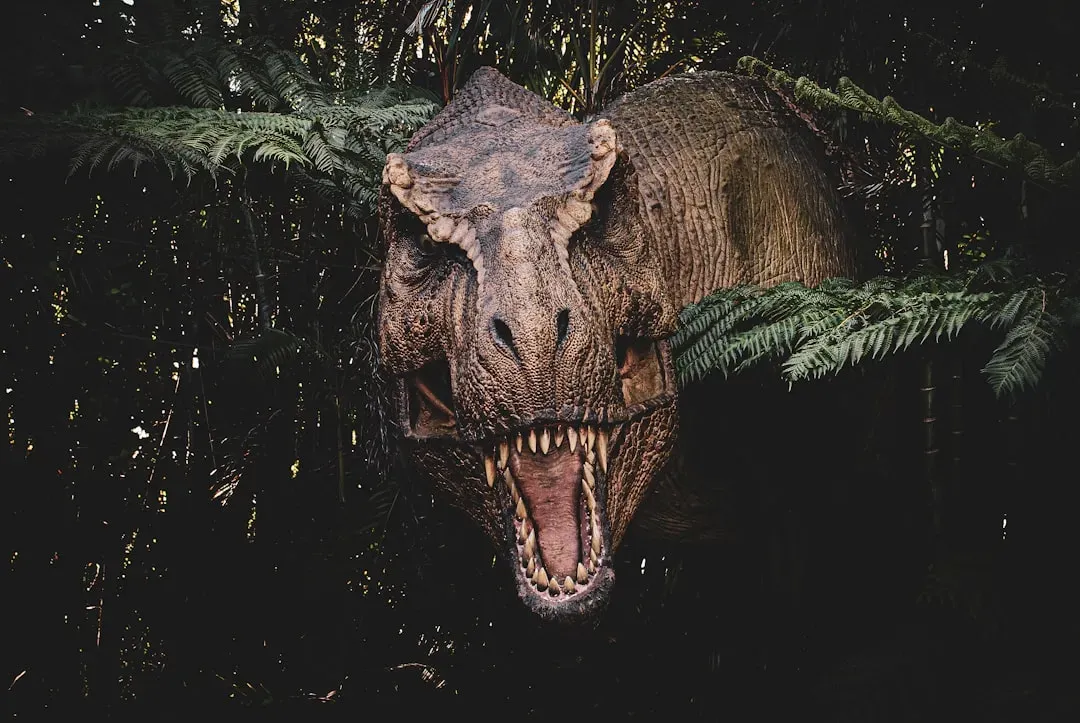
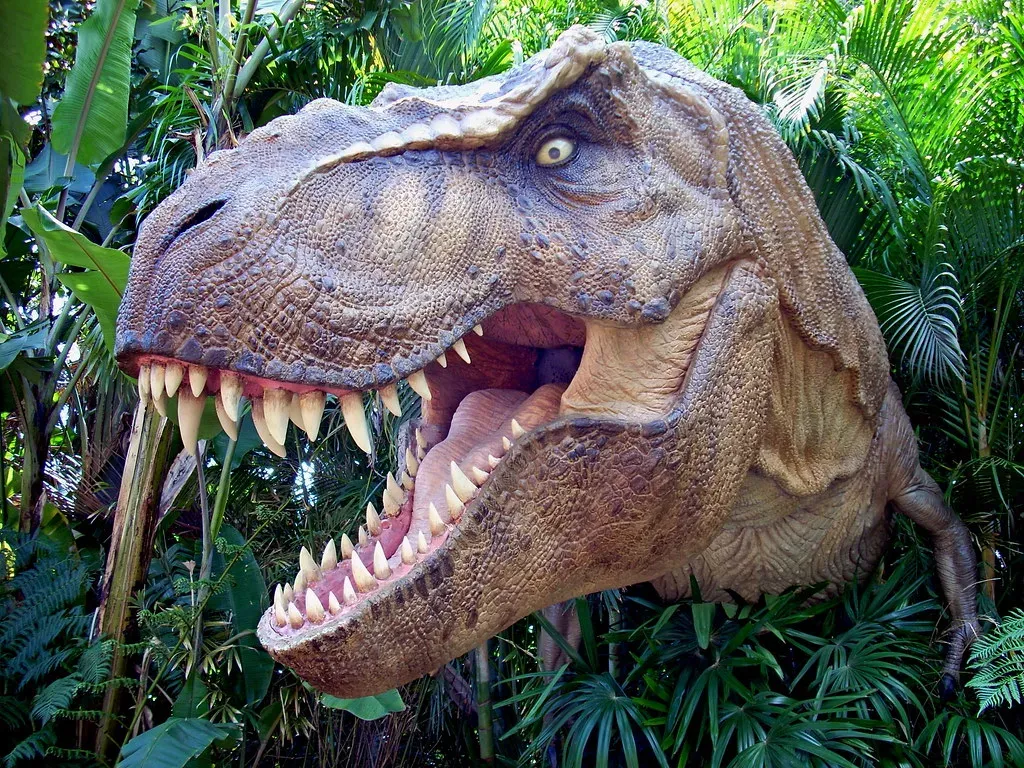
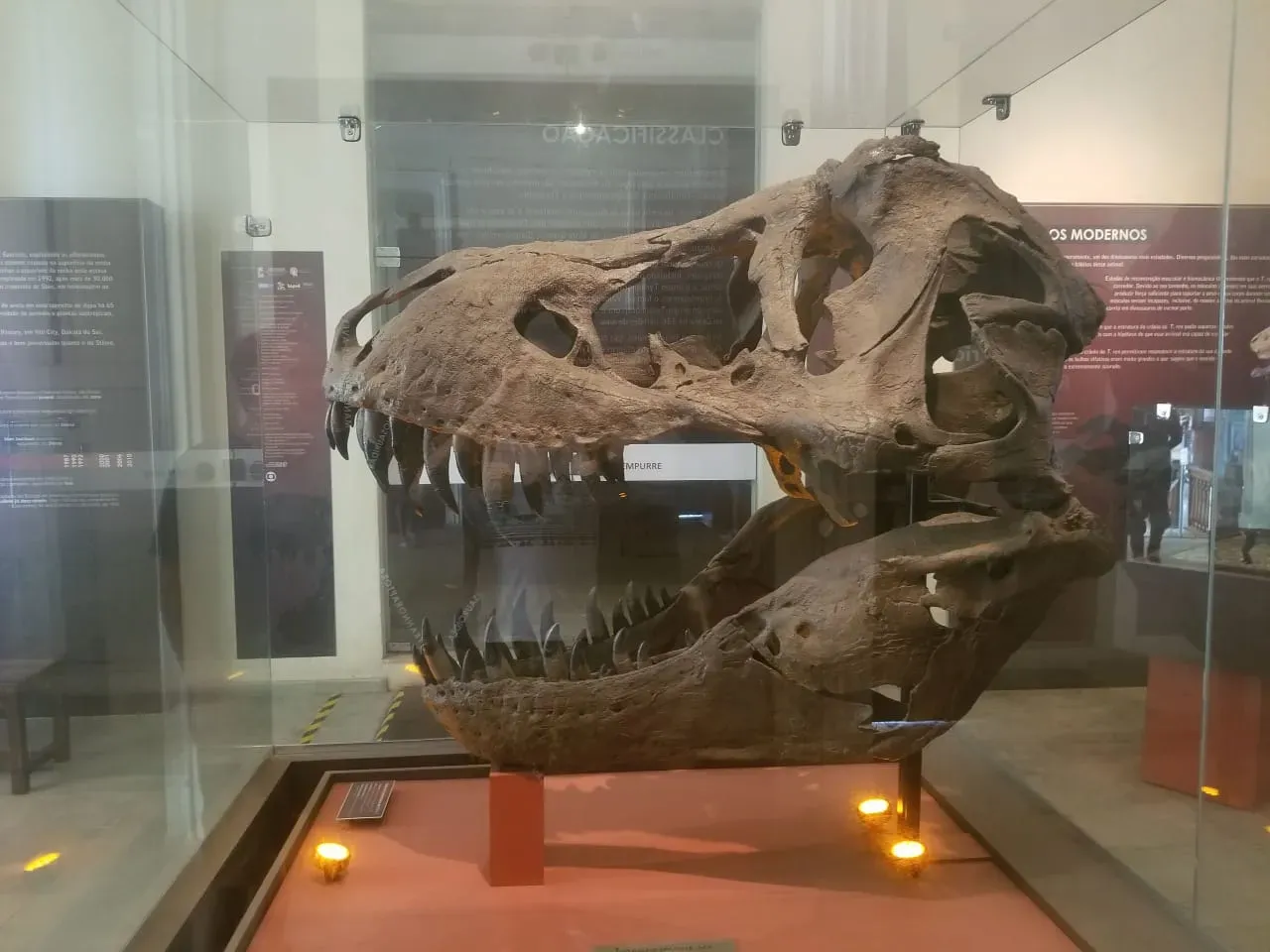
Tyrannosaurus rex generated sustained bite forces between 35,000 to 57,000 newtons at a single posterior tooth, by far the highest bite forces estimated for any terrestrial animal. To put that in perspective, you’re looking at roughly the equivalent of having a medium-sized elephant sitting down on the ground, all that pressure concentrated through just one tooth.
An adult T. rex was capable of a maximum bite force of 35,000 to 57,000 newtons at its back teeth, more than four times higher than past estimates and ten times as forceful as the bite of a modern alligator. Just imagine that for a second. Ten times stronger than an alligator, which already possesses one of nature’s most fearsome bites today. The king of the dinosaurs truly earned its crown through sheer jaw power.
How Scientists Crack the Code of Ancient Jaws
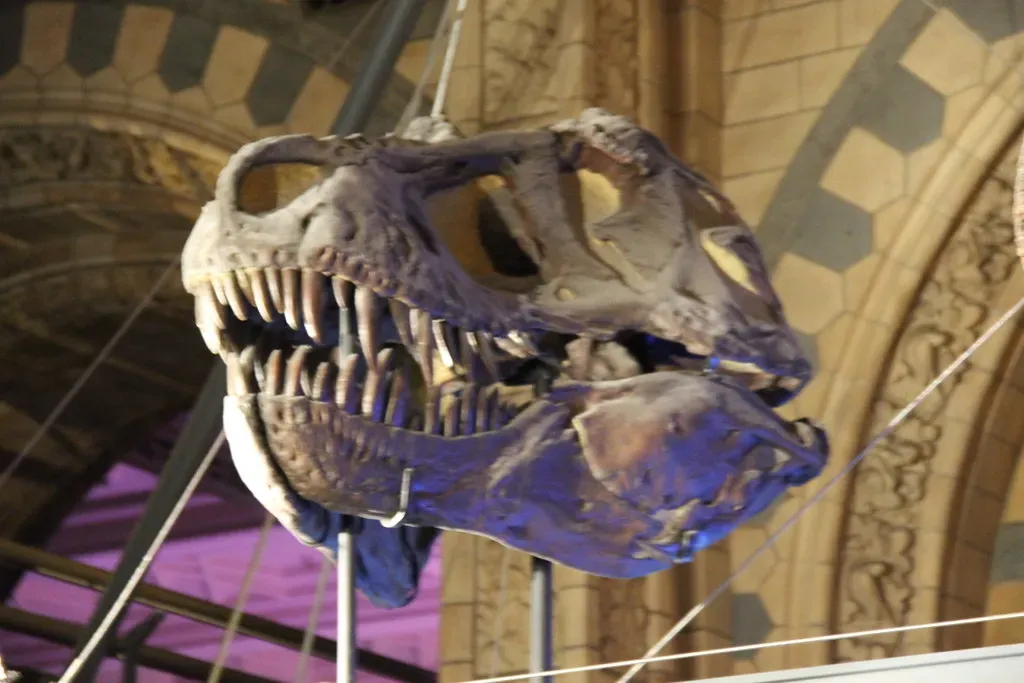
You might wonder how researchers can possibly know the bite force of a creature that went extinct 65 million years ago. Biomechanicists used laser scanners to digitize juvenile and adult T. rex skulls, then used computer models to reconstruct the dinosaur’s jaw muscles and analyze bite performance. It’s honestly remarkable what modern technology can reveal.
Scientists estimate muscle size by looking at subtle marks on the bones where muscles attached and pulled when the dinosaur was still alive. These attachment points tell a story written in bone, allowing paleontologists to work backwards from fossil evidence to living, breathing muscle. The process involves understanding physiological cross-sectional areas of muscles and applying mathematical formulas that determine how much force those muscles could generate.
Tooth Design and Bone-Crushing Capabilities
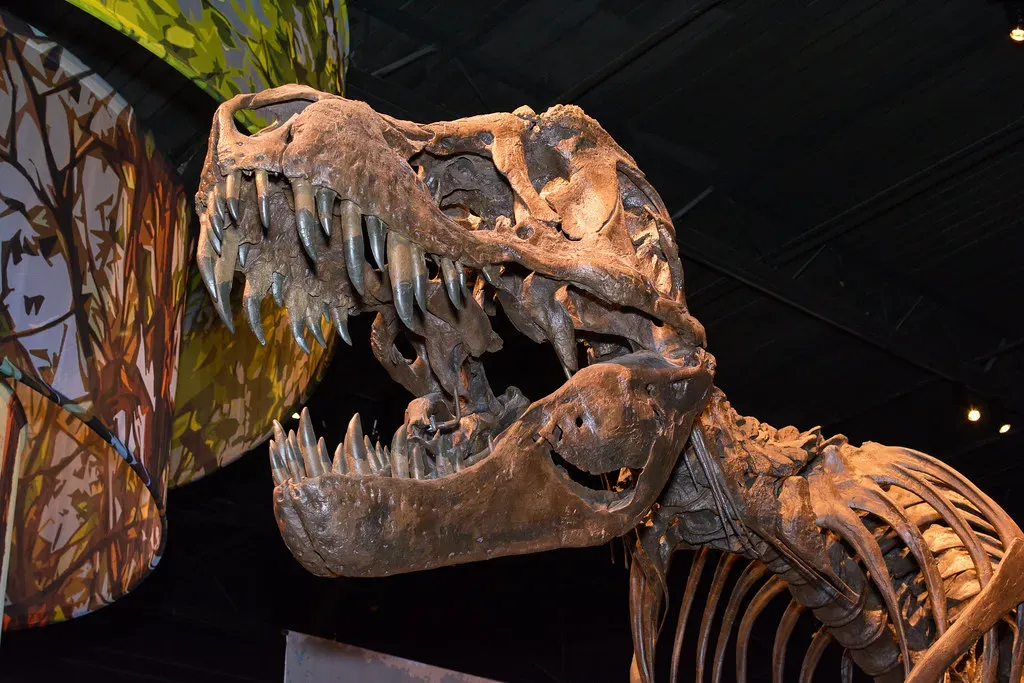
T. rex could chow down with nearly 8,000 pounds of force, more than two times greater than the bite force of the largest living crocodiles. Yet bite force alone doesn’t tell the complete story. Researchers needed to understand tooth pressure, the biomechanically more relevant parameter, because having high bite force doesn’t necessarily mean an animal can puncture hide or pulverize bone.
Bone pulverization was made possible through prodigious bite forces and tooth pressures promoting crack propagation in bones, tooth form and dental arcade configurations that concentrated shear stresses, and repetitive, localized biting. The teeth of T. rex weren’t just strong; they were engineered for destruction. Those thick, banana-shaped teeth worked like biological battering rams, designed to withstand incredible stress while transferring maximum force into prey.
The Changing Bite Through a T. Rex’s Life
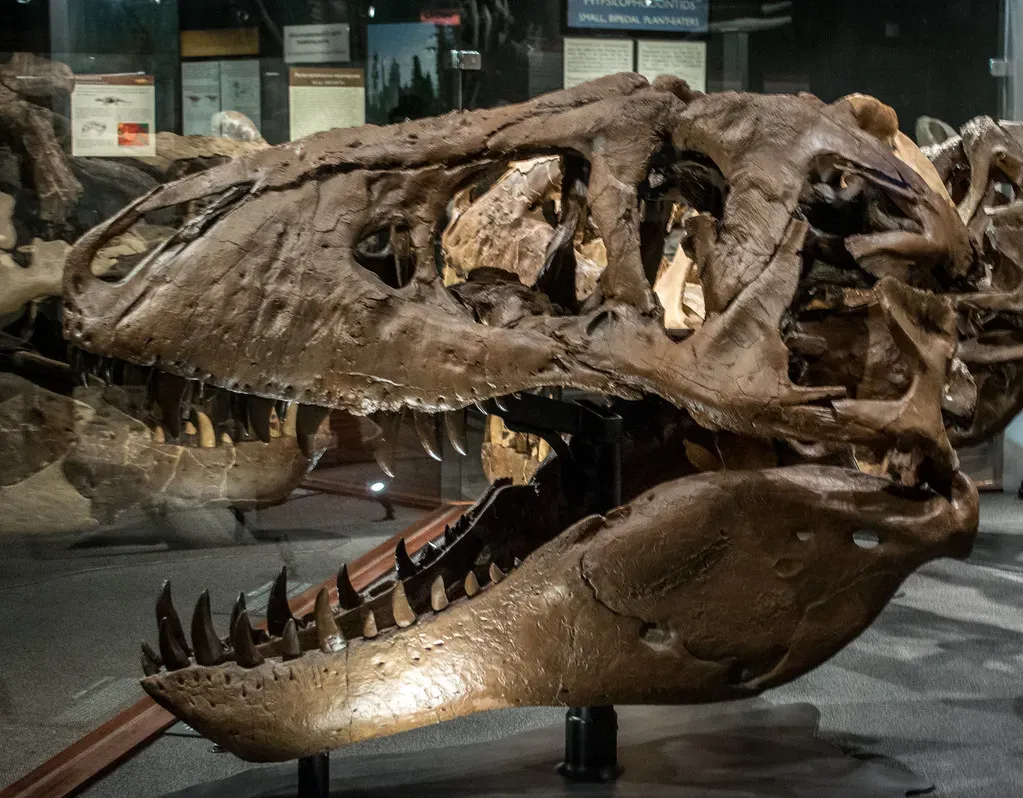
Here’s something many people don’t realize. Juvenile tyrannosaurs didn’t possess anything close to adult crushing power. Juvenile T. rexes, while not yet able to crush bones like their 30 or 40 year old parents, were developing their biting techniques and strengthening their jaw muscles. Think about that from an ecological perspective.
Juvenile T. rex bites topped out at about 880 pounds. Still formidable compared to most animals today, yet nowhere near adult capabilities. The juvenile had a relatively weaker bite than the adult even when size differences and uncertainties about muscle size were taken into account, suggesting T. rex underwent a change in feeding behaviour as it grew. This allowed parents and offspring to hunt different prey, reducing competition within the species itself.
Other Large Theropods and Their Biting Power
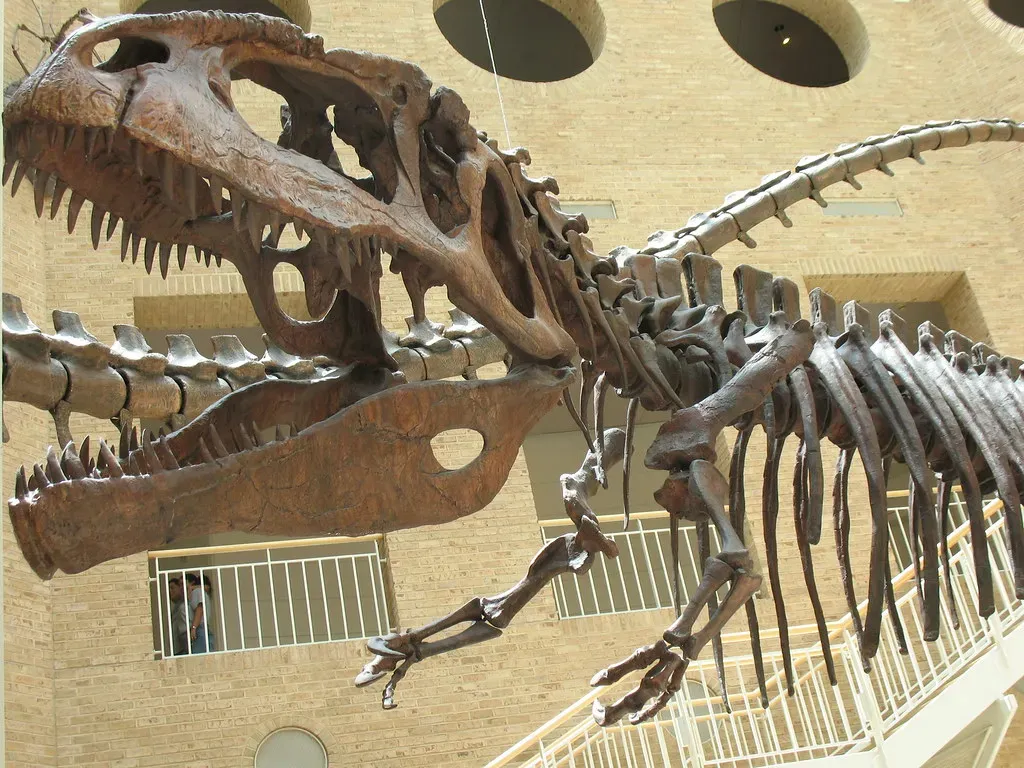
Tyrannosaurus wasn’t the only massive predator stalking prehistoric landscapes. Giganotosaurus had bite forces between 4,000 to 9,000 PSI, while Spinosaurus ranged from 4,000 to 5,000 PSI. These were still incredibly powerful animals capable of taking down enormous prey. The differences reveal fascinating evolutionary strategies.
Unlike T. rex, some dinosaurs including spinosaurs and allosaurs became giants while maintaining weaker bites more suited for slashing at prey and stripping flesh, with large tyrannosaur skulls optimized like modern crocodiles with high bite forces that crushed prey. Evolution found multiple solutions to the problem of being a giant carnivorous biped. Some went for the crushing approach, others for slashing and tearing. Both strategies worked remarkably well for millions of years.
Marine Reptiles That Rivaled Dinosaurs
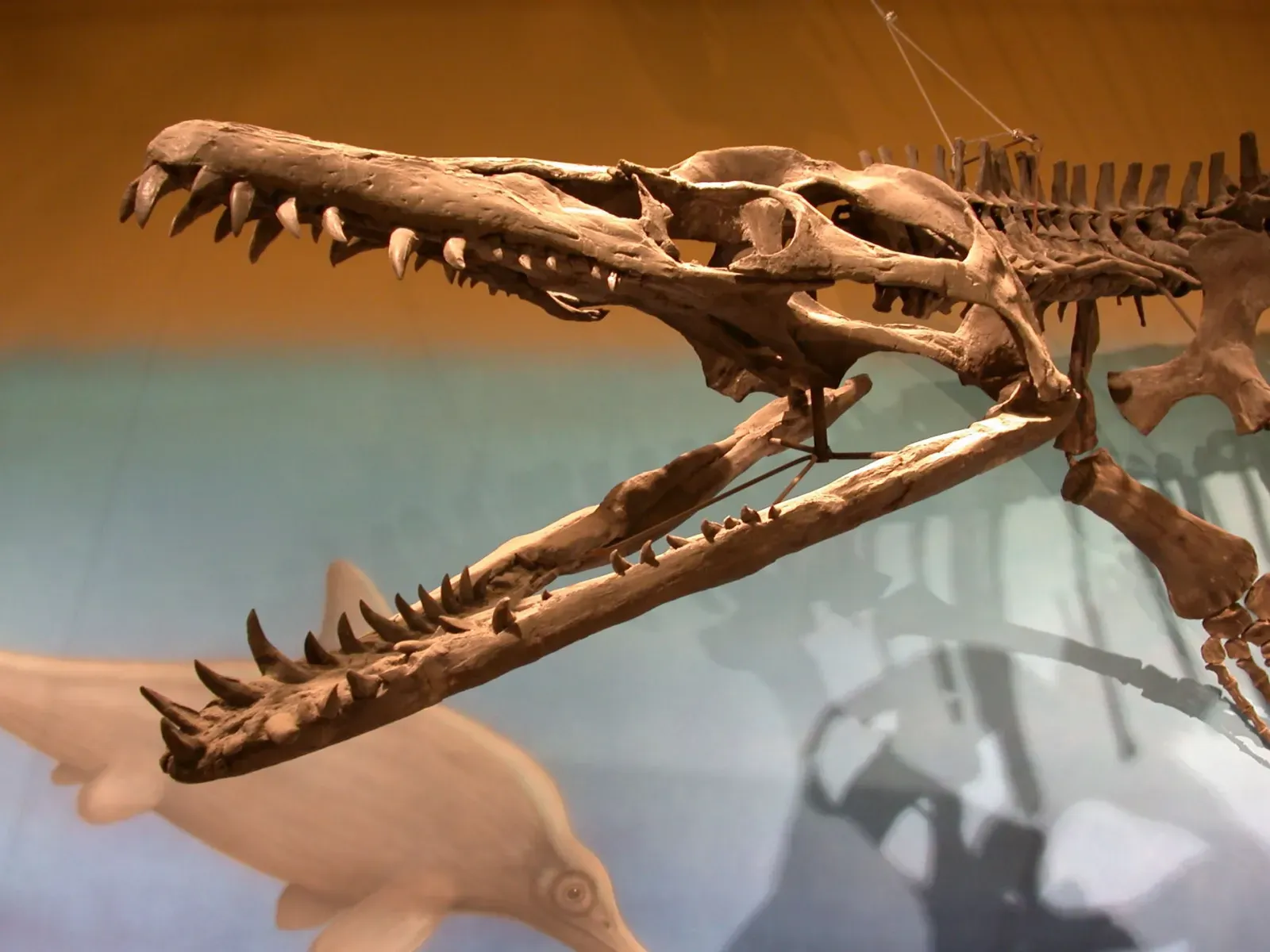
The oceans held their own terrors during the Mesozoic Era. Kronosaurus, an extinct pliosaur, had bite force estimates between 15,000 to 27,000 newtons. Honestly, that’s competitive with many large terrestrial predators. Kronosaurus exceeded the bite force of any living animal, only slightly surpassed in some estimates by Tyrannosaurus.
Prehistoric megalodon sharks, which may have grown to lengths of more than 50 feet and weighed up to 30 times more than the largest great white, could chomp with more than three times the force of T. rex. When you consider the sheer mass involved, it makes sense. Size matters tremendously in generating bite force, though skull structure and muscle attachment points create significant variation.
The Weakest Biters of the Dinosaur World
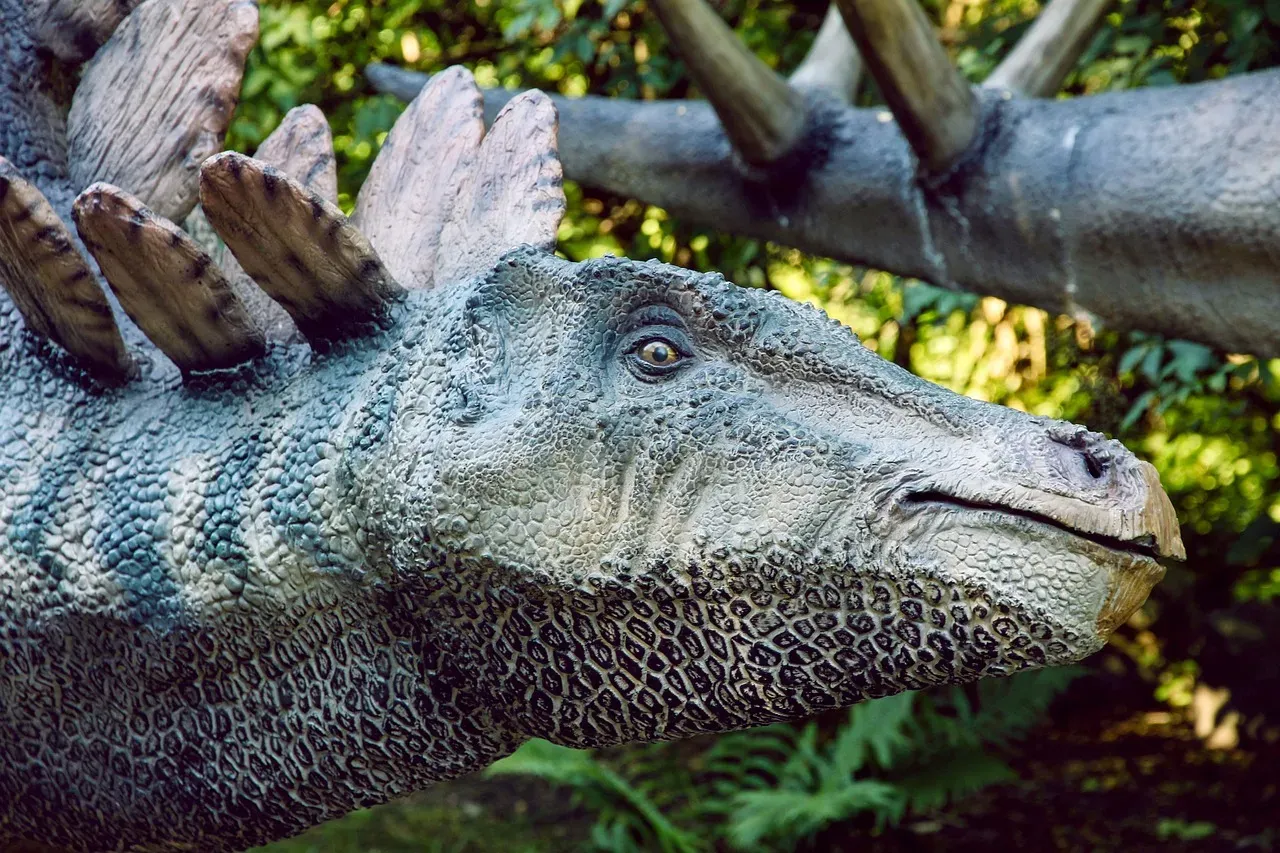
Not every dinosaur evolved for powerful bites. The herbivorous Stegosaurus likely had one of the weakest bites, with its small and narrow head leaving it with a tiny snout and less room for muscles. Function follows form in evolution.
Stegosaurus didn’t need a strong bite since it grazed on ground-level plants such as ferns and cycads, with scientists suspecting its bite force was close to 500 PSI. That’s actually weaker than a teenage T. rex despite Stegosaurus being a multi-ton animal. The difference highlights how dietary needs drive jaw evolution. Herbivores processing soft vegetation simply don’t require the crushing power of predators that must pierce thick hide and crack open bones.
What Bite Force Reveals About Prehistoric Ecosystems
Bite force measurements help paleontologists understand the ecosystem in which dinosaurs lived, which predators were powerful enough to eat which prey, and what other predators they competed with. It’s like reconstructing an entire food web from fossilized teeth and jaw bones. The science tells us about competition, resource partitioning, and hunting strategies.
Tyrannosaurs evolved skulls built for strength and crushing bites, while other lineages had comparatively weaker but more specialized skulls, suggesting a diversity of feeding strategies even at massive sizes, meaning there wasn’t one ‘best’ skull design for being a predatory giant. This diversity allowed multiple large predators to coexist in the same environments by specializing in different hunting techniques and prey types. Evolution discovered that many roads lead to success in the predator game.
The Legacy of Ancient Bite Force Research
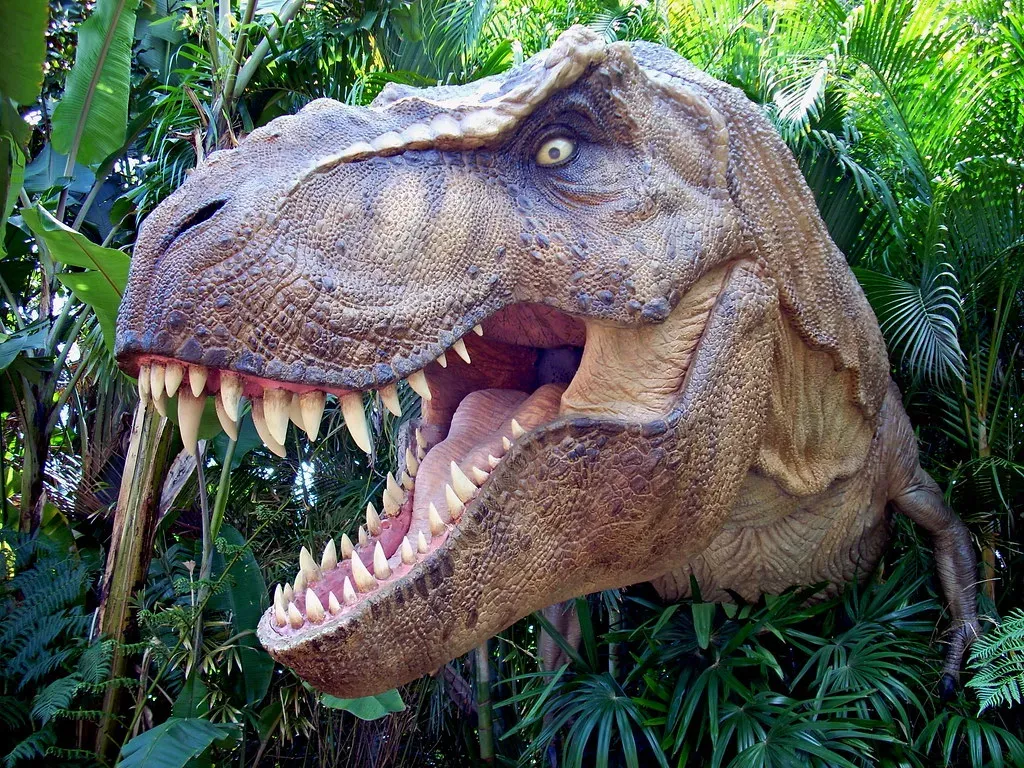
Research results show that T. rex had an extremely powerful bite, making it one of the most dangerous predators to have roamed our planet, with its unique musculoskeletal system continuing to fascinate scientists. The research continues advancing with new technologies and fossil discoveries. Every year brings refinements to our understanding.
The journey from fossilized bone to quantified bite force represents one of paleontology’s most impressive achievements. Through computer modeling, biomechanical analysis, and careful study of muscle attachment sites, researchers have brought these ancient predators back to life in ways their discoverers could never have imagined. The numbers tell us T. rex remains undefeated among land animals, yet the full story encompasses diverse strategies, ecological niches, and evolutionary pathways that all led to success in their time.
So which dinosaur truly had the strongest bite? Tyrannosaurus rex takes the crown for terrestrial animals without question, though marine reptiles like Kronosaurus came impressively close and megalodon exceeded all of them. The answer depends partly on how you define the competition. What do you find most surprising about these ancient bite forces? Does knowing the science make these creatures more or less terrifying in your imagination?