Think about this for a moment. You can probably recall with vivid detail where you were when you heard life-changing news, yet the name of someone you met yesterday has completely vanished. Your brain keeps track of some things with crystal clarity while letting others slip through your fingers like sand. It’s puzzling, honestly, and you’re not alone in wondering why this happens.
What determines which moments stick around and which ones disappear into the mental void? The answer involves a fascinating interplay between your brain’s architecture, emotional intensity, and even how much sleep you got last night. Your memory isn’t just a filing cabinet storing everything equally. It’s a dynamic system that’s constantly deciding what matters and what doesn’t.
Your Brain Has a Team Approach to Memory Storage
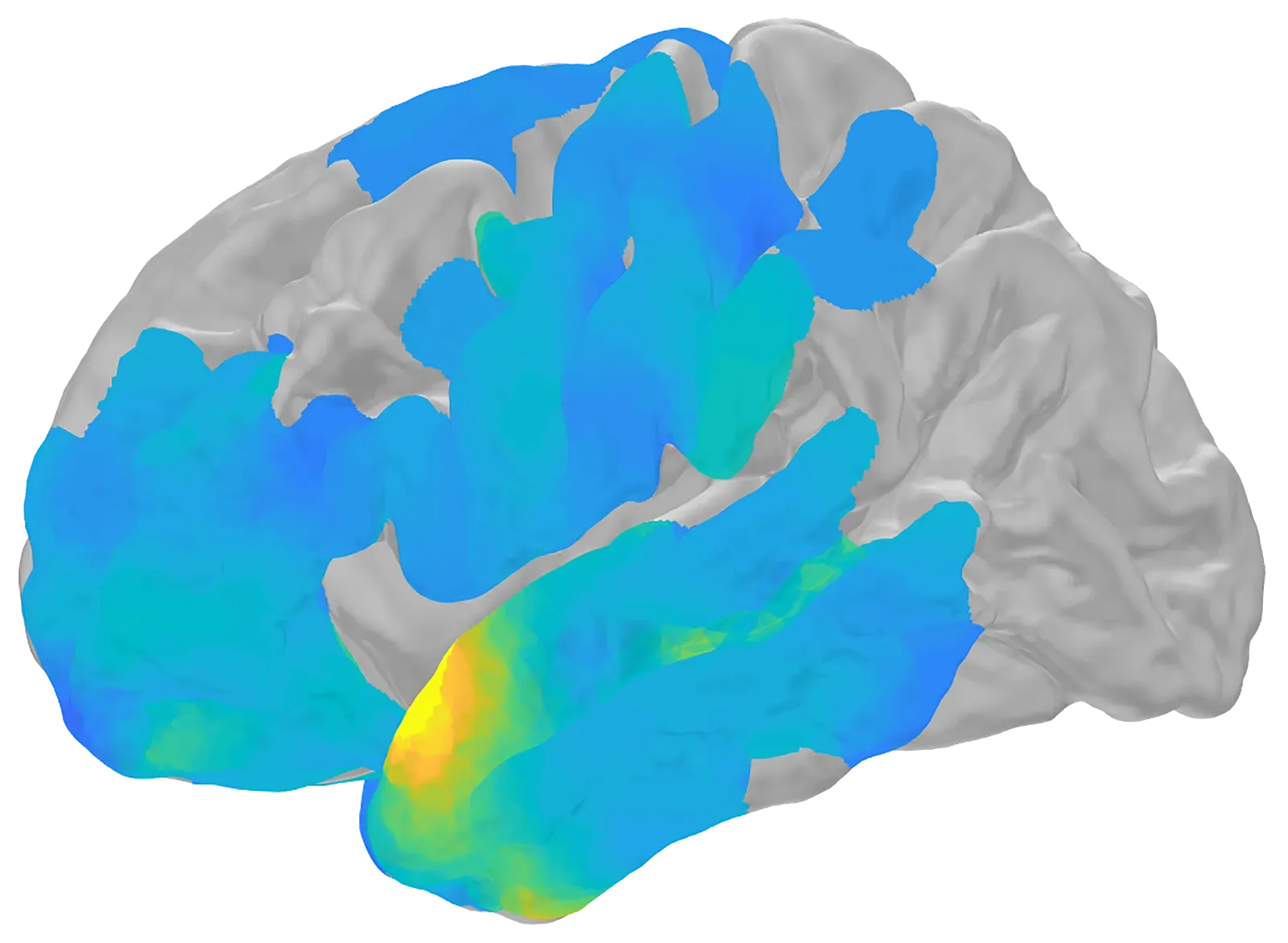
Here’s something that might surprise you. Strong, stable memories are encoded by teams of neurons all firing in synchrony, providing redundancy that enables these memories to persist over time. Think of it like telling a complicated story to multiple friends so that if one forgets details, the others can fill in the gaps. That’s essentially what your neurons do.
Mice that had formed strong memories encoded by higher numbers of neurons remembered tasks quickly, and using groups of neurons enables the brain to have redundancy and still recall memories even if some of the original neurons fall silent or are damaged. This explains why some memories remain accessible even decades later. The more neurons involved in encoding an experience, the better your chances of holding onto it. Memories might fade more rapidly as we age because a memory is encoded by fewer neurons, and if any of these neurons fail, the memory is lost.
Emotions Act Like Memory Superglue

Let’s be real, you remember emotional moments far better than mundane ones. Emotionally impactful events strengthen the neural connections in the brain that store memories, and these important events act as a kind of glue, anchoring otherwise trivial experiences. That dinner you had last Tuesday? Probably forgotten. However, the dinner where you received shocking news? You likely remember every detail, down to what was on your plate.
Mundane memories get extra sticking power in the brain if they are connected to a significant event, including something surprising, rewarding, or events with an emotional punch. Your brain doesn’t just save the big moment itself. It also preserves the little details surrounding it, like background music or what you were wearing. The strength of recall for things that occurred after an event depends on the emotional impact of the big moment itself, while memories from before the event are more likely to be cemented if they had similarities that connected them to the pivotal moment.
Molecular Timers Control How Long Memories Stick Around
Long-term memory relies not on a single switch, but on a sequence of gene-regulating programs that unfold like molecular timers across the brain, with early timers activating quickly but fading fast, allowing memories to disappear, while later timers turn on more gradually, giving important experiences the structural support needed to persist. It’s hard to say for sure, but this timing system seems to be your brain’s way of sorting what’s worth keeping from what can be tossed out.
These molecules act like a sequence of timers, with some activating quickly but fading fast, allowing short-term memories to disappear, while others activate more slowly and provide the support needed for long-term memory. The thalamus helps determine which memories should be kept and directs them to the cortex for long-term stabilization. This process happens without you even being aware of it, working constantly in the background to manage your mental storage.
Sleep Transforms Fragile Memories Into Lasting Ones

You’ve probably noticed that after a good night’s rest, information seems to stick better. That’s not coincidence. REM sleep elicits an increase in neuronal activity following an enriched or novel waking experience, thus increasing neuronal plasticity and therefore playing an essential role in the consolidation of memories. While you’re dreaming away, your hippocampus is essentially replaying the day’s events and transferring them to long-term storage in your cortex.
The seminal study by Jenkins and Dallenbach yielded a positive effect of sleep on recall, and this effect has since been replicated many times. Sleep is more likely to benefit the consolidation of memories if the information is relevant to future events or behaviors. So if you’re trying to remember something important, sleeping on it isn’t just a cliché. It’s neuroscience.
The Forgetting Curve Shows Memory Decay Follows a Pattern
Humans tend to halve their memory of newly learned knowledge in a matter of days or weeks unless they consciously review the learned material. Hermann Ebbinghaus discovered this back in the 1880s, and it still holds true today. Within an hour, you can lose up to half of newly acquired information if no effort is made to reinforce it, and this decline continues rapidly, with roughly seventy percent forgotten within a day and around ninety percent within a week.
The curve isn’t a straight line downward though. Memory retention drops sharply within the first few hours after learning, and this decline follows an exponential pattern, with rapid initial forgetting that eventually slows down over subsequent days. Forgetting is a predictable decay shaped by several factors: the strength of the original encoding, the method of learning, emotional salience, and the frequency of review. Your brain is essentially making executive decisions about what deserves storage space and what doesn’t.
Repetition and Spacing Can Rescue Fading Memories

Here’s the thing about fighting the forgetting curve: timing matters more than volume. When material is being repeated at strategically spaced intervals, the brain reconstructs the memory and strengthens it in the process, and these specific time intervals between multiple learning sessions are essential as they allow the brain to recover between repetitions and consolidate the learning. Cramming everything into one marathon study session won’t cut it.
Some learning consultants claim reviewing material in the first day after learning information is the optimum time to actively recall the content and reset the forgetting curve, and evidence suggests waiting around ten to twenty percent of the time towards when the information will be needed is the optimum time for a single review. It’s like watering a plant at just the right intervals. Too much at once doesn’t help, but regular, spaced attention keeps things thriving.
The Hippocampus Acts as Your Brain’s Memory Manager
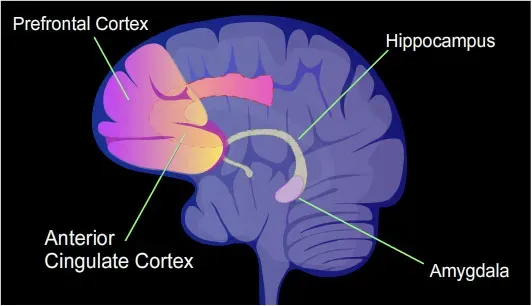
The hippocampus plays important roles in the consolidation of information from short-term memory to long-term memory, and in spatial memory that enables navigation. Think of it as the gatekeeper deciding what gets promoted from temporary storage to permanent archives. Systems consolidation is the process by which the hippocampus guides the reorganization of the information stored in the neocortex such that it eventually becomes independent of the hippocampus.
Interestingly, Just one day after a fear-conditioning event, memories were being stored in engram cells in both the hippocampus and the prefrontal cortex, though the engram cells in the prefrontal cortex were silent initially and the prefrontal cortex already contained the specific memory information, which is contrary to the standard theory that you gradually transfer memories. Over approximately two weeks, these silent cells mature and become capable of independent recall. It’s a more complex system than scientists previously understood.
Why Some Memories Become More Resistant to Forgetting

Overnight consolidation makes aversive memories more resistant to suppression, which requires more prefrontal inhibitory control over hippocampal memory and amygdala emotional systems. Ever notice how trying to forget something stressful becomes harder after sleeping on it? Your brain has literally strengthened those neural pathways overnight, making them more permanent fixtures in your mental landscape.
Like old photographs, memories fade in quality over time, and people consistently remembered visual scenes as being less vibrant than they were originally experienced, though the fading effect happened less for memories that were rated as subjectively stronger. This visual decline is something you’ve probably experienced yourself. Older memories lose their sharpness and color, becoming more like faded snapshots than high-definition videos. Still, the most meaningful ones retain more detail than the everyday moments that barely registered in the first place.
Conclusion: Your Memory Is Constantly Making Judgment Calls
Your memory system is far from passive. It’s actively evaluating, sorting, and deciding what deserves permanent storage and what can be discarded. The memories that last forever typically share common traits: they involve strong emotions, they’re encoded by multiple neurons working together, they get reinforced through sleep and repetition, and they connect meaningfully to other experiences in your life.
The ones that fade quickly? They’re often mundane, isolated experiences that your brain deems unimportant for survival or future use. Your neural architecture is optimized for efficiency, not comprehensive documentation. Understanding this process gives you power over your own memory. You can strengthen what matters through strategic review, emotional connection, and quality sleep. The brain might make the initial judgment calls, but you’re not entirely at its mercy. What memory are you going to strengthen today?