Picture this: you’re offered a promotion at work. It’s what you’ve been working toward for years. Better salary, more responsibility, a corner office. So why does your stomach twist into knots at the thought of accepting it? Here’s the thing, your brain isn’t trying to sabotage you. It’s just doing what it’s been programmed to do for thousands of years: keeping you alive.
Change isn’t just uncomfortable. For many of us, it feels downright threatening, even when we know it’s good for us. Let’s dig into why your mind treats a new job, a move to another city, or even switching up your daily coffee order like a potential disaster waiting to happen.
Your Brain on Threat Mode

When your brain perceives change, it often processes it as an error or threat, activating the amygdala and diverting resources away from the prefrontal cortex. Think of your amygdala as an overprotective security guard that’s been on duty since prehistoric times. The amygdala processes emotionally salient external stimuli and initiates the appropriate behavioral response. Basically, it doesn’t care that you’re in a modern office building and not running from a predator.
When confronted with change, the amygdala becomes activated, triggering a stress response commonly known as the fight or flight reaction, which is deeply ingrained in our evolutionary history as a survival mechanism. Your heart races, your palms sweat, and suddenly that promotion feels less like an opportunity and more like standing at the edge of a cliff. The really frustrating part? When this part of the brain processes fear, you may not even understand why you are afraid.
The Comfort Zone Conspiracy

Our brains crave certainty, and predictability feels safe even when it’s painful. It’s wild when you think about it. You might stay in a job you hate, a relationship that drains you, or a city where you feel stuck, simply because it’s familiar. Change threatens our routines, comfort zones, and sometimes even our identity.
I’ve seen this play out countless times. People know something isn’t working, yet the devil they know feels safer than the angel they don’t. Resisting organizational change is in the nature of employees because they often find it uncomfortable to leave their comfort zone, and employees generally get stressed out due to the fear of the unknown. The same principle applies to personal change. Your comfort zone might be uncomfortable, but at least you know what to expect tomorrow.
Losing Yourself in the Shuffle

For many, change doesn’t just mean doing something different, it means becoming someone different. This hits harder than most people realize. When you’ve spent years building an identity around being a certain type of person, the thought of changing can feel like erasing yourself.
Fear of change is often fear of loss: loss of control, certainty, or a past version of ourselves. Who are you if you’re not the dedicated employee who always stays late? What happens to your sense of self if you leave the small town where everyone knows your name? When change happens in the workplace, employees may fear for their jobs, fear they will fail at new processes, fear they will lose their position or that they will no longer be working with trusted colleagues. These aren’t just workplace concerns; they’re fundamental questions about who we are.
The Evolutionary Hangover

When confronted with uncertainty or potential danger, both animals and humans balance resource pursuit against risk avoidance, and species have developed similar threat response strategies and neural mechanisms. Your ancestors didn’t have the luxury of experimenting with change. Wandering into unfamiliar territory could mean encountering predators, hostile tribes, or environments where food and water were scarce.
When faced with change, our evolutionary alarm system activates, triggering stress responses that can result in anxiety, resistance, or avoidance. Those who were cautious, who stuck with what worked, who feared the unknown? They survived long enough to pass on their genes. Congratulations, you’ve inherited their nervous system. Several processes involved in responsivity to threat are exacerbated by uncertainty, including estimates of threat cost and probability, heightened vigilance, and behavioral and cognitive avoidance.
The Uncertainty Trap

Fear of what we do not know and uncertainty is one of the main reasons for resistance to change. Uncertainty isn’t just uncomfortable; for some people, it’s unbearable. Intolerance of uncertainty is particularly associated with overgeneralization of defensive responsivity to potential threats, and is significantly associated with the tendency to be concerned about ambiguous situations.
Let’s be real: your brain hates not knowing what’s coming next. Uncertainty poses a critical adaptive challenge for any organism, so individuals are motivated to keep it at a manageable level, and adopting clear goals and belief structures helps to constrain the experience of uncertainty. When you can’t predict the outcome, your mind fills in the blanks, and honestly? It rarely fills them in with rainbows and unicorns. It usually jumps straight to catastrophe.
Why Failure Feels Fatal

Fear of failure is another source of anxiety associated with change, as any change will result in failure or even disaster. This one’s particularly insidious because it masquerades as being realistic. You tell yourself you’re just being practical, considering all possibilities. Really, though? You’re catastrophizing.
People fear that they will fail at new processes and procedures, and fear that their next new job or role will require skills that they don’t possess. The irony is that by avoiding change to prevent failure, you’re guaranteeing stagnation. Threat to self efficacy emerges when new skill requirements make people doubt their competence, and when a company introduces advanced tools, employees might resist learning these new skills, fearing they won’t perform as well. You might not fail at the new thing, but you’ll definitely fail to grow.
The Moral High Ground of Sticking

Humans tend to become set in their routines to such an extent that they resist change because they truly believe that the status quo is best, and people cling strongly to the familiar, the tried and true. There’s something almost noble-sounding about that, isn’t there? Tradition, loyalty, consistency.
But honestly, sometimes this is just stubbornness dressed up in fancy clothes. People think the old way is the best way, the old way is the right way. I know it sounds crazy, but we can actually convince ourselves that resisting change isn’t just preference; it’s a moral imperative. The problem is that what worked brilliantly in 1995 might be completely irrelevant in 2026. Times change, and so should we.
When Organizations Get It Wrong

Research shows that nearly 75 percent of all organizational change programs fail, not because leadership didn’t adequately address infrastructure, process, or IT issues, but because they didn’t create the necessary groundswell of support among employees. That’s a staggering failure rate, and it tells you something important: it’s not the change itself that’s the problem.
Unaware of the potential benefits associated with organizational change, employees often develop a sense of fear and perceive the introduction of change as an unfair act, developing negative attitudes and exhibiting adverse reactions known as resistance to change. When people don’t understand why something is happening, when they’re not included in the process, when their concerns aren’t addressed? Of course they resist. It’s hard to say for sure, but most organizational change resistance probably comes down to poor communication and lack of trust rather than inherent human stubbornness.
Rewiring the Resistance
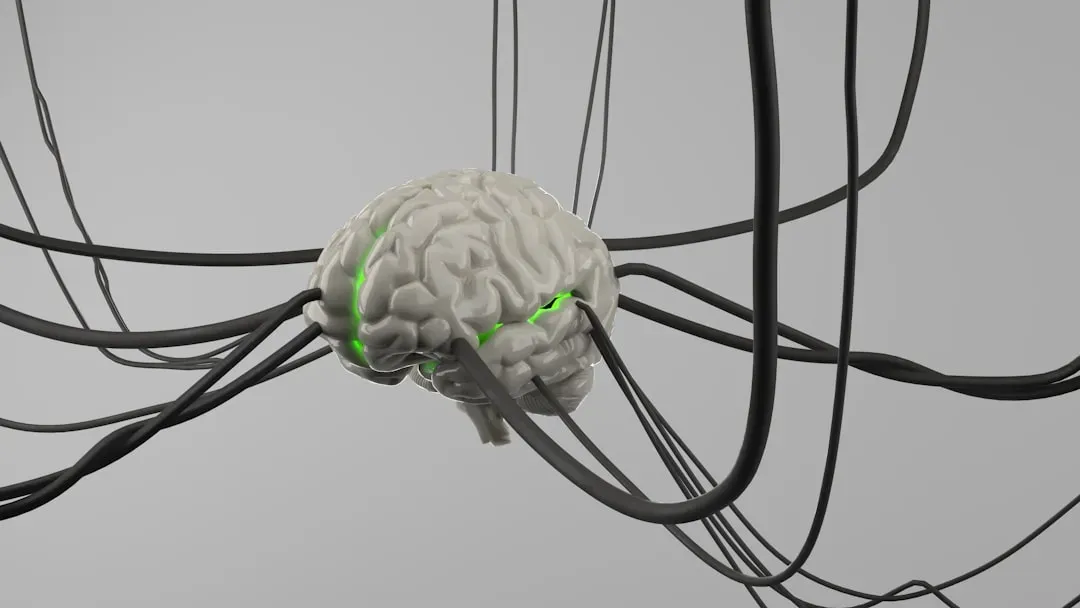
You can actually rewire your anxious brain to help eliminate anxiety triggers, as the book Rewire Your Anxious Brain discusses the surprising level of flexibility and potential for change in your brain. Your brain isn’t set in stone. Neuroplasticity means you can literally reshape how you respond to change.
We don’t wait for fear to disappear before acting, we learn to carry it with us, and courage is not the absence of fear but the willingness to act anyway. The goal isn’t to eliminate fear of change entirely. That’s probably impossible and maybe not even desirable. Instead, you learn to recognize it for what it is: an outdated alarm system trying to protect you from dangers that no longer exist. You acknowledge the fear, thank your amygdala for its service, and move forward anyway.
Conclusion
Clarity often comes after the first step, not before, and that step doesn’t need to be dramatic; it might be having a conversation, asking for help, making a list, or simply acknowledging that something needs to change. Your fear of change isn’t a character flaw or a sign of weakness. It’s biology, it’s evolution, it’s your brain doing exactly what it was designed to do.
The difference between people who embrace change and those who resist it isn’t that one group feels no fear. They just understand that growth lives on the other side of comfort. Staying the same might feel easier, but it can mean giving up a fuller, more meaningful life. So the next time you feel that familiar knot in your stomach when change comes knocking, remember: your ancestors feared change to survive. You get to fear it and do it anyway.
What’s one change you’ve been avoiding that might actually transform your life? Think about it.