You’ve probably experienced it. You’re walking down the street, and suddenly a fire hydrant seems to be staring at you. Or maybe you glance up at the clouds and notice one that looks remarkably like a dolphin. These aren’t accidents of perception. They’re examples of a fascinating psychological phenomenon called pareidolia. Your brain is constantly working overtime to make sense of the chaos around you, and sometimes it gets a bit too creative. Let’s explore why your mind insists on finding familiar patterns in the most unexpected places.
What Exactly Is Pareidolia and Why Does It Happen?

Pareidolia is the tendency for perception to impose a meaningful interpretation on a nebulous stimulus, usually visual, so that one detects an object, pattern, or meaning where there is none. Think of it as your brain playing connect the dots with reality, even when the dots weren’t meant to form anything at all.
Pareidolia is a psychological phenomenon that causes people to see patterns in a random stimulus and often leads to people assigning human characteristics to objects. The phenomenon is remarkably common. You might spot a face in your morning toast, discern animal shapes drifting through the sky, or even feel like your car is expressing emotion through its headlights and grille. It is not a clinical diagnosis nor is it a disorder. It’s just your brain being wonderfully, predictably human.
The Evolutionary Advantage Behind Seeing Faces Everywhere
Here’s where it gets really interesting. It was safer for the ancestors we evolved from to assume they see a face, even where there is none, because you’re much more likely to survive if you assume that rustling in the bushes is a predator and get out of there. Your ancient relatives who were quick to spot potential threats lived long enough to pass on their genes. Those who weren’t? Well, they became lunch.
Over centuries of evolution, humans’ pattern recognition skills determined natural selection, as hunters skilled at spotting prey and predator and telling poisonous plants from healthy ones had a better chance of survival. This hypervigilance became hardwired into your neural circuitry. The cost of believing that the rustle in the grass is a dangerous predator when it is just the wind is relatively low compared with the opposite, so there would have been a beneficial selection for believing that most patterns are real. Better to be wrong a hundred times than fatally mistaken once.
How Your Brain Processes Face Pareidolia at Lightning Speed
A magnetoencephalography study found that objects perceived as faces evoke an early activation of the fusiform face area at a time and location similar to that evoked by faces, at 165 milliseconds, which is similar to the slightly faster time of 130 milliseconds that is seen for images of real faces. That’s faster than you can blink. Your brain doesn’t wait around to fully analyze whether something is actually a face.
The fusiform gyrus in the temporal lobe of the cortex activates to process facial recognition. Only patterns of brain activity in the face-selective regions, including the fusiform face area and occipital face area, were informative about whether someone was currently looking at an illusory face in an object or not. Remarkably, although illusory faces were initially represented as more similar to human faces than objects were, this representation rapidly evolved in just a quarter of a second so that illusory faces were represented more like objects than faces. Your brain makes a split second decision, then quickly corrects itself.
The Role of Top-Down Processing and Expectation
We see what we want and expect to see, and if we are looking out for meaningful patterns, we are likely to see them. This is where your expectations start messing with your perception. Your previous experiences, beliefs, and current mental state all influence what you perceive.
Top-down processing refers to the use of background information in pattern recognition, always beginning with a person’s previous knowledge, and psychologist Richard Gregory estimated that about 90 percent of the information is lost between the time it takes to go from the eye to the brain. Your brain has to fill in the gaps based on what it already knows. A proximate cause is the priming effect, in which your brain and senses are prepared to interpret stimuli according to an expected model. If you’re thinking about faces, you’ll start seeing them everywhere.
Why Faces Are the Most Common Form of Pareidolia
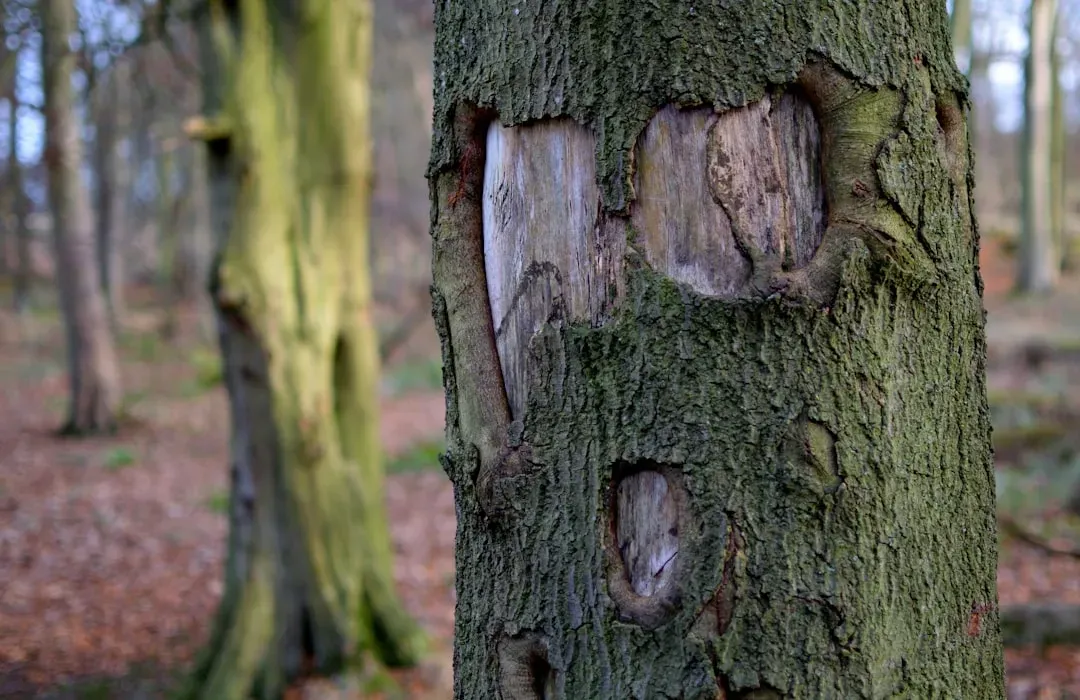
It’s widely thought that the brain is primed to see faces and is a product of our evolution. Faces convey critical social information. They tell you whether someone is friend or foe, happy or angry, trustworthy or threatening. Perceiving faces is so essential to social life that we are primed to see faces even when they are not there.
Evidence of pareidolia emerges early, including remarkably in the third trimester of pregnancy as studied by 4D ultrasound technology, and experimentally, researchers have found evidence of pareidolia in infants as young as 10 months. Even babies prefer looking at face like patterns over random configurations. The most commonly perceived shapes are faces, followed by animals, revealing the importance of such recognition. Your brain is basically a face-finding machine from the moment you’re born.
When Pattern Recognition Goes Into Overdrive

Studies show that neurotic people, and people in negative moods, are more likely to experience pareidolia, and the reason for this seems to be that these people are on higher alert for danger, so are more likely to spot something that isn’t there. Anxiety and stress can crank up your pattern detection sensitivity to eleven.
Unfortunately, we did not evolve a baloney detection network in the brain to distinguish between true and false patterns, and we have no error detection governor to modulate the pattern recognition engine. This is why pareidolia can sometimes lead you astray. The same mechanisms that help us identify real patterns can also cause us to see patterns where none exist. Your brain would rather make a false positive than miss something important.
Famous Examples and Cultural Significance Throughout History
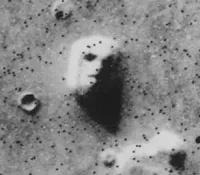
One of the most famous instances of pareidolia is the face some people see in a photograph of the surface of Mars captured by the Viking 1 orbiter in the 1970s, though later probes determined that what appears to be a face from one angle is merely a formation of rocks. People have spotted religious figures on toast, in tree bark, and even in weather patterns. Notably hurricanes Matthew and Milton gained much attention for resembling a human face or skull when viewed from the side.
Renaissance authors have shown a particular interest in pareidolia, and in William Shakespeare’s play Hamlet, Prince Hamlet points at clouds claiming to see a camel, then a weasel, then a whale, demonstrating his supposed madness. Descriptions of pareidolia date back to Leonardo da Vinci’s 16th century writings on painting. Artists have long recognized and exploited this quirk of human perception.
Pareidolia, Creativity, and Modern Applications

Pareidolia plays a significant role in creative cognition, enabling artists and viewers to perceive novel forms and meanings in ambiguous stimuli, and this phenomenon has been harnessed in artistic practices for centuries. Great artists like Salvador Dali and Pablo Picasso may have engaged in pareidolia, and it may well be that people who frequently experience pareidolia are more creative.
Rehabilitation psychologists believe that by using pareidolia, they can assist people in seeing in new ways, and they are incorporating pareidolia as a tool in patient interventions to promote cognitive flexibility during rehabilitation and recovery. Research links pareidolia to neural activity, creativity, and cognitive flexibility. It’s not just a perceptual quirk. It’s a window into how your mind constructs reality from incomplete information.
So the next time you spot a face in your coffee foam or see a dragon in the clouds, don’t dismiss it. You’re witnessing millions of years of evolution doing exactly what it was designed to do: finding meaning in randomness and keeping you alert to the world around you. Your brain isn’t malfunctioning when it does this. It’s actually working perfectly, drawing on ancient survival mechanisms that helped your ancestors navigate a dangerous world. Pretty remarkable when you think about it, isn’t it? What patterns have you spotted today that made you do a double take?