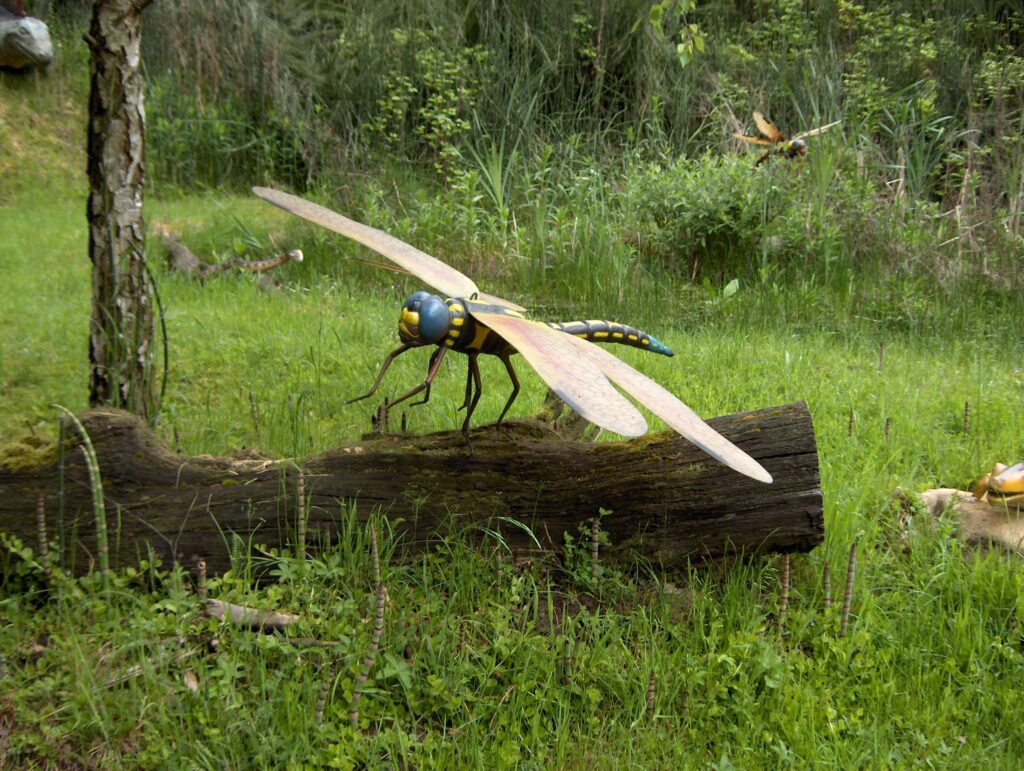
During the Carboniferous period, some insects achieved sizes unimaginable today, with wingspans stretching nearly three feet. Researchers have long puzzled over their disappearance, often pointing to shifts in atmospheric oxygen. A recent study in Nature challenges that view, showing these ancient giants could have thrived in modern air. The findings redirect attention to competition and predation as key drivers of their decline.
Giant Flyers Defied Low Oxygen Expectations
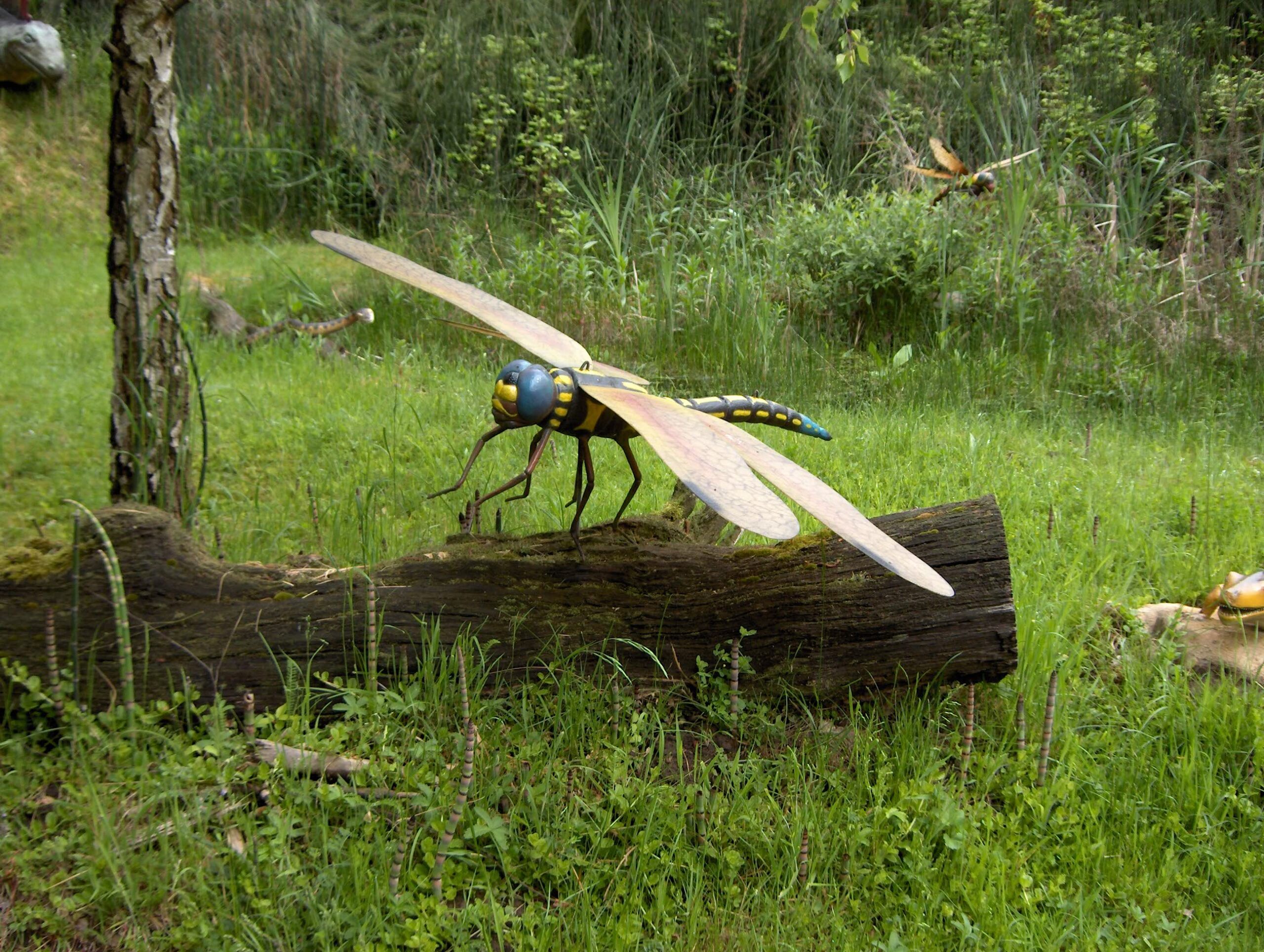
Giant Flyers Defied Low Oxygen Expectations (Image Credits: Upload.wikimedia.org)
Griffinflies, ancient relatives of modern dragonflies, boasted wingspans up to 70 centimeters, dwarfing anything alive now. The study examined their fossilized flight muscles and revealed a striking adaptation. Tracheoles, the tiny airways that deliver oxygen to tissues, occupied just 1 percent of the muscle volume. This efficient design allowed easy expansion, enabling the insects to extract sufficient oxygen even at today’s 21 percent atmospheric levels.
Previous theories held that high oxygen concentrations around 35 percent fueled gigantism by supporting larger bodies. Yet the research demonstrates these creatures possessed respiratory systems flexible enough for lower oxygen environments. Such resilience upends the idea that falling oxygen alone doomed them. Instead, their anatomy suggests survival hinged on other pressures.
Inside the Physiology of Prehistoric Powerhouses
Fossil evidence from well-preserved griffinfly specimens provided the data for this analysis. Scientists used advanced imaging to map tracheal structures within the thorax. The results showed minimal airway density compared to modern insects, hinting at superior oxygen efficiency. This setup prevented the tracheal clogging that limits insect size today.
Modern insects face a scaling barrier: larger bodies demand more oxygen, but tracheal systems cannot grow proportionally without collapsing under weight. Griffinflies sidestepped this through sparse, expandable tracheoles. Their design offered a blueprint for gigantism independent of oxygen abundance. The study confirms they could have powered flights in contemporary conditions.
The Rise of Vertebrate Rivals Changed Everything
As flying vertebrates like birds and pterosaurs emerged, they introduced intense predation pressure. These agile hunters targeted large, slow-moving insects, culling the biggest specimens from populations. Griffinflies, despite their size, lacked the speed or defenses to evade such threats effectively. Over time, natural selection favored smaller, nimbler survivors.
Ecological shifts compounded the challenge. Forests thinned, and landscapes opened up, reducing hiding spots for massive insects. Vertebrates dominated aerial niches, leaving little room for giants. The study posits this predator-prey dynamic, rather than oxygen, drove the evolutionary downsizing of insects.
Modern Implications from Ancient Fossils
Today’s insects remain small partly due to entrenched tracheal limits and persistent predation. Birds and bats continue to control populations, mirroring ancient dynamics. The research highlights how environmental pressures shape body sizes across eras. It also prompts questions about potential insect growth under altered climates.
Climate change could subtly boost oxygen demands or shift predator balances. Still, vertebrate dominance likely caps any resurgence of giants. Paleontologists now eye fossils for more clues on respiratory evolution. These insights refine our understanding of life’s adaptability.
Insects traded size for survival, a lesson in evolutionary trade-offs. The Nature study closes one chapter on gigantism while opening others on ecology’s role. What factors do you see shaping the natural world today? Share your thoughts in the comments.
Key Takeaways
- Griffinflies’ tracheoles occupied only 1% of flight muscle volume, allowing adaptation to modern oxygen levels.
- Oxygen decline did not cause their extinction; predation by flying vertebrates played a larger role.
- Efficient respiratory systems enabled prehistoric gigantism, but ecological competition ended it.