If you could step into a time machine and visit the early Earth, you probably would not recognize the place as home. No blue oceans glittering under white clouds, no green continents, no forests or animals, not even the familiar bright sun in a crisp blue sky. Instead, you’d likely see a dim red glow through a murky, choking atmosphere, oceans the color of rust or ink, and a sky streaked with volcanic ash and violent lightning. It would look less like our modern world and more like the backdrop of a dystopian space movie that went a little too far with the special effects.
What makes this even more mind-bending is that many researchers now think early Earth may have looked stranger than most of the exotic worlds we imagine in science fiction. Real geology and real chemistry tend to be wilder than anything in a screenplay. When you unpack what scientists have pieced together – from ancient minerals to isotopes locked in rocks – you start to realize that our planet’s past is not just old, it’s profoundly alien. And yet, out of that nightmarish landscape, life somehow emerged. That is the mystery that keeps pulling scientists back billions of years into our own world’s weirdest era.
A sky without blue: the alien atmosphere of early Earth
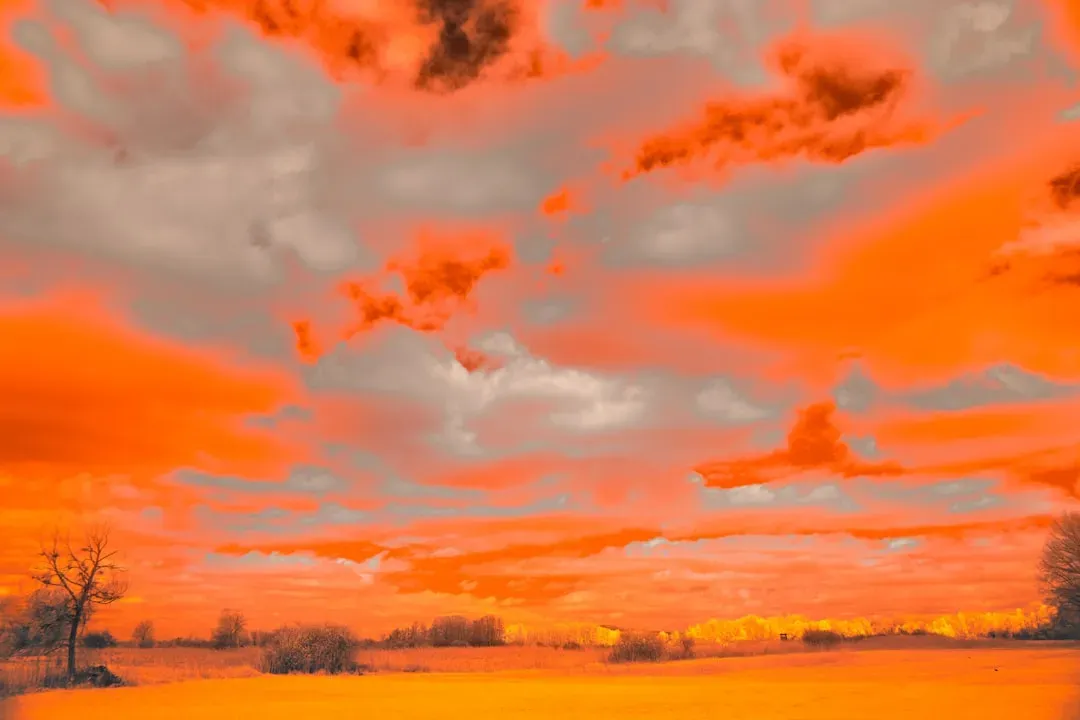
One of the most shocking ideas is that for a huge chunk of Earth’s history, the sky probably was not blue at all. In the first billion years or so, the atmosphere was likely thick with carbon dioxide, methane, water vapor, sulfur gases, and almost no free oxygen. Think of something closer to a denser, wetter version of Titan’s smog or Venus’s suffocating air, though not quite as extreme as Venus is today. Under those conditions, the scattering of light would have been very different, giving the heavens a hazy, reddish or orange-brown cast instead of the crisp cerulean we take for granted.
That alien sky did more than just change the view; it reshaped everything about the planet’s climate and chemistry. Greenhouse gases kept Earth from freezing solid when the young sun was significantly dimmer, a problem scientists call the faint young Sun paradox. At the same time, ultraviolet light would have poured through parts of the atmosphere with little ozone to block it, bathing the surface in radiation that would fry most modern organisms. To early microbes, though, that harsh light and weird chemistry were simply the normal conditions of home, just as dramatic as any fictional planet but very real.
Take a mental snapshot of the modern ocean: a deep blue surface, rich with oxygen, teeming with life from corals to whales. Now erase almost all of that. For a large part of Earth’s early history, the oceans were anoxic, meaning there was little to no dissolved oxygen. Instead, they were loaded with dissolved iron and other reduced chemicals. When that iron met even tiny traces of oxygen produced by early photosynthetic microbes, it rusted out and fell to the seafloor, leaving behind banded iron formations we still quarry today. The water itself may have been greenish, brownish, or even a deep reddish hue in places, more like a metallic soup than the clear blue we know.
Those strange seas were also likely rich in hydrogen sulfide and other compounds that would be deadly to large animals or humans. To us, they’d smell like rotten eggs and feel like a slow-motion poison. Yet for early microbial life, these waters were a buffet of chemical energy. Imagine a world where “breathing” did not mean using oxygen at all, but instead using sulfur, iron, or even hydrogen in intricate metabolic loops. In that context, our present-day oceans, with their oxygen-rich waters and elegant coral reefs, might look boringly tame by comparison, like the “after” photo in a cosmic makeover story.
A surface sculpted by constant violence: impacts, volcanoes, and magma seas
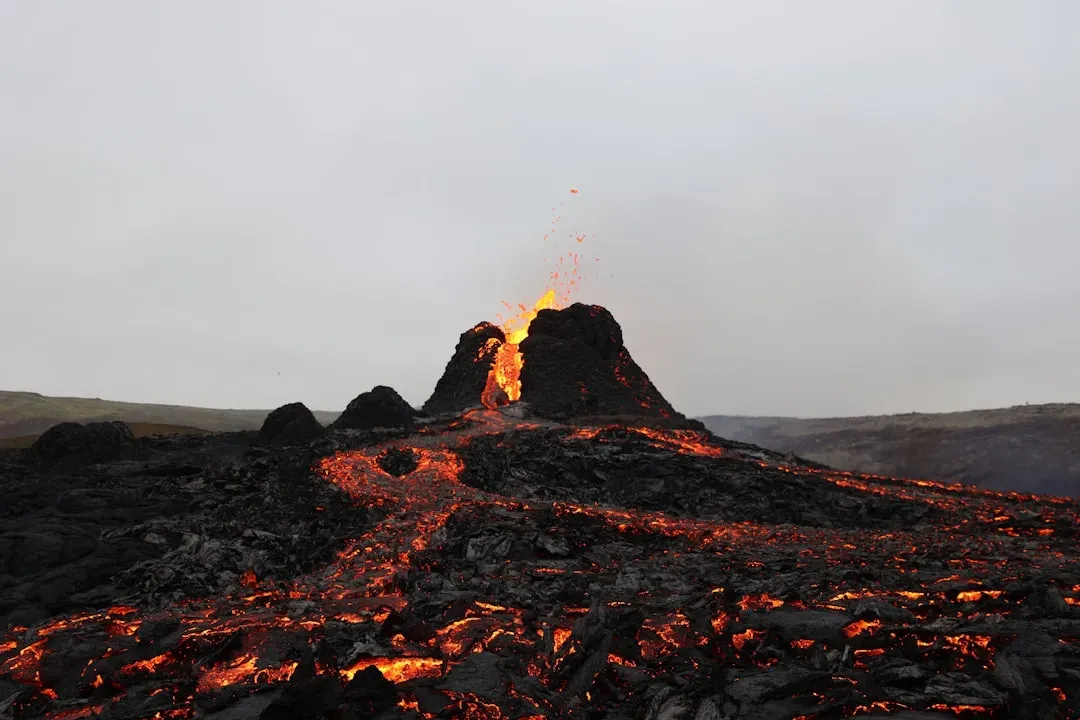
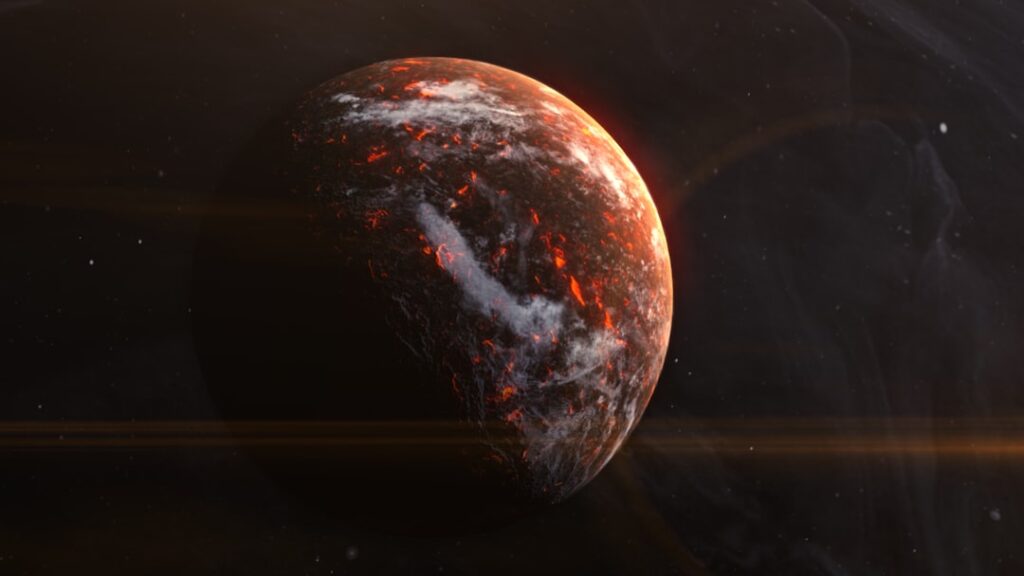
When we picture Earth, we tend to imagine a stable blue planet slowly turning in space, but the earliest Earth was more like a construction site during a meteor shower. In the Hadean and early Archean eons, enormous asteroids and comets slammed into the surface again and again, releasing as much energy as global-scale nuclear blasts. Some impacts were so large that they could vaporize oceans or melt huge portions of the crust, briefly turning parts of the surface into actual seas of magma. If you have ever watched a science fiction scene where a planet is half lava and half rock, that kind of thing probably did happen here, just not all at once or forever.
On top of these impacts, volcanic activity would have been ferocious. Think of entire regions covered in lava flows that dwarf today’s volcanic eruptions, giant plumes rising from deep in the mantle, and constant belching of gases into the already strange atmosphere. This relentless recycling of rock and gas did more than just make the place look hellish. It helped shape the atmosphere, deliver key volatiles like water and carbon dioxide, and create new habitats in hydrothermal systems around vents and volcanic lakes. It is a brutal picture, but out of that chaos, the building blocks of a habitable world were laid down, one eruption at a time.
Landscapes without life: continents that looked truly dead
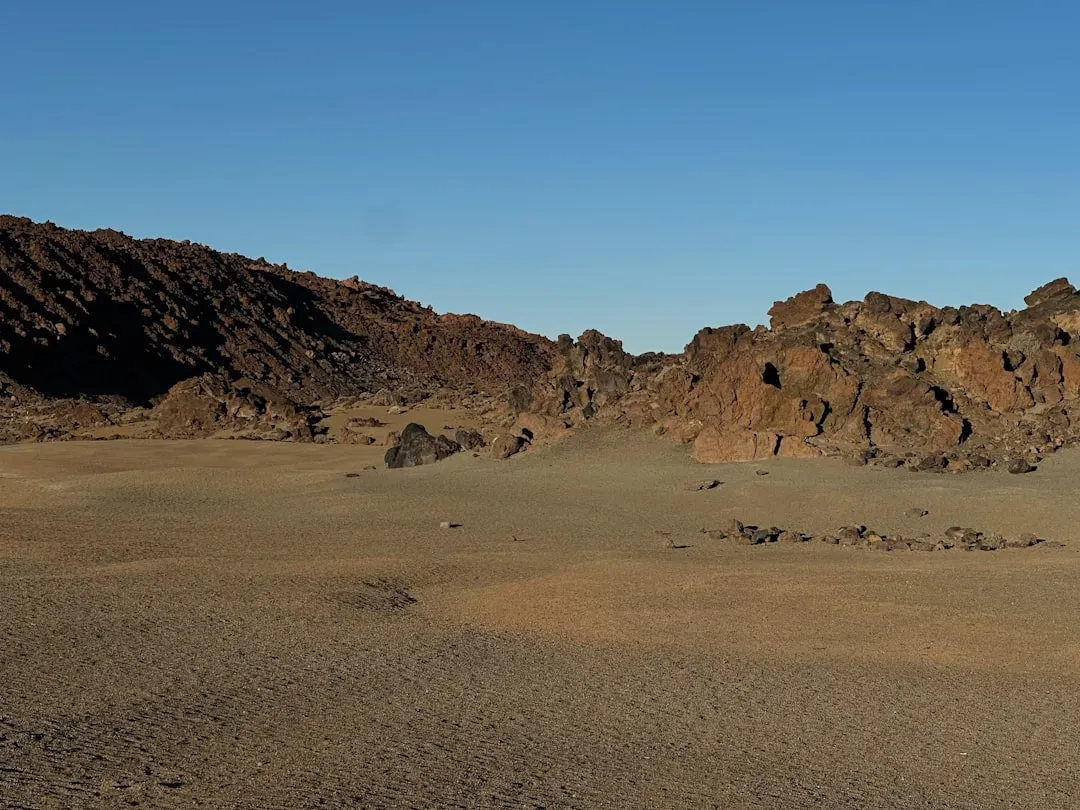
Even when the first continents began to stabilize, they probably looked nothing like the lush, green land we know. There were no trees, no soil in the modern sense, no insects buzzing around, not even moss clinging to wet rocks. Instead, early continents may have been barren, jagged expanses of rock, intermittently covered by shallow seas or scoured by acid rain. The only life, if present at all, would have been microbial mats clinging to shorelines or thin films of biofilm tucked into cracks and pools, almost invisible to the naked eye. Any science fiction set designer who left out all visible life would probably be told the set looked too empty, but that emptiness may have been the reality.
Without plants to hold it in place, the land surface would have eroded quickly, sending sediments and minerals tumbling into the seas. Rivers may have run milky with dissolved metals and clays, creating shorelines far more unstable and raw than today’s relatively gentle beaches. From orbit, those continents might have appeared as dark, ragged blotches against swirling clouds and odd-colored oceans, strange islands of rock that rarely stayed the same for long. In that sense, what makes ancient Earth feel alien is not that it had some bizarre feature we can barely imagine, but the exact opposite: it lacked almost everything we instinctively expect from the word “landscape.”
Life that did not look like “life”: microbial worlds and weird metabolisms
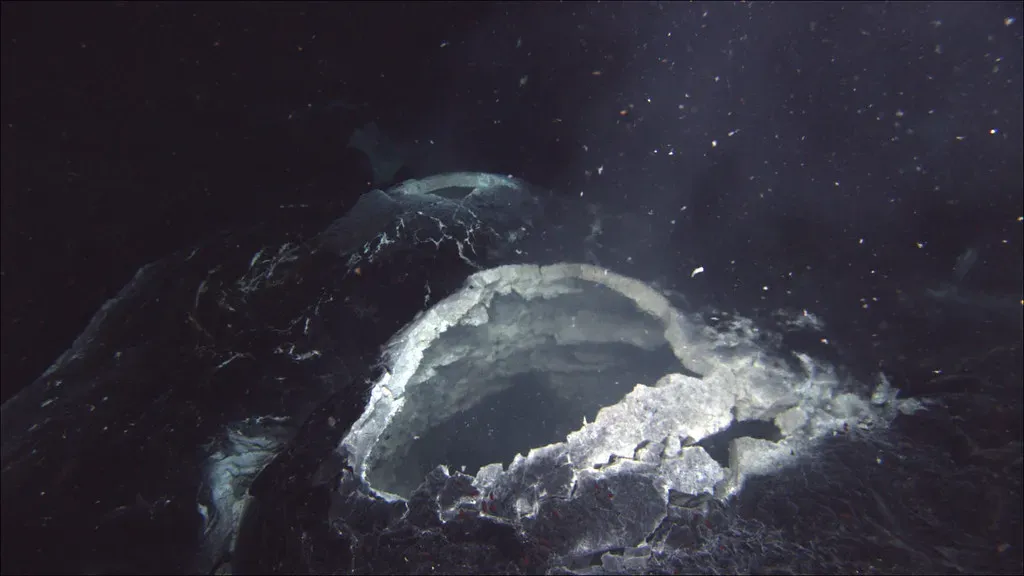
The first successful inhabitants of this alien Earth were not animals, plants, or anything remotely like the creatures that dominate nature documentaries. They were microbes: single-celled organisms that probably would not impress you if you scooped them up in a jar. Yet those tiny cells were running biochemistry that seems almost outrageous by our standards. Some may have used hydrogen and carbon dioxide directly as fuel, others tapped into iron or sulfur, and still others eventually developed a way to use sunlight to split water and release oxygen. To a human observer, this would have been an invisible revolution, but to the planet, it changed everything.
What feels especially science-fiction-like is how alien these early ecosystems were compared to the complex food webs we know. There were no predators chasing prey, no trees shading understory plants, no birds migrating from pole to pole. Instead, the drama was happening at the scale of micrometers, with gene swapping, occasional leaps in metabolism, and slow colonization of new niches. Hydrothermal vents, for example, may have hosted communities powered almost entirely by chemical gradients, like cities lit not by the sun but by deep underground wiring. When you realize that, you start to see early Earth less as a failed version of today and more as a completely different style of biosphere, like a prequel series with its own rules.
Great Oxygenation: the planet-wide “terraforming” that made our world
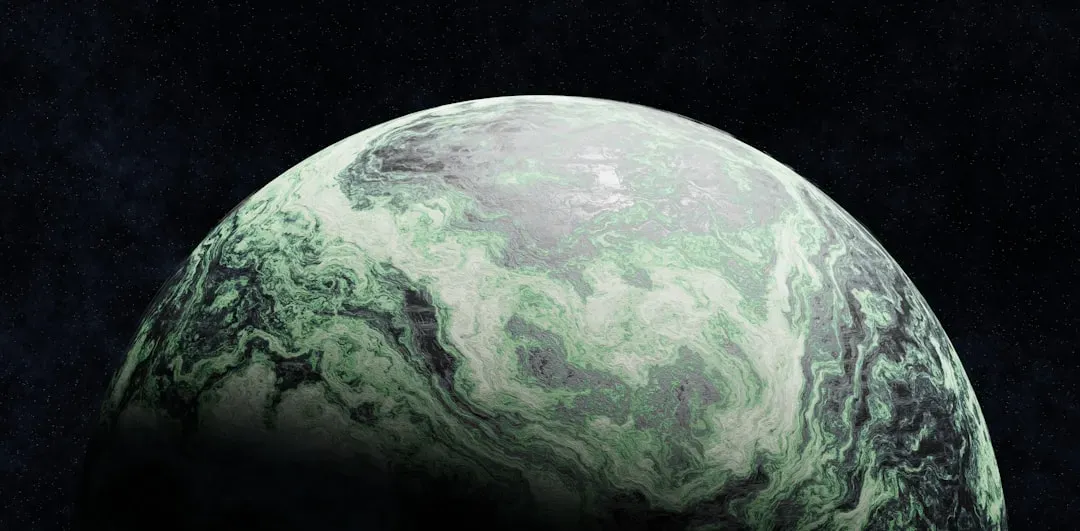
One of the most radical transformations in Earth’s history is the rise of oxygen in the atmosphere, often called the Great Oxygenation Event. For roughly the first two billion years, free oxygen was rare at the surface, even though certain microbes were already producing it as a waste product. At first, that oxygen reacted with iron and other elements, getting locked away in rocks rather than floating free. Only after those chemical “sinks” were mostly filled did oxygen start accumulating in the air and oceans. To many existing microbes, this gas was not a blessing; it was a deadly poison that rusted their delicate molecular machinery.
From a planetary perspective, the spread of oxygen was basically a slow-motion terraforming project carried out by tiny, unconscious engineers. The shift stripped the atmosphere of some gases, changed the color and chemistry of the oceans, and paved the way for new forms of metabolism, including the kind of high-energy respiration your own cells use right now. It likely triggered mass die-offs of organisms that could not handle the new conditions, while opening up ecological space for those that could adapt. In a science fiction story, this would be the act of some powerful alien civilization remaking a world. In reality, it was the patient work of microbes that never knew they were rewriting the rules of the game.
Why early Earth out-weirds science fiction – and why it matters now
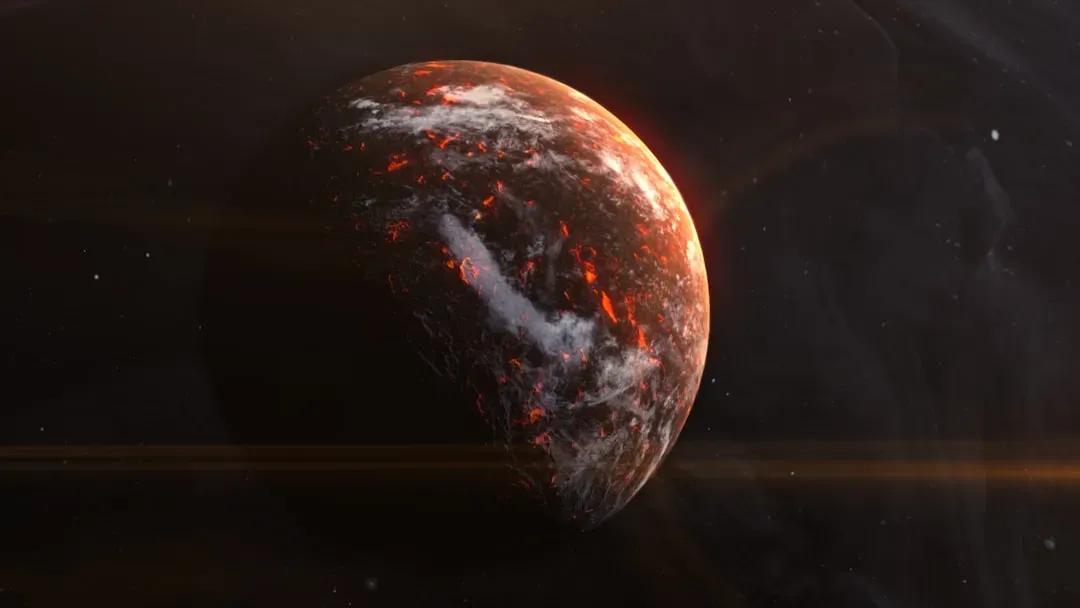
When you stack all of this together – the suffocating atmosphere, the toxic oceans, the molten impacts, the dead continents, the microscopic pioneers – it becomes pretty clear that ancient Earth would have looked wildly foreign to human eyes. Many fictional planets are just Earth with one twist: maybe red sand, or floating rocks, or two moons. By contrast, early Earth piled on change after change, shifting through phases that would each be a whole setting in a sci-fi universe: magma world, steam-shrouded ocean world, anoxic iron seas, sulfur-rich skies, then a slow pivot toward something recognizable as our modern climate. If you dropped a person from today into any of those stages, they might struggle to believe it was the same planet at all.
For me, this is where the story gets personal. Once you really absorb how alien Earth used to be, our current world feels less like the default and more like a fragile, lucky outcome of a brutal history. It also changes how you think about other planets. A seemingly hostile world around another star might just be at an earlier chapter of a similar saga, or heading down a completely different evolutionary path. Seeing Earth as once truly alien is not just a fun thought experiment; it is a reminder that habitability is not a switch but a moving target, and that our own comfortable moment in the story is temporary. It makes you wonder: if you could take a snapshot of Earth a billion years from now, would you even recognize it?