
Have you ever stood at the edge of something new, heart pounding, palms sweating, wondering if you should take the leap? That moment of hesitation is where most people stop. They turn around and retreat back to what feels safe and familiar. Here’s the thing though: everything you’ve ever wanted is waiting for you on the other side of that fear. The rewards you’re chasing, the person you want to become, the life you dream about – none of it lives in your comfort zone.
When you think about the most successful people in history or even people in your own life who inspire you, they all have one thing in common. They took risks when it felt terrifying. Let’s dive into why stepping into the unknown might be the smartest thing you’ll ever do.
Your Brain Is Wired for Risk, Even If It Doesn’t Feel Like It
Taking calculated risks is actually an essential human trait, crucial to our development as a species and as individuals, with our risk-taking ancestors being the survivors who took chances to adapt to a changing environment. You come from a long line of people who said yes to the unknown. Your ancestors didn’t sit around waiting for perfect conditions. They explored, they experimented, they failed, and they learned.
In order to grow, we need to experience challenges and take risks. Think about learning to ride a bike. You probably fell a few times. Maybe you scraped your knees or bruised your ego. Yet eventually, you figured it out because you kept trying despite the risk of falling again.
Breaking Free from the Prison of Comfort

Your comfort zone is a behavioural state within which you operate in an anxiety-neutral condition, using a limited set of behaviours to deliver a steady level of performance, usually without a sense of risk, fear or aspiration. Sounds cozy, right? The problem is that nothing grows there. You’re essentially choosing sameness over possibility.
We live in a culture of fear and as a society we have actually become more risk-adverse. Think about how often you scroll through social media seeing people’s highlight reels while you’re sitting at home talking yourself out of trying something new. Society has become really good at amplifying fear while downplaying the rewards of taking chances. You deserve better than living small because of manufactured worries.
When you stay too long in that comfortable bubble, you’re not protecting yourself – you’re limiting yourself. In truth, comfort zones are not really about comfort, they are about fear.
The Hidden Gift Inside Failure
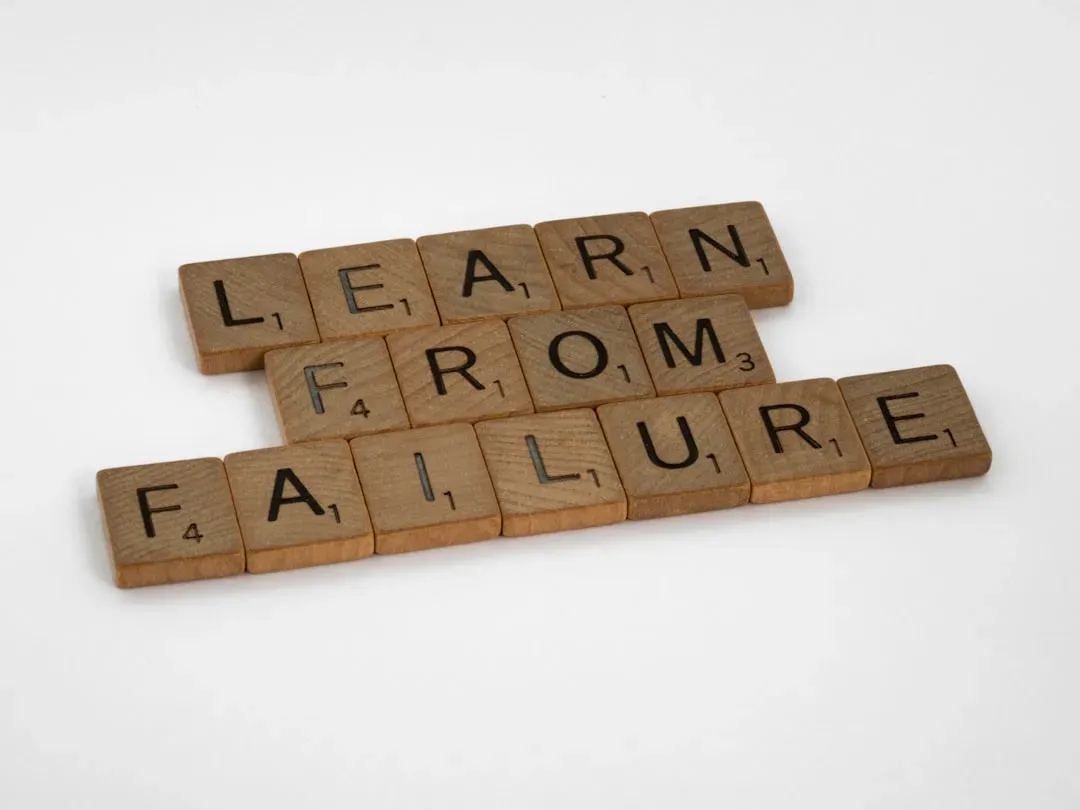
Let’s be real about something nobody wants to talk about. Failure stings. Fear of failure and feelings of shame and embarrassment can hold us back to taking on a challenge. The truth is, you’re probably going to mess up sometimes when you take risks, and that’s completely okay.
In order to take on risks, one must consider failure as an option, an opportunity to learn and grow – and a necessary part of the process. Every misstep teaches you something valuable. Maybe you learn what doesn’t work, or maybe you discover inner strength you didn’t know existed.
Failure is a natural part of the learning process, and when you take risks, there’s always a chance that things won’t go as planned, but embracing failure as a learning opportunity can help you to grow and develop new skills. Imagine if Thomas Edison had given up after his first thousand failed light bulb experiments. We’d all be sitting in the dark.
Building Confidence That Actually Lasts

You know what’s interesting? Taking risks requires pushing past fear, and when you step outside of your comfort zone and take a risk, you’re telling yourself that you’re capable of handling whatever comes your way. Each time you face something scary and survive it, you’re depositing proof in your mental bank account that you can handle hard things.
Over time, this can help to build confidence and resilience, which are essential traits for personal growth. Think of confidence like a muscle. It doesn’t get stronger by reading about exercise. It grows when you actually lift the weight, feel the burn, and push through anyway.
Accomplishment brings self-confidence, especially if you worked hard, challenged yourself, and saw it through, and the boost in self-confidence you get after achieving one goal can push you to achieve more. Success breeds more success. One small win leads to another, creating momentum you never imagined possible.
Unlocking Creativity and Innovation Through Risk

Risk-taking promotes creativity and innovation, hence personal and professional growth, with the risk-taker thinking creatively and bringing novel solutions to problems. When you’re willing to try unconventional approaches, you open doors that others don’t even know exist. Honestly, some of the best ideas sound absolutely crazy at first.
Taking a risk forces a person into trying out new concepts and breaking the traditional method of doing things. If everyone always played it safe, we wouldn’t have smartphones, airplanes, or any of the innovations that make modern life possible. Innovation is impossible without risk, with the greatest inventions and breakthroughs in history all involving some element of risk.
Risk-taking pushes individuals to explore unconventional solutions, enhancing problem-solving abilities and broadening the problem-solving toolkit by encouraging creative thinking and critical analysis. You become someone who sees possibilities instead of roadblocks.
Developing Resilience That Carries You Through Life

Risk-taking builds resilience, with resilience being termed by psychologist Angela Duckworth as perseverance and passion for long-term goals. Life is going to throw curveballs at you whether you take risks or not. The difference is that when you’ve practiced handling uncertainty by choice, you’re better equipped when challenges come uninvited.
Personal growth requires resilience – the ability to bounce back from setbacks and challenges – and taking risks can help to build resilience by exposing you to new challenges and forcing you to adapt and problem-solve. Each time you navigate through something difficult, you’re training yourself for the next challenge. It’s like developing emotional armor that gets stronger with each battle.
Each time we take a risk and fail, we learn valuable lessons that make us more resilient and better equipped to handle future challenges, and resilience is a crucial trait for personal growth that allows us to bounce back from setbacks, adapt to change, and keep moving forward despite obstacles. You stop being so fragile. Life’s difficulties don’t shatter you anymore – they shape you.
Opening Doors to Unexpected Opportunities

Taking risks can lead to new and interesting relationships, experiences, places, and knowledge. Sometimes the best things in your life will come from chances you took without knowing where they’d lead. That job you applied for on a whim. The conversation you started with a stranger. The class you took just because it sounded interesting.
Each experience outside your comfort zone builds upon the other, and although you might not know where the journey into unfamiliar territory will take you, know that previously shut doors will start to open. Opportunities have a funny way of showing up when you’re in motion. They rarely knock on the door of someone hiding under the covers.
When you take risks, you open yourself up to new experiences and opportunities that can help you learn and grow as a person. You never know which risk will be the one that changes everything. That networking event you almost skipped might introduce you to your future business partner. The trip you were nervous about taking could lead to the adventure of a lifetime.
Discovering Who You Really Are

When you start intentionally making yourself uncomfortable, you get acquainted with parts of yourself that had always existed but had been lying dormant for decades, discovering more flaws, uncovering new strengths and feeling more like yourself than ever before. There are versions of you that only emerge under pressure, in unfamiliar territory, when you’re forced to figure things out on the fly.
Risk-taking promotes personal growth and self-awareness by pushing individuals to explore their limits and reflect on their values, strengths, and weaknesses, leading to greater self-understanding and personal development. You can’t really know what you’re made of until you test yourself. It’s like those hidden talents or strengths that surprise everyone, including yourself, when circumstances demand them.
Stepping out of your comfort zone means learning new things, meeting new people, seeing new places, and trying new experiences. Each risk you take adds another layer to who you are. You become more interesting, more capable, more fully yourself.
Taking Smart Risks, Not Stupid Ones
Look, nobody’s saying you should bet your life savings on a questionable investment or jump off a bridge without a bungee cord. Just because you are taking risks doesn’t mean that you do it haphazardly, so prepare to take risks by educating yourself on the possible fall-out, do your homework and understand the importance of implementation and follow-through. There’s a huge difference between calculated risks and reckless behavior.
With calculated risks, challenges faced, and errors learned from, one unlocks life to full potential, leading towards fulfilment and riches. Smart risks involve weighing potential benefits against possible downsides. You gather information, you prepare as much as possible, and then you leap with your eyes open.
Determining when risks warrant action involves carefully projecting possibilities using logic and intuition, and visualizing multiple game plans for varied scenarios strengthens foresight, with this analysis, planning, and deliberation around risk sharpening strategic decision-making. The goal isn’t to eliminate fear completely – that’s impossible. The goal is to make informed decisions despite feeling afraid.
Are Waiting

While the potential for failure is always present, the rewards of taking risks far outweigh the drawbacks. Every person who’s achieved something remarkable has a story about the risk that changed everything. Maybe it was starting a business, moving to a new city, ending a toxic relationship, or pursuing an unconventional career path.
When we understand that it’s only fear keeping us from taking worthwhile, calculated risks, we can see the true benefits of taking risks, with risks not being something to be feared but presenting possibilities that can transform your life into one you are happy and proud to live. The life you’re dreaming about isn’t going to build itself while you wait for the perfect moment.
You’re standing at a crossroads right now. One path leads back to the familiar, where everything stays the same and you wonder forever about what might have been. The other path leads into uncertainty, where are waiting for you to claim them. Which path will you choose? What would you attempt if you knew you couldn’t fail?