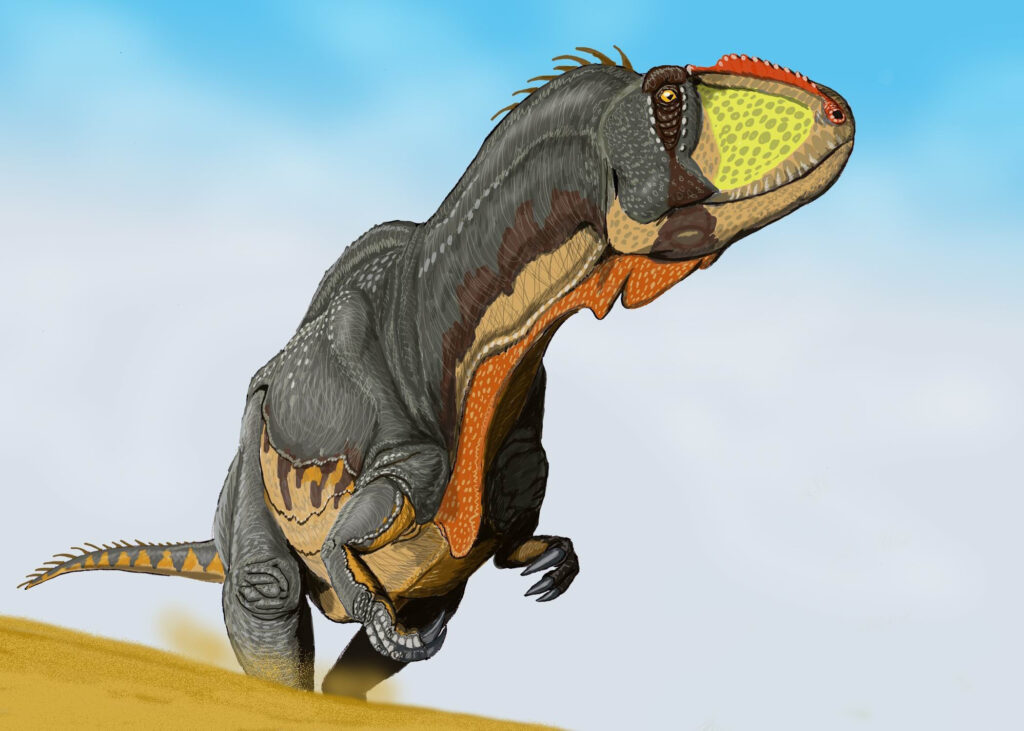
Ask a random dinosaur fan to name a big Jurassic predator, and you’ll almost always hear Allosaurus. It shows up in documentaries, toys, museum gift shops, and endless online debates. But lurking just offstage, in the Late Jurassic rocks of China, is another powerful carnivore that almost never gets the spotlight: Yangchuanosaurus.
Once you start looking at what we actually know about Yangchuanosaurus – its size, its skull, its place in the ecosystem, and what it tells us about dinosaur evolution – it quickly stops feeling like a “minor” theropod. Instead, it starts to look like the missing superstar of Jurassic predators, the one we’ve unfairly sidelined while we replay the same Allosaurus story again and again.
Yangchuanosaurus Was Every Bit The Heavyweight Predator
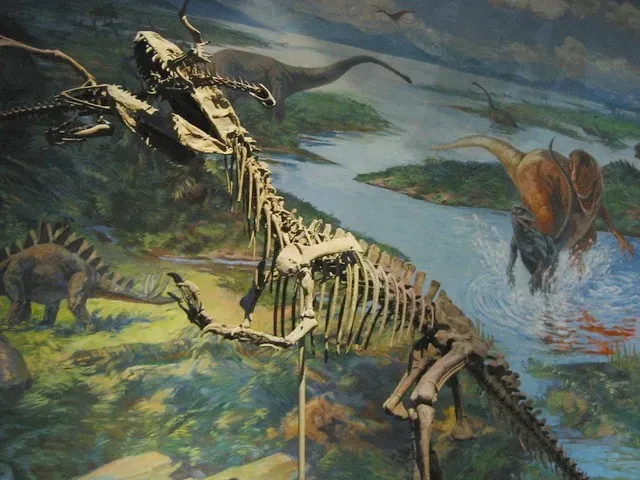
Most people who have at least heard of Yangchuanosaurus still picture it as some mid‑tier carnivore overshadowed by the giants. That mental image is badly outdated. The largest known specimens of Yangchuanosaurus are estimated to have reached lengths comparable to, or even slightly exceeding, the biggest Allosaurus individuals, putting it squarely in the top league of Jurassic apex predators.
What makes this more impressive is where and when it lived. Yangchuanosaurus stalked the Late Jurassic landscapes of what is now China, ruling over its local ecosystems much like Allosaurus did in North America. So when we talk about “the” great Jurassic hunter, it is oddly biased to focus almost exclusively on an American genus while largely ignoring its Chinese counterpart, which could absolutely have held its own in any cross‑continental comparison.
A Skulled-Up Carnivore With Serious Bite Engineering
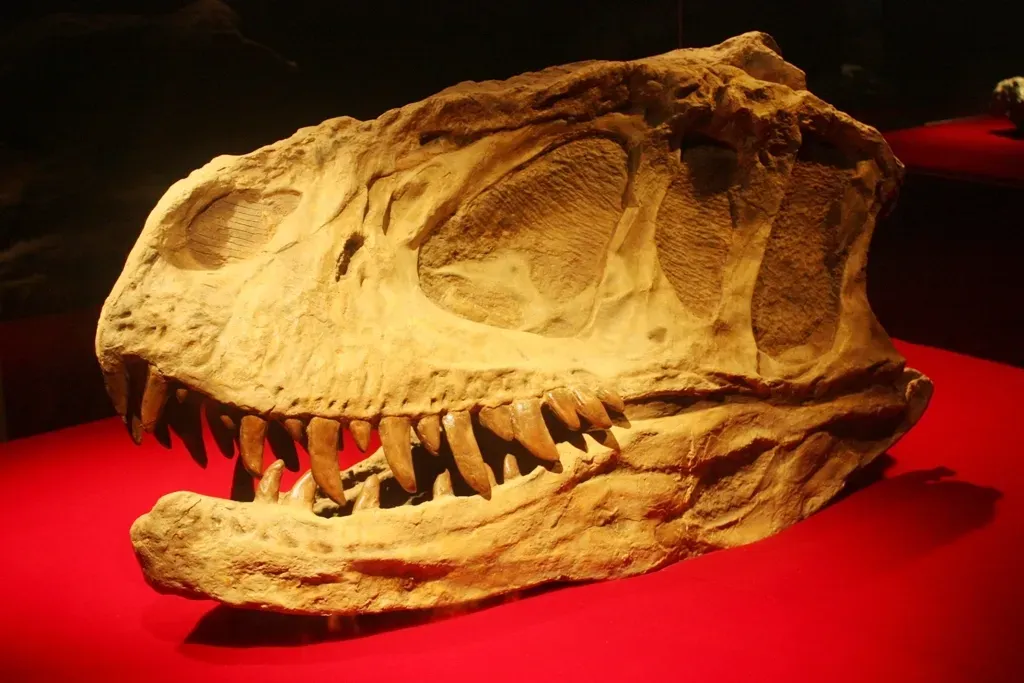
If you put the skulls of Allosaurus and Yangchuanosaurus side by side, Yangchuanosaurus does not look like a second‑rate design. Its skull is robust, deep, and heavily ornamented, with thickened bones and a configuration built for gripping and tearing large prey. The jaws carried sharp, laterally compressed teeth – classic theropod steak knives – designed to slice through flesh more than crunch bone.
Some researchers have pointed out that Yangchuanosaurus had cranial features suggesting a powerful bite and a head capable of handling significant stress, potentially matching or surpassing what we infer for Allosaurus. While there is still room for debate about the exact biomechanics, the idea that Allosaurus was somehow uniquely “advanced” in skull function just does not hold up. Yangchuanosaurus looks less like a background extra and more like a carefully engineered weapon, tuned by evolution to dominate its food web.
It Opens A Crucial Window Into Asian Jurassic Ecosystems
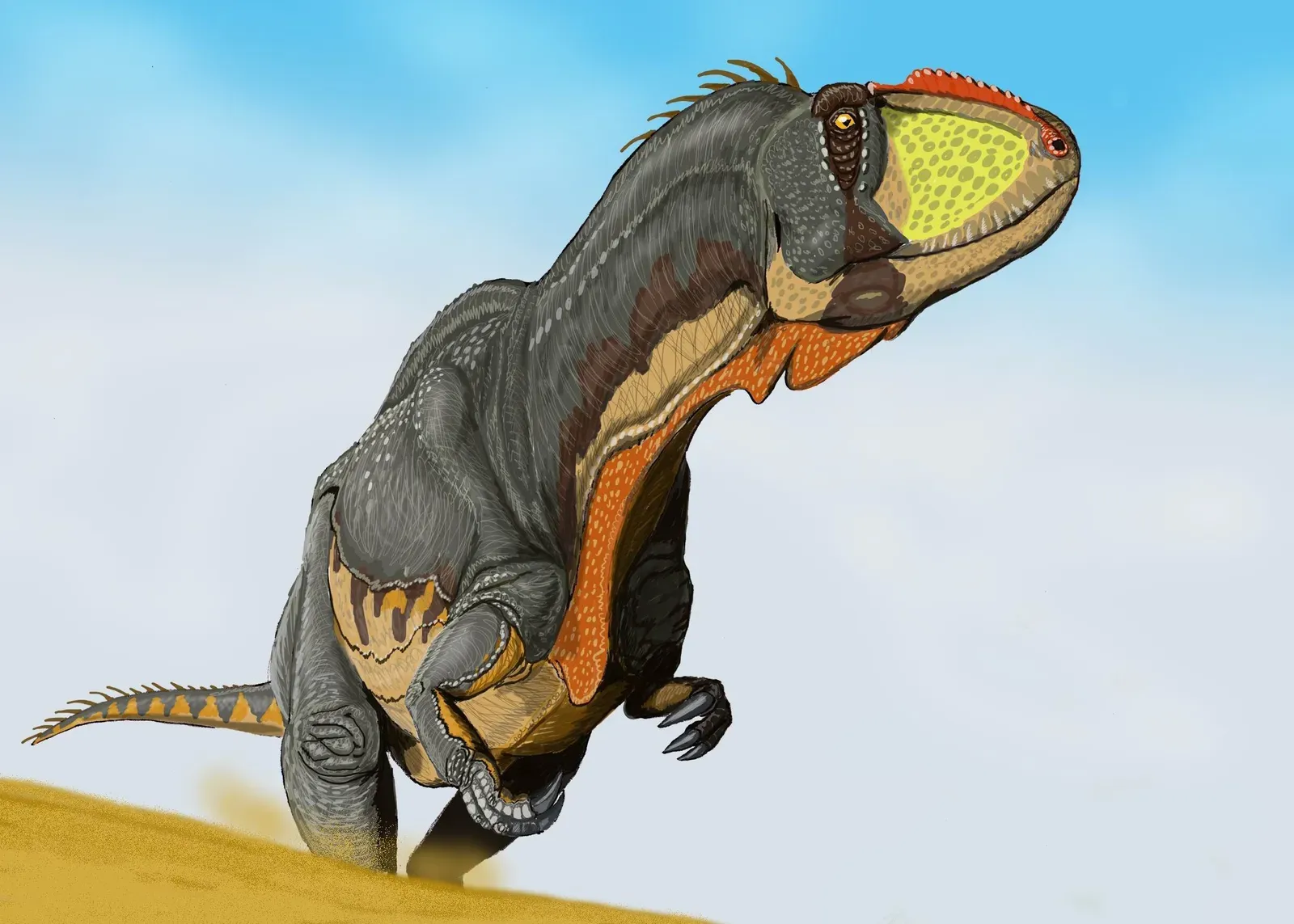
Allosaurus is tied so strongly to the Morrison Formation in North America that it has become the default mental image for Jurassic predators. That is useful, but also limiting. Yangchuanosaurus, by contrast, gives us a rare, detailed look at Late Jurassic ecosystems in East Asia, where the cast of herbivores and competitors was very different. By studying it, paleontologists can test whether patterns we see in North America hold true elsewhere or whether each region evolved its own distinctive predator‑prey dynamics.
In formations where Yangchuanosaurus appears, it lived alongside an array of sauropods and other herbivores that do not mirror the Morrison fauna one‑to‑one. That makes it much more than an Allosaurus “clone” in another place. It was a major player in its own unique theater of evolution, helping researchers understand how large carnivorous dinosaurs adapted to different prey bases and environments across the globe during the Jurassic period.
A Key Piece In The Puzzle Of Megalosauroids And Allosauroids
![A Key Piece In The Puzzle Of Megalosauroids And Allosauroids (By User:Phreakster 1998
VSPYCC[1]
User:FunkMonk
User:Sheep81
User:NGPezz
Belinda Hankins Miller from U.S.A., CC BY-SA 4.0)](https://nvmwebsites-budwg5g9avh3epea.z03.azurefd.net/dinoworld/d5539e2db9594cdaba21e2e4d82d373f.webp)
Scientifically, Yangchuanosaurus punches far above its pop‑culture weight. Its anatomy has played an important role in discussions about how large theropods are related to one another, especially between the groups broadly known as megalosauroids and allosauroids. Depending on the analysis and dataset, Yangchuanosaurus has shifted position in dinosaur family trees, highlighting just how pivotal it is to understanding these evolutionary branches.
That may sound dry, but it matters. When researchers try to reconstruct how big predators diversified, which traits evolved first, and how lineages spread across continents, Yangchuanosaurus is one of the fossils that can tip the balance for certain hypotheses. Allosaurus is already extremely well studied and heavily sampled in these analyses, but that is exactly why giving equal attention to Yangchuanosaurus is so important: it helps prevent a North America–centric view of theropod evolution from quietly becoming the unchallenged default.
Underexposed In Media, Overqualified For Obscurity
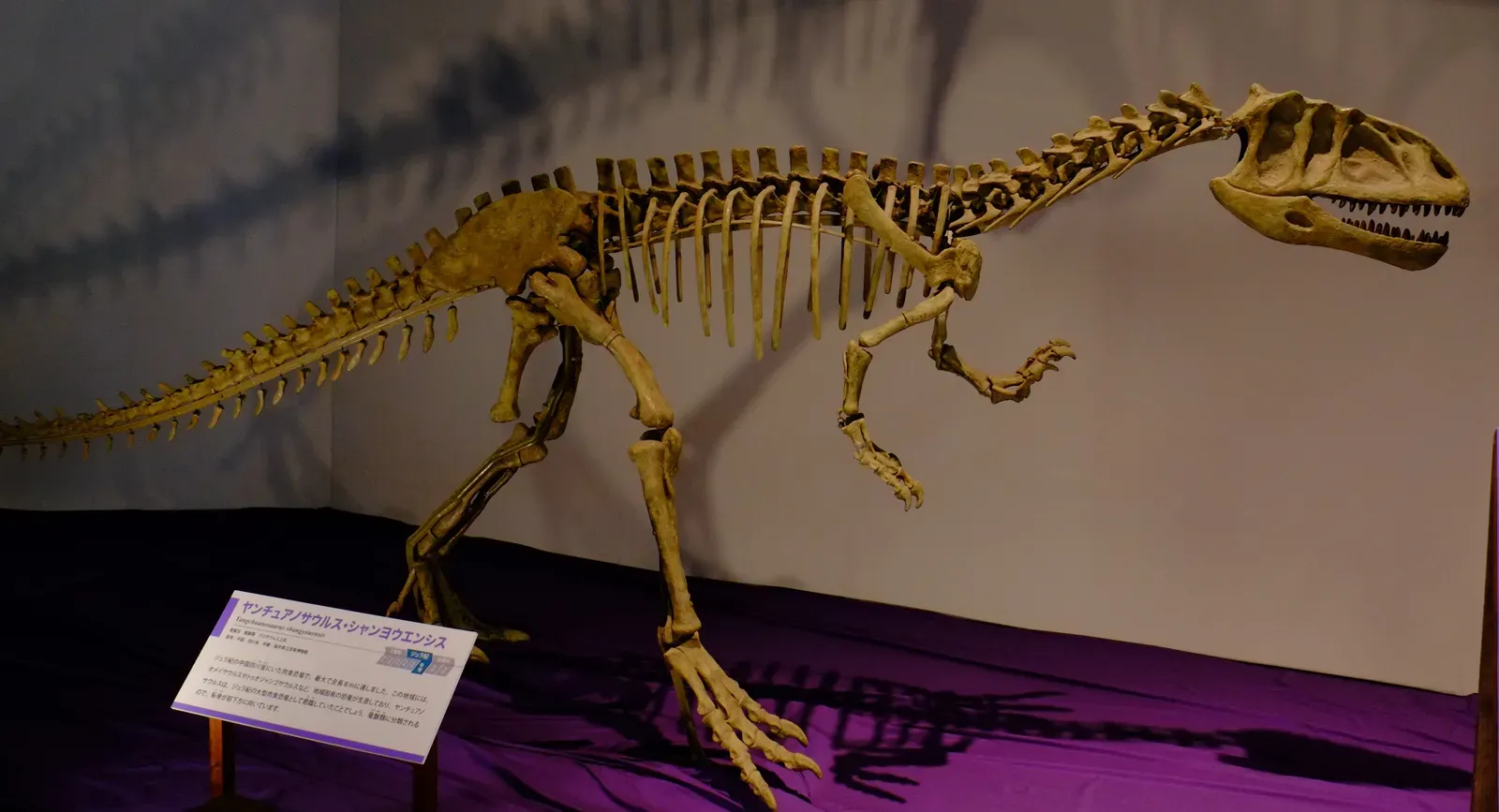
Let’s be honest: a huge part of Allosaurus’s fame is not purely scientific, it is cultural momentum. It was named earlier, found in spectacular numbers, and dug up in a country with massive museum and media reach. Yangchuanosaurus, on the other hand, suffers from being discovered later, in China, and outside the traditional Western storytelling pipeline that shaped so many early dinosaur documentaries, books, and toy lines.
Yet when you look at what filmmakers and artists actually need – a large, scary, scientifically respectable carnivore with a striking skull and a real fossil record – Yangchuanosaurus checks every box. It could easily headline documentaries, museum exhibits, and even blockbuster movies as the face of Asian Jurassic ecosystems. The fact that it so rarely does is not a reflection of its scientific importance, but of how unevenly attention has been distributed. In other words, Yangchuanosaurus is not obscure because it is uninteresting; it is obscure because we keep telling the same Allosaurus story by habit.
Why It Is Time To Shift The Spotlight
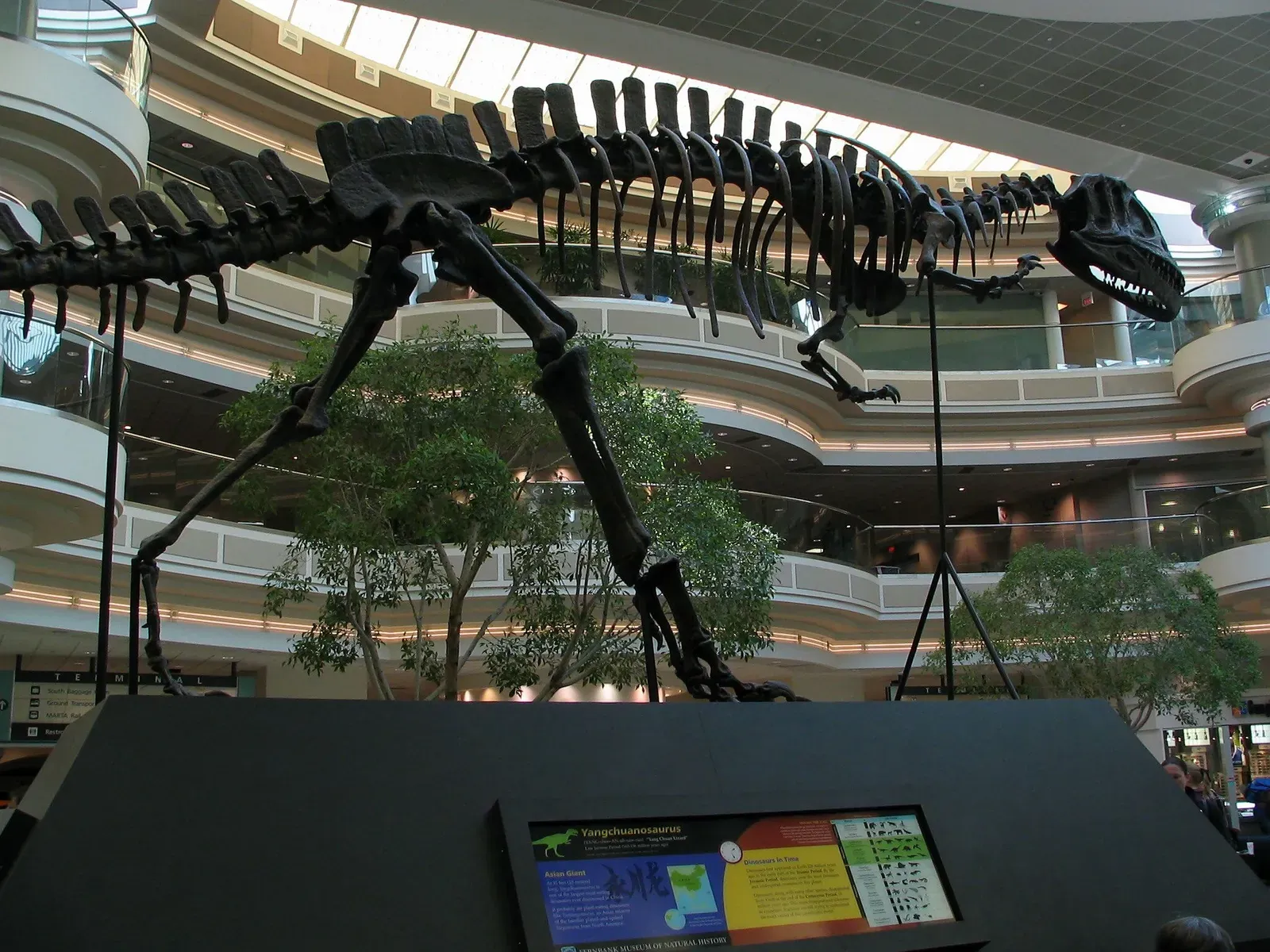
None of this means Allosaurus is overrated junk – it is an amazing animal and a cornerstone of our understanding of Jurassic predators. But when one genus hogs nearly all the attention, we end up with a flattened, almost cartoonish view of deep time. Yangchuanosaurus shows that similar‑sized apex hunters evolved along parallel tracks in different parts of the world, each with its own nuances. Giving it more attention helps restore the global complexity that actually existed.
In my view, we are past the point where Yangchuanosaurus should be treated like a footnote. It was a top predator in its own right, a critical data point for theropod evolution, and a vivid window into Asian Jurassic life. If we keep centering only Allosaurus, we are not just being unfair to a dinosaur; we are quietly shrinking our picture of the prehistoric world. Next time someone brings up their favorite Jurassic carnivore, maybe the most interesting move is to surprise them with another name: Yangchuanosaurus. Did you see that one coming?