Sydney, Australia – Scientists have turned to wild-born regent honeyeaters as vocal mentors to teach captive-bred juveniles their traditional song, a cultural trait fading amid the species’ steep decline. The critically endangered bird, once common across southeastern Australia, now numbers fewer than 250 individuals mostly confined to the Blue Mountains region. This innovative approach addresses a hidden threat: without proper songs, released birds struggle to attract mates or claim territories, compounding genetic losses with cultural erosion. Researchers at Taronga Zoo reported striking progress, marking a potential turning point for conservation.
A Cultural Crisis Gripped the Species
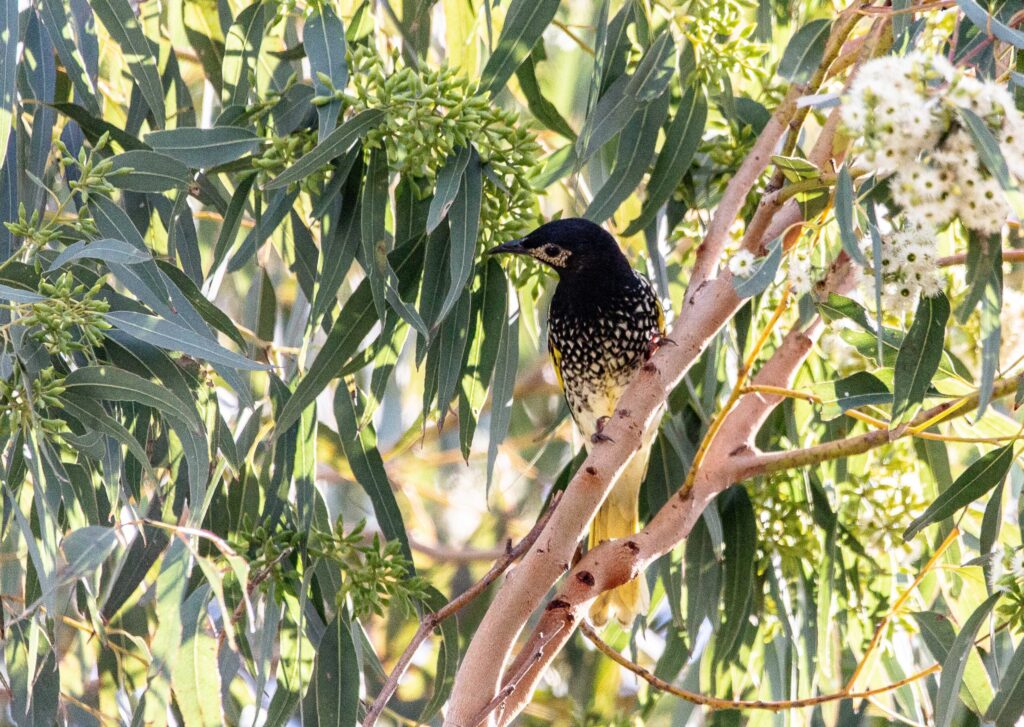
A Cultural Crisis Gripped the Species (Image Credits: Upload.wikimedia.org)
Regent honeyeaters rely on complex songs learned from adult tutors during a sensitive juvenile period. As populations plummeted due to habitat loss and other pressures, young birds encountered fewer conspecifics, leading to simplified tunes or even mimicry of species like noisy friarbirds. Captive-bred males supplemented wild numbers but sang atypical variants, creating a mismatch that hindered integration.
The full Blue Mountains dialect—rich with syllables essential for communication—vanished entirely from wild flocks during the study period. This left zoo aviaries as the last bastion for the traditional melody. Without intervention, the species risked a double extinction: genetic and cultural.
From Failed Playbacks to Live Mentorship
Conservationists at Taronga Zoo in Sydney and Taronga Western Plains Zoo in Dubbo launched tutoring experiments over three breeding seasons starting in 2020-21. Initial efforts played wild song recordings daily to fledglings for their first six months, yet no juveniles mastered the tune.
Researchers pivoted to live instruction using just two wild-born males as tutors. They grouped small creches of about six juveniles from various parents with each mentor, optimizing learning dynamics. Lead author Dr. Daniel Appleby explained the shift: “We realised that if you have too many birds to one tutor – so a big class size – they don’t learn as effectively.” This hands-on method, integrated into routine husbandry, proved transformative.
Measuring the Melody’s Return
Success built rapidly. The first year yielded zero proficient singers, but by the third, 42 percent of juveniles replicated the wild song accurately. More than half of tutored males now produce close matches to historic recordings, and several passed the dialect to the next generation within the program.
Since 1995, Taronga’s captive efforts have released 556 birds into New South Wales and Victoria since 2000. Recent cohorts include these culturally restored singers, poised to bridge the wild-captive divide.
| Year | Tutoring Method | Learning Success Rate |
|---|---|---|
| 1 | Song playback | 0% |
| 2-3 | Live wild tutors | 42% |
Implications for Survival and Reintroduction
Restored songs promise better mating prospects and social bonds for released birds. Dr. Appleby noted, “Our work teaching regent honeyeaters to sing wild type songs has far reaching implications for captive breeding and reintroductions.” Dr. Joy Tripovich described the moment: “Hearing the zoo-bred birds sing their wild song for the first time was incredibly moving – like a piece of their identity coming back to life.”
The study, detailed in Scientific Reports, underscores culture’s role in viability. Simple protocol tweaks could apply to other songbirds facing similar losses.
- Song learning demands precise timing in juveniles.
- Small tutor groups enhance transmission.
- Cultural restoration boosts post-release fitness.
- Ex-situ programs now safeguard wild traditions.
- Releases aim for self-sustaining flocks.
Key Takeaways
- Two wild tutors restored a lost dialect now absent in nature.
- Learning rates jumped from 0% to 42% with live mentoring.
- Culturally equipped birds could revitalize wild populations.
This avian comeback highlights how behavioral science bolsters endangered species recovery. As regent honeyeaters teeter on the brink, their revived chorus signals hope. What do you think about efforts to save animal cultures? Tell us in the comments.