Southeastern United States – The wood stork, America’s only native breeding stork, achieved a significant conservation milestone with its removal from the federal Endangered Species Act after more than four decades of protections.
A Turnaround from the Brink
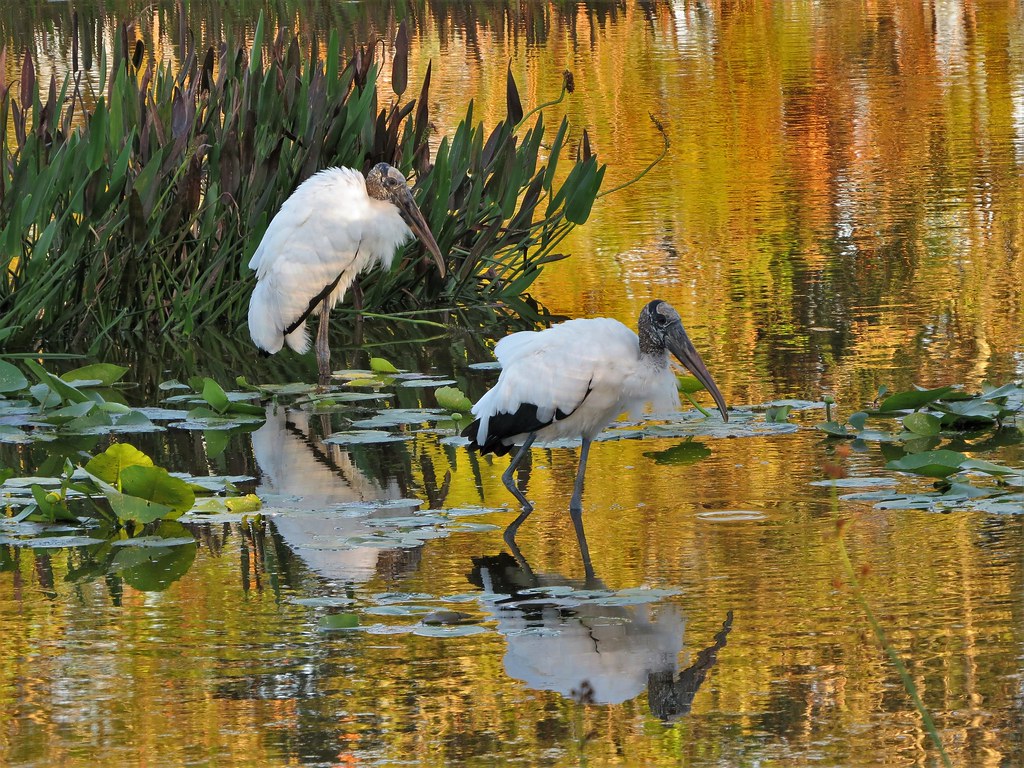
A Turnaround from the Brink (Image Credits: Flickr)
Listed as endangered in 1984, the wood stork faced near-extinction due to severe habitat loss, particularly in South Florida wetlands drained for development and agriculture. Its population had plunged by over 75 percent since the 1930s, leaving just a handful of colonies.
By 2014, sustained efforts led to a downlisting to threatened status. The species’ numbers rebounded dramatically, surpassing recovery benchmarks set decades earlier. Today, experts credit partnerships among federal agencies, states, and conservation groups for this revival.
Population Boom Across the Region
Nesting pairs now range from 10,000 to 14,000 annually – more than double the figure at listing and spread across roughly 100 active colony sites, up from about 27 in 1984.[1] This expansion reflects the bird’s adaptability to diverse habitats, including coastal marshes, flooded rice fields, and even human-managed wetlands.
Breeding occurs in four main regions: South, Central, Northwest, and Northeast. Recent surveys show steady growth, with a five-year average exceeding 10,000 pairs since 2016.[3]
| Region | 5-Year Avg. Nesting Pairs |
|---|---|
| Northeast | 4,187 |
| Northwest | 1,510 |
| Central | 2,690 |
| South | 2,106 |
Factors Driving the Success
Habitat restoration played a pivotal role, countering the wetland drainage that once imperiled the species. Programs like the Comprehensive Everglades Restoration Plan continued to bolster foraging areas, even as the stork shifted northward into Mississippi, Alabama, Georgia, South Carolina, and North Carolina.
Climate challenges, such as sea-level rise and droughts, proved manageable through the bird’s behavioral flexibility – shifting colonies and exploiting varied prey sources. Federal protections under the Migratory Bird Treaty Act remain in place post-delisting.
- Targeted wetland acquisitions and management.
- State wildlife action plans supporting key sites.
- Reduced hydrological alterations in critical areas.
- Monitoring by the Wood Stork Research Working Group.
- Northward range expansion since the 1990s.
Post-Delisting Safeguards
The U.S. Fish and Wildlife Service implemented a 10-year monitoring plan to track population trends, productivity, and habitat conditions. This includes annual surveys of nesting pairs and colony health, with provisions for swift relisting if declines emerge.
“The wood stork’s recovery is a real conservation success thanks to a lot of hard work from our partners,” stated U.S. Fish and Wildlife Service Director Brian Nesvik. Ongoing efforts, such as Clean Water Act permits and state regulations, ensure habitat security without Endangered Species Act mandates.
Key Takeaways
- Population doubled since 1984, with over 100 colonies now active.
- Recovery driven by habitat work and species adaptability.
- 10-year monitoring guarantees long-term viability.
This delisting highlights how collaborative conservation can reverse biodiversity losses, offering hope for other struggling species. What do you think about this achievement? Tell us in the comments.