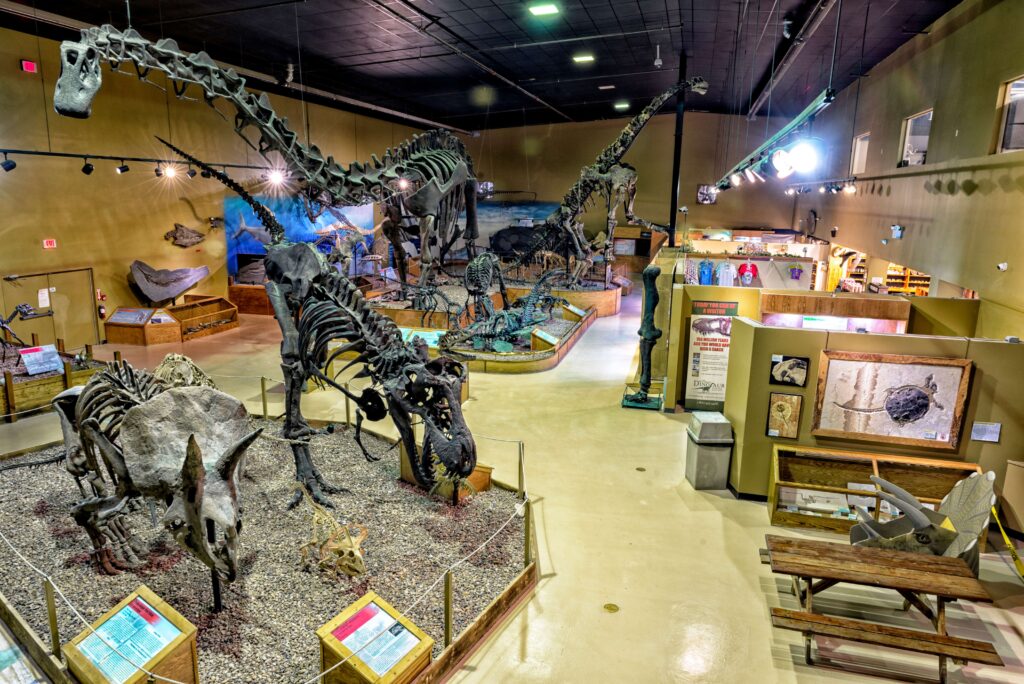
Thermopolis, Wyoming – Deep in the Bighorn Basin, the Wyoming Dinosaur Center draws paleontology enthusiasts to its vast collection of fossils unearthed from nearby ranchlands. The museum houses over 70 mounted skeletons and hundreds of displays that span millions of years of Earth’s history. Exhibits highlight not only Jurassic behemoths but also ancient mammals, revealing how life diversified before and after the dinosaur dominance.
Jurassic Giants Dominate the Halls
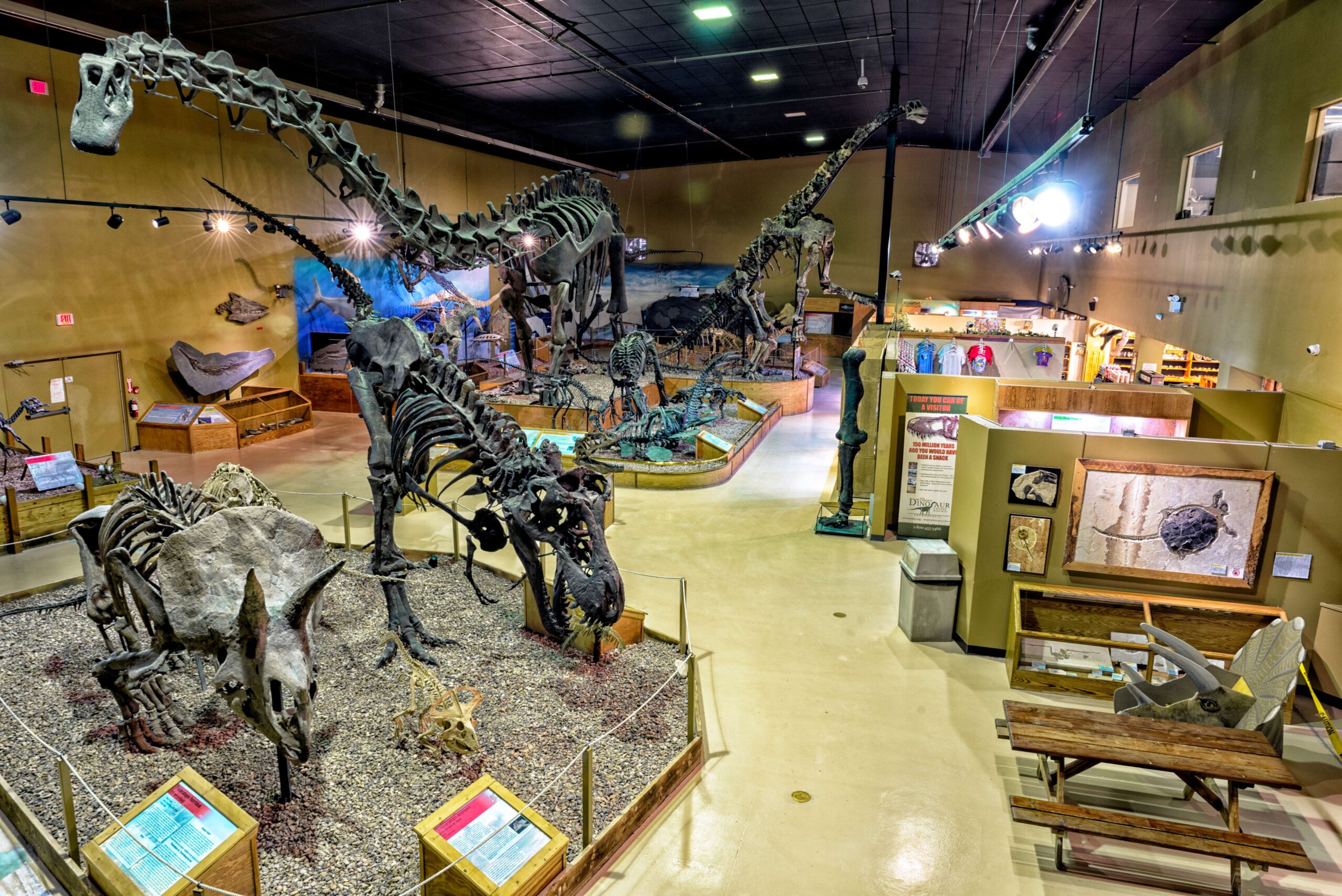
Jurassic Giants Dominate the Halls (Image Credits: Upload.wikimedia.org)
Supersaurus “Jimbo” commands immediate attention as one of the longest dinosaurs ever mounted at 106 feet. This replica, based on a specimen donated in 2003, stretches across the museum floor alongside other sauropods like Camarasaurus and Diplodocus. Visitors stand in awe beneath the 35-foot Tyrannosaurus rex named Stan, a formidable predator from the Late Cretaceous.
The Hall of Dinosaurs features full mounts of Triceratops, Medusaceratops, hadrosaurs, stegosaurs, and allosaurs, many sourced from Wyoming sites. A nearly complete Camarasaurus skeleton, excavated over two decades on the property, adds local flavor to the display. These skeletons provide scale to the prehistoric world, where herbivores and carnivores vied for supremacy.
Marine Reptiles and Early Vertebrates Bridge Eras
Beyond land-dwelling giants, the center showcases real and replica marine reptiles alongside flying reptiles, illustrating oceanic predators of the Mesozoic. The Walk Thru Time exhibit traces evolution from single-celled organisms through arthropods, early fish like the coelacanth, and synapsids such as Dimetrodon. This progression underscores the precursors to modern vertebrates.
Notable among avian transitions sits the Thermopolis Specimen of Archaeopteryx, one of only two authentic examples on public display outside Europe. This feathered fossil blurs lines between dinosaurs and birds, captivating researchers and families alike. Such displays emphasize the interconnected web of prehistoric life.
Ancient Mammals Emerge from the Shadows
The museum’s more modern galleries spotlight prehistoric mammals, including fossil camels, horses, rodents, and nimravids—saber-tooth cat-like predators. These specimens demonstrate mammalian radiation following the dinosaur extinction 66 million years ago. Exhibits position them within the broader evolutionary narrative, showing adaptations that led to today’s fauna.
Visitors encounter these relics alongside thousands of bones from the Warm Springs Ranch bonebeds, totaling over 10,000 specimens. Nimravids, with their elongated canines, evoke the fierce competitors of the Eocene epoch. Horses and camels reveal early hoofed mammal forms, bridging ancient ecosystems to contemporary plains.
Hands-On Digs Bring Fossils to Life
Unique to the center, active excavation sites on the adjacent Warm Springs Ranch invite public participation during summer months. Programs like Dig for a Day allow families to unearth real fossils from May to September, under expert guidance. Sites such as “Something Interesting” yield sauropod footprints, Allosaurus teeth, and juvenile Camarasaurus bones marked by scavenger bites.
A fully operational preparation lab lets observers watch staff clean and preserve discoveries. Kids’ Dig programs for ages 8-12 combine fieldwork with lab work and molding. These experiences transform passive viewing into active discovery, fostering appreciation for paleontology.
Key dig sites include:
- Foot Site (FS): Juvenile diplodocid hands and feet.
- There You Are (TYA): Multiple Allosaurus remains.
- Beside Sauropod (BS): Over 1,800 bones from six Camarasaurus and more.
- Something Interesting (SI): Trace fossils and scavenged skeletons.
Key Takeaways
- Over 70 mounted skeletons span dinosaurs to mammals.
- Archaeopteryx and Supersaurus highlight transitional and giant forms.
- Summer digs offer hands-on fossil hunting on real sites.
The Wyoming Dinosaur Center in Thermopolis encapsulates Earth’s dynamic history, from microbial origins to mammalian ascendancy. Plan a visit via the official website to witness these timeless treasures firsthand. What prehistoric era fascinates you most? Share in the comments.