Shanxi Province, China – Paleontologists uncovered a partial skeleton in 2011 that revealed one of the youngest known stegosaurs, challenging long-held views on the group’s timeline. Named Yanbeilong ultimus, this dinosaur roamed Early Cretaceous landscapes around 113 to 100 million years ago, long after most of its plated relatives vanished. The find from the Zuoyun Formation highlights a persistent stegosaur presence in Asia during a period when these herbivores had become rare globally.
A Rare Cretaceous Holdout
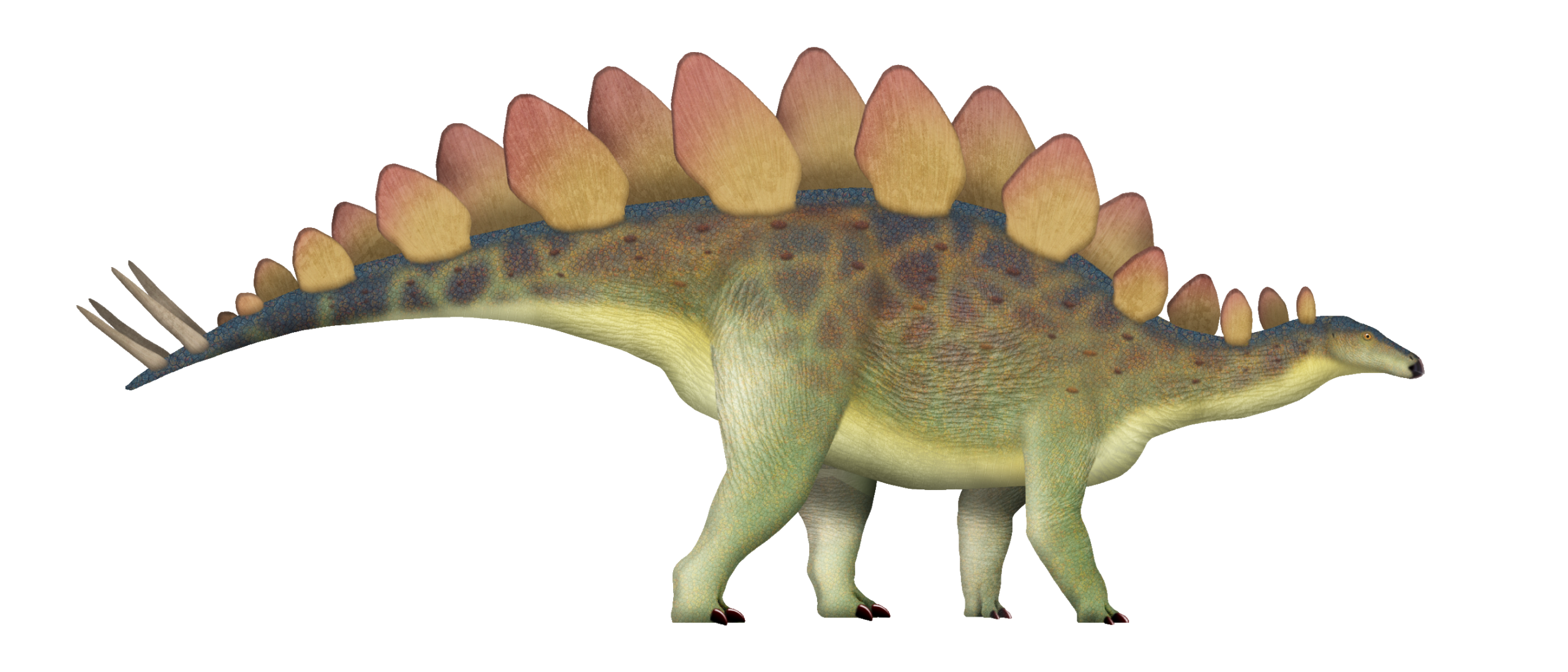
A Rare Cretaceous Holdout (Image Credits: Upload.wikimedia.org)
Stegosaurs dominated Jurassic ecosystems but faded by the Early Cretaceous, with fossils scarce after that era’s start. Yanbeilong ultimus stands out as one of the latest records, coexisting with early tyrannosaurs and advanced ornithopods. Researchers described the specimen in early 2024, noting its significance in extending the group’s known range.
Before this discovery, only four valid Cretaceous stegosaur taxa existed: Paranthodon, two Wuerhosaurus species, and Mongolostegus. “Stegosaurs are a minor but iconic clade of ornithischian dinosaurs,” stated lead author Lei Jia and colleagues. “They range from the Middle Jurassic to the Early Cretaceous, but are rare and poorly represented in the Cretaceous.” This new taxon pushes the boundary further into the Albian stage.
Unique Bones from the Zuoyun Formation
The holotype, cataloged as SXMG V 00006, includes seven dorsal vertebrae, the sacrum, both ilia, a left ischium, right pubis, and a caudal vertebra. Found near Madaotou Township in Zuoyun County, these bones preserved details of the dinosaur’s midsection and hips. Unlike more complete Jurassic specimens, this partial skeleton offered glimpses into late evolutionary tweaks.
Distinctive traits set Yanbeilong apart. Its dorsal vertebrae featured a higher neural arch and smaller neural canal compared to relatives. The ilio-sacral block showed fewer fused sacrals and fenestrae along sacral ribs. “Compared to other stegosaurs, Yanbeilong ultimus has several unique characteristics in dorsal vertebrae and ilio-sacral block,” Jia’s team reported.
- Higher neural arch on dorsal vertebrae, suggesting robust spinal support.
- Smaller neural canal, possibly linked to nerve protection or posture.
- Reduced number of sacrals and fenestrae in the hip region, indicating a more compact pelvis.
- Differences in dorsosacral ribs, caudal vertebrae, and ilium from close kin.
- Overall build akin to Stegosaurus, with inferred long hindlimbs and shorter forelimbs.
Family Ties to Stegosaurus
Phylogenetic studies placed Yanbeilong deep within Stegosauria, as sister taxon to a clade including Stegosaurus stenops and Wuerhosaurus homheni. Later analyses refined this, positioning it near Wuerhosaurus in a Chinese stegosaurine group alongside Jiangjunosaurus. Such relations underscore Asia’s role as a refugium for these dinosaurs.
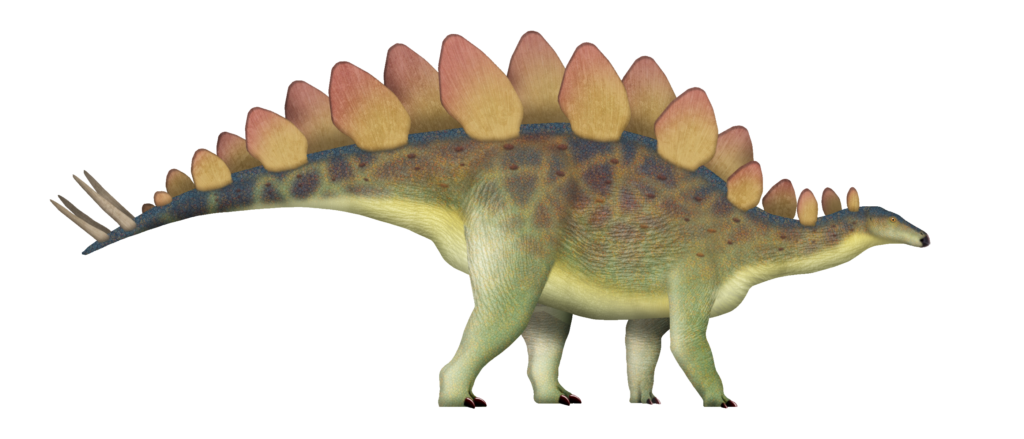
Though direct plates and spikes remain absent from the fossils, reconstructions propose two parallel rows of large dorsal plates tapering into a thagomizer tail. Estimated at 5 to 7 meters long and weighing around 4 tons, Yanbeilong rivaled North America’s Stegosaurus in stature. Its long, narrow skull suited low browsing on ferns and cycads in a subtropical flood plain.
Implications for Stegosaur Decline
The Zuoyun Formation’s riverine deposits preserved Yanbeilong amid a shifting fauna. Stegosaurs likely succumbed to competition from more efficient herbivores like iguanodonts. Yet holdouts like this one, Mongolostegus in Mongolia, and unnamed Chinese remains suggest pockets of survival into the mid-Cretaceous.
This discovery enriches the Early Cretaceous record, first for Shanxi and extending Stegosauria’s footprint. It prompts questions about why plated giants lingered in Asia while vanishing elsewhere. Future finds may clarify their final chapters before ankylosaurs and ceratopsians rose.
Key Takeaways
- Yanbeilong ultimus marks one of the latest stegosaurs, from 113-100 million years ago.
- Unique vertebral and hip features distinguish it from Jurassic ancestors.
- Close relation to Stegosaurus highlights Asian persistence of the lineage.
Yanbeilong ultimus embodies resilience in a changing prehistoric world, a plated survivor amid rising challengers. What do you think about this late stegosaur? Share your thoughts in the comments.