Greater Yellowstone Ecosystem – Brown bears descend on talus-covered slopes each late summer, flipping rocks to harvest energy-packed army cutworm moths in a display of nature’s ingenuity.
An Unlikely Pair in the Rockies
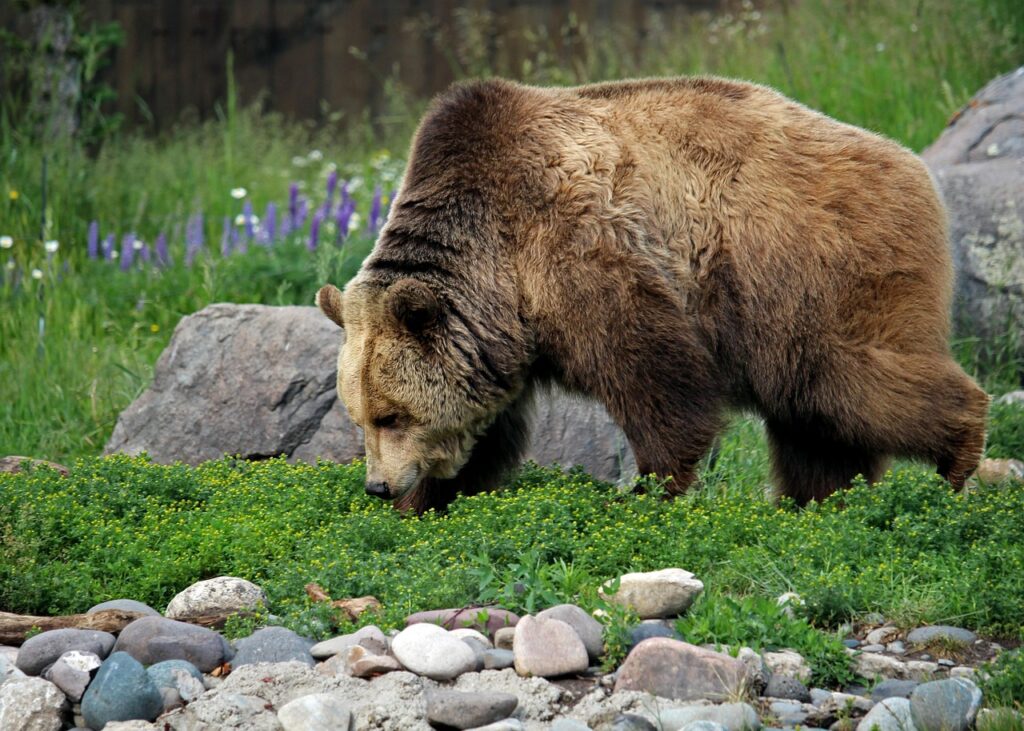
Yellowstone Grizzlies’ Secret Summer Feast: Digging for Moth Riches (Image Credits: Pixabay)
Army cutworm moths, drab gray fliers often dismissed as porch light nuisances, undertake vast migrations to reach alpine meadows in the Greater Yellowstone Ecosystem. There, they sip nectar from mountain blooms and seek shelter under loose talus rocks. Researchers first noted bears targeting these moths in the region during the 1980s, building on sightings from other areas dating back to the 1950s.
Bears employ clever tactics to claim their prize. They use their tongues like sticky snares to lap up the insects and spend hours daily shifting heavy stones. This foraging frenzy peaks in late July and early August, drawing crowds of the massive carnivores to just a handful of spots.
Decades of Data Uncover Site Loyalty
Scientists pored over 42 years of records from radio-collared bears, including aerial telemetry flights and GPS tracking. They documented 4,754 instances of feeding or digging across 36 moth aggregation sites. Bears demonstrated striking fidelity, returning year after year to favored locations despite the rugged terrain.
During peak season, a quarter of the GYE’s brown bear population crammed into less than 1% of the ecosystem’s expanse. Shorter front claws, measuring under two inches, marked late-fall captures of frequent moth-site visitors. “When they get a food windfall, they’re typically keyed in on that resource and looking for it in the future,” noted lead researcher Justin Clapp.
Females Dominate the Moth Fields
Female brown bears outpaced males in both frequency and duration at these sites. They lingered longer, maximizing intake during critical periods. Such patterns suggest moths play an outsized role in female energy budgets, potentially aiding cub-rearing demands.
Clapp, a large carnivore biologist with the Wyoming Game and Fish Department and part of the Interagency Grizzly Bear Study Team, called the phenomenon striking. “It’s the coolest thing. These two different species couldn’t be further apart on the spectrum from each other, but they actually interact in the ecosystem and influence each other.”
Insights for Bear Health and Habitat
The moths deliver a nutrient-dense payoff, fueling bears through summer. Future work will probe connections between moth numbers, consumption rates, and outcomes like body condition, survival, and reproduction. Meanwhile, the study maps these hotspots to guide management.
Avoiding human intrusions – from hikers to hunters – emerges as a priority. Mountaineers and climbers frequent talus zones, risking disruption. “If you capture a bear in late fall, you can tell immediately this bear has been on a moth site,” Clapp observed.
Key study findings include:
- 36 confirmed army cutworm moth sites in the GYE.
- 4,754 bear foraging observations over 42 years.
- Site confirmation via multiple annual sightings or repeated yearly visits.
- Peak activity from late July to early August.
- Female bears showed higher site use and longer stays.
Key Takeaways
- Moths offer bears a high-energy summer staple, shaping foraging habits.
- Targeted sites demand protection from recreation during peaks.
- Long-term data highlights ecological links across disparate species.
This moth-bear dynamic underscores Yellowstone’s interconnected web, where tiny insects bolster top predators. As research deepens, it promises better strategies for grizzly conservation. What surprises you most about this feast? Share in the comments.