Have you ever wondered why your horoscope seems to speak directly to your soul? Why certain personality traits feel hardwired into your being, as though written in the stars long before you were born? The truth is, they were. Your zodiac sign carries within it thousands of years of human history, mythology, and cultural wisdom from civilizations that gazed at the same sky we do today.
What if I told you that every time you check your horoscope, you’re tapping into a cosmic language created by ancient astronomers and storytellers who believed the heavens held the blueprint for human destiny? The practice of astrology first originated in ancient Mesopotamia in the second millennium B.C. From there, it traveled through time and across continents, picking up stories, symbols, and secrets from the Babylonians, Egyptians, Greeks, Romans, and beyond. Each zodiac sign you know today is a living artifact of these ancient worlds.
Aries: The Warrior Ram of Ancient Babylon and Greece
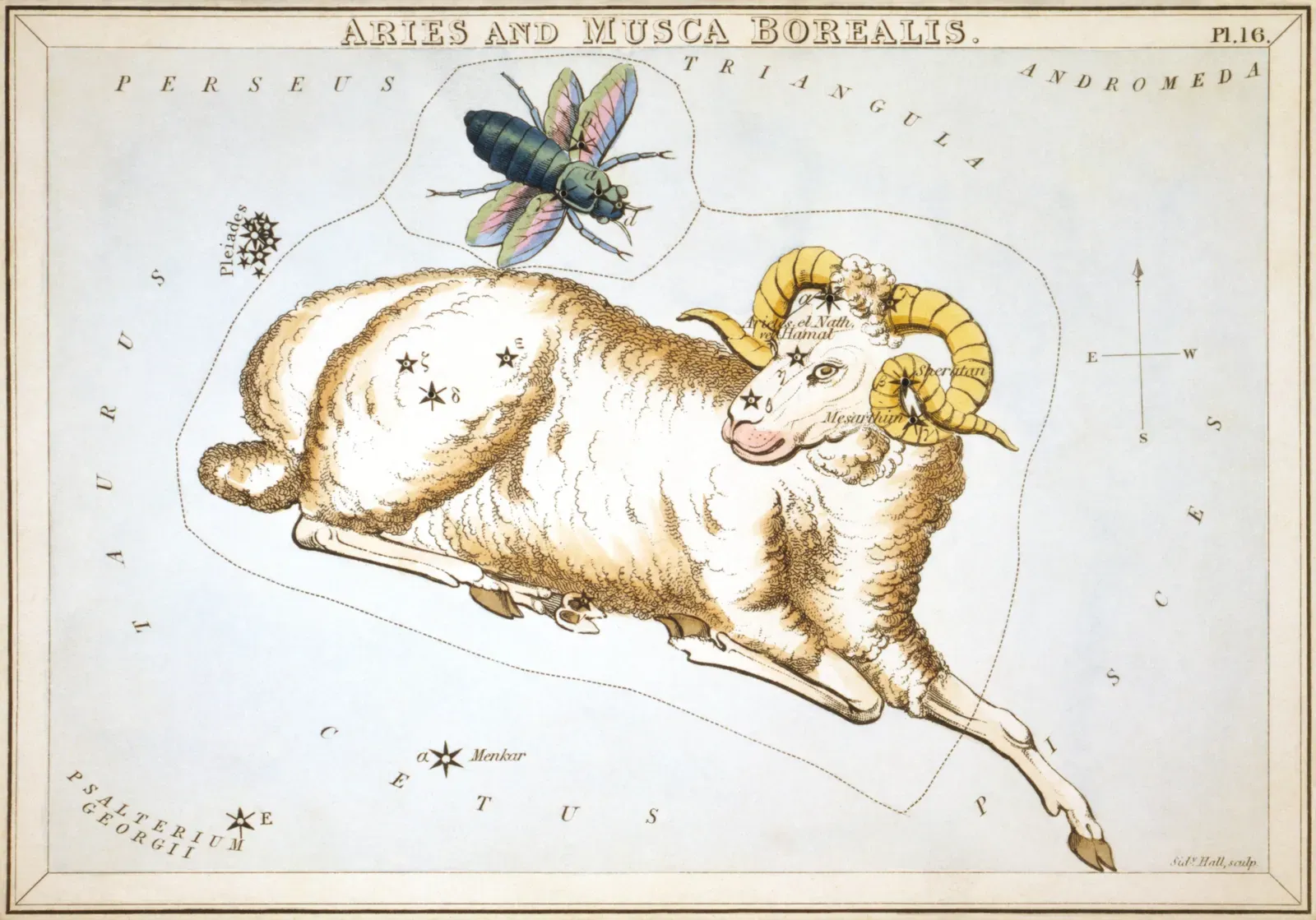
Your sign doesn’t just represent courage and boldness by accident. It is thought that it was presented in cave paintings, dating about 15000 BC but not until the Babylonian astronomy was it represented as a bull, named “The Great Bull of Heaven” or “The bull in front”. Wait, that’s Taurus. Let me correct that. But it also comes from an Ancient Greek Myth – the story of Phrixus and Helle (where Hellenic gets its name) – where the two heroes are eventually saved by a ram with golden wool.
This golden ram became the legendary Golden Fleece that Jason and the Argonauts sought in one of the most epic quests in Greek mythology. The ram wasn’t just a symbol; it was a divine savior. The age of Aries begins somewhere between 2300 and 2200 B.C. and it lasts till the appearance of the Christianity in the Age of Pisces. It’s the period of formation of The Old Testament in which Moses leads the Jews from Egypt and forbids the worship of the old idol – golden veal from the Age of Taurus. Moses himself was a shepherd and warrior, embodying the Aries archetype perfectly.
Taurus: The Sacred Bull of Mesopotamia and Egypt
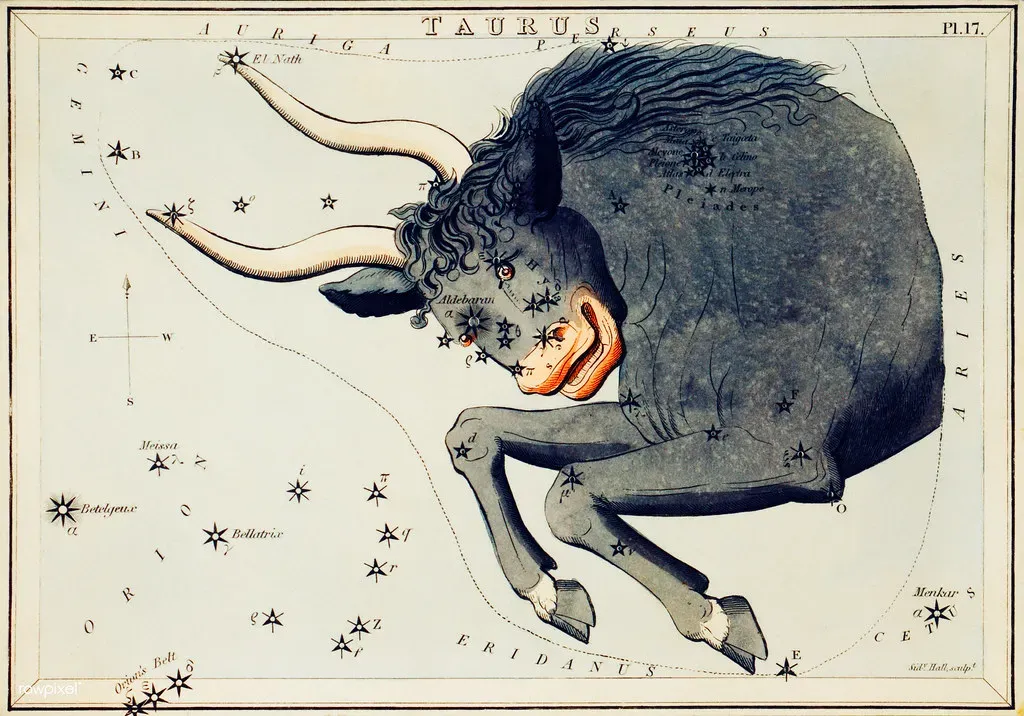
If you’re a Taurus, you’re connected to one of the oldest and most revered symbols in human history. Taurus is one of the oldest known constellations. It is thought that it was presented in cave paintings, dating about 15000 BC but not until the Babylonian astronomy was it represented as a bull, named “The bull of heaven” or “The bull in front”. Its importance to the agricultural calendar influenced various bull figures in the mythologies of ancient Sumer, Akkad, Assyria, Babylon, Egypt, and of course Greece and Rome.
The bull represented strength, fertility, and earthly abundance. In the Epic of Gilgamesh, one of the earliest works of literature, Taurus is sent by the goddess Ishtar to kill Gilgamesh for spurning her advances, while in early Mesopotamian art it was closely associated with Innana, the Sumerian goddess of sexual love, fertility and warfare. In Greek mythology, Zeus transformed himself into a magnificent white bull to seduce the Phoenician princess Europa, carrying her across the sea to Crete. Your sign’s stubborn loyalty? That’s thousands of years of sacred symbolism running through your veins.
Gemini: The Divine Twins of Sparta and Babylon
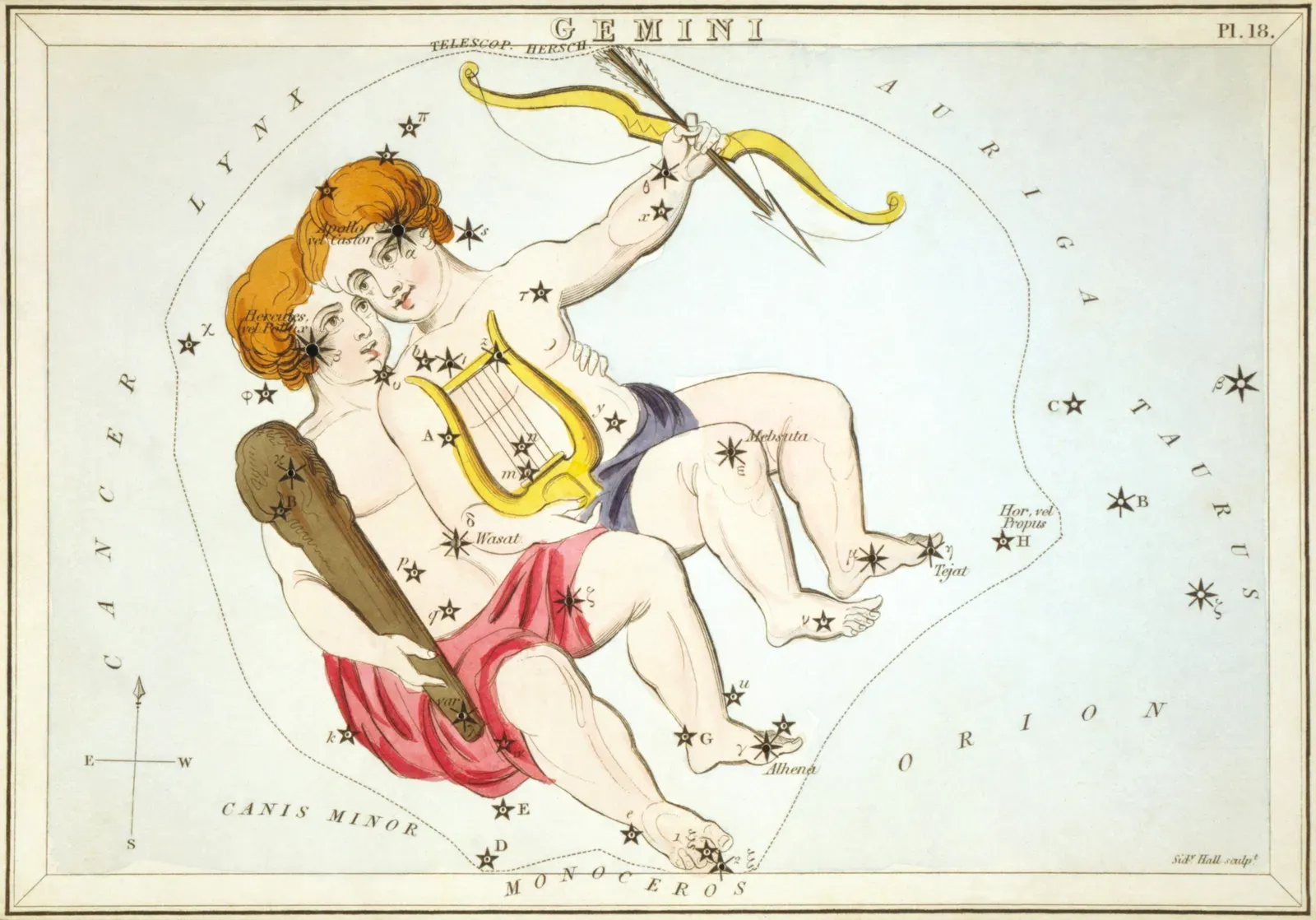
Gemini’s leading stars Castor and Pollux are named after the twins of Queen Leda of Sparta in ancient Greek mythology; here the constellation was known as ‘Didumoi’. The names of the Twins were not consistently identified amongst classical writers. The first account, named Phaenomena and written by Greek poet Aratus in the 3rd century BC, does not mention them by name, whilst Eratosthenes (3rd century BC) named them as Castor and Polydeuces. Your dual nature isn’t a flaw; it’s an ancient inheritance.
The story goes that one brother was mortal and the other immortal, yet their bond was so strong that Zeus granted them both immortality. Stricken with grief, Pollux begged Zeus to take his life and give immortality to Castor. Zeus was so touched by this act of love that he awarded them both immortality and a place in the stars as the constellation of Gemini. This is why Geminis are known for their adaptability and their ability to bridge different worlds. The Babylonians also recognized twin figures in the sky, though they sometimes saw them differently than the Greeks. Still, that duality theme? Universal.
Cancer: The Protective Crab and Ancient Homebodies
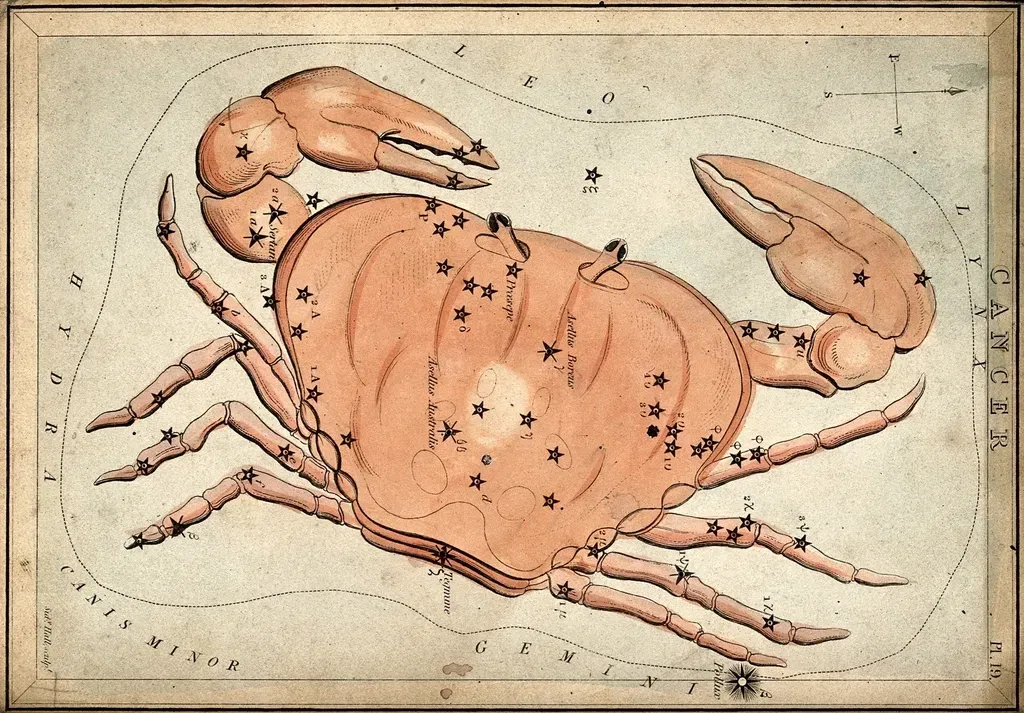
Your sign might seem simple at first glance, but it connects to profound themes of home, protection, and nurturing that ancient peoples held sacred. While there are many stories of the crab of Cancer, in Greek mythology, it is a simple story which some believe was added later to make the Twelve Labors of Hercules correlate with the twelve signs of the zodiac. On his mission to kill the Hydra, a many-headed sea-monster, Hera (the goddess who both hated Hercules and had sent him on this task) ordered a crab to attack Hercules. The crab squeezed on one of Hercules’ toes with its claw and Hercules kicked it into the sky, killing it.
That crab’s loyalty to Hera, even in the face of certain death, mirrors the fierce protectiveness Cancer natives are famous for. The ancient Sumerians of Mesopotamia were devising sophisticated city-states thousands of years ago. Houses made of sun-dried brick that employed intricate arches, domes, and vaults would be arrayed so that they faced courtyards and were clustered around a ziggurat – the terraced, pyramidal temples that served as Sumerian places of worship. When much of the planet’s residents were nomadic or lived in temporary shelters, the Sumerians were the world’s first homebodies. As a Cancer, you carry the DNA of civilization’s first architects of home.
Leo: The Majestic Lion and Solar Kings
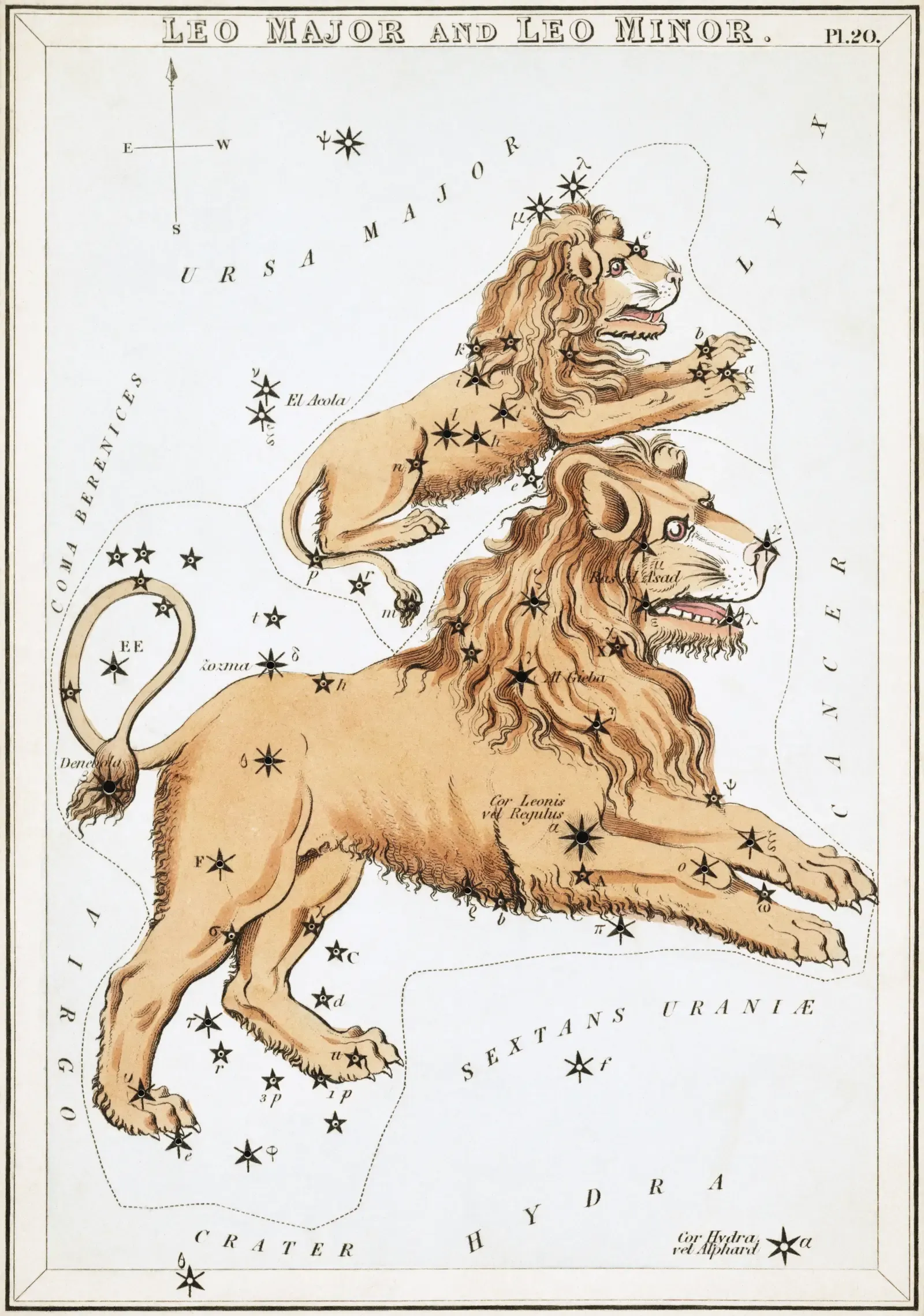
Leo isn’t just ruled by the Sun metaphorically. Your sign is deeply entwined with solar worship that dates back millennia. The lion was a symbol of royalty, courage, and divine power across nearly every ancient culture. In Greek mythology, after Hercules killed the Nemean Lion, Hera felt guilty for putting the lion in harm’s way. As a result of this guilt, she transformed the Nemean Lion into the constellation, Leo.
The Nemean Lion was no ordinary beast. Its hide was impervious to weapons, making Hercules’ victory all the more legendary. Egyptian pharaohs wore lion headdresses and sphinxes guarded temples. Honestly, when ancient civilizations wanted to express ultimate power and courage, they reached for the lion every single time. Your regal bearing isn’t ego; it’s an echo of sacred kings and divine beasts that commanded respect across ancient empires.
Virgo: The Harvest Goddess Across Multiple Cultures
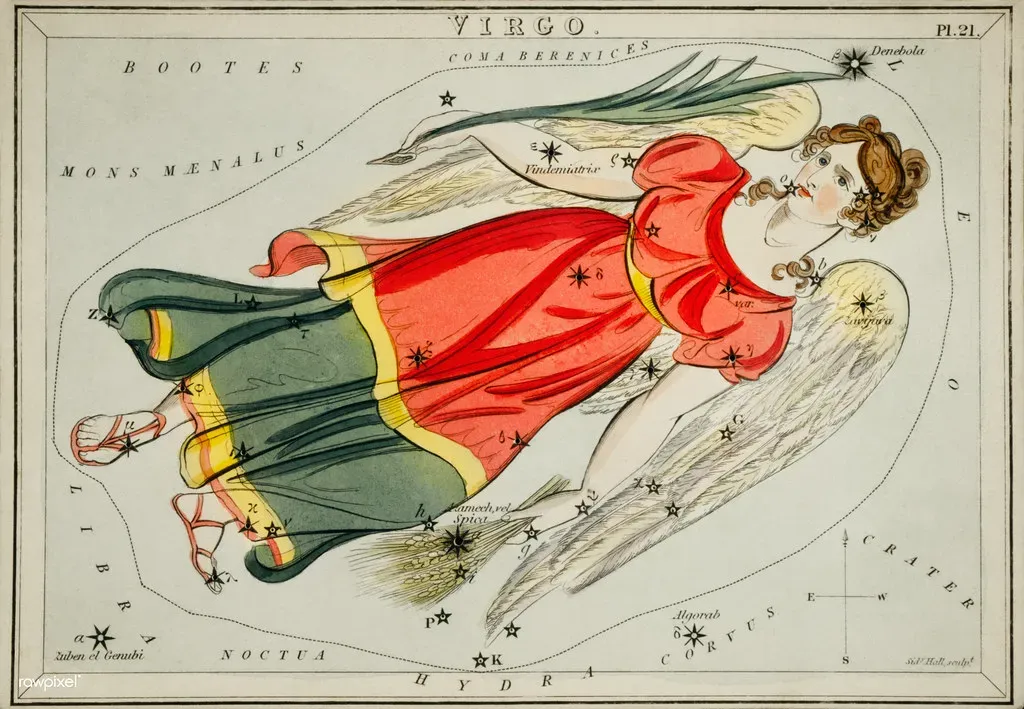
Most of the goddesses who were linked to Virgo were considered fertility goddesses, or goddesses of the harvest. This resonates with the view of Virgo being the caretaker of mankind through her fertility. This includes Ishtar (Babylonian mythology), Isis (Egyptian mythology), Ceres (Roman mythology), and Demeter (Greek mythology). The constellation Virgo is thought to be a woman holding an ear of corn, thus reinforcing the Harvest Mother mythology.
Your meticulous nature and desire for order comes from this agricultural connection. Ancient peoples relied on precise observation of the stars to know when to plant and harvest. In Greek mythology, Demeter was the goddess of the harvest, revered for her nurturing and compassionate nature. Abducted by Hades, the god of the underworld, Demeter’s grief was sparked, and the subsequent barrenness of the earth. As a virgin maiden, Persephone’s story embodies themes of innocence, transformation, and seasonal cycles. Virgos inherited this exactitude, this need to perfect the systems that sustain life. That critical eye you’re known for? It’s been saving harvests for thousands of years.
Libra: The Scales of Justice From Babylon to Greece
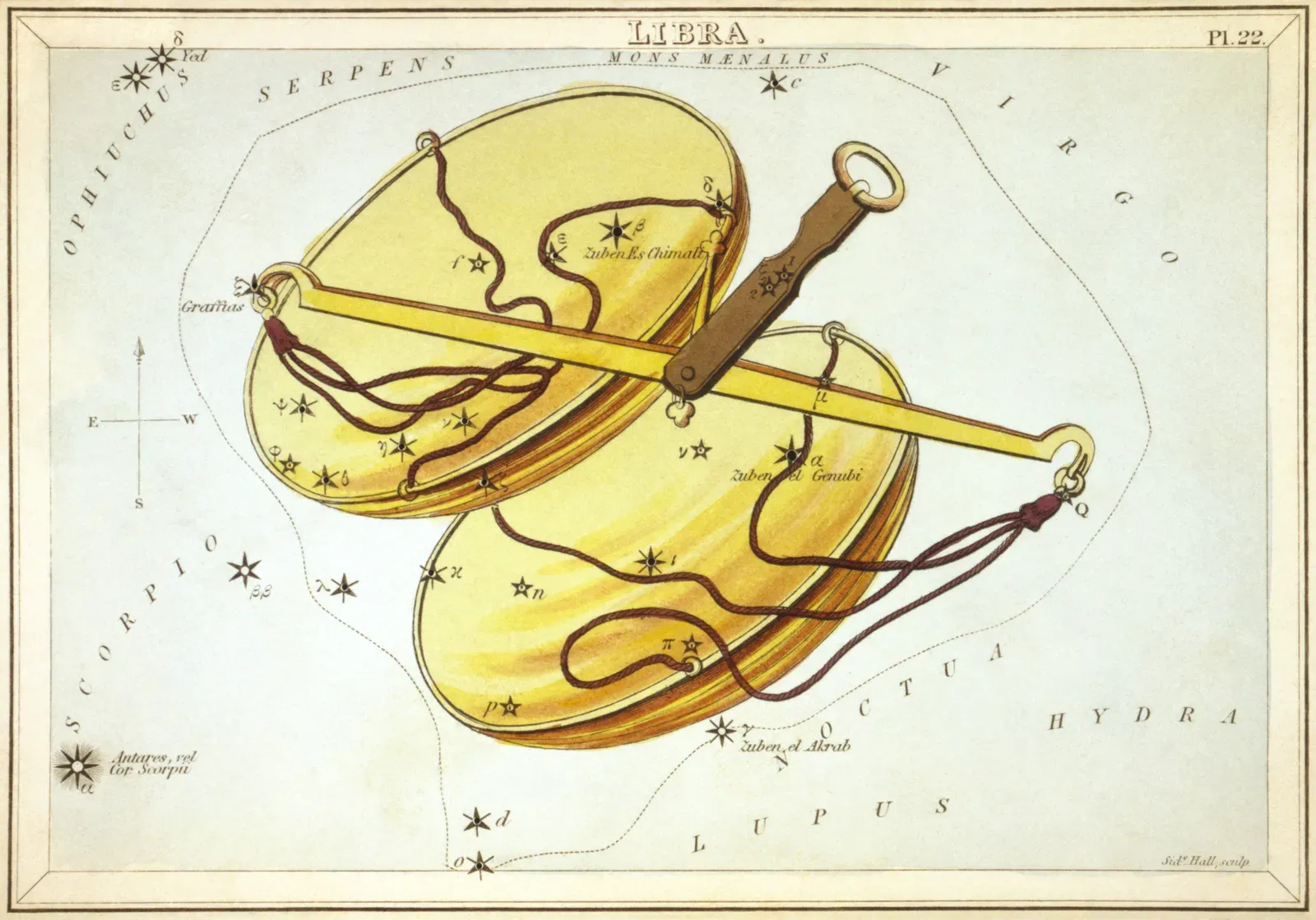
The seventh sign of the modern zodiac, Libra, is represented by a set of scales and is the only sign of the zodiac that is not representative of a living species. Libra is also the one of the last zodiac symbols to be recognized. Your sign’s uniqueness is intentional. The first ones to link Libra with the balance were Babylonians – they called the Libra constellation ZIB.BA.AN.NA, which means “the balance of heaven”.
In ancient Mesopotamia, the constellation of Libra was associated with the sun’s entry into the autumnal equinox, marking the beginning of the fall season. The Babylonians, renowned for their advanced astronomical observations, considered this celestial event as a pivotal moment in their agricultural calendar, signifying the transition from warmth and abundance to colder months and scarcity. Libra, therefore, held practical importance as a guide for agricultural activities and served as a symbol of balance between the seasons. Later, In Greek mythology, the scales of Libra are often attributed to the goddess Themis, who personified divine law and order. Your diplomatic nature comes from this ancient role as the cosmic balancer.
Scorpio: The Underworld Scorpion of Ancient Secrets
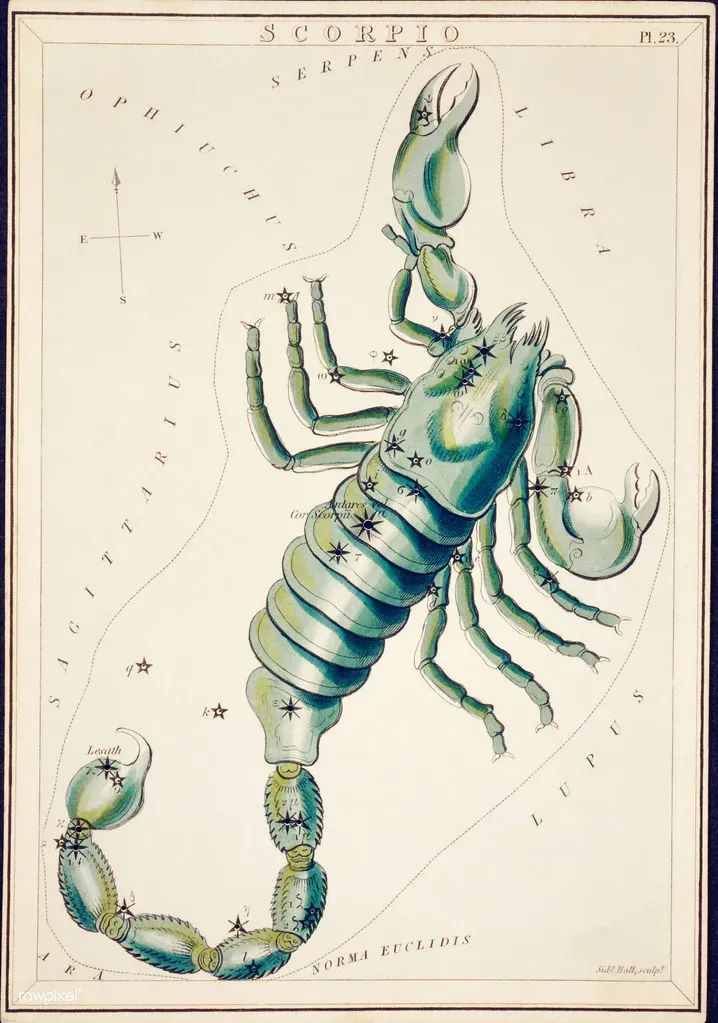
Scorpio’s saga is rooted in the Ancient Sumerians and Babylonian empires, where it was regarded as the bearer of deepest & darkest secrets. Your intensity isn’t random; it’s the weight of millennia of mystery traditions. The meaning behind the zodiac sign Scorpio is based on the Greek myth of Orion, the son of Poseidon and Euriale, who after enraging the Goddess Artemis (Goddess of Hunting) is punished by the Gods. In another version of the legend, he dares to boast of his hunting skills by arrogantly showing Artemis the hundreds of trophies of his kills. In both versions of the story, the Gods decided to punish him – a scorpion is sent to do battle with him and eventually kills him with its poisonous sting.
The scorpion represents transformation through crisis, death leading to rebirth. To begin with, the Greek god of the underworld who kidnapped Zeus’s daughter was called Hades (Pluto). This God was an outcast among the Olympians because he tended to prefer force over peace, and was also associated with darkness and cruelty of the ‘lower world’. He remained loyal to his wife forever, however, his selfishness also caused Persephone’s mother Demeter to fall into the hands of misery, her joy to die and the spring to end. Scorpios channel this ancient understanding that true power comes from embracing the shadow.
Sagittarius: The Wise Centaur Archer of Greek Legend
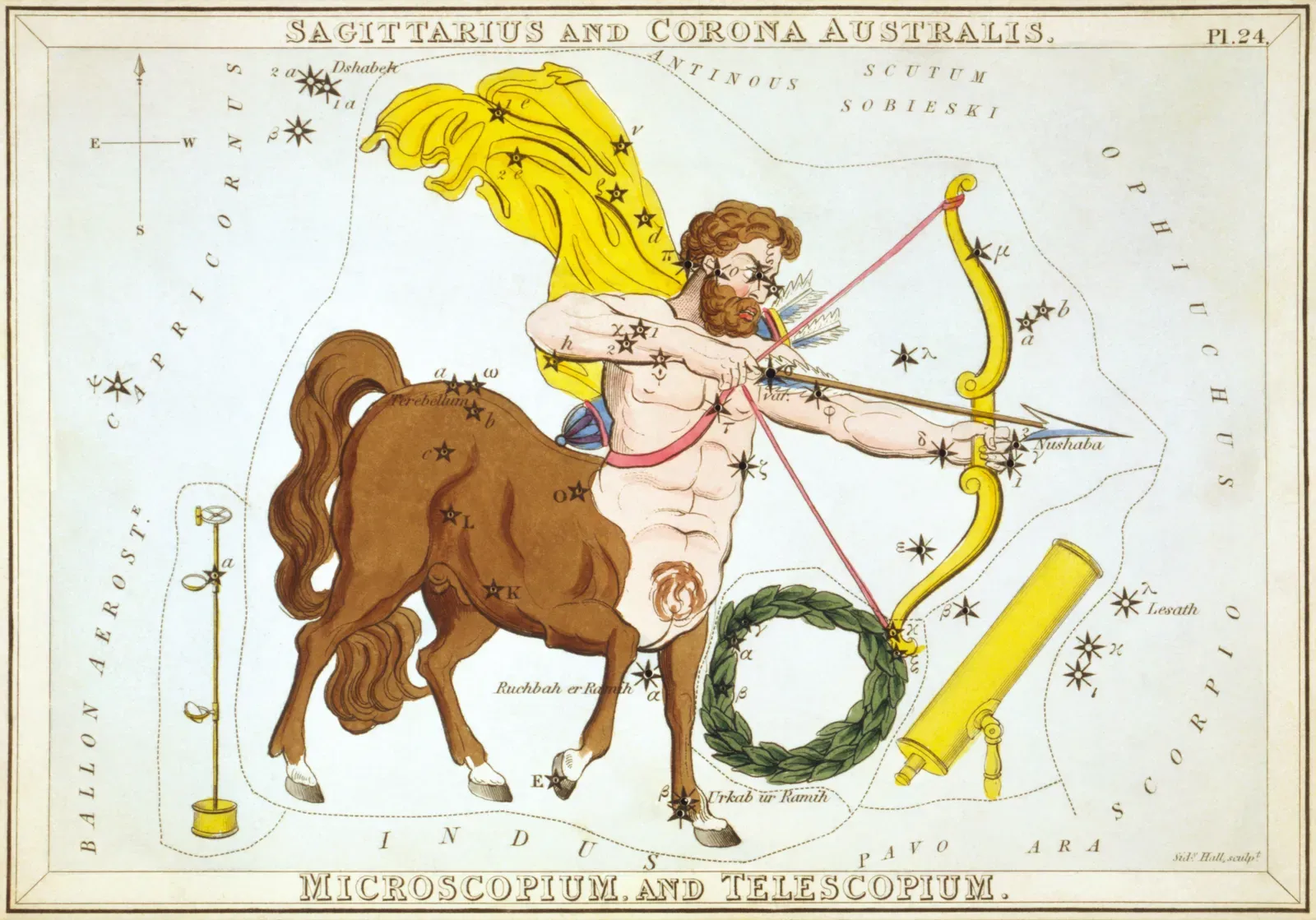
A fire sign, Sagittarius, is generally represented by an archer, an ancient Zodiac sign which often takes the form of the mythological centaur Chiron. Centaurs, which are half-human and half-horse, often play an important role in Greek mythology, but few are more famous or important than Chiron. According to Greek legend, Chiron played a critical role in mentoring Achilles, who – despite his later documented weakness in his ankle – was a hero in the Trojan War.
Unlike other wild centaurs, Chiron was wise, gentle, and devoted to teaching. He trained heroes, understood medicine, music, and archery. Your love of knowledge, exploration, and truth seeking? That’s Chiron’s legacy flowing through Sagittarius. The archer’s arrow points upward, always seeking higher truths and broader horizons, just as the ancient Greeks envisioned their greatest teacher doing.
Capricorn: The Sea-Goat of Sumerian and Greek Myth
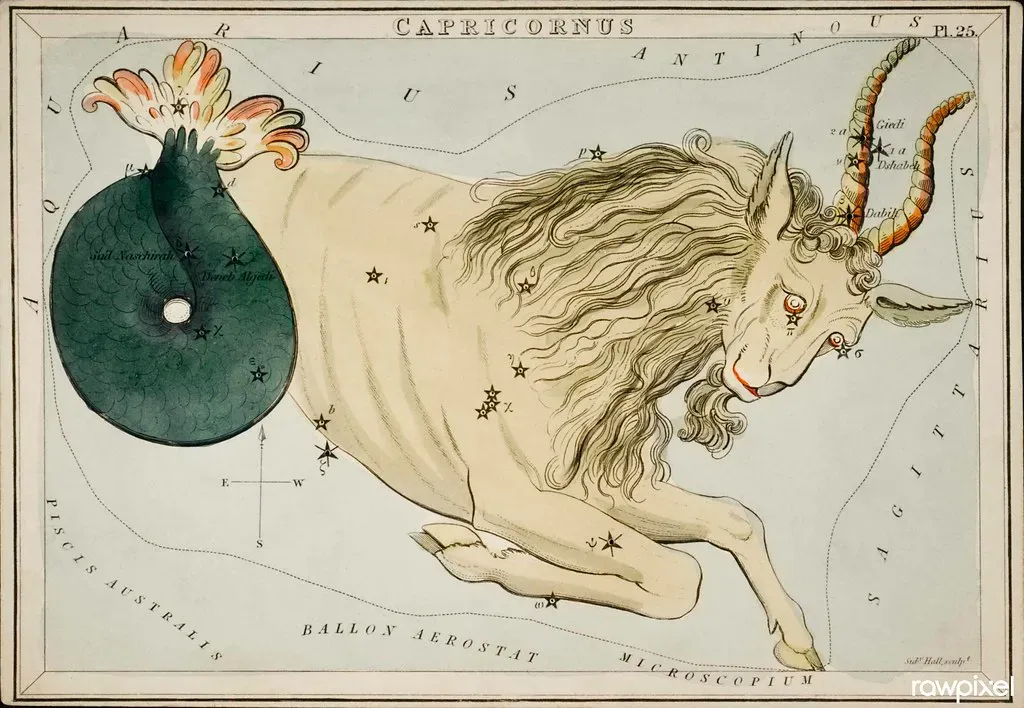
Capricorn is an earth sign, along with being the first of the three winter zodiac signs. Capricorn, like several other zodiac signs, can trace its origins back to Sumerian Mythology, as well as Babylonian mythology. The sea-goat is one of the most ancient and peculiar symbols in astrology. Capricorn’s unusual form – half goat, half fish – comes from the story of Pan, the rustic god of shepherds and wild places. When the monstrous giant Typhon attacked Mount Olympus, the gods fled in panic, each disguising themselves as animals. In his hurry to escape, Pan jumped into the Nile River but was transformed incompletely. His upper body became a goat while his lower half turned into a fish tail, allowing him to swim away.
The primary inspiration for this goat is Amalthea, who is known for taking the form of a goat and raising Zeus after he was abandoned by his parents. Your ambition and determination to climb every mountain? That’s the goat. Your emotional depth hidden beneath a practical exterior? That’s the fish tail. Capricorns embody this ancient duality of earth and water, ambition and intuition.
Aquarius: The Water Bearer and Divine Cupbearer
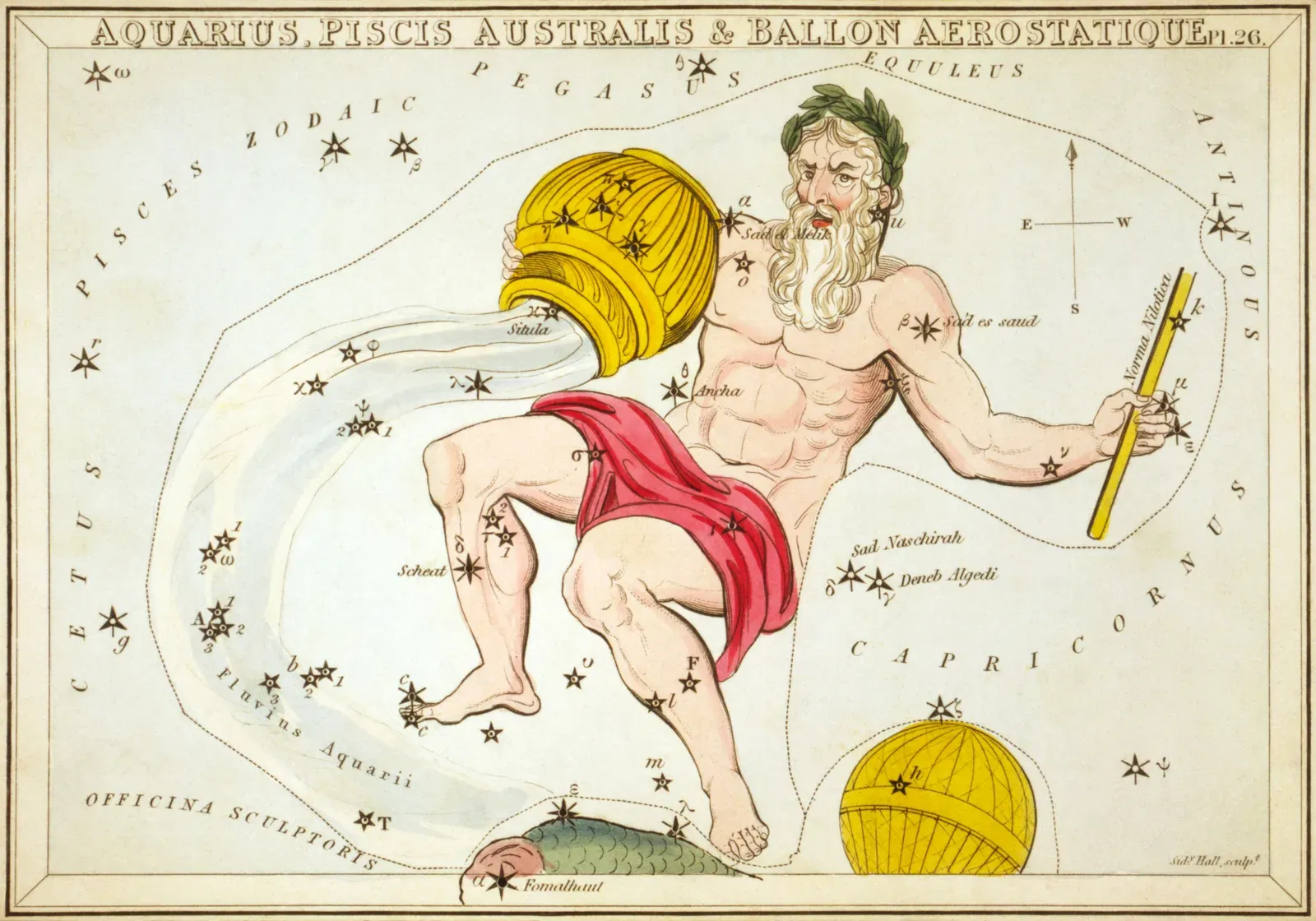
In astrology, Aquarius is the 11th sign of the zodiac, considered as governing the period from about January 20 to about February 18. Its representation as a man pouring a stream of water out of a jug came about, because in ancient times the rising of Aquarius coincided in the Middle East with a period of floods and rain. But there’s more to your story. The Aquarius legend is inspired by Ganymede, who both humans and the gods alike considered to be the “most beautiful” mortal man. However, eventually, Zeus decided to kidnap Ganymede, where he eventually became a water carrier (cupbearer) upon Mount Olympus.
Ganymede was the only mortal to serve the gods directly, existing between two worlds. Aquarius was considered positive by cultures that had lands plagued by drought, such as the Greeks and Egyptians. In contrast, cultures prone to flooding, such as the Babylonians, looked at Aquarius in a negative way. Your humanitarian instincts and revolutionary thinking stem from this role as the one who brings life-giving water (or knowledge) from divine realms to humanity.
Pisces: The Twin Fish of Aphrodite and Ancient Waters
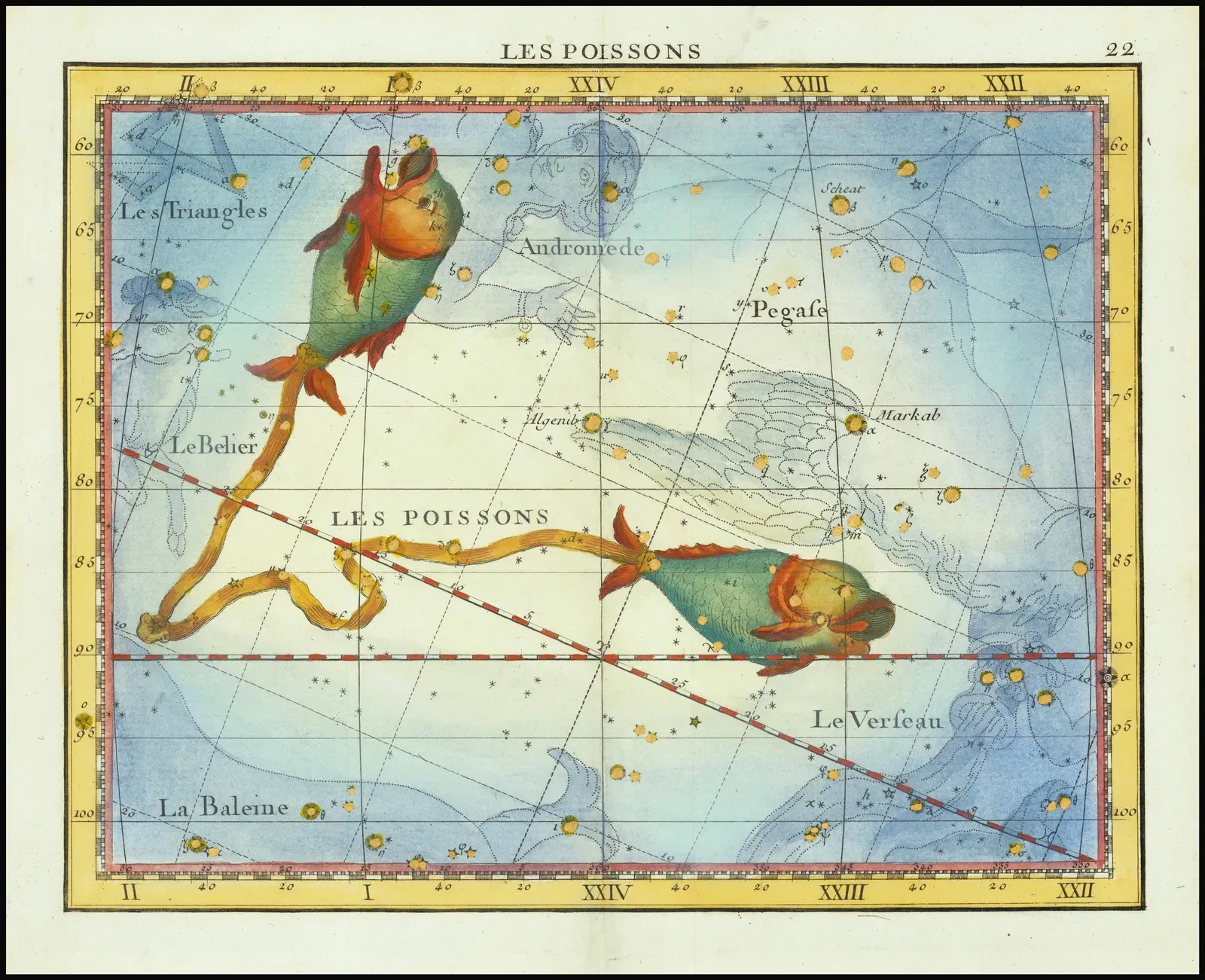
Its representation as two fish tied together is usually related to the Greek myth of Aphrodite and Eros, who jumped into a river to escape the monster Typhon and changed into fish, or, alternatively, the two fish that carried them to safety. As this terrifying creature approached Mount Olympus, Aphrodite (goddess of love) and her son Eros (god of desire) fled toward the Euphrates River. Finding themselves trapped between the advancing monster and the water, they transformed into fish to escape beneath the waves. To avoid losing each other in the current, the mother and son tied themselves together with a cord.
This is why Pisces natives often feel pulled in two directions, caught between the material and spiritual worlds. With the story of the birth of Christ coinciding with this date, many Christian symbols for Christ use the astrological symbol for Pisces, the fishes. The figure Christ himself bears many of the temperaments and personality traits of a Pisces, and is thus considered an archetype of the Piscean. Moreover, the twelve apostles were called the “fishers of men”, early Christians called themselves “little fishes”, and a code word for Jesus was the Greek word for fish, “ΙΧΘΥΣ ICHTHYS”. Your compassion and mysticism carry forward one of the most sacred symbols in human history.
Conclusion: Written in the Stars, Carried Through Time
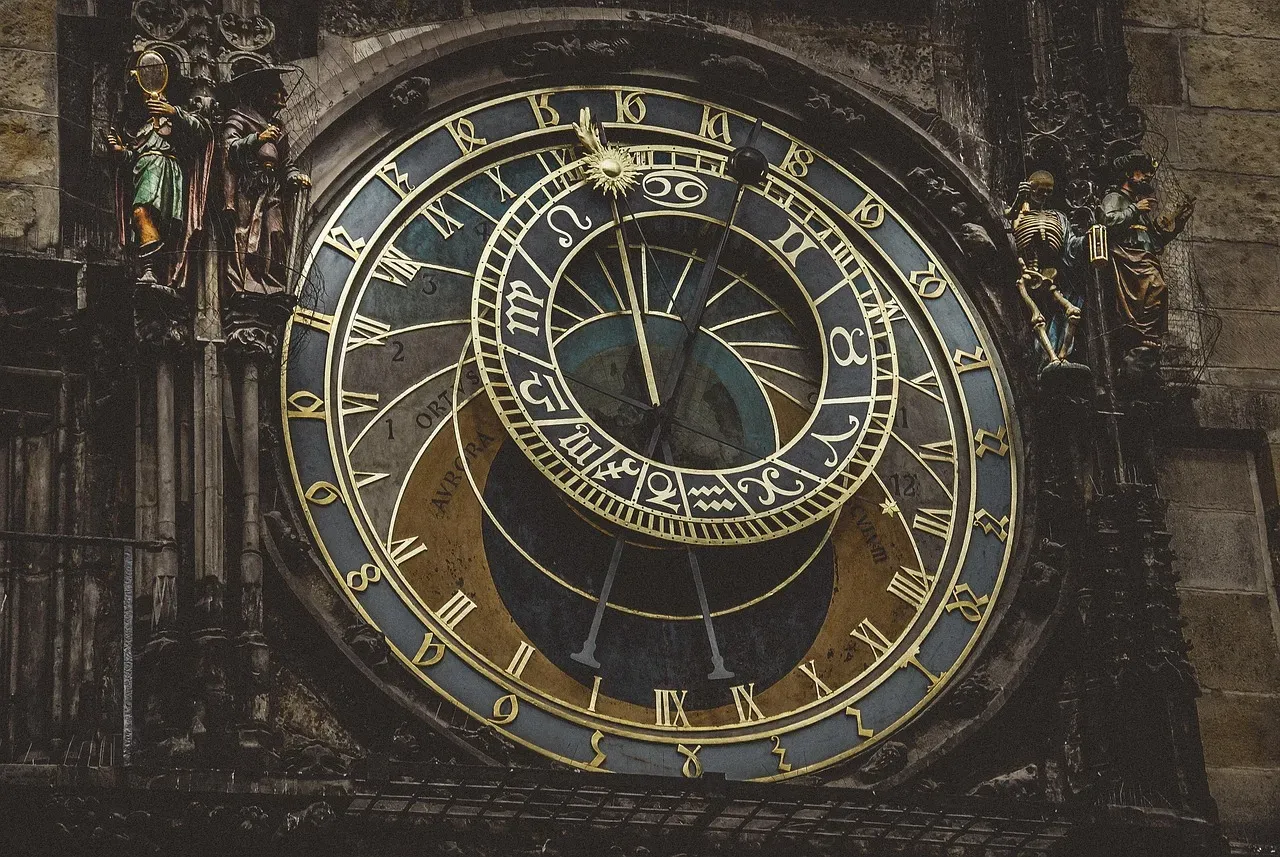
It was in Ptolemaic Alexandria that Babylonian astrology was mixed with the Egyptian tradition of Decanic astrology to create Horoscopic astrology. This contained the Babylonian zodiac with its system of planetary exaltations, the triplicities of the signs and the importance of eclipses. Along with this it incorporated the Egyptian concept of dividing the zodiac into thirty-six decans of ten degrees each, with an emphasis on the rising decan, the Greek system of planetary Gods, sign rulership and four elements. Your zodiac sign is not a modern invention or a simple personality test. It’s a complex tapestry woven from Babylonian astronomy, Egyptian cosmology, Greek mythology, and Roman cultural integration.
Every time you read your horoscope, you’re participating in a practice that has connected humans to the cosmos for over four thousand years. The traits you recognize in yourself aren’t just astrological descriptions; they’re echoes of gods, heroes, and sacred symbols that shaped entire civilizations. From the temples of ancient Babylon to the forums of Rome, from the pyramids of Egypt to the academies of Greece, these star patterns guided kings, inspired poets, and gave meaning to the mysterious dance of human personality. The stars haven’t changed. Neither has their ancient wisdom.
What’s your sign’s ancient story? Does knowing its origins change how you see yourself?